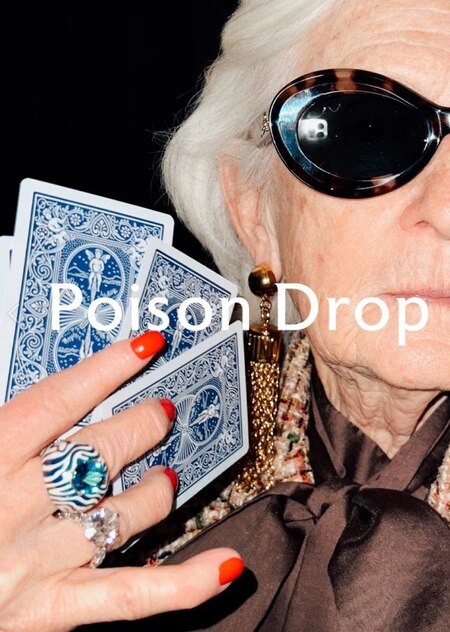
Project Focus
This project analyzes the communication strategy of Poison Drop, an existing designer jewelry retailer. The focus is not only on what the brand sells, but on how it constructs a recognizable image through visual language, social media, storytelling, tone of voice, and digital platforms. The project studies Poison Drop as a brand that communicates jewelry not simply as an accessory, but as a tool of personal expression. And the main research question is:
How does Poison Drop use visual and emotional communication to transform jewelry into a symbol of identity and self-expression?
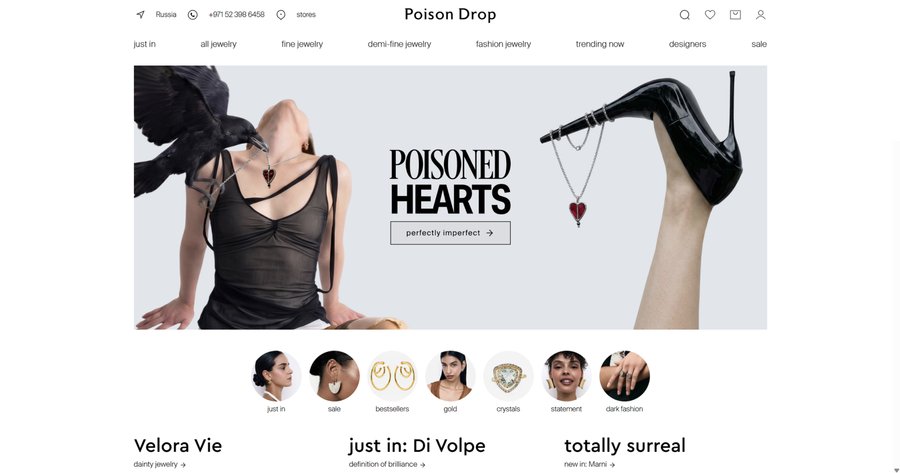
Poison Drop’s public communication field combines website, products, social media, fashion styling, and emotional visual codes.
Brand Overview
Poison Drop is a designer jewelry and accessories retailer. The brand offers rings, earrings, bracelets, necklaces, piercing jewelry, accessories, gift certificates, and curated trend selections. Poison Drop works as a curated jewelry space: it gathers different designers and styles in one place and helps customers choose jewelry that fits their personal image. This makes the brand closer to a fashion platform than to a traditional jewelry store. In this project, Poison Drop is analyzed as an existing brand with a strong visual identity and emotional communication strategy.
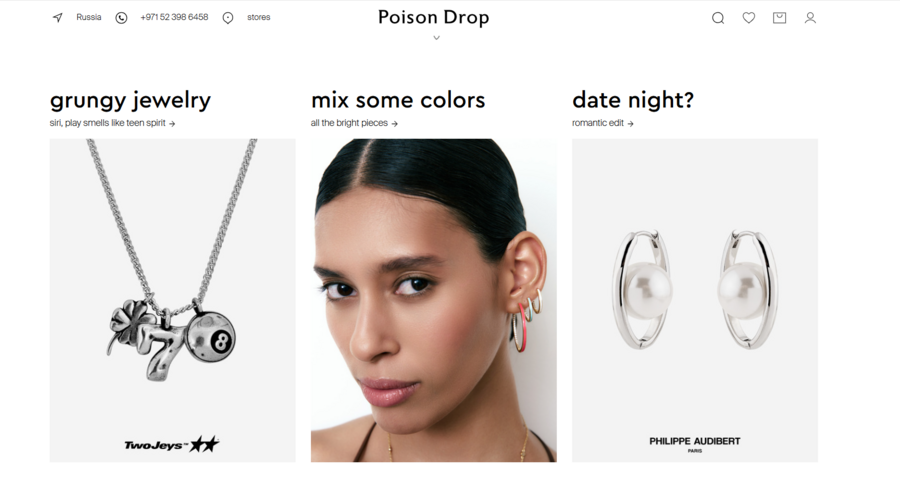
The website presents Poison Drop as a curated space for designer jewelry and accessories. Product categories, designer names, trends, and gift selections already communicate the brand’s positioning.
Brand Positioning
Poison Drop exists between jewelry retail, fashion, and lifestyle communication. The brand does not communicate only through rational product information such as material, price, or quality. Instead, it creates an emotional and cultural context around jewelry. Its core associations are individuality, boldness, aesthetics, transformation, personal choice, and self-expression. Poison Drop sells not only jewelry, but also the feeling of being visually and emotionally different. The brand positions jewelry as something that helps a person become more expressive, memorable, and confident.
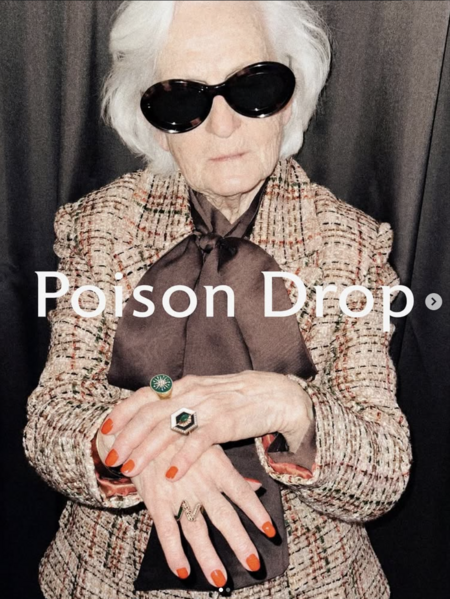
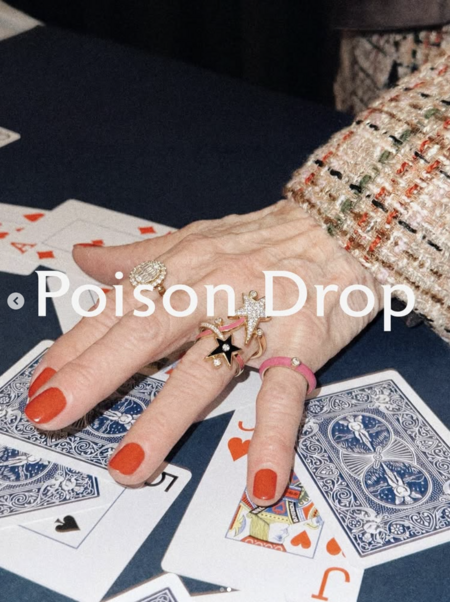
Campaign photos
Product as Image In Poison Drop’s communication, jewelry is shown not only as a decorative object, but as a visual tool that changes the whole image.
Jewelry as a Message In Poison Drop’s communication, jewelry works as a non-verbal sign. It can communicate mood, taste, aesthetic preferences, and personal identity without words. This makes the brand relevant for communication theory because its visual system is built around signs and meanings. Metal, stones, shapes, packaging, styling, model poses, and captions all contribute to the message. Poison Drop turns the purchase of jewelry into an act of self-presentation. The customer does not only choose an object; they choose what this object will say about them.


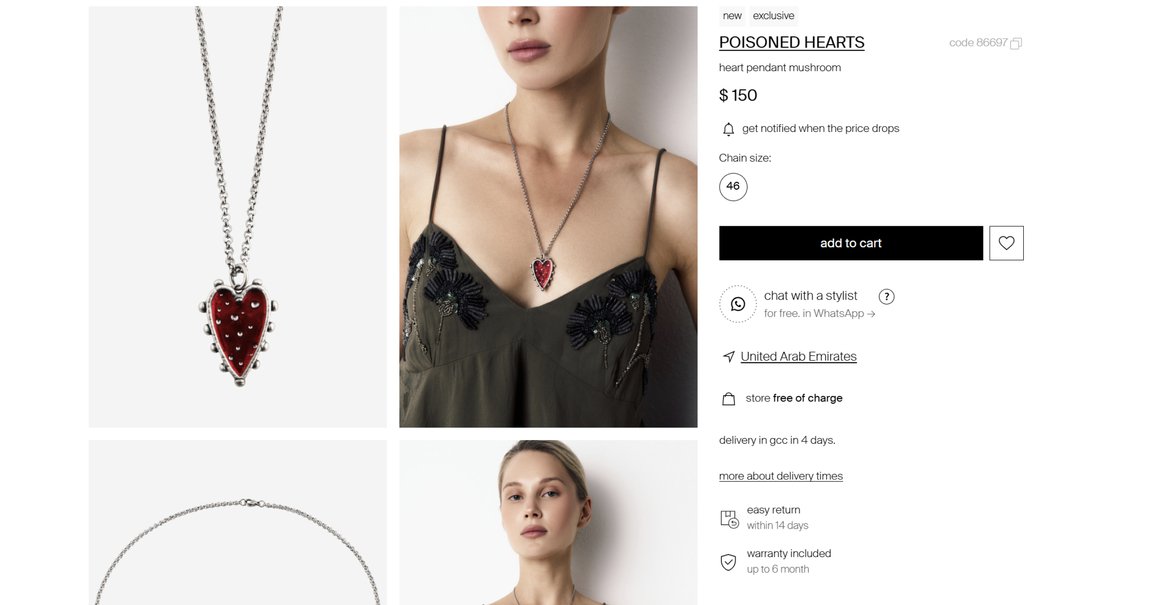
Product Categories The product range supports different emotional scenarios: everyday style, statement image, special occasion, and gifting.
Target Audience The main audience of Poison Drop consists of young and adult urban customers, approximately 18–35 years old, who are interested in fashion, design, beauty, lifestyle, visual culture, and self-expression. They usually live in large cities, actively use social media, follow trends, and are sensitive to visual codes, atmosphere, recommendations, and emotional brand associations. For this audience, jewelry is not only a functional accessory. It is part of personal style and a way to construct a desired image. Poison Drop’s customers choose jewelry because it helps them feel more confident, expressive, attractive, bold, or unique. Their needs can be divided into three groups: functional — to find stylish jewelry for an outfit, event, everyday look, or gift; emotional — to express mood, confidence, and individuality; social — to demonstrate taste and belonging to contemporary visual culture.
Audience Segments Poison Drop’s audience can be divided into several key segments. Fashion-oriented customers follow trends and use jewelry to make their outfits more expressive and memorable. They are interested in styling, new collections, seasonal aesthetics, and visual inspiration. Creative professionals include designers, stylists, photographers, SMM and PR specialists, art students, and people from creative industries. For them, jewelry becomes part of their personal brand and everyday visual identity. Gift buyers choose jewelry as a present for a partner, friend, or family member. For them, curated selections, gift certificates, packaging, and the feeling of a special choice are especially important. Overall, Poison Drop’s audience sees jewelry as a tool for self-expression, emotional storytelling, and identity construction.
Competitive Context
The project focuses on one existing brand — Poison Drop. However, a short overview of competitors helps us understand the brand’s position in the public communication field. Poison Drop can be compared with other designer jewelry brands that also use visual communication and emotional positioning: Viva La Vika, Saharok, and Avgvst. Viva La Vika is more bright and playful; Saharok is softer and more sincere; Avgvst is more intellectual, artistic, and symbolic. Compared to them, Poison Drop combines fashion retail, visual boldness, and emotional storytelling.
Competitors
Poison Drop stands out through a bold fashion-oriented image and the idea of jewelry as self-expression. The brand competes not only through products, but also through the type of personality and lifestyle it offers.
Communication Channels
Poison Drop communicates with its audience through a connected system of public channels: the official website, mobile app, Telegram, VK, Instagram, TikTok, YouTube, influencer collaborations, user-generated content, PR, and media mentions. These channels have different roles: the website and app provide product information and support purchase; social media create visual inspiration and engagement; influencers and UGC build trust; PR and media mentions strengthen brand awareness and credibility. Poison Drop’s communication can be described through the PESO model. Paid media includes targeted advertising, sponsored content, and influencer collaborations. Earned media includes reviews, media mentions, and organic recommendations. Shared media includes reposts, comments, tagged photos, and UGC. Owned media includes the official website, app, social media accounts, YouTube channel, product pages, and newsletters. Together, these channels help the audience discover the brand, emotionally connect with it, explore products, and move toward purchase.
The official website is the central owned media channel of Poison Drop. It combines product catalogue, brand positioning, designer selection, trend navigation, gift options, and purchase mechanics. The website works not only as a sales platform, but also as a visual environment. It helps the customer understand the brand’s aesthetic and choose jewelry through categories, filters, curated selections, and product images. The mobile app extends the shopping experience and makes the brand more accessible in everyday life. It supports product search, catalogue browsing, delivery, bonuses, and notifications.
Mobile app
Telegram* works as a more direct and intimate communication channel. It can be used for announcements, new drops, trend selections, product recommendations, sales, behind-the-scenes content, and short editorial texts. Compared to the website, Telegram feels more conversational. It can create the effect of being part of an inner circle.