
Block 1: Introduction
Duolingo is an American educational technology company founded in 2011 by Luis von Ahn and Severin Hacker. It is the world’s most downloaded language-learning application, available in over 40 languages and used by more than 500 million registered users globally.
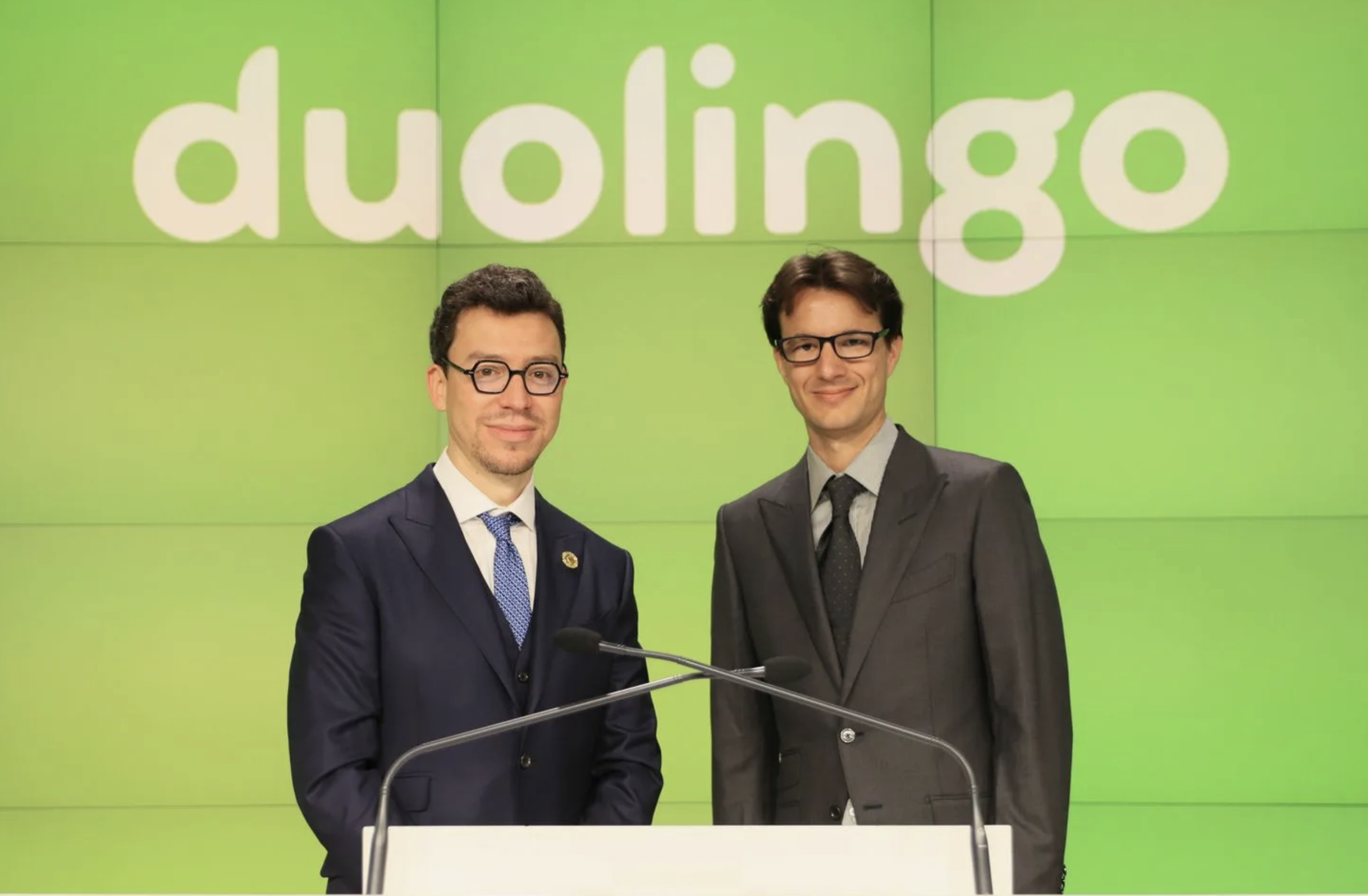
Luis von Ahn and Severin Hacker
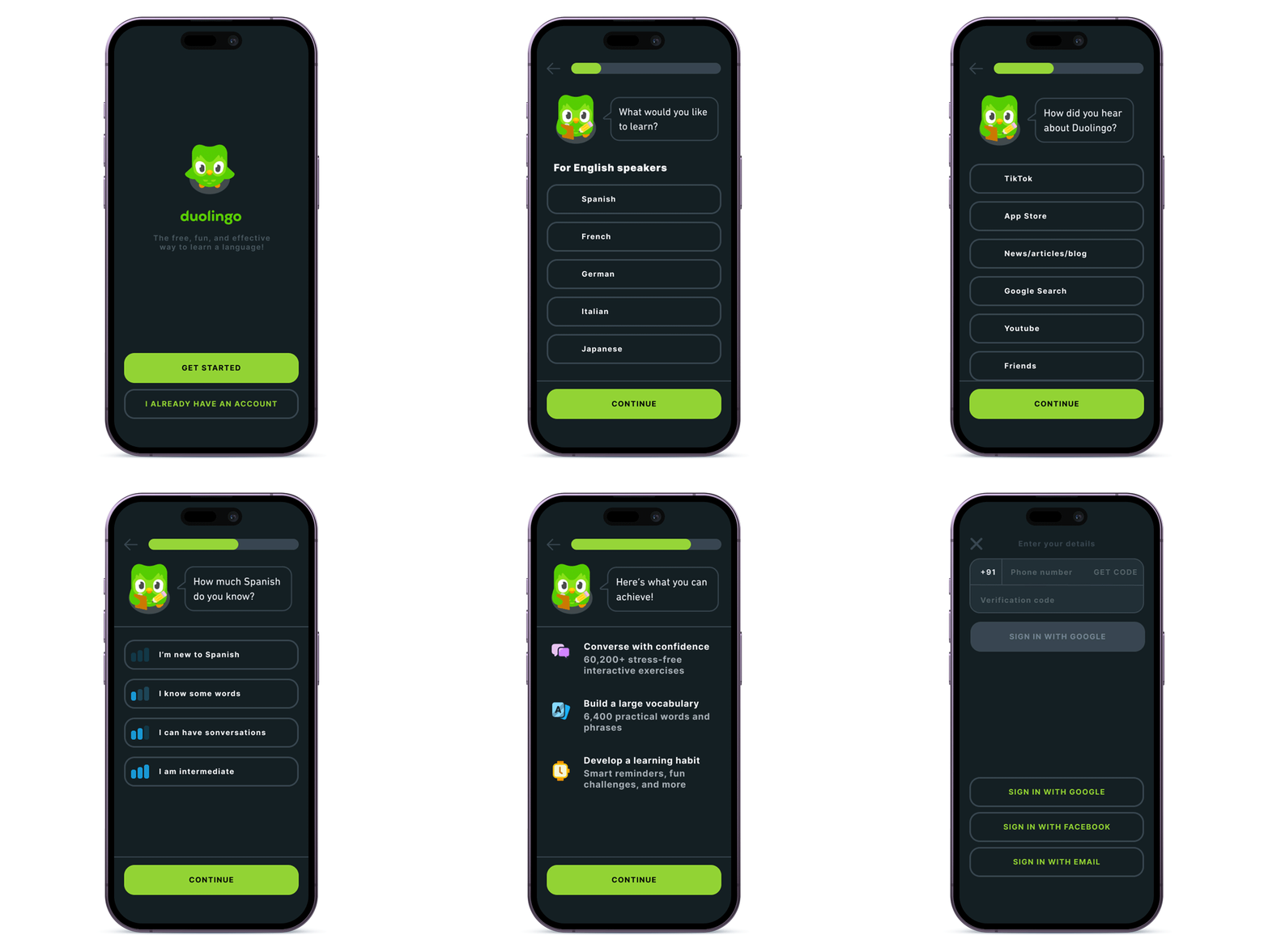
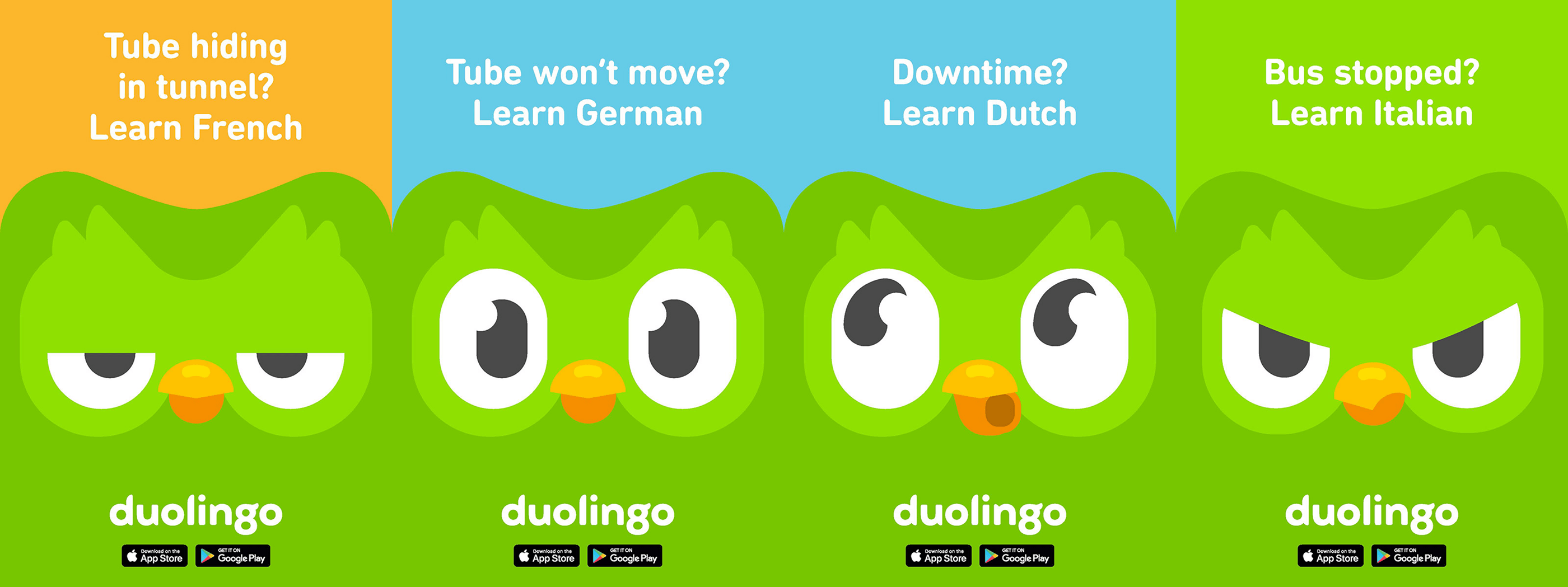
Duolingo positions itself around one central promise: language learning should be free, fun, and effective for everyone. It differentiates itself from traditional language education through gamification, short daily lessons, and a distinctly irreverent brand personality. The brand’s famous green owl mascot, Duo, has become one of the most recognizable figures in digital marketing — known for its passive-aggressive humor and meme culture presence.
App’s primarily targets:
• Gen Z and Millennials (ages 16–35) who are digitally native and respond to humor-driven content • Casual learners seeking accessible, low-commitment education • Students supplementing formal language education • Professionals looking to add language skills for career development • Secondary audience: parents choosing educational tools for children
The brand speaks to people who want self-improvement but resist traditional, boring educational formats.
Block 2: Communication Channels & PR Strategies
Duolingo operates across multiple platforms with a highly differentiated strategy per channel:
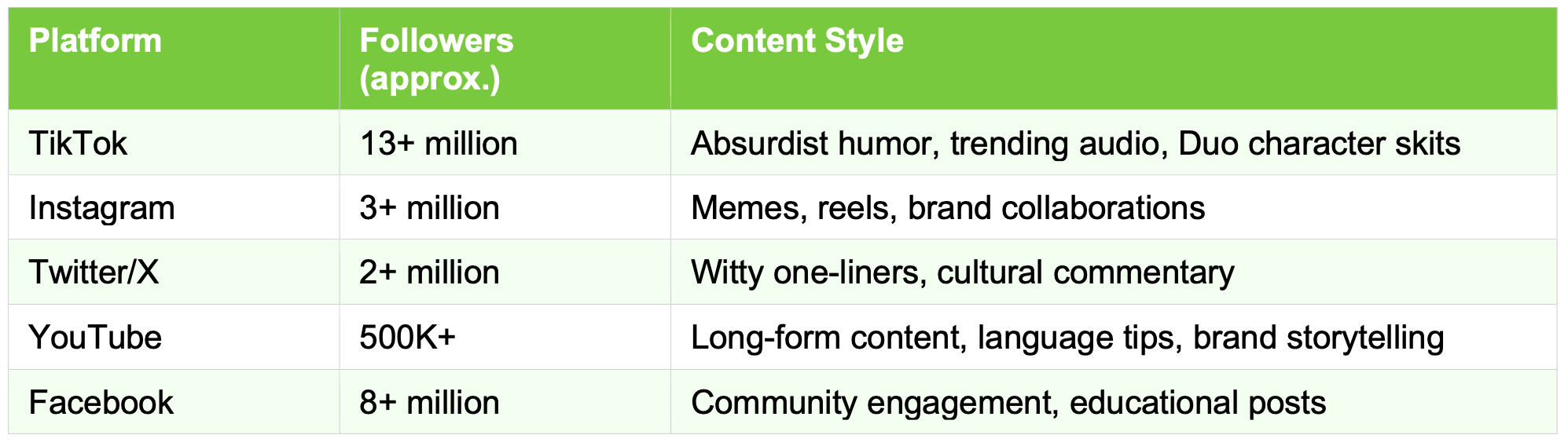
Also, it employs several notable PR and communication approaches:
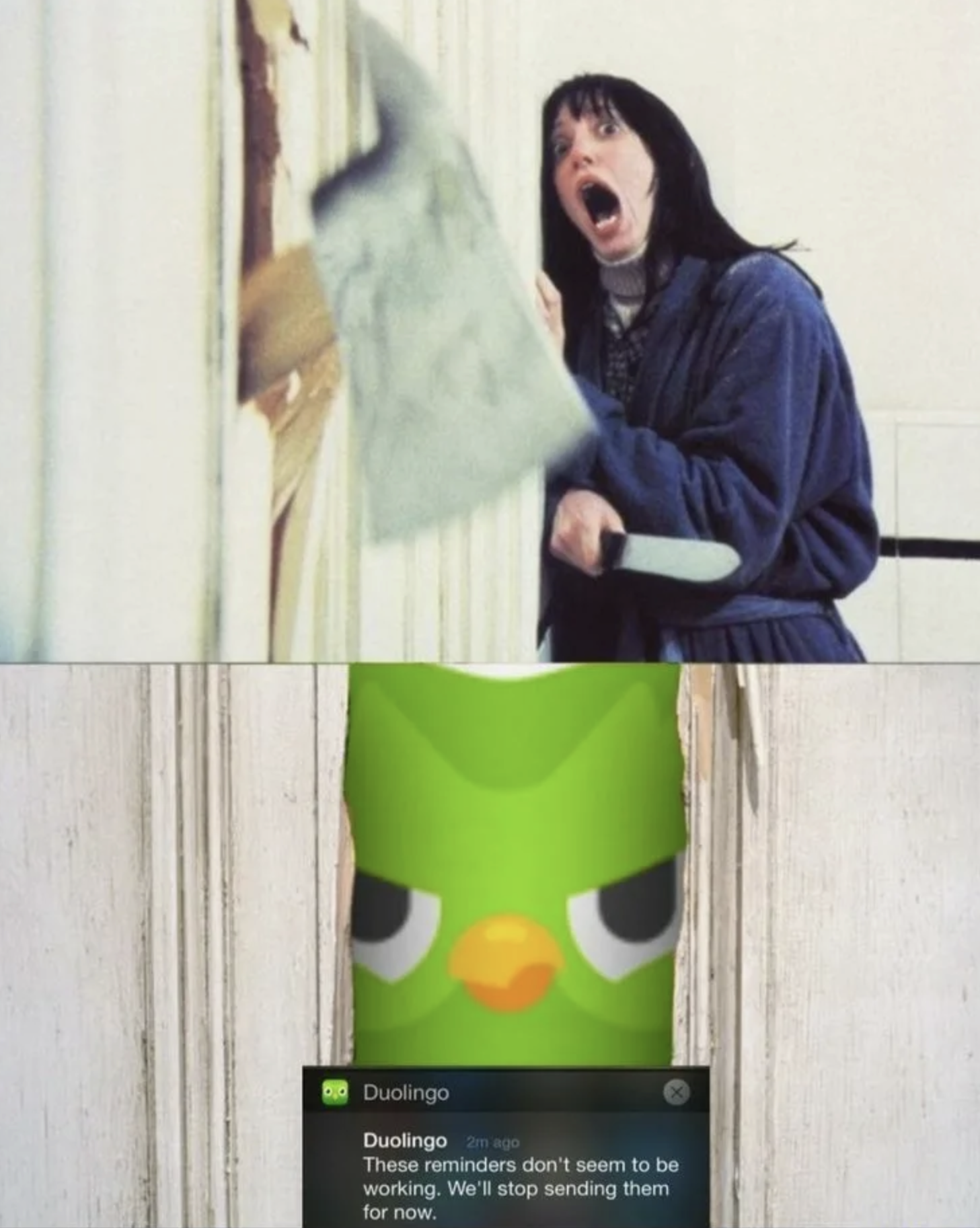
Meme Marketing
Duolingo was among the first major brands to build its strategy entirely around meme culture, particularly the «threatening owl» narrative where Duo reminds users to complete their lessons.
Character-Driven Marketing
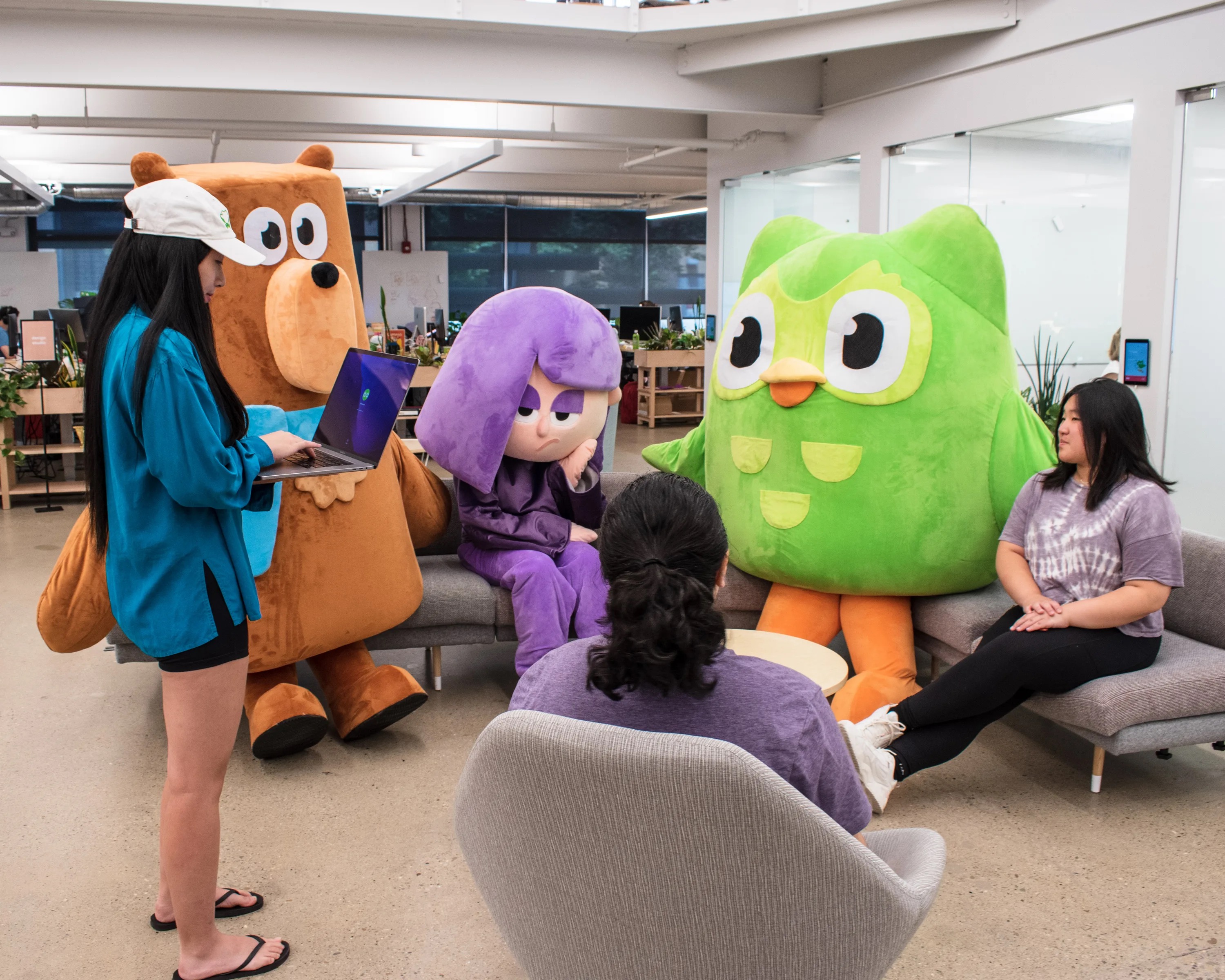
The Duo owl functions as a fully developed brand persona — appearing in real-world activorials, responding to users online, and participating in pop culture moments (Met Gala, sports events, celebrity interactions).
Duolingo sponsor ‘the other Qatar’ ahead of the controversial World Cup
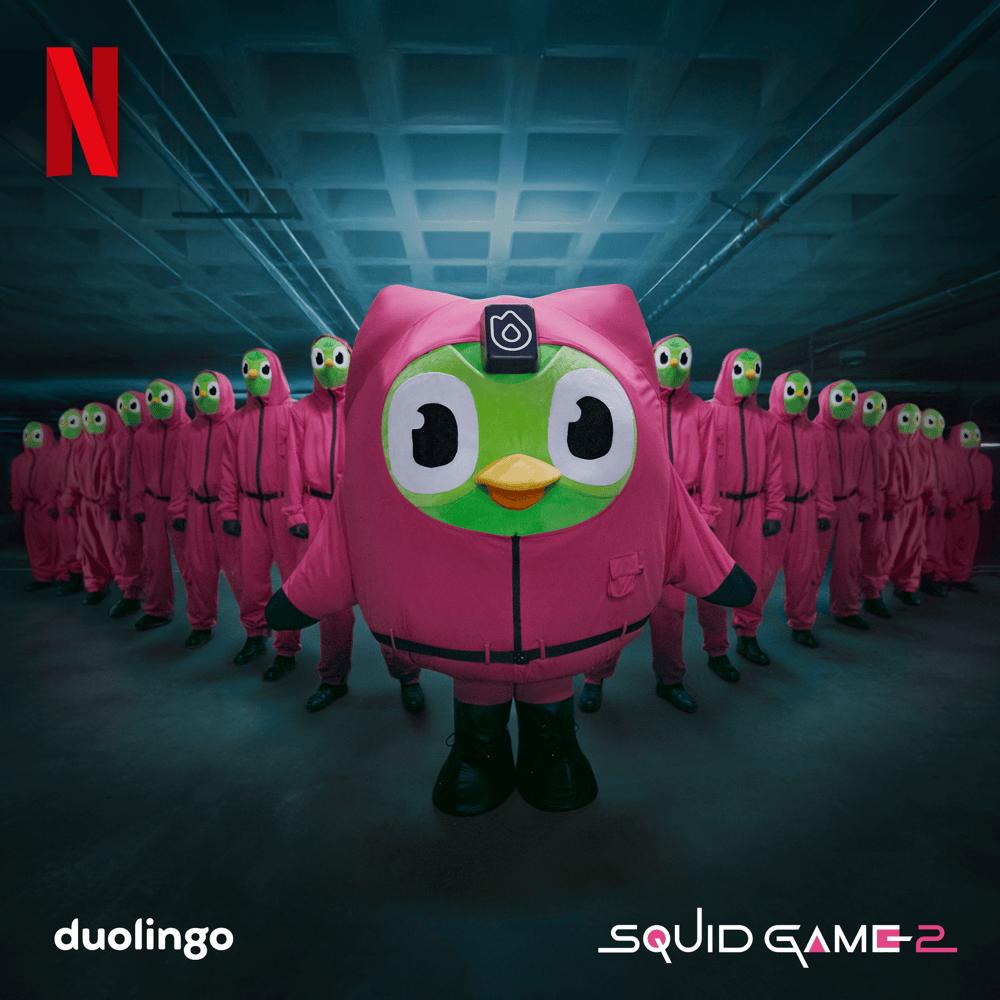
Brand Collaborations
Duolingo has partnered with Netflix series (Squid Game, Wednesday), musicians, and other brands to generate earned media and reach new audiences.
Reactive PR
The social media team responds in real-time to trending cultural moments, inserting Duo into conversations organically.
Crisis-as-Content
When Duo the owl was «killed» in a marketing stunt in early 2024, it generated massive press coverage and user engagement — turning a fictional brand death into a global conversation.
Block 3: Theoretical Framework
Theory 1: Uses and Gratifications Theory

Introduced by Blumler and McQuail, Uses and Gratifications Theory (UGT) argues that the audience is active and purposefully selects media to satisfy specific needs. Rather than asking what media does to people, it asks what people do with media.
This theory is highly applicable to Duolingo because the app and its social media presence are built around satisfying multiple user needs simultaneously: the need for entertainment, for self-improvement, for social belonging, and for identity expression. Users don’t just passively receive Duolingo content — they seek it out, share it, and co-create around it (memes, reaction videos, «Duo threatening» jokes).

Key gratifications Duolingo satisfies:
• Diversion — humor and entertainment through Duo’s personality • Personal identity — association with a brand that values self-improvement • Social interaction — shared meme culture creates community • Surveillance — language tips and educational content
Theory 2: Dialogic Theory
Developed by Kent and Taylor, Dialogic Theory argues that organizations should build quality relationships with publics through genuine two-way communication characterized by mutuality, empathy, risk, propinquity, and commitment.
Duolingo’s social media strategy, particularly on TikTok and Twitter, provides a compelling case for analyzing how (and how well) a brand can implement dialogic principles at scale. The brand frequently responds to user comments, engages in real conversations, takes creative risks, and demonstrates a genuine willingness to be vulnerable and humorous — all core elements of dialogic communication.
Block 4: Analysis
Applying Uses and Gratifications Theory
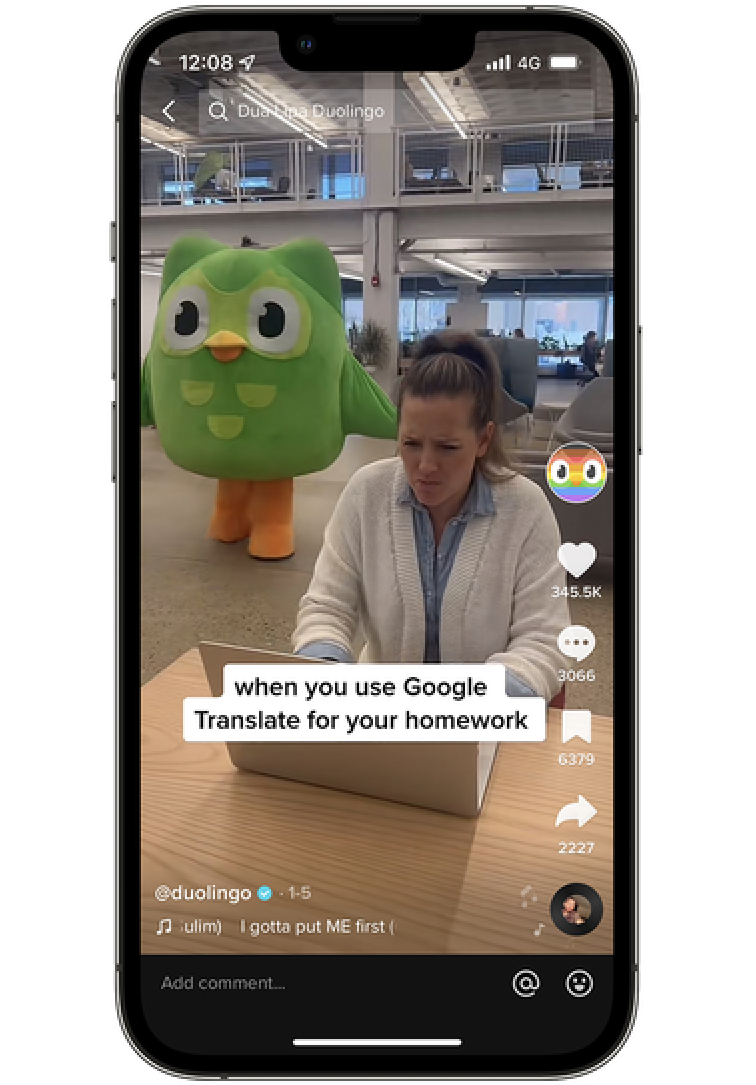
Duolingo’s TikTok strategy directly addresses the five categories of audience needs identified in UGT:

Diversion
Duolingo’s TikTok content almost never teaches language directly. Instead, it produces skits, dances, and absurdist scenarios featuring Duo. A typical video might show Duo attending a celebrity event or «mourning» a user who missed their streak. This content diverts users from routine and provides entertainment — satisfying the diversion gratification even among users who have never opened the app.
Personal Identity
Following Duolingo signals something about who you are — someone who values humor, self-awareness, and a non-traditional approach to self-improvement. The brand actively cultivates this identity marker. When users share Duolingo memes, they communicate something about their own personality.
Social Interaction
The «Duo is watching you» meme became a cultural phenomenon because it gave users a shared reference point. Comment sections on Duolingo posts are highly active, with users building on jokes together — creating a participatory community around brand content.
Surveillance
Embedded within the entertainment, Duolingo delivers genuine educational value — language facts, learning tips, and motivational content — satisfying users' need to stay informed.
Visual Evidence — UGT Application
The structure of Duolingo’s TikTok profile demonstrates multi-gratification design: • Pinned videos feature Duo in narrative scenarios (diversion) • Comment reply videos create dialogue (social interaction) • Occasional «did you know?» language posts (surveillance/learning) • Streak celebration content reinforces user identity (personal identity)
Applying Dialogic Theory