Navigation Menu
- Concept
- Innovator and Intellectual
- Hedonist and Imitator
- Hedonist and Innovator
- Imitator and Intellectual
- Commonplace Person and Careerist
- Conclusion
Concept
Absolut is a rare brand that has used the same visual motif for forty years: the shape of a medicinal bottle. Meanwhile, the meanings have changed radically, shifting from pop art to contemporary dance campaigns. Many describe Absolut’s communication as universal. But how exactly does one visual device manage to engage such diverse audiences? There is still no clear answer to this question. This study proposes to examine Absolut’s universality not as a given, but as a mechanism that can be described through a typology of consumer motivations.
Main question: how does Absolut build its visual communication so that the «you’re not like everyone else» appeal works on two axes simultaneously—display and self-realization?
The hypothesis is this: Brand universality is not achieved by «averaging» the message. It is achieved through the varying depth of reading of the same visual motif. Absolut appeals not so much to psychological archetypes as to a mode of interpretation—that is, to the viewer’s willingness to engage in deciphering the visual code.
It is important here to clarify which typology I am referring to. Gromova’s typology divides consumers not by age or income, but by values. For some, it is important to convey status and group affiliation (the demonstration axis). For others, it is more important to express inner world and uniqueness (the self-actualization axis). Absolut works for both groups because its visual code allows for both readings.
This willingness to embrace different interpretations unites the Hedonist, the Imitator, the Innovator, and the Intellectual. However, it excludes the Ordinary Person and the Careerist from the communication. Their motivation does not require interpretative work.
The visual material is sourced from three categories. The first category includes classic prints from various years from archives and retrospective publications. The second category features contemporary campaigns taken from the brand’s official press releases. The third category is a contrasting example of a communication failure that generated public controversy.
I deliberately reject a rigid schema of «one poster equals one psychological type.» The material is grouped by pairs of types that are united by a shared motivation or, conversely, represent different axes. Within each group, it is evident how different types perceive the same technique at varying depths. Gromova’s typology functions here as a heuristic tool, not a strict psychological classification. It establishes the coordinates of the axes but does not dictate the poster’s «belonging» to a specific type.
The work utilizes archived brand materials, press releases, and critical reviews of the campaigns. The goal is to demonstrate how Absolut’s visual material reveals the boundaries of this typology’s applicability to real-world advertising. The conclusion is not that «universality is illusory, ” but rather that „universality is conditional.“ It relies on the audience’s willingness to play the game. And it has a precise boundary—one that runs not between types, but between modes of consumption.
Innovator and Intellectual
Andy Warhol. Absolut Warhol. 1985 / Damien Hirst. Absolut Hirst. 1998 / Aleksandr Kosolapov. Absolut Kosolapov. 1990 / Nam June Paik. Absolut Paik. 1999.
Before discussing how Absolut engages with diverse audiences, it’s essential to start with the most complex group. The Innovator and the Intellectual are those who don’t need to demonstrate status or group affiliation.
A Path to Self-Actualization.
Neither type seeks validation from others. What matters to them is self-expression. The innovator requires a concept and irony. The intellectual craves cultural depth and intellectual reflection. Absolut speaks to them in the language of art. The bottle here is not a product—it is a prompt for an intellectual game.For the innovator, it is important to perceive the irony and appreciate the conceptual gesture.
For the intellectual, it is about decoding the cultural layer and feeling that they understood the joke others missed. Both types derive pleasure not from status or taste, but from the very process of interpretation.
The bottle here is not a product; it is a prompt for an intellectual game.
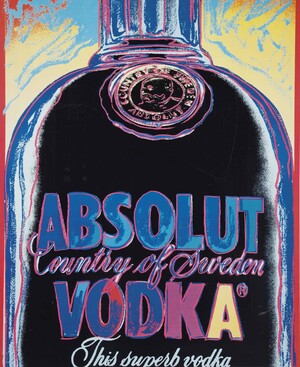
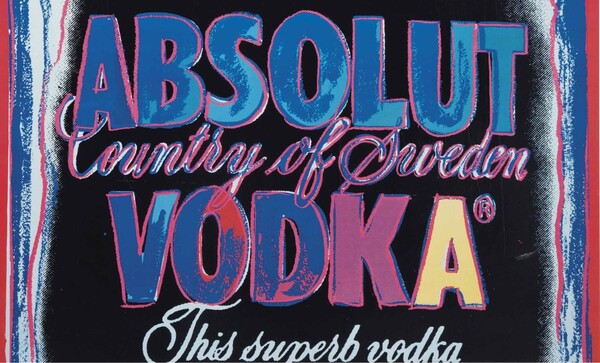
Andy Warhol. Absolut Warhol. 1985
This is Absolut’s first and most pivotal artistic gesture. Warhol took a medicinal bottle and transformed it into a piece of pop art. For the Innovator, the irony itself is key: an artist who spent his life exploring the relationship between art and money ends up creating an advertisement for vodka and turning it into an art object. For the Intellectual, the value is created not by the image, but by the narrative: Warhol, the auction house, the museum, the legacy. He values not the bottle, but the discourse on art that it sparks.
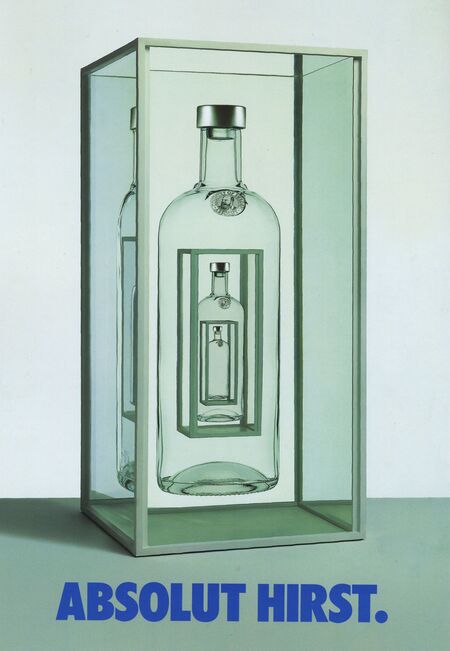
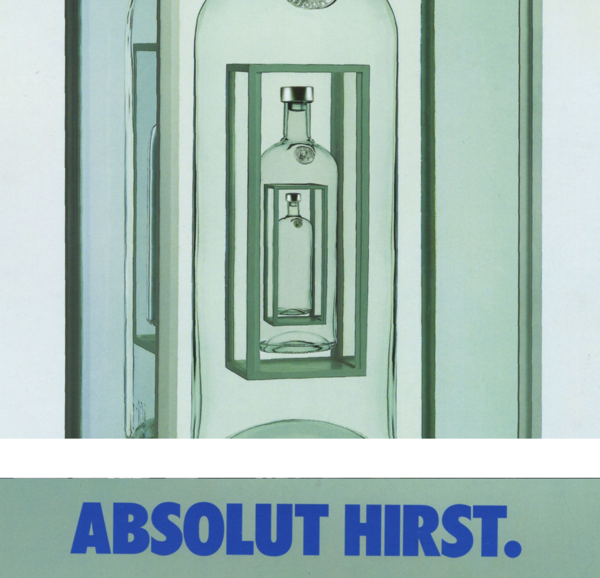
Damien Hurst. Absolut Hirst. 1998
Hirst is the most provocative artist among those who have worked with Absolut. His method involves placing an object in a context that alters its nature. When a bottle is displayed in a showcase or given an «apothecary» aesthetic, it stops being a beverage and becomes an exhibit. For the Innovator, the irony is key: an artist who critiques commerce takes money from a brand to create work that simultaneously advertises and questions the boundaries of art. For the Intellectual, this dual gesture is significant: Hirst doesn’t just «sell out»; he plays with the situation, and the viewer who understands this gains intellectual pleasure.
Alexander Kosolapov. Absolut Kosolapov. 1990
This is pure social art. Kosolapov takes the language of Soviet propaganda and inserts a capitalist product into it. The result is an ironic hybrid: a worker featuring Absolut looks simultaneously absurd and recognizable. For the Novator, the core appeal is the play on ideology itself—a vodka brand invading the space of Soviet myth. For the Intelligentsia, the significance lies in the cultural layer: they understand what social art is, recognize the poster’s style, and grasp exactly what the artist is satirizing. This isn’t merely «funny»; it is an intellectual reflection on the history and visual language of the era.
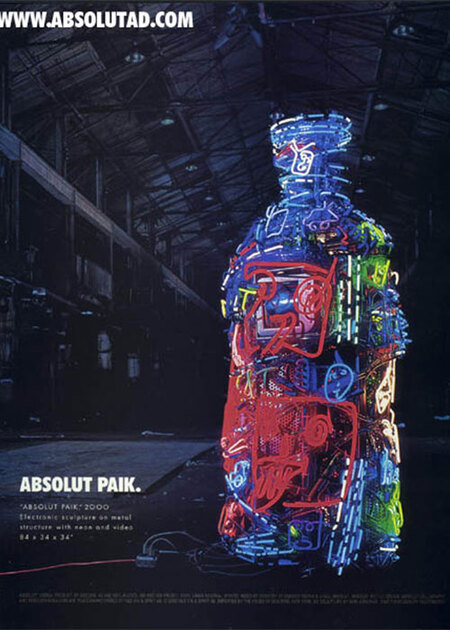
John Pike—a pioneer of video art and an artist who transformed televisions and neon into art—does not merely paint a bottle here; he constructs it from technology. For the Innovator, this is a conceptual gesture: the brand yields its object to an artist who reconfigures it into media sculpture. For the Intellectual, context is paramount: Pike worked at the intersection of art and technology, and his Absolut is not an advertisement, but a statement on media, light, and image. The bottle here becomes an art object existing within the gallery space, rather than on a magazine page.
The Hedonist and the Imitator
TBWA. Absolut Idol. 1990s / TBWA. Absolut Apeach. 2005 / Absolut Born to Mix. 2025 / Absolut Disco. 2008
In the previous section, the bottle required intellectual engagement from the viewer: to assess the irony, decipher the cultural code, and enter into a dialogue with the artist. Here, the mechanics shift. Absolut moves from a mode of interpretation to a mode of sensation. Color, taste, fame, and movement operate directly, without heavy intellectual demand.
Here are the demonstrations.
Both types present themselves externally, but for different reasons. The Hedonist values enjoyment and status. The Imitator values group belonging and making the correct choice. Absolut appeals to both through sensation. Color, taste, fame, and movement are read directly, without complex interpretation. For the Hedonist, this is a promise of pleasure. For the Imitator, it is a signal: «I am with those who are in the know.»For the Hedonist, it promises pleasure and celebration.
For the Imitator, it signals a «correct» choice and belonging to those who live vibrantly. The intellectual load is removed, leaving an emotional appropriation. Furthermore, there is a trajectory within this section: from direct taste to the social dimension of pleasure, and then to bodily movement.


TBWA. Absolut Idol. 1990s
Here, the same «silhouette in context» mechanic is at play, but with a different emotional charge. The bottle is assembled from two elements: a limousine (the cap and neck) and a crowd of fans surrounding the car (the bottle’s body). The inscription «Absolut Idol» functions here not as a name, but as a judgment. The word «Idol» transforms the product into an object of worship. For the Hedonist, it is a pure promise of celebration, glory, and belonging to the «beautiful life.» The limousine and the crowd represent an image of success that one wishes to adopt. For the Imitator, the signal is even stronger: «everyone wants to be near this, so I must as well.» This is the logic of the herd, presented in a light, celebratory form. The poster doesn’t require intellectual effort; it strikes directly at the desire to be part of something larger.
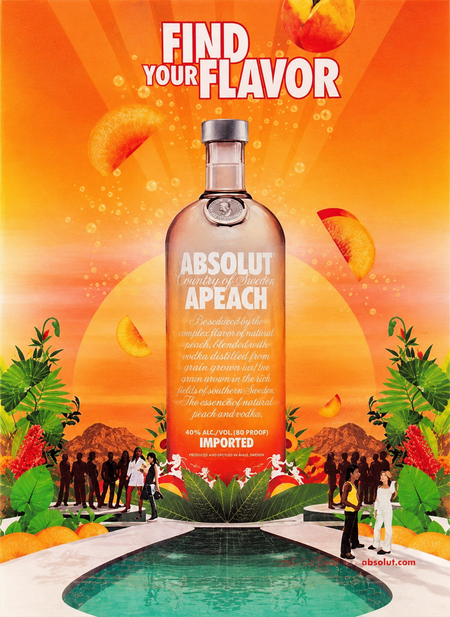

TBWA. Absolut Peach. 2005
Here, pure hedonistic aesthetics at play—no riddles or puns. Color, fruit, and vacation atmosphere promise taste, freshness, and pleasure. However, two slogans set the perception in different ways. «Find Your Flavor» appeals to the Imitator. For them, the choice from the offered list, group belonging, and the signal of «I chose correctly» are what matter. «Surrender to Apeach» appeals to the Hedonist. The word «surrender» strips away rationality and suggests a simple physical experience: don’t think, just try. The same product, but different emphases within a single motivation: choice versus temptation.
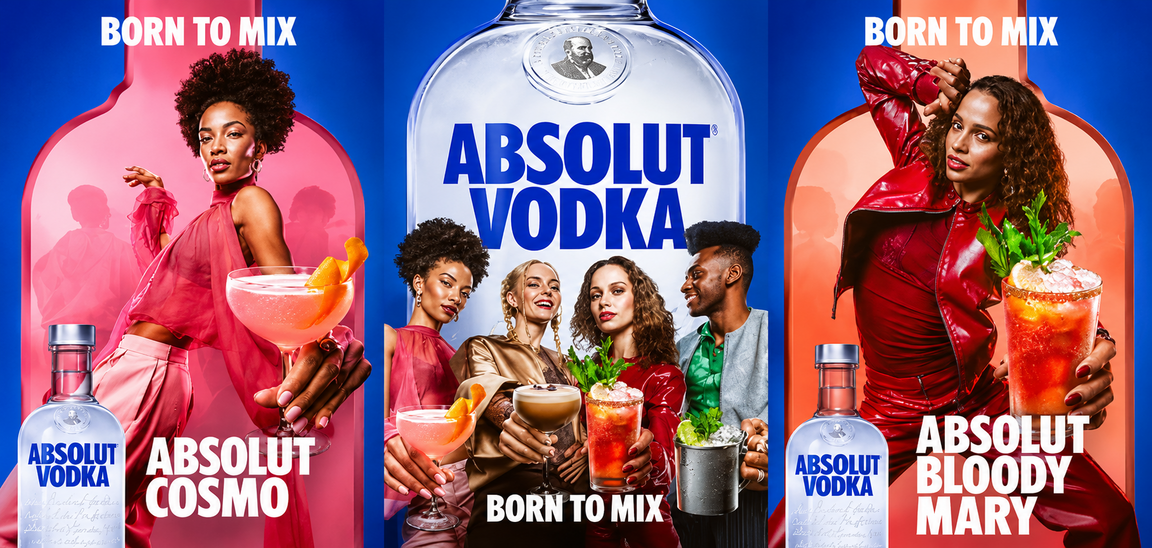
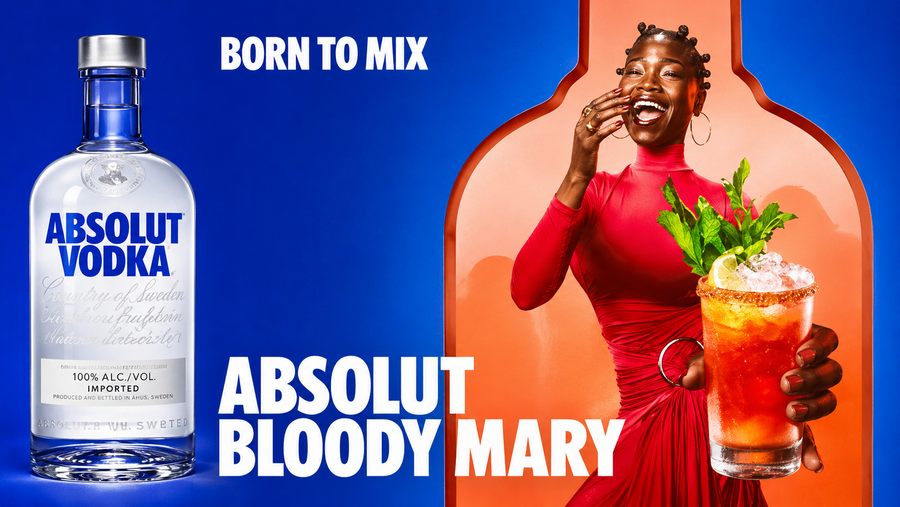
Absolut Born to Mix. 2025
Here, the transition from static to dynamic occurs. Dance becomes a metaphor for mixing, and the cocktail its literal embodiment. The slogan, «Born to Mix, ” operates on two levels simultaneously. On the surface, it refers to mixing beverages: vodka, juice, ice. However, in the 2025 campaign, Absolut expanded this meaning: „mix“ also signifies the blending of people, cultures, and movements. For the Hedonist, it is an invitation to the party and corporeal pleasure: move, try, enjoy. For the Follower, it is a signal of belonging to a trend: „everyone is mixing now, and so am I.“ The poster does not require interpretation—it demands participation in the movement.
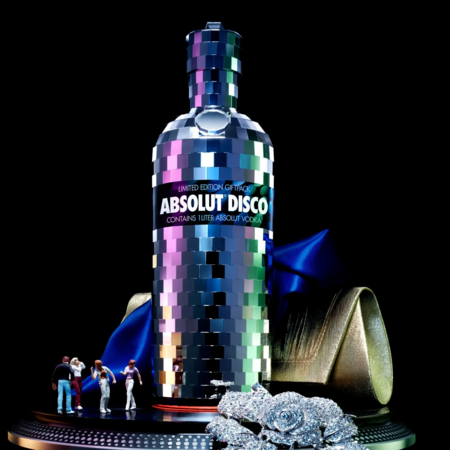
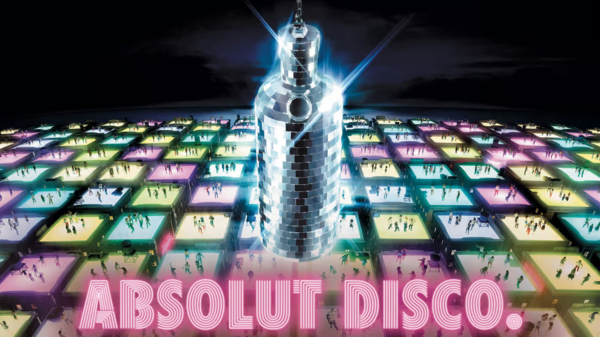
Absolut Disco. 2008
There is no riddle, no cultural reference here. Only a pure visual signal: shimmer, light, movement. The bottle literally transforms into a disco ball—a symbol of partying and dancing. For the Hedonist, this is a direct promise of pleasure: celebration, music, savoring the moment. There is nothing to decipher; it is enough to feel the atmosphere. For the Imitator, a different mechanism at play: this is a limited edition run that must be acquired. The feeling of belonging to something special and «correct» is stronger here than with typical taste advertising.
Hedonist and Innovator