Navigation
- Piu-pau-po, Topic One, Film One: 1.1 Who are these pirates? Tell me about the Oscar for CGI! 1.2 What is the goal? And about the references 1.3 What are the challenges? 1.4 How did you end up making it? . Backstage insights.
- Po-pau-piu, same topic, Film Two, therefore, different: 2.1 Don’t know if there are awards, just briefly 2.2 References, goals 2.3 Basically the same
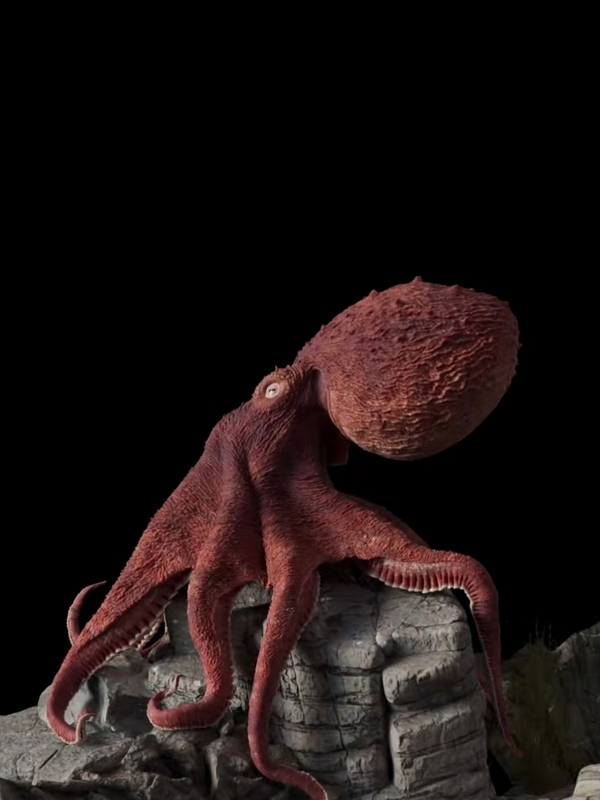
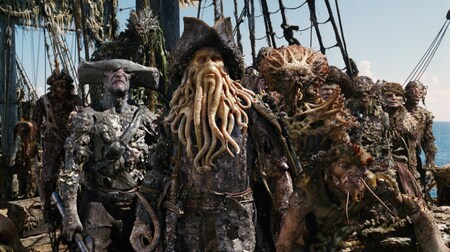
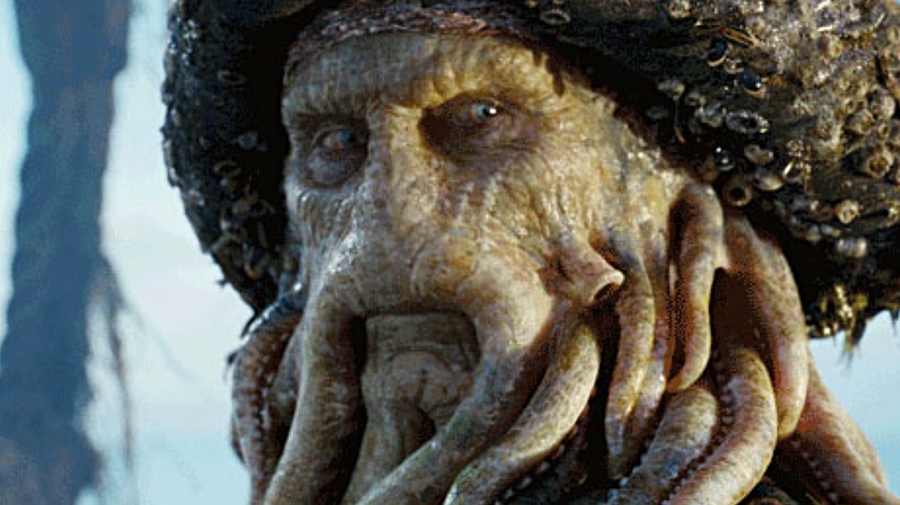
Tentacles—a visually challenging effect to render, requiring meticulous attention to detail: each tentacle must appear pliable within the frame while simultaneously replicating the octopus’s movement patterns in a way that preserves the inherent nature of those tentacles. Attention to the overall movement of the limbs is also crucial, as overly chaotic or, conversely, too structured behavior will destroy the photorealistic effect that the creators aimed for in both David J.'s beard and the octopus itself.
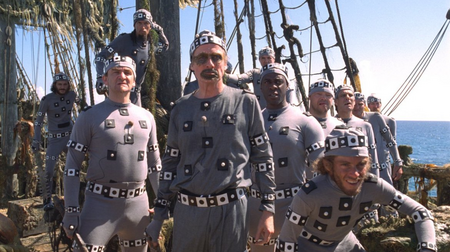
The tentacles, as a subject for study, attracted attention due to the difficulty of realizing them: according to [omitted text], the only references available were film stills from Godzilla, and there was a need to tie the tentacles to the actor’s facial expressions using iMoCap. In the NUS project, the abundance of references complicated the task, requiring the precise replication of minute details—from micro-movements to texture. Overall, pliable, yet not amorphous, living objects that look good on camera are interesting for analysis because abrupt or jerky movements can disrupt the perception of the character as a whole, necessitating a careful approach. Primarily, the interest in the behind-the-scenes aspects of this work justified the choice of the theme.
To learn about the process of creating CG effects, I consulted archival footage, site photographs, and interviews. Analyzing such sources is most suitable for visual assessment and examining the technical components within the scope of my research.
While reading the material and watching film clips, a question arose that later formed the basis of my hypothesis: What difference in approach and technology allowed the shift from imitating continuous, realistic tentacle movement—which relied on rigid segmentation—to simulating soft-body physics?
Different goals and criteria… for some, the priority was maintaining correct dynamics using…; for others, it was creating unique motion with micro-movements…
Pontius Pilate of the Calypso Sea
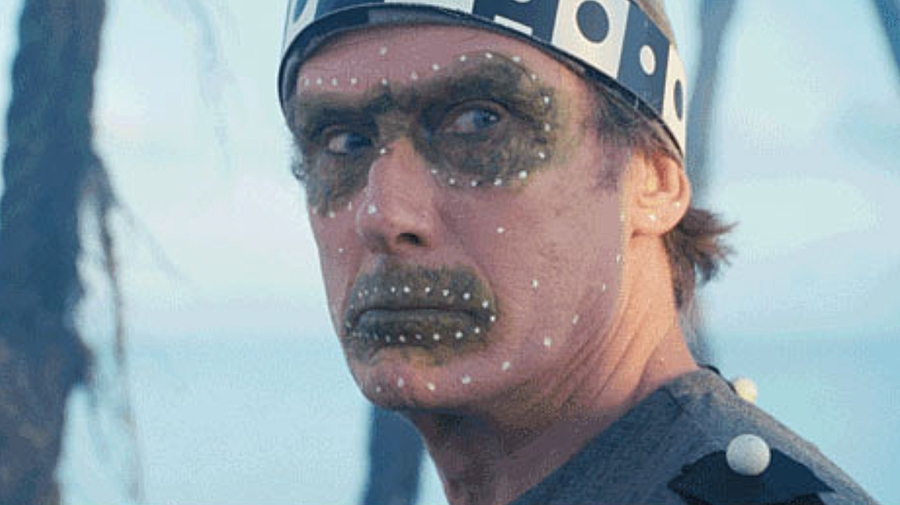
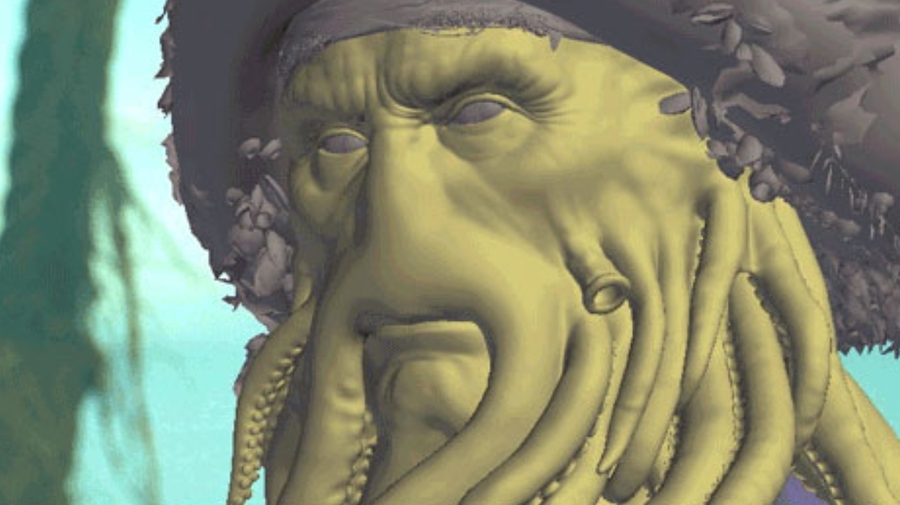
Title 11
How to create a photorealistic CG octopus: visual effects of «Remarkably Bright Creatures» // befores & afters. — 2026. — May 19. — URL: https://beforesandafters.com/2026/05/19/how-to-make-a-photoreal-cg-octopus-the-vfx-of-remarkably-bright-creatures/ (Accessed: Nov 13, 2026).
The CGI magic behind the octopus character from «Remarkably Bright Creatures» // 80.lv. — URL: https://80.lv/articles/the-cgi-magic-behind-remarkably-bright-creatures-octopus-character#1 (Accessed: Nov 13, 2026).
Retro RenderMan: ILM’s stunning Davy Jones // befores & afters. — 2020. — August 19. — URL: https://beforesandafters.com/2020/08/19/retro-renderman-ilms-stunning-davy-jones/ (Accessed: Nov 13, 2026).
Behind the Scenes // DVD Talk. — URL: https://www.dvdtalk.com/features/behind_the_scen.html#1 (Accessed: Nov 13, 2026).
Davy Jones' Beard: Hard Tentacle Simulation // ACM Digital Library. — URL: https://dlnext.acm.org/doi/epdf/10.1145/1179849.1179995 (Accessed: Nov 13, 2026).
rare