Navigation
- Concept
- Space of Movement and Ritual
- Fluid Form and the Object World
- Face, Gesture, and the Transformation of the Canon
- Conclusion
- List of Textual Sources Used
- Image Source References
Concept
This visual study is dedicated to Aegean art—the unique phenomenon of the Cretan-Mycenaean civilization, whose artistic language fundamentally diverges from strict monumental canons. The choice of this topic stems from a desire to deeply investigate an aesthetic that focuses not on stasis, but on movement, natural elements, bodily freedom, and the dynamism of ritual, making Aegean art an outstanding occurrence in the history of world culture.

Minoan Culture. Fragment of the fresco «Ship Procession» («Flotilla») from the Western Palace in Akrotiri (Thera). 16th century BCE. National Archaeological Museum, Athens.
Research Objective—To analyze the aesthetics of Aegean art, identify the key characteristics of its plastic language, and visually demonstrate how artists of the Minoan and Mycenaean worlds worked with the dynamism of the human body, natural motifs, and spontaneous gesture.
Hypothesis—Aegean art focuses on capturing the unstable moment, natural elements, and the spontaneous movement of the human body. The visual material substantiates this hypothesis through a detailed analysis of compositional choices, perspectives, and plastic motifs within the Cycladic-Minoan culture’s monuments.
Material Selection Principles and Categorization
The study deliberately excludes heavy fortification and architecture to maintain a strict focus on frescoes, vase painting, glyptic art, and small-scale sculpture. The entire visual material is broken down into logical blocks that track the evolution of form and gesture—from the freedom of Minoan movement to the transformation of the canon in the Mycenaean period.
Principle of Selecting and Analyzing Text Sources
The theoretical foundation of this work is built upon fundamental studies in Aegean art archaeology and history, museum collection catalogs, and authoritative art historical articles. The principle of source selection is based on their scholarly reliability and the author’s critical interpretation, which precludes simple compilation: all theoretical theses are substantiated by verified data, and any rare borrowings are formatted in strict accordance with academic standards.
Space of movement and ritual
This small fragment of fresco demonstrates the apex of Minoan freedom in rendering the human face. Despite the conventional profile depiction with a wide-open eye facing «forward,» the master creates a strikingly vivid, individual image: the upturned nose, bright lips, carelessly falling locks, and the ritual knot at the nape of the neck are imbued with an immediacy and grace that would soon yield to the rigid Mycenaean canon.
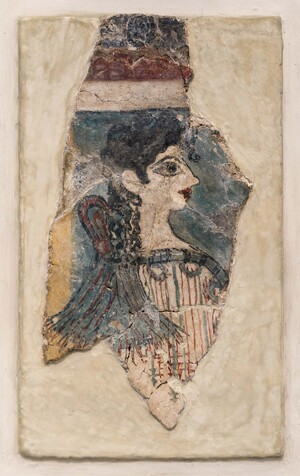
Minoan culture. Fragment of a fresco, «The Parisian Woman» (La Parisienne), from the Palace of Knossos (Crete). Circa 1450–1375 BCE. Archaeological Museum, Heraklion.
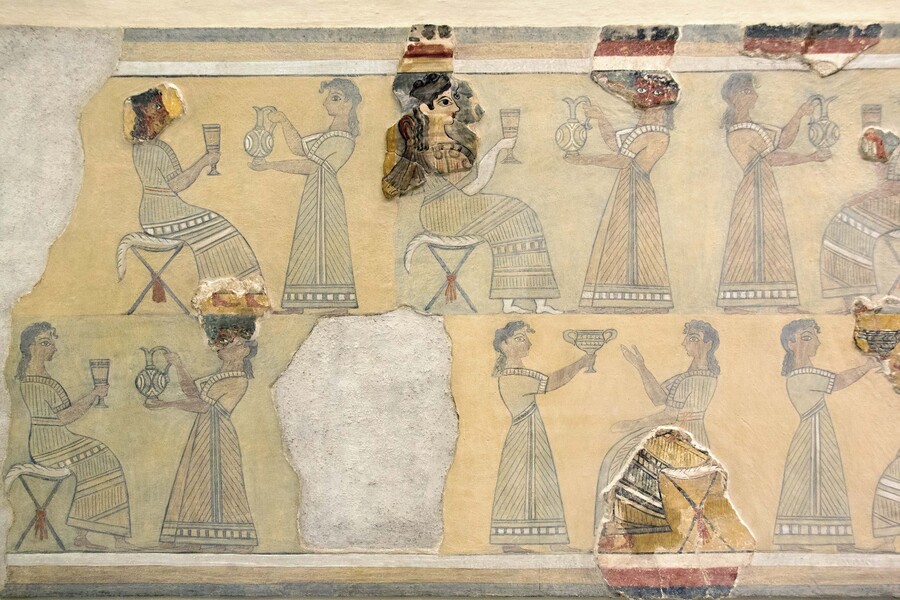
Three female figures convey dynamism through rhythmic, stylized hand gestures and serpentine strands of hair. Masters of the Mycenaean circle move away from static representation, capturing a moment of living interaction and expressive dialogue against a rich blue background.
Mycenaean culture. Fragment of a fresco depicting female figures («Mycenaean Women»). 13th century BCE. National Archaeological Museum, Athens.
A key image of Minoan culture, capturing the culminating, ephemeral moment of an acrobatic leap over an animal. The curved back of the bull and the flying figures of young men and women emphasize absolute freedom from the laws of frontality and symmetry.
Minoan culture. Fragment of the fresco «Games with the Bull» from the Palace of Knossos (Crete). Circa 1450 BCE. Archaeological Museum, Heraklion.
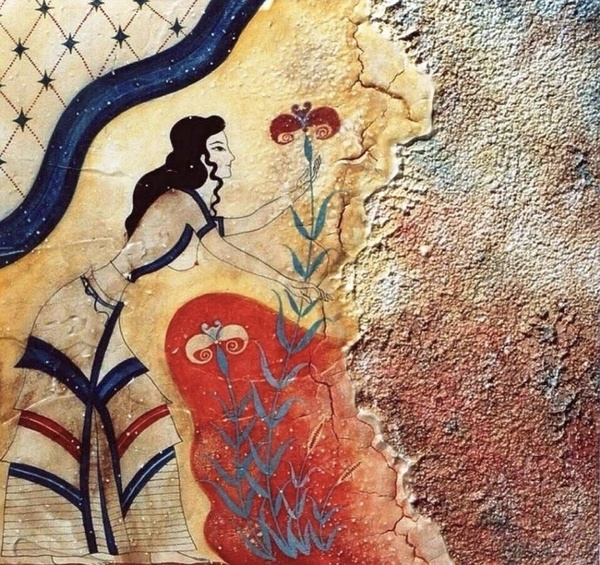
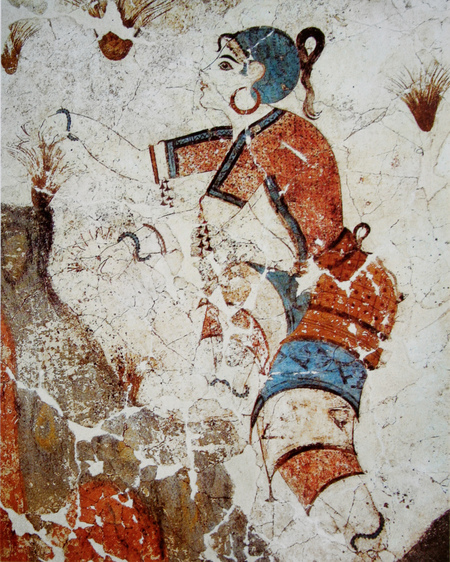
Minoan and Cycladic-Minoan traditions. Scenes of ritual saffron harvesting: frescoes from the Palace of Knossos (Crete, 16th–15th centuries BCE) and the Xeste 3 complex in Akrotiri (Thera, 16th century BCE).
This paired narrative demonstrates the unity of sacred initiation ritual in the Aegean world. Whether it is the stylized, fluid plasticity of a Knossian master or the psychologically precise gesture of a Cycladic female gatherer, the art of civilization rejects stasis: the curves of bodies, the lines of hairstyles, and the movement of hands are all governed by a singular natural and ritualistic rhythm.
Fluid form and the material world
In the masterpieces of Aegean vase painting, the master artists execute a revolutionary shift wherein the ornamentation completely subjugates the form of the objects. Whether it is a mainland amphora or a Cretan flask/jug, the octopus tentacles and marine motifs organically wrap around the body, creating the illusion of continuous movement in the watery realm and completely dissolving the boundary between the flat drawing and the three-dimensional plasticity of the form.
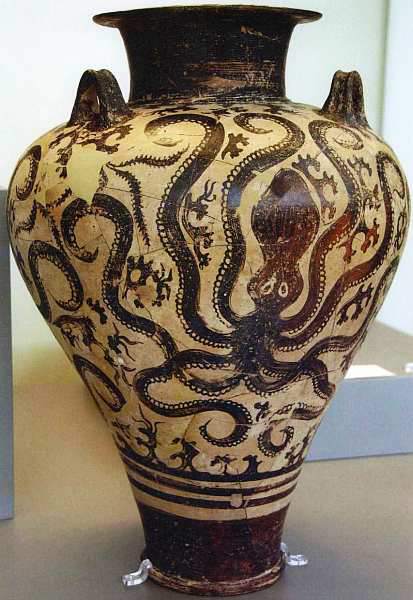
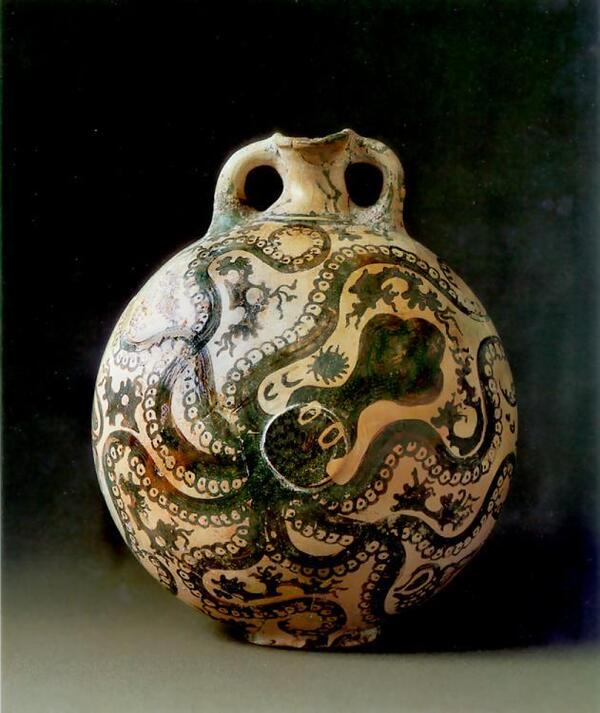
Minoan and Mycenaean traditions. Amphora with an octopus from Prosymna (15th century BCE, National Archaeological Museum, Athens) and vessels in the «sea style» from Paleastro (Crete island, c. 1450 BCE, Archaeological Museum, Heraklion).
Intricate geometric, floral, and wave motifs (spirals, rosettes, flowing ribbons) are applied using light pigments onto a dark, almost black background. The thin-walled vessels seem to pulsate and unfurl from within, foreshadowing the organic freedom of the later «sea style.»
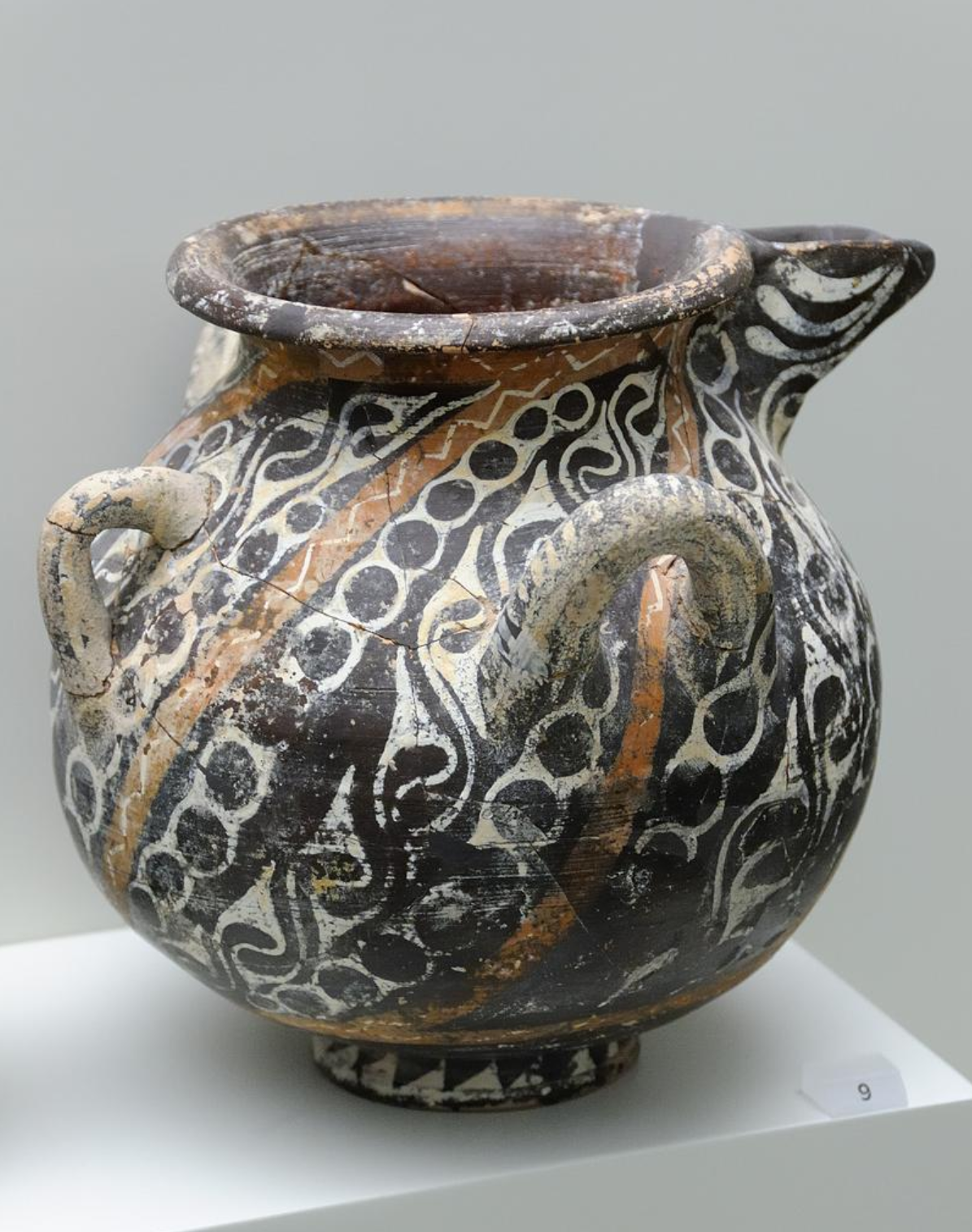
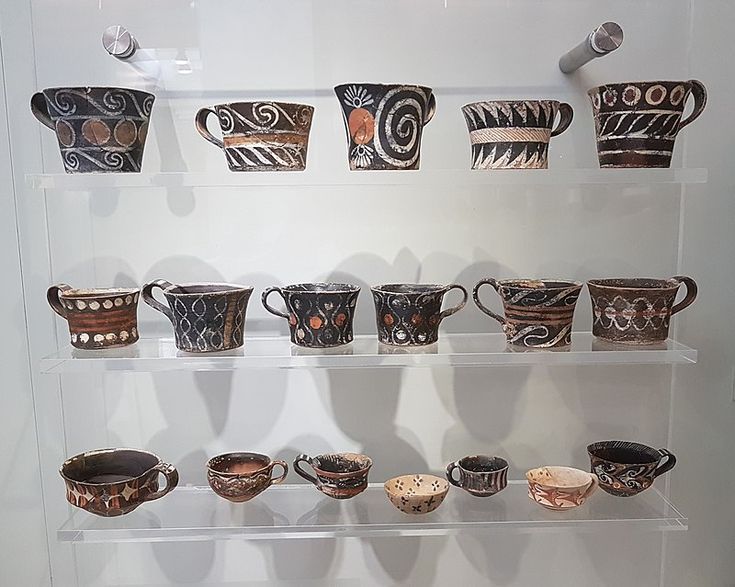
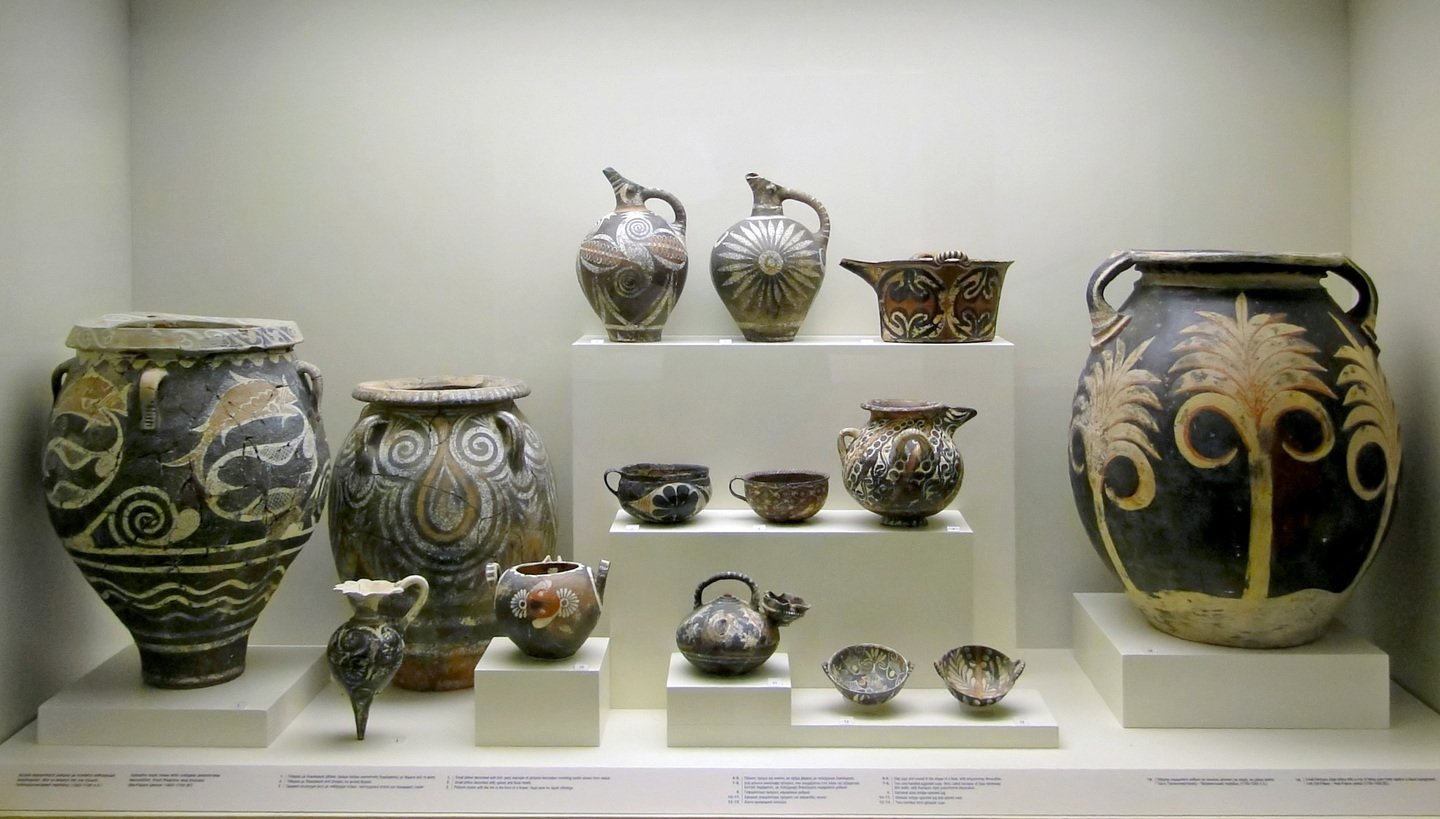
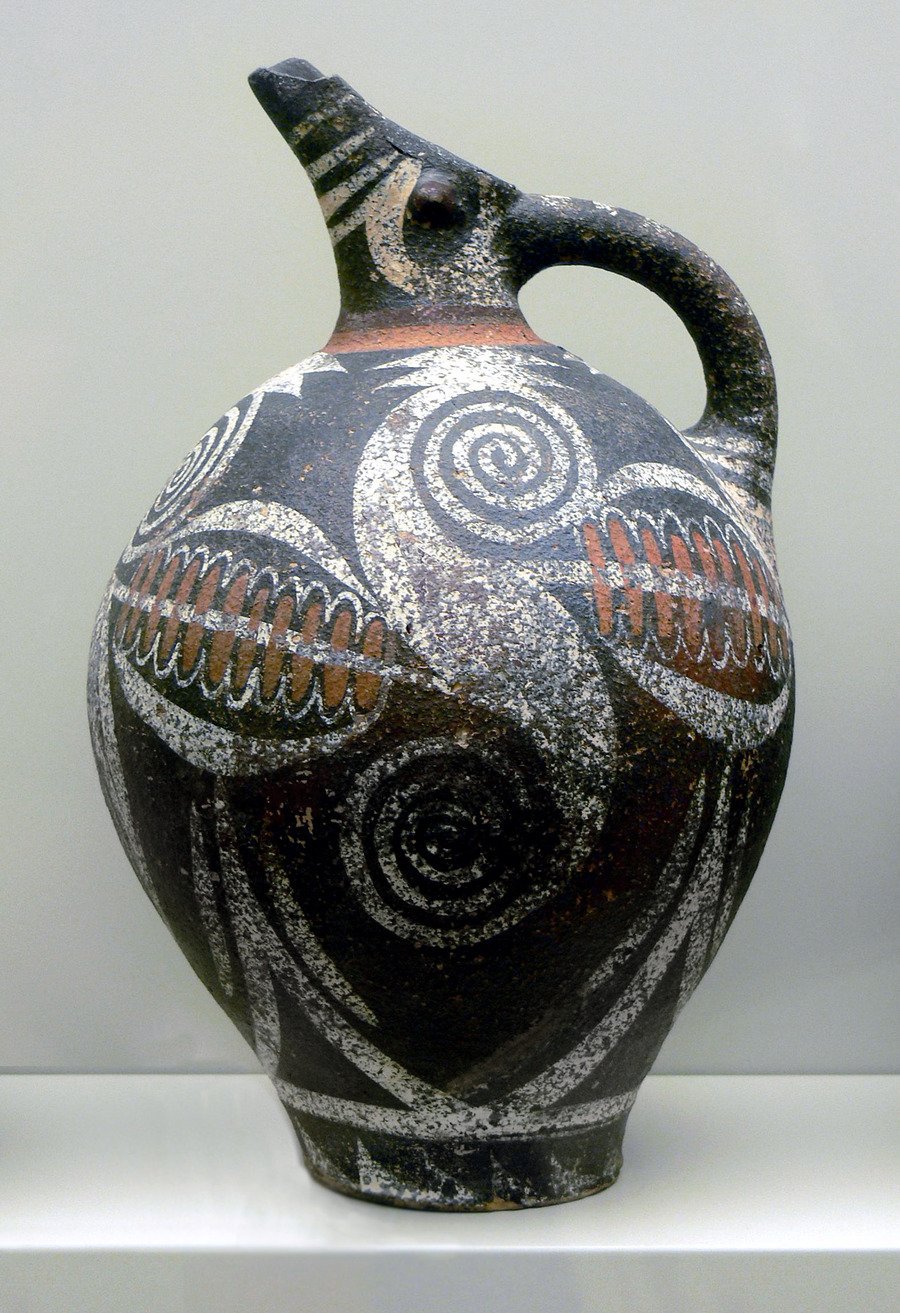
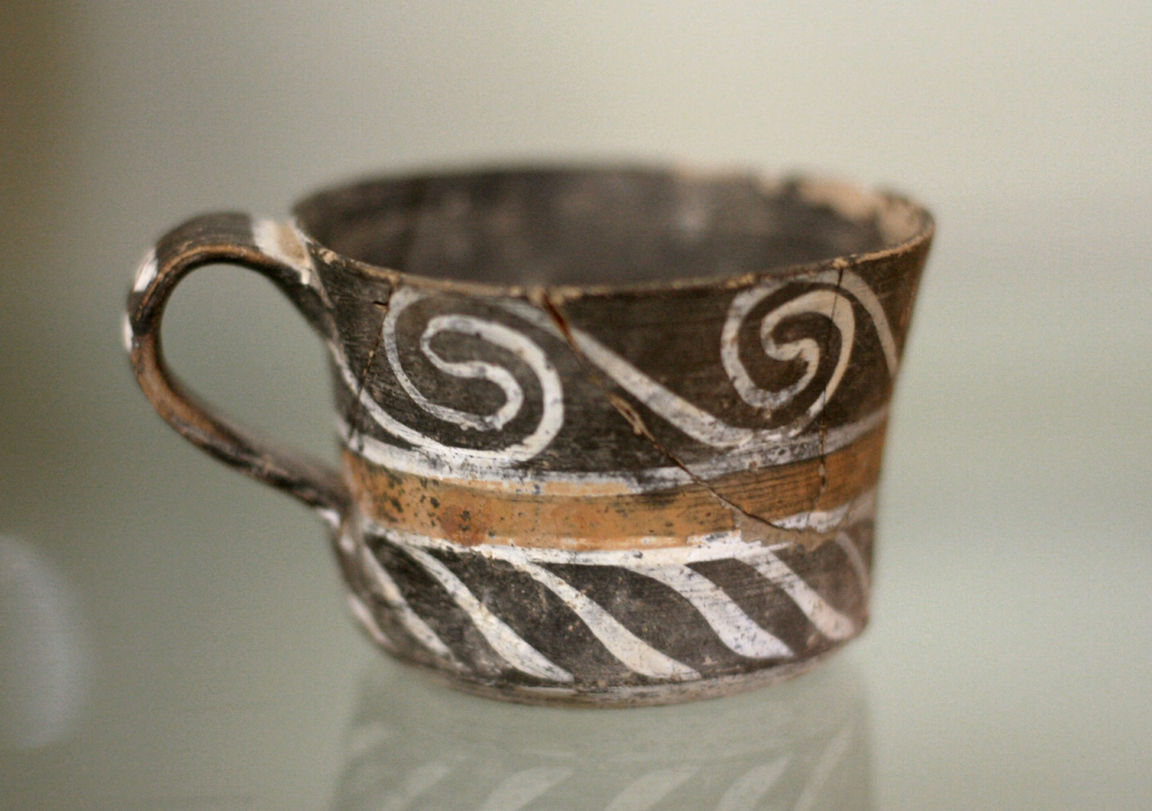
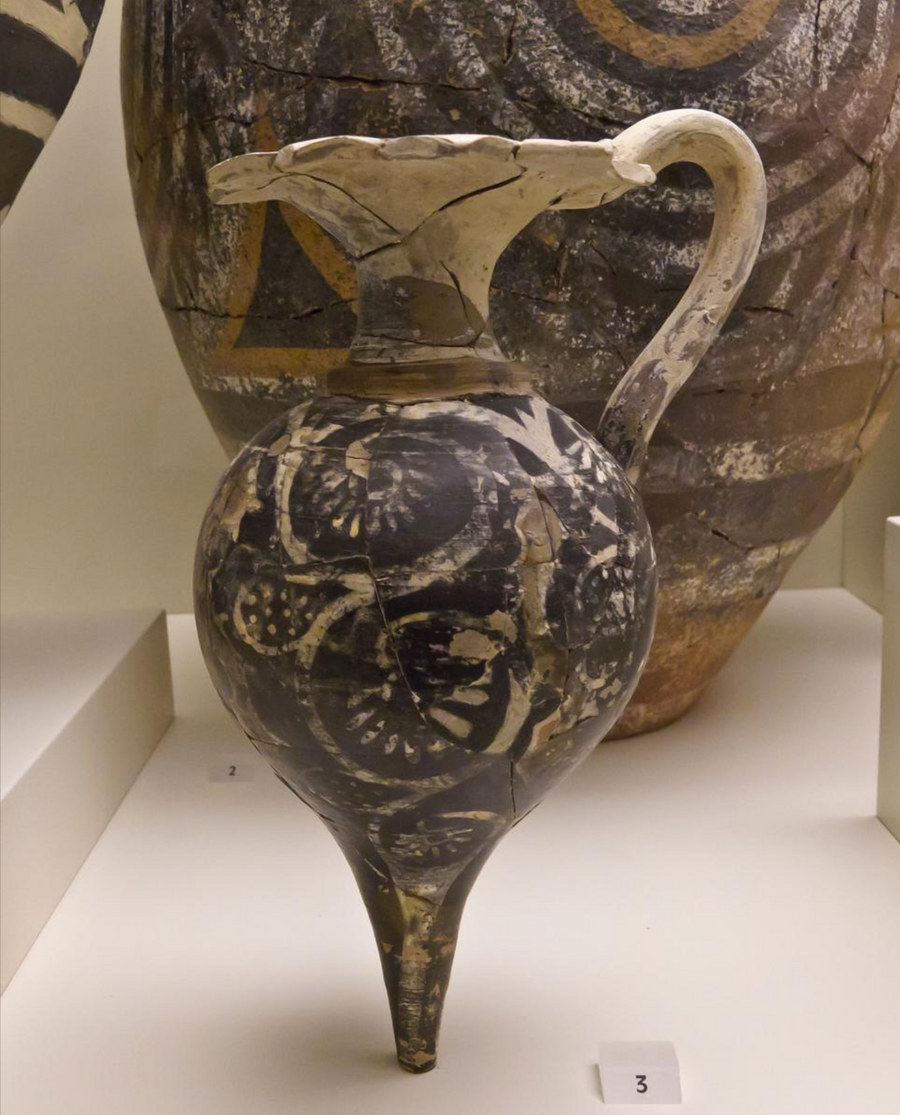
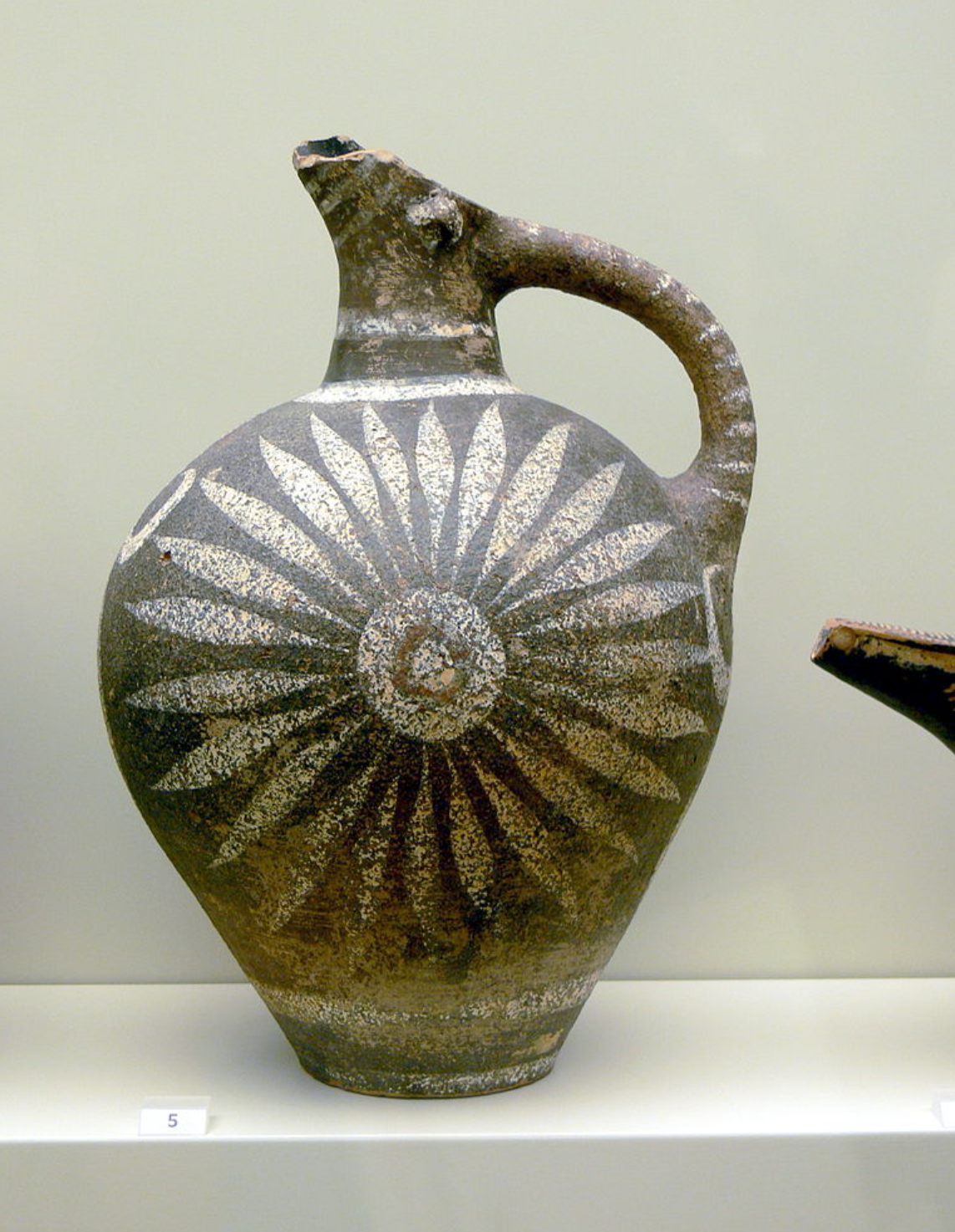
Minoan Culture. Kamares-style cups from Phaistos. 1800–1700 BCE. Archaeological Museum, Heraklion, Crete.
This ritual libation vessel demonstrates masterful command of volumetric sculpting and natural expression. Carved from a single block of dark stone (steatite) and inlaid with eyes and mother-of-pearl details, the rhyton merges utilitarian function with the monumental power of Minoan cult imagery, where the sacred animal embodies the dynamics and might of the elements.
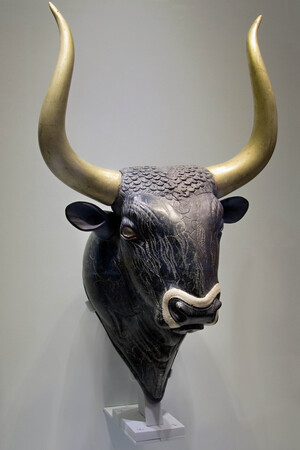
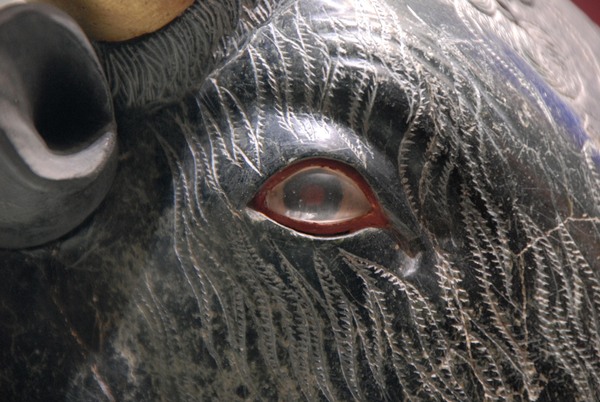
Minoan Culture. Rhyton in the form of a bull’s head from the Small Palace / Knossos Palace (Crete). Circa 1550–1500 BCE. Archaeological Museum, Heraklion.