Table of Contents
1. Concept 2. Anatomy in the Renaissance 3. Michelangelo and Anatomy 4. Madonna of the Stairs 5. Battle of the Centaurs 6. Pieta 7. Bacchus 8. David 9. Moses 10. Slave 11. The Deposition (Florentine Pieta) 12. Rondanini Pieta 13. Brutus 14. Conclusion
Concept
Michelangelo’s sculptures don’t just sit there—they live. His work captures something beyond the mere human form; it captures the energy of life itself. His figures feel poised to move, as if they are holding their breath or bracing for impact. The detail is astonishing—the way muscles stretch, tendons pull, and skin folds gather—it is so visceral, it verges on the impossible. Yet, Michelangelo wasn’t solely driven by technical mastery. For him, the body was a vehicle for narrative—a means to reveal emotion and spirit. He wasn’t content simply to replicate what he observed; he needed to understand the mechanics of the body, how it carried the soul. This compulsion drove him to extraordinary measures, including secretly dissecting corpses to learn how flesh, bone, and muscle interlock.
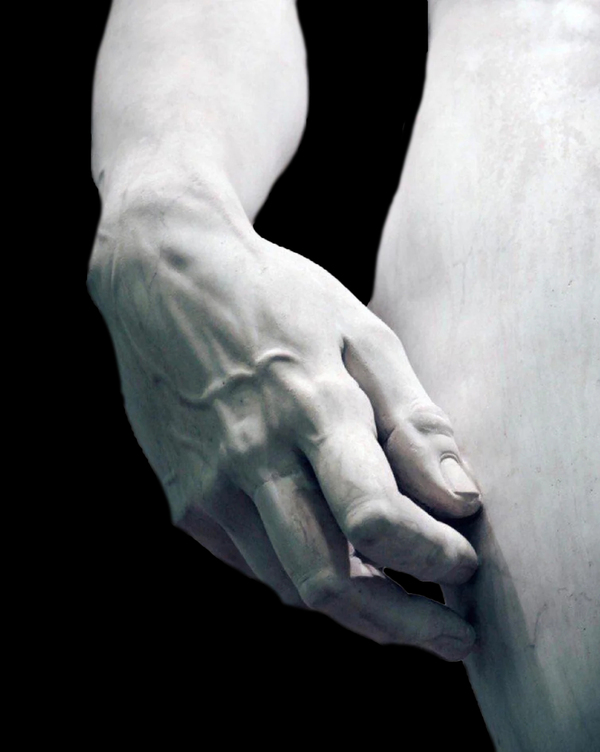
When you look at David, you can see all of this in action. At first, you notice how flawless he is—every muscle and sinew carved with incredible precision. But the longer you look, the more you see the tension in his stance, the way his body twists ever so slightly, as if he’s caught mid-thought. There is strength in him, certainly, but also vulnerability—as if he knows the challenge ahead is immense, yet he is ready to face it anyway. That’s what makes David so compelling. He’s not merely a statue of a hero; he is a hero, filled with the same doubts and resolve that anyone might feel before a fight.
And then there’s the Pietà. It’s one of those works that stays with you. Mary holding the body of Christ—there’s something almost unbearably tender about it. Her face is calm, but it’s the kind of calm that comes from deep, overwhelming grief. You can feel the weight of his body in her lap, the lifelessness of it. And yet, the sculpture isn’t just sad—it’s peaceful too. Michelangelo captured something profoundly human in this piece: the balance between heartbreak and acceptance, between loss and love. He turned cold marble into something that feels soft, even warm. You can almost sense the quiet in the moment he’s showing you.
Michelangelo drew inspiration from classical ideals—the perfect proportions and harmony of Greek and Roman art. But he didn’t stop there. His work isn’t detached or serene like much classical art; it’s brimming with raw energy. His figures don’t just look alive—they feel alive. He leveraged his profound understanding of anatomy to make his sculptures move you. Every muscle and vein serves a deliberate purpose. It’s not merely about rendering the figure realistically; it’s about making you feel the tension in their body, the power, or the pain held within.
Moses is a perfect example. He is seated, yet everything about him feels charged. His muscles are taut, his hands look ready to snap into action at any moment, and his expression is fierce. There is frustration in his face, but also wisdom and authority. You can sense the weight he is carrying—the responsibility, the divine mission, the human struggle. Michelangelo didn’t just sculpt a leader; he sculpted a man grappling with something far greater than himself.
What’s remarkable is how Michelangelo achieved this. His private dissections weren’t merely about breaking conventions or satisfying intellectual curiosity. He sought to understand life at its most profound level. He wanted to see how everything functioned, how movement transpired, how the body conveyed emotion. Yet, he didn’t stop at the physical. He transcended it, melding his anatomical knowledge with an artist’s intuition to create figures that felt more human than human. His sculptures aren’t perfect in the sense of being flawlessly rendered—they are perfect because they are alive, because they pulse with emotion and narrative.
What makes Michelangelo’s art timeless is how deeply it connects with us. His work isn’t just about beauty or technical skill, though he had plenty of both. It’s about the things we all share—strength, vulnerability, grief, hope, struggle. He used the human form to speak to something universal, something that still resonates centuries later. His sculptures remind us that even in stone, there’s a way to capture life, to freeze a moment so real it feels like it could breathe. Michelangelo wasn’t just a genius. He was a storyteller, carving humanity itself into marble. That’s why his work will always feel alive.
Anatomy in the Renaissance
Michelangelo, Seated male nude, separate study of his right arm
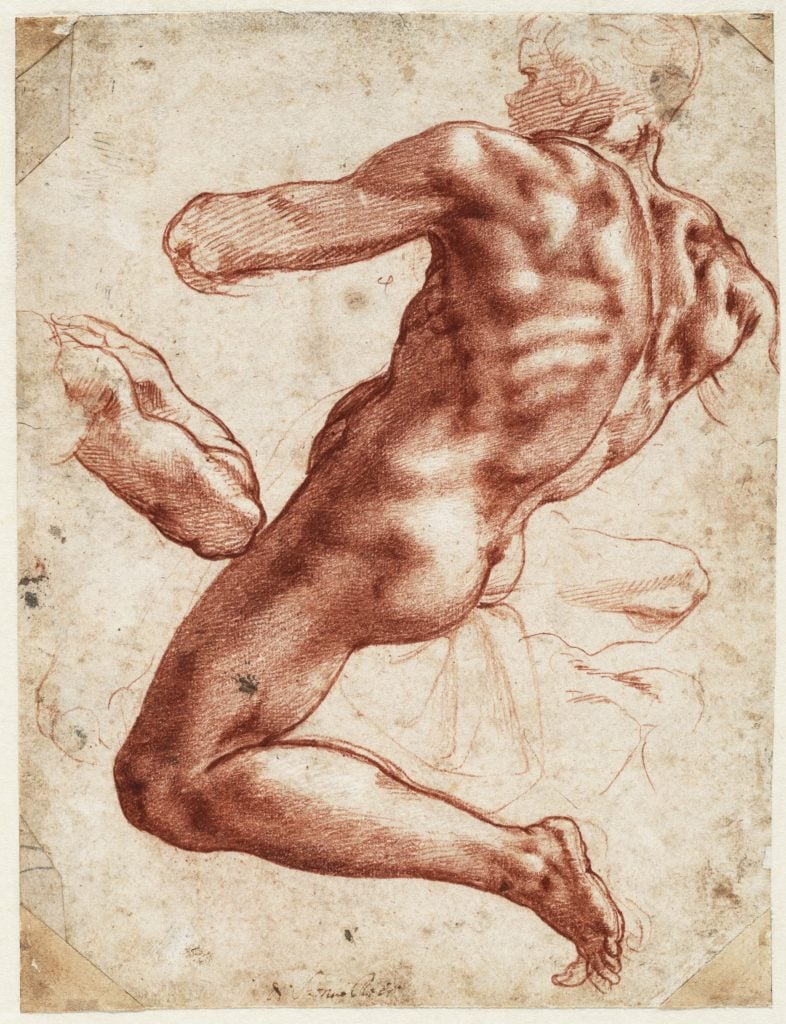
Michelangelo, Various figure studies
The Renaissance was a comprehensive period of rebirth and development that brought innovations across all aspects—political, economic, philosophical, cultural, artistic, and scientific.
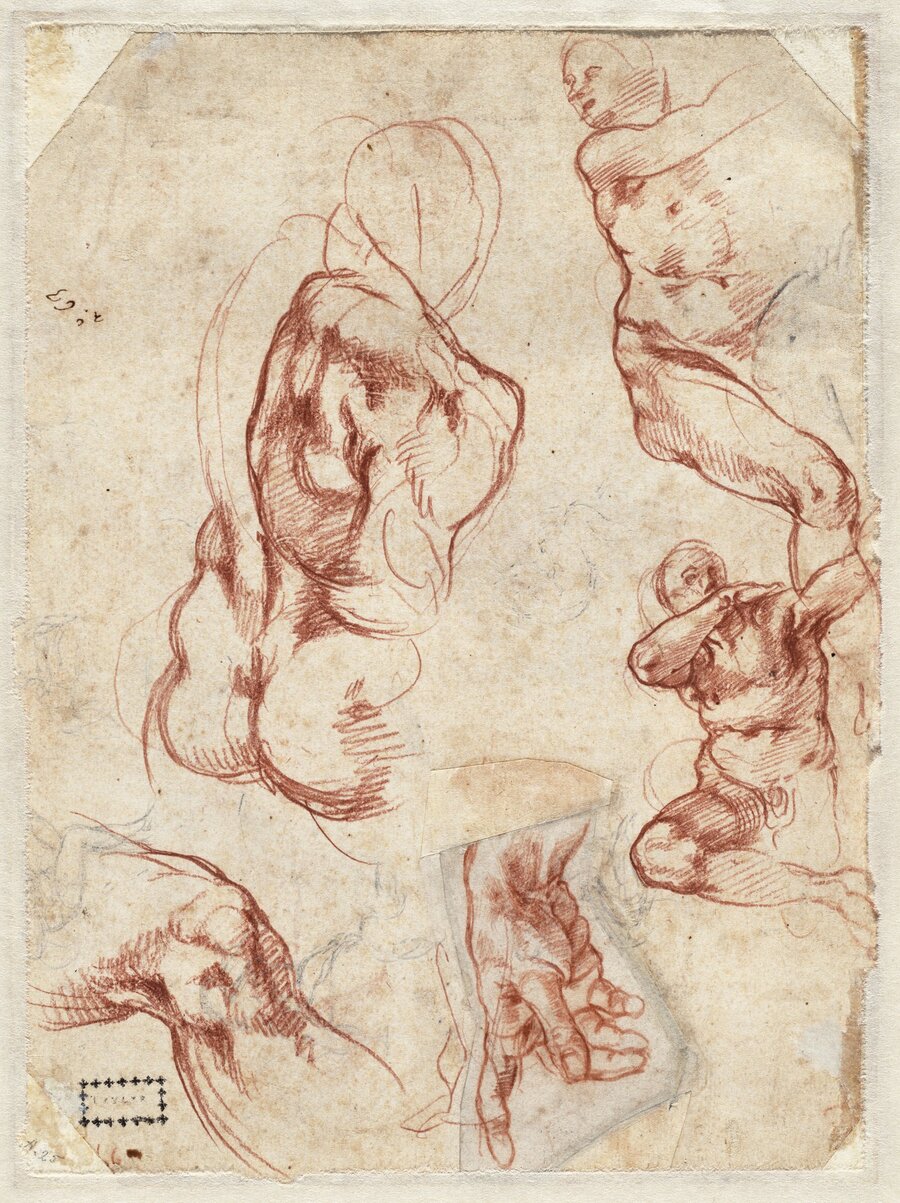
Michelangelo, Male nude, turning to the right; studies of anatomical details
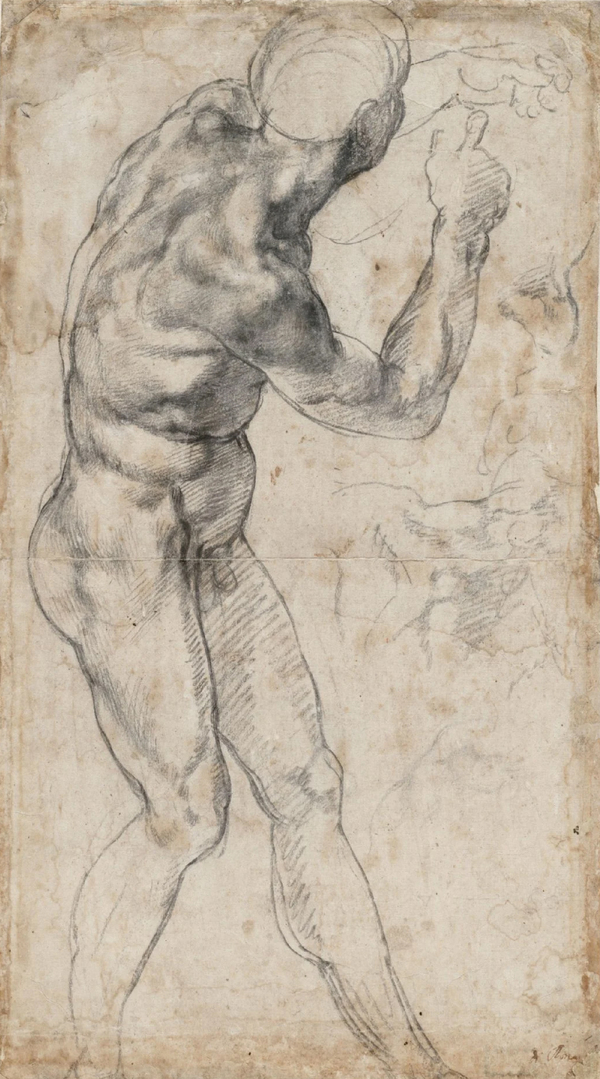
Michelangelo, Four studies, including two for a crucified figure
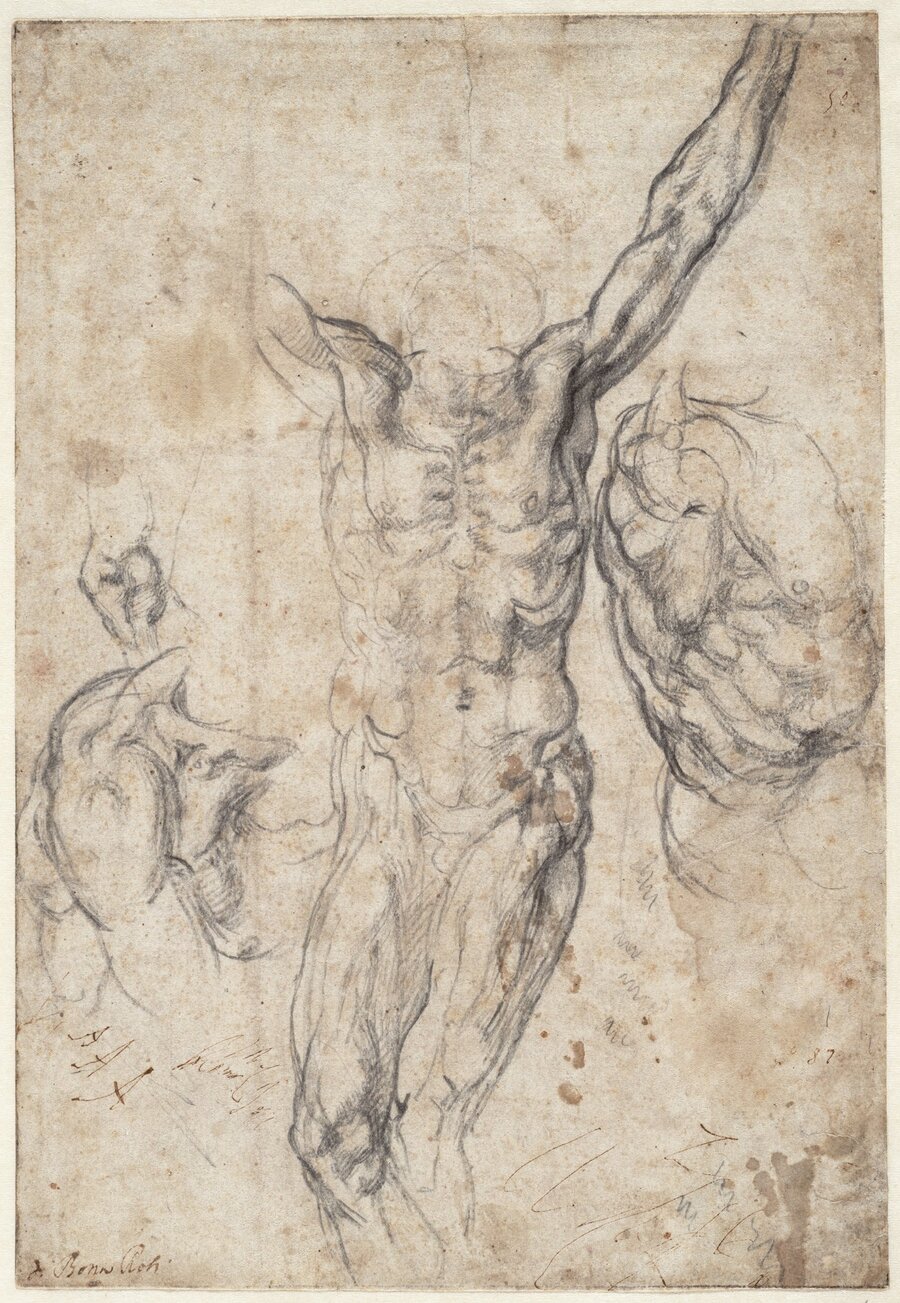
The Renaissance functioned as a laboratory for extensive scientific and artistic creation, encompassing the study of the human body for both medical and artistic ends. Alongside the quest for scientific naturalism among Renaissance artists, scientific knowledge—particularly anatomy—grew increasingly significant in artistic practice.
Michelangelo, Studies of a left arm and a shoulder
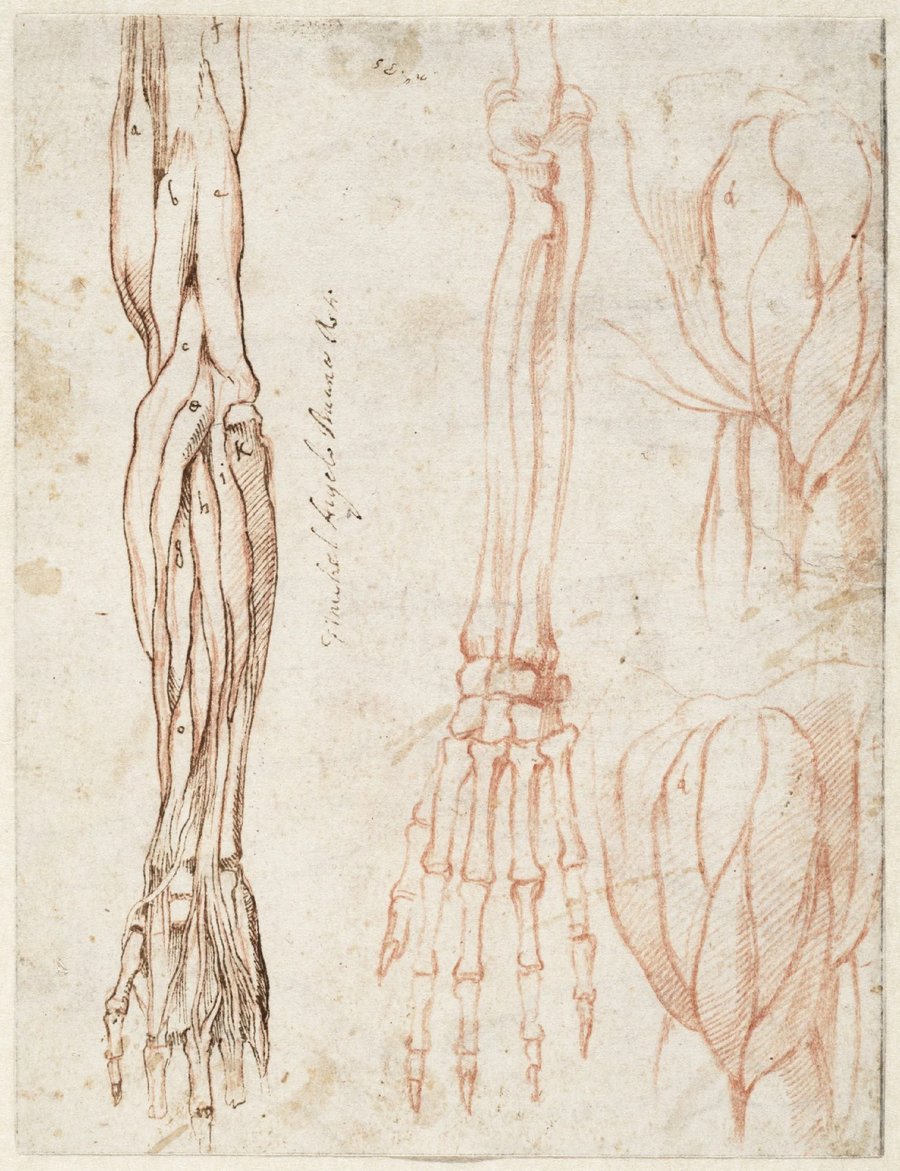
Michelangelo, Studies of a neck and shoulder, from the back and side
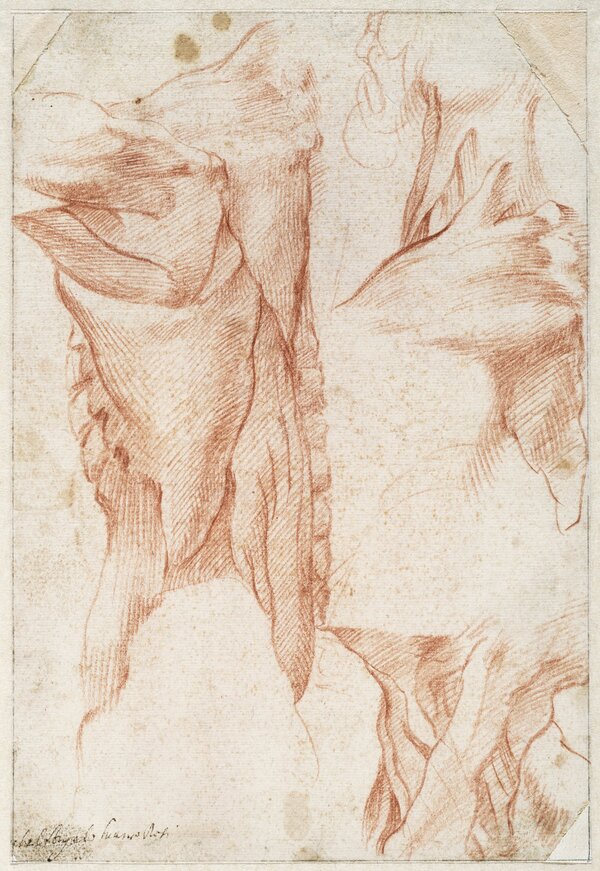
Thus, numerous artists were required to conduct anatomical studies to understand the human form and provide material for their artworks. As a result, a new dynamic emerged in which Renaissance artists spearheaded medical progress and fostered anatomical development.
Michelangelo, Study of the back and left arm of a male nude
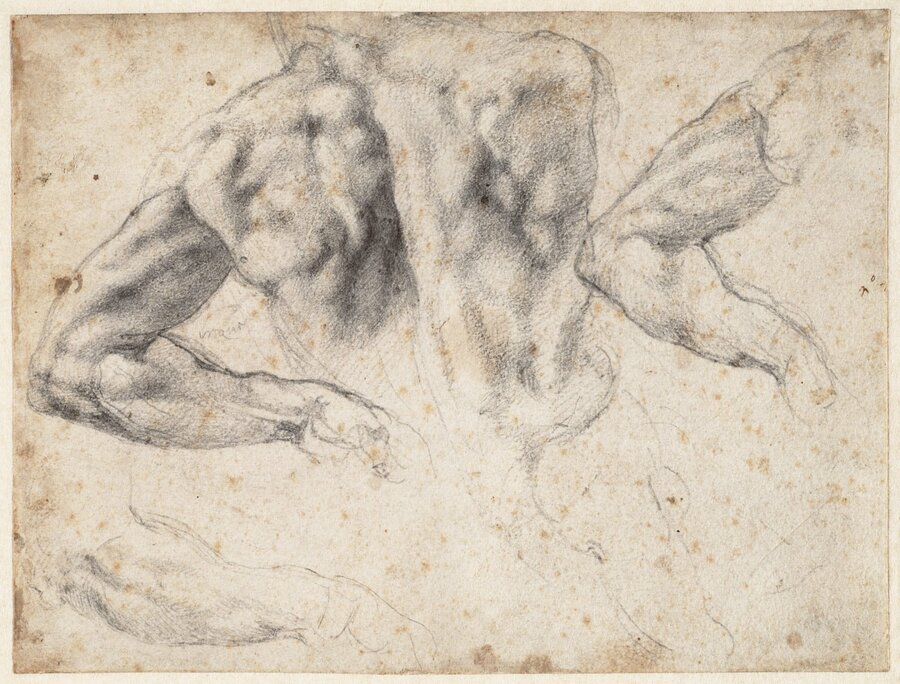
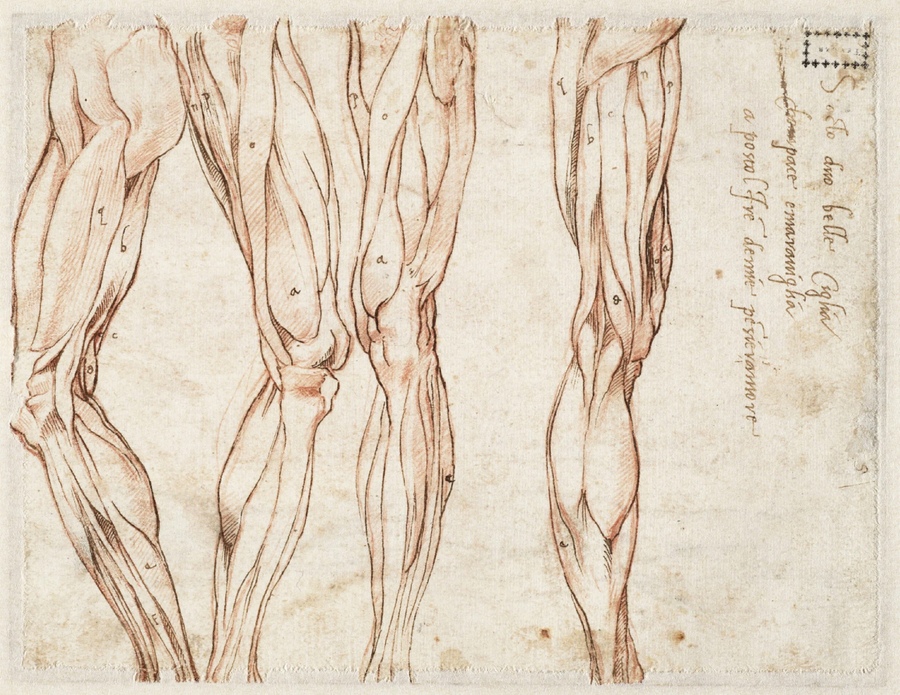
Michelangelo, Studies of a knee
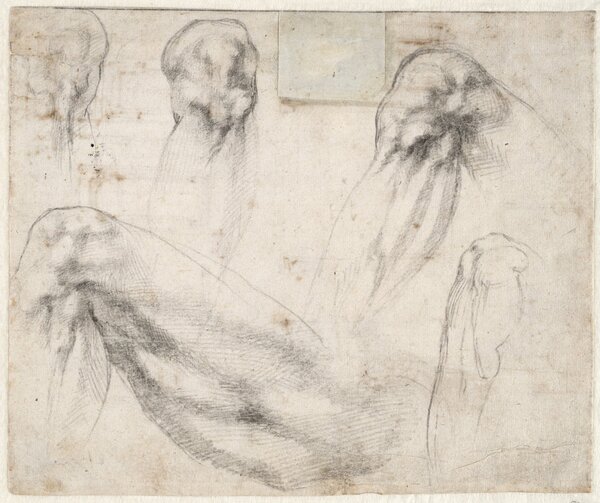
At that time, there were strict restrictions on human dissection—for instance, private dissections were prohibited, and only public dissections by local physicians were permitted. Furthermore, the origin of cadavers was limited, allowing for dissection only of criminal bodies. Despite these constraints, many artists spared no effort to find ways to study human anatomy, among them Michelangelo.
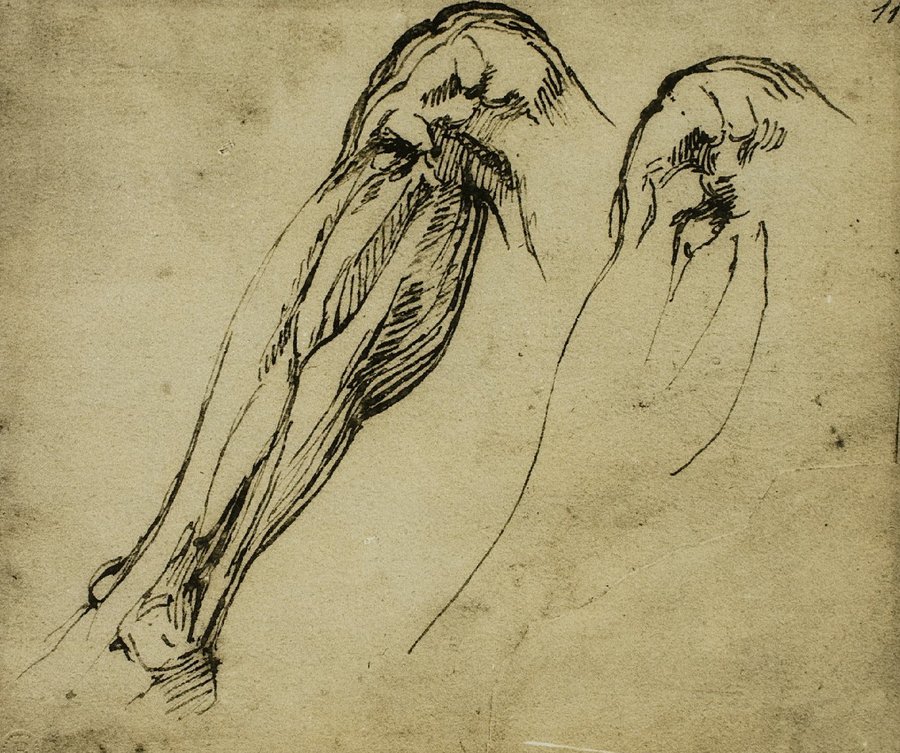
Michelangelo, Studies of leg
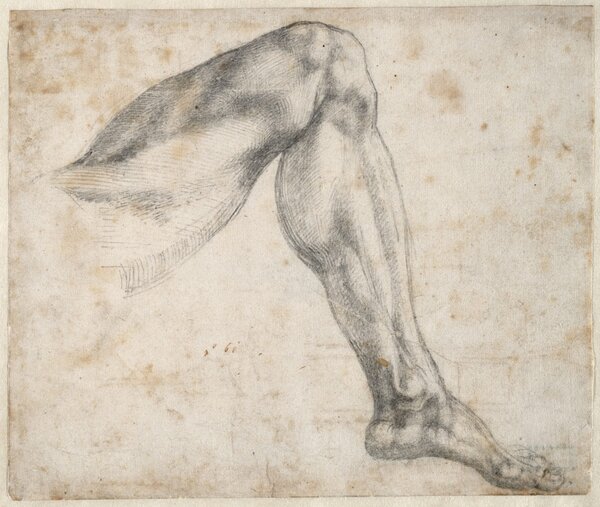
Michelangelo and Anatomy
Michelangelo, Studies of the upper body of a women
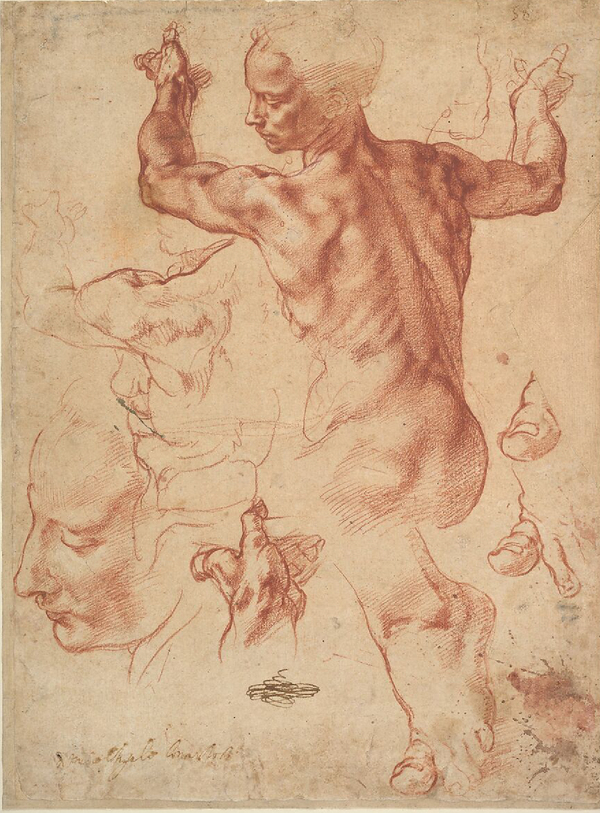
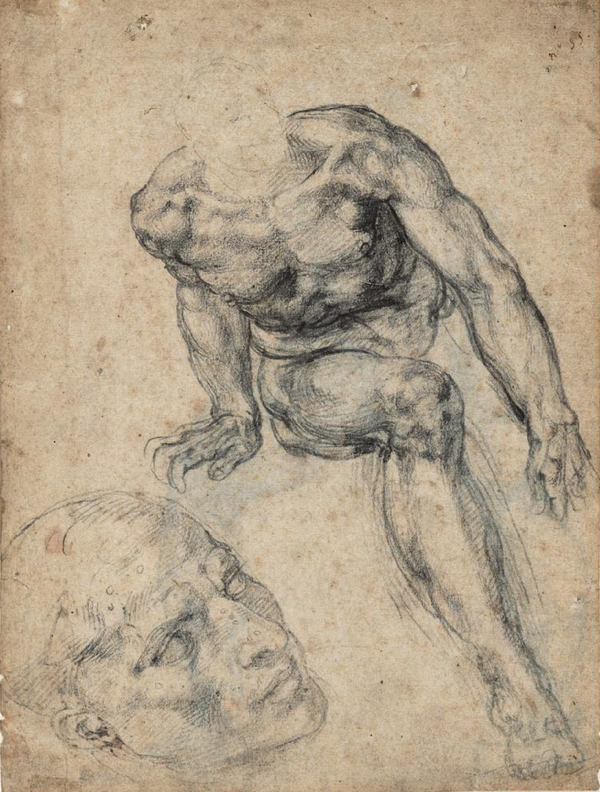
Michelangelo, Studies of the upper body of a man
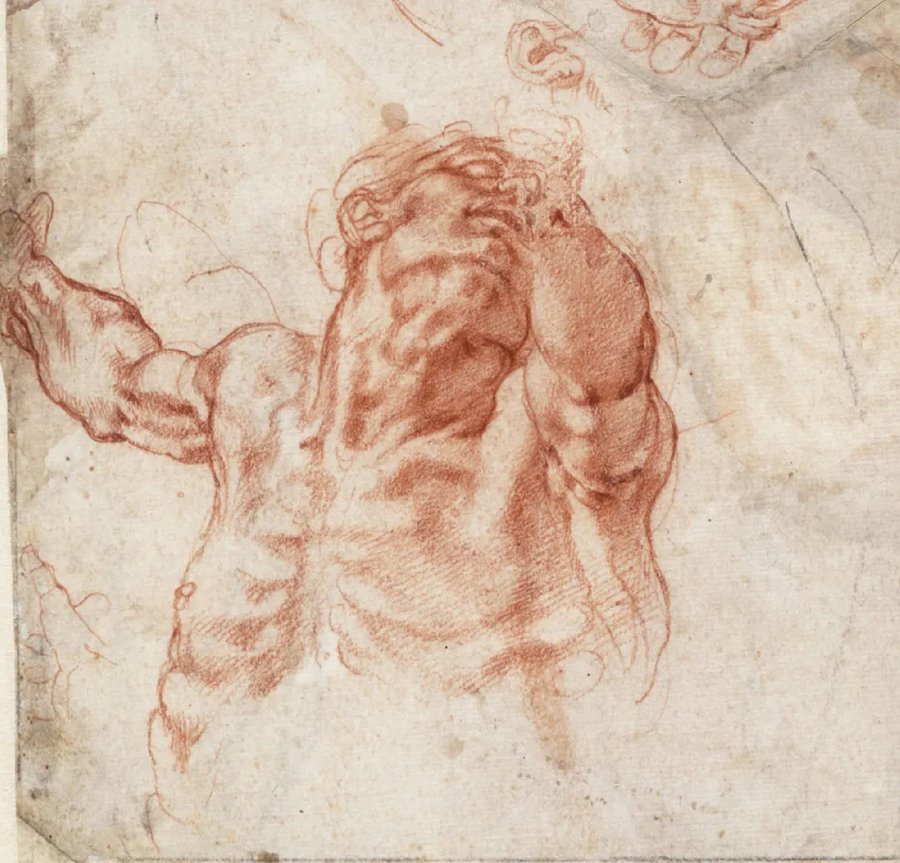
As one of the most representative figures of the Renaissance, Michelangelo’s research spanned numerous fields, including natural science and art, where he made a breakthrough in applying anatomy to his artworks.
Michelangelo, Studies of a knee
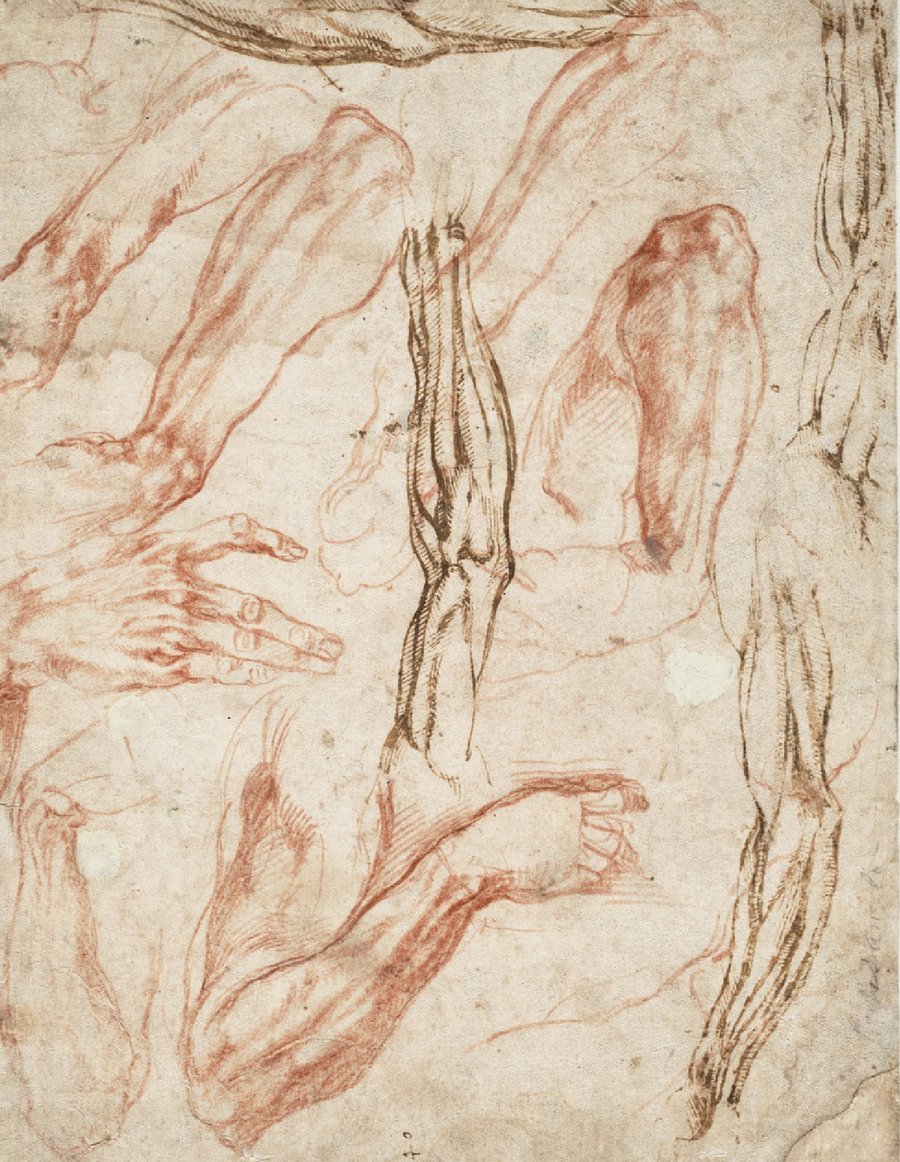
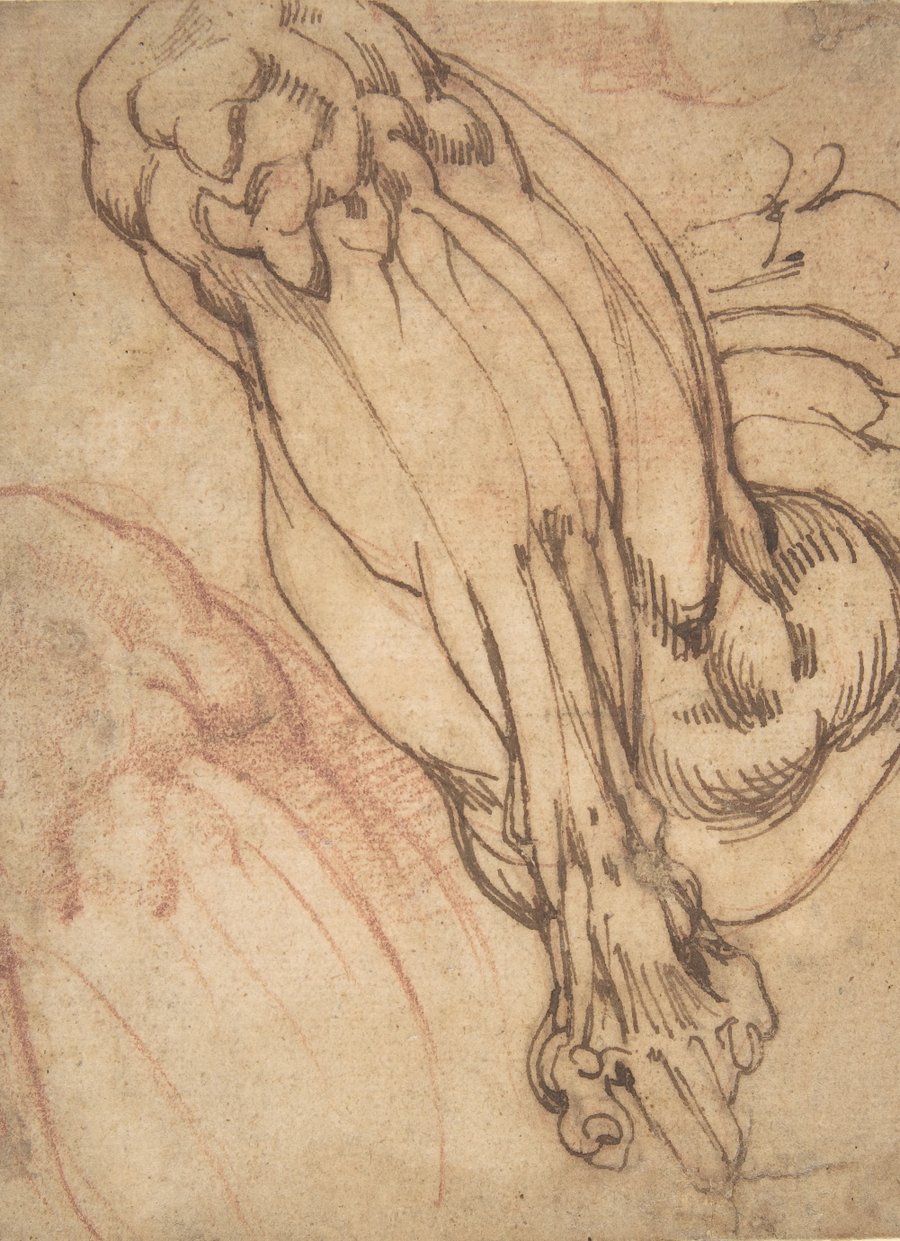
He was eager to explore all the anatomical principles and rules related to art. His keen interest in Michelangelo’s anatomy gave him a deeper insight into the human body, which fueled his progress in artistic creation.
Michelangelo, A man abducting a woman
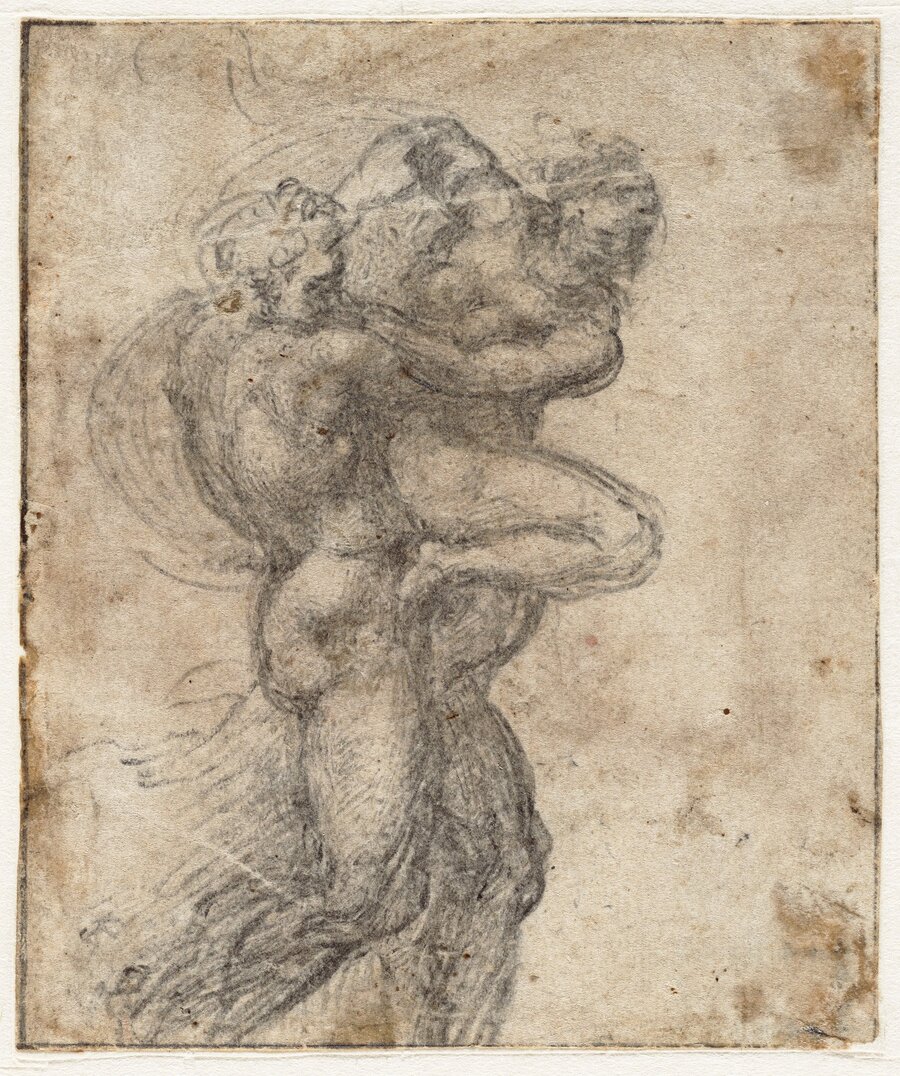
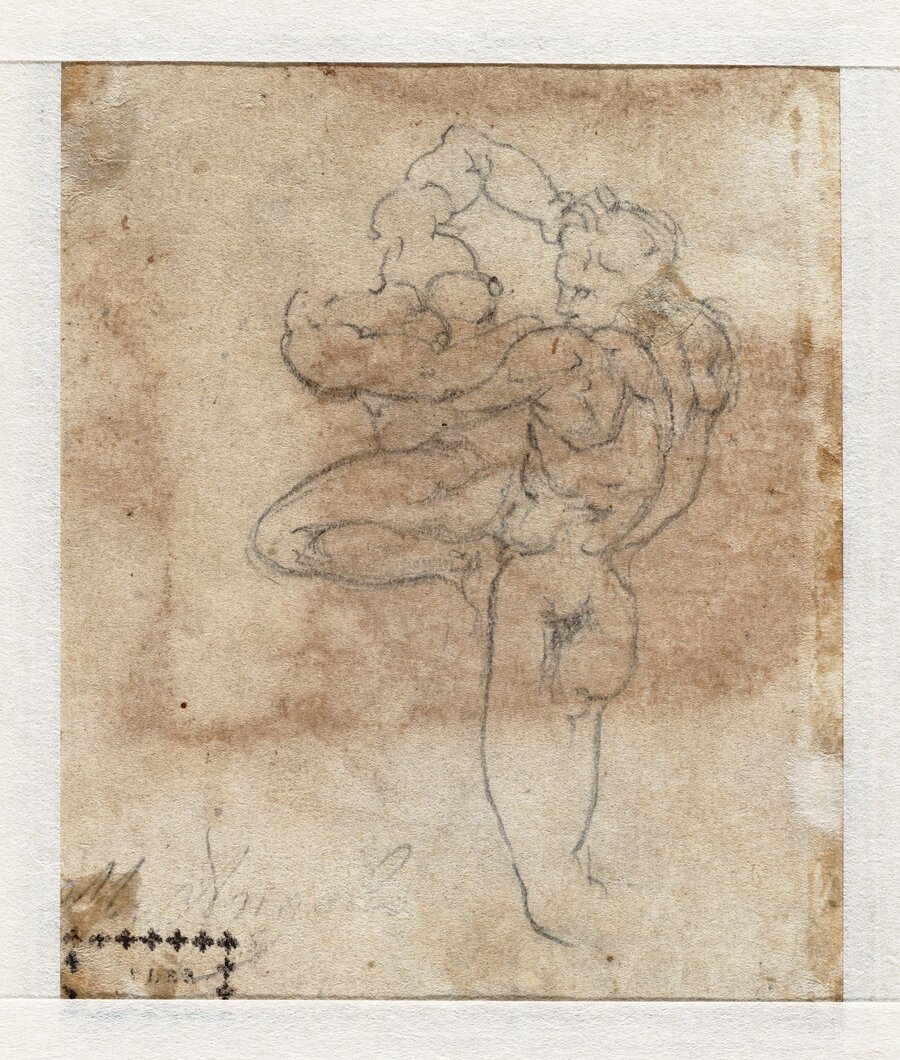
In The Life of the Artists, Vasari writes that Michelangelo was extremely drawn to artistic pursuits. In order to achieve complete perfection, he conducted countless anatomical studies, dissecting cadavers to understand the constructive principles and the combinations of bones, muscles, veins, and nerves, as well as the various movements and every posture of the human body.
Michelangelo, Studies of a man body and a knee
Madonna of the Stairs
This low-relief sculpture depicts the Virgin Mary gently holding the infant Jesus. Inspired by Donatello’s relief techniques, the piece showcases Michelangelo’s emerging style, using delicate lines to evoke an intimate bond between mother and child.