Navigator
Concepts
- Reimagining Natural History: Mount Analogue by Xu Yun
- The Colonial Archive as Palimpsest: Reenacting the RAS Library
- From Lecture Hall to Collective Learning: AUUUUDITORIUM
- The Pacific Ocean as Counter-Geography: Best Synthetic Answer by Rindona Johnson
- Hospitality, Diaspora, and Oceanic Knowledge: Wan Hai Hotel
Concept
This visual study examines mechanisms of institutional critique in contemporary China, using the Rockbund Art Museum in Shanghai as a case study.
In recent decades, institutional critique has become a key area of research in contemporary art and museum practice. It is traditionally associated with artists and theorists who viewed the art museum not as a neutral space for display, but as a system of power: a system of selection, classification, legitimation, exclusion, and the production of cultural value. However, applying this theoretical model to China requires contextualization.
China’s colonial past is not reducible to the model of direct territorial colonization typical of British India or French Indochina. Beginning with the Opium Wars and the system of unequal treaties in the 19th century, China became integrated into a semi-colonial order where foreign powers gained trade privileges, extraterritorial rights, control over treaty ports, and the ability to establish their own cultural, scientific, missionary, and educational institutions. It was within this environment that the political and economic forms of external influence, as well as unique regimes of knowledge, developed—ways through which China became an object of description, classification, and representation.
Shanghai held a central place in this system. As a treaty port and international trade hub, it was a space where capital, transport, diplomacy, science, urban modernization, and foreign presence intersected. However, Shanghai’s significance to the history of coloniality is not determined solely by its economic and legal structure: here, institutions were formed that gathered, cataloged, and interpreted knowledge about Chinese nature, art, language, ethnography, and history; they defined what counted as knowledge about China, who could produce that knowledge, and in what forms it became public.
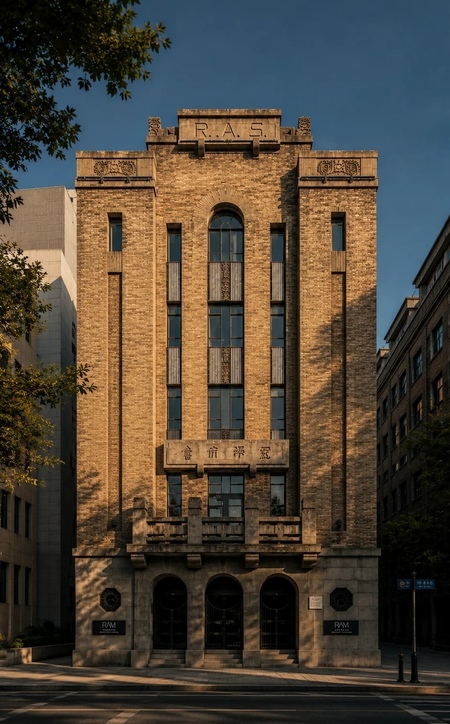
In this context, and especially for our research, the history of the Royal Asiatic Society (RAS) and the Rockbund Art Museum (RAM), which has occupied the RAS building since 2010, is particularly important. Through expeditions, natural science collections, archives, libraries, public lectures, and scientific publications, the society contributed to the systematization of knowledge about China. This knowledge was not neutral; it shaped colonial hierarchies of visibility. Some elements of knowledge were highlighted and disseminated, while others were omitted and relegated to the background. Thus, the former RAS building functions simultaneously as an architectural monument, museum infrastructure, and material testament to Shanghai’s semi-colonial status. [2]
The original RAS building, constructed in 1871, was located on the same site as the current RAM. The library, reading room, and lecture halls were on the first floor, while the museum was on the second.
Construction of the RAS building, 1932–1933. Architect George Wilson, Palmer & Turner architectural firm.
In 2024–2025, RAM executed the multi-year research, exhibition, and public program Complex Geographies. Its stated goal was to challenge contemporary artists to reinterpret the colonial legacy of the building’s original owner—the Royal Asiatic Society.
The first part of the program, titled China Journal, draws its name from a Shanghai journal of science and art founded by the English naturalist Arthur Sawyerby and the Sinologist John Kelvin Ferguson.China Journal encompassed several interconnected exhibitions and public initiatives, including Hu Yun: Mount Analogue, Shanghai Palimpsest: Restaging the R.A.S. Library, AUUUUDITORIUM, Rindon Johnson: Best Synthetic Answer, and Wan Hai Hotel. These projects addressed various aspects of the building’s institutional past: its role as a natural history museum, a library and archive, a center for lecture culture, a point of reference for oceanic trade routes, ecology, diaspora, and territorial control systems.[3][2]
The research proceeds from the premise that Complex Geographies constitutes a form of institutional critique based on the reinterpretation of historical space. In contrast to models where the museum is critiqued predominantly from the outside, RAM enacts critique from within: the museum itself turns its architecture, archives, history, and regimes of knowledge into objects of artistic and curatorial inquiry. In this regard, RAM can be viewed as an institution that seeks to transform the building’s colonial origins into a subject of public discussion and critical work.
The objective of this study is to analyze how the Rockbund Art Museum, through the Complex Geographies project, reflects on its own colonial past and transforms it into an object of institutional critique.
Limitations of Institutional Critique in the PRC
In the PRC, institutions of contemporary art do not exist within a fully autonomous public sphere. The mechanisms governing and restricting exhibitions can be opaque; research indicates that decisions about censorship are influenced by the status of the institution, the venue, the political calendar, media attention, and the politically or sexually sensitive nature of the work.
This limits the forms of critique that can be institutionally realized in Shanghai:
- Colonialism is often discussed through history, ecology, archives, geography, and transnational theory.
- Direct critique of contemporary state power, nationalism, territorial governance, ethnic policy, or politically sensitive events carries significant risk.
- Artists and curators may turn to allegory, veiled statements, archival fragmentation, speculative fiction, performance, ecological discourse, and historical displacement.
Reimagining Natural History: Mount Analogue by Xu Yun
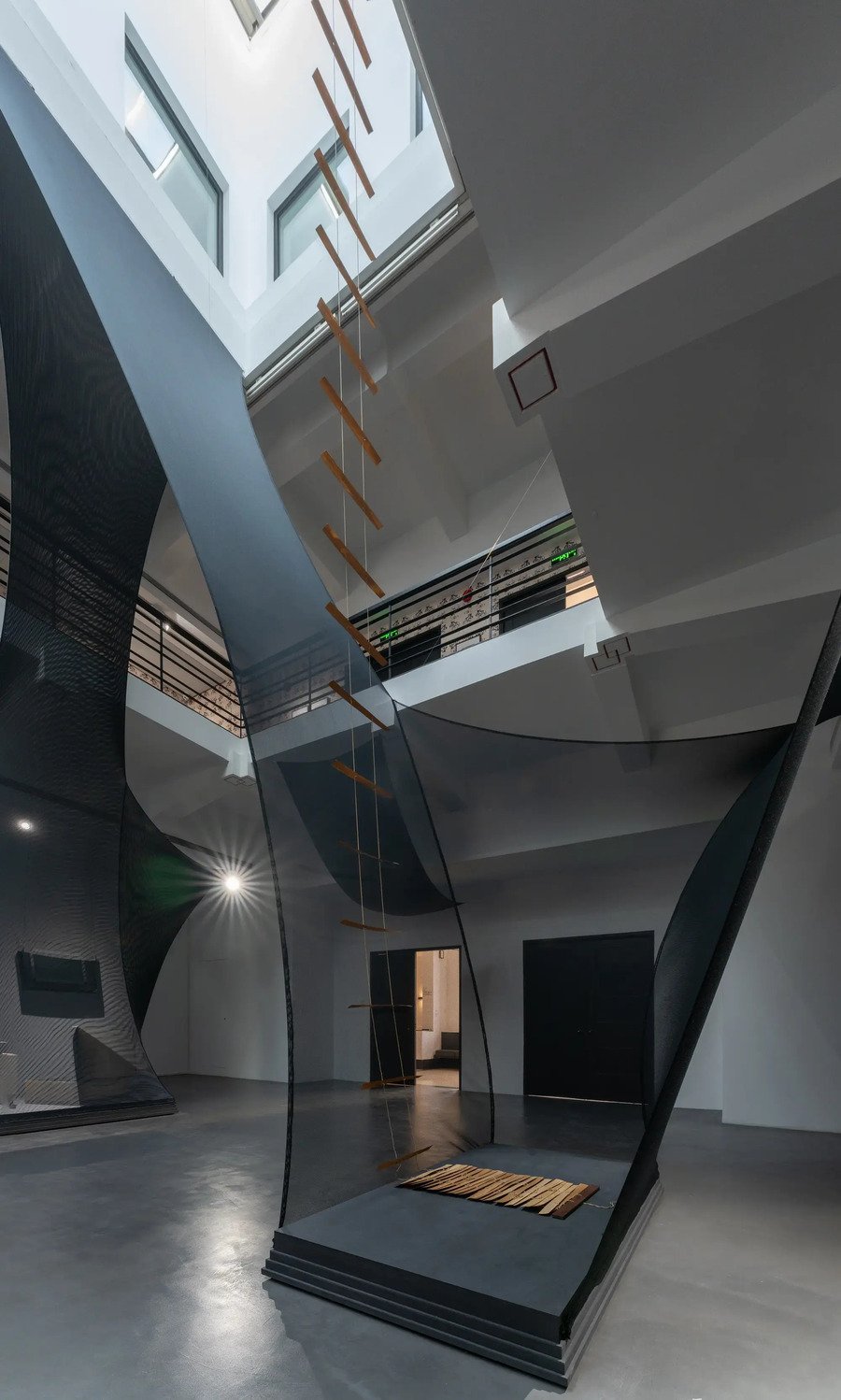
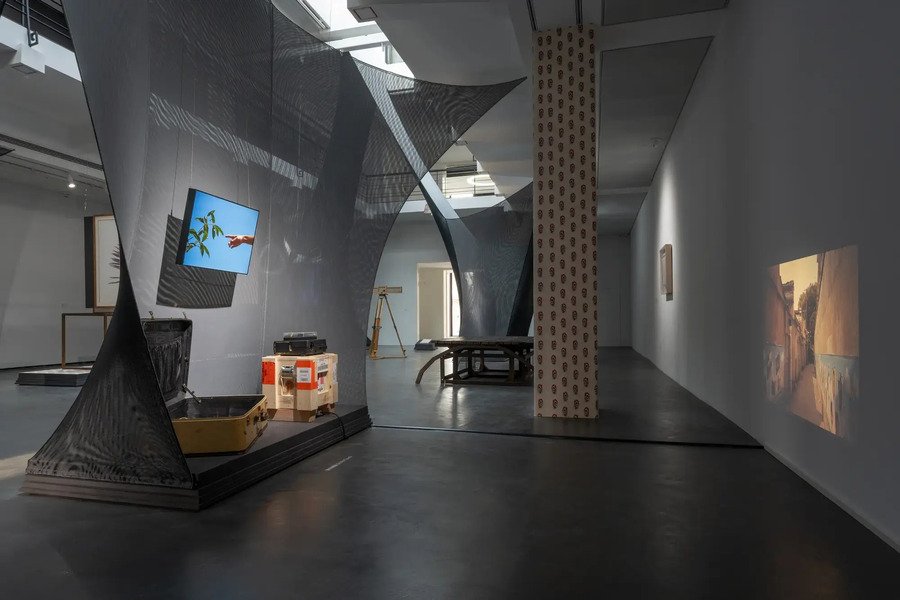
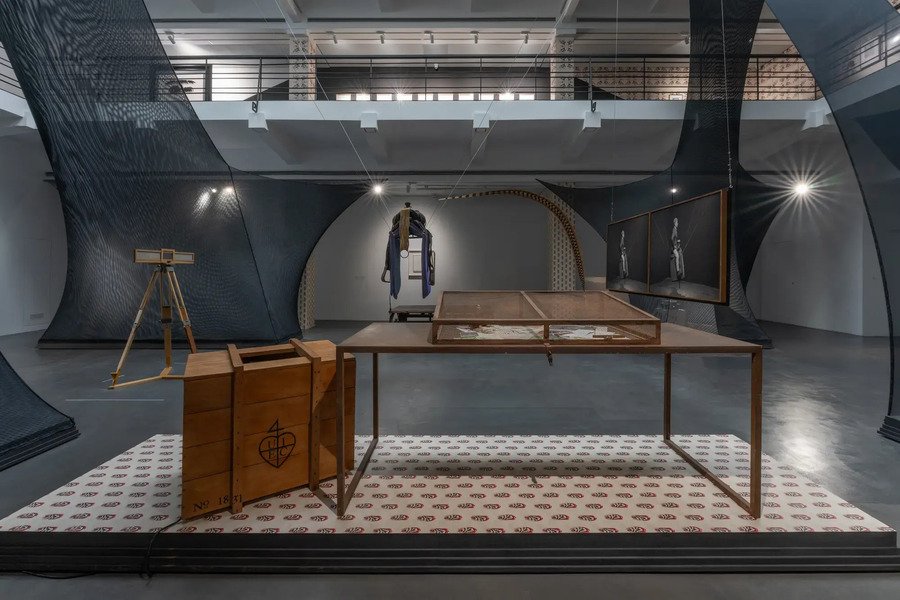
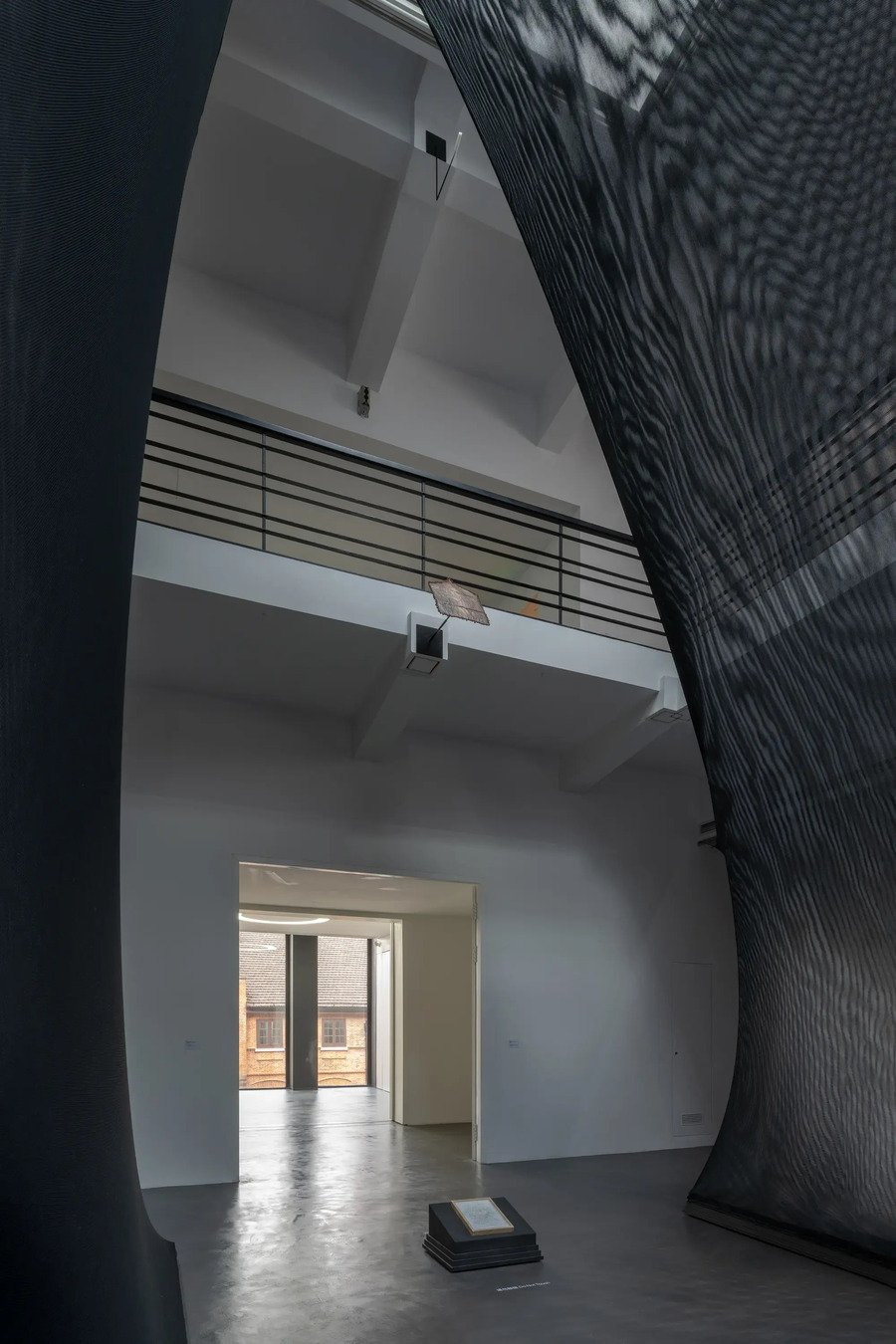
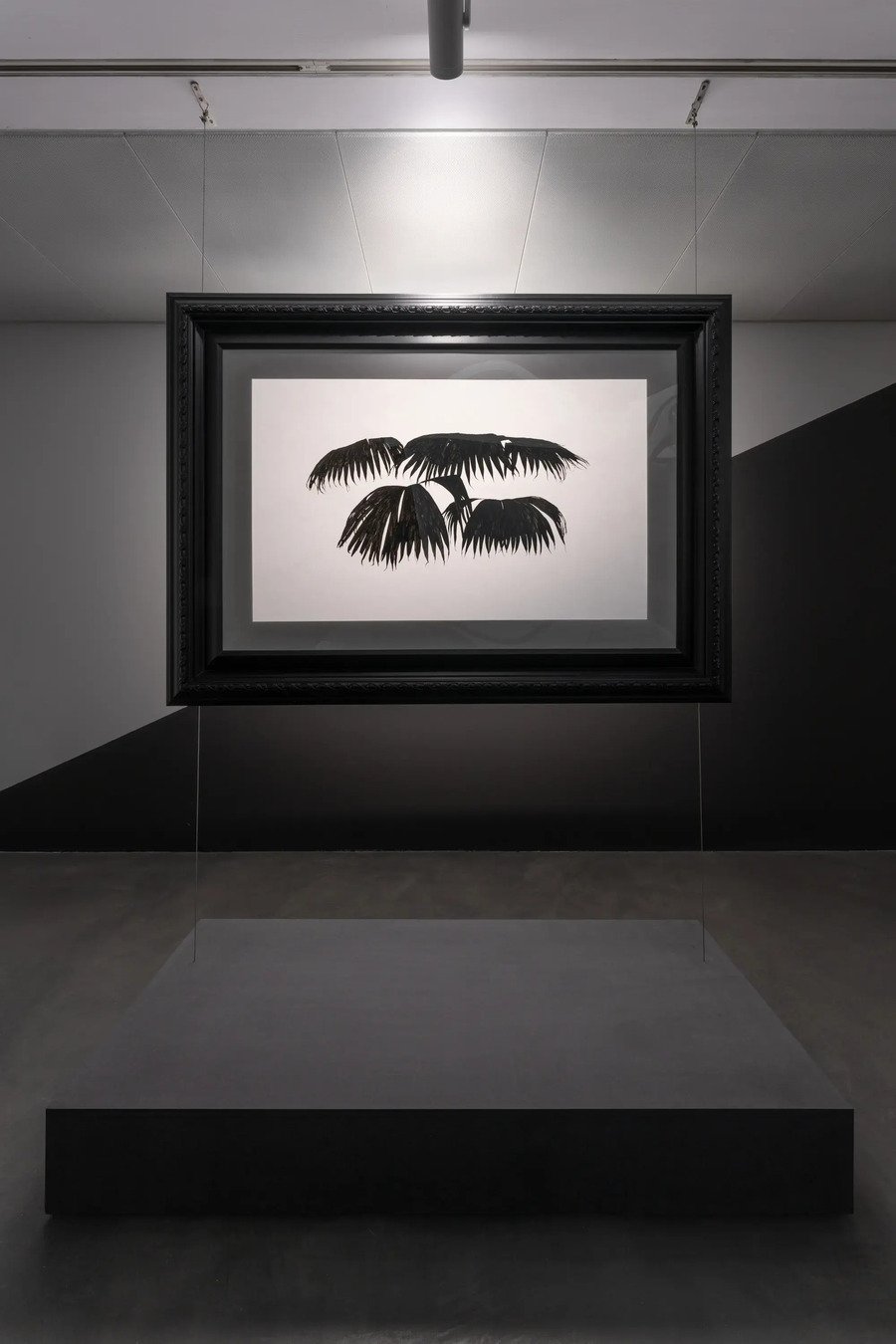
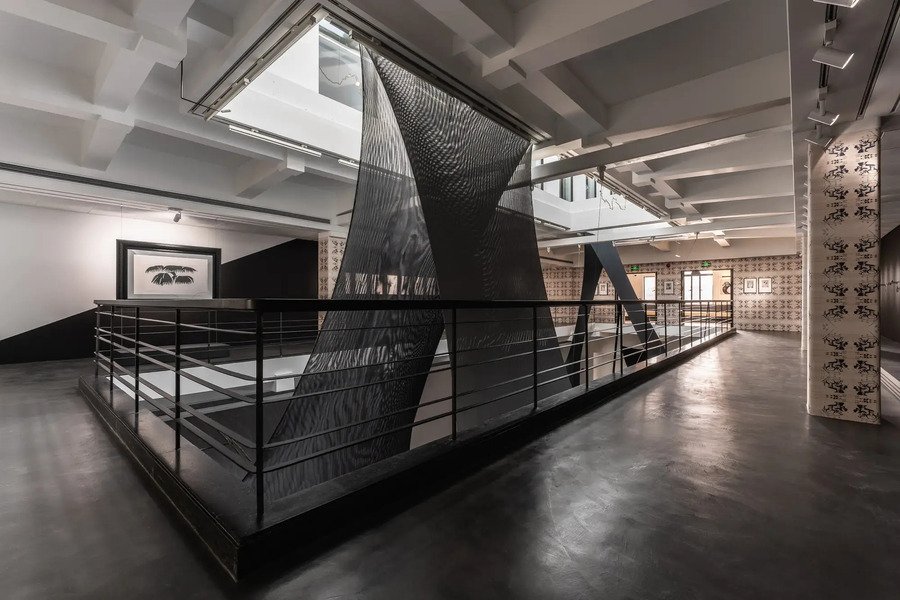
RAM describes Hu Yun’s project as an investigation and intervention into the history of the Royal Asiatic Society museum building—a precursor to early natural science museum practices in China. The museum notes that Hu Yun’s work uncovers the violence inherent in what the artist terms the «expansive apparatus of knowledge, ” engaging with voices and modes of knowing that have eluded preservation, classification, and categorization.
234