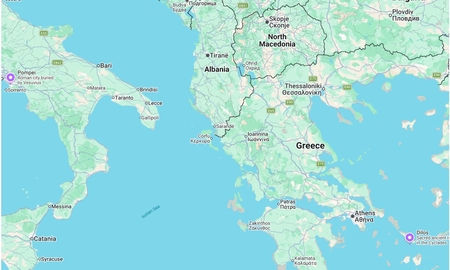
Cultural Transfer Between Egypt and the Greco-Roman World: The Case of Delos and Pompeii
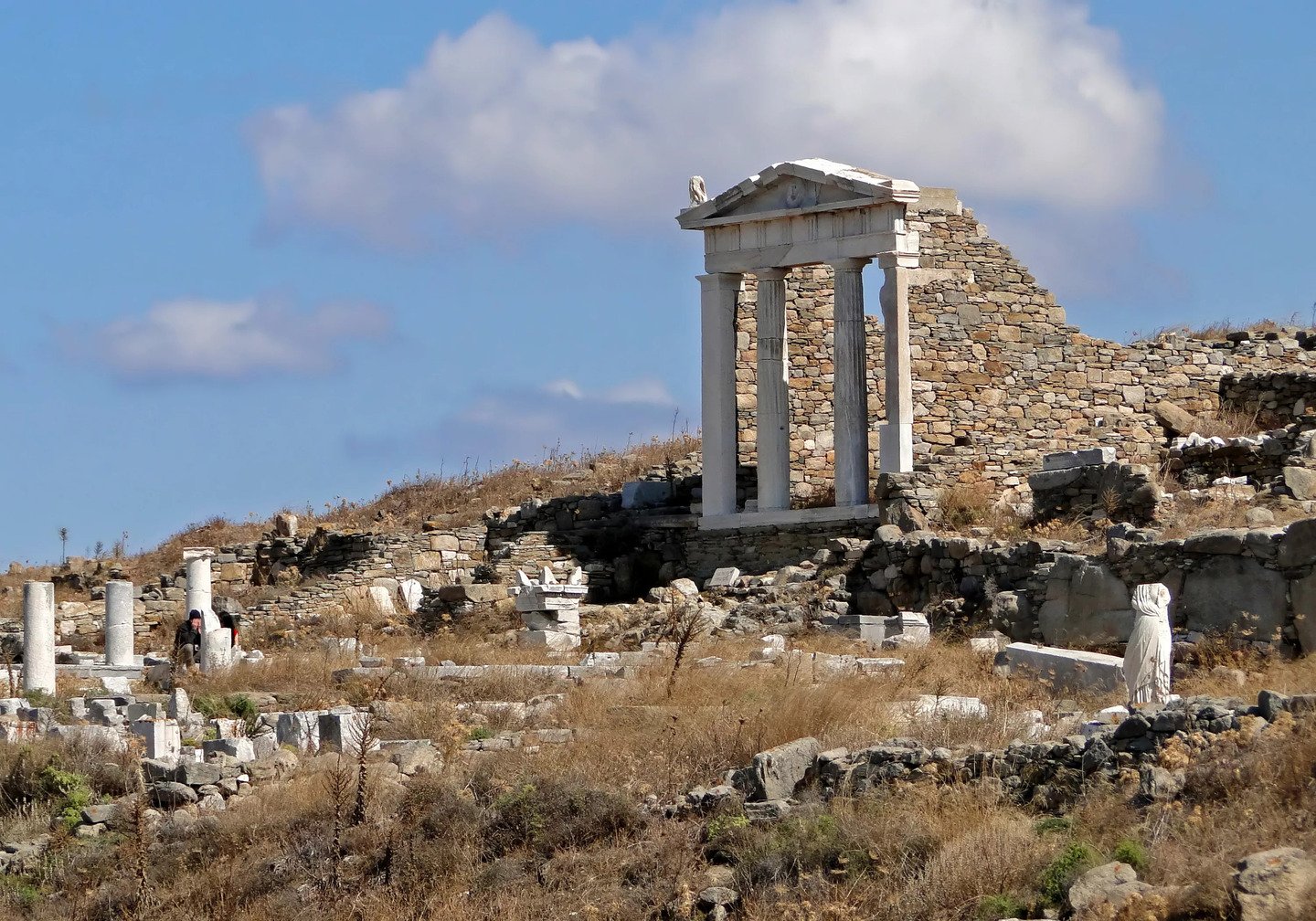
Egyptizing art is not mere copying; it is an active «translation.» Greek and Roman masters retained Egyptian sacred symbols (sistrum, ankh, hieroglyphs), but they borrowed their plastic language from classical Greek art. The goal of this presentation is to illustrate this mechanism through two examples: Delos, where the Greeks first began to «translate» Egyptian iconography into their own artistic language, and Pompeii, where this translation became integrated into the everyday urban environment. P. S. The largest number of inscriptions dedicated to Egyptian deities outside of Egypt has been found on Delos; the Serapeum C was an official public sanctuary recognized by the city around 180 BCE.What did Egyptian masters bring or create?
Statuettes strictly following Egyptian canon were discovered at Delos. However, the key question remains: were they imported or crafted locally? Some researchers suggest that part of these «Egyptian» artifacts may have been made by local artisans, which would point to the early assimilation of Egyptian iconography by Greek craftspeople.
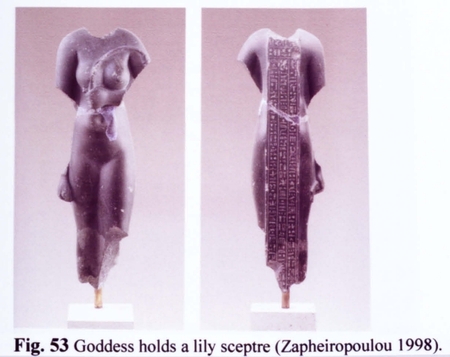
Delos — A «Pure» Egyptian Import
The image shows a fragment of an Iside statuette in a hieratic pose, with a hieroglyphic column on its back, Delos, 3rd–2nd centuries BCE (https://livrepository.liverpool.ac.uk/3174442/1/490806.pdf page 238; current location — Archaeological Museum of Delos).There is a specialized study directly dedicated to this statuette (Leclant & De Meulenaere, published in Kêmi XIV, 1957). The study’s conclusion is unequivocal: this green stone statuette (roche verte), depicting a woman leaning on a back column with a hieroglyphic inscription, was discovered in two fragments on Delos, one of which originated from the Iside sanctuary on the «Terrace of Foreign Gods.» The research directly indicates that it was imported straight from Egypt (particularly from Sais) to Delos and dates to the beginning of the Ptolemaic period.







Step 3. Clarification
Провести аудиторию по логике, которая снимает неопределённость
Approach the answer step-by-step, with each step clarifying something and reducing ambiguity. Show which facts, definitions, or models are necessary to move forward. It is helpful to document intermediate conclusions—this makes the logic reproducible and reduces cognitive load.








Step 4. Answer
Дать ясный ответ и показать, из чего он следует
Formulate a concise and unambiguous answer, then elaborate it into a clear model or formula. Demonstrate how the answer derives from the clarification steps—this maintains credibility and enhances the educational impact. Be sure to define the scope of applicability so that the answer does not sound like universal «magic.»








Step 5. Final
Закрепить логику решения и помочь перенести её на новые задачи
Document not just the answer, but the path to it, perhaps as a brief diagram or checklist. Give the audience a chance to test their understanding: a question, a mini-task, or applying the concept to a different example. The conclusion must enable them to reproduce the logic without your charisma or the original slides.