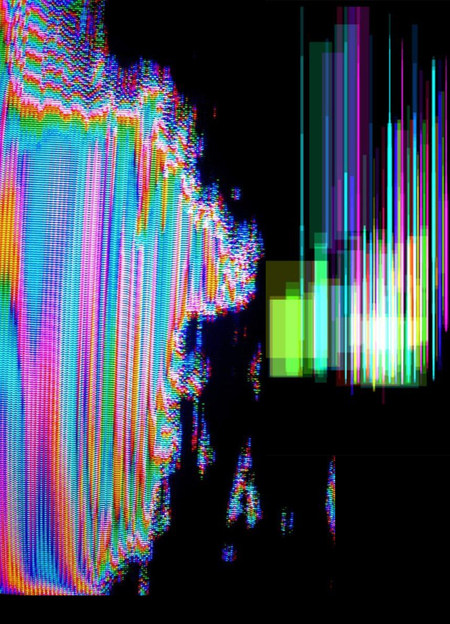
Concept
An Investigation into the Aesthetics of Digital Error in Net Art. This work examines how technical glitches, image distortions, pixelation, and digital artifacts have transformed from random malfunctions into autonomous artistic techniques. Special attention is paid to how artists utilize these effects to create unusual visual imagery, experiment with the digital medium, and express their own ideas.
Relevance
The topic is timely because digital technologies and the internet have become an indispensable part of modern life. Typically, when creating images, the goal is high quality, sharpness, and the absence of errors. However, in net art, artists intentionally use distortions, interference, and glitches, transforming them into elements of artistic expression. Studying this aesthetic allows one to understand how the perception of a digital image is changing and why what was once considered a technical flaw can now become part of art.
Research Goal
To study the peculiarities of the aesthetics of digital error in net art, examine the fundamental artistic techniques associated with glitches, distortions, and pixelation, and analyze how artists utilize technical failures in the creation of their works.
Hypothesis
It is hypothesized that a digital error might not simply be a technical malfunction, but rather an independent artistic tool. Through glitches, distortions, and pixelation, artists can forge new visual imagery, convey emotion, and present the familiar digital environment in a novel way.
1. What is Glitch Art?
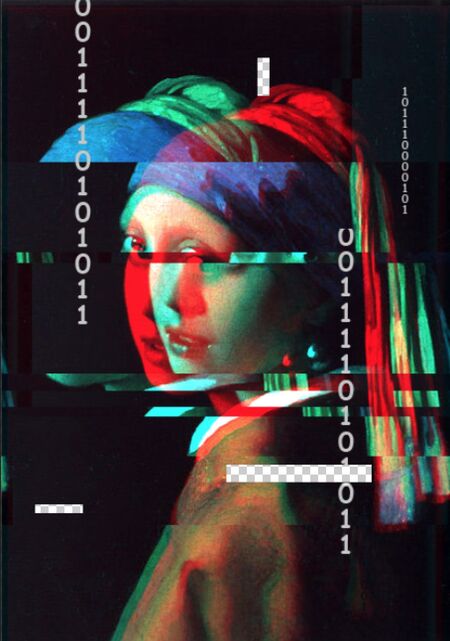
Glitch art is a digital art genre where technical errors and malfunctions are utilized as an artistic technique. Instead of correcting image damage, artists intentionally create distortions, color interference, tearing, and pixelation.
These effects can arise from software malfunctions, file corruption, or alterations to digital data. Artists use them to disrupt conventional image perception and create unconventional visual compositions.
Rosa Menkman — A Vernacular of File Formats (2010)
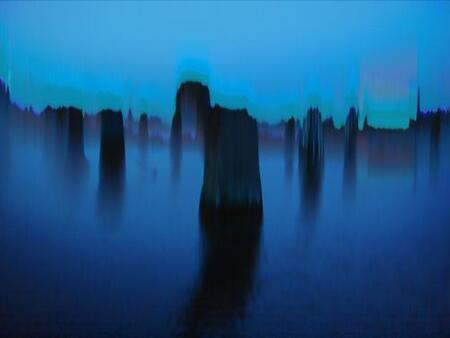
Thus, glitch art changes the perception of a technical error: it transforms from a problem to be fixed into a tool for creating a work of art.
2. Core Visual Techniques of Glitch Art
Color Channel Shift (RGB Shift)
Image color channels shift relative to one another. This causes red, blue, and green outlines to appear around objects. This effect creates a sense of instability and distortion in the digital image.
Horizontal Breaks and Fragment Shifts
The image appears to be sliced into horizontal strips, with each section shifting sideways. This creates the impression that the video signal is corrupted or the image is failing to load properly. This technique is often used to convey movement, chaos, and instability.
Pixel Sorting
The process involves altering the arrangement of pixels based on specific parameters, such as brightness or color. Individual areas of the image are stretched into long strips, causing the photograph to resemble digital abstraction.
Digital Noise and Interference
Digital noise appears as small dots, streaks, flickering, and random color elements. It resembles interference from an old television or a signal dropout. This effect helps to create an atmosphere of technical failure and visual instability.
Various types of glitch effects allow artists to experiment with the form, color, and structure of an image. Each technique disrupts the conventional perception of visual information in its own way, transforming a technical error into an expressive artistic element.
2. Glitch Aesthetics in Contemporary Visual Culture
Over time, the glitch moved beyond solely digital art and became an intrinsic part of modern visual culture. Its elements can be found in music videos, album art, promotional materials, posters, and graphic design.
Artists and designers utilize digital distortions to capture the viewer’s attention, emphasize a work’s mood, or forge a unique visual style.
Kanye West — Welcome to Heartbreak (2009)
Nabil’s music video utilizes pixelation, color distortion, and digital image fragmentation. These effects help convey emotional tension and inner experience.
Nine Inch Nails — Year Zero (2007)
The visual design of the project utilizes the aesthetic of digital artifacts, corrupted imagery, and technical glitches. It complements the dark atmosphere and concept of the music album.