Navigation
1. Concept 2. Main Body: ⁃ The runway as a zone of disaster ⁃ Object anti-design ⁃ Visual language 3. Conclusion 4. References
Concept
The research object is the visual communication of the Balenciaga brand during the creative direction of Demna Gvasalia—specifically, the stage design of runway shows and recent advertising campaigns. Particular interest lies in how the fashion house transforms objects and imagery associated with trash, wear, or disaster in everyday life into status artifacts of high fashion.
The goal of this research is to understand precisely which graphic and spatial tools are used to achieve this effect, and how the brand manages to translate social anxiety, chaos, and traces of destruction into a new visual code of elite consumption.
I chose this topic because I am drawn to how a brand deliberately breaks the conventional canons of the industry, employing an aesthetic of imperfection and visual noise to build a strong identity. As part of this research, it is important for me to trace how deconstruction and provocation become independent expressive tools—capable of forming a lasting brand image and managing audience attention more effectively than classic advertising techniques.
Research Hypothesis: By employing deliberate visual noise, grit, and aesthetics of decay in advertising campaigns, a brand provokes a strong emotional response from the audience, establishing shock content and signs of wear as the primary language of modern luxury.
For the analysis, key visual manifestations of the campaigns were selected: total scenography of the shows functioning as zones of catastrophe, object anti-design emphasizing the texture of decay, as well as brutalist layouts and specific photographic techniques. The research structure proceeds from the general to the particular—from large-scale spatial installations to the details of product advertising and the psychological mechanisms of viewer perception.
PODIUM AS A ZONE OF CATASTROPHE
In visual communication, Balenciaga’s runway space ceases to be a neutral backdrop for showcasing apparel. The staging of the shows transforms into a total installation and the brand’s primary advertising tool. The space establishes a narrative of ecological and social catastrophe even before the first models appear, generating powerful visual content for global media and social networks.
Mud Show (Spring/Summer 2023)
For the collection presentation, the fashion house, in collaboration with Spanish artist Santiago Sierra, constructed a gigantic pit inside the exhibition pavilion, completely filled with actual construction mud and wet peat.
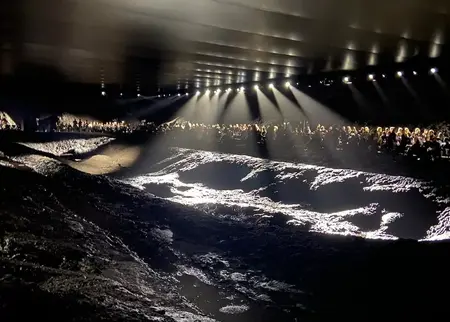
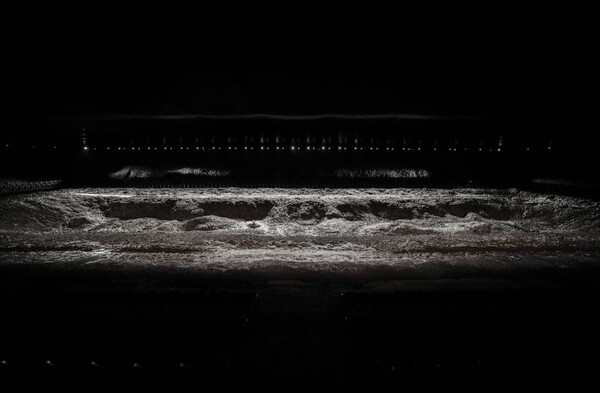
Spatial Installation Mud Show (Balenciaga SS23): an overview of the mud crater before the fashion show began.
The visual impact is constructed on the stark contrast between high-status apparel and a marginalized, gritty environment. Models in voluminous jackets, floor-length evening gowns with trains, and complex accessories strode deliberately through viscous sludge, intentionally dirtying their hems and shoes. The lack of sterility and the artificial industrial landscape transformed the show into a statement about the fragility of the familiar world and the search for truth amid chaos.
Clip from the Balenciaga Mud Show 23 featured in the FASHION BUSINESS CHANNEL video (2022)
Model walkouts on the muddy runway during the Balenciaga Summer '23 show (Mud Show)
Model on the mud runway during the Balenciaga Summer '23 show (Mud Show)
The Snow Show (Autumn/Winter 2022)
The collection presentation took place inside a hermetically sealed, spherical glass arena resembling a giant snow globe. However, instead of a cozy Christmas fairy tale, an artificial snowstorm whipped up inside with gusts of icy wind.
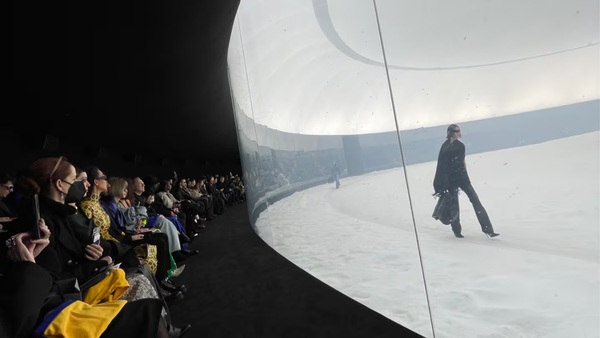
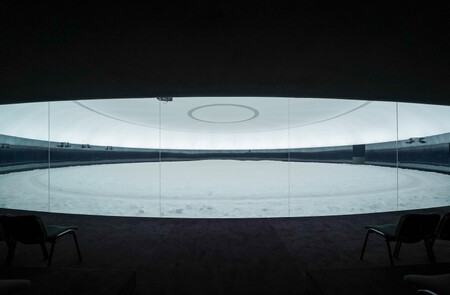
Set design for the performance The Snow Show (Balenciaga AW22): a transparent glass dome separating the audience from the artificial blizzard inside the arena.
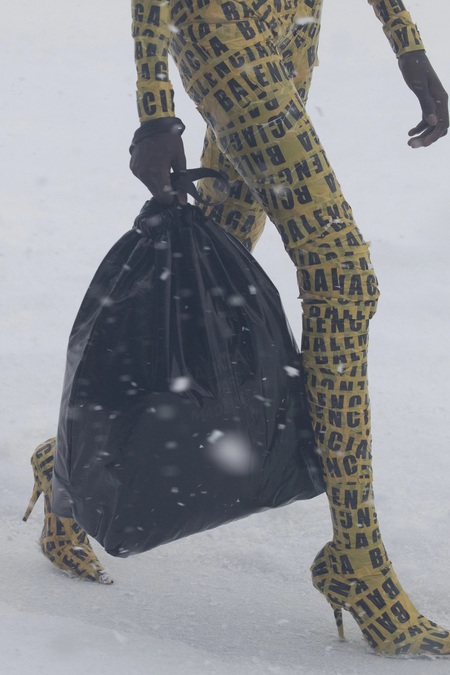
Spectators watched the proceedings through the glass, as if observing a natural catastrophe from afar. The models moved in a circle, leaning into a strong wind while bundled in multilayered clothing. Many carried leather Trash Pouch bags, which were visually indistinguishable from ordinary black and blue garbage bags.
A clip from Balenciaga’s The Snow Show 22 from the official Balenciaga video (2022)
Models on the ice rink during the Balenciaga Winter 22 (The Snow Show) presentation
The Balenciaga AW22 show model navigates an artificial blizzard while carrying the Trash Pouch bag.
SUBJECT ANTI-DESIGN
In Balenciaga’s product line and advertising campaigns, the readymade technique is employed, transposed into the context of luxury. The brand borrows recognizable visual codes from everyday, disposable, or damaged items, strips them of their utilitarian function, and mass-produces them using expensive materials. This sharp contrast between the low visual aesthetic and the high price point creates a viral news hook.
Trash Pouch
Model exiting with the Trash Pouch bag at the Balenciaga Winter 22 show (The Snow Show)
The Trash Pouch bag, first unveiled at the Winter 22 show, recreates the silhouette, sheen, and construction of a drawstring garbage bag. The item is crafted from thin calfskin in black, blue, white, and yellow—the standard color coding of trash bags. In its advertising campaign, the object is placed in an intentionally neutral or brutalist setting, where its status is read solely through the logo and price, transforming a symbol of disposal into a marker of elite consumption.
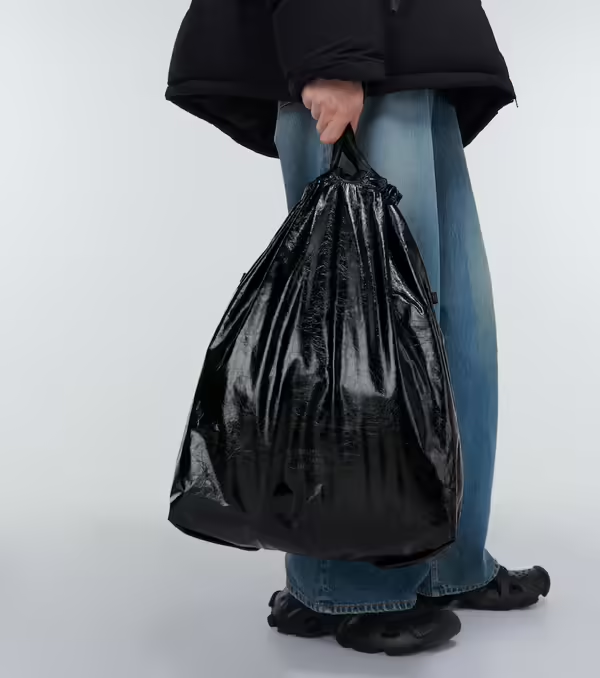
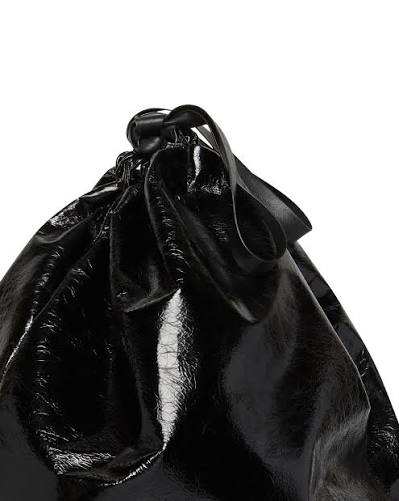
Demonstration of the Trash Pouch bag from the Winter 22 collection in the brand’s advertising campaign







