Death is simultaneously zero and infinity. It is one of those concepts that the human mind cannot materialize.
Navigator
- Introduction Chapter 1. Leningrad Necorealism: History of Origin and Core Artistic Principles 1.1. Historical and Cultural Context 1.2. Necorealism as an Artistic Phenomenon 1.3. The Artistic Language of Necorealism Chapter 2. Necorealism in the Context of Anti-Aesthetic Trends of the 1980s 2.1. Necorealism and Punk Culture 2.2. Necorealism and Horror 2.3. Necorealism and Science Fiction 2.4. Necorealism and Political Art Chapter 3. The Aesthetics of Ruin: The Specificity of Necorealism and Its Place in 1980s Art 3.1. The Grotesque as an Aesthetic Category 3.2. The Destruction of the Human Image 3.3. Necorealism’s Position within 1980s Anti-Aesthetics
- Conclusion
Introduction
«Werewolf Sanitars,» E. Yufit, 1984
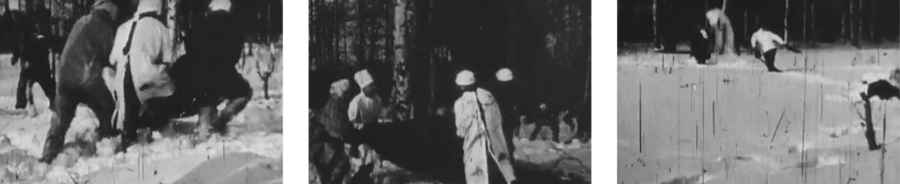
In 1984, a young man in a striped shirt and holding a saw steps off a suburban platform outside of Leningrad. He wanders into the woods, leaps from a tree, and is caught by people in knee-length white coats, who then beat him with snow shovels and pitchforks. The final shot is a white steamboat from Soviet archives. This is how Evgeny Yufit’s «Werewolf Sanitarists» looks—a film that marks the beginning of Leningrad necrorealism.
Over forty years, this gang of hooligans armed with a camera has become a museum artifact. In 2011, the Moscow Museum of Modern Art held the first major retrospective of the movement, curated by Olesya Turkina; Yufit’s works are housed in the Russian Museum and MoMA. Recognition, however, has outpaced analysis. Necrorealism is often discussed using mere epithets («wild,» «shocking,» «trashy»), while much less has been written about how its shots, color, makeup, and plasticity are structured.
The relevance of this topic is also tied to the international context. In 1980, Julia Kristeva published «Powers of Horror» with her theory of abjection (disgust toward what violates bodily boundaries and order), and in 1983, Hal Foster released the collection «The Anti-Aesthetic.» Many 1980s artists translated these ideas into their own work. The necrorealists worked with the same motifs—corpse, mannequin, anatomical atlas, hybrid body—but within a closed Soviet environment where these texts were almost inaccessible. Comparison allows us to test how similar images arose independently and how they ultimately differ. There is also a methodological point. Early necrofilms were silent, black-and-white, shot on 8 mm and 16 mm film with a shaky, grainy image. Their meaning rests on posture, makeup, montage, and color.
«Dad, Ded Moroz is Dead, ” E. Yufit, 1991
Closest to the participants are the texts of philosopher Viktor Mazin, whose monograph «The Cabinet of Necorealism and Yufit» (1998) was read by the movement through Lacan, Deleuze, Barthes, and Freud, as well as his joint history of necorealism with Turkina and the articles by Sergey Dobrotvorsky. The anthropological perspective was opened by Alexey Yurchak, who described necorealism through Giorgio Agamben’s «bare life» and the «politics of non-differentiation»; Ellina Sattarova contests his findings. The works of David Bering-Porter, the Pittsburgh Symposium collection from 2001, and Alexander Borovsky’s article «The Necro-challenge» are also important. Political and anthropological interpretations have been developed in detail, but there is almost no consistent visual analysis or comparison with Western anti-aesthetics (body art, object art, body horror). The object of the study is Leningrad necorealism as an artistic phenomenon of the 1980s. The subject is its visual language and methods of working with the grotesque and the human image in comparison with the anti-aesthetic trends of the same period. The goal is to define the specifics of this language and the place of necorealism within the 1980s anti-aesthetics. To achieve this, it is necessary to reconstruct the context of the movement’s emergence, analyze its motives and techniques, compare it with punk, horror, fantasy, and political art, and examine the grotesque as an aesthetic category. The main method is formal, or visual, analysis. This is supplemented by a comparative-historical approach; concepts from psychology and psychoanalysis help explain the viewer’s reaction. The chronological scope ranges from late 1970s actions to the early 1990s, extending to Yufit’s later films up to «Pryamokhodzhenie» (2005). Many early films are difficult to access, and some shots are known only through descriptions, so discrepancies in source dates and details are noted in the text.
«Electricians,» V. Kustov, 1990
Chapter 1. Leningrad Necorealism: Origins and Core Artistic Principles
1.1. Historical and Cultural Context
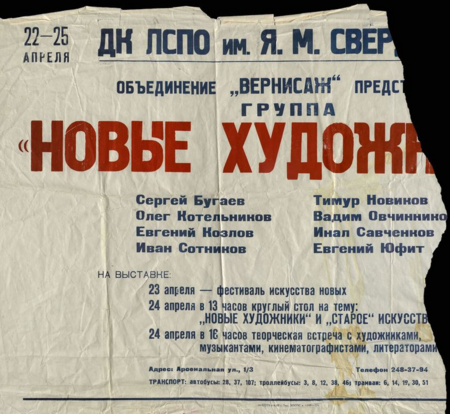
By the early 1980s, the Leningrad underground had established a history of its own. In December 1974, 220 works by unofficial artists were shown at the Gaza 52 House of Culture, and the exhibition drew about 15,000 visitors over four days. Nine months later, the «Nevsky» House of Culture began publishing these works in forty-minute installments, meaning each painting received only about six seconds of screen time. Day-to-day, this art lived in apartments and boiler rooms: Timur Novikov opened the «ASSA» gallery in his communal apartment in 1980 and ran it until 1987. Paintings hung next to kitchen utensils, and films were screened on bedsheets. This domestic, non-canonical perspective later informed the necrophilmic cinema. In 1981, the authorities began to legalize the underground—but under surveillance. A rock club opened on Rubinshteina Street, 13, which was monitored by the KGB, the Party, and Komsomol, alongside the Society for Experimental Fine Arts (TEII). This organization eventually brought together 140 artists and nine groups, including «Mitki,» «New Artists,» and the «Necorealists.» In 1982, «New Artists» began with a sharp gesture: Novikov and Sotnikov exhibited a shield with a hole—a «Zero-Object.» The void in the frame, instead of a picture, anticipated the necorealistic nullification of meaning. Yufit joined the group in 1984, and Novikov named him the leader of the group’s cinematic wing. According to Borovsky, Leningrad’s «direct action art» split into «New Artists» and necorealism, but both currents «communicated and shared energy.» The necorealists took to the stage with Kuryokhin’s «Pop-Mechanics,» where figures moved «zombie-like» and were responsible for the «wild, ugly» aspect of the show. The backdrop was the later era of stagnation. From 1982 to 1985, general secretaries died one after another, and Chernenko became the third leader buried within three years under televised broadcasts. The official iconography only recognized heroic «death for the Motherland,» depicting the fallen in classical ideals of beauty, as if their bodies were impervious to decay. Necorealism reintroduced the body into this imagery. Yurchak terms the participants «non-Soviet Soviet»: they did not fight the regime, but refused to acknowledge its existence. Borovsky clarifies: the struggle was not «with» ideology, but «for» the right to personally lived art.
Triptych «Cold,» V. Kustov, 1990
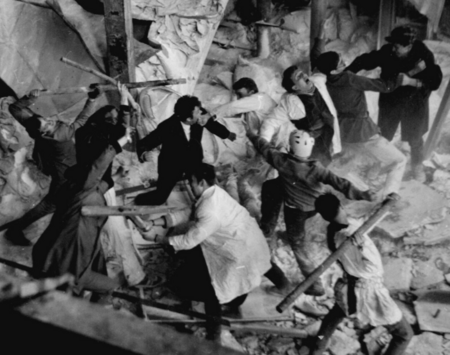
Evgeny Yufit was born on January 17, 1961, in Leningrad. At the turn of the 1970s and 1980s, he became associated with the Kupchinsky Punk group, which included Viktor Tsoi, Alexey Rybin, and Andrey Panov. Initially, their actions were non-spectator, non-film events: staged fights on commuter trains, in construction sites, and in the forest; beatings of mannequins, what was termed «filmmaking without film, ” following the Borovsky tradition. A turning point was the Russian translation of Eduard von Hofmann’s „Atlas of Forensic Medicine“ in 1900, which featured hundreds of lithographs detailing the aftermath of injuries, burns, hangings, and poisonings. Kotelnikov recalled that the term „necrorealism”—which Yufit and he coined in a kitchen while being „captivated“ by these illustrations—came from this material. A key detail: the corpses in the atlas are depicted standing upright. A body in the posture of a living person breaks the viewer’s expectation and resolves into something between a portrait and a autopsy report. Around 1984, about ten people traveled outside the city. One wore a sailor’s top, another was drinking, and Yufit suggested filming a „sailor“ emerging from a train. Upon seeing people in white coats, he invited them to follow him. He developed and edited the film himself, splicing in documentary footage, and released it under the banner of the self-created studio „Mzhalalafilm.“ Its founding is usually dated to 1984, sometimes 1985; „mzh“ means gloom, doze, and the unconsciousness of the sick, while „lala“ refers to babbling. On one occasion, passersby called the police after seeing the beating of a medical mannequin; the film was developed in the Bolshoy Dom, and they concluded that „only the madness of what was shot absolves them of responsibility.“ Bering-Porter sees the camera as a shield: the act, labeled art, ceased to be mere hooliganism. In the second half of the decade, the necrorealists, together with the Moscow-based „Sine-Phantom, ” created a „parallel cinema.“ In 1988, Vladimir Maslov, Sergey Serp, and Vladimir Kustov joined them, and Alexander Sokurov invited Yufit to an experimental workshop at Lenfilm, where his first 35 mm film, „Knights Under the Sky, ” was released in 1989.
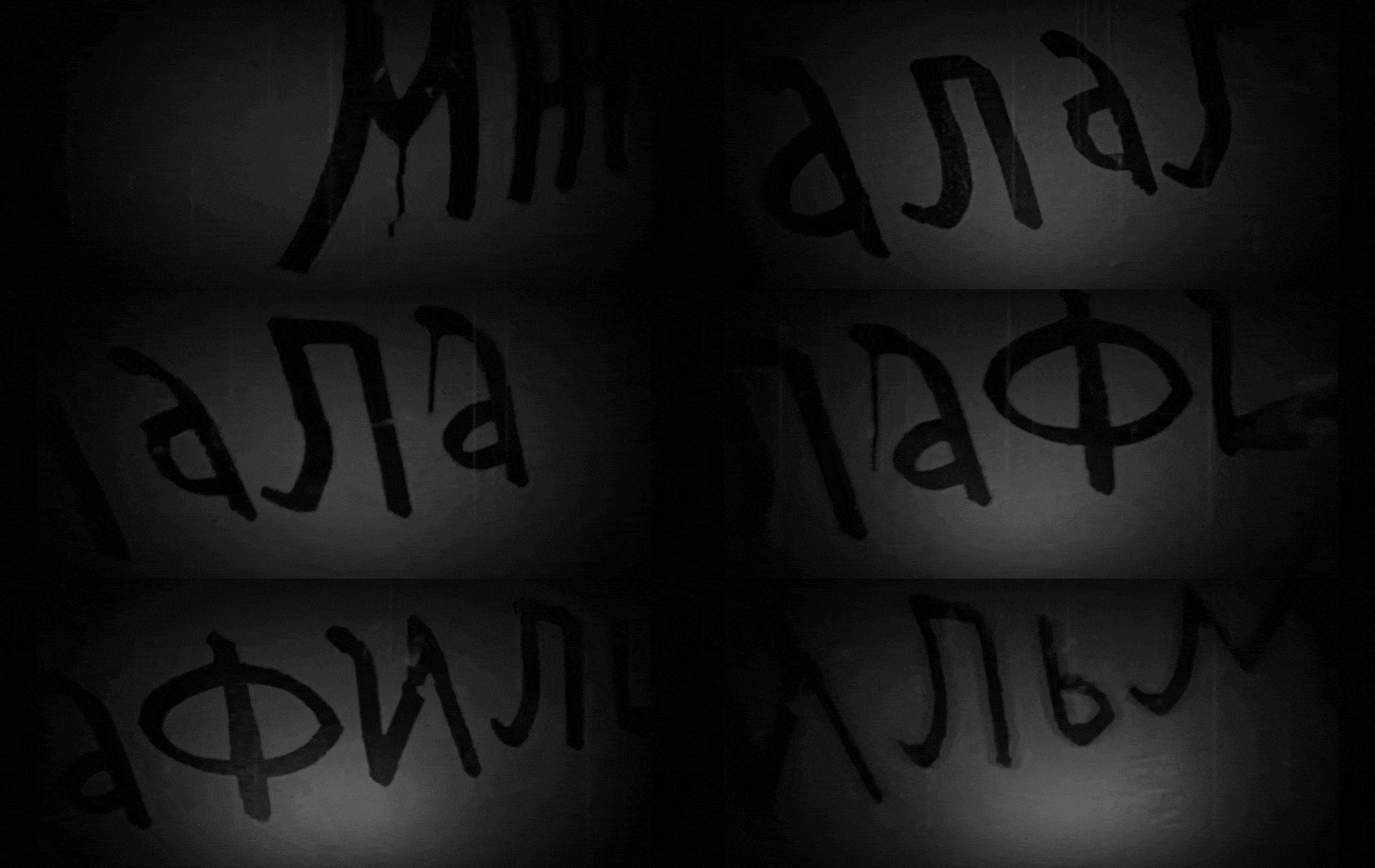


«Mzhalalfilm» Titles, 1990s
1.2. Necrorealism as an Artistic Phenomenon
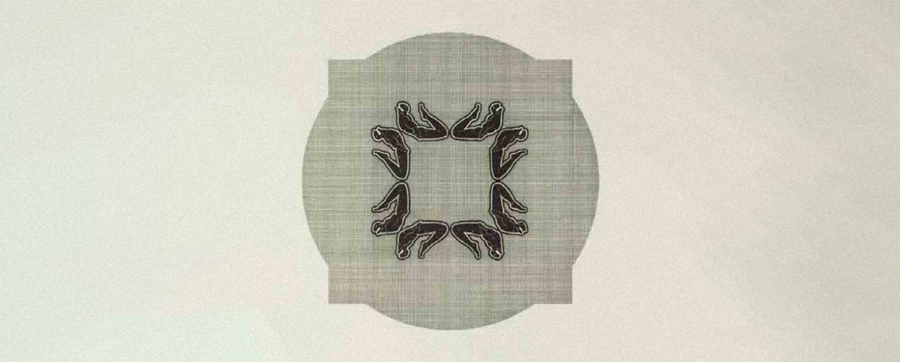
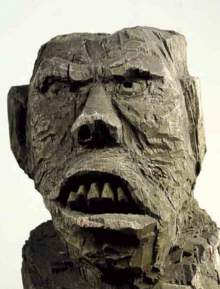
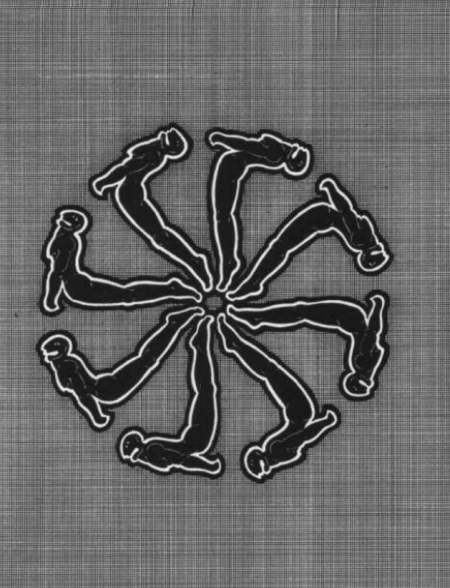
«Signs. Square in a Circle, ” V. Kustov, 1998. „Idol, ” V. Morozov, 1990
Title—oxymoron: the Greek word «nekros, ” meaning death, combined with „realism, ” and also a parody of „socialist realism.“ Yufit called necrorealism „the collision of two opposites—death and life, ” art of „the territory of doubt.“ There was no manifesto; according to him, aesthetics were spawned by „chaos and absolute authorial whim.“ Instead of a program, there was a humorous ladder: „stupidity, vigor, and audacity“ lead to „maturity, ” the highest form of which is „ferocity.“ The movement had nothing to do with necrophilia or morgues; participants maintained rumors about cemeteries for the sake of mystery, and they depicted post-mortem changes based on atlases. Almost everyone performed under pseudonym-masks: Andrey Myortvy, Trupyr, Evgeny Debil, Yuri Tsirkul; alongside them were Kustov, Kotelnikov, Serp, Igor Bezrukov, and Valery Morozov. The artist became a character in the necromundo simply through their name. Myortvy worked in crematoriums and wrote „corpses, ” Debil scratched film by hand, Trupyr worked as a cameraman for early films, Morozov was the only „necrosculptor, ” and Maslov, who staged Beckett and Ionesco, became a co-author on Yufit’s feature films. Kustov began structuring the movement’s theory in the early 1990s.
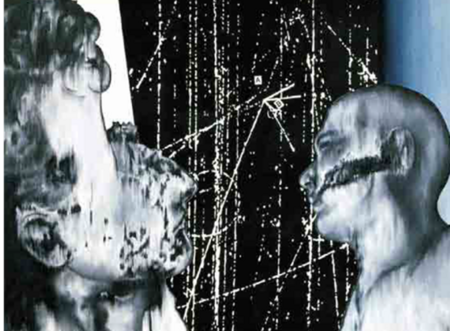
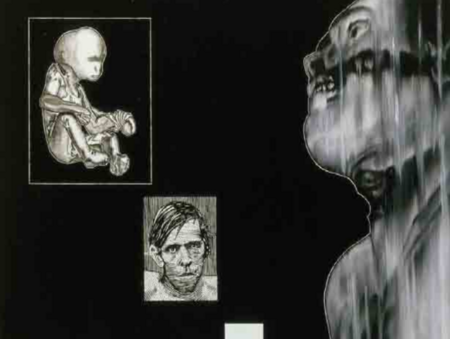
«Birth and Decay. Anti-Sigma-Minus-Hyperon, ” V. Kustov, 1997. „Pan Sperma, ” V. Kustov, 1994
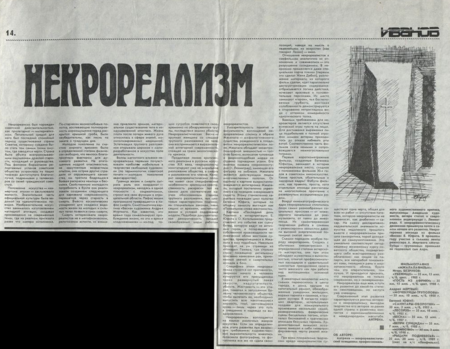
Film was the primary medium. Early films were shot in mere hours, and the artists themselves acted in them: «The Werewolves, ” „The Lumberjack, ” „Spring, ” „Courage, ” and „Suicide Spring“ (1988). The screening of „The Corpse-Loiterers“ in the House of Cinema in 1988 ended with cries of „Such art is not needed by the people!“ In the same year, Yufit’s films were accepted at the Riga Festival „Arsenal.“ The feature film „Dad, Santa Claus Died“ (1991), based on Alexey Tolstoy’s „The Werewolf Family, ” won the Grand Prize in Rimini in 1992. Later came „The Wooden Room, ” „Silver Heads, ” „Struck by Lightning, ” and „The Walker, ” and the merriment of the early works gave way to gloom. Concurrently ran exhibitions: The Russian Museum in 1989, Stedeleyk in the 1990s, and „Binationalle“ in 1991. For the 2011 retrospective, the halls were designed with felled trees, fir, birch, and aspen, and the forest—the main scene of necorealism—literally entered the museum. As a cohesive movement, necorealism dissolved by the late 1990s. The theme was death, but not the kind you expect from the title. „Death in necorealism is not naturalistic; there is nothing repulsive in it. There are no gunshots, no murders, no blood. It is grotesque, parody, black humor, ” Yufit would say. Kotelnikov described the subject as „the life of the body after the spirit dies, ” while FURFUR viewed it as death that was „not yet happened but perpetually enduring.“ The characters are drawn from Soviet mythology: sailors, pilot suicides, medics, scientists, Pioneers, against whom is the „necrosquad, ” running in a circle through the forest. The train, the loop, water, and the forest—which in the fairy tale is linked to the realm of the dead—recur. Borovsky lists the sources of imagery almost in a breath: state propaganda, „We from Kronstadt, ” the „Film Travel Club, ” forensic and meat-cutting manuals, military experience, and the poetry of Oleg Grigoriev. Tradition was not abandoned, however. Yufit traced his lineage back to the 1920s film avant-garde, surrealism, and German Expressionism, viewing silent film as the ideal—in his opinion, sound, color, and video only diminished the energy of cinema. What was rejected was not the tradition itself, but its official, cliché-ridden, devolved version.
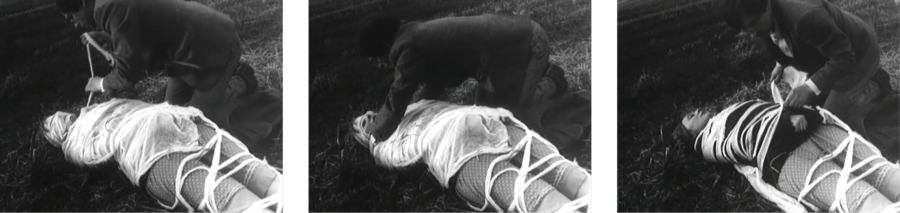
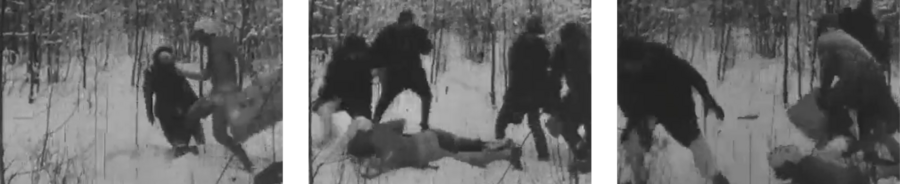
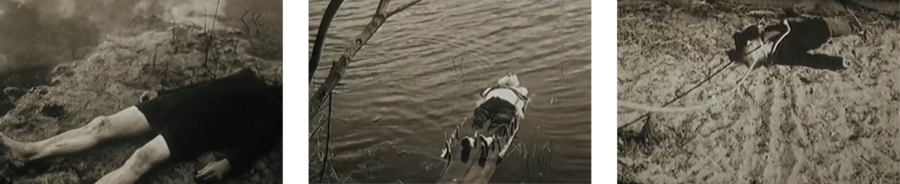
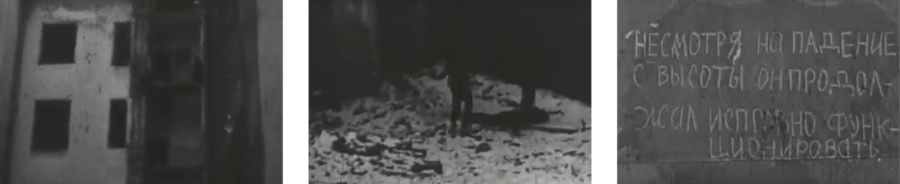
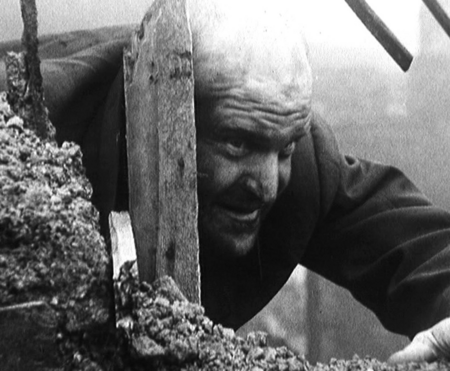
«Logger,» E. Yufit, 1985. «Silver Heads,» E. Yufit, 1985. «Logger,» E. Yufit, 1985. «Dad, Ded Moroz Died,» E. Yufit, 1991.
1.3. The Artistic Language of Necorealism
«In the Reeds» by Trupyrya (1987), the title sequence «Mzhalalafilma, ” shows half-decomposed sailors emerging from the reeds. The sailor’s uniform—a symbol of revolutionary heroism—is worn by a body rising from the water, and the vertical hatching of the reeds merges with the figures, giving the impression that they have sprouted from the swamp. The „Dutik“ of the Dead is made from plastic heated over a gas burner: the material balloons like a corpse affected by putrefaction gases, and the technique itself becomes an imitation of physiology. In a series of portraits of the scientists Kustov and Mechnikov, the rendering is academic, but Einstein (1989) and Marriott are „decaying in all abstract beauty.“ Within one series, a portrait disintegrates into a stain.
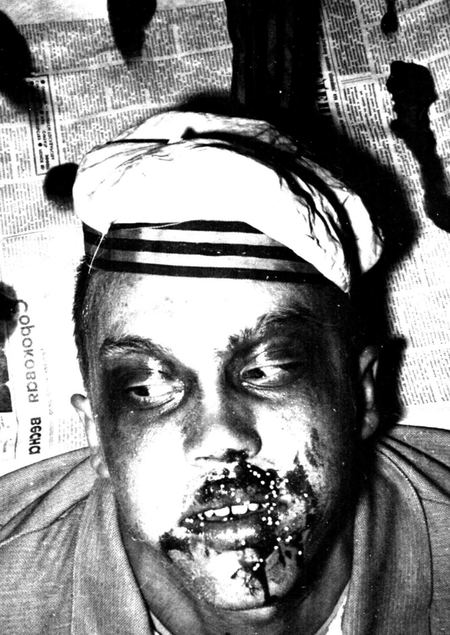
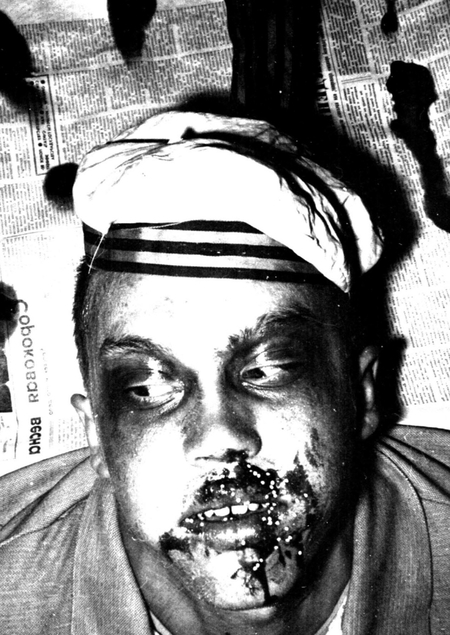
The naturalistic aspect stops being repellent. The makeup was assembled from bandages, tomato paste, jam, rosehip syrup, and cotton used to puff up the cheeks. The viewer sees not injury, but a homemade forgery, and revulsion coexists with laughter. In „Werewolves in Sanitariums, ” the white coats almost blend with the snow; the figures alternately emerge from the background or dissolve into it, and white immediately signifies medicine, sterility, and emptiness. The steamboat in the finale will also be white—"Soviet happiness,» according to Yufit. The montage connects two white spots—violence in the woods and official joy at sea—and the blanket promising salvation turns into preparation for execution. Cognitive dissonance arises, and laughter disperses it.
Rhythm adds absurdity. Early films paired the hustle reminiscent of Chaplin and Keaton with the grim texture of stagnation, while scenes shot in slow motion resulted in accelerated, puppet-like movements upon playback. The primary compositional figure is a closed loop: meaninglessness is born not from the plot, but from the trajectory, and everything is performed with complete seriousness. Sound is separated from the body: in «Knights of the Heavens, ” the actor delivers lines while standing on his head. The movement anthem „Grease-Wax“ is sung with the intonation of an upbeat mass song: „Our corpses devour / Emaciated bugs. / After death comes / The life we want, guys!“ The grotesque is most acute in the juxtaposition of the montage with the chronicle. In „Suicide Boars, ” one man helps another descend into a dacha pit and pours boiling water on his face, and absurd deaths alternate with marching pioneers and airplanes. This is a montage of attractions (meaning emerges at the cut point): the line of a collective body next to a solitary body awkwardly falling in the pit, and it is unclear which is more alive. The chaotic, almost dance-like movements of the characters resemble the medieval „Dance of Death.“
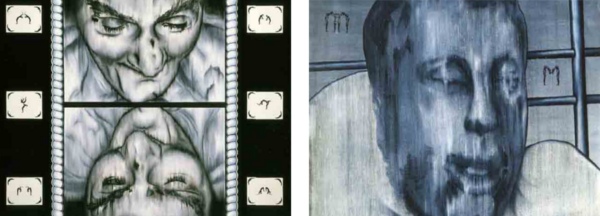
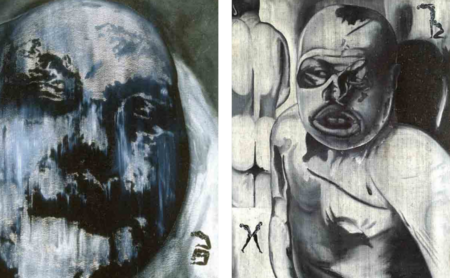
«Animator,» V. Kustov, 1994. «Courage,» V. Kustov, 1998. «Einstein,» V. Kustov, 1989. «Electricians,» V. Kustov, 1988
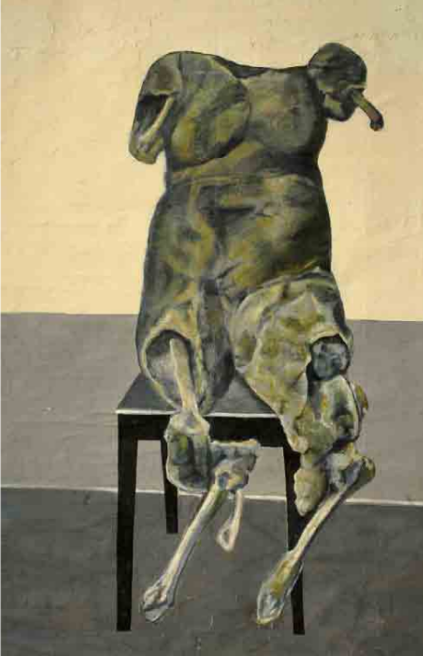
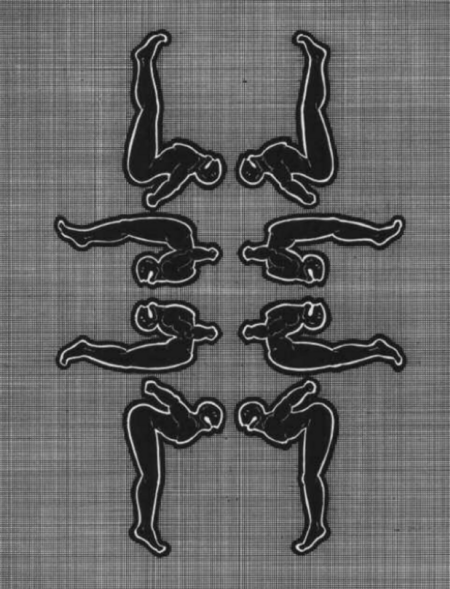
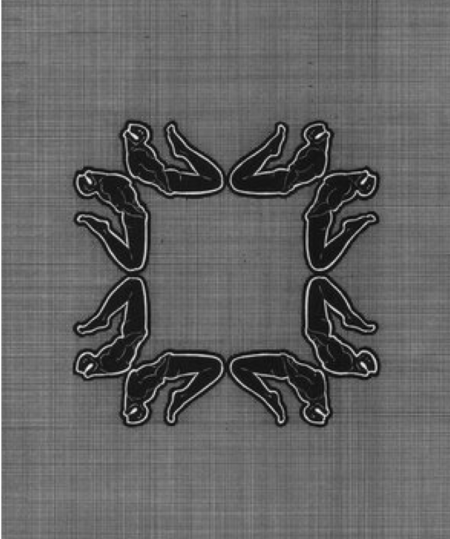
Kustov developed the most rigorous system. His necromantic method captures a «corridor of dying, ” and color becomes a concept here: black signifies life, white signifies death, gray signifies dying—a state of „neither life nor death.“ The physical justification is this: black absorbs light, while white reflects it. Conventional European symbolism is inverted. If this code is accepted, Yufit’s monochrome ceases to be a consequence of poverty: dark figures against the snow are read as stages of a single transition. The human figure is distorted across several planes. High contrast „burns out“ the lighter areas of the face, shadows consume the eye sockets, and the face becomes a mask. The Scythe and Bezrukov dissect the bodies, and in „Sivash is Still Ours“ (1988), Bezrukov „dismembered“ the sickle and hammer as well. Borovsky notes that the necro-like quality contains the motif of rapport (a recurring pattern element): the human becomes a reproducible detail, and, according to Lapay, it is difficult to distinguish the actors from the victims. The figures are also warped and „alive.“ Maria Popova compares Yufit’s characters’ behavior to misplaced activity (in ethology, this is how inappropriate behavior is termed, such as when an animal suddenly starts grooming during a conflict): scientists and military personnel perform meaningless actions with perfect posture, and students listen to lectures with perfectly straight backs. Mechanistic plasticity deforms the human figure as much as zombie makeup. Why this effect is simultaneously funny and unsettling is explained by Freud’s „uncanny“ and the related concept of the „uncanny valley“ (the unpleasant feeling evoked by a figure that is almost, but not quite, human).
«Love or Death,» V. Kustov, 1994
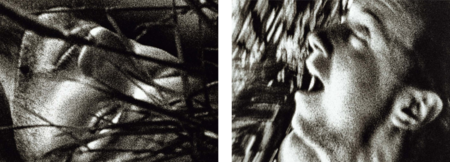
The central idea of the movement is the abolition of the dualism—the rigid opposition—between life and death, with the «corpse-not» as its central image. «Being dead, its necrogrotesque heroes end up being more alive than the living themselves,» writes Popova. In Lumberjack, a man falls from the ninth floor, but, as the title notes, continues to «function well»; he is placed under a train «to revive» him, and in the finale, the pioneers release pigeons. They also planned a shot with reversed film, where the man who threw himself under the train walks back; the role of the «newborn corpse» was played by the mannequin Zurab from the Institute of Forensic Medicine. The final frame of Santa Claus, Dad Died is shot from above: a group of men in black suits walks through the white grass of the previous year between black trees and disappears into «nowhere,» leaving behind birch trees resembling a skeleton protruding from a white body. The verticals of the people echo the verticals of the trunks, and as the people depart, the trees take their place; in Kustov’s code, the black abandons the white. His later films push this logic to its extreme: the scientists in Silver Heads crossbreed humans with trees, Uprightness is based on fictional documents about experiments on crossbreeding humans and apes, and in Struck by Lightning, man, stone, and tree are «all the same.» The language of necorealism can be described as a system of boundary erasure: monochrome serves as a transition scale, everyday makeup makes death both terrifying and comical, the circle removes the movement’s goal, chronicle confronts the collective body with the individual, and the forest absorbs the human. Turkina reduced the movement’s meaning to memento mori, but, as will be seen further on, this memento mori is a rather strange kind.
«Logger, ” E. Yufit, 1985
Chapter 2. Necorealism in the Context of Anti-Aesthetic Trends of the 1980s
2.1. Necrorealism and Punk Culture