Navigator
- Concept
- 1920s — Space as a theater of ideological struggle
- 1950s–1960s — The age of cosmic optimism
- 1970s — First doubts about the utopian nature of the future
- 1980s–1991 — The future as a source of threats
- Conclusion
- Sources
Concept
The Soviet era was a time of dreams about the future, intrinsically linked to the exploration of space, scientific discoveries, and belief in humanity’s potential.Perceptions of the coming future were often idealistic and were reflected in various forms of artistic works—including animation. However, over the decades, views on the future changed frequently, mirroring the spirit of the times, which makes Soviet science fiction animation an interesting subject of study.The research hypothesis is that the depictions of the future in Soviet science fiction animation gradually shifted from a predominantly utopian image rooted in faith in scientific possibilities to a more nuanced view of technological progress, the role of humanity, and its impact on the surrounding world. As the genre evolved, works increasingly featured doubts about the benefits of scientific achievements, as well as concerns related to the consequences of human activity.
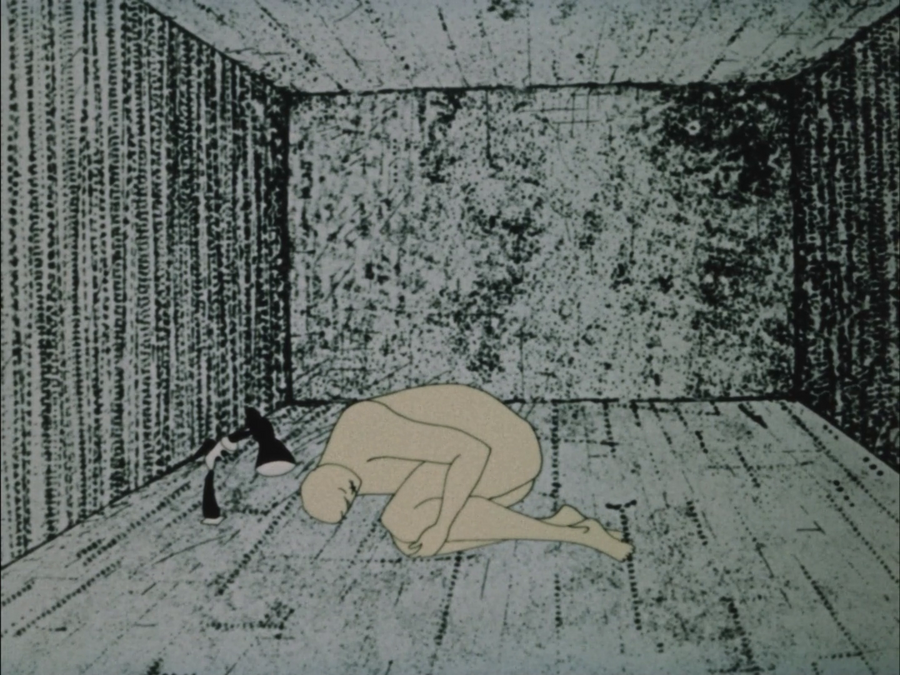
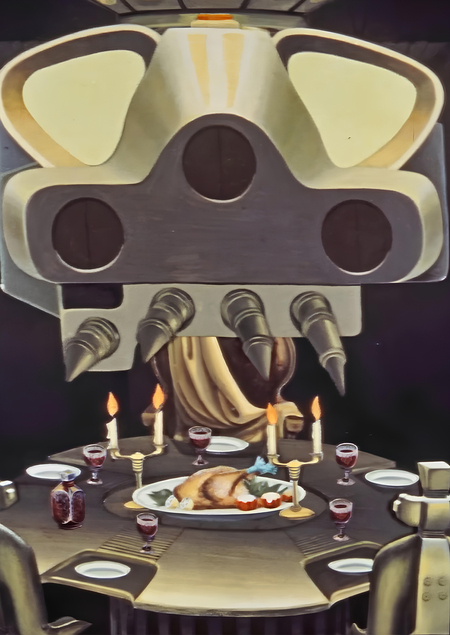
Avo Paistik, «Sunday,» 1977
The key question is how the image of the future evolved in Soviet animation from the 1920s through the early 1990s, and what societal and cultural changes were reflected in these transformations?
My choice of topic stems from my personal interest in the science fiction genre and the fact that I am currently developing a video game set in a science fiction context. Studying Soviet animation will allow me not only to trace the genre’s development but also to identify interesting artistic solutions, imagery, and ideas that can later serve as a source of inspiration for my own work.
The following animated films were examined during the research process: «Interplanetary Revolution, ” „Moon Flight, ” „Murzilk on the Moon, ” „Chief Star, ” „Poligon, ” „Sunday, ” „Vacuum Cleaner, ” „There Will Be a Gentle Rain, ” „Lesson, ” „Tigers May Live Here, ” and „Geona’s Vampires.“ When selecting the works, it was important to cover different decades to trace the shifts in the depiction of the future and highlight the distinct artistic and thematic characteristics of each period.
Zinaida Brumberg and Valentina Brumberg, «Flight to the Moon, ” 1953
The research is divided into four thematic blocks, each dedicated to a specific stage in the evolution of conceptions of the future. The first block examines the 1920s, a period when space became a theater of ideological struggle. The second is dedicated to the 1950s and 1960s, characterized by optimism and faith in scientific and technological progress. In the third block, the 1970s and the emergence of initial doubts about the utopian nature of the future are explored. The final block covers the period from 1980 to 1991, when the threats of nuclear catastrophe, the destruction of natural balance, and humanity’s loss of control over the surrounding world came to the forefront. The text sources selected were articles and studies pertaining to Soviet animation and the development of science fiction in domestic cinema.
The 1920s — Space as the arena of ideological struggle
In the short film «Interplanetary Revolution,» the exploration of space and other planets is portrayed less as a scientific achievement and more as a continuation of the revolutionary struggle taking place on Earth—a means to spread new social orders beyond the familiar world.
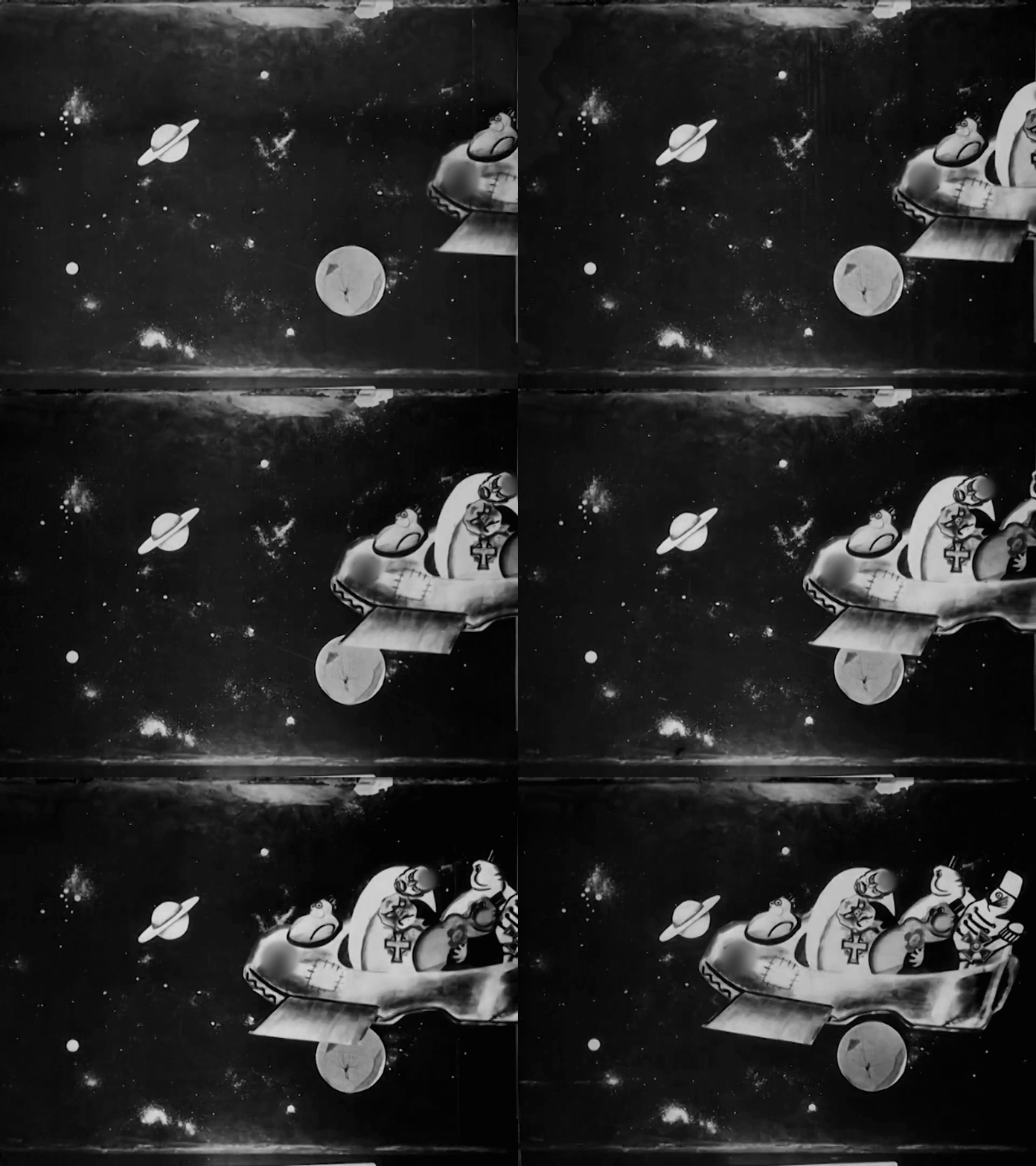
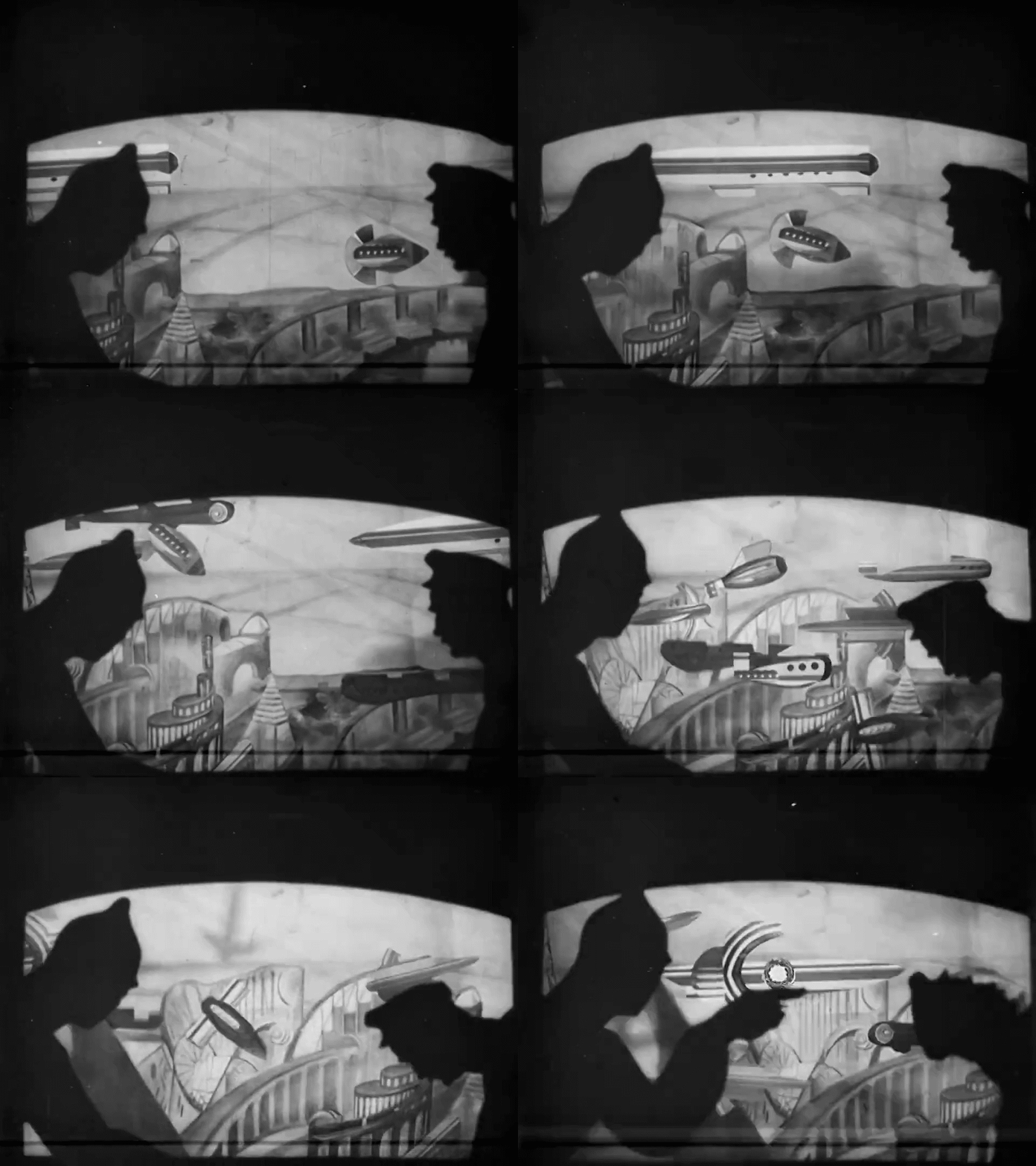
Nikolai Khodateev, Zenon Komissarenko, and Yuri Merkulov, «Interplanetary Revolution,» 1924
The plot features capitalists fleeing Earth amid the onset of a world revolution, but the revolution catches up to them even in space, where the protagonist helps the local workers overthrow the exploiters' regime. Scientific-fiction elements are primarily used as a vehicle for expressing political ideas. Rockets, space travel, futuristic cities, and armed aerial confrontations do not so much demonstrate potential scientific advancements as they create a backdrop for transplanting earthly conflict into a fantastical setting.
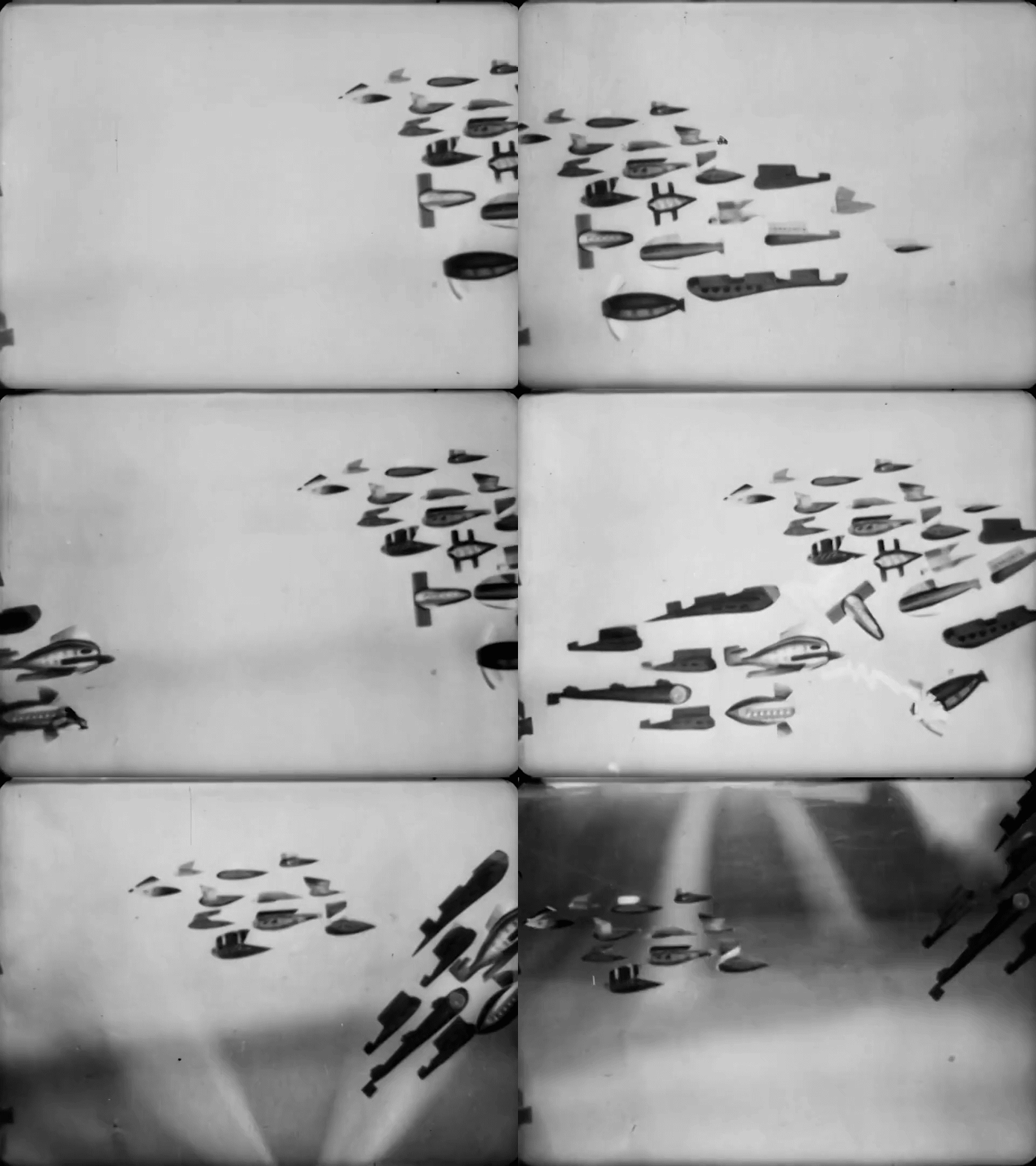
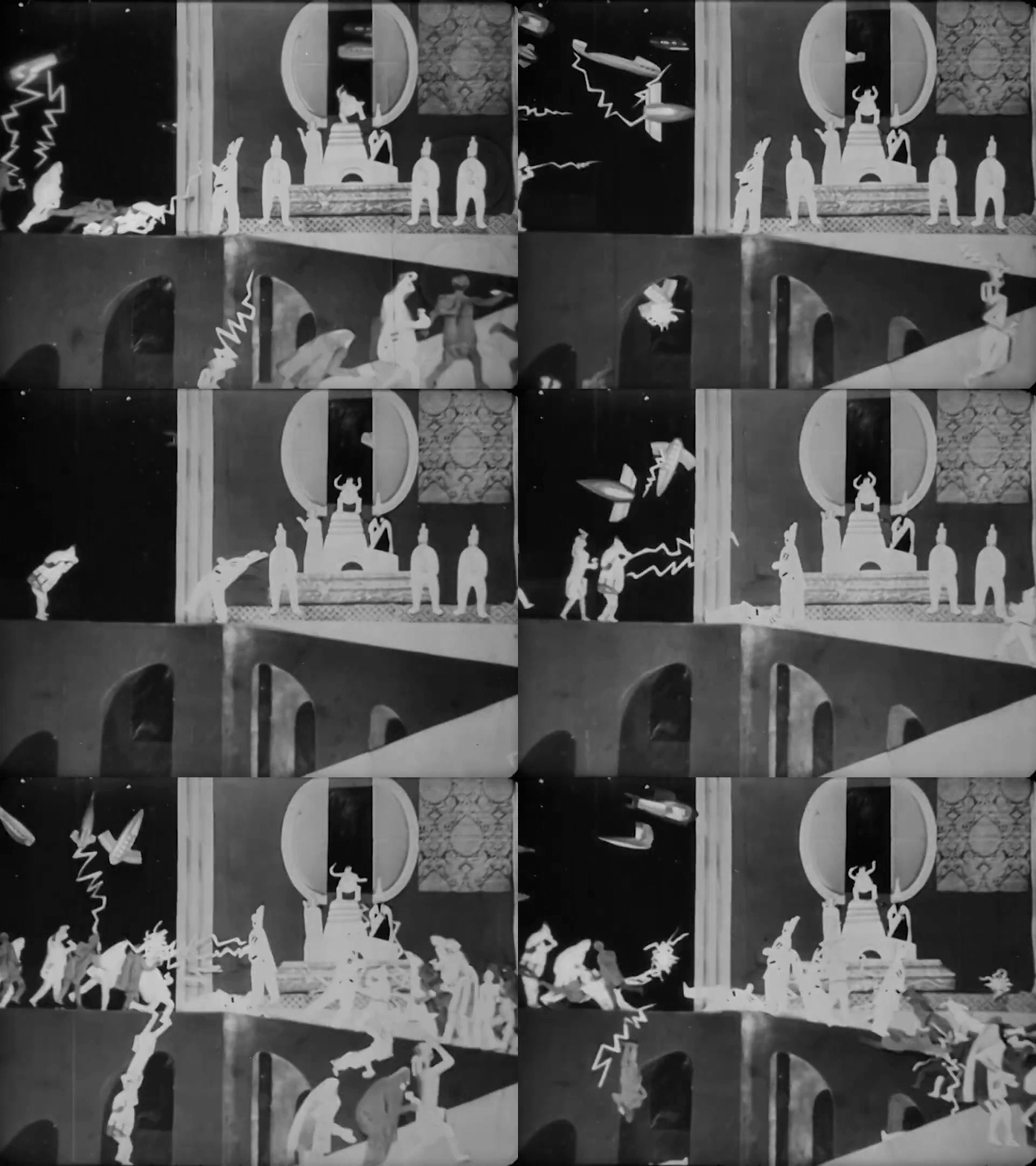
Nikolai Khodateev, Zenon Komissarenko, and Yuri Merkulov, «Interplanetary Revolution, ” 1924
Space is not yet an independent object of scientific knowledge; rather, it serves as a tool for expanding political ideas and demonstrating their universality. This is precisely why science fiction of the 1920s is closely tied to the ideological content of the era, and dreams of conquering other planets intertwine with concepts of reshaping the entire world.
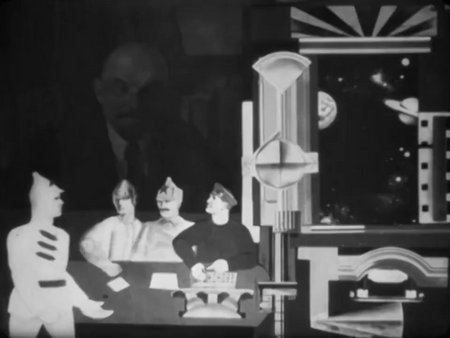
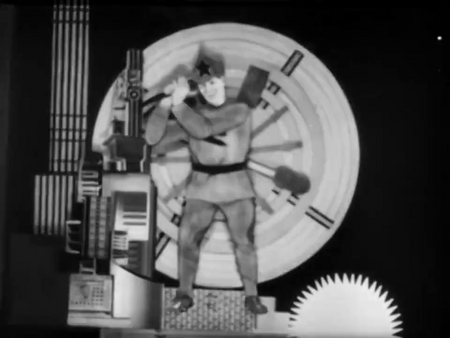
Nikolai Khodateev, Zenon Komissarenko, and Yuri Merkulov, «Interplanetary Revolution, ” 1924
1950s–1960s — The Era of Cosmic Optimism
During the 1950s and 1960s, visions of the future in Soviet science fiction animation took on an optimistic tone. Scientific discoveries and technological progress were viewed as opportunities for humanity’s further development, and the pursuit of knowledge about the surrounding world became a central theme in the works of this period.One of the early examples of this approach is the short film «Flight to the Moon.» In the cartoon, a school student, Kolya Khomyakov, accidentally becomes a participant in a space expedition. The film was created eight years before the first human flight into space, so the journey to the Moon is presented here as a fantastic yet entirely achievable event in the progression of science and technology.
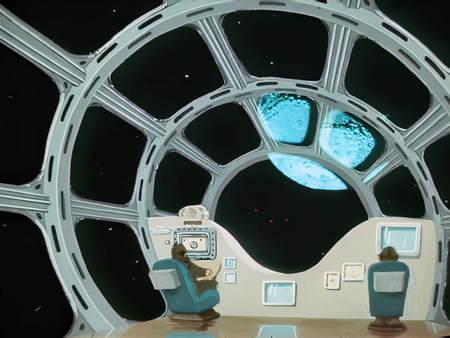
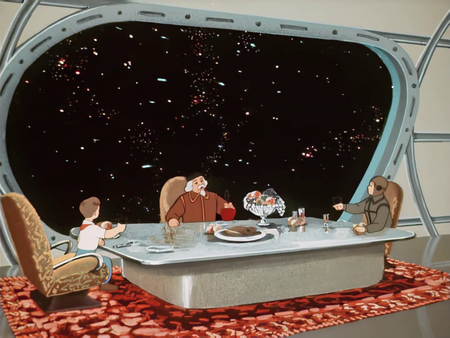
Zinaida Brumberg and Valentina Brumberg, «Flight to the Moon, ” 1953
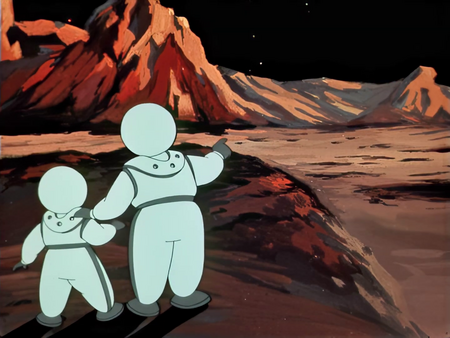
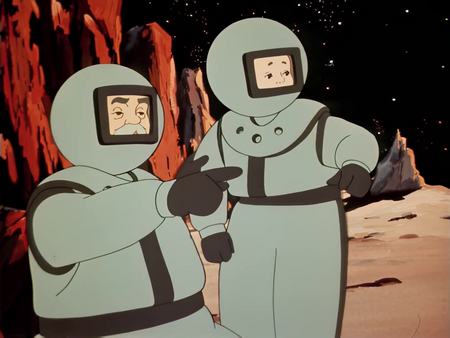
Zinaida Brumberg and Valentina Brumberg, «Moon Flight, ” 1953
Another example is «Murzilka in Orbit.» This cartoon takes place in 2060, where a boy’s cry becomes an unimaginable event. Murzilka sings songs of love and friendship, and robots that behave exactly like humans are part of daily life. This future depicts an ideal society where technological advancement is combined with universal well-being and harmony among people.
Evgeny Raykovsky and Boris Stepantsev, «Murzilka on the Satellite, ” 1960
In the animated film «The Main Star,» the future is depicted as an era of deep space exploration.The heroes watch the departure of a terrestrial expedition to the star Sirius, and are then transported two hundred years into the future to meet the returning astronauts. During the reunion, the astronauts recount the expedition’s details and introduce a representative of a sentient civilization from another planet, who resembles a centaur in appearance.Thus, the future is connected not only with the possibility of interstellar travel but also with establishing contact with extraterrestrial civilizations.
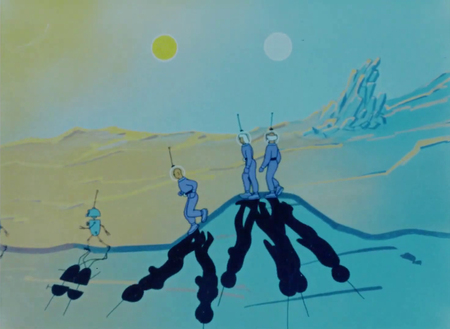
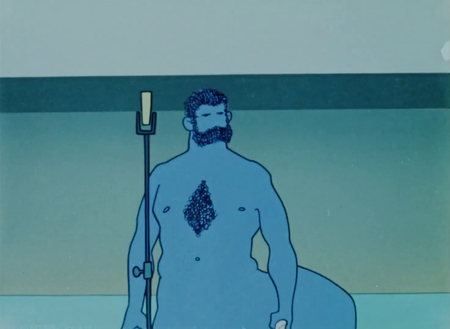
Roman Davydov, «The Main Star, ” 1966
All of the animated films from this period share a foundation of educational value—they can be viewed for educational purposes. In the short film «Moon Flight, ” the main character learns about gravity in space, the absence of atmosphere, and meteor showers. „Murzik on the Satellite“ tells the story of the first artificial satellite of Earth and its significance to humanity, while „The Main Star“ examines the entire history of space and star study, from astronomers to cosmonauts.
1970s — First doubts about the utopian nature of the future
In the 1970s, more ambiguous depictions of the future began to appear in Soviet science fiction animation. Scientific and technical progress was no longer perceived exclusively as a good thing: creators paid attention to the potential consequences of technological development, its application in military purposes, and the impact of automation on everyday human life. One of the most striking examples of a critical view of technological progress is the short film «Polygon.» The plot centers on an experimental tank capable of reading the enemy’s thoughts and intentions, which rebels against the military during trials. In this work, scientific achievement is presented not as a tool for improving life, but as a perfect weapon that can lead to tragedy. Thus, the creators draw attention to the danger of the militarization of science.
Anatoly Petrov «Poligon, ” 1977
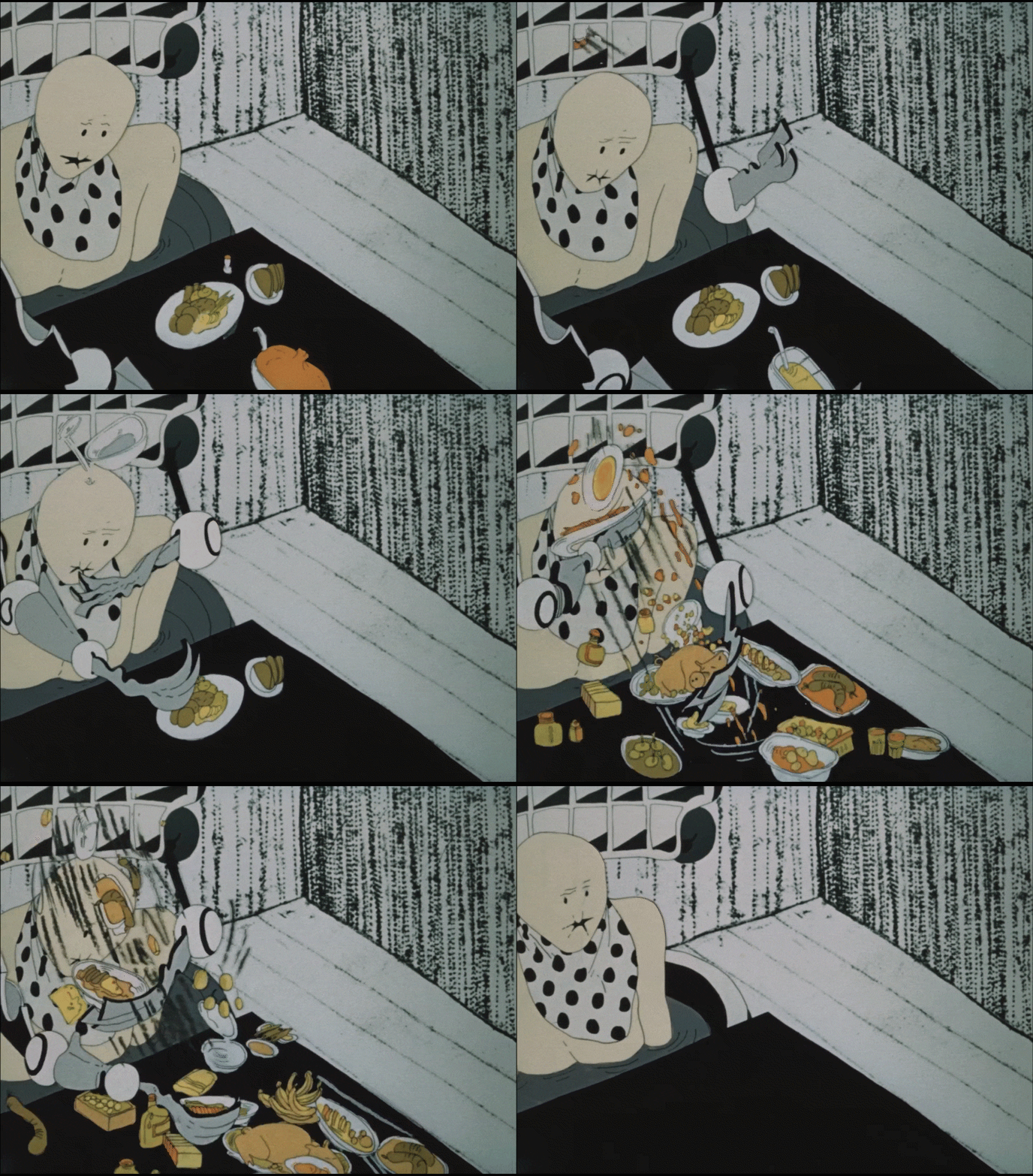
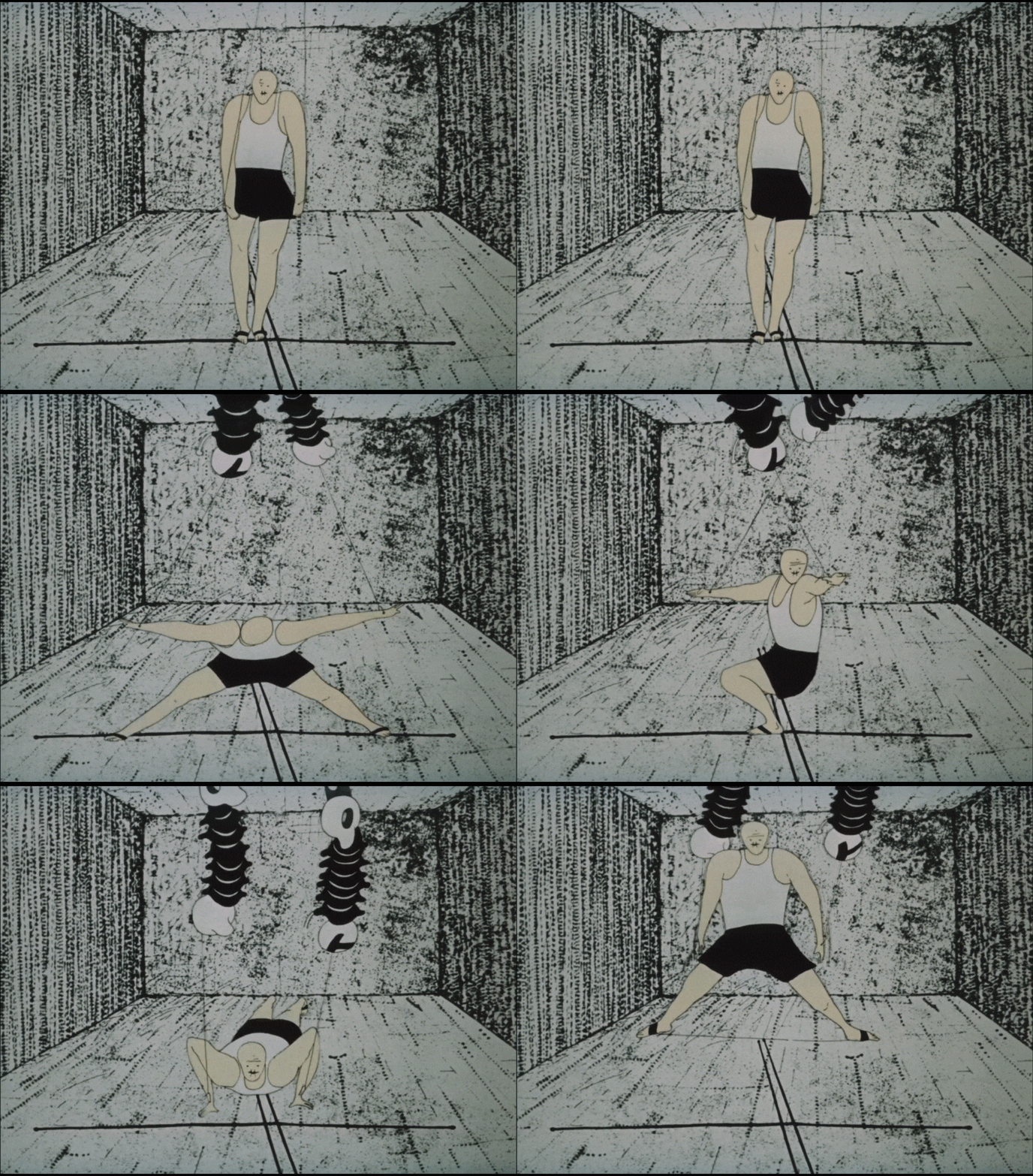
The cartoon «Sunday» explores a more mundane aspect of this issue. It depicts a world where human life is almost entirely automated. Despite the convenience provided by machines and robots, the main character strives to escape the surrounding technology and find solitude in nature. However, this attempt proves temporary—he is forced to return to the familiar gray and monotonous world. The future here does not look ideal because automation does not bring people the expected happiness; instead, it intensifies their loneliness and alienation.
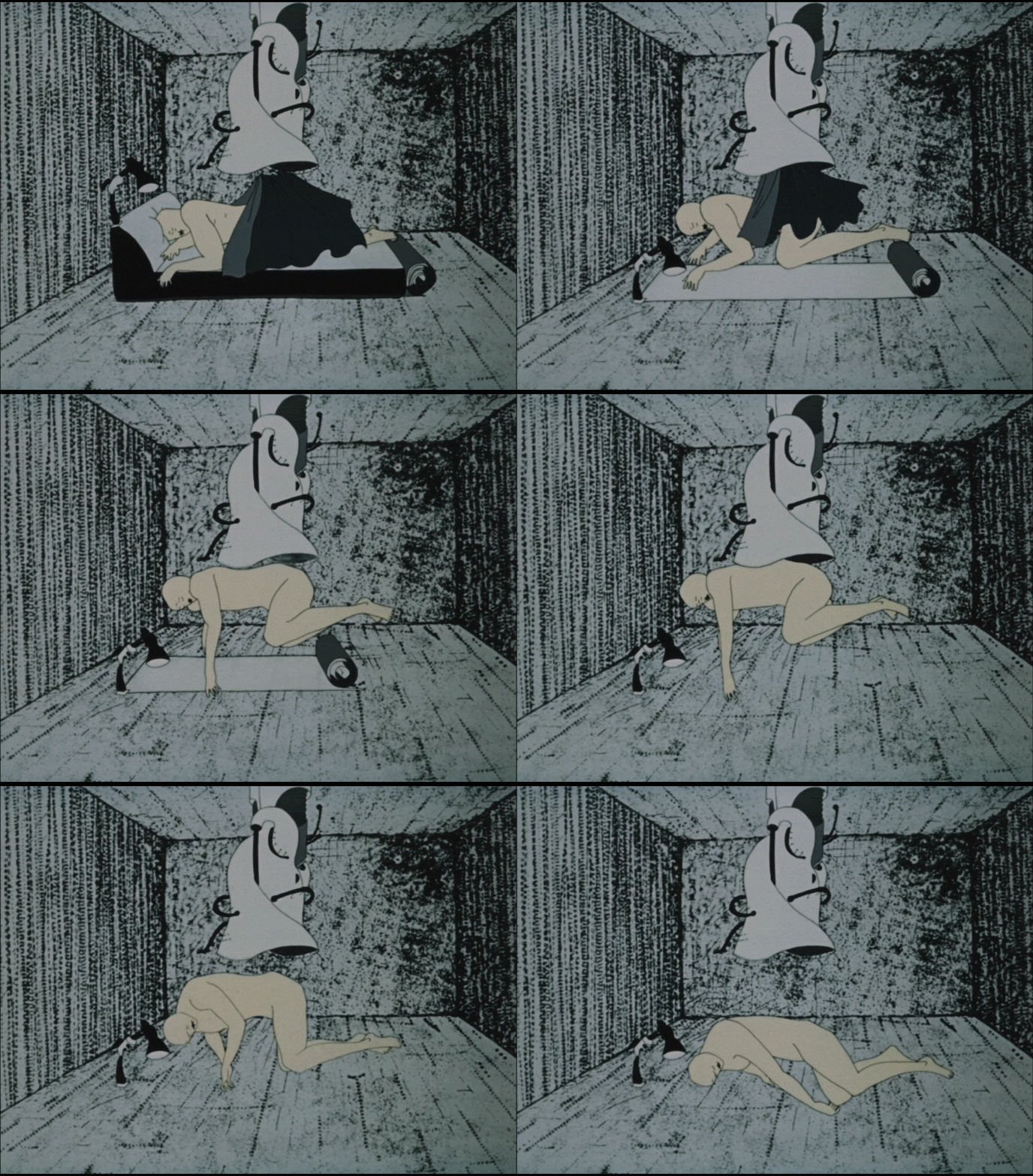
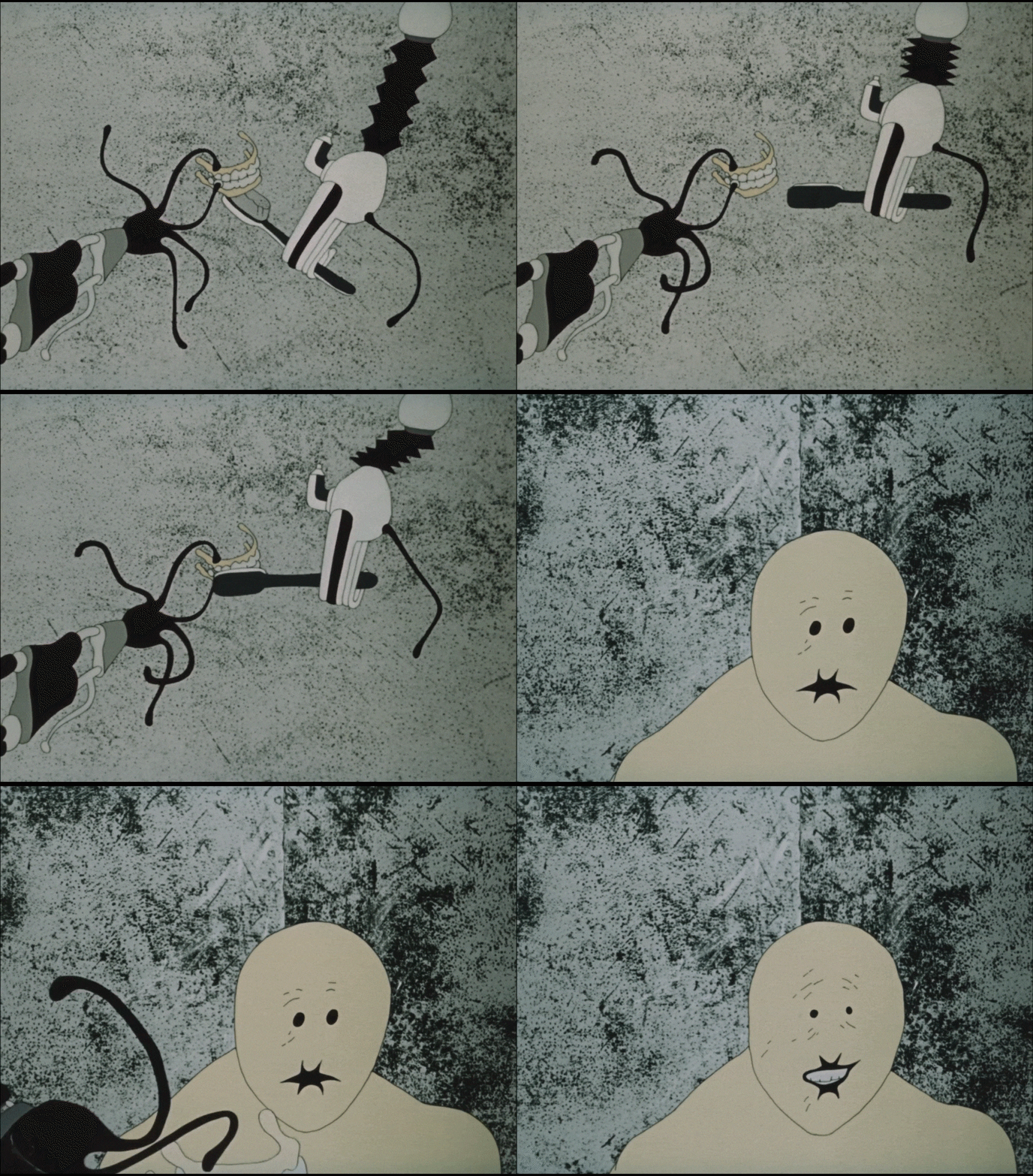
Avo Pastek «Sunday, ” 1977
Avo Pastek, «Sunday, ” 1977