Concept
Alien (1979) is one of the most iconic sci-fi horror films, thanks to its detailed world-building and memorable visual effects, which earned the film an Academy Award in 1980. The Xenomorphs, inspired by the illustrations of Swiss artist Hans Ruedi Geiger, have become some of the most recognizable monster icons in cinema history. In the original film, all visual effects were practical due to the lack of alternatives at the time, but in the newer films of the series, CGI is increasingly used to create the alien creatures. In my research, I would like to analyze the methods of creature creation by examining comparable scenes from three films in the series: Alien (1979), Alien: Covenant (2017), and Alien: Romulus (2024). Comparing these three films will allow me to trace how the approaches to visually realizing the monsters have changed, as well as to determine the capabilities and limitations of different technologies.
How have the methods of creating aliens in the «Alien» franchise changed, and why do modern films in the series continue to use practical special effects alongside CGI?
The research will analyze the creation of scenes and their visual presentation in the film, involving adult Xenomorphs, facehuggers, and the gestation of the alien inside a human, as these elements are similar across all three films. The main hypothesis of the study is that the franchise creators are returning to the use of analog visuals, supplementing them with computer-generated imagery, because this makes the alien creatures feel more realistic to the viewer. Index Concept Xenomorph Facehugger Chestbuster Conclusion
XENOMORPH
Stranger (1979)
When conceiving the appearance of the alien for the first film in the franchise, Ridley Scott and H. R. Giger wanted to ensure it stood apart from other horror films of that era. «In most horror movies, the monster looks very implausible, sometimes even ridiculous—and as soon as you see it, the film ends because it looks like a person in a costume. Ridley Scott and I did not want that. We wanted to create a very unconventional monster—a believable one, ” Giger told Cinefex magazine in 1980.
To avoid the «man in a suit» syndrome, the director wanted to use a fully mechanized alien of non-human form, but the film’s budget wouldn’t allow it. Settling for using a human in a costume, he planned to hire an acrobat-equilibrist to avoid movements that resembled human ones. Ultimately, Bolaji Badejo played the alien. A costume was created for the actor, consisting of a dozen or more separate overlays worn over a black full-body suit.
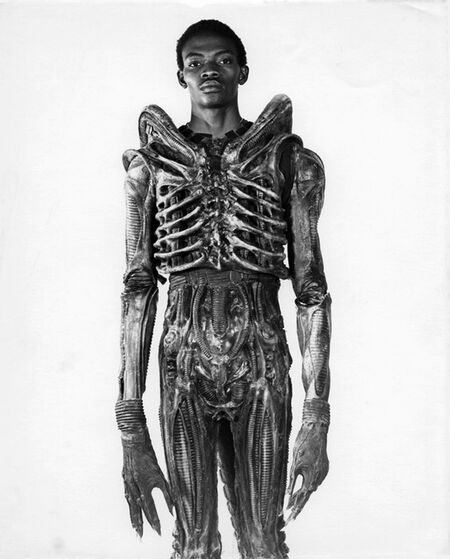
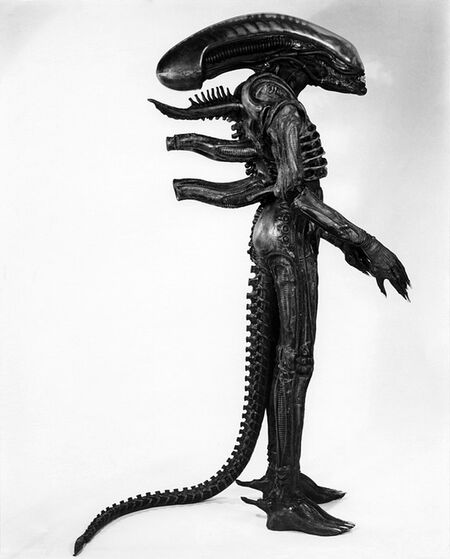
Baladji Badedjo in a Xenomorph costume
The head was worn separately and was fabricated by Carlo Rambaldi to fit the actor’s measurements. It consisted of fiberglass for the skull and movable parts, with an internal aluminum support. Each mechanical component was connected to a cable that exited the base of the head. There were nine in total, each seven meters long, connected to levers on a wooden panel. This construction allowed for various movements. The head itself was coated on the exterior with a special polyurethane mixture that had almost the same properties as human skin. This texture made the monster in the film even more tangible, convincing the viewer that it was real. To conceal the mechanisms that animated the head, the creators devised a method of coating the alien’s head in lubricant, which hid the mechanics and added to the repulsive nature of the appearance, but caused the skin to become pale, forcing H.R. Giger to reapply makeup every shooting day.
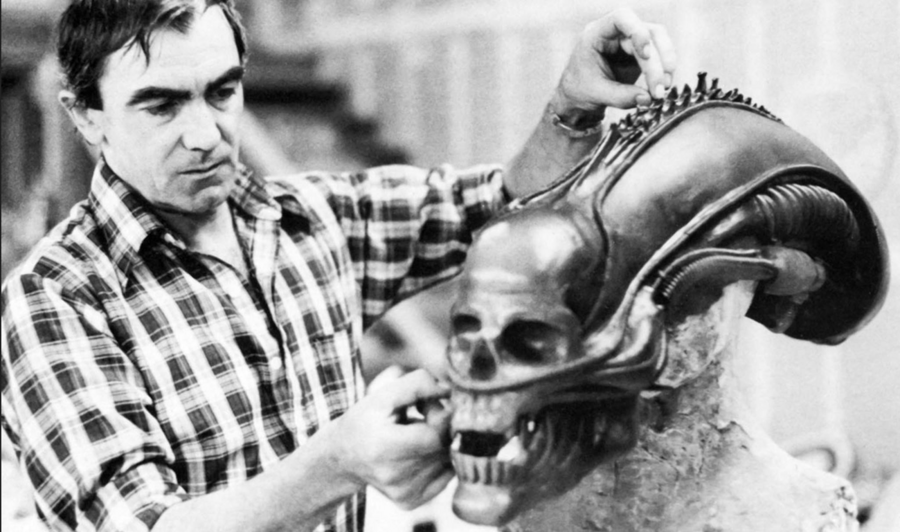
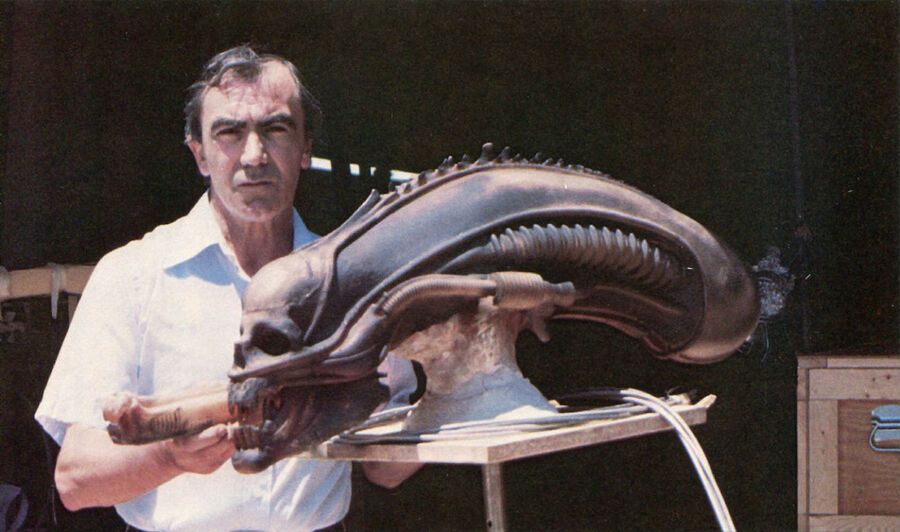
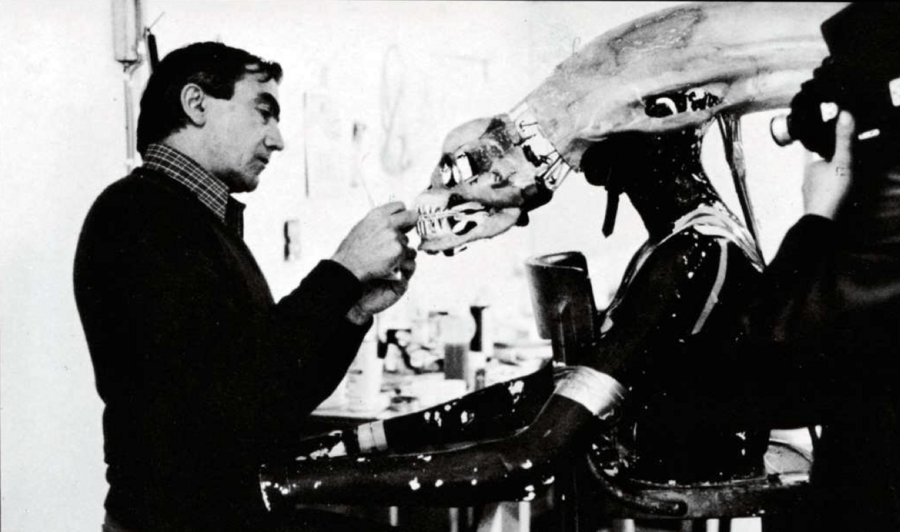
Carlo Rambaldi working on the Xenomorph head
Despite the work completed, the creature was far from the ideal the director envisioned. The movement choreography was limited to the actor’s performance, leading to a «man in a costume» syndrome in long takes. «The alien was incredibly meticulously and richly designed, ” Michael Seymour explained, „but we needed to approach the filming with extreme care. We discussed this countless times because, ultimately, if the camera lingered on him for more than a few seconds, he turned into just an ordinary person in a rubber monster suit, and that, of course, was unacceptable.“
A frame from Alien (1979)
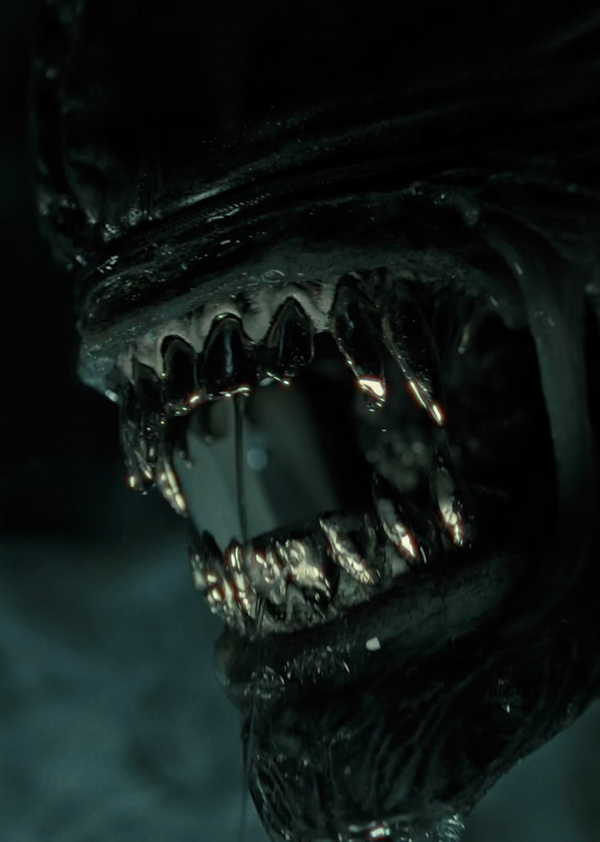
Therefore, in the film itself, we see the monster either in a close-up, enveloped in fog, or for a few seconds during jump scares. In the close-ups and static poses, the monster truly feels frightening even today, as the viewer can see the texture of the skin, the jaw, and the slime dripping from its mouth—these factors make it feel tangible and real.
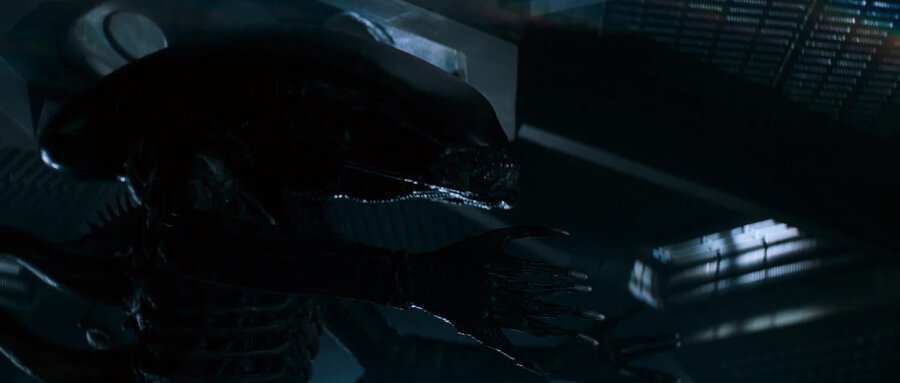
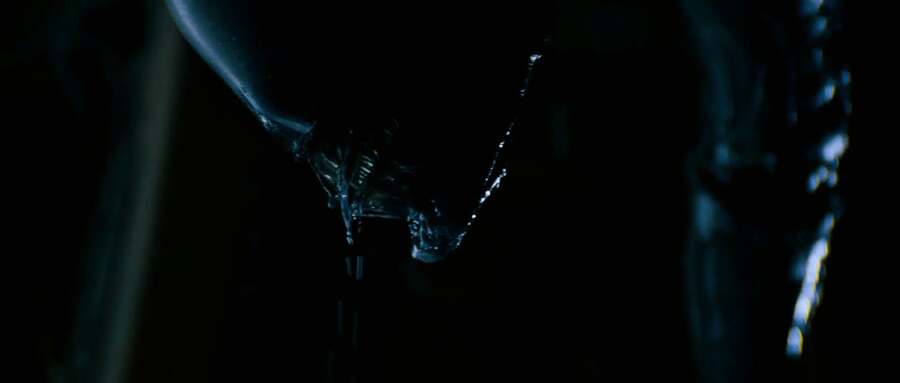
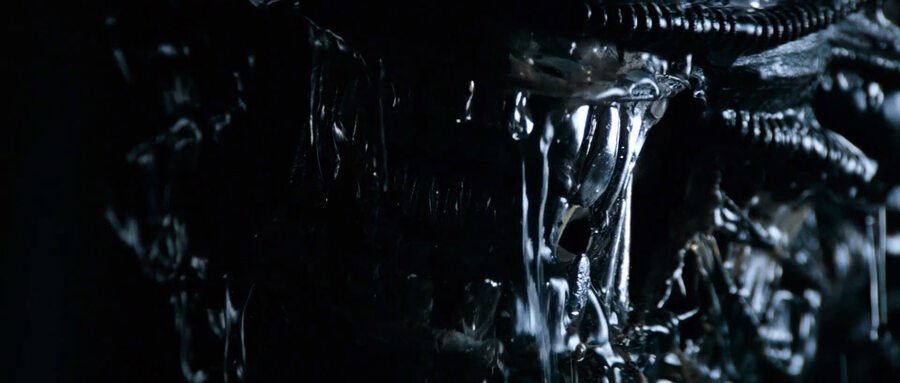
Stills from Alien (1979)
The situation with the long shot is quite the reverse, because due to technological leaps in cinema, the contemporary viewer feels the presence of a person behind the Xenomorph costume in action sequences. We can conclude that despite the meticulous development of the suits and mechanisms, creating a monster using analog methods has numerous limitations and complexities that impede viewer perception, especially that of the modern audience.
Someone Else: Testament (2017)
This film was also directed by Ridley Scott, but unlike the first installment, a completely different approach was chosen for the visual effects—nearly all the monsters in the film were created using CGI. Furthermore, high-quality models and monster costumes were also recreated in reality, although they often served a different purpose. In Cinfex magazine, Issue 153, the visual effects supervisor, Charlie Henley, stated that the director wanted real objects on set that the camera could interact with and that the actors could interact with.
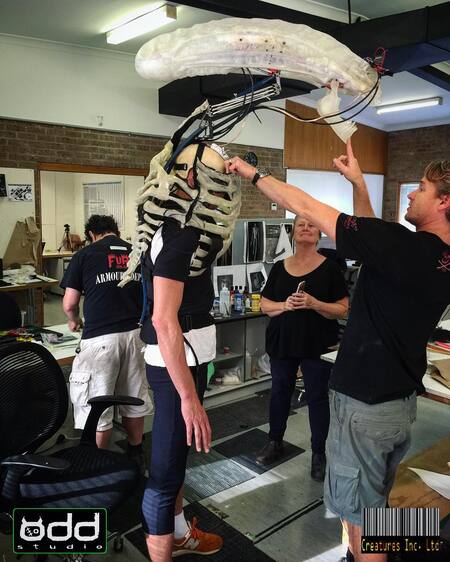
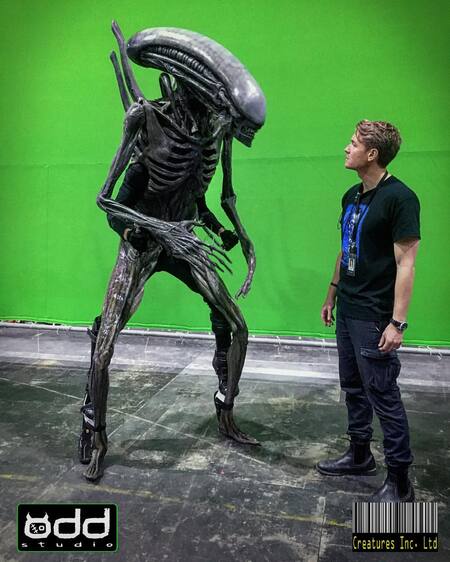
OddStudio working on the costume
Even though the film features many Neomorphs, a costume and mechanical head were also created for the Xenomorph. This work differed from the suit in the first film because the creators wanted to eliminate the «human in a suit» syndrome. Adam Johansson, creature effects supervisor, explains that due to some design differences in the Xenomorph, the standard costume wasn’t appropriate, so the team developed a hybrid approach inspired by Japanese Bunraku. The actor wore a partial suit where the actor’s head was housed in the chest cavity, and the Xenomorph’s legs were positioned on the outside of the actor’s legs. This construction successfully avoided the human-like appearance seen in the first film. Additionally, a classic foam latex suit was made for close-ups in tight sets.Furthermore, for the close-up of the drone, a separate animatronic head with jaw and mouth movement was created. Sculpting in ZBrush and 3D printing were utilized in its creation for the jaw. Compared to the first film, newer technologies, including computer-based ones, were employed here.
Frame from Alien: The Covenant (2027)
All the Xenomorph scenes in action were created using CGI developed by MPC studio, with Dan Zelks serving as the asset supervisor. In the animation of the digital Xenomorph, the studio animation supervisors, Alexander Ronco and Philip Morris, imbued the creature with insect-like characteristics in its movements.
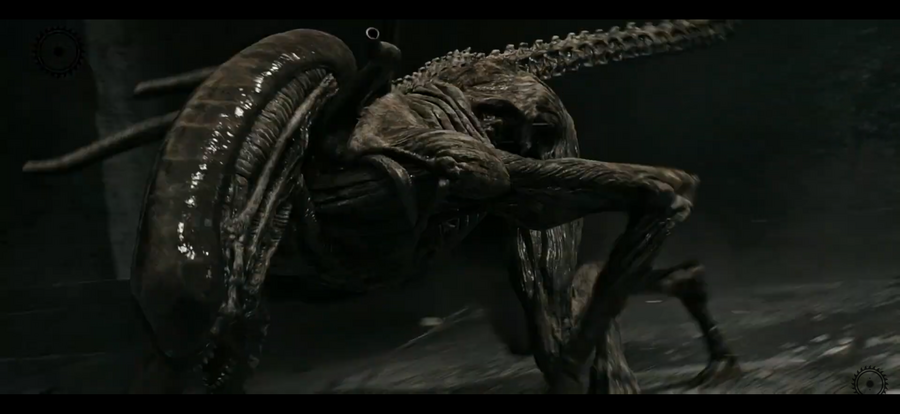
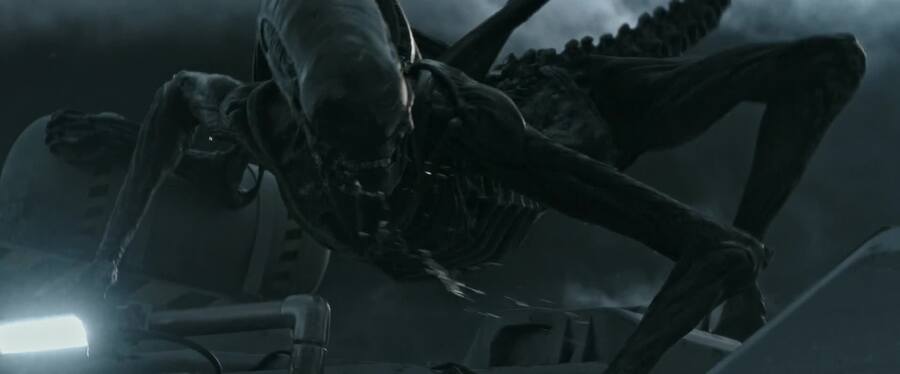
Stills from Alien: Covenant (2017)
In the digital version of the Xenomorph, the creators decided to retain the smooth, glossy skin texture from the first film; this is noticeable in certain shots where the monster appears disconnected from the overall scene. Furthermore, some scenes—because the monster is entirely digital—resemble a video game, which also compromises the sense of realism. It can be concluded that in the film Alien: Covenant, practical visual effects serve more as a supplement to the CGI when creating the Xenomorph, resulting in the monster lacking a tangible presence in some sequences. Consequently, it is harder for the audience to believe in the reality of the creature’s danger to the on-screen protagonist.
Author: Romulus (2024)
In this film, Ridley Scott also participated, but as a producer; the film was directed by Fede Álvarez. He leaned into the practical effects characteristic of the first film in the franchise, with the team using CGI to complement the physical models. Unlike the previously described film, in Alien: Romulus, complex scenes were also frequently shot using physical xenomorph models on set and then enhanced with computer graphics. The approach to creating the xenomorph models differs from the films analyzed above, as a system of interchangeable physical embodiments was developed. Like in other films, a suit was created for the performer, made of foam rubber and plastic. Some elements were 3D-printed. Furthermore, similar to Alien: Covenant, a Bunraku puppet, controlled by an actor, was fabricated.
Costume worn by the actor
Unlike the other two films, for «Alien: Remul,» Legacy Effects created a full-scale animatronic Xenomorph in addition to the head. Compared to the first film, where the head was controlled by wires and hand levers, the animatronic utilized modern servo motors and computerized animatronic control systems. The director’s main principle was to use analog visual effects techniques wherever possible to achieve maximum realism, so physical models were always used in close-up shots. Another difference from previous films is the change in the Xenomorph’s texture—it shifted from smooth skin to something rough, like shark skin.
This variety of physical models allowed them to be used as often as possible without limitations on the actor’s capabilities, unlike in the first film, and advancements in animatronics technology facilitated the work.







