[MENU]
Concept [1]
Vermitrax — «Dragonslayer, ” 1981 [2]
Draco — „Dragonheart, ” 1996 [3]
„Game of Thrones“ Dragons, Season 8, 2019 [4]
Conclusion [5]
References [6]
[CONCEPT]
This research analyzes the technological evolution in creating a photorealistic dragon through three works: the film Dragonslayer (1981, dir. Matthew Robbins), the film Dragonheart (1996, dir. Rob Cohen), and Season 8 of the series Game of Thrones (2019, HBO). The focus is on comparing approaches to solving common technical challenges: rendering the texture of the scales, constructing and animating the wings, creating the fire breath, controlling facial expressions, and integrating the character with live-action footage. The central research question is how these technologies have changed over 40 years and how the shift from analog animatronics to procedural digital modeling has impacted the visual result.
In «Dragonslayer,» the Vermitrax dragon was realized as a go-motion model under the supervision of Dennis Muren (ILM), with design by Phil Tippett. For close-up shots featuring actors, a separate, full-scale mechanical head equipped with a hydraulic drive was constructed. Body animation was achieved by filming a miniature puppet frame-by-frame using motion blur, a technique that distinguished it from traditional stop-motion. Facial expressions were limited by the puppet’s mechanical capabilities. The fire breath was filmed as a separate pyrotechnic element and composited with the shot optically.
In «Dragonheart,» the dragon Draco became the first fully computer-generated character in film history to take a leading role. The design was once again handled by Phil Tippett, with Scott Squires as supervisor and Rob Coleman (ILM) handling the animation. A system called Caricature was used for the facial expressions, allowing the movement of the facial geometry to be linked to the phonetics of Sean Connery’s dialogue. The scales and body were modeled as a single digital surface, the wings were manually animated frame by frame, and the fire was created as a separate digital element and composited over the live-action footage.
In the eighth season of «Game of Thrones,» the work on the dragons was distributed across several studios: Image Engine handled the base animation under the direction of Thomas Shelesny, while Weta Digital, Scanline, and Pixomondo were responsible for final rendering and compositing, with Joe Bauer and Stephen Fangmeier providing overall supervision. The animation was passed between studios in the form of caches (Alembic), which allowed the work on body movement, muscle simulation, and rendering to be divided. The wings were animated separately: the billowing (membrane sway) was controlled manually by animators, while the rippling (fine ripple) was calculated through creature effects simulation. The fire was created through a hybrid process—a practical element was filmed using a flamethrower on a motorized Bolt Cinebot platform and then refined with digital simulation.
[Vermitrax — «Dragonslayer, ” 1981]
Vermitrax, «Dragonslayer» (1981). Director: Matthew Robbins. VFX Supervisor: Dennis Merren.
The work on the dragon was supervised by Dennis Meren, ILM Visual Effects Supervisor. The character design was developed by David Bennett and refined by Phil Tippett. The basis was the pterosaur Ramphorhinus: the dragon’s front limbs simultaneously served as its wings.
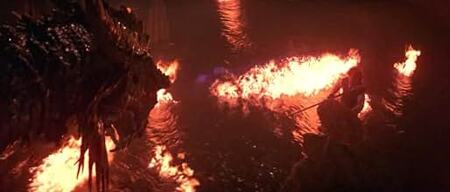
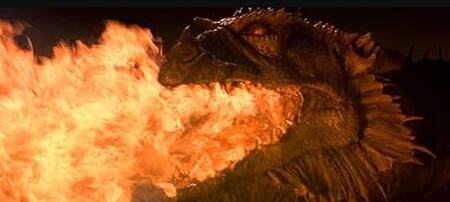
The concept of the Vermitrax head and the fiery breath frames. «Dragonslayer» (1981). Director — Matthew Robbins. VFX Supervisor — Dennis Meren.
Several versions of the dragon were built for the film in different scales: a full-size mechanical head and neck (five meters), a miniature model for stop-motion animation, and a separate «close-up» model at half scale.
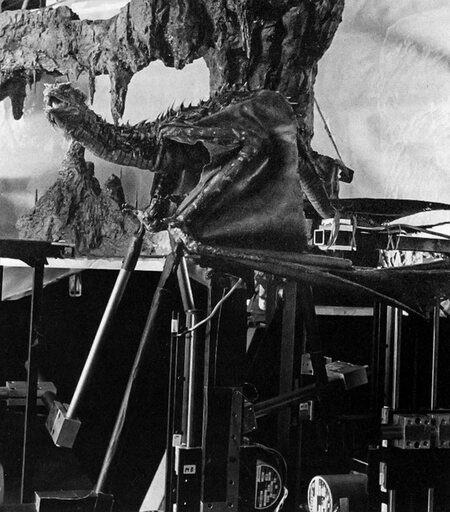
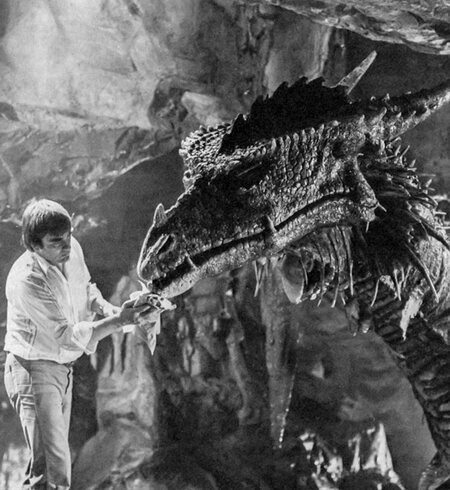
Full-scale mechanical head of Vermitrax and animation model. «Dragonslayer» (1981). Director — Matthew Robbins. VFX Supervisor — Dennis Muren.
The dragon skin was cast from urethane using the sculpture molds. The casting fit tightly around the mechanical armature, ensuring a precise fit for the skin on the moving parts of the structure.
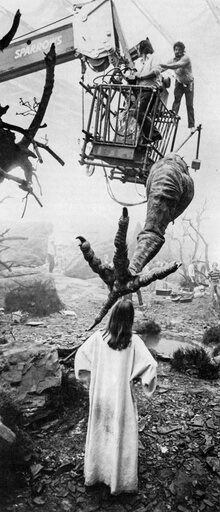
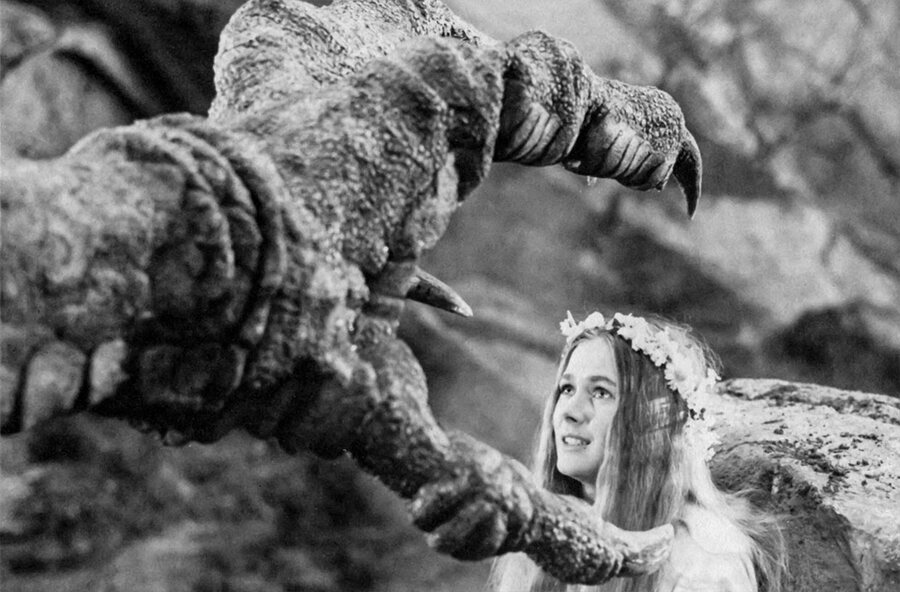
Full-scale mechanical leg of Vermitrax and a scene with Princess Elsbet. «Dragonslayer» (1981). Directed by Matthew Robbins. VFX Supervisor: Dennis Merren.
The full-sized head weighed several tons and was controlled by hydraulics. The dragon’s foot was mounted on a separate cart with hydraulic drive. For the scene in Lake of Fire, where the head rises from the water with its mouth open, thirteen people controlled the head in the frame simultaneously.
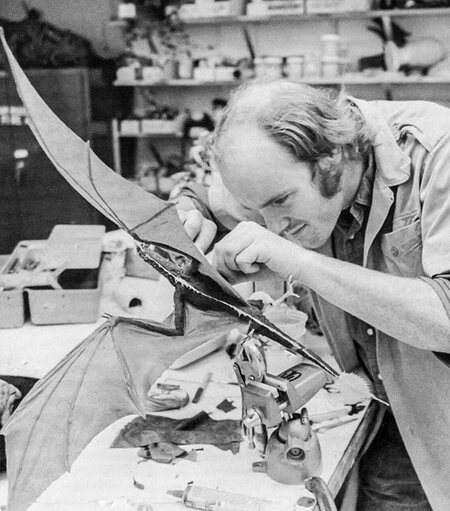
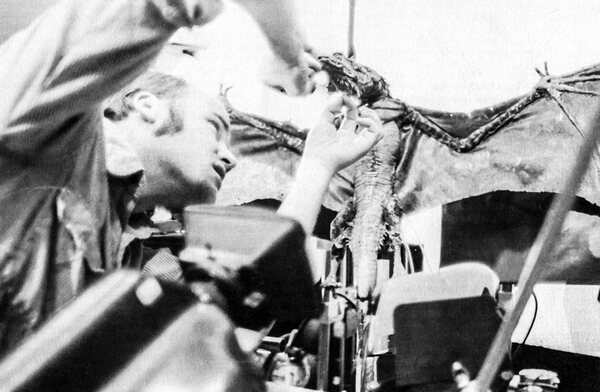
Working on miniature Vermitrax models in the visual effects workshop. «Dragonslayer» (1981). Director: Matthew Robbins. VFX Supervisor: Dennis Meren.
The wings were constructed separately from the body and attached via a system of tensioned cables that held the membrane taut. For the miniature doll’s wing flap, a miniature gearbox, approximately two and a half centimeters in size, was embedded—larger motors and hydraulics would not have fit.
The gearbox was powered through flexible shafts, one for each wing. The system was successfully tuned for a full flapping cycle, though the wingtips still required manual animation. The gearbox was solely responsible for the movement at the base of the wing.
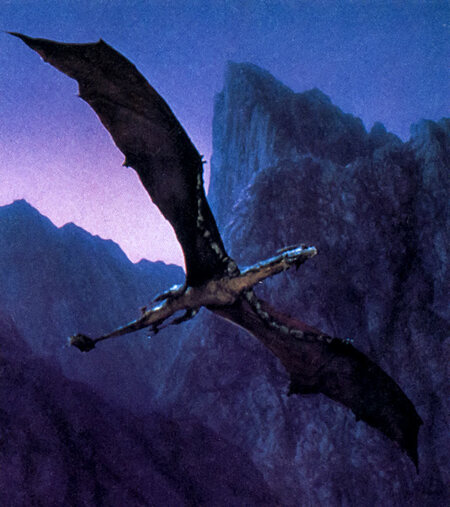
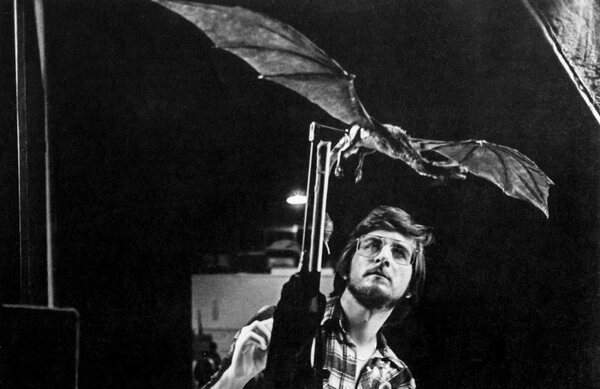
Vermitrax in flight and a miniature dragon model for animation. «Dragonslayer» (1981). Directed by Matthew Robbins. VFX Supervisor: Dennis Meren.
Director Matthew Robbins decided to reduce the amplitude of the wing beats during the animation process compared to the original animation. In his opinion, the intensified flapping overloaded the frame.
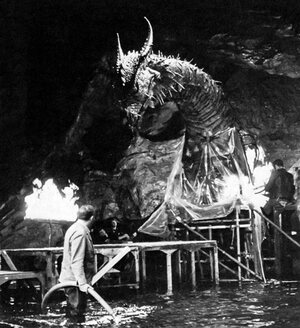
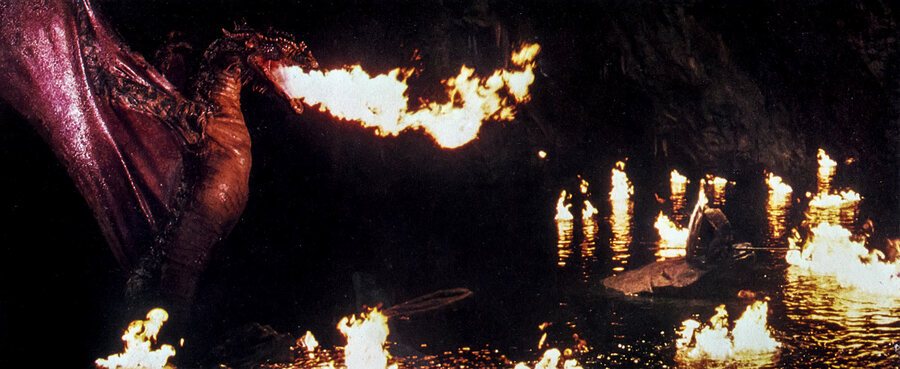
The practical construction of the Vermitrax on the set and the final shot of the fire breath. «Dragonslayer» (1981). Director—Matthew Robbins. VFX Supervisor—Dennis Merren.
The dragon’s fiery breath was captured using two flamethrowers designed by Bryan Johnson, Supervisor of Special Mechanical Effects. For shots where the fire needed to appear to emanate from inside the maw, frame-by-frame manual masking was employed. The outline of the jaws and teeth was traced frame by frame to conceal the external source of the flame.
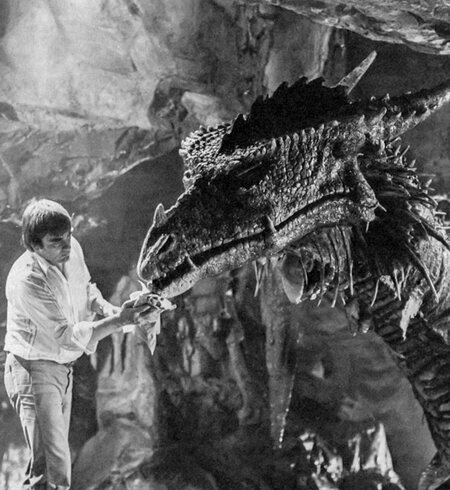
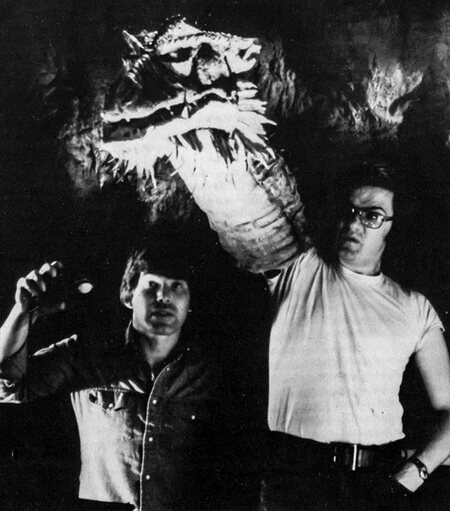
Full-scale mechanical Vermitrax head and work with a reduced dragon model. «Dragonslayer» (1981). Directed by Matthew Robbins. VFX Supervisor: Dennis Meren.
The dragon’s facial expressions were limited by the mechanical capabilities of the dolls. The eyelids, eyes, and jaw moved on the full-sized head and the close-up doll. The close-up model was operated via a pistol grip inside the head and supplementary cable mechanisms controlled by assistants off-camera.
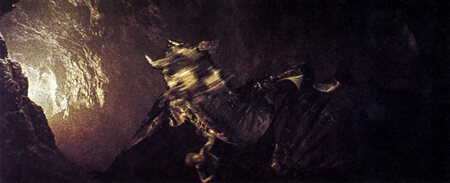
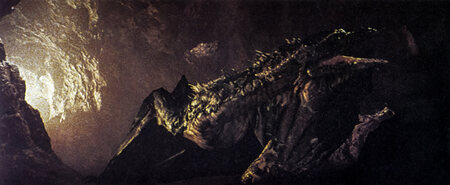
Sequential frames of the Vermitrax in motion. «Dragonslayer» (1981). Directed by Matthew Robbins. VFX Supervisor: Dennis Meren.
Miniature doll animation was executed using go-motion technology: the computer recorded the movement of the controller, which the animator manipulated, and then reproduced it on the doll using motorized drives. The model physically moved during the frame exposure, which created natural motion blur, unlike the sharp, jerky frames of traditional frame-by-frame animation.
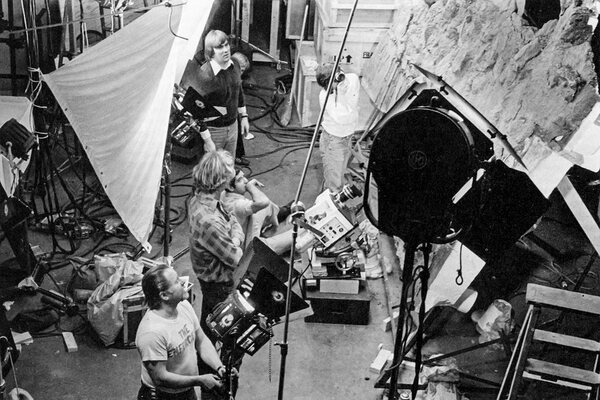
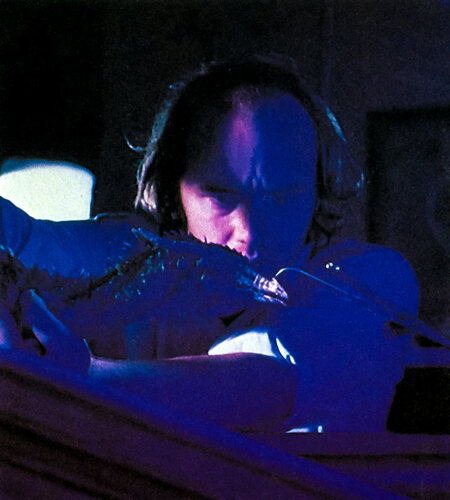
Behind-the-scenes footage of visual effects and work with the miniature model of Vermitrax. «Dragonslayer» (1981). Directed by Matthew Robbins. VFX Supervisor: Dennis Merren.
The footage was shot against a blue background. The connecting rods that controlled the doll’s movement were either concealed by the doll’s body or manually removed during shot composition.
[Draco — «Dragonheart», 1996]