Research Topic: «The Evolution of Technologies for Creating Human Transformation into a Werewolf: From Practical Effects to CGI»
Research Concept
Transforming a human into a werewolf is one of the complex challenges in creating visual effects. In my research, I aim to understand how such transformations were depicted in film across different years. For comparison, I have chosen two movies: «An American Werewolf in London» (1981) and «The Wolfman» (2010). Using these films as case studies, I want to trace how the technology for creating such scenes has evolved over 29 years, what new capabilities have become available to specialists, and how this has influenced the appearance of the transformation on screen.
Research Question: How have the technologies used to create the transformation of a person into a werewolf changed from 1981 to 2010, and how have these changes affected the believability of the screen result?
Research Hypothesis: The combination of computer graphics and practical effects allowed for the depiction of more complex and fluid changes to the human body, which were previously difficult to create using only makeup and mechanical constructions.
Research Structure
Part 1. Transformation Technologies in the Film «An American Werewolf in London» (1981) — Prosthetics. How the finger elongation effect was created — The team responsible for the transformation: production crew; — Torso transformation: mechanical construction and raised flooring; — Reverse filming: how the fur growth effect was created; — Change-O-Head—a mechanical model for the head transformation; — Reverse filming: how the fur growth effect was created. Part 2. Transformation Technologies in the Film «The Wolfman» (2010) — The team responsible for the transformation: production crew; — Prosthetic makeup: from character concept to application on the actor; — Transitioning from physical makeup to 3D modeling; — How the digital hand transformation was created; — Facial transformation; — Creating digital fur; — How the digital transformation was integrated with live-action filming. Part 3. Conclusions — Comparative matrix — How the approach to creating transformation has evolved Bibliography Image Sources
Films for Study
«The American Werewolf in London» (1981)
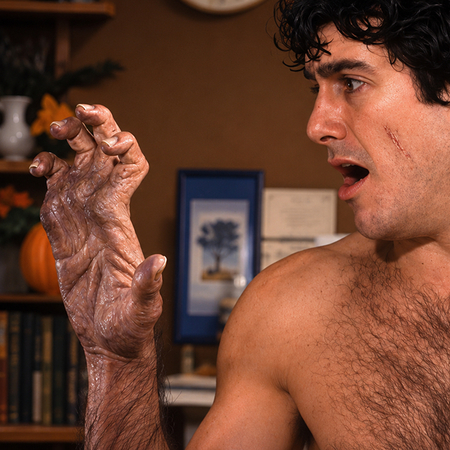
Director: John Landis Make-up and Mechanical Effects: Rick Baker
In this film, the protagonist’s transformation was achieved almost entirely without computer graphics. Rick Baker’s team utilized special make-up, mechanical rigs, and various filming techniques.
The key feature of these effects was that most of the changes happened physically, right in front of the camera. For each stage of the transformation, the make-up and mechanical apparatus had to be created separately.
«Man-Wolf» (2010)
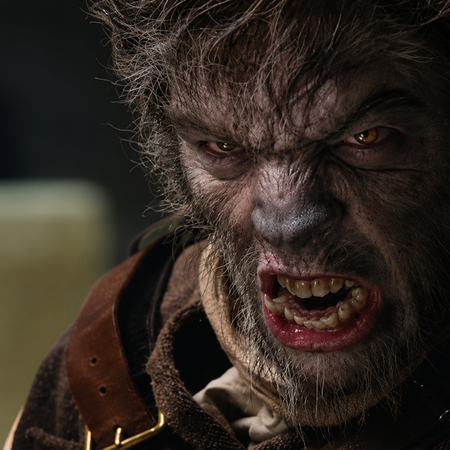
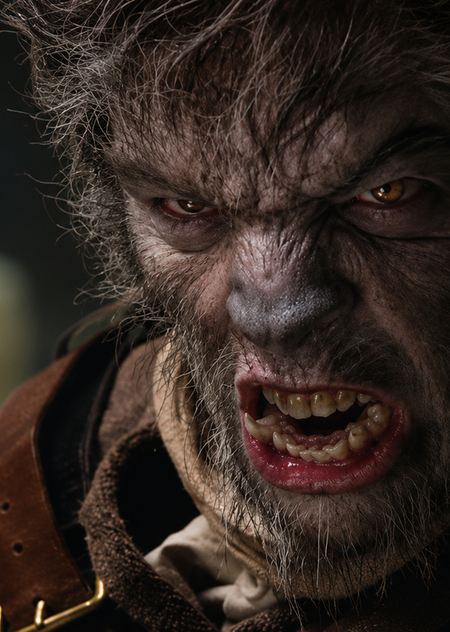
Director: Joe Johnston Makeup Artist: Rick Baker, Dave Elxsi VFX Supervisor: Steve Bagg Digital Effects: Moving Picture Company (MPC)In this film, a combination of makeup and computer graphics was used to create the werewolf. Rick Baker and Dave Elxsi worked on the character’s appearance and created the physical makeup. MPC studio specialists then used this groundwork to create the digital models.Thanks to computer graphics, it was possible to show more complex and fluid transformations that would have been difficult to capture using only mechanical rigs.
Part 1. Transformation Technologies in the Film «The American Werewolf in London» (1981)
Brush. How the elongated finger effect was created
Phase 1. Creating the Prosthetic ClawFor the scene depicting the transformation of a human hand into a werewolf paw, Rick Baker’s team engineered a specialized mechanical device—Change-O-Hands. This apparatus allowed the fingers to elongate and alter their shape in real time during filming.
Flexible Brushes Change-O-Hands
Stage 2: Mechanical ActuationFor finger movement, a system using syringes and plastic tubing was employed. One design variation incorporated four syringes. Upon depressing the pistons, the mechanism drove the fingers of the artificial hand.
Stage 3. Structure ControlDuring the tests, the operator manually pressed the syringe plungers. The fingers gradually lengthened, and the flexible surface of the palm stretched. The speed and degree of elongation depended on the mechanism’s performance and the artificial skin material.
The mechanism inside the brush was operated manually by the operator.
Stage 4. Filming the TransformationThe camera filmed the artificial brush changing its shape right as the mechanism was working. This allowed the viewer to see human fingers gradually stretching and becoming wolf-like.
Torso Transformation: Mechanical Construction and Elevated Floor
Phase 1. Constructing the Torso FormRick Baker’s team fabricated artificial body parts that replicated various stages of transformation. They featured an enlarged back, a modified ribcage, and protruding vertebrae. Mechanisms were housed beneath the artificial skin, enabling changes in the body’s shape.
Tom Hester, a specialist in plastic makeup and special effects, was responsible for creating the werewolf’s body form.
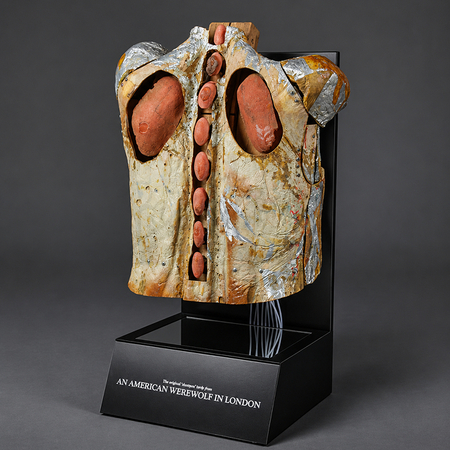
Stage 2. The Mechanism for Spinal and Torso TransformationFor the transformation scene, Rick Baker created a fiberglass structure featuring movable components along the spine. This was covered on top by a flexible urethane shell, resembling skin.During filming, specialists manipulated the mechanism using syringes filled with air. When the syringes were pressed, the components extended and stretched the artificial skin, thus creating the effect that the spine was changing shape directly beneath the skin.The photograph shows the original structure from the set. Over time, the artificial skin deteriorated, revealing the internal components. Later, to demonstrate the mechanism’s function, the air system was replaced with electric motors and cables.
To capture more noticeable bodily changes, a raised floor with an opening was used. The lower body of David Norton was beneath it, while his head and arms remained visible.Instead of real torso and legs, artificial body parts were used. Specialists were positioned under the floor, controlling their movement with hidden mechanisms.
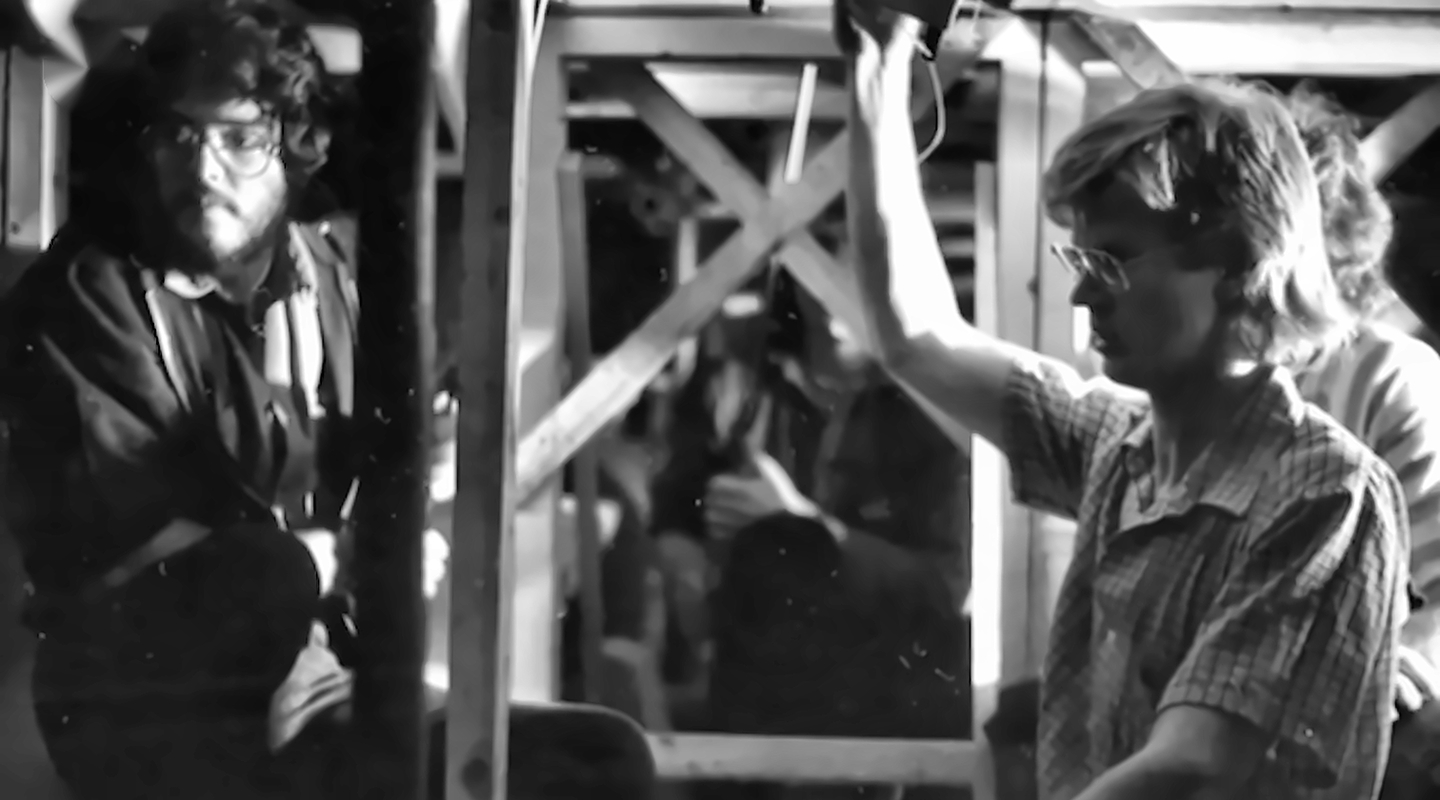
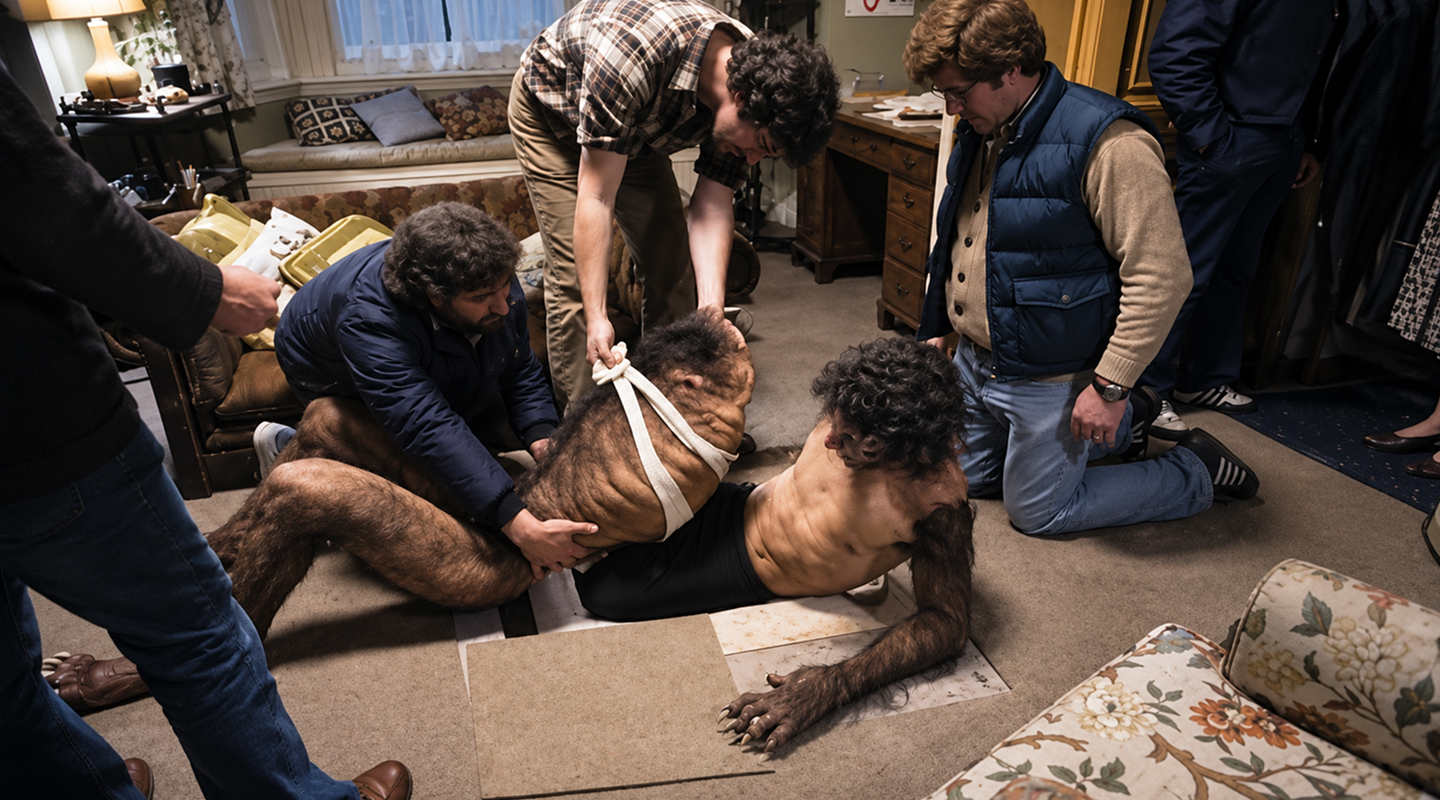
For the body shots, a raised floor was used on which the lower half of David Norton was positioned.
Stage 4. Capturing the TransformationDuring the filming, the team activated the mechanisms. The artificial back arched, and the torso and limbs shifted position.The camera was positioned to make the actor’s real body parts and the artificial structure appear as a single entity. This allowed the viewer to see the body gradually stretch and acquire wolf-like features.
In 1981, these effects were created mechanically—without computer graphics. For every movement, a separate mechanism was assembled, and an angle was chosen to mask the details and the team’s work.