Project Idea
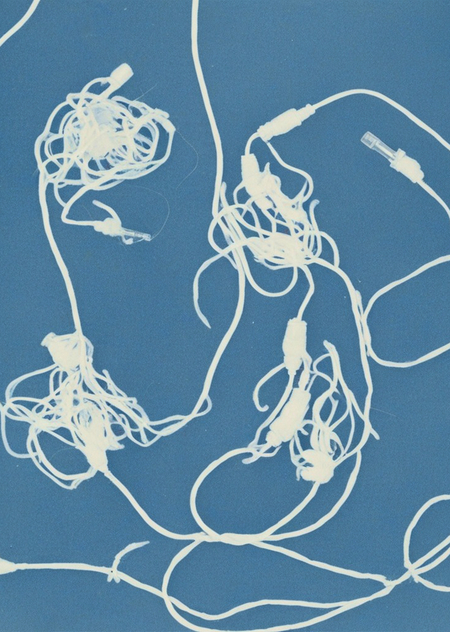
A neural network, trained on cyanotypes by Anna Atkins from 1843, constitutes a herbarium of the things that surround us today: wires, keys, masks, and packages.
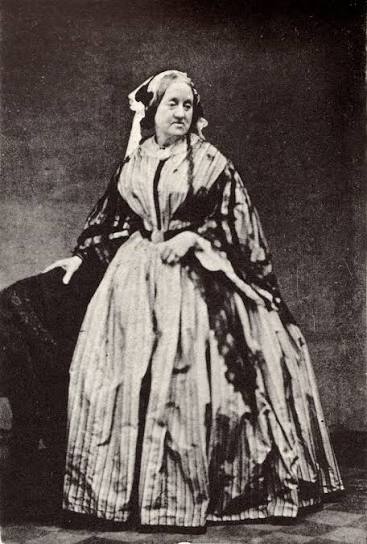
Anna Atkins was an English botanist who first published a book with photographic illustrations, Photographs of British Algae: Cyanotype Impressions (1843–1853). She placed algae directly onto photosensitive paper and exposed it to the sun: where the sample lay, the paper remained white, and everything else turned Prussian blue. This resulted in an accurate impression of the form, without a camera or perspective.
In 180 years, the shore is yielding not just seaweed, but also bags, nets, and bottle caps. This project proposes to continue Atkins’s book: to collect the «British seaweed» of the Anthropocene—objects that have become so ubiquitous that they behave like nature.
Tangled headphones branch like filamentous algae; a bag floating in water drifts like a jellyfish; the traces on a phone board mimic the pattern of coralline algae. A neural network is used as a method to examine where the boundary lies between natural and technical forms when viewed from the same perspective.
Task Type: Style learning. The model learns the manner—blue background, white silhouette, paper texture, layout of samples on the page—and I provide the items via text.
Dataset