Concept
Play is a vital element of a people’s cultural and social life, reflecting their values, traditions, worldview, and historical experience. Within the study of India’s cultural characteristics, the analysis of the elements and types of play—which have been shaped by centuries of history, religious beliefs, and folk customs and are deeply rooted in the culture—takes on particular significance.
In this study, I aim to examine play through the lens of traditions, rituals, and scriptures, as well as ancient board games as a symbol of the worldview characteristic of the Indian people. The research utilizes Roger Caillois’s typology of games to explore different aspects of play.
Outline:
- The Worldview of «Play as Life»
- Mimicry
- Ilinx
- Agon
- Alea
The relevance of this research lies in drawing a parallel between the deep worldview of India, illustrating this with examples from both scriptures and history, and how these forms of play persist and remain actively vibrant in contemporary India.
The World as a Game
According to Johan Huizinga, play is an intrinsic part of human life and culture. The entire world can be viewed as a massive game, where every element is a manifestation of play processes. In this context, human life, society, and even the universe are a kind of game, filled with rules, symbols, and interactions. This perspective helps us understand that play is a mode of existence, as well as a means of learning and development. Life itself is a continuous game in which humans learn, grow, and seek meaning.
«You cannot deny play. You can deny almost any abstraction: rights, beauty, truth, good, spirit, God. You can deny seriousness. But you cannot deny play.» Johan Huizinga [2]
Lila as a Divine Play
In Hinduism, Lila is the divine play of the Creator (Brahma, Vishnu, Shiva) in which the universe manifests. The world is a manifestation of this divine play, wherein everything occurs according to God’s will, and this play is a mode of expressing divine love and creativity. In the traditions of Advaita and Tantra, the play (Lila) is the path to recognizing one’s true nature and unity with the Divine. Knowledge is attained through spontaneous expression and the recognition of one’s divine essence. In Hinduism, the world is an intrinsic part of this divine play, where every part is a manifestation of divine creativity, and everything unfolds within the framework of Lila.
«There is an ancient Sanskrit word, lila, which means… the divine play, the play of creation, destruction, and recreation of the cosmos» [1]
Mimicry
Mimicry plays a vital role in culture and rituals. Through embodying different archetypes, adherents traverse a life-game—a process where every action and symbol serves the spiritual growth and strengthens the connection to the divine within, through various aspects of gods and the stories associated with them. This process resembles a game where an individual, by taking on various roles and masks, comes to understand their spiritual nature and place in the world. Mimicry becomes an integral part of traditional practices, helping participants immerse themselves in deep symbolism and experience their life journey as part of the «great cosmic game.»
Murti
Murti (Sanskrit: मूर्ति, literally «manifestation») — a statue or image of a specific form of God, deity, or saint in the religious traditions of Hinduism and Buddhism. [3]
Murti Sri Devrakha Baba. Photographer Mariam Bagdasaryan. Used with the permission of the copyright holder.
Murti serves not only as a visual representation of the deity but also as a means for worship, meditation, and spiritual focus. The statue of the deity is considered a living manifestation of divine energy and is treated with profound respect and reverence. In the culture and art of Hinduism, murtis embody mythological narratives, legends, and spiritual concepts. The attributes of the deity depicted are «imparted» to the statue.
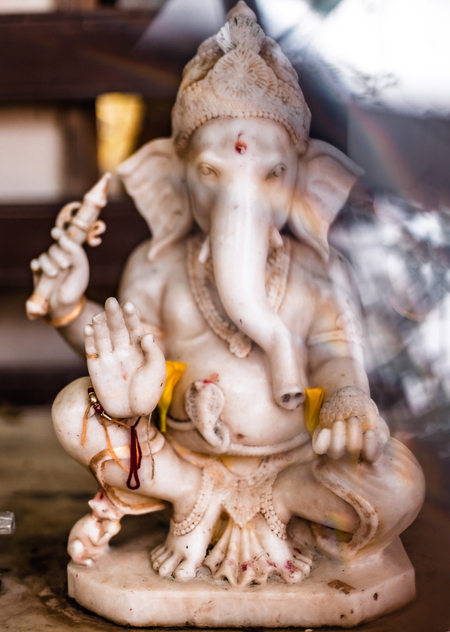
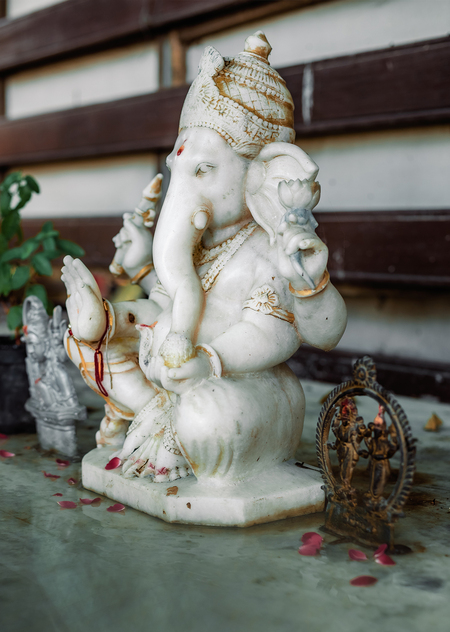
Murti of Ganesha. Photograph by Mariam Bagdasaryan. Used with permission from the rights holder.
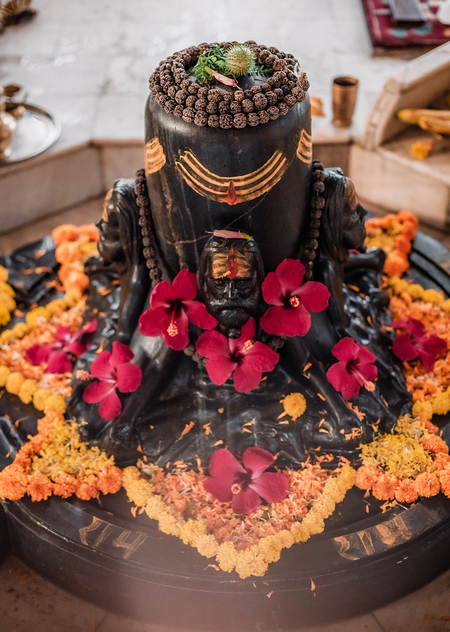
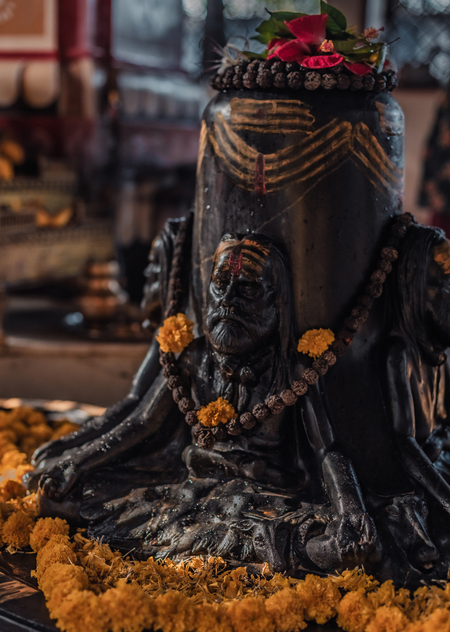
Shiva. Photograph by Mariam Bagdasaryan. Used with the permission of the copyright holder.
Scenes from the game of gods during the 7-day reading festival of the «Shri Mad Bhagavatam»
«Shrimad Bhagavatam» is a sacred Hindu scripture, one of the most important in the Vaishnavism tradition. It offers a poetic and philosophical account of the life and deeds of the god Vishnu and his avatars.
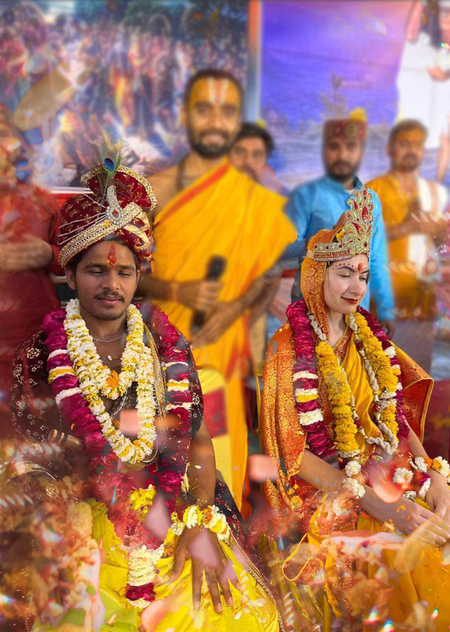
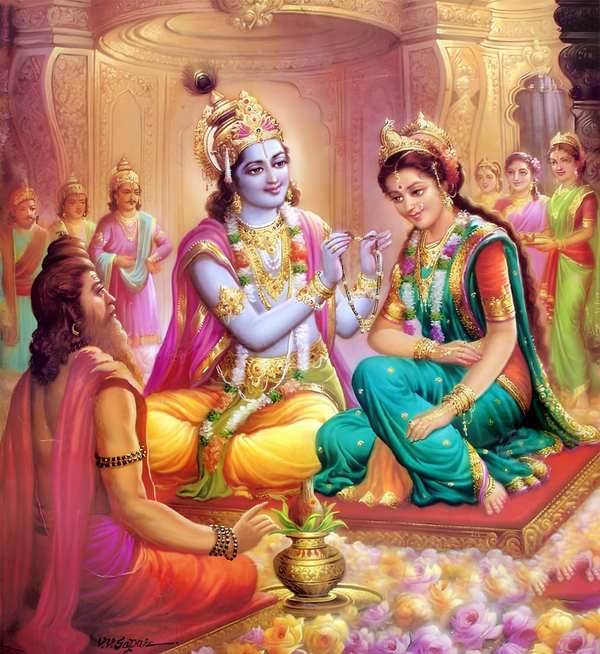
Photograph. People reenacting the wedding of Krishna and Rukmini from the «Shri Mad Bhagavatam.» Painting. The Wedding of Krishna and Rukmini (painting) from the Bhagavata Purana.
According to ancient scriptures, King Parikshit insulted a sage because the sage did not afford him the expected honors. The sage placed a curse upon the king. In seven days, he would die from a snakebite. The king sought out another sage, Shukadeva Goswami, who immersed him in knowledge about the nature of the human soul for all seven days and helped him find liberation.
Thus, the tradition of reading the «Shrimad Bhagavataram» for seven consecutive days began. Devotees believe that this purifies the mind and leads to the liberation of ancestral souls. This tradition continues today. During the festival, scenes from the lives of the gods are enacted.
Examples: The Birth of Krishna The Lifting of Mount Govardhan The Marriage of Krishna and Rukmini
During the «game of gods,» the people who portray them temporarily become living deities. They are treated as gods, offerings of flowers and sweets are made to them, an art (a fire consecration ritual) is performed, and they ask for blessings. This tradition has a «magic circle» within which all participants follow established rules. The individuals chosen to be the «deities» in turn wear costumes and adhere to their character, accepting offerings and acting out the scene.
Illinx
Spiritual practices can also be viewed as a form of play. The idea that the path to the divine is not merely a rigid duty or obligation, but a joyful, playful manifestation of consciousness, akin to Lila—the divine play—is deeply rooted in Hindu culture. This approach helps frame spirituality as a natural and inspiring process in which the individual participates with ease and joy, revealing new facets of their own nature.
Ancient stone bas-relief of meditating Shiva, Prambanan Hindu temple sanctuary, Yogyakarta, Central Java, Indonesia. UNESCO World Heritage Site.
Meditation Gurus
In this context, life is a game, and spiritual practice is a method for leveling up and successfully navigating the game of life—and transcending it.
Yoga—An ancient Indian practice focused on unifying body, mind, and spirit.
Meditation—A practice of focusing the mind to achieve inner tranquility. It is used to enhance mindfulness, develop concentration, and foster spiritual growth.
Pranayama—Breathing exercises that are part of the yoga system. They help regulate energy (prana), strengthen health, and deepen meditative states.
Mantra Yoga—The practice of repeating sounds or mantras to purify the mind and achieve spiritual development. It is a way to connect with the divine and attain inner harmony.







