Concept
Portraying a ruler in ancient societies was not merely a portrait; it was a vessel for power, presence, and memory. Therefore, destroying such an image was not an act of vandalism but a deliberate action: chipping away at a statue’s face, erasing a name from an inscription, or altering a portrait meant intervening in the very fate of the depicted person. This study examines how this concept manifested in Ancient Egypt and Ancient Rome, and how the reasons, methods, and meanings behind «erasing» rulers differed between these cultures.
What was the significance of image destruction, as he characterized the attitude toward rulers' images in these cultures? What was the purpose of destroying monuments?
The topic of dismantling and recontextualizing monuments remains relevant today, as this practice is still employed in contemporary society. A prime example is the dismantling of Confederate monuments in the United States since 2020 due to escalating political tensions. Against this backdrop, people are increasingly contemplating whether and how to «erase» figures of authority from public spaces. Consulting the knowledge of antiquity allows us to objectively assess such occurrences in the modern world.
Key question: How did the attitudes toward the destruction of monuments differ between the rulers of Ancient Rome and Ancient Egypt?
The research is divided into three chapters, which allow for a staged examination of how the perception of the ruler’s image—and consequently the meaning of its destruction—has evolved. The first chapter examines Egyptian practices where the statue was perceived as the ruler’s living body. The second chapter analyzes the Egyptian tradition of appropriation and erasure of names. The third chapter reveals the Roman practice of the «curse of memory.»
Chapter 1. Image as Living Body.
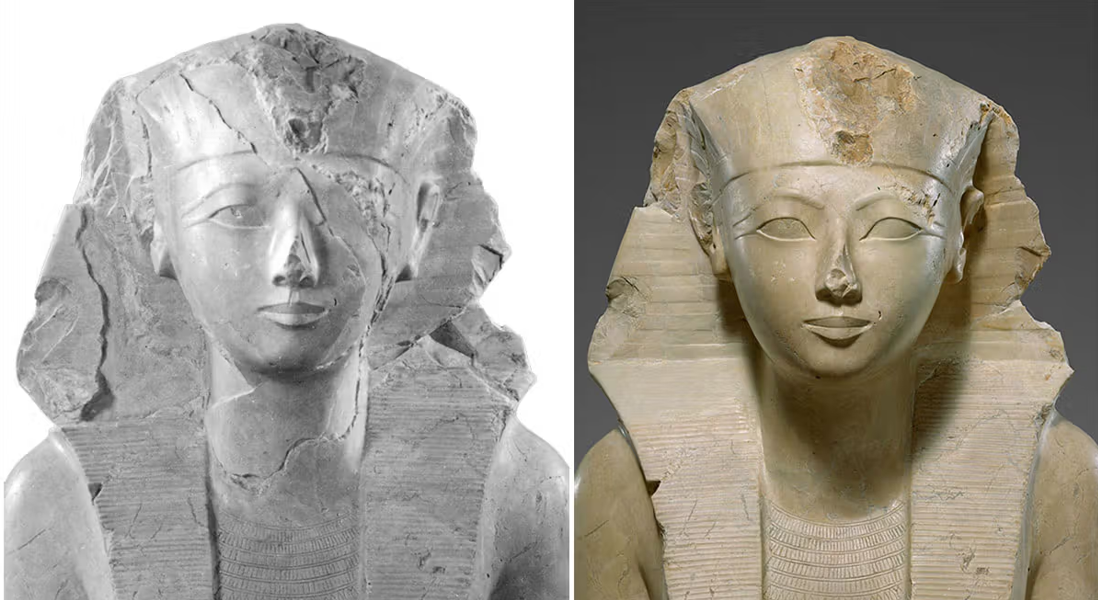
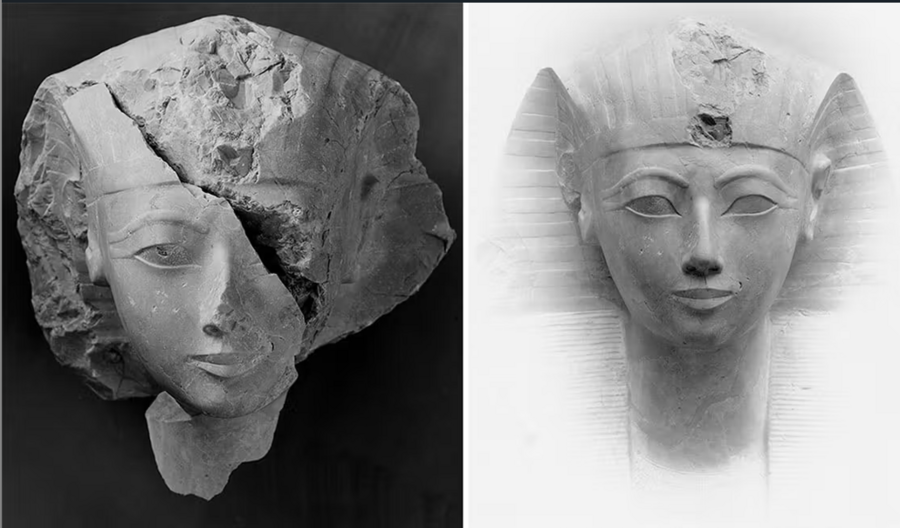
In Egypt, a royal statue was not considered a depiction of a ruler but another body of the ruler. His life energy was imbued within it, and it received offerings. That is why the very «body» of the image was destroyed. The statue was smashed at the neck, waist, and knees; the face, nose, and hands were chipped away from the relief. The goal was not to humiliate the depicted figure before the audience, but to strip the image of its ability to breathe, see, and act.