Navigation
- Concept
- The 1979 Islamic Revolution: Causes and Consequences
- The Emergence of Comics in Iran
- The First Iranian Comic Book Author
- Comics in Iran After the Islamic Revolution
- Reflection of the Islamic Revolution in Comics
- Conclusion
Concept
Comics are graphic narratives—illustrated stories. They are a form of sequential art with its own set of rules and system. Comics can cover any subject, whether it’s saving the world or first love. Today, you can find them in virtually every country. Nevertheless, there are certainly more popular works that immediately spring to mind when the topic of comics comes up, such as American superhero comics. Consequently, when we talk about comics, most people are unlikely to think of the Middle East.
The less widespread recognition of comics by Middle Eastern authors is not surprising. Historically, Islam is prevalent in this region. In fact, Islam generally discourages realistic and detailed depictions of people and animals. However, it’s important not to forget that many Middle Eastern countries are secular states. Moreover, comic characters can be stylized, meaning they possess more simplified forms. When an author creates characters for a comic, the priority is conveying the character’s personality and mood through their appearance, rather than depicting them with maximum realism. Take Tintin—the main character of one of the world’s most popular comics, «The Adventures of Tintin.» He is an extraordinarily vivid character with expressive facial expressions, yet his face and figure are simplified.
In the Middle Eastern countries, comics entered during the first half of the twentieth century under European influence. Initially, these were translations of Western works, but now in many countries in the region, a distinct comics culture has taken root, as is the case in Egypt.
It might seem that, in countries where Islam is officially the state religion, there are no comics. However, this is not the case. Comics are also published in the Islamic Republic of Iran and the Islamic Republic of Pakistan—both translations of Western works and original creations. Furthermore, before the Taliban came to power in 2021, comics existed in Afghanistan. For instance, a comic titled after the radio play «New Home, New Life, ” which was broadcast on the BBC in Pashto, was created. The Pashtuns live in Afghanistan and Pakistan. The comic narrated how Nick Mohammad’s family returned to their native village, from which they had been forced to flee due to the war. Upon their return, they encountered the arbitrary power of the local authorities: Jabar Khan had seized Nick Mohammad’s fields and began cultivating poppy there.
In this study, I would like to examine how the 1979 Islamic Revolution and the subsequent regime change influenced Iranian comics. My hypothesis is twofold: first, the Islamic Revolution was such a momentous event that it could not have failed to impact the process of comic creation in Iran. Second, due to the profound significance of the Islamic Revolution to Iran, it must have found its reflection within the comics.
The Islamic Revolution of 1979: Causes and Consequences
Massive demonstrations in Shahyad Square (now Azadi Square). Tehran, January 19, 1978.
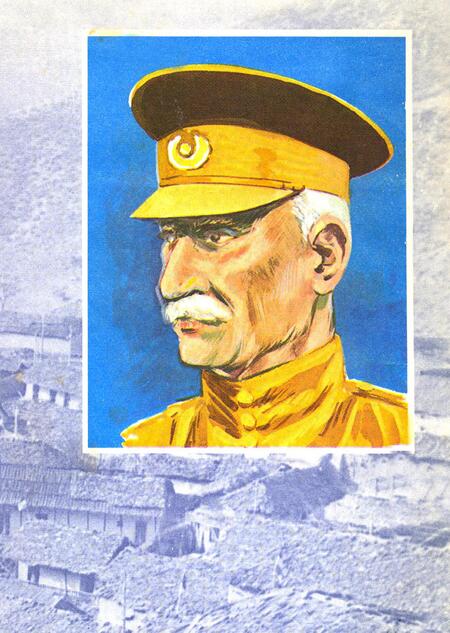
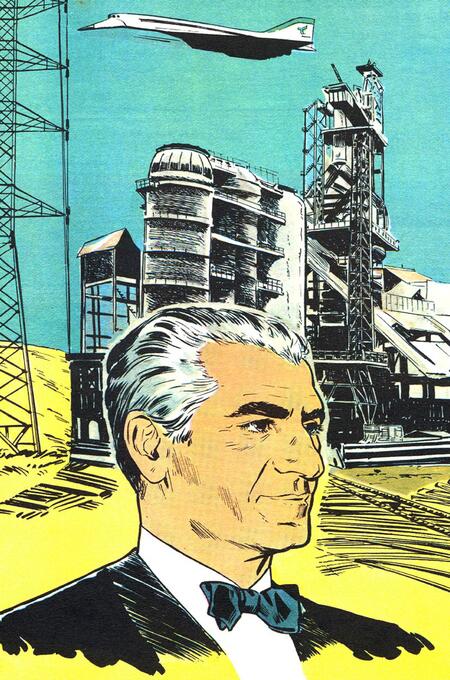
Before diving into comics directly, it is worthwhile to first address the topic of the Islamic Revolution itself—its causes and consequences. In 1941, Mohammad Reza Shah Pahlavi (1941–1979) took power in Iran. His father, Reza Shah (1925–1941), whose portrait appears on the front cover of Dino Attanasio’s comic, «Recovered Glory» (1978), had already begun implementing reforms in Iran aimed at the Europeanization of the country.
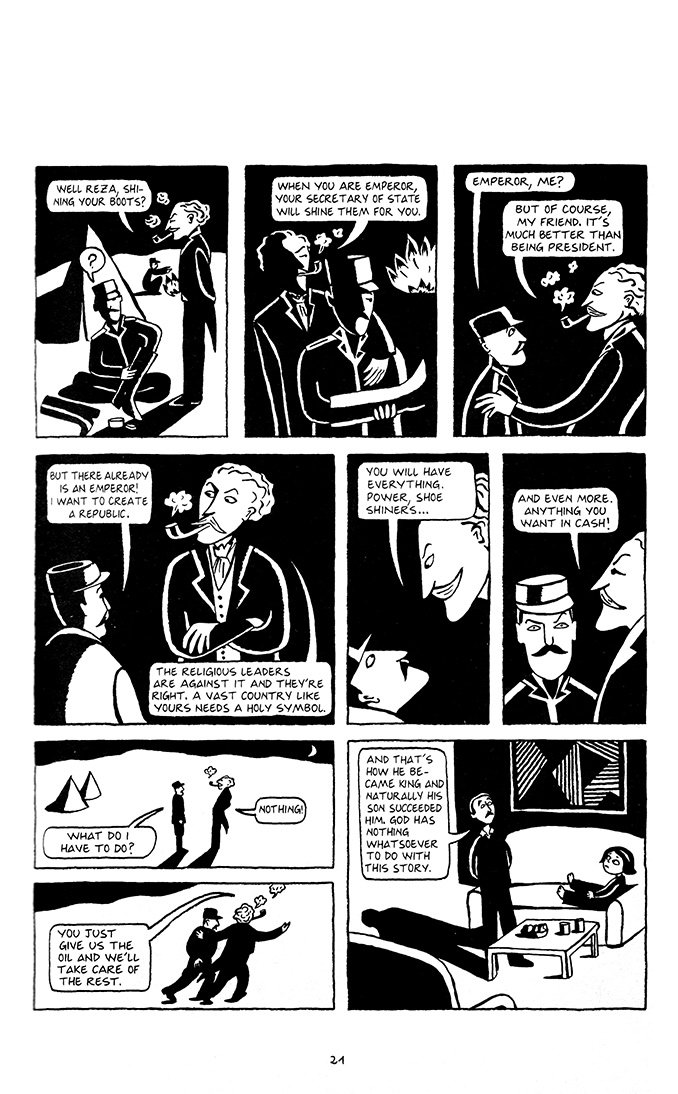
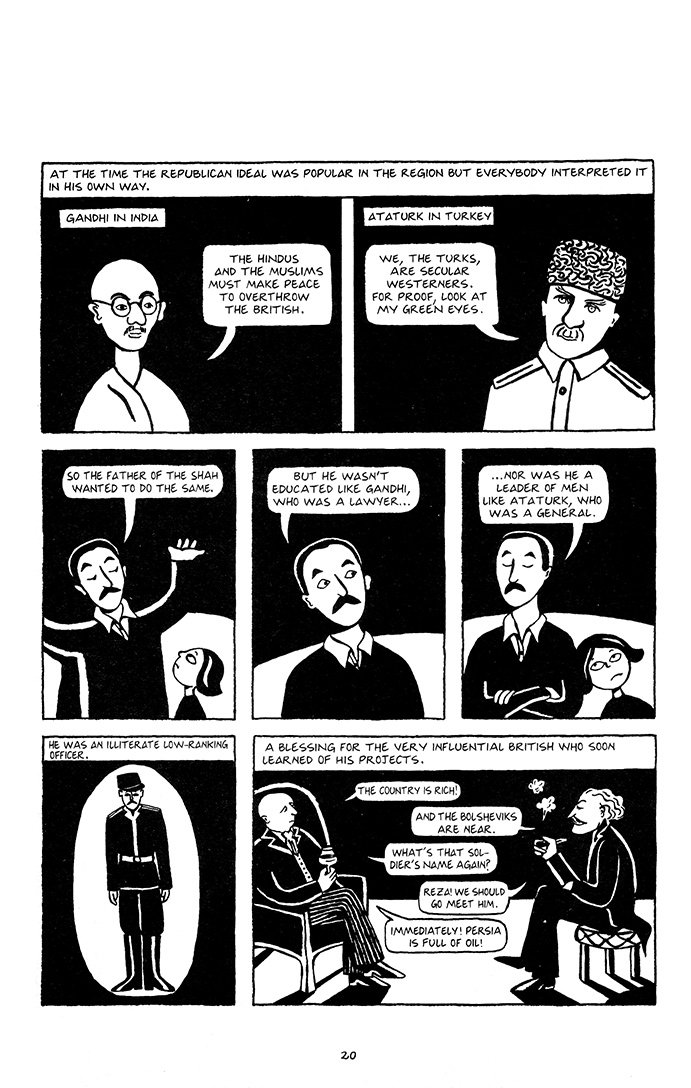
The depiction of Reza Shah Pahlavi in Marjane Satrapi’s comic, Persepolis (2003). Reza Shah is presented here as a shallow man, easily bribed.
The policy of Europeanization pursued by Reza Shah also impacted the sociocultural sphere. In 1935, Reza Shah issued a decree mandating the removal of the chador.The chador is a female cloak that covers the woman’s body from head to toe, as prescribed by the aurat (the set of Islamic rules regulating dress). Because the chador is made of light, breathable fabric, it is comfortable to wear in the hot Iranian climate during the summer.
In the 1930s, Iran was predominantly an agrarian country with a conservative society. The removal of the chador was a blow to people—a genuine cultural shock rather than a progressive measure. There were instances where girls in schools had their chador cut if they continued attending classes while wearing it. Men, however, were required to wear European suits. While this was not as strictly regulated, people could be prevented from getting jobs if they showed up in traditional Muslim attire.Over time, however, the authorities managed to «dress» the residents of cities and large villages in European pants and skirts.
Image of Mohammad Reza Shah with his son from Dino Attanasio’s comic book «Regained Grandeur» (1978).
For Mohammad Reza Shah, society’s strong resistance to the 1935 reforms did not serve as a lesson. Like his father, he decided to adhere to Westernization, but this time with a more radical approach. The Europeanization under Mohammad Reza Shah evolved from a process of reforming and improving the country into a crisis and decline. The Shah essentially bowed down to the Western powers. For instance, all oil-producing companies in Iran were not only private but were also owned by foreign states, primarily the United States and Great Britain.
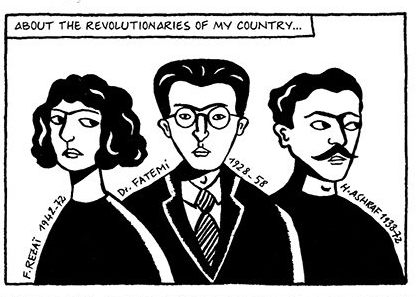
In the first half of the 1950s, the Popular Front, an opposition movement, emerged in Iran. It was led by Prime Minister Mohammad Mossadegh (1882–1967). Through Mossadegh’s efforts, oil-producing enterprises were nationalized, but unfortunately, only for a short time. The United States and Great Britain announced a boycott of Iranian oil, and subsequently, together with the Shah, illegally and by force removed Mossadegh from power and arrested him.The Shah supported the United States and Great Britain, and they, in turn, supported him. Censorship intensified, and any opposition to the Shah’s regime was suppressed.
The cover art for Dino Attanasiou’s comic «Reclaimed Glory» (1978), featuring Mohammad Reza Shah and the Iranian coat of arms during his reign.
In 1971, the Shah made what may have been a critical error. Severe drought was affecting several Iranian provinces, and people were starving. Nevertheless, Mohammad Reza Shah launched a grand celebration of the 2,500th anniversary of the Persian Empire. The festival was decided to be held in Persepolis, the capital of the Achaemenid Empire, home to ancient palaces adorned with exquisite bas-reliefs and cuneiform inscriptions in Old Persian. Preparations for the celebration took about a year. Exquisite wines and dishes were brought to Persepolis; 50,000 birds were even transported there, only to perish from the intense heat shortly after the festival. Leaders and representatives from dozens of nations arrived in Persepolis. Even a Soviet delegation, led by N.V. Podgorniy, attended the event. All guests were ensured security. Consequently, the celebration cost Iran tens of billions of dollars.
In 1973, the oil crisis occurred: Arab nations refused to sell oil to the United States and all supporters of Israel. During those years, Iran was the only predominantly Muslim nation that supported Israel. Thus, the oil embargo resulted in an increased demand for oil in Iran, which led to a massive rise in inflation in the country. Furthermore, a stream of foreigners poured into Iran—the oil extraction enterprises were now mostly staffed by Americans.
The country was impoverished. Among the populace, indignation and outrage grew day by day. The idea of a revolution strengthened. Moreover, the majority, including the intellectual elite of Iran, supported the idea of not just a revolution, but specifically an Islamic Revolution. The Islamic Revolution signified not only political and economic liberation from foreign states, but also a cultural victory. European clothing and European mores remained alien to people outside of major cities.
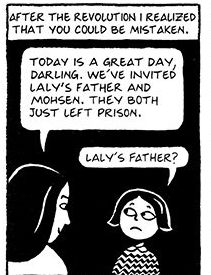
In 1979, the Islamic Revolution took place, Iran was declared an Islamic Republic, and a new constitution was adopted in the country. Foreign states lost any opportunity to interfere in Iran’s economy. Nevertheless, the revolution was followed by a massive wave of emigration. The new regime turned out to be too strict: the education system was restructured, and art was regulated. Universities were closed, and teachers and students were persecuted. Thus, many of those who initially supported the revolution were forced to leave the country.
The Emergence of Comics in Iran
Cover and spread photograph of Tintin’s Adventures in Persian.
The first comics in Iran appeared around the 1950s. These were European works translated into Persian.Since Reza Shah drew heavily from France and Belgium, it is unsurprising that among the first comics to enter Iran were «The Adventures of Tintin» by the Belgian artist Hergé. However, the characters' names were replaced with Persian equivalents. For example, Tintin became Behrooz, and Milo became Barfi.
The Iranian version of the Tintin comic strip titled «Behrouz’s Journey to Africa» (Mosāferat-e Behrūz be Āfrīqā).
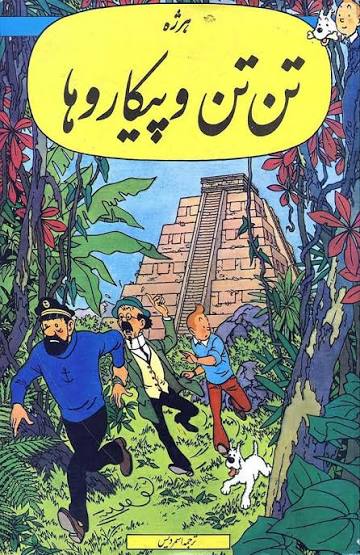
It is noteworthy that the names of both characters are originally Persian words. In the mid-twentieth century, a policy of purifying the Persian language from Arabic loanwords was implemented in Iran.
As mentioned before, Milo was called Barfi in the Iranian version. The word barfī means «snowy.» Naturally, the dog received this name because of its coloring. However, it was not named sefīd, because sefīd is a loanword from Arabic.
Today, thanks to globalization, his original name has been preserved in the Tintin comics.
Cover of Dino Attanasio’s comic, «Regained Grandeur» (1978).
In 1978, the comic strip «Restored Glory» (Azamat-e bāzyāfte) appeared in Iran. The comic was created specifically for that country. It is the work of the Belgian artist of Italian descent, Dino Attanasio. The comic was created especially for Iran and served as propaganda.The goal of the comic was to establish an image of Mohammad Reza Shah as a benevolent, altruistic ruler who does everything for the good of his country.
A panel from Dino Attanasio’s comic strip, «Rediscovered Glory» (1978), which praises the agrarian policies of Mohammad Reza Shah. It is depicted that the Shah is personally involved in the affairs of the village.
The comic strip includes a panel titled «A Day in the Life of the Shahanshah of Aryans» (Zendegī-ye rūzāne-ye šāhenšāh-e āryāmehr). This strip depicts the Shah’s routine, which, naturally, includes listening to ministers' reports and meeting with representatives from other nations.However, the Shah also encounters happy Iranian children dressed in every conceivable European fashion trend. They joyfully greet both Mohammad Reza Shah and his wife, Shahbanu Farah Pahlavi. In one panel, the Shah is drawn in military uniform, which speaks to his devotion to the homeland. The Shah also supports the pursuit of knowledge, shaking hands with an outstanding student in a robe and cap.The Shah did not forget his visits to the mosque and prayer. In the final panel, we see him surrounded by Shiite clergy. In reality, the clergy largely did not support the Shah because, due to his Europeanization policies, the Shah limited their authority and secularized some lands belonging to the mosques.
The strip «A Day in the Life of Shahinshah of the Arians» from Dino Attanasio’s comic, «Regained Glory» (1978).