Topics
- Concept
- Everyday Bodily Deformation
- Transforming the Body into an Object
- Fantastic Bodily Transformation
- Conclusion
Concept
The visual study investigates how changes to a character’s body convey the meaning of action in American animated film from the 1920s to the 1930s. Deformation, in this context, refers to any alteration from the body’s conventional form. A character’s arm might stretch, the back might bend, other body parts might appear or existing ones might change and become objects. In every case, the deformed body plays a distinct role.
The meaning of a character’s body deformation is determined by the context and the sequence of actions on screen. Stretching helps convey the character’s effort, while body deformation indicates that the character has encountered difficulties. The transformation of a body part into an object symbolically narrates the character’s intentions. Certain changes completely alter the character’s physical properties and abilities.
How does the transformation of a character’s body shape shape the perception of an animated film’s plot?
Three types of character body deformation can be identified in foreign animation from the 1920s and 1930s.
Body deformation, which refers to visible changes in the physical properties of a body resulting from collisions, impacts, or interactions with other characters.
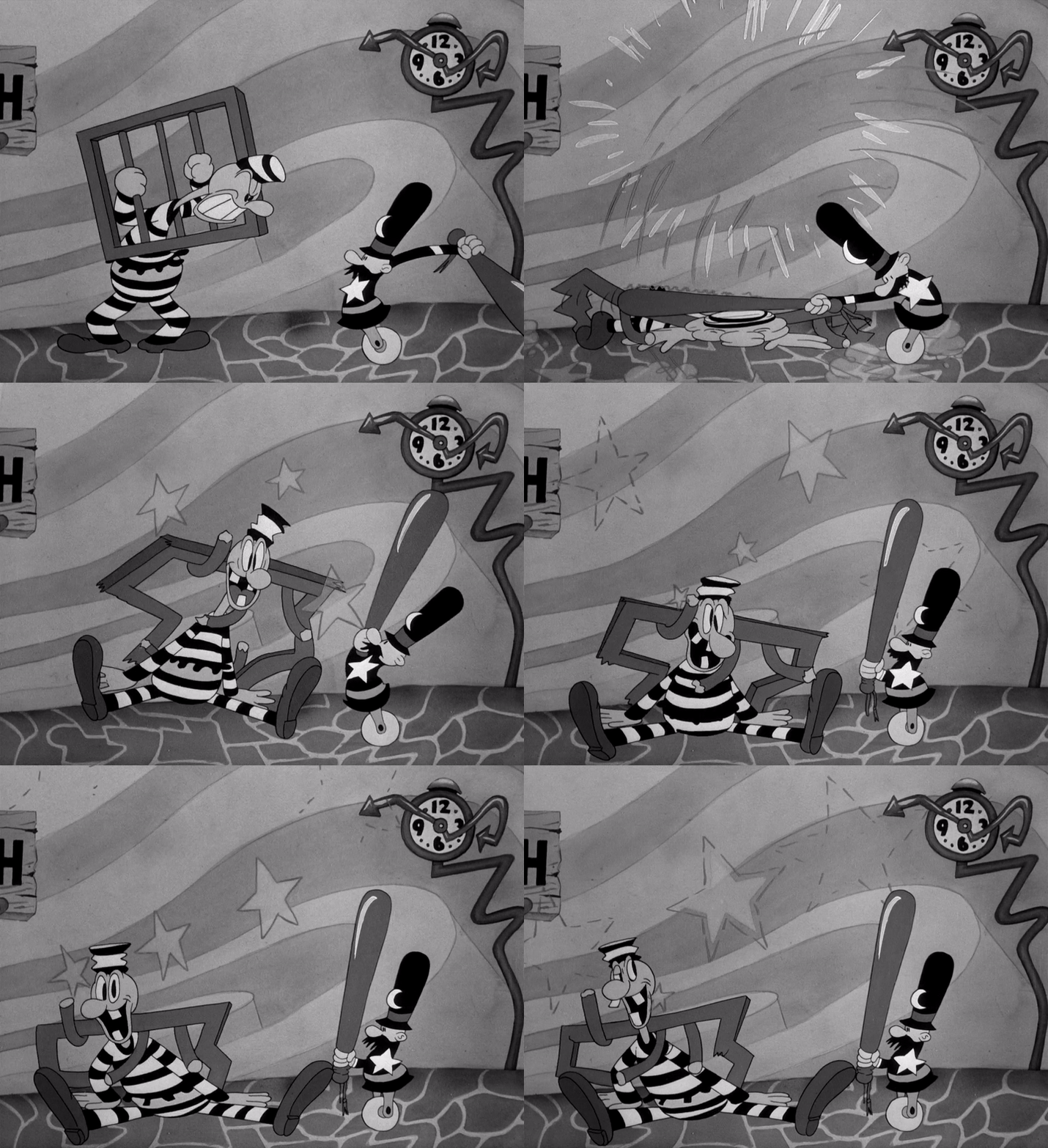
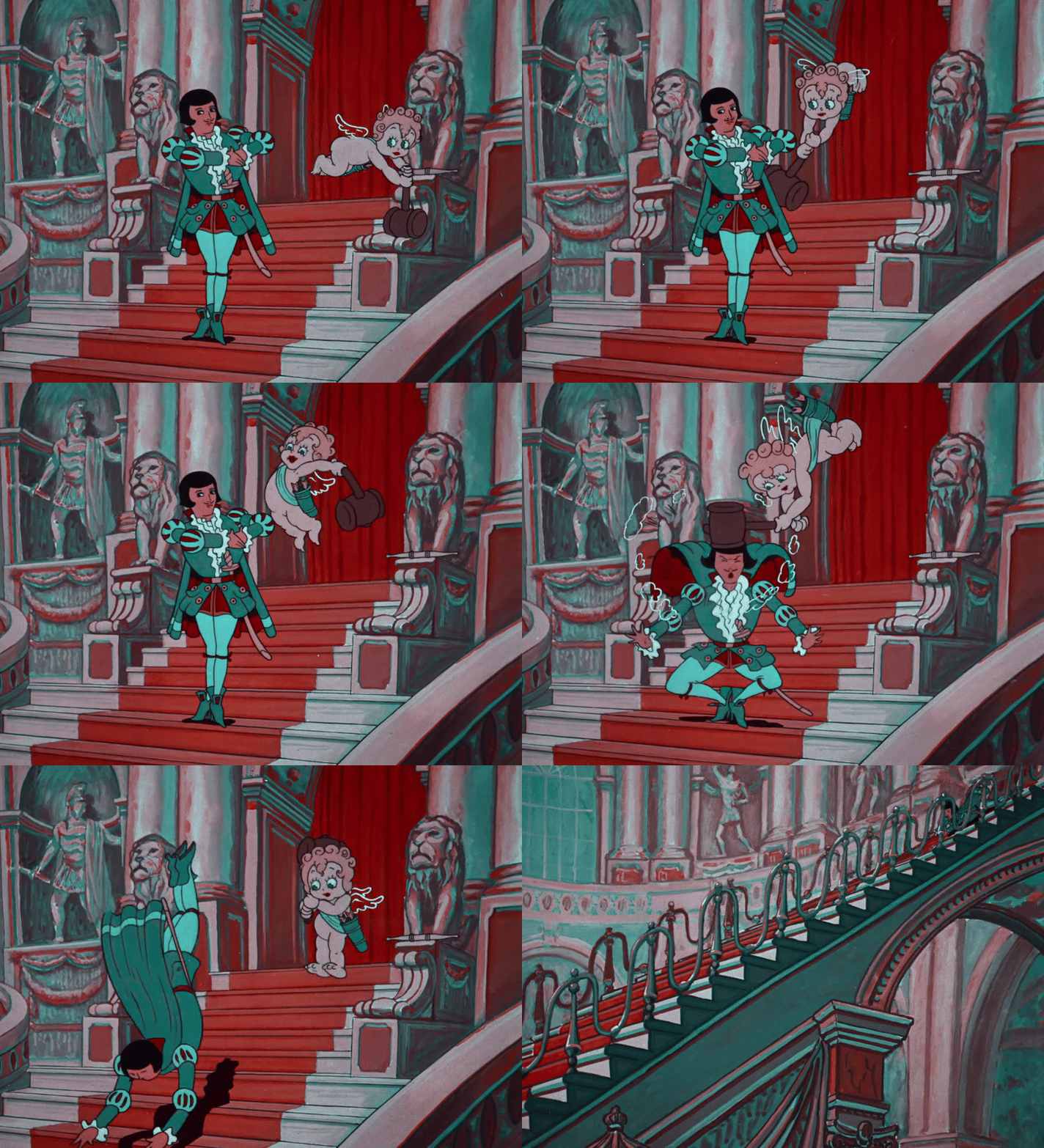
1. «Porky in Wackyland, ” Bob Clampett, 1938, 00:03:00–00:03:03 2. „Poor Cinderella, ” Dave Fleischer, 1934, 00:06:49–00:06:52
Transforming a body part into an object. Most often, this functions as a metaphor for a character’s intentions and desires; it can also be a humorous exaggeration of some of the body’s biological properties.
«Snow White, ” Dave Fleischer, 1933, 00:05:10–00:05:15
Fantastic bodily deformation. It most often shifts the narrative of a film into the realm of the irrational, and some noticeable and powerful changes to the entire human body cease to be surprising.
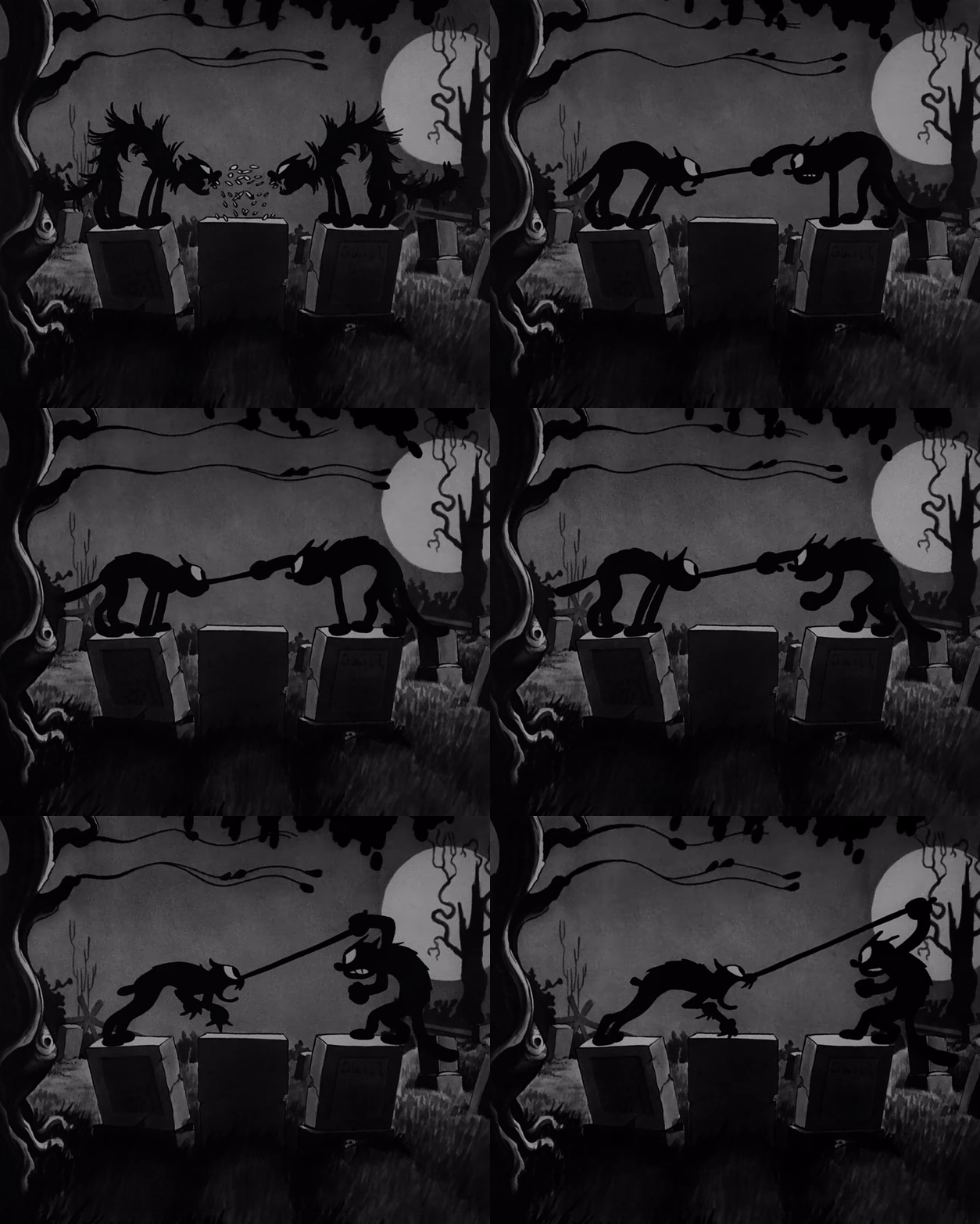
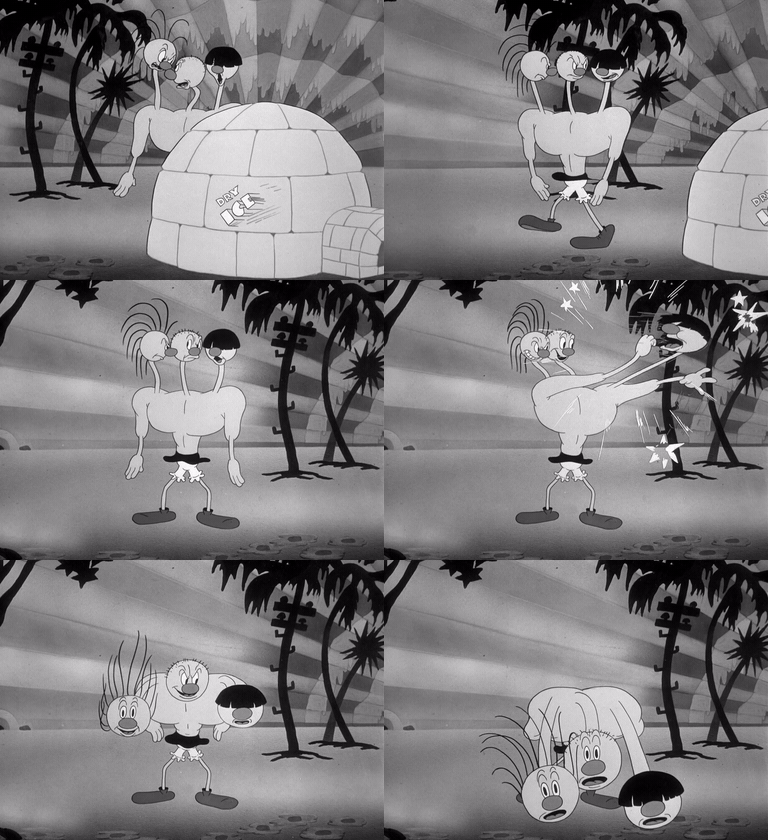
1. «The Skeleton Dance, ” Walt Disney, 1929, 00:01:32–00:01:36 2. „Porky in Wackyland, ” Bob Clampett, 1938, 00:03:41–00:03:49
In a domestic scene, the duration of deformation indicates how long the force is sustained. When a body part transforms into an object, the crucial factor becomes the moment of its use. A fantastic transformation can be traced through the following actions of the character: these actions demonstrate the possibilities opened up to him by his changed body.
When comparing episodes, the direction of movement, the moment the silhouette changes, the duration of the new form, and the action that follows it are taken into account. Similar deformations are matched across different circumstances. Stretching a limb might express an attempt to reach a goal or convey a jolt caused by an external force. If the purpose of the new form becomes clear later, that pause can become part of the joke. This comparison allows one to trace exactly how the technique of body deformation is being used and at what moment the body’s alteration begins to dictate the subsequent course of the scene.
The study included eight films: «Felix in Hollywood» (1923), «Plane Crazy» (1928), «Steamboat Willie» (1928), «The Skeleton Dance» (1929), «Snow-White» (1933), «Poor Cinderella» (1934), «The Flying Mouse» (1934), and «Porky in Wackyland» (1938). Scenes depicting the original body form, the transition, and its consequences were selected for analysis. These scenes were taken from both silent and sound films.
Body Distortion
«Steamboat Willie, ” Walt Disney, 1928, 00:00:52–00:00:59
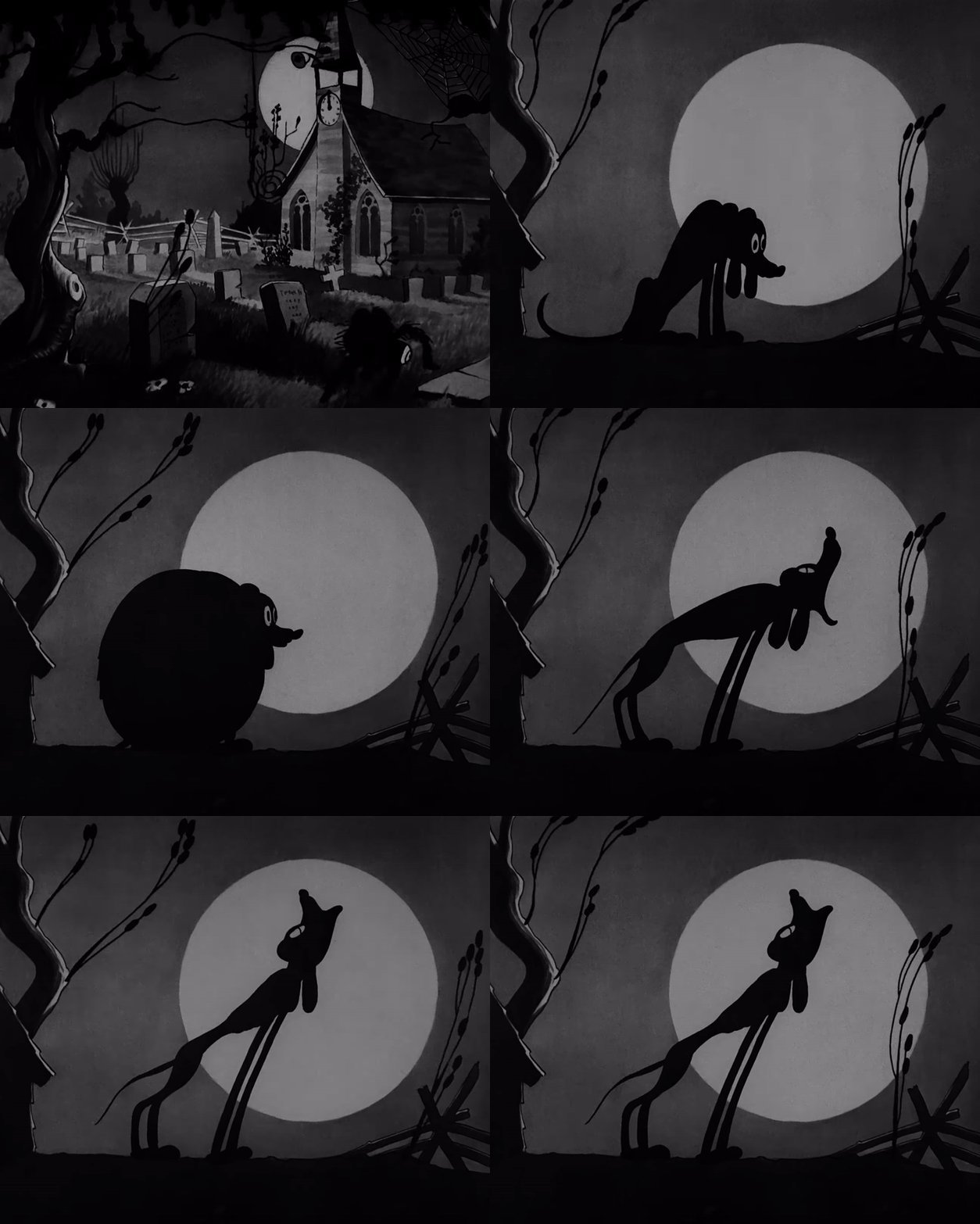
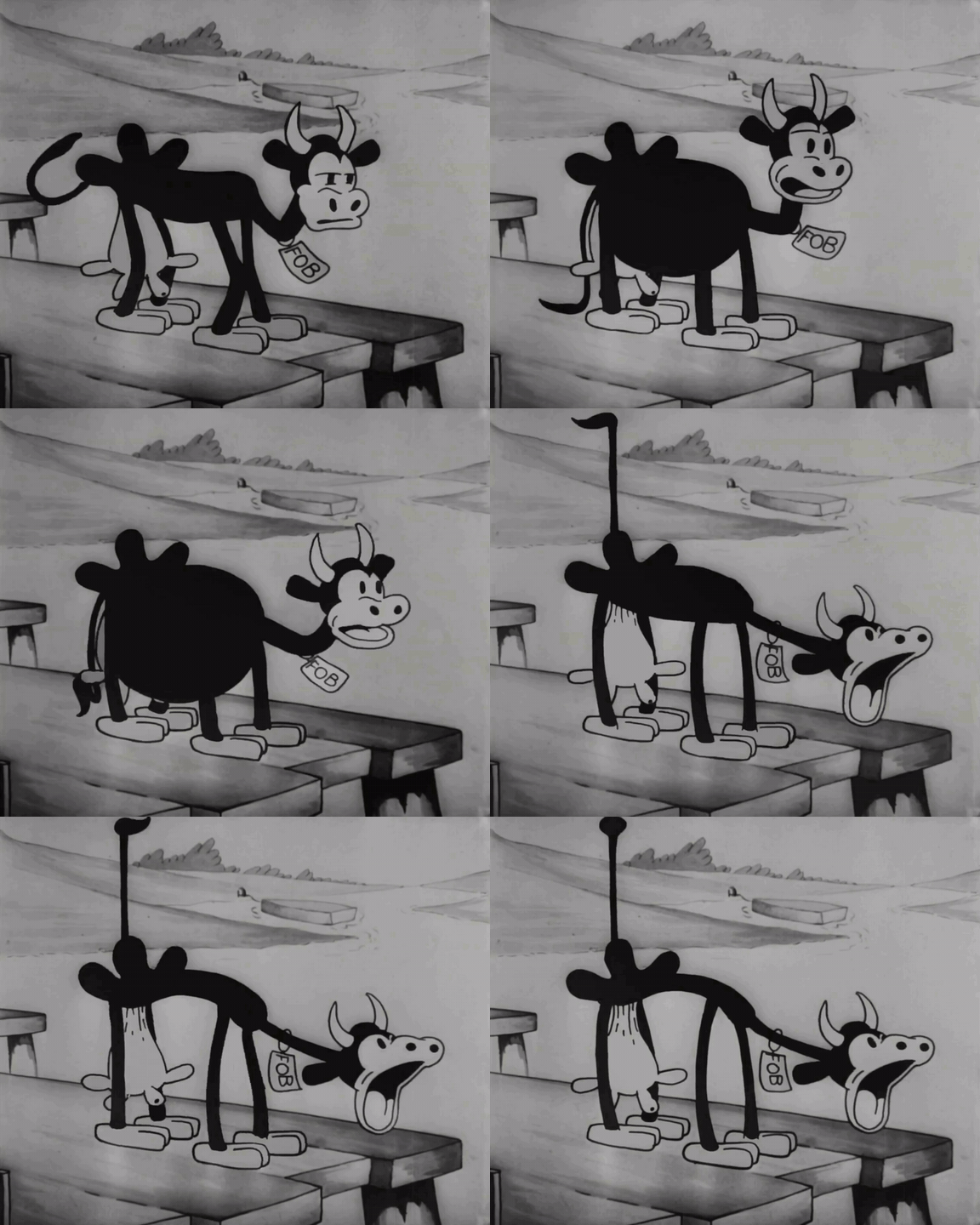
1. «The Skeleton Dance, ” Walt Disney, 1929, 00:00:59–00:01:04 2. „Steamboat Willie, ” Walt Disney, 1928, 00:02:10–00:02:15
The character’s physical deformation in a domestic setting most often illustrates how the protagonist overcomes the obstacles they encounter.
«Porky in Wackyland, ” Bob Clampett, 1938, 00:06:32–00:06:34
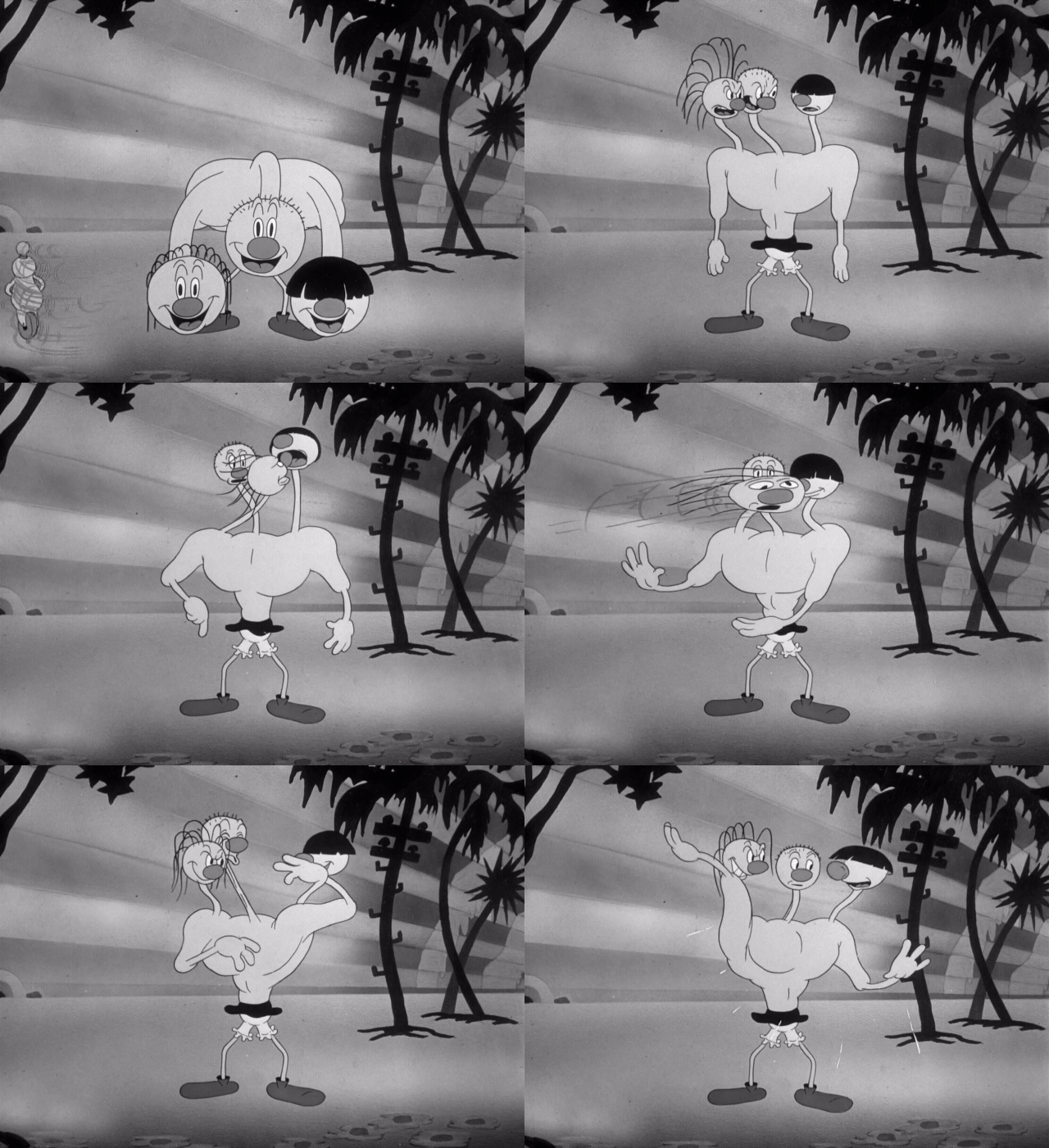
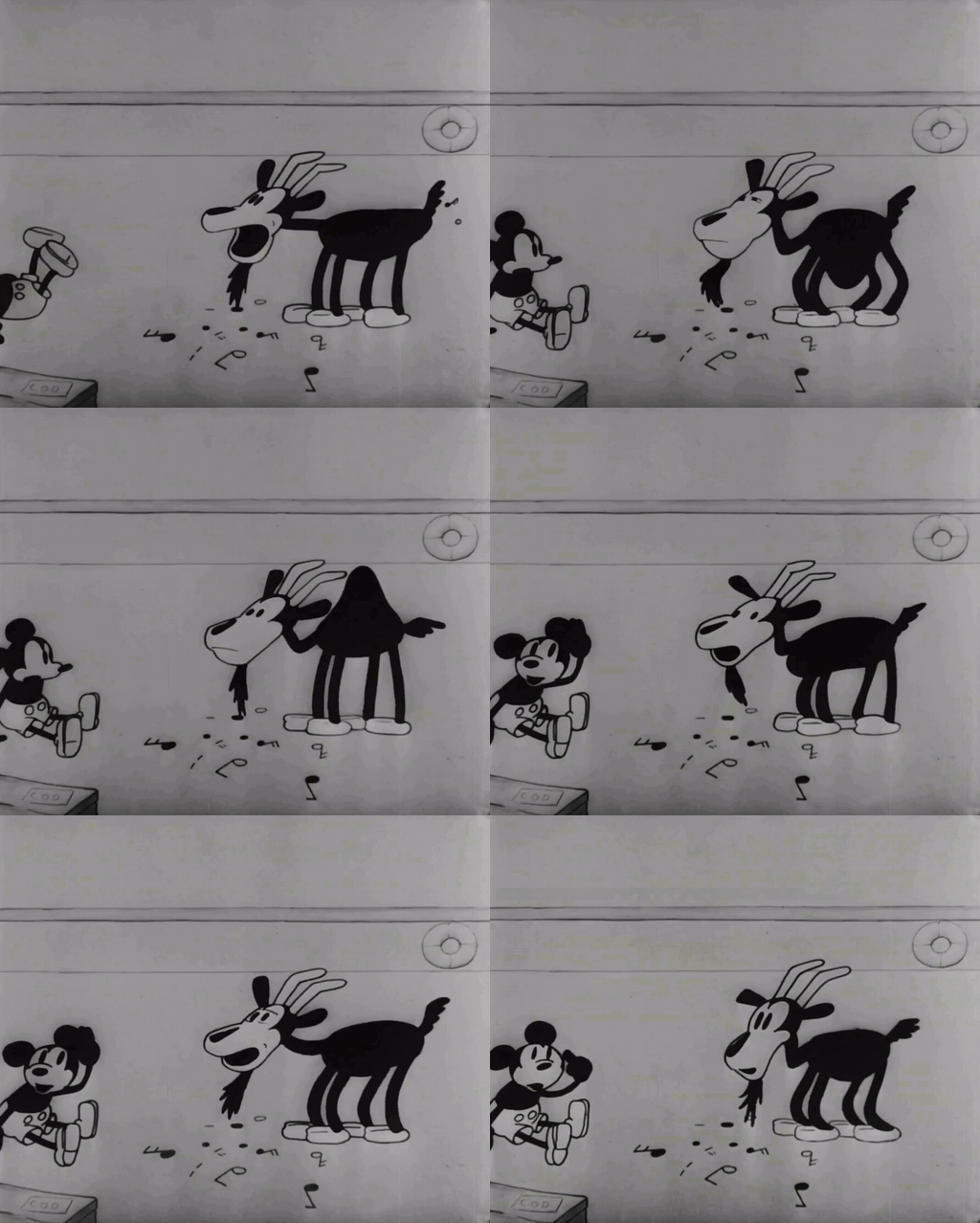
1. «Porky in Wackyland, ” Bob Clampett, 1938, 00:03:57–00:04:02 2. „Steamboat Willie, ” Walt Disney, 1928, 00:03:58–00:04:04
«Snow White,» Dave Fleischer, 1933, 00:03:40–00:03:43
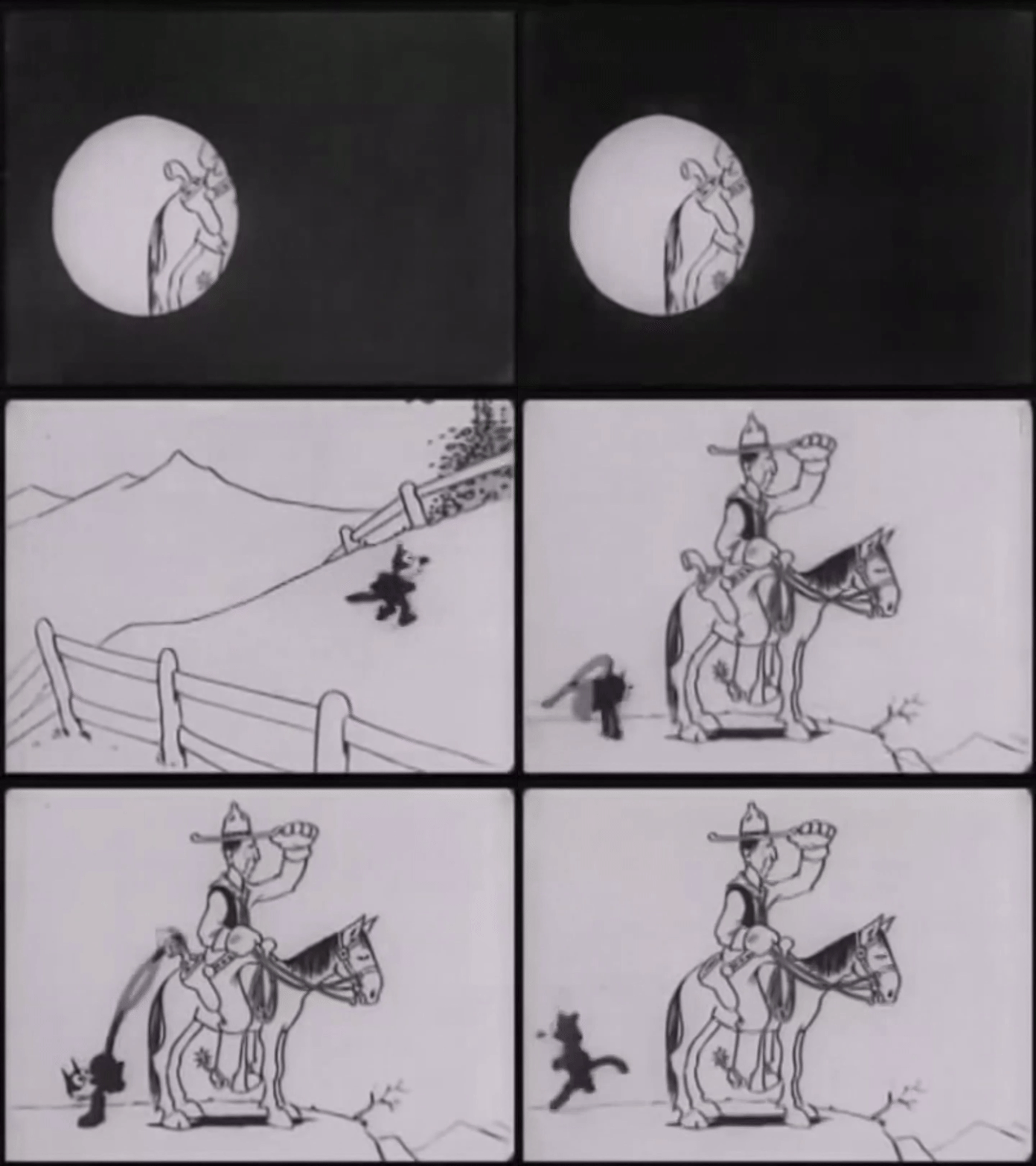
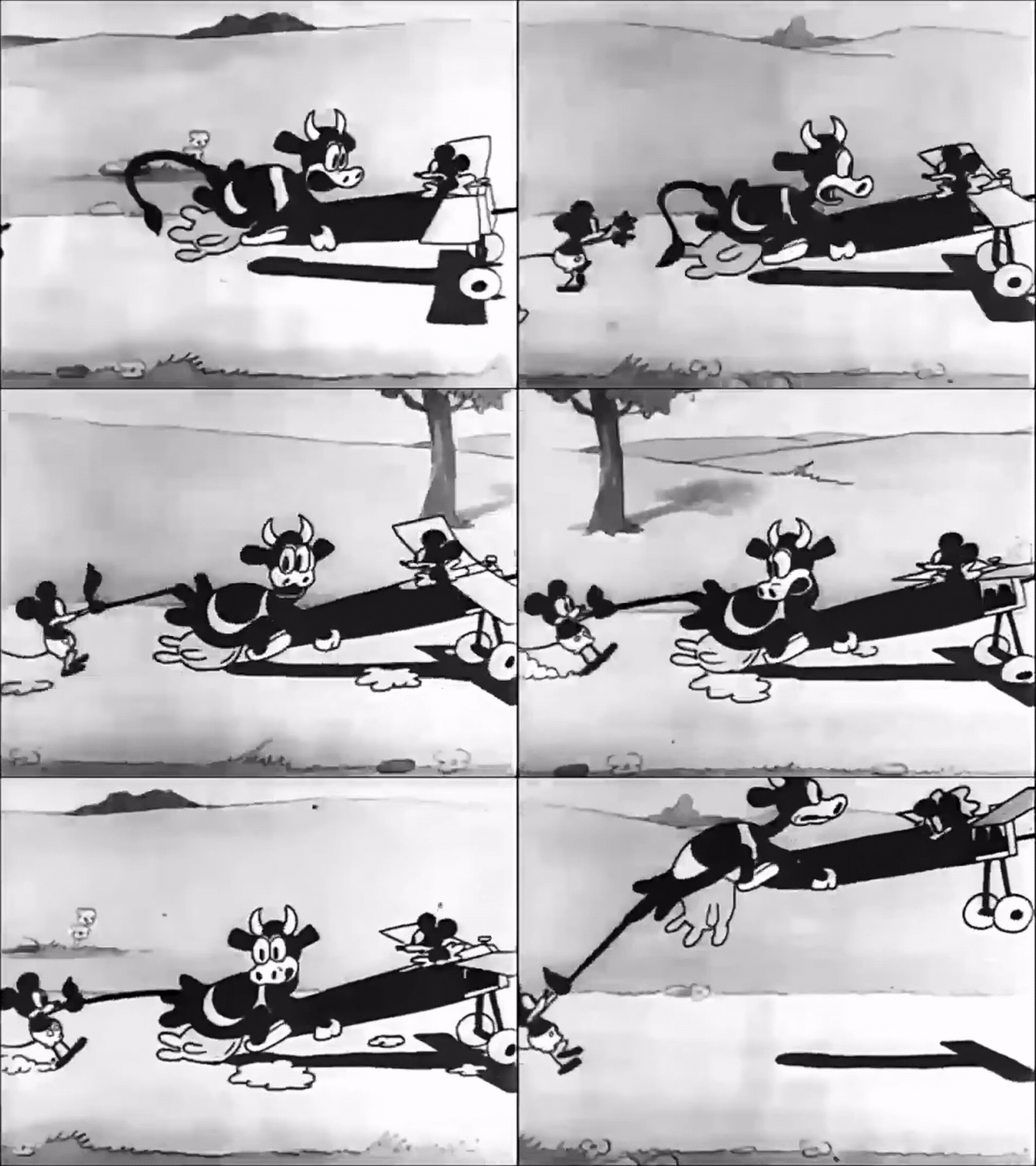
1. «Felix in Hollywood, ” Otto Messmer, 1923, 00:06:58–00:07:02 2. „Plane Crazy, ” Walt Disney, 1928, 00:03:29–00:03:32
«Porky in Wackyland, ” Bob Clampett, 1938, 00:05:04–00:05:07
In these episodes, the stretching, compression, and bending of body parts reveal what is difficult to convey with a single posture: the effort, resistance, or the character’s sharp reaction to constraint.
«Plane Crazy, ” Walt Disney, 1928, 00:05:23–00:05:30
«Porky in Wackyland, ” Bob Clampett, 1938, 00:06:08–00:06:11
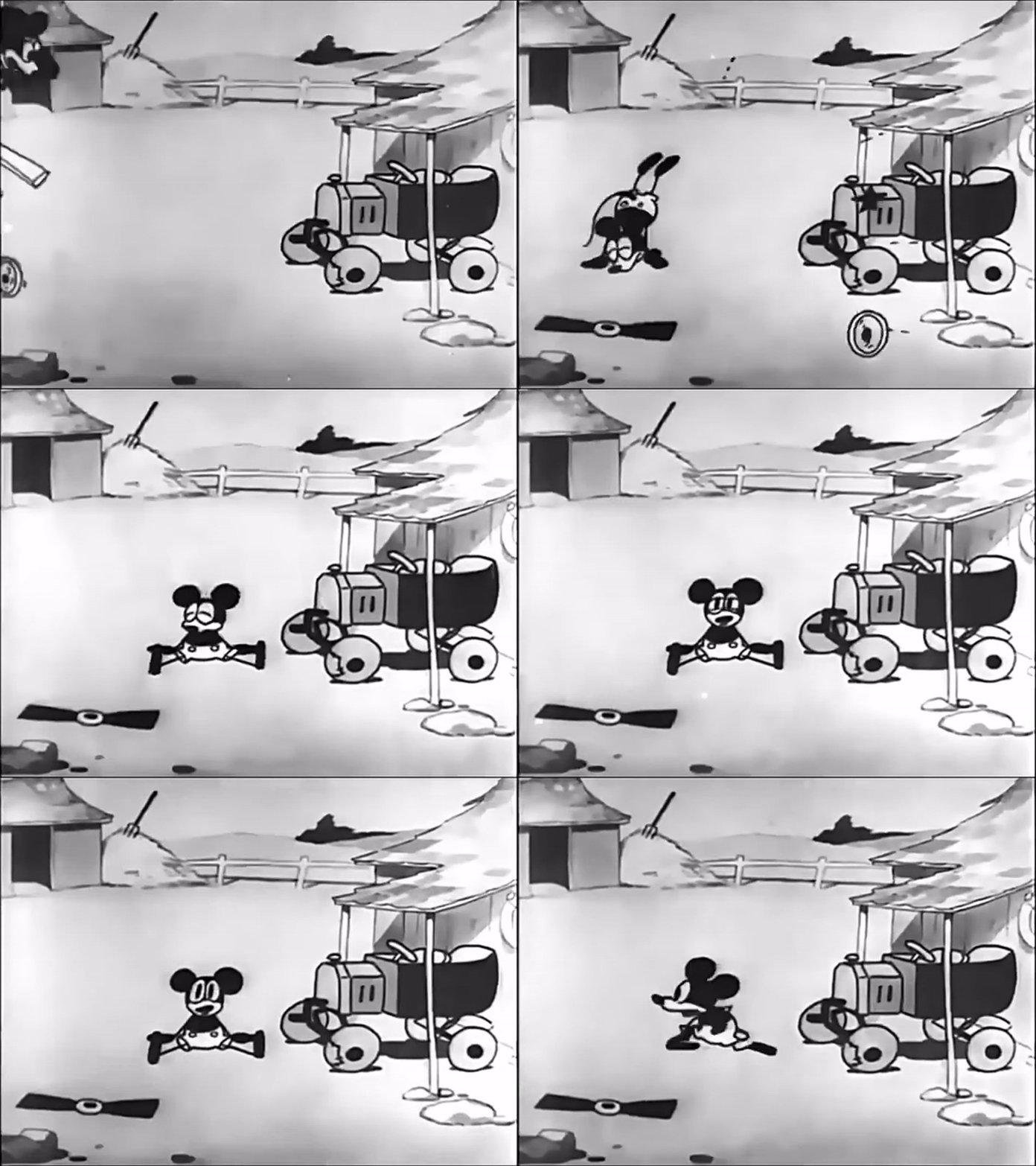
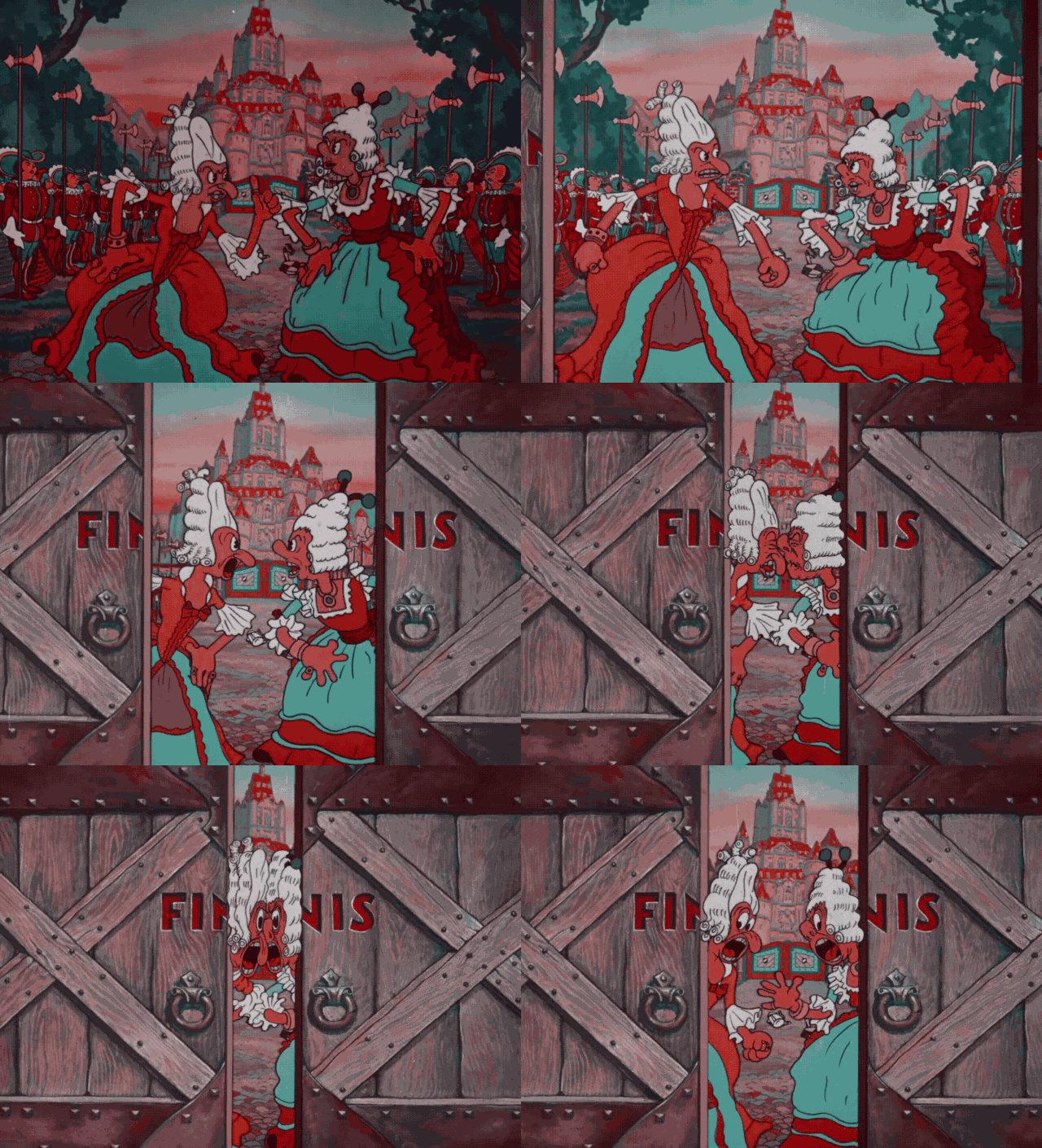
1. «Plane Crazy, ” Walt Disney, 1928, 00:01:27–00:01:30 2. „Poor Cinderella, ” Dave Fleischer, 1934, 00:10:17–00:10:20
A fairly common technique—the distortion of a character’s body—appears when the hero collides with something. Here, the body’s depiction conveys the force of the impact and creates a comedic effect, thereby characterizing the character’s persona.







