Concept:
Games from the pre-digital era often do not require the rationalization of their game status. No one would doubt that chess is a game. The same applies to most board games released today. In modern society, where the word «game» is synonymous with fun, no one would argue that Monopoly—which allows a player to spend an enjoyable time with loved ones—is a game. Simultaneously, contemporary social discourse periodically returns to the debate: should games fundamentally be fun to earn their status?
Horror, as a genre variation of games in the digital age, is an excellent tool for analyzing this topic.
The primary objective of horror, without a doubt, is to provoke as many negative emotions in the player as possible, which obviously contradicts the common perception of games as a source of amusement. Nevertheless, the genre’s long-standing popularity speaks for itself—people enjoy horror games. To understand precisely what makes horror games «games,» I believe we need to look at this subject through the lens of philosopher Johan Huizinga and his book Homo Ludens.
Categories:
- Concept;
- Indexing;
- Homo ludens—Introduction;
- Homo ludens—Key Concepts;
- The Reflection of Horror Games and Their Subgenres in the Key Concepts of Homo ludens;
- The Violation of Homo ludens Rules as a Genre Tool;
- Conclusion;
- Bibliography;
Homo Ludens — Introduction.
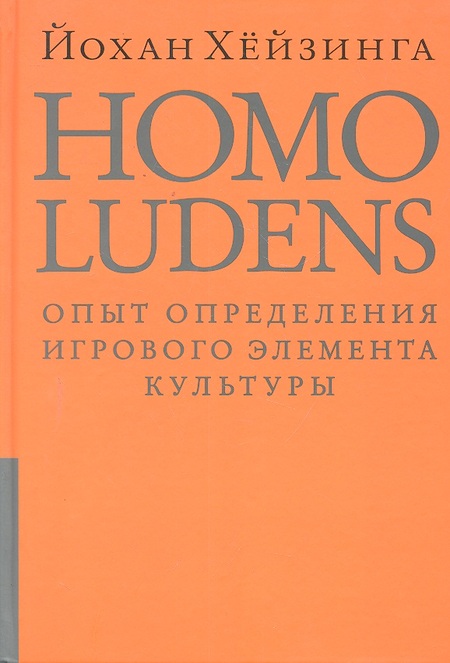
Homo ludens (or «The Playing Man») is a treatise written by the Dutch cultural theorist Johan Huizinga. In this work, he explores the phenomenon of play and its universal significance in human civilization. In his view, «human culture arises and unfolds through play,» and the characteristics of play can be found in the most diverse manifestations of human activity—for example, when examining the manifestations of labor, love, war, and even the attitude toward death across different cultures and social structures.
Homo ludens — Key Concepts.
Hyo-Jing provides a list of principles by which a given set of actions can be considered a game:
Freedom: Play must be a voluntary activity. If coercion is present during the process, the activity ceases to be a «game.»
Lack of Necessity: The game must exist outside of everyday needs, and even if it touches upon related activities (e.g., hunting games), fundamentally it does not serve to satisfy anyone’s basic needs.
Internal Order and Rules: Within the game, there are its own laws that all participants must abide by—and these often differ from the rules of the real world.
Temporal and spatial constraints. A game must have a beginning and an end, as well as defined spatial limits—whether those limits are a game board, a field, an arena, or a territory fixed by any other means.
From the examples above, it can be concluded that a game is a space separated from reality where specific rules apply. Individuals willingly enter this space, and within it, conventionalities are taken seriously. Huizinga uses a specific term for this—the magic circle.
Example: Competitive games. Conflict within the playing field does not turn players into enemies outside of the game. The magic circle allows for this transition between the game world and the real world.
Lack of Material Gain: The game is valuable for the process of playing itself.
Agonality: This is the drive for superiority—a competitiveness that, according to Hwang Yi-jin, is innate to human nature. Play, in Hwang Yi-jin’s view, provides an outlet for this instinct.
Of course, these are far from all the nuances explored by Hyung-jing, but they are enough to derive a basic definition of play from his treatise.
Play is a form of free activity that has its own rules, spatial limitations, and typically possesses a competitive element.
The reflection of horror games and their subgenres in the key concepts of homo ludens.
Based on the information above, the main factors that allow horror games to earn and maintain their status as a genre are:
Freedom:
Even though horror games deal with feelings of fear and helplessness—they still allow the player to confront these negative emotions within a «magic circle, ” the finding of which and the exit from which are the player’s free choice.
Presence of Rules:
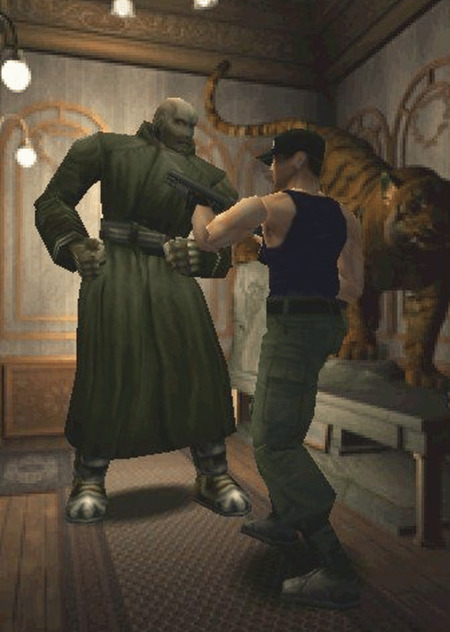
Every horror game operates under a set of rules that govern not only the player but also the world surrounding them.Playing any part of Resident Evil, you know that biological threats blocking your path can be stopped by a bullet, and each enemy has a specific amount of ammunition required to defeat it.The pursuers in Outlast will not peer into your hiding spot if you manage to hide quickly and don’t get caught crawling under a bed in front of them.These rules operate in both directions—for the player and for their digital opponents.