The goal of the visual research is to compare two exhibitions: «The Russian Museum at ZILART. Masterpieces of Art from the Second Half of the 20th Century. Dar of Peter and Irene Ludwig» and «Precursors to Pavel Tretyakov: Fyodor Pryanishnikov and Kozma Soldatyonkov» at the Tretyakov Gallery. Both exhibitions explore the role of the collector and their collection within the context of forming a museum collection and its influence on art history as a whole. The objectives are to identify and compare the tools and approaches curators use to illuminate this theme—specifically, the features of the exhibition design and visitor engagement.
«Precursors to Pavel Tretyakov: Fyodor Pryanishnikov and Kozma Soldatyonkov» in the Tretyakov Gallery
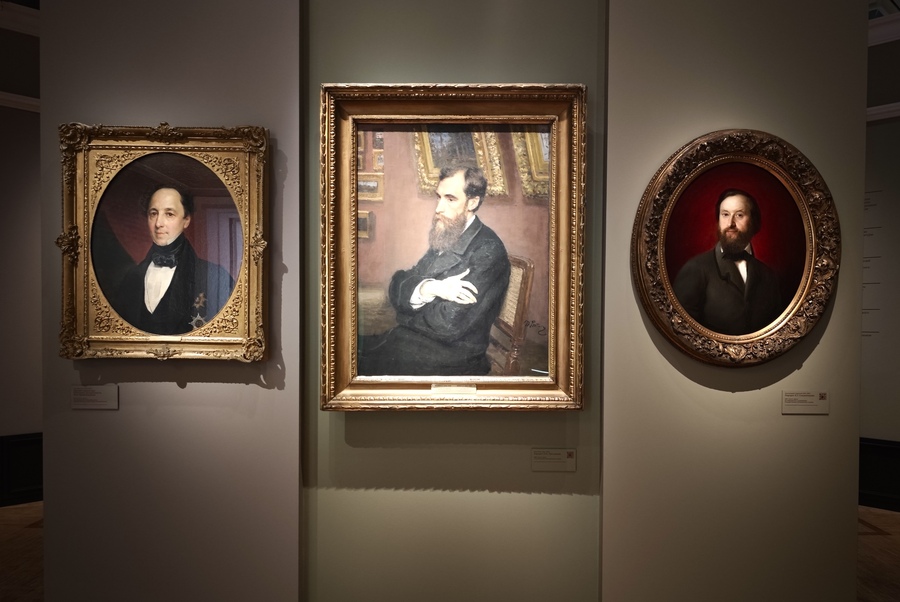
portraits (from left to right) of Fyodor Pryanishnikov, Pavel Tretyakov, Kozma Soldatyonkov
June 12, 2026 — October 11, 2026.
Tretyakov Gallery, Lavrushinsky Pereulok, 12, Engineering Building.
Curators — Natalia Yuryevna Samoylenko, Ekaterina Klementyeva, Marfa Kuznetsova.
The exhibition is a partnership project between the State Tretyakov Gallery and the Russian State Library.
First Impression
The exhibition focuses on the historical context of collecting in Russia. Significant emphasis is placed on the biographies of Pryanishnikov, Soldatenkov, and Tretyakov—their development and passion for art.All works presented in the exhibition are long-standing parts of the permanent collections of Russian museums, so there is no extensive commentary directly on them. Instead, they serve to visualize the tastes and preferences of the collectors.
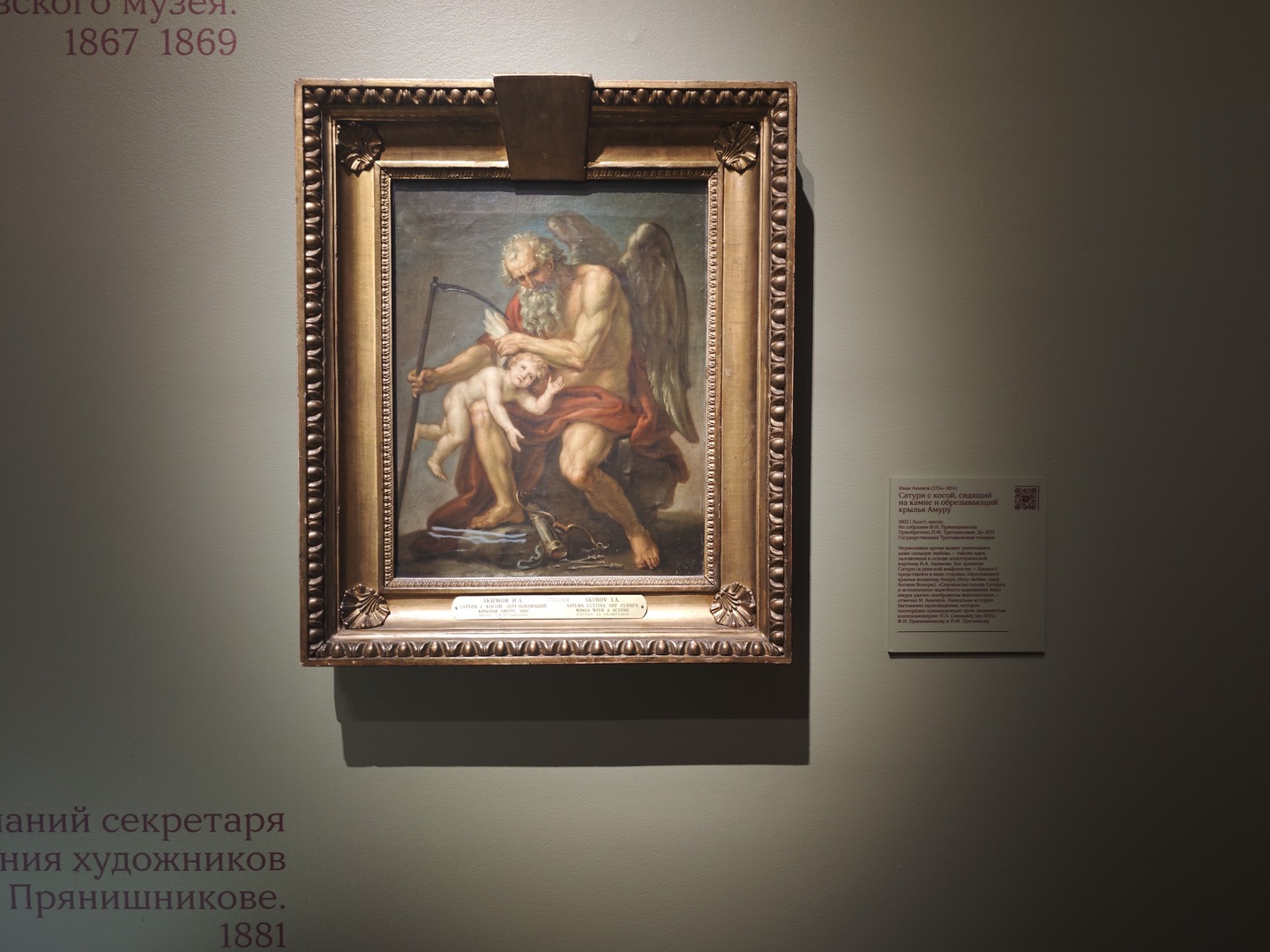
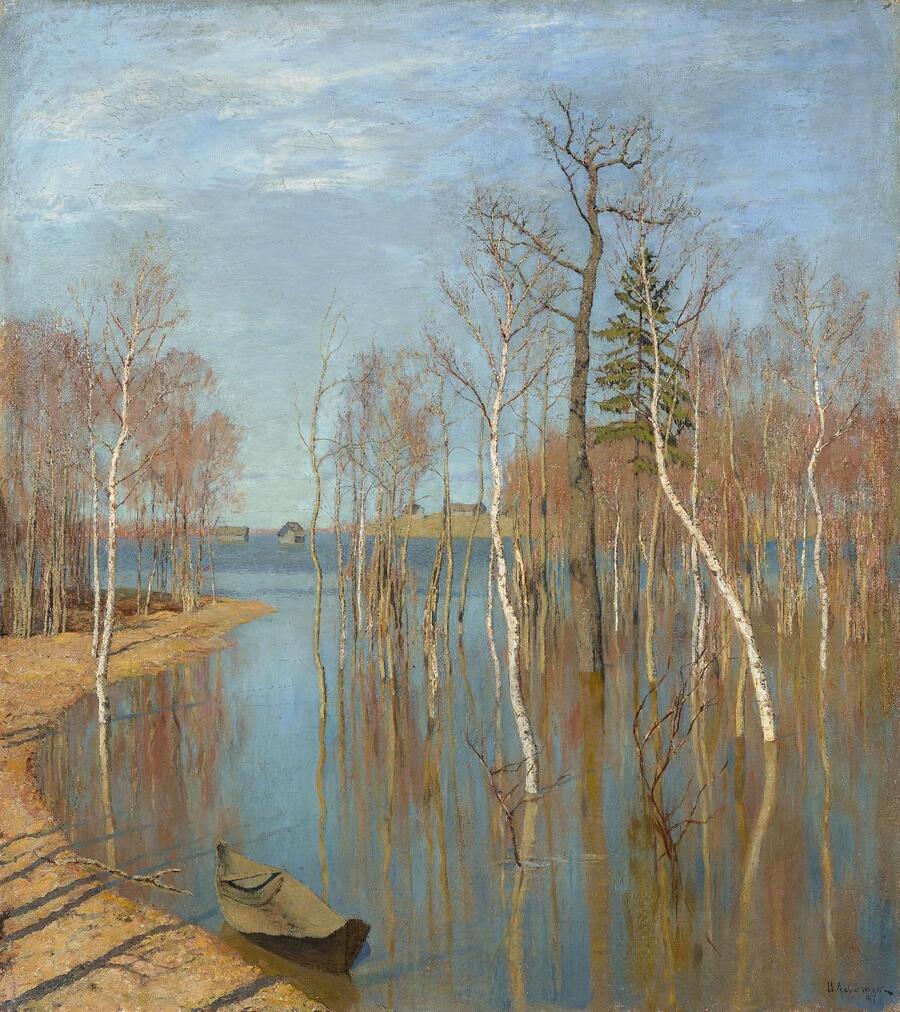
I. I. Levitan. Spring — Big Water. I. Akimov. Saturn with a Scythe, Sitting on a Stone and Clipping Amur’s Wings. 1802.
Exhibition Design
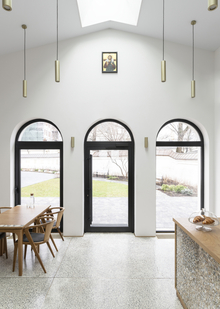
The exhibition is being held in the Engineering Wing of the Tretyakov Gallery, and three halls on the third floor have been designated for it.Additional drywall partitions have been erected to divide the space and create focal points. Primarily, this construction features three-dimensional works alongside thematically cohesive paintings.
In the first and second rooms, the focus is on telling the story of the collectors, detailing their biographies. The exhibits include various archival materials, books, documents, as well as some paintings from the collectors’ holdings.The narrative is detailed; viewers spend more time reading than looking. The storytelling logically concludes in the second room, leading the visitor to the outcome of the collectors’ efforts—the collection itself. The final room presents only the works of art.
The lighting, unfortunately, suffers, much like in many exhibitions at the Tretyakov Gallery. The first and second halls were quite dim, and there were strong glare spots reflecting off the glass. The third hall benefits from a large window. Even though it is lined with special materials to preserve the works, the space still becomes very bright.
The curatorial text, which conveys the exhibition’s concept, does not contradict the actual realization. Indeed, the exhibition thoroughly details Tretyakov’s predecessors, provides insight into the collection’s formation, and demonstrates the current historical significance of the collection for the entire art world.
Parallel Program. Media. Viewer Engagement.
The parallel program turned out to be incredibly rich: we had museum tours, lectures on collectors, and even full-cycle seminars.It struck me that the exhibition wasn’t widely known to the general public; admission was integrated with other projects in the engineering building.
What can be improved?
In my opinion, the exhibition «Precursors to Pavel Tretyakov: Fyodor Pryanishnikov and Kozma Soldatyonkov» felt too typical and straightforward. Within the context of the institution, this is logical, although the Tretyakov Gallery occasionally mounts more unconventional projects.The exhibition is complete in terms of concept and organization. The parallel program is thoroughly developed, though there weren’t many publications or media mentions.Perhaps the qualitative aspects could have been improved: — lighting design; — presenting the collectors' stories in interactive formats, rather than focusing solely on text; — engaging more directly with the works in the collection and emphasizing the curators' emotional choices.
«The Russian Museum at ZILART. Masterpieces of 20th-Century Art. The Peter and Irene Ludwig Collection»
September 5, 2026 — February 7, 2027. ZILART Museum, Bulvar Bratsev Vesninikh, 3. Curator — Alexander Borovsky.Exhibition — a joint project of the ZILART Museum and the State Russian Museum.
First Impression
Exhibition Design
Parallel Program. Media. Viewer Engagement.
What can be improved?