Navigation
1. Concept 2. Artistic Devices for Constructing the Image of the Ideal Ruler 3. Attributes of Power and Status 4. Embodiment of Virtues 5. Conclusion 6. Bibliography
Concept
During the Renaissance, the portrait genre became a crucial tool for shaping and displaying human identity. The growing interest in human individuality and classical heritage influenced the development of portraiture and the concept of the ideal person. This took on particular significance in the depiction of rulers, as the portrait served to convey physical likeness and became a way to demonstrate power and personal virtues. Through works of art, a ruler could present themselves not merely as someone of high social standing, but also as an individual possessing the exceptional qualities necessary for governing a state.Humanism of the Renaissance, alongside references to ancient models, played a vital role in forging the image of the ideal ruler. A concept of the perfected human was being established—one in which physical beauty merged with intellectual and moral virtues. The Christian tradition complemented this image with ideas of justice and spiritual perfection. The portrayal of those in power was intended to demonstrate the qualities that society associated with worthy and just governance.
The ruler in Renaissance portraiture gradually became the embodiment not only of political power but also of a specific human ideal.
A ruler’s portrait was not always an objective reflection of their appearance or character. Artists could idealize facial features, conceal signs of aging, emphasize physical perfection, and employ various artistic techniques to create an impression of greatness and superiority. Furthermore, the patrons of these portraits could influence their content, as the image served as a tool for political representation and the demonstration of the legitimacy of power.
I have identified several aspects that play a crucial role in constructing the image of the ideal ruler. The principle of categorization for my visual study is based on these elements. These include various artistic devices, attributes of power and status, and the embodiment of virtues through which the ruler is presented as a wise and pious person. Collectively, these elements form the image of an individual who aligns with the era’s conception of the ideal sovereign.
My research hypothesis is that the ruler in Renaissance portraiture is depicted as an ideal human being; however, the more perfected his artistic portrayal becomes, the further it may diverge from historical reality.
For the visual component, I selected portraits and sculptures of Renaissance rulers, in which the methods for constructing the ideal image are most vividly expressed. In the analysis of these works, I refer to books on Renaissance history, scholarly articles, and museum archives. I examine the historical context of the work’s creation, the personality of the depicted ruler, and biographical details. This allows me to determine which features were preserved and which were intentionally altered.
Artistic Elements in Constructing the Image of the Ideal Ruler
The artistic devices of portraiture during the Renaissance became one of the key ways to shape the perception of a ruler’s personality. Firstly, the artist sought to convey the physical likeness to the subject, and secondly, they addressed the task of creating a specific impression of him. Composition, figure placement, posture, gestures, the direction of the gaze, and lighting helped achieve this.
The portrait became a way to craft the ideal public image of a ruler.
One of the essential rules in constructing the ruler’s image was the idealization of their appearance. Artists could preserve recognizable facial features while softening flaws, adjusting proportions, and lending the visage greater harmony.
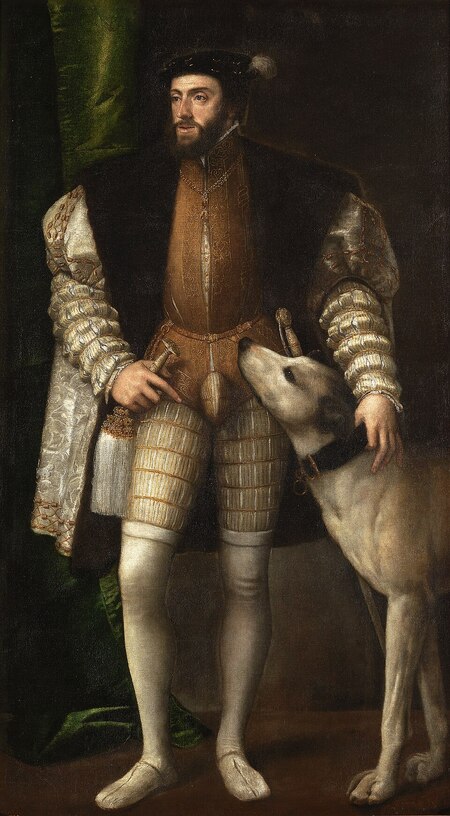
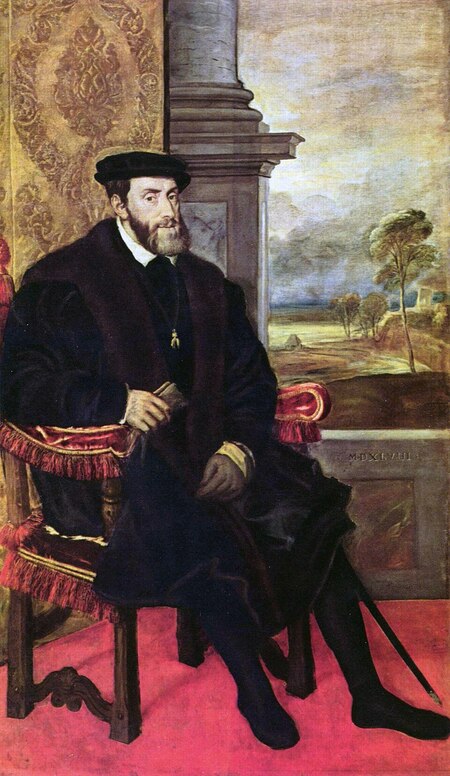
Titian Vecellio / «Portrait of Charles V with a Dog,» 1533 / «Portrait of Charles V in a Chair,» 1548
The portraits of Emperor Charles V created by Titian serve as a good example of this phenomenon. Despite the characteristic features of the Habsburgs—particularly the strongly prominent jawline—the artist smoothed out this feature to a significant degree. As a result, the emperor appeared more harmonious and majestic than his actual appearance.The commissioner favored heroic portrayals over a precise depiction of his features. This example demonstrates that idealization could have been a deliberate choice by both the artist and the monarch.
Another crucial artistic technique was the selection of the figure’s pose and the composition of the portrait. In early Renaissance portraiture, the profile was frequently used—a convention tied to the ancient tradition of depicting emperors on coins and medals.
Follis of Emperor Severus II. 306–307 AD.
Piero della Francesca. «Diptych of Federico da Montefeltro and Battista Sforza.» c. 1465–1472.
The Duke is depicted in profile against a landscape background. His figure stands out against the open space, and the calm expression on his face and the static nature of the composition create an impression of restraint and dignity.
This technique allowed for the highlighting of individual facial features while simultaneously giving the image a resemblance to ancient models. A prime example is the diptych by Piero della Francesca featuring portraits of Duke Federico da Montefeltro and his wife, Battista Sforza.
Over time, the profile image gradually gave way to three-quarter and frontal compositions. Such approaches allowed the artist to convey more individual characteristics of the person.
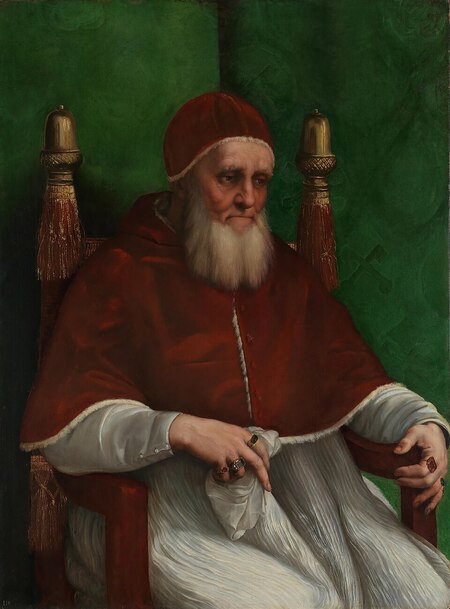
In Raphael’s portrait of Pope Julius II, the figure is presented in three-quarter view, with a gaze directed downward and to the side. Instead of displaying ostentatious solemnity, the artist portrays the ruler in a contemplative state. The composition creates an impression of internal concentration, emphasizing not only the Pope’s high status but also his individuality.
The ruler’s posture also played a significant role. Through the body’s positioning, the artist could convey specific character traits. A calm and stable pose was associated with self-control and the ability to manage a situation, while more dynamic compositions, conversely, could emphasize military valor and readiness for action.
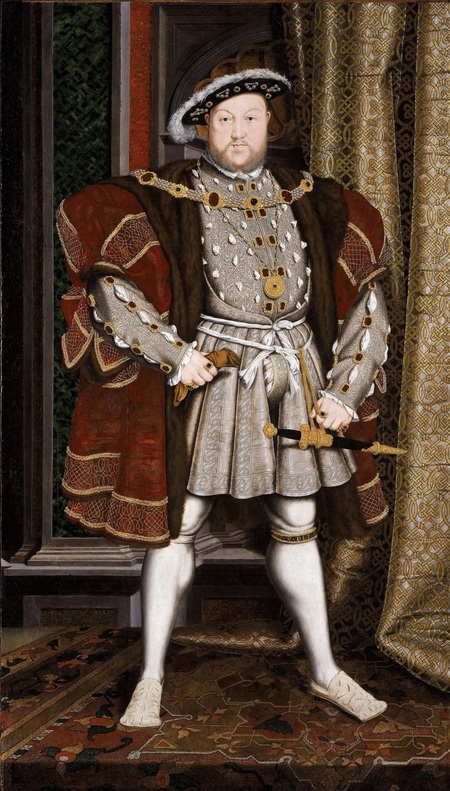
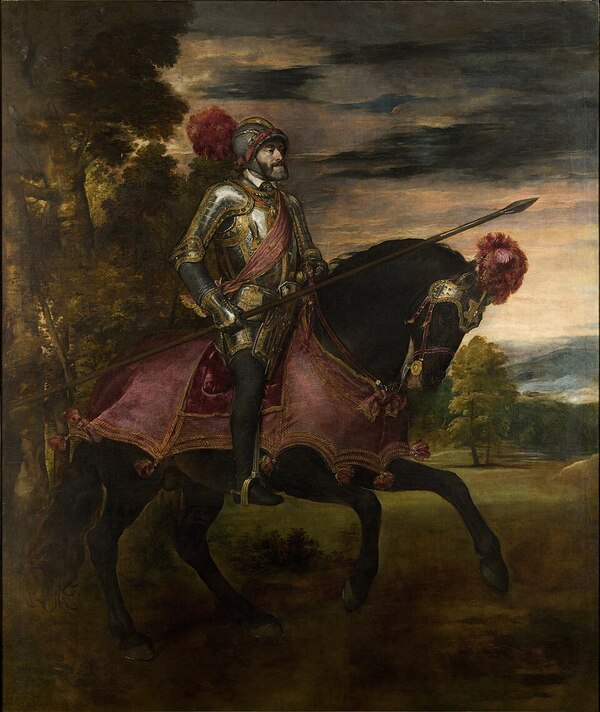
Hans Holbein the Younger. «Henry VIII.» Copy, original circa 1537 / Titian. «Equestrian Portrait of Charles V.» 1548.
The significance of posture is demonstrated in Titian’s equestrian portrait of Charles V. The Emperor is depicted mounted on a horse in military attire, holding a spear. His figure maintains stability and composure despite the military setting.Gestures and hand placement were also crucial additions to the posture, capable of conveying authority and restraint. For instance, having a hand on the hip or resting on an object created a sense of confidence and command over space—a quality traceable in Hans Holbein the Younger’s portrayal of Henry VIII. The king is presented with widely set legs and hands on his hips; such a posture emphasizes confidence and dominion.
In portraits of rulers, gestures were rarely arbitrary; they adhered to the overall composition and helped shape the desired impression of the person.
Examining portraits of rulers reveals that the gaze was one of the key elements in shaping their image. A direct gaze could project an air of confidence, while a side-glance might lend the portrait a sense of contemplation and detachment.
Albrecht Dürer. «Portrait of Emperor Maximilian I.» 1519.
Observing Hans Holbein the Younger’s portrait of Emperor Maximilian I, one can see that the artist pays great attention to the individual features of the face. However, the calm expression and restrained composition lend the emperor a special significance. His gaze is not overly emotional, allowing the viewer to perceive the subject as a person possessing inner resilience.
Light, color, and background played a significant role in shaping the image. The lighting helped to highlight the face and figure, directing the viewer’s attention toward the most important details. The color schemes could also amplify the impression of grandeur: rich reds, golds, and dark tones were associated with wealth and high status. Meanwhile, a neutral or darkened background allowed the focus to remain solely on the ruler, preventing the viewer from being distracted by secondary details.
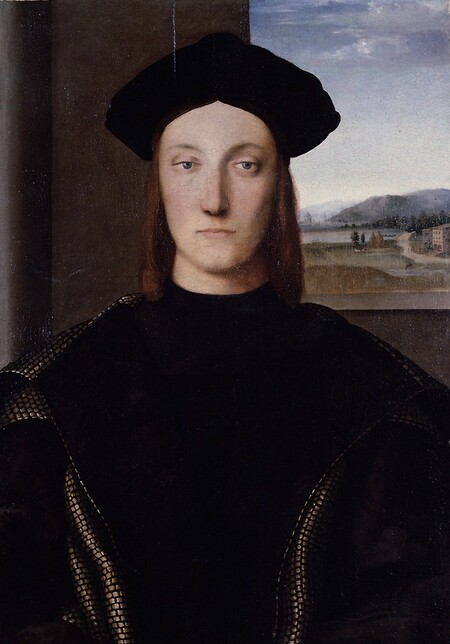
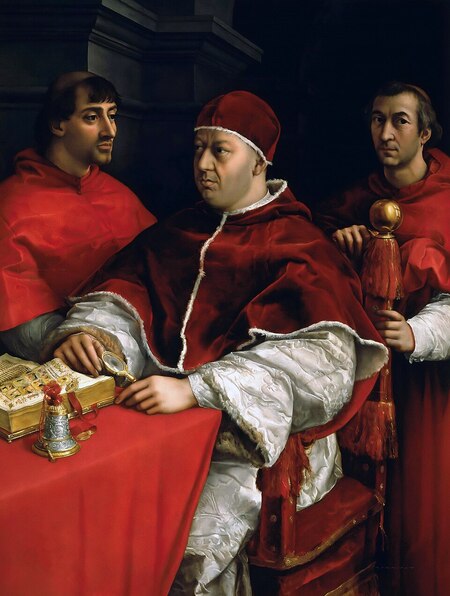
Raphael Santi / «Portrait of Guidobaldo da Montefeltro.» c. 1503–1504. / «Portrait of Pope Leo X with Cardinals.» 1518–1519.