Navigation Menu
- Introduction
- Methodology
- Historical and Cultural Context
- Evolution of the Spear
- Evolution of the Knife
- Comparison of Functions and Designs
- Symbolism
- Influence of Technologies and Hunting Methods
- Conclusion
- Sources
Introduction
This study is dedicated to a comparative analysis of Paleolithic and Medieval hunting implements. The spear and the knife are examined as crucial tools that played a key role in the development of hunting technologies and in shaping the culture of these eras. The goal of this work is to investigate how the materials, construction, and functions of these implements changed over time and under the influence of new technologies.
Research Problem: Despite technological advancements, fundamental hunting implements, such as spears and knives, retained core characteristics over centuries. This raises the question: how significantly did these implements change from the Stone Age to the Middle Ages?
Relevance of the Study: Understanding the evolution of hunting tools allows for a deeper assessment of the technological and cultural achievements of ancient societies. Studying these changes helps trace the relationship between technological development and the evolution of tools' forms, functions, and meanings, and also sheds light on how these objects influenced people’s lifestyles and worldviews.
Main Research Question: To what extent did the spear and the knife as hunting tools change from the Stone Age to the Middle Ages? Are these changes significant, or is there a continuity?
Research Objectives:
- To trace the evolution of the spear and the knife as hunting and combat tools.
- To determine the similarities in the design, use, and symbolic meaning of these implements across different periods.
- To study the influence of technology and materials on the changes in the form and function of the spear and knife.
- To understand the role of hunting methods in shaping the design of these implements during the prehistoric and medieval periods.
Methodology
Primary Research Methods:
Comparative Analysis of Artifacts — examining and comparing preserved copies and weapons from different eras to identify constructive and functional characteristics. Study of Scientific Publications and Museum Sources — analyzing contemporary research and utilizing data from museums such as the British Museum, the Louvre, and the State Historical Museum. Analysis of Medieval Visual and Written Sources — investigating medieval illustrations, chronicles, and descriptions of hunting and weaponry.
Primary Information Sources:
Museums and Artifact Collections—The British Museum, the Louvre, and the State Historical Museum—provide access to ancient spears, knives, and other hunting tools. Scientific Publications on Archaeology—articles covering stone and metalworking techniques and exploring the evolution of weaponry. «Art Culture» Website Articles—materials on prehistoric technologies and the history of cold weapons.
Historical and Cultural Context
Stone Age Periods:
Paleolithic (approximately 2.5 million — 10 thousand years ago) — the early stage, characterized by the first stone tools. Mesolithic (approximately 10 thousand — 8 thousand years ago) — the transitional period with the development of more complex hunting implements. Neolithic (approximately 8 thousand — 3 thousand years BCE) — the late period associated with the advent of agriculture and the refinement of tools. Significance of the Stone Age for Tool Development: The Stone Age was the period when the first hunting spears and knives were formed. These tools became the foundation for subsequent technological development and played a key role in the survival and adaptation of ancient humans to the environment.
Hunting as the Foundation of Survival.
In the Stone Age, hunting was the primary method of acquiring food and played a central role in human life. Hunting skills and tools determined survival success in the face of harsh nature.
Spear and Knife as Primary Hunting Tools: Spears were used to hunt large animals, while knives served for butchering carcasses and processing hides. These implements fulfilled not only a practical but also a social function, demonstrating the status and mastery of their owners.
The Significance of Hunting for Communities: Hunting unified the community and shaped collective resource acquisition methods. This fostered technological development and led to the creation of specialized tools, such as throwing spears and knives made of stone and bone.
Hunting in the Middle Ages.
In the Middle Ages, hunting became an important part of the culture, especially among the nobility. It served not only as a means of obtaining food but also as a form of entertainment and for training military skills.
Status and Symbolism: Hunting tools, such as spears and knives, acquired status and symbolic significance. For instance, possessing hunting weaponry indicated one’s social standing, and the tools themselves could be decorated and bear the owner’s coat of arms.
The Role of Hunting in Knight Training: Hunting large game, such as wild boar or deer, was a form of training for knights, improving their combat skills and agility—a crucial asset in feudal society.
The Symbolic Significance of Weapons.
In the Middle Ages, weaponry, including hunting spears and knives, often carried symbolic meaning. It served as an indicator of social status, and possessing ornate and personalized implements was a privilege of the nobility. Such items were passed down through generations and could bear heraldry, emphasizing the owner’s lineage.
Evolution of the Spear
Stone Ages.
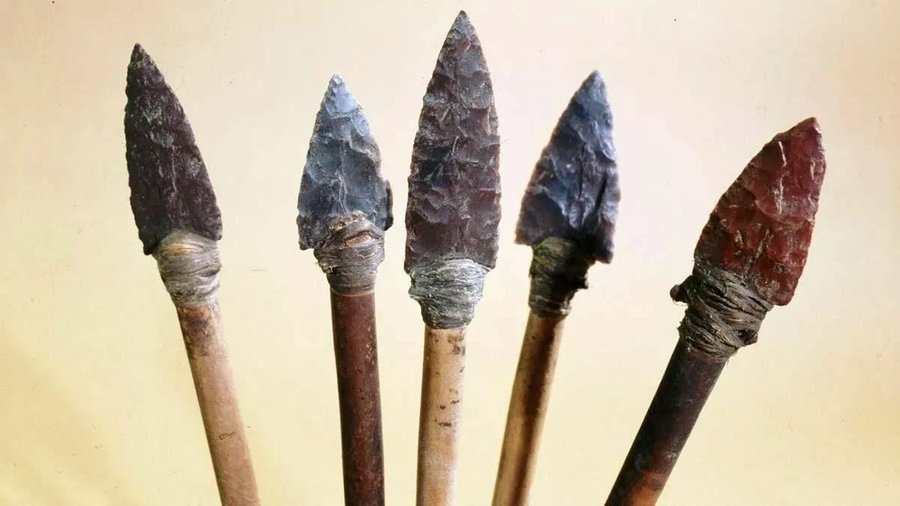
Materials and Manufacturing Techniques: Stone Age spears were fashioned from readily available materials: stone, bone, and wood. The arrowheads were carved from flint or obsidian, which gave them strength and sharpness. Creating these spears required considerable skill in stonework and hafting.
Form and Function: Stone points were sharp and durable, allowing for the efficient takedown of prey. These spears were used both for throwing and for close combat, making them versatile tools.
Artifact Examples: Preserved spearheads found by archaeologists demonstrate a diversity of shapes and designs, indicating that the spears were adapted to various types of game and hunting conditions.
Varieties of Spears in the Stone Age.
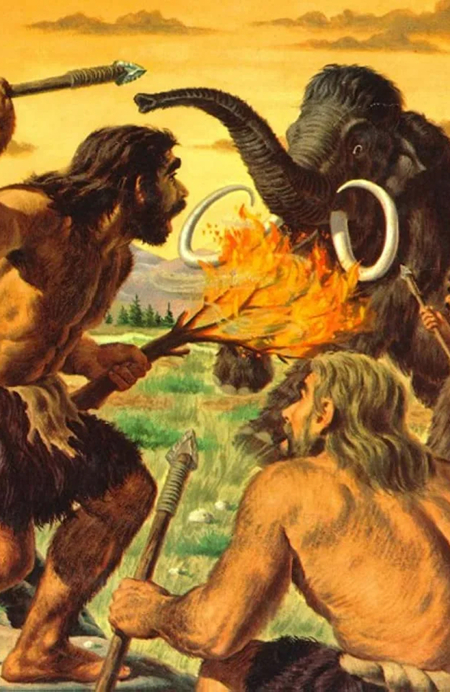
Throwing Spears. These spears were lighter and longer, primarily designed for long-distance throwing. They were used to hunt large animals, such as mammoths and deer. The tips of these spears were often made from flint or obsidian, allowing them to be sharp and penetrate the animal’s flesh easily.
Melee Spears. These were short, sturdy spears used in close contact with prey or for defense against predators. The tips could be more robust and sometimes serrated, allowing them to hold or fight the animal at close range.
Serrated-Tip Spears. These spears were specifically designed to hold an animal after striking it, preventing escape. Such tips were created using stone cutting and flaking techniques, making them more effective for hunting.
The Middle Ages.
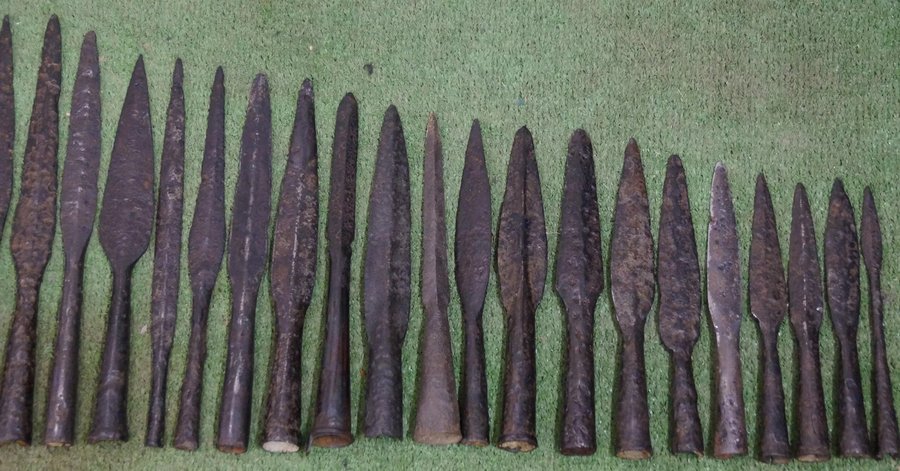
Transition to Metals: With technological advancements during the Middle Ages, the use of stone arrowheads gave way to metal ones. Iron and steel became the primary materials for crafting spearheads, which significantly increased their durability and effectiveness.
Types of Arrowheads: Conical arrowheads were suitable for throwing and piercing strikes. Wide, flat arrowheads were used to cut through thick hide and meat, including for hunting large game. Shapes with notches or extensions were designed to increase effectiveness upon impact.
Manufacturing Technology: Metal arrowheads were produced using blacksmithing techniques, allowing for the creation of stronger and more precise pieces with superior combat characteristics compared to their stone counterparts.
Varieties of Copies in the Middle Ages.
Hunting spears for large game—heavy spears with wide points, designed for hunting deer, boars, and other large animals.