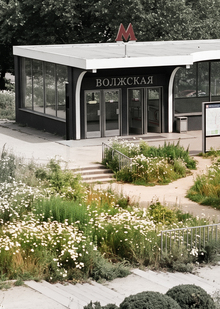
What has changed in the modern person’s lifestyle over the last 100 years? They no longer think about survival. They can afford a safe life. They have no need to use violence. They do not need to engage in hard physical labor. Humans can afford to be humane toward other animal species. There is no need for cruelty toward them. There is no need to use animals for physical labor.

Fantasies about the «Cloud City»
Where is the true habitat of humanity? Where is the most comfortable territory for us to be? Water. Land. Space. We are drawn toward heights. Airplanes slice through the sky—the atmosphere has different properties than the Earth. Different forces of resistance, different levels. Georgy Krutikov’s Flying City from 1928—it was too early for its realization. And now?

The location has been selected in the city of Kotovsk. In 2024, an artifact was discovered there that was believed to be lost. The twin Shukhov towers—a legacy of a bygone age of brilliant industrialists, many of whom could have served as the archetype for characters in Ayn Rand’s novels. Shukhov studied under Mendeleev, Zhukovsky, Chebyshev, Orlov, and Pirogov. He worked alongside figures such as Melnikov, Bari, Nobel, Vesnin, Kekushev, and others, each of whom dedicated their life to their work.
*Ayn Rand, an American writer of Russian descent (1905–1982). Ayn Rand is the creator of the «philosophy of objectivism.» In her novels, The Fountainhead and Atlas Shrugged, Rand portrayed her ideal of the creative individual.
Natural Forms
Shukhov’s hyperboloidal forms have roots in organic shapes. Shukhov entered the Medical Academy as a private student, a decision encouraged by the renowned physician Pirogov. During discussions with scientists, the young natural scientist developed the idea that prototypes for new mechanisms and technologies should be sought within the most perfect creations on our planet—living organisms, and above all, humans.
Forms of Science and Art
Among the favorite seasons, those with stable, «good» weather—summer and winter—are mentioned most often. Autumn and spring are variable, and rainy weather is usually associated with a certain melancholy. However, we often forget that rain primarily brings renewal. Water creates life, and perhaps that is the uniqueness of our planet.
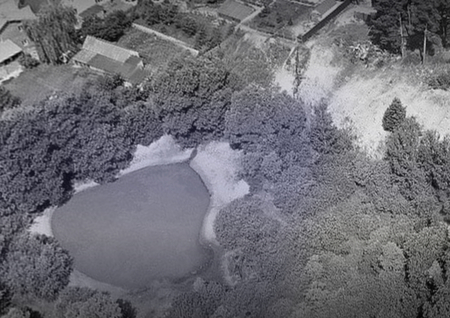
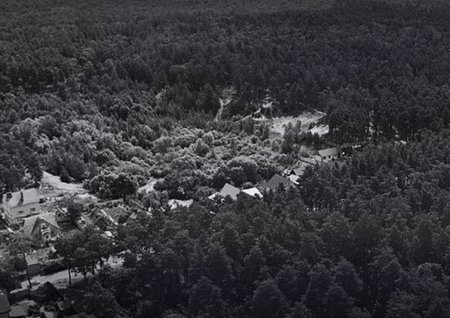
The chosen spot is a ravine surrounded by an old pine forest. It appears to have formed due to undermining by groundwater. It is a frequent spot for walks and runs (there is a running track), but a swamp lies at the bottom.
The selected forest area is planned to serve as the foundation for a hydrokinetic rain concert hall, which will be situated above the pine treetops. The swamp located below is part of this area. The plan involves creating a garden around the swamp that does not contrast with the forest but rather extends it using water-loving plants.
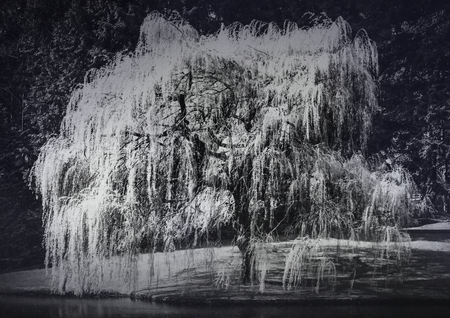
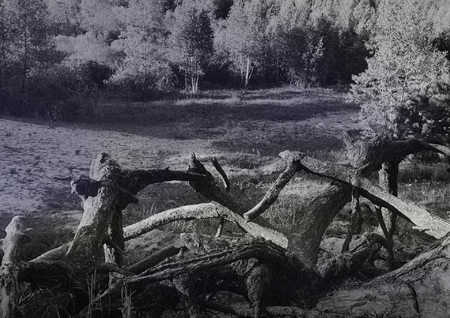
Weeping Willow. The native habitat of the Chinese willow, or weeping willow, is China. In cooler climates, many weeping willows, especially those found in parks, are hybrids, and human-created hybrids of weeping willows constitute one of the most complex plant groups. The weeping willows best adapted to harsh conditions are hybrids between the Babylon willow (Salix babylonica), white willow (Salix alba), brittle willow (Salix fragilis), and supple willow (Salix alba).
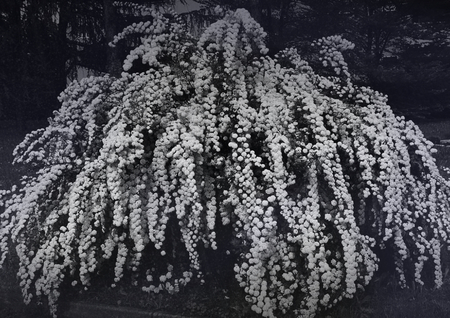
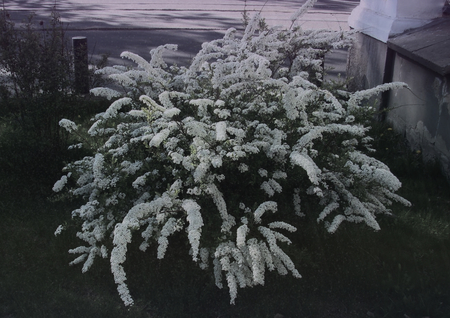
Grey Spirea 'Grefsheim'. A beautifully flowering deciduous shrub with numerous, picturesque, pendulous arching branches. Snow-white, double blossoms completely cover the stems. It is one of the finest spring-blooming spirea varieties. This hardy, fast-growing shrub is distinguished by its exceptionally abundant and early annual flowering.
Carex palustris (Marsh Sedge). This moisture-loving plant thrives in bogs across most of Russia and wet tundra. It is frost-resistant and quite adaptable, provided it grows in damp soil.
Iris. In Russia, only six species of irises grow (there are up to one hundred and fifty worldwide). These species are found in the forests and mixed meadows of the Southern Primorye, on the island of Sakhalin, and on the Kuril Islands. These are the peninsula iris, the Japanese iris, the Sakhalin iris, the Komarova iris, the Sadoan iris, and the Amur iris.
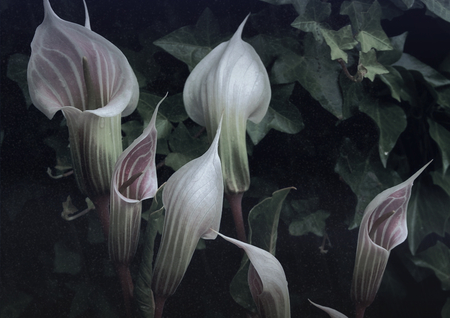
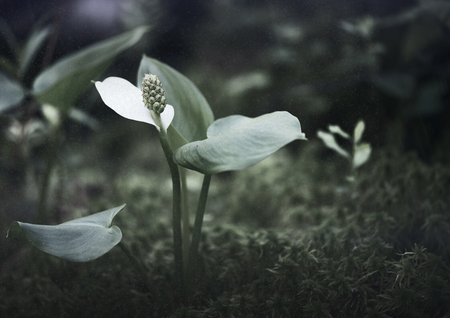
Marsh White-Winged Plant. In nature, the Marsh White-Winged Plant is a species native to the marshy banks of bodies of water and peat bogs. It is found in bogs, shallow waters, ditches, and near streams. It is widespread throughout almost the entire temperate zone of the Northern Hemisphere. Due to its broad range, it has not one, but a whole array of names—including obrazki, bobak, zmeevik, shalen, vakhka (vakta), white companion, petushki, krasukha, khlebnitsa, bobovnik, water root, marsh grass, and many others. Furthermore, it is named differently in every locality. Several other marsh plants are attached below.
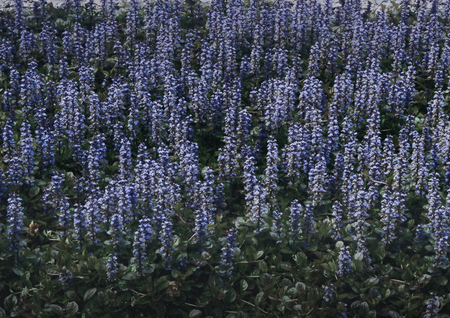
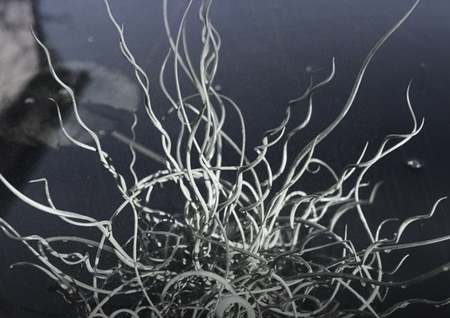
Crawling moss and sprawling honeysuckle
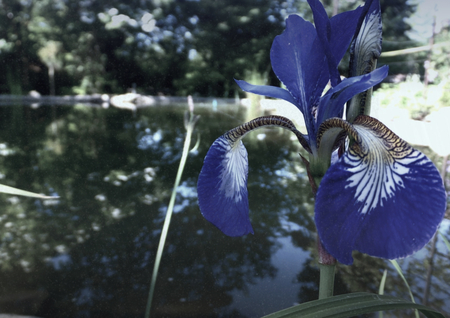
Iris marsh and hardy
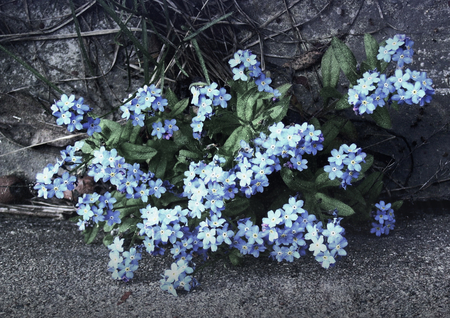
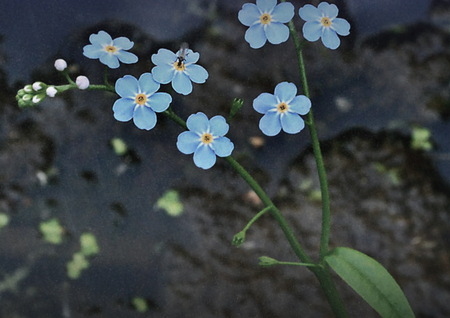
Wood Forget-me-not and Bog Forget-me-not