Concept
Every song has a beginning—the moment the listener first encounters the music. This might be a bass line gradually joined by drums and melody, a guitar riff that makes us recognize the track, or a voice from the very first seconds. The intro helps establish the rhythm and mood of the track, builds anticipation, and introduces the main musical theme. Therefore, the intro is not merely the time leading up to the first verse; it is a crucial part of the song that influences our perception of the entire piece.The role of the introduction has evolved alongside how people listen to music. Radio, music albums, and dance culture each influenced the song’s opening in different ways. With the advent of streaming, it has become easy to skip a track at any moment. Now, the listener decides whether or not to listen to the intro. Because of this, the first few seconds of a song have become particularly vital. However, this does not mean that long intros are obsolete. We must consider not only the length of the intro but also what is happening musically during that time.

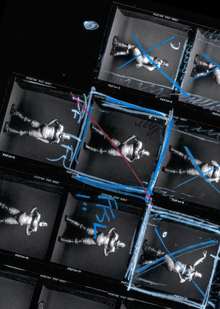
Ampex Grand Master 456, 1985
How have the duration, structure, and function of musical introductions changed with the rise of streaming platforms, and in what distinct ways do these changes manifest across pop, hip-hop, rock, and electronic music?
The core of this study examines two distinct approaches to song structure: immediately presenting the most recognizable element to the listener or gradually leading them to it. In some tracks, the vocals, hook, or distinct rhythm are apparent from the very first seconds. In others, the introduction unfolds slowly, preparing the listener for the main theme. One might suggest that the rise of streaming has led to shorter intros, allowing the central musical idea to emerge sooner. However, these shifts manifest differently across various genres. Even when an intro shortens, its function doesn’t disappear; what previously occurred in the introduction may now take place at the start of a verse, chorus, or instrumental section.This research analyzes pop, hip-hop, rock, and electronic music. This comparison allows us to contrast how songs begin—whether abruptly with vocals, with a guitar riff, or with a rhythm that is gradually enhanced by new sounds. To facilitate this comparison, tracks from different decades have been selected, some recorded before and some after streaming became the dominant way people consumed music. For every example, we analyze the length of the intro, when the vocals and main theme appear, the order in which instruments enter, and how the subsequent song sections commence. Furthermore, we compare different versions of the same track.
The research is divided into five sections. First, the role of the intro before streaming is examined, and how new listener habits have altered the beginning of songs. Next, it explores why the main theme often appears immediately in pop and hip-hop, whereas music in rock and electronic genres may develop gradually. Comparing different versions of the same recording helps to understand how not only genre characteristics but also listening habits influence the intro.
The study draws upon research into musical structure, articles on streaming, and the opinions of music critics. Sources are selected based on their relevance to the topic. Their conclusions are then compared against the structure of the selected musical recordings.
Introduction to the Streaming Era
WHAT & HOW; «Mix» Magazine; 1985
Before streaming, there was no unified approach to beginning composition.
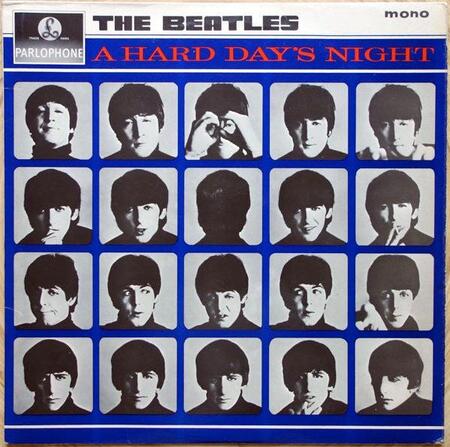
Album «A Hard Day’s Night»; 1964
The song «A Hard Day’s Night» opens with a single, loud chord. Instead of a typical instrumental introduction, we hear a sharp, rich sound immediately followed by John Lennon’s voice.
Although the introduction lasts only a few seconds, its sound design is quite complex. This chord is created by the simultaneous playing of George Harrison’s twelve-string electric guitar, John Lennon’s acoustic guitar, Paul McCartney’s bass guitar, and George Martin’s piano. The sounds of several instruments merge into one powerful chord. This kind of opening was a deliberate creative decision. Producer George Martin recalled, «We needed a particularly strong and impactful opening.» [16]
The desire to engage the listener from the very first seconds existed long before the advent of streaming. Even then, a short introduction could function as an independent musical device.
«Harrison essentially created the introductory chord. He also deconstructed this chord to provide the core elements of his guitar solo…» [13]
Pink Floyd while working on Wish You Were Here, Abbey Road Studio, 1975
In Pink Floyd’s «Shine On You Crazy Diamond,» a different approach is taken to the introduction. Unlike «A Hard Day’s Night,» the composition begins with a slow musical development. Long synthesizer tones gradually emerge from the silence, later joined by David Gilmour’s guitar solo. In the first few minutes, there is no defined rhythm; the music is built on sustained sounds, pauses, timbre changes, and spatial effects. The vocals only appear at the nine-minute mark.
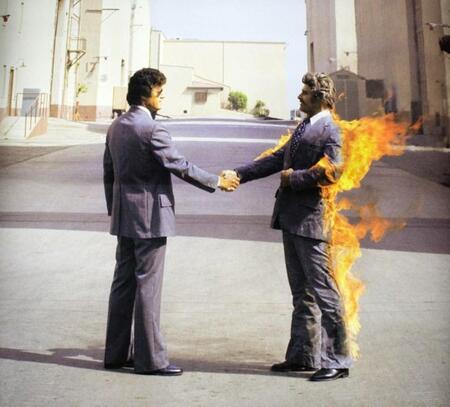
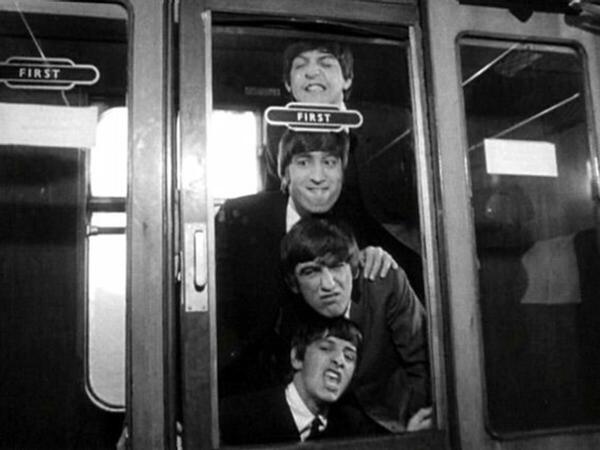
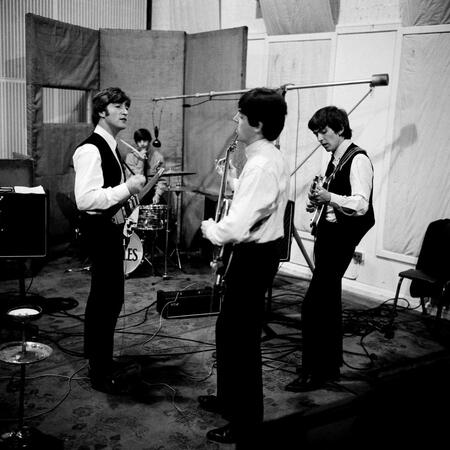
Album cover for «Wish You Were Here»; 1975 / Still from the comedy A Hard Day’s Night; 1964
Comparing these two compositions, one can understand the different roles that might have existed in musical intros before the advent of streaming. The Beatles use a single chord to effectively define the song’s character, whereas Pink Floyd transforms the long minutes of their work into a sonic landscape.
The introduction can establish the rhythmic foundation of the song.
In «Billie Jean,» the main musical idea emerges before the vocals begin. Drums and bass establish the rhythm, which is then augmented by synthesizers. Producer Quincy Jones recalled that Jackson resisted shortening the intro because it «made him want to dance» [5].
In «Blue Monday,» the intro is built on repetition, with electronic parts gradually added afterward. The rhythm becomes the foundation.
«The strength of Blue Monday lies precisely in its arrangement.» — Bernard Sumner [2]
In the 1990s, songs became more recognizable thanks to short, repeated musical motifs. In «Smells Like Teen Spirit,» the guitar riff serves as such a motif, intensifying sharply throughout the introduction. «C.R.E.A.M.» is built around a recurring piano snippet from a 1967 soul composition, while Daft Punk utilizes a disco sample as the foundation for their dance track.Despite the differences between genres, in all these examples, the main musical motif appears before the main body of the composition begins. Musicologists Jaydee O’Ryan and Tim Byron define hooks as «musical and lyrical phrases that stand out and are memorable to the listener» [8]. Thus, the introduction establishes its characteristic sound in the listener’s memory.
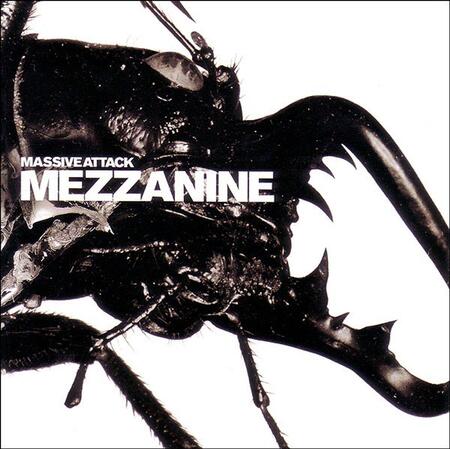
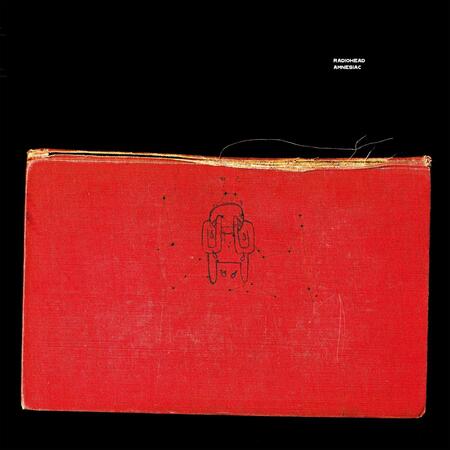
Teardrop (1998)/ Packt Like Sardines in a Crushd Tin Box (2001)
In electronic music, the introduction becomes a space for experimenting with rhythm and timbre. In Teardrop, the sound layers saturate a steady pulsation, whereas in Radiohead, their emergence alters the sense of rhythm. Mark Spicer compares a similar construction to «assembling a sonic puzzle» [14].