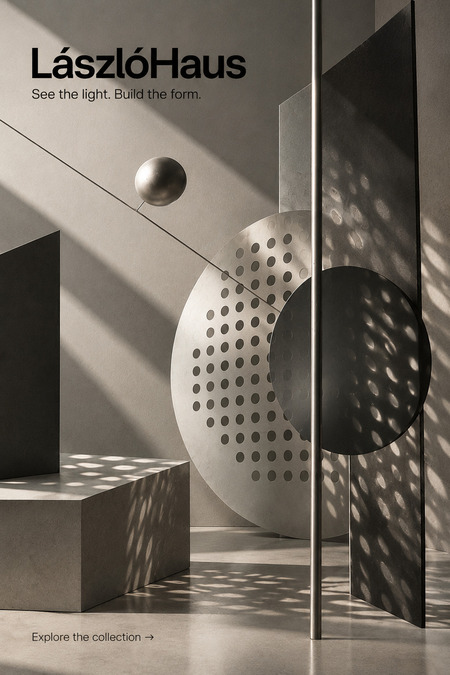
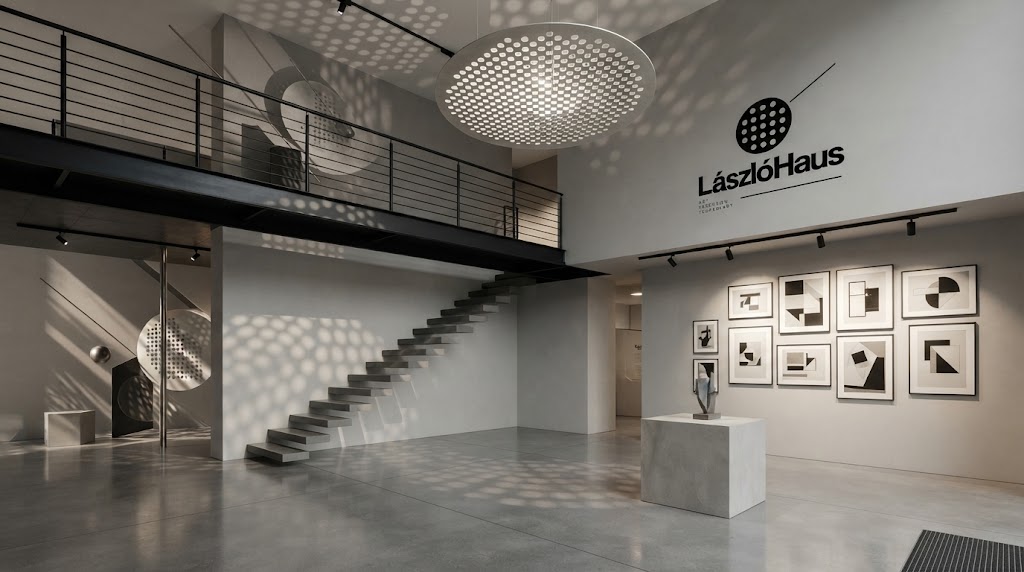
The park accompanying the «LászlóHaus» exhibition is inspired by the late work of László Moholy-Nagy and his explorations of light and shadow. Circular perforated canopies, which reference the forms found in his work, create a shifting pattern of shadows. As the sun moves, the park space continuously transforms, becoming a living study in light and shadow.
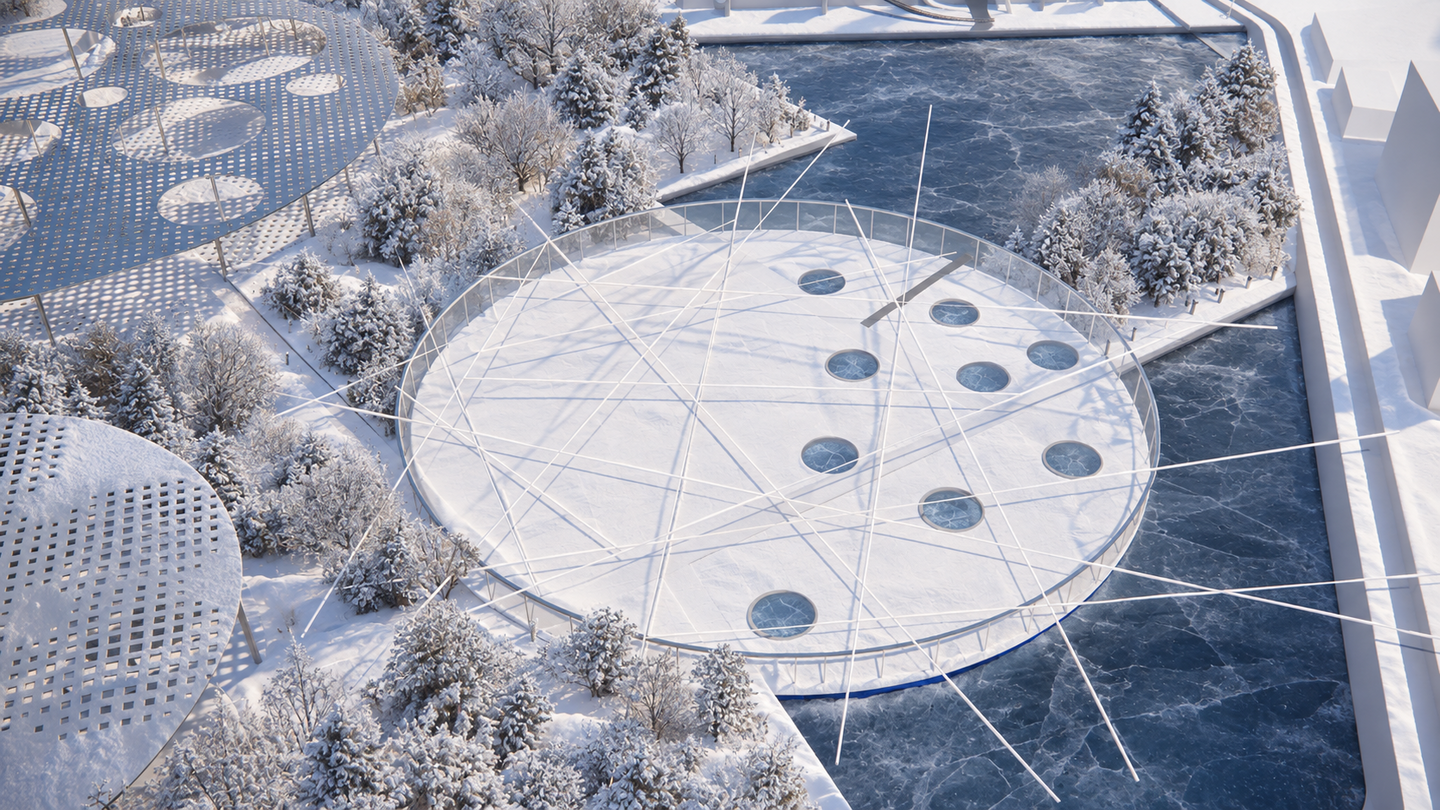
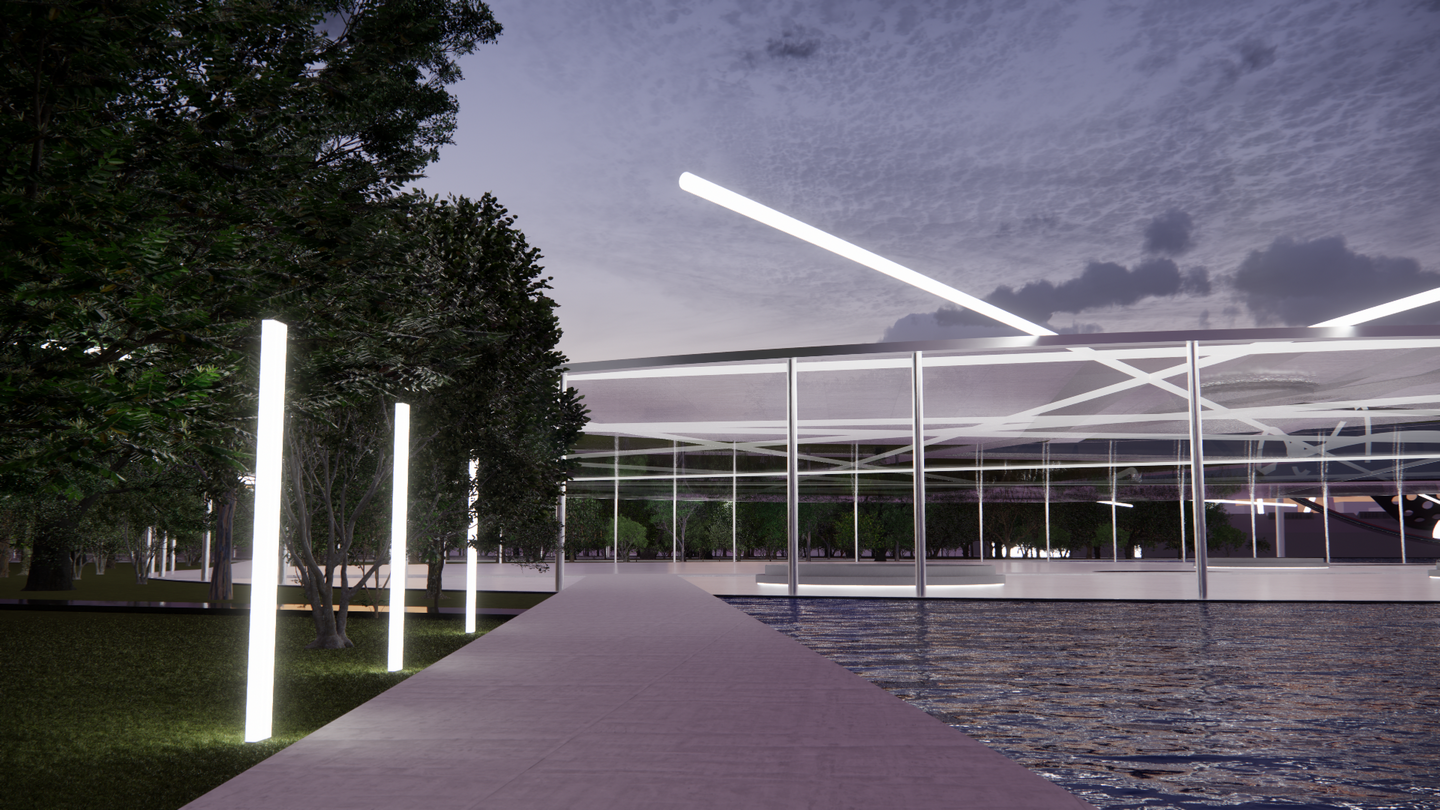
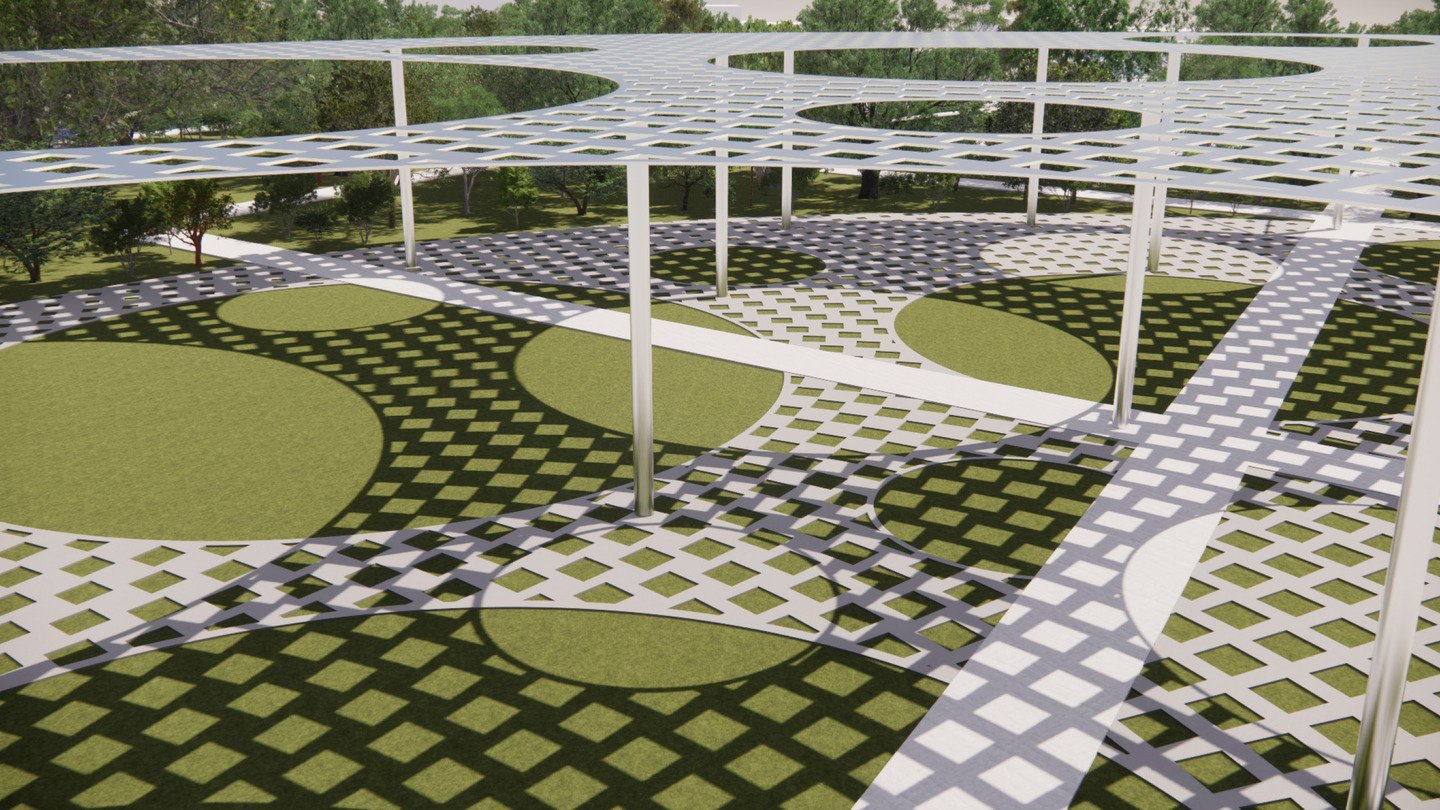
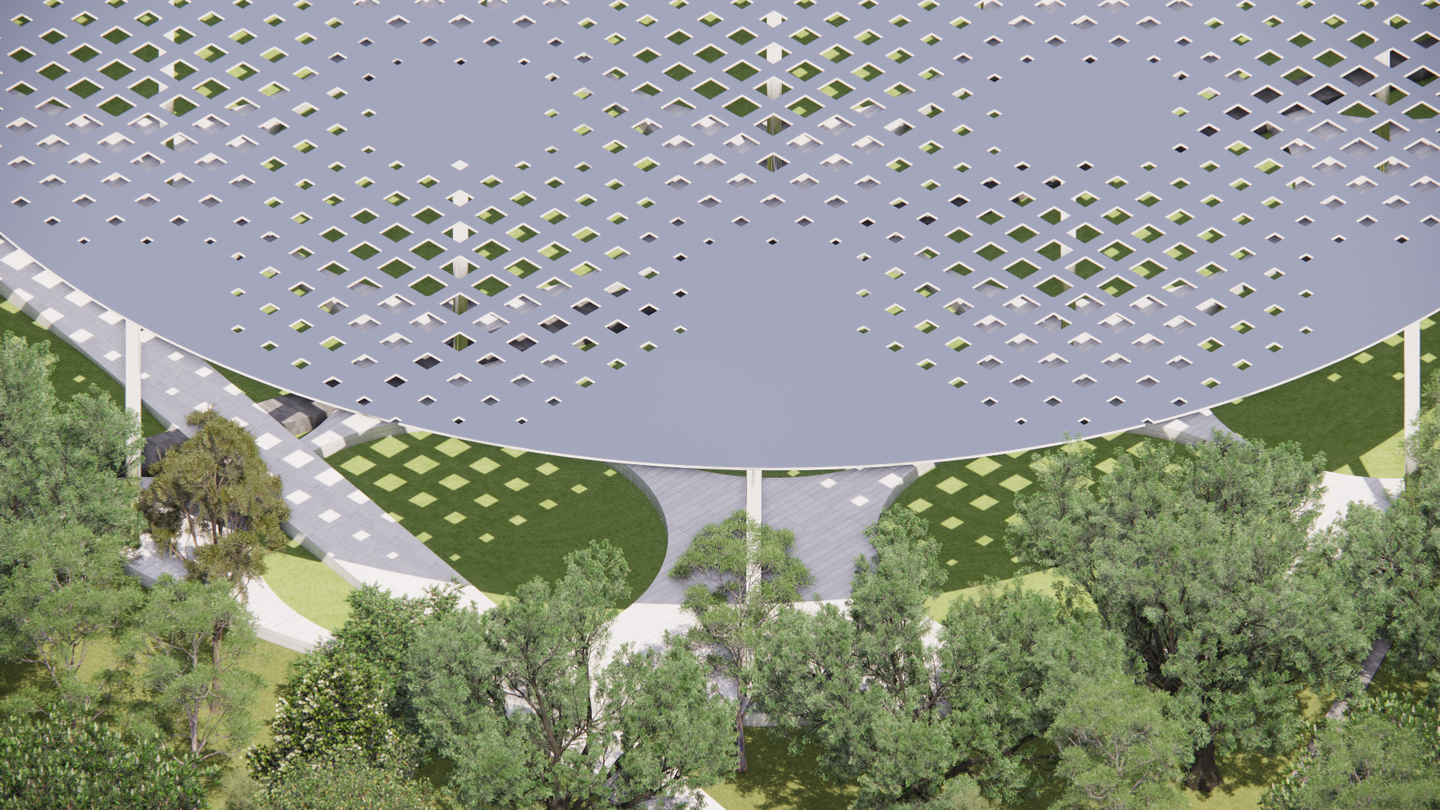
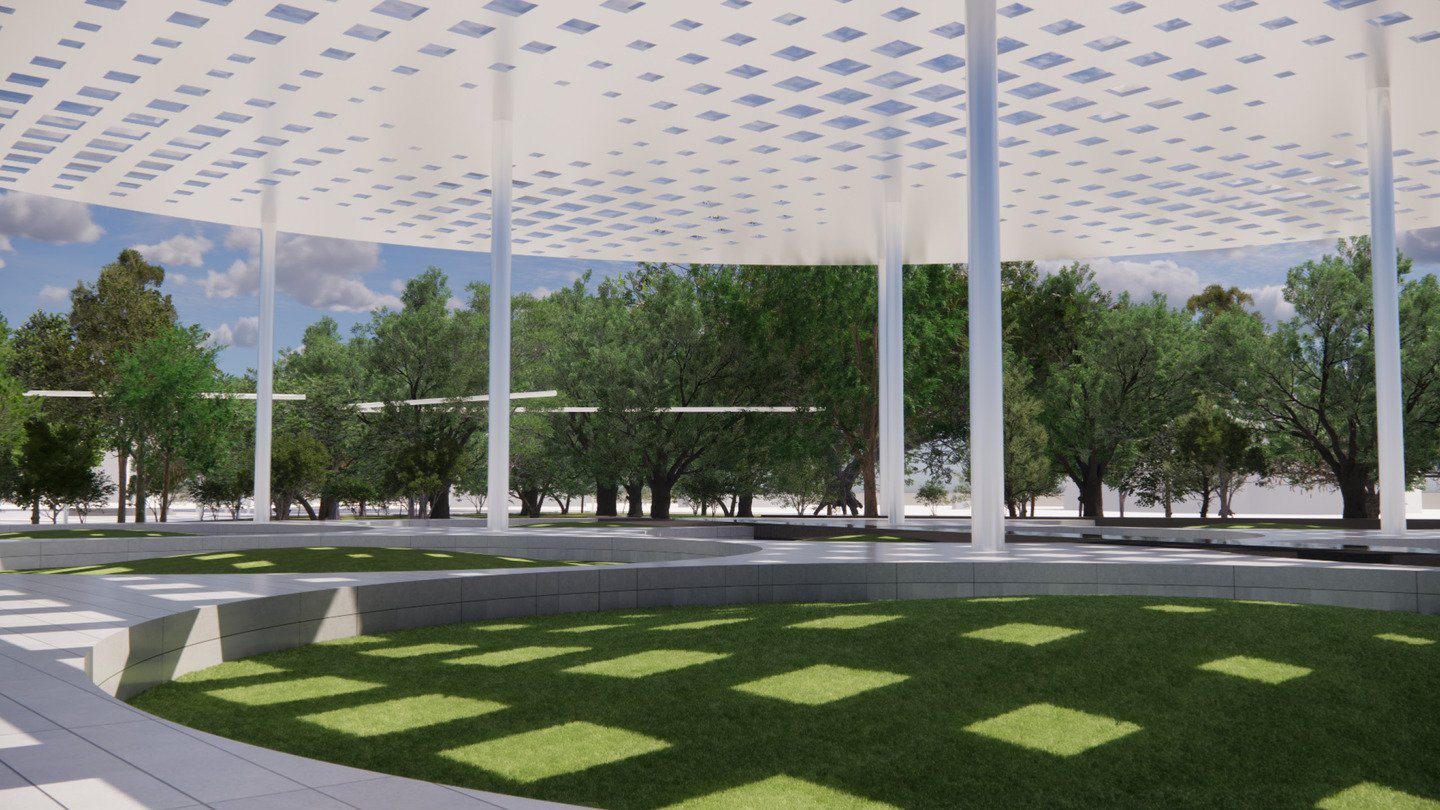
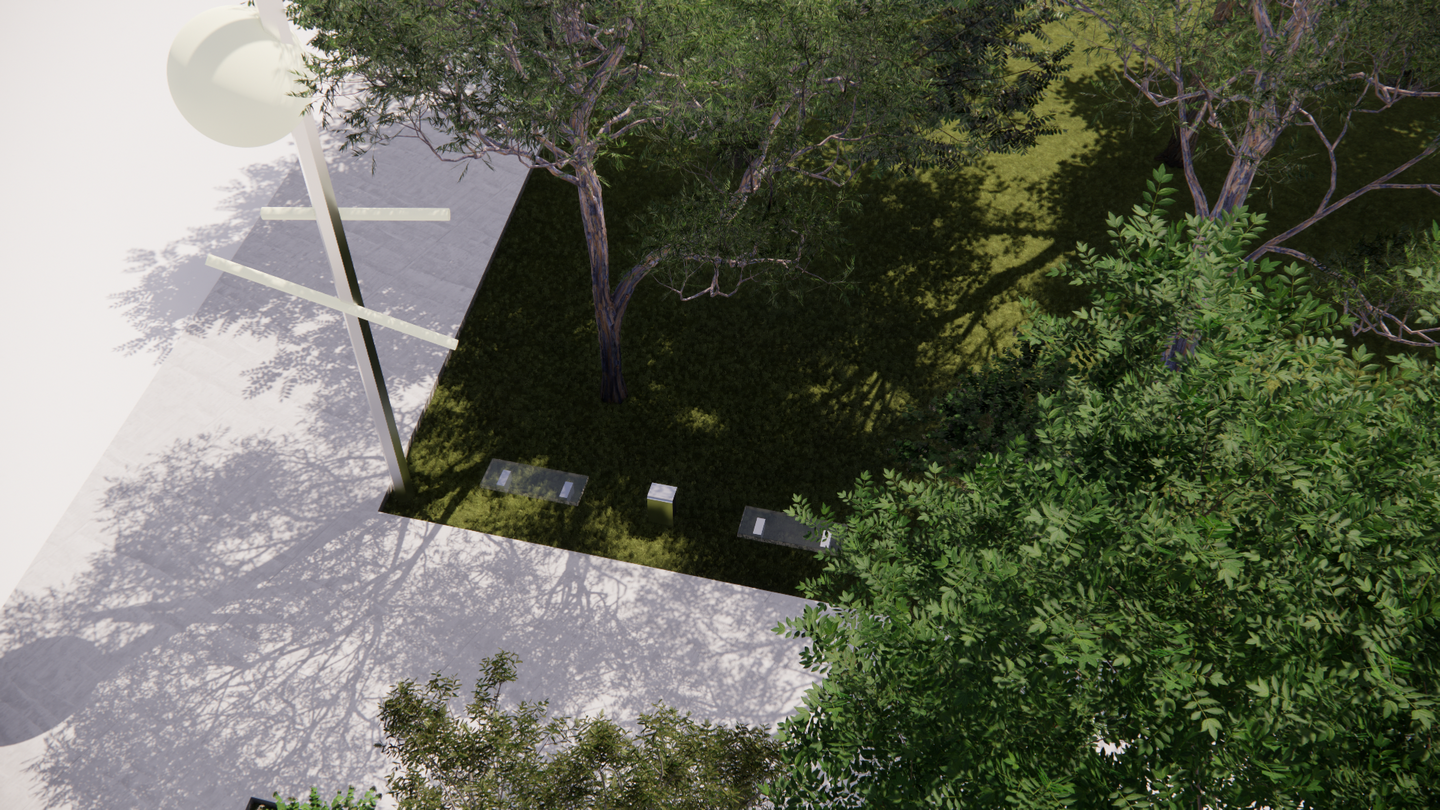
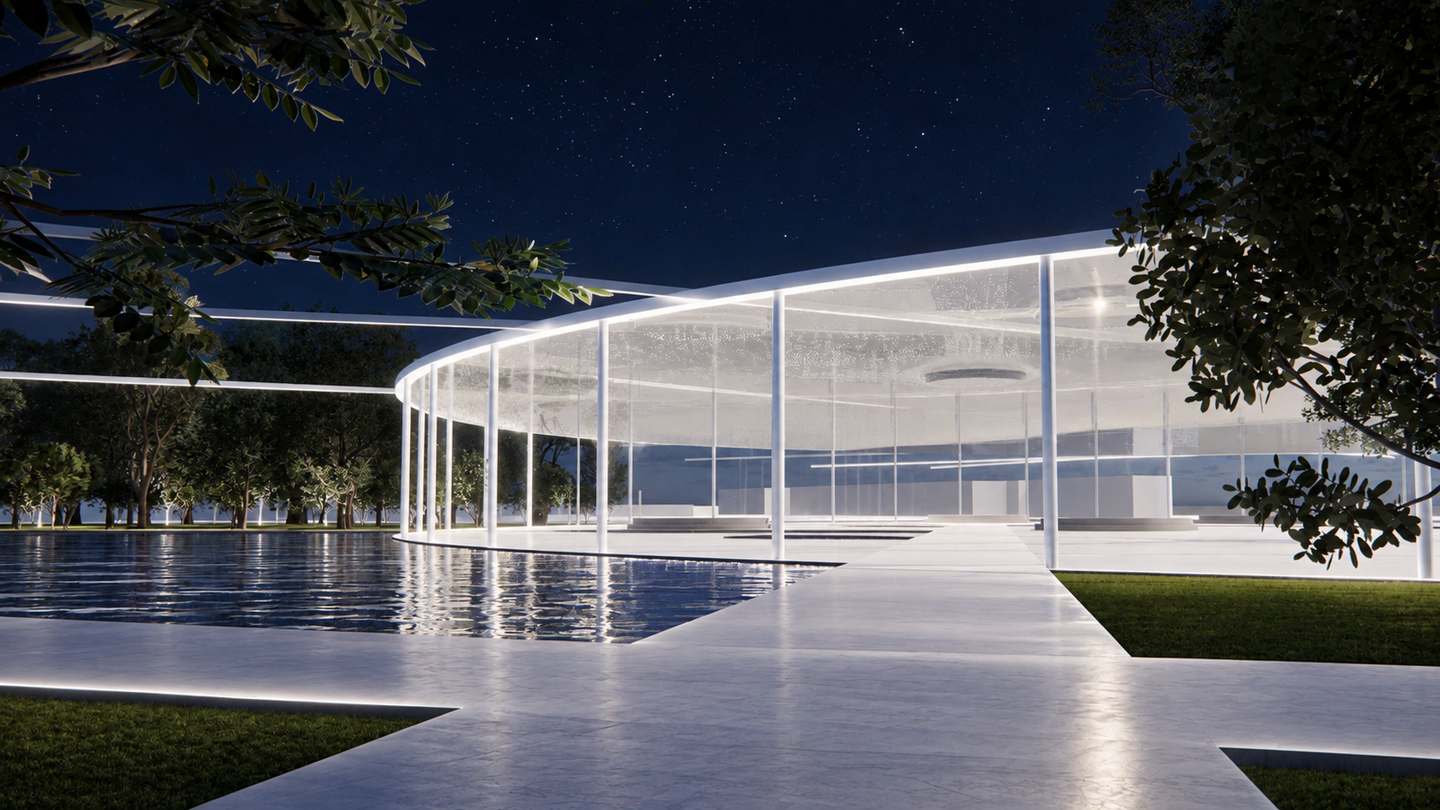
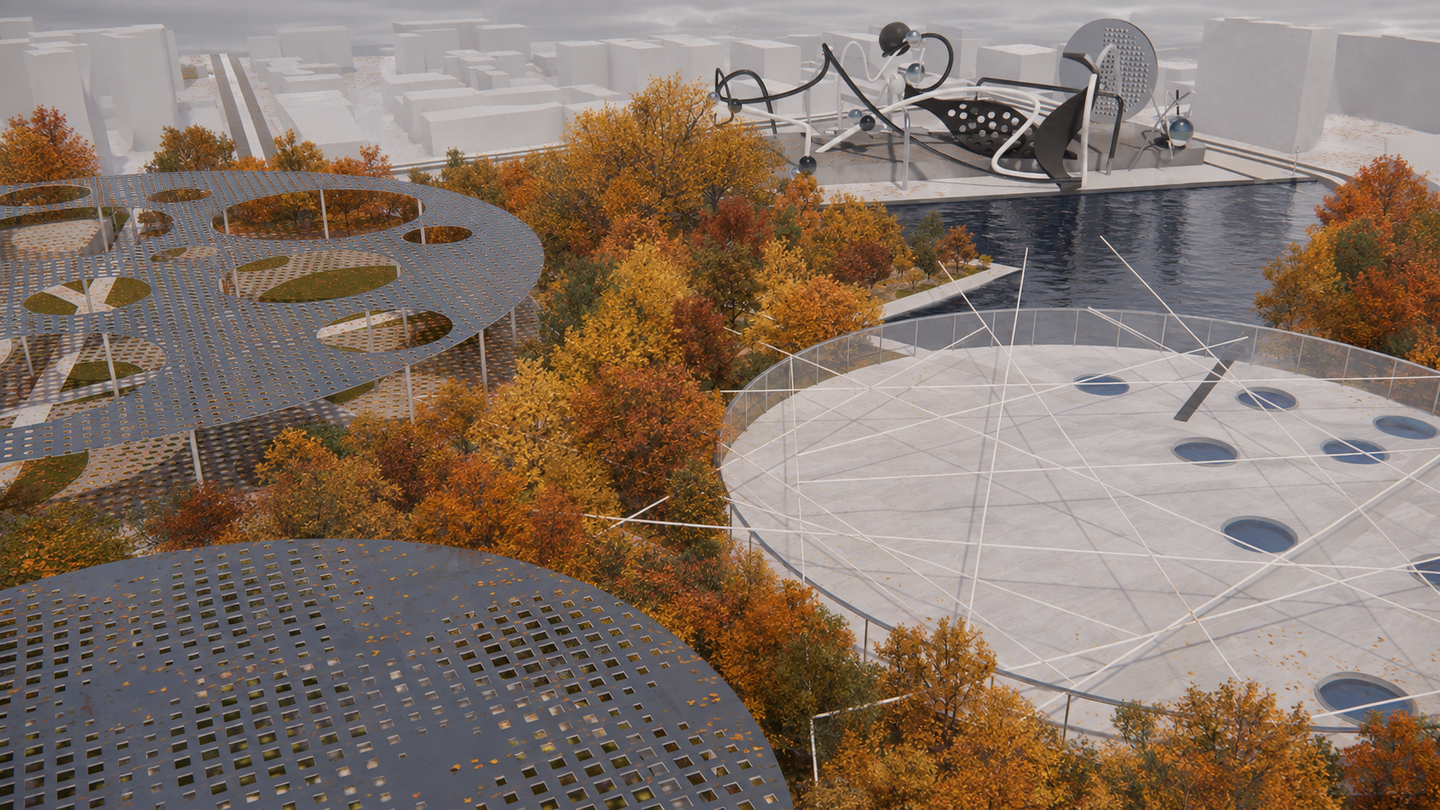
Park space for the exhibition László Moholy-Nagy «LászlóHaus»
DESCRIPTION
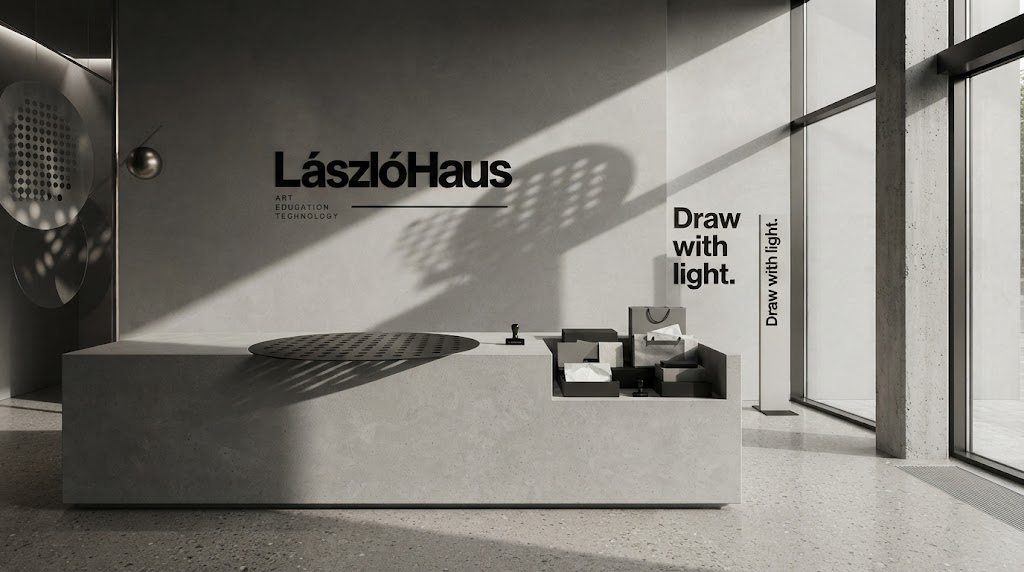
LászlóHaus — a brand of goods for artistic photography and creativity, rooted in the visual language of László Moholy-Nagy and the principles of his pedagogical philosophy. The project’s concept lies in synthesizing technology, art, and education: for us, photography is not merely an image, but a manipulation of light, form, and composition.This project is an attempt to create an ecosystem around László's experimental approach to creativity. It includes fine art photography, a merchandise line (sets for creating photograms, a camera in Constructivist aesthetics, sketchbooks, and printed materials), and a retail space that functions as a «light laboratory»: here, one can not only purchase goods but also learn and experiment.
KEY VISUALS
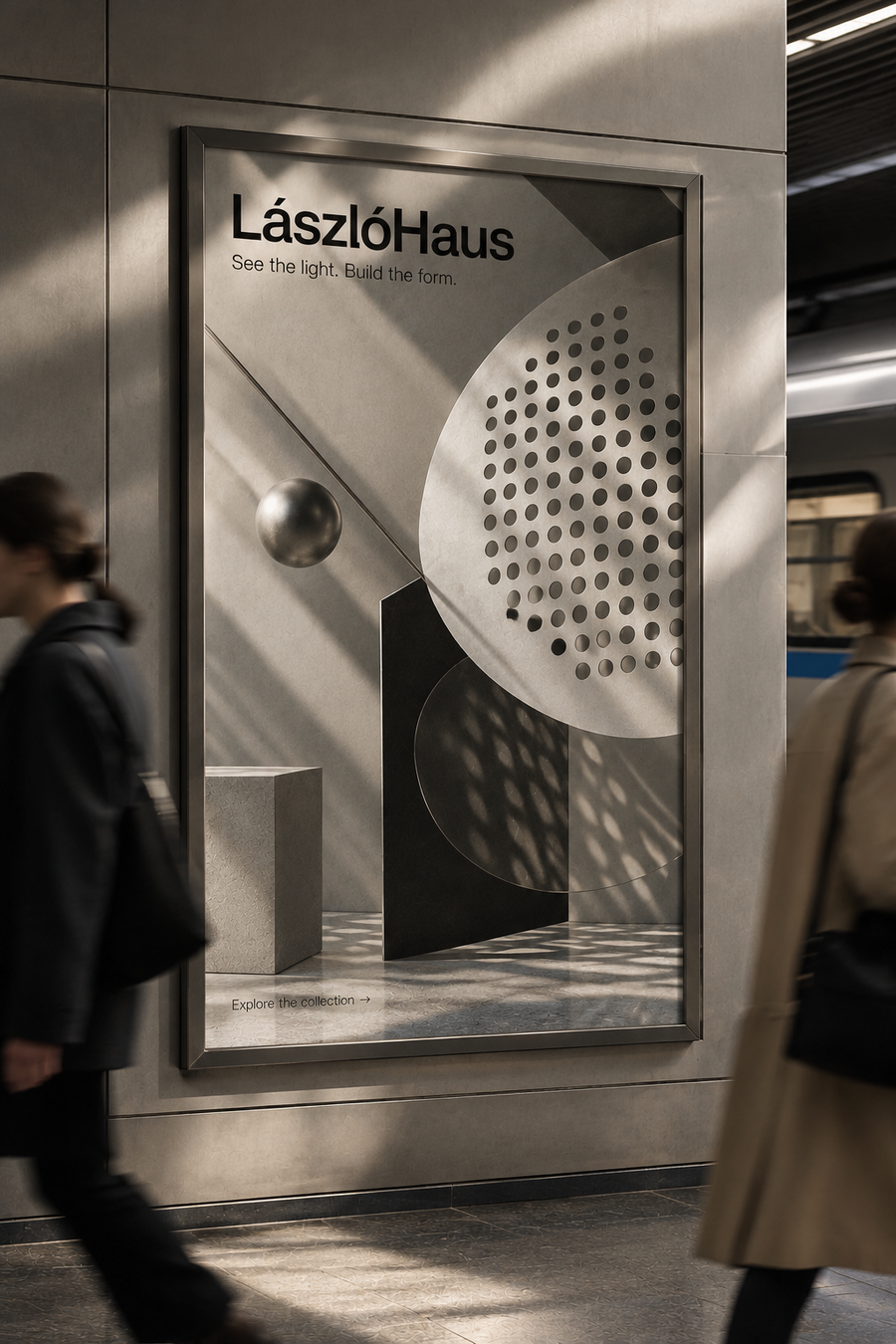
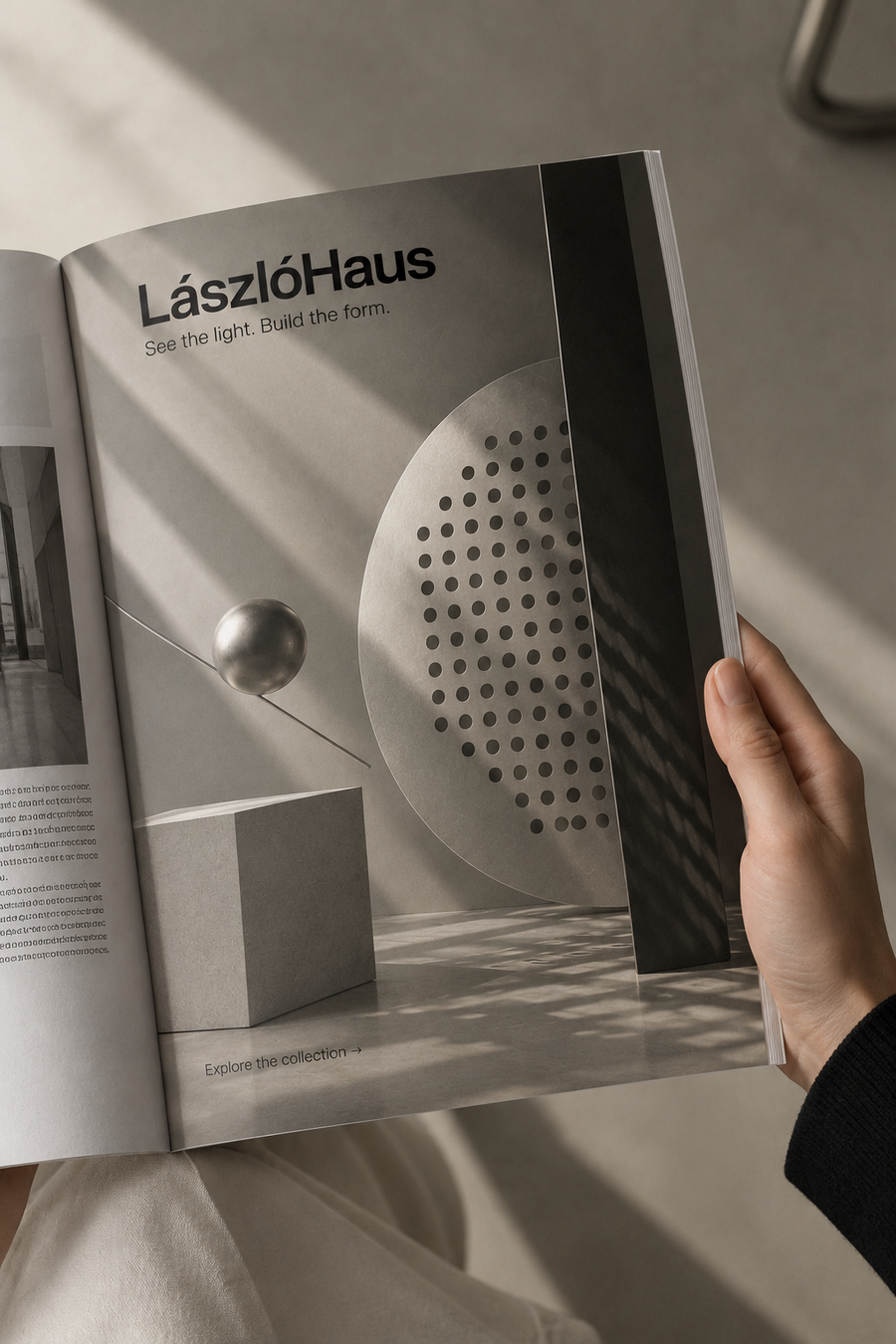
Poster and Print Advertising
Claude Prompt: «You are an art director. I have attached a reference artwork by László Moholy-Nagy. First, analyze it briefly: composition, geometric forms, use of transparency and overlap, light, perspective, rhythm, color. Then use it as the prototype for a key visual for the brand „LászlóHaus“ (fine-art photography and branded merchandise). STEP 1 — MASTER KEY VISUAL Create one master key visual in the spirit of the reference: floating geometric forms (square, rectangle, circle, semicircle, cross, straight lines), perforated projections, strong perspective lines, light effects, and an illusion of movement, as in Moholy-Nagy’s Light-Space Modulator. The composition should be architectural, balanced, yet dynamic, with generous negative space. Palette: grey as the dominant color, white, and black, with subtle metallic-silver accents. Flat color with soft light play; no photorealism, no decorative ornaments. Typography: clean, modern grotesque sans-serif. The wordmark „LászlóHaus“ must have correct diacritics (á, ó). Tagline: „See the light. Build the form.“ Concept: an experimental approach to art, creativity, and education; photography as light, form, and structure. The key visual must be modular: the main graphic element can be cropped, scaled, rotated, or extended without losing recognizability. CONSISTENCY RULES — Maintain one shared visual system across all five executions: same palette, same forms, same typeface, same logo placement logic. — Each adaptation should be recomposed for its specific format, not merely stretched. — Keep text minimal and spelled exactly: „LászlóHaus“, „See the light. Build the form.“, „Explore the collection“. AVOID: photorealistic people, 3D plastic effects, extra colors, cluttered layouts, extraneous text, misspelled brand names, resemblance to any existing brand’s identity.»
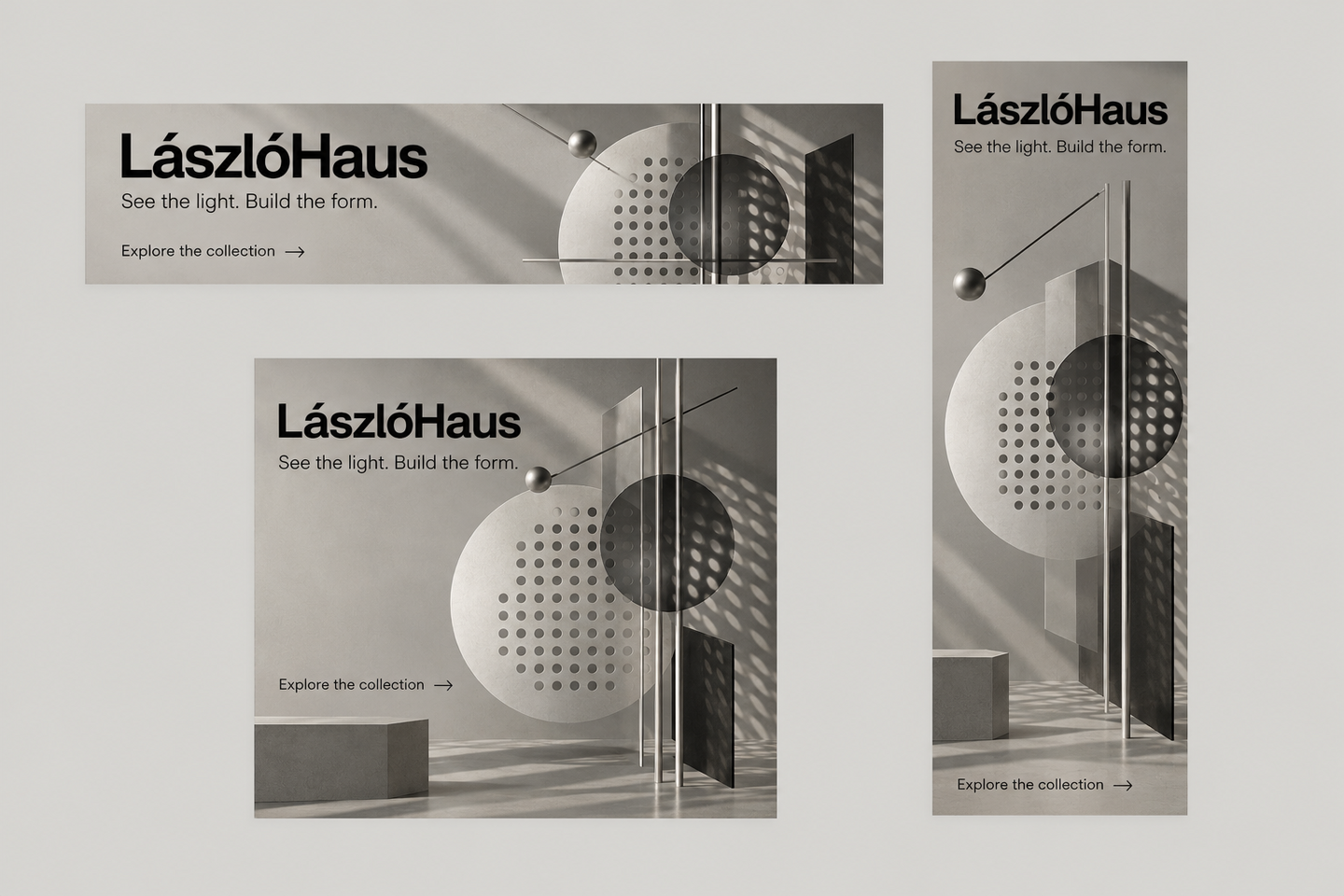
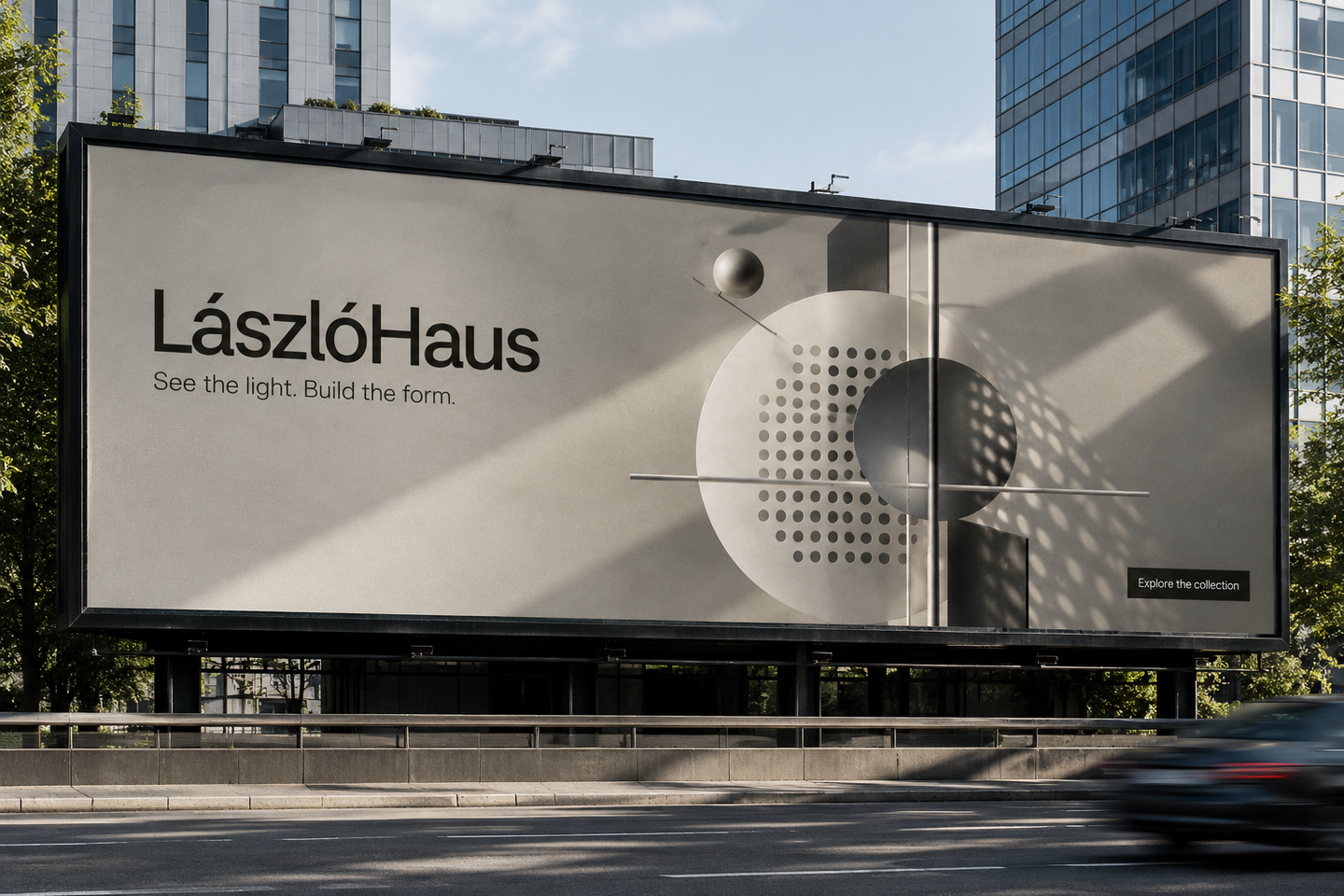
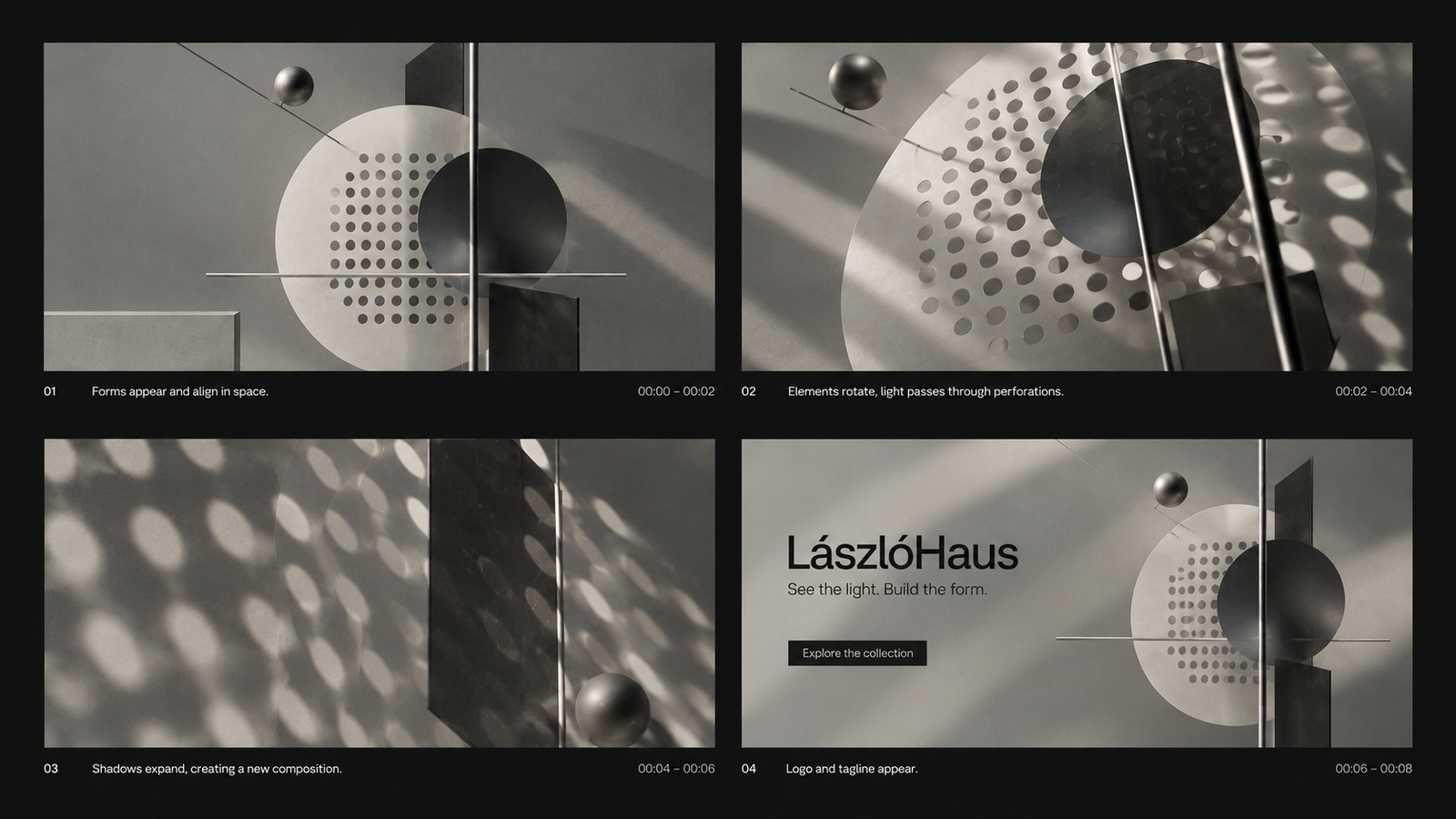
Billboards, video advertisements, and web banners
STEP 2 — ADAPTATION TO 5 MEDIA Show the same key visual adapted to five realistic mockups, each in its own image:
- Urban poster: a city-light or metro poster in a vertical format, with the key visual cropped tightly around one dominant form, plus the logo.
- Print ad: a full-page magazine advertisement, vertical, with the key visual, a short line of text, and the logo at the bottom.
- Billboard: large outdoor billboard on a city street, wide horizontal crop, huge geometric shape, minimal text (logo and tagline only), readable from a distance.
- Video ad: a strip of 4 storyboard keyframes (16:9) showing the forms moving, rotating, and casting perforated light, ending on the logo frame. Add short captions for the motion of each frame.
- Web banners: a set of three digital banners (leaderboard 728×90, medium rectangle 300×250, vertical 160×600) with the key visual recomposed for each format and a clear call to action, «Explore the collection.»Ghat GPT Visualizations
IDENTITY
The visual identity is built upon geometric forms (circle, semicircle, square, cross, lines) and the perforated circle, which references László Moholy-Nagy’s «light-space modulator.» The primary palette is gray, accented with black, blue, and metallic tones, using a grotesque typeface with an architectural and constructivist aesthetic.
Logo
Prompt Claude: «Create a logo for „LászlóHaus,“ a brand of fine-art photography and branded merchandise. Visual language: draw inspiration from the work of László Moholy-Nagy and the Bauhaus. Construct the mark from basic geometric forms—square, rectangle, circle, semicircle, cross, and thin straight lines—arranged in a dynamic yet clean, architectural composition. Employ overlapping and intersecting planes, strong diagonals, and a sense of balanced tension. Optionally incorporate a perforated circle as a subtle reference to the Light-Space Modulator (a circle with a pattern of small holes or concentric light cut-outs). Typography: the wordmark „LászlóHaus“ set in a clean, modern grotesque sans-serif (Akzidenz-Grotesk or Helvetica-like), geometric, and minimal, featuring accurate diacritics (á, ó). Medium-to-bold weight, tight but legible spacing, aligned precisely to the geometry of the symbol. Color palette: grey as the dominant color, with black accents. Optional thin metallic-silver highlights. Flat colors, no gradients, no shadows. Concept: an experimental approach to art, creativity, and education; photography as light, form, and structure. Style: constructivist, minimalist, modernist, vector-like, high contrast, crisp edges, generous negative space. Output: a primary logo (symbol + wordmark, horizontal lockup) on a plain light background, centered, in a flat vector style. Also show a compact symbol-only version and a black-and-white version. Must function effectively at small sizes (stamp, tag, tote bag print). Avoid: photorealism, 3D effects, decorative ornaments, extraneous colors, thin hairlines that disappear at small sizes, misspelled text, and any text other than „LászlóHaus“."Ghat GPT Visualization
Speakers
Prompt Claude: «You are a brand identity designer. I have attached the existing logo of „LászlóHaus, ” a brand of fine-art photography and branded merchandise. Do NOT redesign or alter the logo—use it exactly as it is. Develop a complete visual identity around it, employing the visual language of László Moholy-Nagy and the Bauhaus: geometric, architectural, and experimental, treating photography as light, form, and structure. STEP 1 — IDENTITY SYSTEM (one brand board) Create a single, clean brand board illustrating: — The logo on a plain background, complete with clear space and minimum-size rules. — Color palette: grey as the dominant color, accented by black, white, and a metallic silver, each listed with its name and HEX code. No other colors. — Typography: a clean, modern grotesque sans-serif for headlines and body text (Akzidenz-Grotesk or Helvetica-like), including an example of the type hierarchy. The brand name is always spelled „LászlóHaus“ with correct diacritics (á, ó). — Graphic elements: a small set of Moholy-Nagy-style forms: circle, semicircle, square, cross, thin straight lines, diagonals, and a perforated circle (a disc patterned with small holes, referencing the Light-Space Modulator). Demonstrate how these elements combine into patterns and layouts. — Image style: monochrome, high-contrast art photography and photograms (white shapes on deep black, sharp edges, ghostly overlaps). — Tagline: „Draw with light.“ RULES — Maintain one consistent system across all applications: the same palette, the same forms, the same typeface, and the same logo placement logic. — Compositions must be asymmetrical yet balanced, featuring generous negative space and strong diagonals. — Graphics must use flat color—no gradients; mockups must show realistic materials (paper grain, embossing, fabric weave, matte metal). — Studio photography style: a single directional light casting crisp geometric shadows, a light-grey seamless backdrop, 8K, sharp detail. — Text must be limited to „LászlóHaus, ” „Draw with light, ” and short functional labels, spelled precisely.AVOID: altering the logo, extra colors, decorative ornaments, cartoonish or 3D plastic aesthetics, cluttered layouts, people or hands, misspelled text, or resemblance to any existing brand’s identity.“
Typography, color palette, mediums
STEP 2 — APPLICATIONS (photorealistic mockups, each as a separate image)
- Stationery set: business cards, letterhead, and an envelope, laid out in an architectural flat-lay on a light-grey surface, with a blind-embossed perforated circle on one card.
- Packaging: a rigid matte grey box and a black tissue-wrapped print tube, featuring the logo and a thin line composition, along with a branded tag and a sticker seal.
- Merchandise: a canvas tote bag, a sketchbook, and a pin badge, rendered in grey and black with the graphic elements.
- Exhibition and signage: a gallery wall displaying large-scale logo lettering, framed photograms, and a wayfinding sign, set within a bright, minimalist interior.
- Digital: a website homepage displayed on both a laptop and a smartphone, plus three social media posts maintaining the same grid, palette, and typography.»Ghat GPT Visualizations
MERCH
Sketchbook
Claude Prompt: «Design and render a sketchbook as a merchandise product for the brand „LászlóHaus“ (fine-art photography and branded merchandise). The sketchbook is a design object inspired by the visual language of László Moholy-Nagy and the Bauhaus: geometric, architectural, experimental, with an emphasis on light, form, and construction. SKETCHBOOK DESIGN: — Format: vertical A5 hardcover sketchbook with an exposed spine stitch (thread-bound, lay-flat) and a black elastic closure band. — Cover: matte grey bookcloth or textured cardboard. Across the cover, a precise Moholy-Nagy-style composition of thin black straight lines, a large circle, a semicircle, and a cross, overlapping and intersecting with a sense of balanced tension. A perforated circle (a disc with a pattern of small holes) is embossed or die-cut on the cover as the signature element, referencing the Light-Space Modulator. Silver foil accents only on one or two thin lines. — Branding: „LászlóHaus“ (correct diacritics á, ó) set in a clean modern grotesque sans-serif, small and precise, blind-debossed or in black ink on the lower part of the cover. No other text on the cover. — Spine: black cloth tape with the thread stitching visible. — Inside: an open spread showing cream-white uncoated paper with a subtle printed geometric grid of very thin grey lines and dots. A few pages show light construction diagrams (circles, diagonals, perspective lines) as an invitation to draw, and a few pages feature a perforated circle watermark. Include a section of black pages for drawing with white pencil and a few translucent tracing-paper pages to layer and overlap forms, such as light projections. The endpapers are solid black with a thin silver line pattern. On the inside cover, a small line: „Draw with light.“ No other text. — Extras: a thin black ribbon bookmark and a grey pocket in the back cover holding a few loose cards with geometric templates.»
VISUAL LANGUAGE OF THE PROJECT: Palette: gray is the dominant color, complemented by black, white, and subtle metallic-silver accents. No other colors. Flat, honest print finish; dynamic yet clean, with an architectural composition and generous negative space. RENDER: Photorealistic, high-end studio product photography, 8K, sharp detail. — Hero shot: the closed sketchbook standing at a slight angle, alongside the same sketchbook opened flat, revealing the interior spread with the grid and tracing paper. Set against a light-gray seamless backdrop. — Lighting: a single directional light source casting crisp geometric shadows and perforated light patterns across the surface, as if the scene were a photogram. — Material accuracy: bookcloth weave, embossing depth, foil reflection, paper fibers, stitching thread, elastic band, shallow depth of field. — Include a small row of three detail close-ups: the embossed perforated circle on the cover, the spine stitching, and the inside spread with tracing paper. AVOID: cartoon or illustration aesthetics, extra colors, glossy plastic finishes, cluttered layouts, decorative ornamentation, people or hands, misspelled or extraneous text, any resemblance to existing brand notebooks.»Ghat GPT Visualization
Camera
Prompt Claude: «Design and render a camera as a merchandise product for the brand „LászlóHaus“ (fine-art photography and branded merchandise). The camera is a design object inspired by the visual language of László Moholy-Nagy and the Bauhaus: geometric, architectural, experimental, with photography understood as the work of light and form. CAMERA DESIGN: — Body: a compact, modular medium-format-style camera built from pure geometric volumes: a rectangular main body with precise edges, a cylindrical lens barrel, and a slim cross-shaped viewfinder frame on top. Clean planes, no unnecessary curves, no visible clutter. — Signature element: a perforated disc (a circle with a pattern of small holes) used as the lens cap, which doubles as a reference to Moholy-Nagy’s Light-Space Modulator. Optionally repeat the perforation as a small speaker-like grille or dial on the side of the body. — Controls: a few minimal, functional elements: a round shutter button, a large semicircular exposure dial, a thin straight bar as the film advance lever, a square window for the frame counter. Every control is a basic geometric form. — Strap: a flat black strap with a thin stitched line detail. — Materials: matte grey powder-coated metal body, black rubberized grip panels, brushed silver metal for the dials and lens ring, a glass lens with subtle reflections. — Branding: „LászlóHaus“ (correct diacritics á, ó) engraved in a clean modern grotesque sans-serif on the front plate, small and precise. No other text, no fake camera brand names or model numbers. VISUAL LANGUAGE OF THE PROJECT: Palette: grey as the dominant color, with black accents and subtle metallic-silver details. No other colors. Flat, honest industrial finish. Dynamic but clean, architectural composition.»
RENDER: Photorealistic high-end studio product photography, 8K, sharp detail. — Hero shot: three-quarter view of the camera with the perforated lens cap placed leaning beside it, on a light-grey seamless backdrop. — Light: a single directional light source that casts crisp, graphic geometric shadows and perforated light patterns on the surface, as if the scene were a photogram. — Accurate materials: matte metal texture, brushed silver edges, rubber grain, glass reflections, shallow depth of field. — Generous negative space and an asymmetrical but balanced composition. — Add a small secondary row of three detail close-ups: the perforated lens cap, the top view with the viewfinder and dials, the engraved logo. AVOID: retro cosplay of existing camera brands (no Leica, Hasselblad or Polaroid look-alikes), cartoon or toy look, extra colors, glossy plastic, cluttered layouts, people or hands, misspelled or extra text.»Ghat GPT Visualization
Photogrammetry Creation Enrollment
Claude Prompt: «Create a photorealistic product render of a merchandise item for the brand „LászlóHaus“ (fine-art photography and branded merchandise): a PHOTOGRAM KIT inspired by László Moholy-Nagy’s cameraless photography. The kit allows users to create their own photograms by placing objects and shapes onto light-sensitive paper and exposing them to light. The design must adhere to the brand’s visual language: Moholy-Nagy / Bauhaus, geometric, architectural, experimental.KIT CONTENTS (display all items clearly laid out): — A stack of light-sensitive monochrome photogram paper sheets, housed in a black light-tight sleeve — A set of reusable geometric templates made from matte translucent grey and black acrylic: circle, semicircle, square, rectangle, cross, thin straight bars, and one perforated disc featuring a pattern of small holes, referencing the Light-Space Modulator — Several transparent acetate sheets with printed lines and dot patterns — A small glass press plate with a black frame designed to hold objects flat during exposure — Thin metal wire and a small spiral spring for shadow drawing — Black tweezers — A compact instruction card featuring a minimal geometric diagram — Several finished example photograms (white geometric shapes and soft gradients on deep black, featuring sharp edges and ghostly overlaps) fanned out beside the kit»
PACKAGING: A rigid, matte light-grey cardboard box with black accents. The lid features a large perforated circle as either a die-cut or embossed motif, crossed by a thin geometric line composition. The box interior is black, with the contents fitted into precise geometric cutouts. The brand name «LászlóHaus» (with correct diacritics á, ó) is printed in a clean, modern grotesque sans-serif typeface on the lid. Below it, smaller text reads: «Photogram Kit.» The side or instruction card displays: «Draw with light.» No other text. COMPOSITION: One hero image. The open box, showcasing its contents arranged in a precise, architectural flat-lay from a slightly elevated angle, paired with the closed box standing beside it to display the lid design. Finished photograms and loose templates are scattered with deliberate, balanced asymmetry. Ample negative space. STYLE AND LIGHT: Photorealistic, high-end studio product photography. Soft, directional side lighting casts crisp, graphic geometric shadows across the surface, making the scene itself resemble a photogram. Light-grey seamless backdrop, subtle cardboard surface texture, accurate acrylic translucency, and edge highlights, shallow depth of field. 8K, sharp detail. PALETTE: Grey as the dominant color, complemented by black and white accents and subtle metallic silver details (wire, spring, edges). No other colors. AVOID: cartoon or illustration aesthetic, cluttered layout, extraneous colors, plastic toy appearance, people or hands, misspelled or unnecessary text, any resemblance to existing brands' packaging.»Ghat GPT Visualization
SPACE
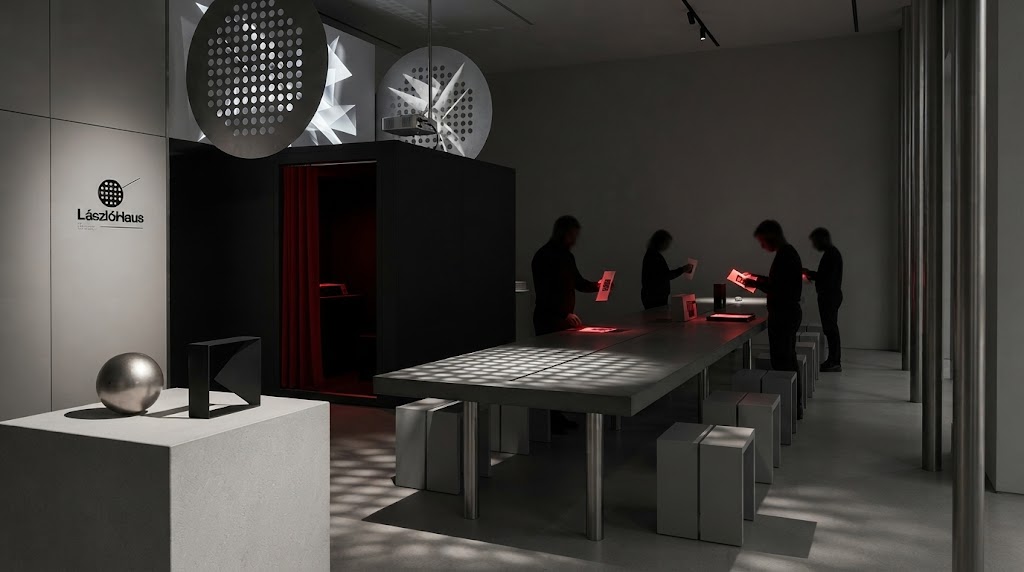
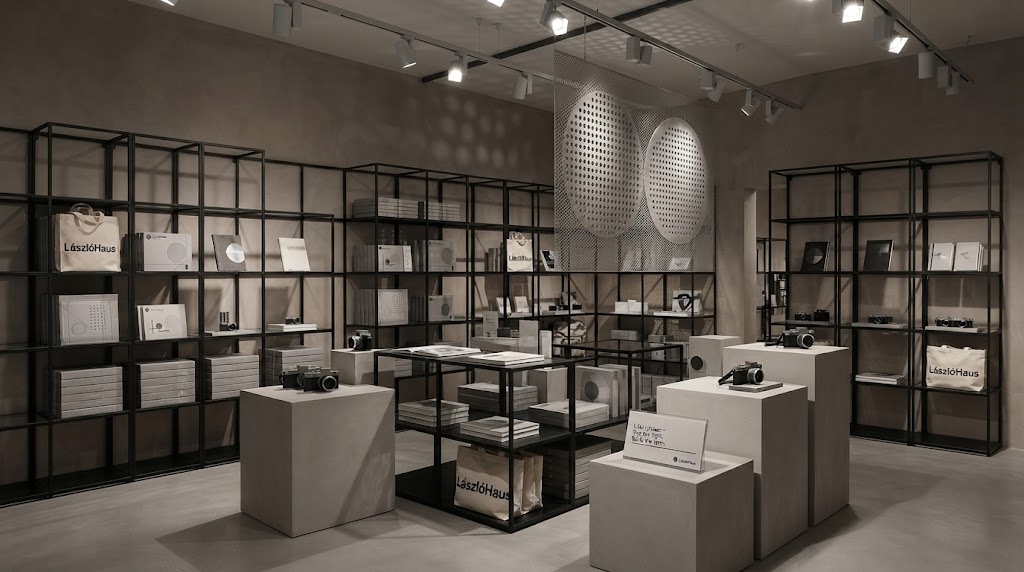
Marketplace







