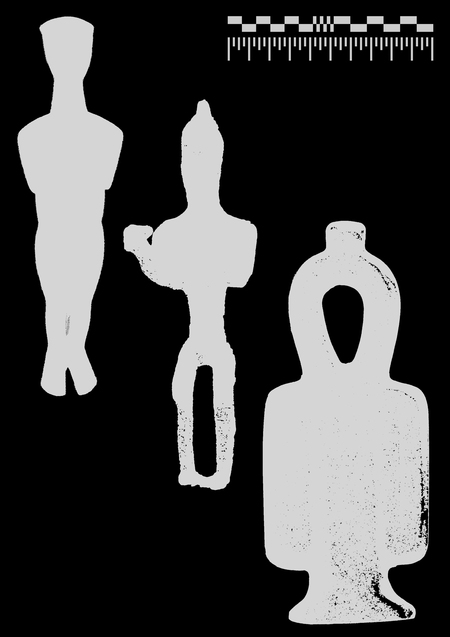
Concept
The visual research approaches one of the most intriguing yet understudied categories of archaeological artifacts—miniature anthropomorphic figures traditionally referred to as «idols.» However, the very term «idol» requires critical revision; it carries evaluative connotations shaped by later religious and colonial discourses. Modern archaeology is increasingly moving away from interpreting these objects solely as «objects of worship, ” proposing instead that they be viewed as complex mediators of social, ritual, and symbolic practices. The small scale of these figures is not accidental, but a constructive principle: it defines their intimacy and their capacity to be part of daily life, rather than solely sacred space.
The home is the most sacred space a person possesses.
The way an individual furnishes it can speak to their temperament, values, and experiences. The desire to do something for one’s home is deeply personal.
Thus, by examining ancient small idols, often carved by ordinary people, we can understand what connects different civilizations in terms of values, rituals, and living conditions.
Contents
- Ancient Greece
- Eastern Europe
- Ancient Egypt
- Comparative Summary
Ancient Greece
Cycladic Idols
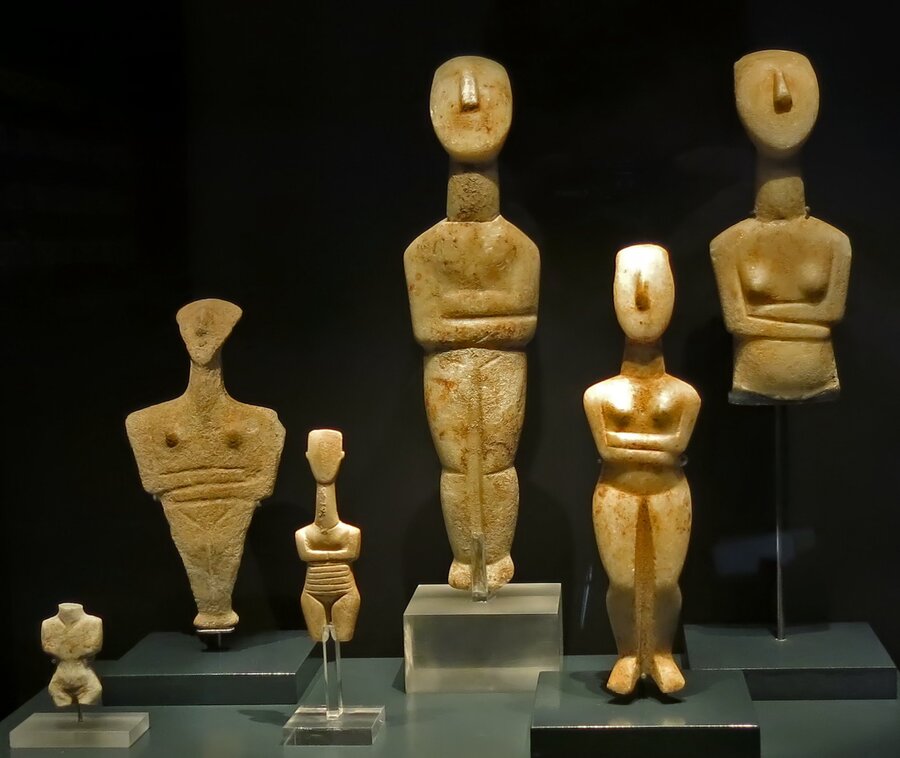
Cycladic idols, sculpted from marble, depict the canon of a pregnant woman with folded arms and tightly pressed legs. They were often rendered in a small format (under 30 cm), but some examples have reached 1.5 meters in height. The figures presented are frequently associated with the motif of fertility because they literally portray a «voluptuous» female form (this type of depiction is called steatopygous), and sometimes a pregnant figure.
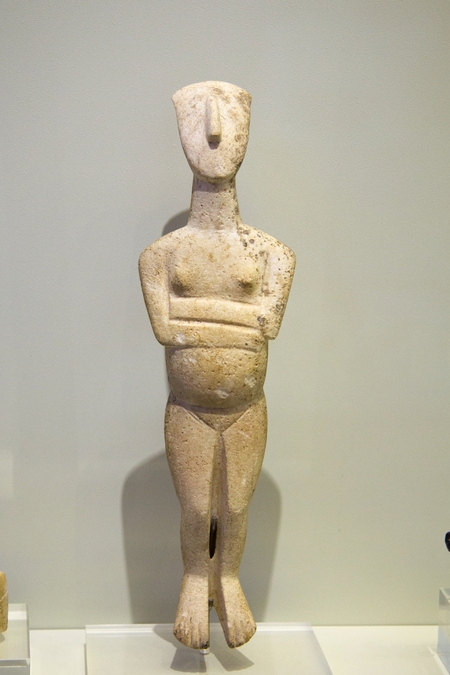
Cycladic idol, c. 2800–2300 BCE. Museum of Cycladic Art, Athens.P. S. The statue clearly emphasizes a pregnant abdomen.
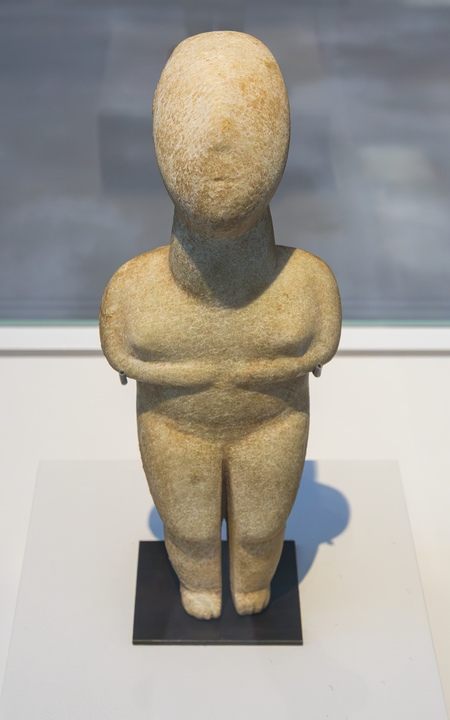
Female statuette from the Archaic period, 3200–2700 BCE, Louvre.P. S. The same canon is visible—crossed arms and heavily compressed legs.
If one looks closely, you can notice that in this canon, the statuettes seem to be standing on tiptoes, meaning they cannot actually stand. Many of them were found in burials, and some showed signs of restoration, which might suggest that the figures accompanied the person throughout their life.
Meanwhile, there were also seated Cycladic idols, which are more akin to decorative figurines. These were also found in burials, and the similarity in imagery allows us to conclude that the standing and seated figures are related.
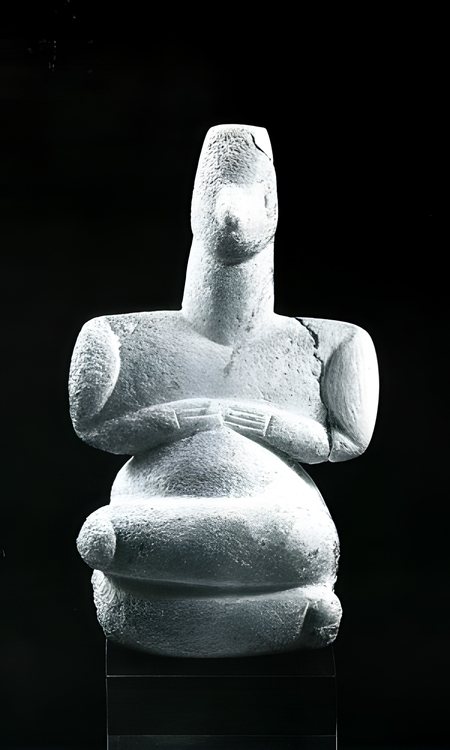
Marbled idol. Salagios — type. Height 9.2 cm. 5300–4300 BCE. Archaeological Museum of Naxos. Inv. No. MN 210. P. S. please note the torso and folded hands.
«Lady from Salagosa.» V–IV millennia BCE. Archaeological Museum of Paros. Inventory No. 887.
There are other seated figurines from the Cyclades. These are already entirely associated with funerary rituals.
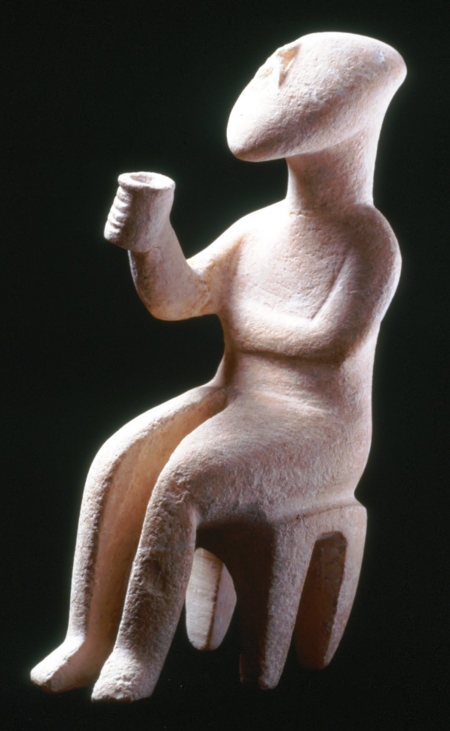
A toast from the Cycladic Art Museum in AthensP. S. The figure is seated on a chair and extends a vessel in its right hand.The statuette almost certainly depicts a libation ritual (a religious pouring of wine or oil in honor of deities or deceased ancestors).
«The Thinker.» Museum of Cycladic Art. Athens. Greenish steatite. Collection No. 348. Height — 5.4 cm. Possible origin — Attica.
Unlike later Greek philosophers, the pose here likely expresses grief or ritual mourning rather than the process of contemplation.
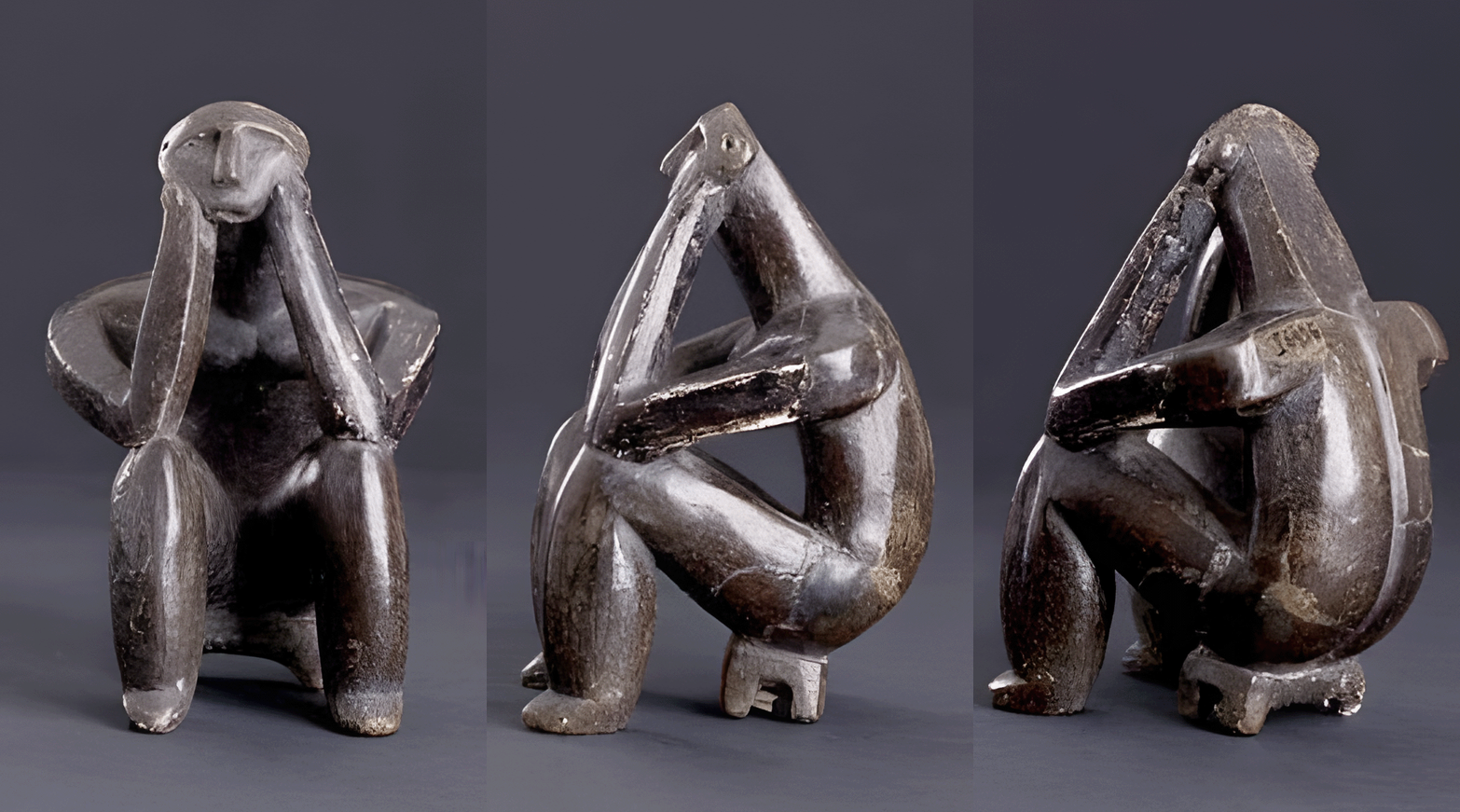
«Thinker» from Chernovod. Romanian National Museum of History. Inventory No. 15906. Height: 11.5 cm. Clay. Late Neolithic. Hamangia Culture.P. S. The terracotta figurine presented is not Cycladic, but merely an expression of the same motif.
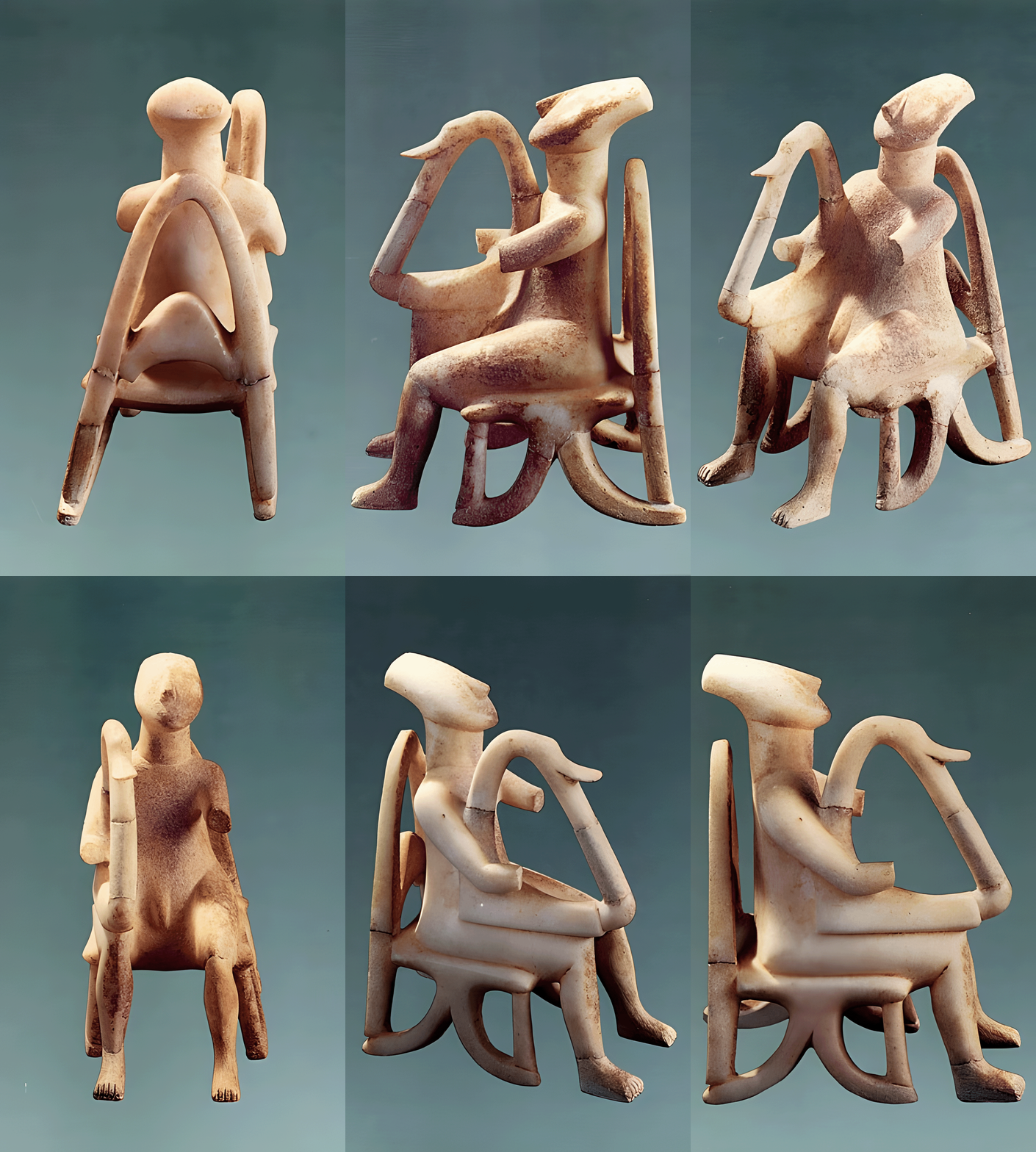
«Arphest» from the island of Keros. National Archaeological Museum, Athens. Inventory No. 3908. Keros, Tomb A. Height: 22.5 cm.
P. S. Music in ancient Mediterranean cultures accompanied religious rituals, burials, and festivals. It is believed that these figurines provided musical accompaniment for the deceased in the afterlife or depicted priests/singers invoking the gods.
«Arpists» from Tira Island (Santorini). Badisches Landesmuseum, Karlsruhe. Inv. No. B 864. Height: 12.5 cm. Inv. No. B 863. Height: 15.6 cm.
Oceanic Harpists. The Metropolitan Museum of Art. New York. Inventory No. 47.100.1. Height: 29.2 cm. The authenticity of this harpist is disputed due to stylistic deviations from the canonical icons of this type.
In conclusion of the Ancient Greece segment, it is worth highlighting the focus on the humanized image, whether it be a goddess of fertility expressed through a stetophygous style or a subject like Aristeas or the Thinker.
Eastern Europe
Sculptural figures of men (cult figurines). Height 11.7 cm. Circa 5th century BCE. Archo Settlement (Dagestan).
Sculptural figure of a woman (cult figurine). Height 7.5 cm. First half of the 1st millennium BCE. Kobansky Necropolis (North Ossetia).
Sculptural figures of men (cult figurines). Height 9.1 cm. Circa 5th century BCE. Archo Settlement (Dagestan).
In this section, we primarily want to draw attention to the trophy value of many objects. This may suggest the great importance of hunting to the ancient inhabitants of Eastern Europe.
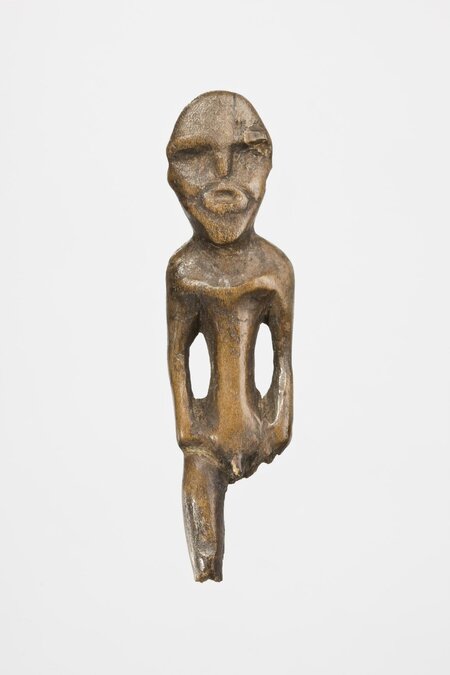
Idol. Sculptural depiction of a man or male statue; late 4th — early 3rd millennium BCE; Pskov region, Usviatsky districtP. S. The figurine is made of bone and likely depicts a hunter.
On the following statuettes, you can see various implements in the hands of the figures, which likely also suggests a hunting theme.
Sculptural human figurines (cultic statuettes). Height 4.1 cm. First half of the 1st millennium BCE. Kobansky Burial Ground (North Ossetia). (1360/599, 600) (left)
Sculptural human figurines (cultic statuettes). Height 4.8 cm. First half of the 1st millennium BCE. Kobansky Burial Ground (North Ossetia). (1360/599, 600) (right)
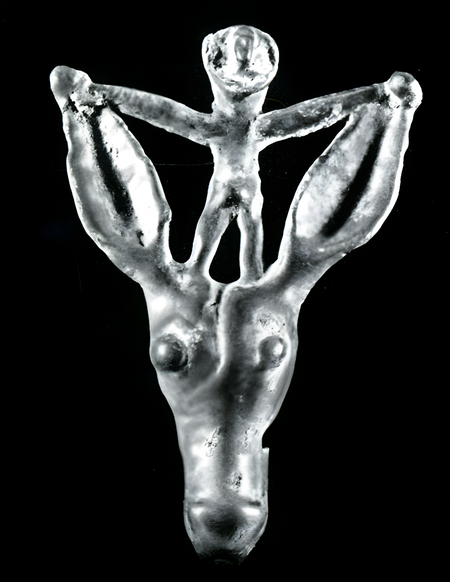
Sculptural human figurine on an elk head (buckle). Height 7.4 cm. First half of the 1st millennium BCE. Kobansky Burial Site (North Ossetia).P. S. this idol clearly carries a trophy meaning.
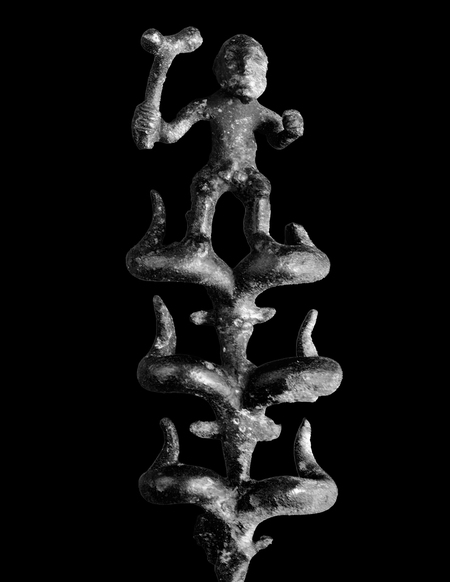
Sculptural composition—three heads of bulls, one atop the other, with a male figure standing on their horns at the top. Height: 13.1 cm. 6th–5th centuries BCE. Kazbek Station (Georgia)P. S. A subject similar to the previous statuette.







