INDEX
I. CONCEPT
Group I. The City as an Independent «Protagonist» of Cinema III. Skyscrapers and the «Scale» of Humanity IV. Speed, Movement, and the Rhythm of the Streets
Group V. Massification and Deindividuation VI. The Urban System: Freedom or Constraint? VII. Conclusion
I. CONCEPT
In the first quarter of the 20th century, American metropolises underwent rapid transformation. Streets filled with trams and automobiles, and the pace of life changed. Silent cinema became a reflection of these shifts. In the 1920s, the image of New York and other large cities in films was shaped by a complex visual system. Shots emphasized the grandeur of architecture, the movement of transport, and the flow of people. Editing, in turn, amplified the rhythm of urban life. The question underlying this topic is especially relevant today, as the process of urbanization and its cultural representations are currently discussed within a historical context. Silent cinema of the 1920s is a period of the rise of American megalopolitanism. Furthermore, silent film offers a way to trace many nascent ideas in cinematography. Most works typically focus on plot or directorial style. This work, however, analyzes the visual language of the city in American silent film.
The principle for selecting visual material (films) is based on the strong connection to the image of the city. Furthermore, their aesthetics complement each other. The comedies showcase striking urban imagery, while Vidor’s film offers a somber perspective on urbanization. The latter film was chosen to broaden the overall view of the concept.
- «The Crowd» (Dir. K. Vidor, 1928)
- «Speedy» (Dir. T. Wilde, 1928)
- «Safety Last!» (Dir. F. Neumeyer, S. Taylor, 1923)
- «Pay Day» (Dir. C. Chaplin, 1923)
- «Never Weaken» (Dir. F. Neumeyer, 1921)
- «Sunrise: A Song of Two Humans» (Dir. F. Murnau, 1927)The work relies on the visual analysis of the frame and scene (composition, editing, and movement). Emphasis is placed on a comparative analysis of scenes from different films to identify common and distinctive features. Various academic studies and articles related to the selected films are used for interpretation.
Structure
The visual study is divided into several sections.
Group (This section focuses more on the image of the city) I. The city as a self-contained protagonist in cinema II. Skyscrapers and the «human scale» III. Speed, movement, and the rhythm of the streets
Group (This section is more focused on the individual within the city) IV. Massiveness and depersonalization V. The urban system: freedom or constraints?
Research Object and Subject: Object — the visual image of the American metropolis in silent films of the 1920s. Subject — the cinematographic techniques used to form this image.
Key Question: How does silent cinema of the 1920s shape the image of the metropolis as a dynamic system and define the human’s place within it? Hypothesis: American silent film portrays the metropolis as a living mechanical system where architecture, transportation, and people establish the rhythm of life. The city on screen appears dualistic. On one hand, it unveils new possibilities for humanity, and on the other—it subjects humans to its «scale.»
II. The City as an Autonomous «Character» in Film
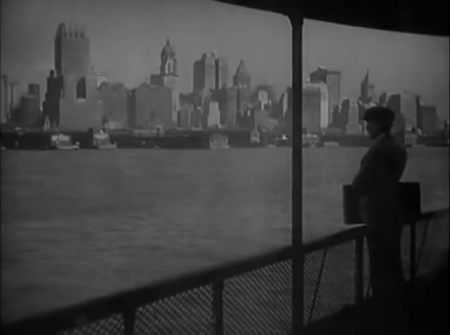
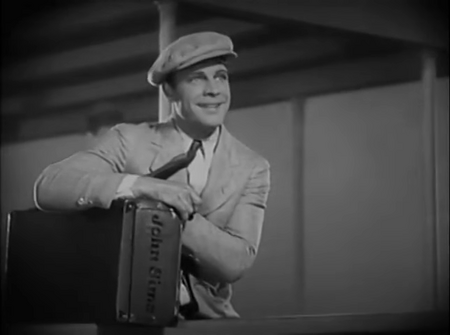
«The Crowd» (directed by K. Vidor, 1928).
«The Crowd» (directed by K. Vidor, 1928).
In this scene, the main character, John Sims, sees the silhouette of New York.
- The first shot immediately emphasizes two ideas: The architectural landscape — the «skyscrapers» — and the scale of the protagonist.
- The second shot is a close-up. It conveys the hero’s excitement before the big city. New York here is almost a character. Its silhouette shapes the frame’s composition and sets up the expectation of dramatic development.
«The Racer» («Speedy,» directed by T. Wilde, 1928).
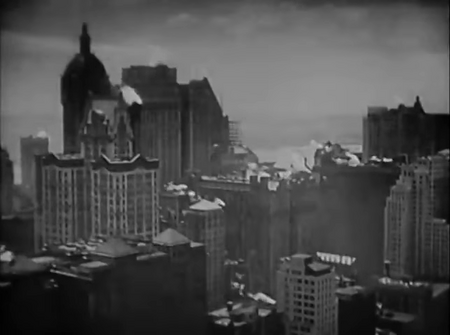
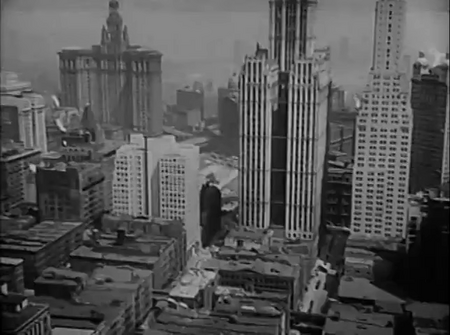
«The Crowd» (directed by K. Vidor, 1928).
Both films present the city as an autonomous system of images. The film «The Driver» feels like a spontaneous emotional message to New York, while «The Crowd» feels like a trial for the «ordinary» person.
«The Crowd» (directed by K. Vidor, 1928).
Both films showcase various shots: for example, wide aerial shots and close-ups of specific buildings.
It is worth noting that the city in silent film is not defined by a sweeping panoramic view. Its character is revealed through specific elements of the urban environment. It is architecture that allows us to see how the «scale» of the metropolis relates to the «scale» of the individual…
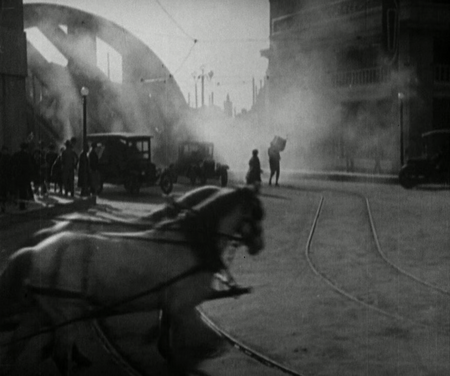
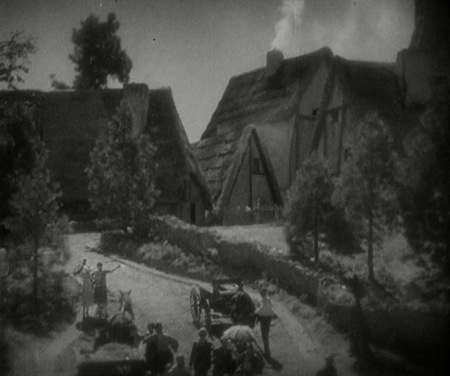
«Sunrise: A Song of Two Humans» (directed by F. Murnau, 1927)
In the film «Sunrise, ” the city is presented as a self-contained visual world. It is contrasted with the village (i.e., another space). We can notice a certain contrast in space. The village is shown as freer and more natural. The city, conversely, is dense and rich in detail and mass, and the lighting makes it feel „artificial.“
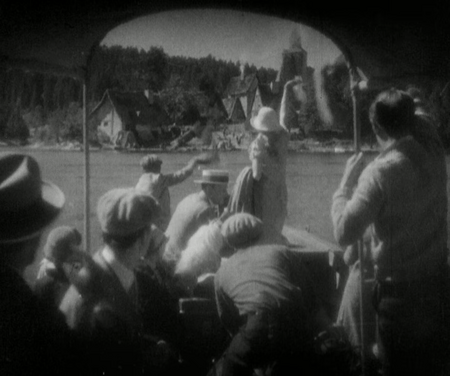
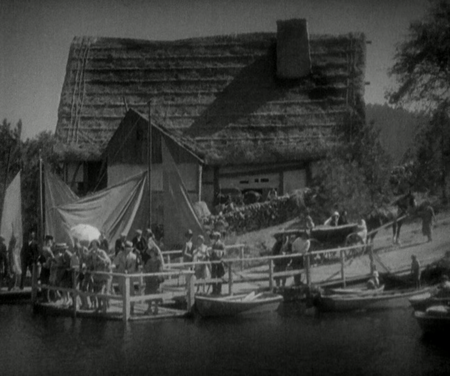
«Sunrise: A Song of Two Humans» (directed by F. Murnau, 1927)
III. Skyscrapers and the Human «Scale»
«Never Weaken» (directed by F. Newmyer, 1921)
«Never Give Up» («Never Weaken, ” directed by F. Newmyer, 1921)
It is worth noting that the urban space is visible in the background. Thus, the city below becomes a measure of height and peril, and the protagonist is physically distanced from everyday life.
The protagonist moves along metal beams at height. It is important to highlight the precariousness of the person’s position and the danger of every movement.
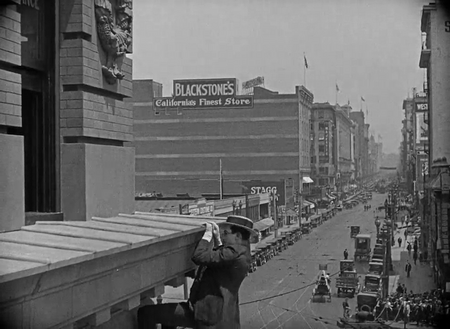
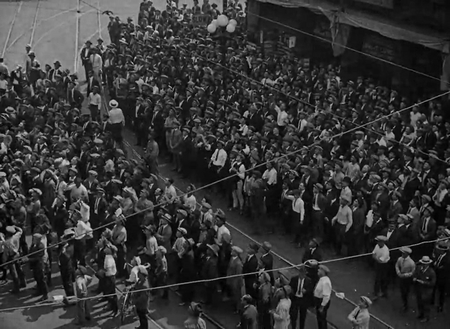
«Safety Last!» (Directed by F. Newmyer and S. Taylor, 1923).
«Safety Last!» (Directed by F. Newmyer, S. Taylor, 1923).
In this scene from the film «Safety is Secondary,» the skyscraper becomes a symbol of the rapidly developing American metropolis.
«Safety Last!» (Directed by F. Newmyer, S. Taylor, 1923).