Introduction
The psychiatric hospital in video games is a persistent cultural archetype. It is more than just set dressing. Over the last two decades, the image of the mental asylum has evolved from a gothic «monster cell» to a metaphor for shattered consciousness and a critique of institutional violence.
At the heart of this study are six games that approach this topic from different perspectives: «Batman: Arkham Asylum» (2009), «Outlast» (2013), «Neverending Nightmares» (2014), «Silent Hill 2» (2001/2024), «The Evil Within 2» (2017), and «Sanatorium: Psychiatric Shelter Simulator.»
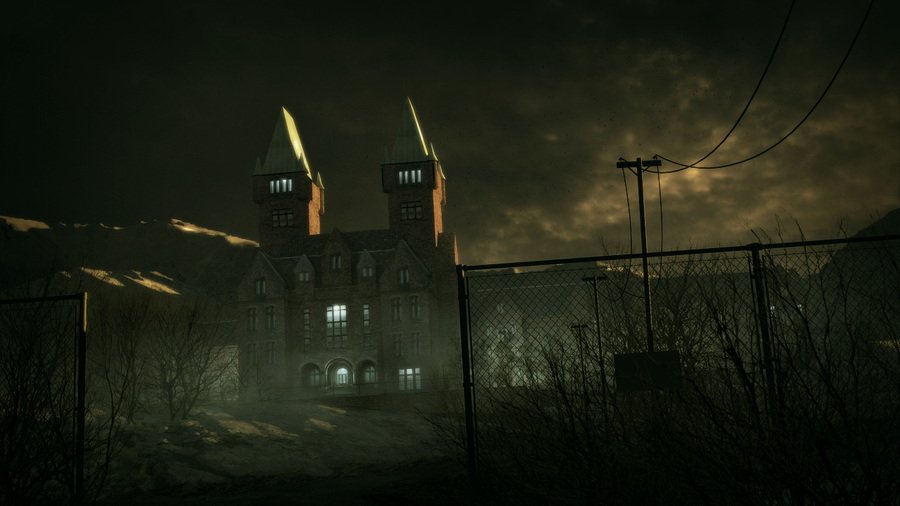
Screenshot of the game «Outlast» [1]
Research Goal: To demonstrate how game designers leverage architecture, mechanics, color, and sound to transform a hospital from a mere setting into an active participant in the narrative. The questions we are asking are: How is madness visualized? How do the camera and freedom of movement alter the perception of the «mental institution»? Has this imagery changed over the last two decades?
The Psychiatric Hospital as an Architectural Cage
«Batman: Arkham Asylum» and «Outlast» represent two poles of the same approach: the hospital as a physical space from which escape is impossible. The difference lies in the aesthetic.
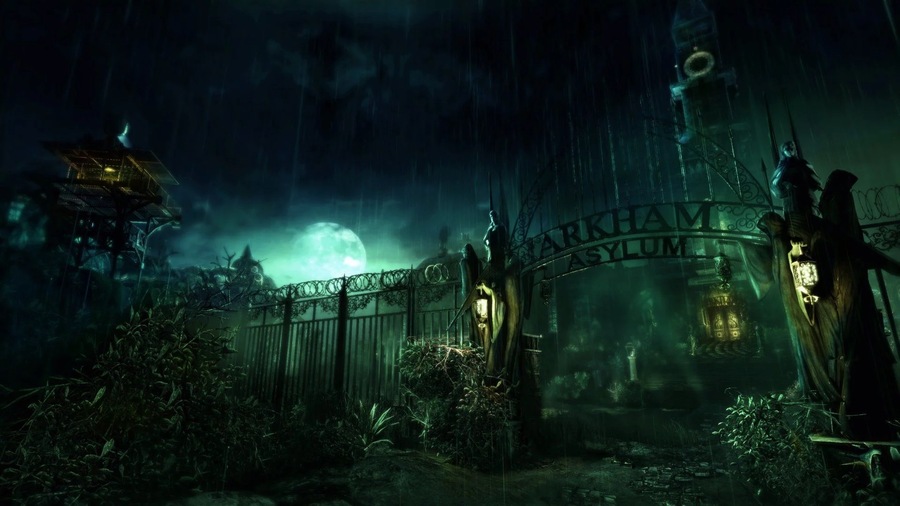
Screenshot of the game «Batman: Arkham Asylum» [3]
Screenshot from the game «Batman: Arkham Asylum» [3]
Arkham Asylum—it’s gothic art deco. The facility resembles a cathedral designed by a deranged architect. Each wing possesses its own visual theme: the medical wing is sterile and cold, the botanical garden is a gothic conservatory, and the intensive care unit is an industrial hellscape. The architecture doesn’t just serve as a backdrop for fights with the Joker; it speaks—the walls remember every lobotomy, every experiment. Batman is an outsider here, invading a kingdom of madness, and the architecture resists him: Pugal’s mirror mazes, the shifting geometry of the corridors.
Screenshot of the game «Outlast» [1]
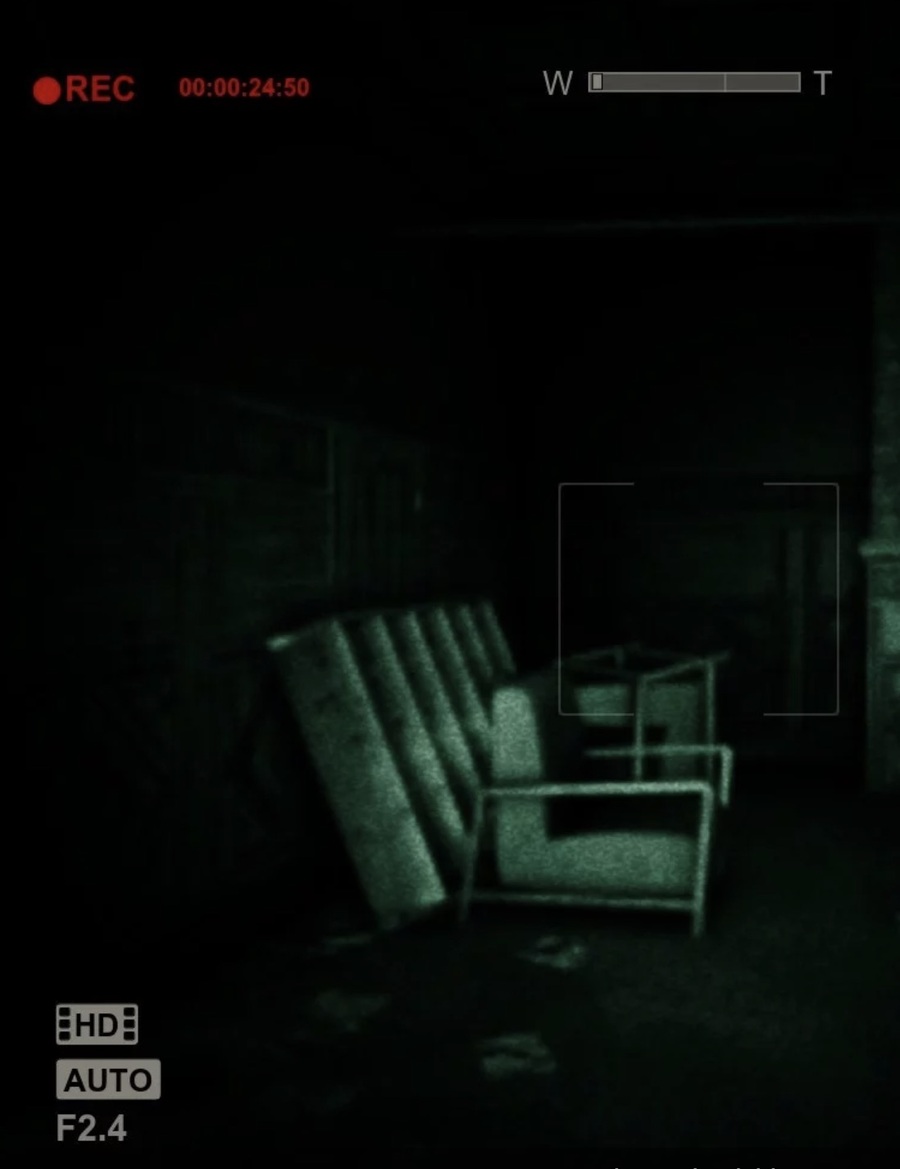
«Outlast» takes a different path. There is no beauty here. The Mount Massive Asylum is filth, rust, and peeling paint. The squalor of the materials underscores the violence of the system. The night-vision camera (the player’s primary tool) transforms the space into a green, grainy nightmare. You are not observing the architecture—you are surviving within it. If Arkham aestheticizes madness, turning it into a style, «Outlast» demonstrates its physical, grotesque nature. Both games, however, converge on one point: their asylums are cages. The difference is merely who they cage—supervillains or ordinary people.
Screenshot from the game «Outlast» [1]
The Asylum as a Projection of Consciousness
The transition to «Silent Hill 2» and «Neverending Nightmares» shifts the perspective. Here, the hospital ceases to be a real location—it becomes a mirror of the protagonist’s inner world.
Screenshot from the game «Silent Hill 2» [2]
Screenshot of the game «Silent Hill 2» [2]
The Brookhaven Hospital in «Silent Hill 2» is one of the most iconic levels in gaming history. James comes here searching for the girl, Laura, but instead finds himself. The hospital’s architecture exists in two modes: the «normal» mode (grimy corridors, dim lighting) and the «otherworld» mode (rusty bars, blood on the walls, biomechanical monsters). Switching between these modes is a pure expression of mental breakdown. The most potent visual device is the sunlight filtering through the windows into an abandoned ward. Typically, light is associated with safety, but here it underscores desolation and melancholy. In the 2024 remake, this contrast was intensified: the daylighting has become even more unsettling.
Screenshot from the game «Silent Hill 2» [2]
«Neverending Nightmares» continues. Here, the asylum isn’t a location—it’s a state of being. Inspired by the developer’s real-life struggle with OCD and depression, the game employs a monochromatic style (black and white with rare, blood-red accents) and looping corridors. You never know if the room is real or just another hallucination. The design borrows the aesthetic of Edward Gorey’s engravings: flat lighting, a lack of perspective, and distorted proportions. This isn’t realism—it’s the stylization of an inner hell. Unlike AAA horror, the budget here is minimal, but the expressiveness is higher: one black bed against a white background speaks volumes more than ten liters of blood.
Screenshot of the game «Neverending Nightmares» [5]
The Psychiatric Hospital as a System (and Its Critique)
«Evil Within 2» and «Sanatorium: Psychiatric Asylum Simulator» introduce an unexpected turn: the hospital as a structure, not merely an atmosphere.
Screenshot from the game «The Evil Within 2» [4]
In «The Evil Within 2,» the protagonist Sebastian periodically «comes to» in the model of a psychiatric ward. This is a hub—a safe zone between nightmarish missions. Here, he improves weapons, listens to recordings, and reflects. The designers made this hub chillingly serene: clean, bright, yet empty. Beds are made up, but there are no patients. X-rays hang on the walls, but there is no one to look at them. This space is a visualization of trauma that has become routine. Sebastian returns here again and again because his consciousness cannot leave this cage. The hospital here is not a setting; it is a structural anchor—a reminder that even in «safety, ” the hero remains a patient.
Screenshot from the game «Simulation & Card Game: Sanatorium: Psychiatric Simulator» [6]
The Sanatorium (also known as Psyhonds) takes the next step: you don’t play as the patient or the detective—you play as the orderly. It is a card simulator stylized after the dark art deco of the 1920s. Your task is to monitor four patients with different disorders. However, the mood system (anxiety, hunger, risk of breakdown) and the card-based treatment mechanics turn the process into bureaucratic hell. You aren’t healing—you are managing. Visually, the game combines the luxury of art deco (chandeliers, plasterwork) with decay (damp walls, grime). This creates the image of a system that is aesthetically beautiful but morally rotten. The Sanatorium critiques not madness, but the institution that attempts to treat it.
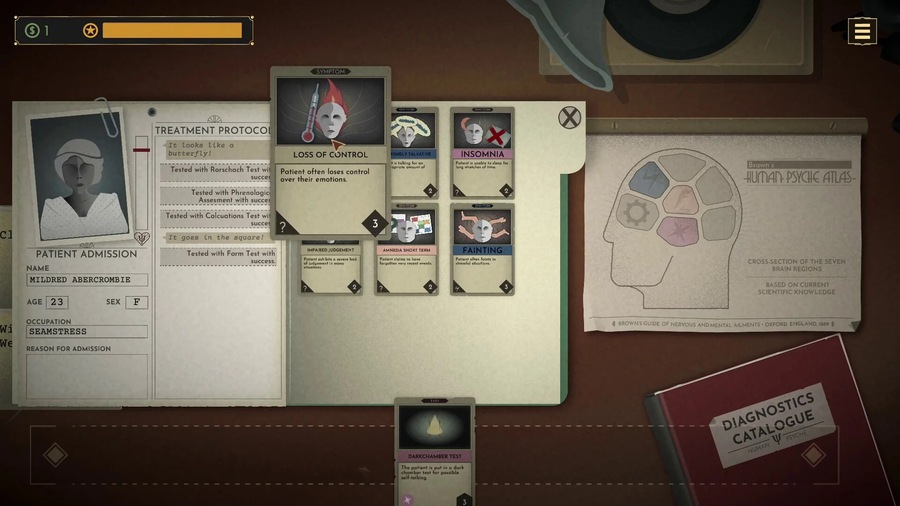
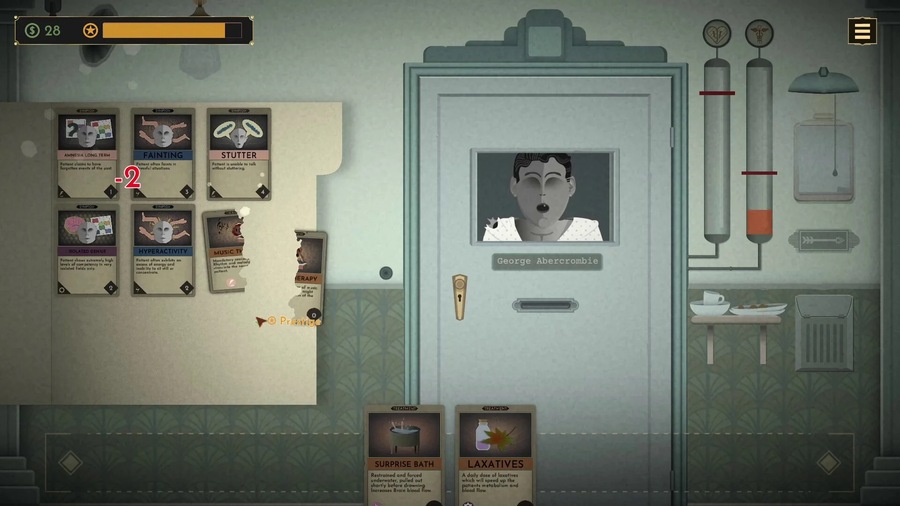
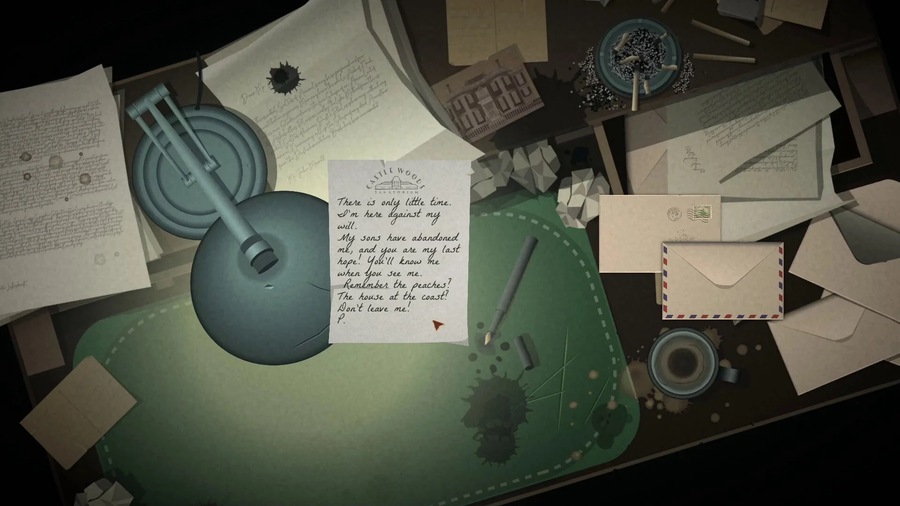
Screenshot of the game «Simulation & Card Game: Sanatorium: Psychiatric Simulator» [6]