Navigation Menu
— Introduction — Origins of Anthropomorphism — The Animal-Character Archetype — Humanizing Animal Form — The Animal in the Human World — Conclusion — References
Introduction
In the early 20th century, animation became a space for experimenting with the depiction of movement, form, and the behavior of living creatures. A characteristic technique of American silent animation was the anthropomorphization of animals: characters retained recognizable animal traits but gradually acquired human characteristics, emotions, habits, and behavioral patterns.
Between 1919 and 1928, animals increasingly became central characters in animated films. They did not merely replicate the behavior of real animals; instead, they adopted human ways of interacting with the world around them—walking upright, using objects, expressing emotions through gestures and facial expressions, and participating in everyday social situations.
The research hypothesis is that the anthropomorphization of animals in American silent animation from 1919–1928 occurred primarily through three visual mechanisms: altering anatomical proportions and body posture, adopting human plasticity and facial expressions, and integrating animals into domestic and social scenarios typical of the human world. It is posited that the combination of these techniques allowed for the preservation of the animal’s recognizability while simultaneously shaping it into an independent character possessing human qualities.
This study aims to identify and analyze these mechanisms using American animated films from the period under review as case studies.
The Origins of Humanization
The attribution of human traits to animals—anthropomorphism—has deep historical roots preceding the advent of animated cinema. Its origins can be traced in mythology, folklore, literature, and visual arts, where animals were endowed with human qualities, emotions, and the capacity for meaningful interaction with the world. In ancient cultures, the line between human and animal was often conditional: beasts could possess intellect, speech, and supernatural abilities, serving as intermediaries between the human world and nature.
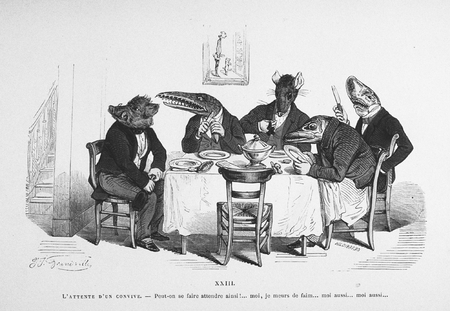
The genres of fables and fairy tales played a particularly significant role in the development of anthropomorphism. In these works, animals became characters reflecting human relationships and societal structures. Stable associations became established with specific species: the fox with cunning, the rabbit with timidity, the bear with strength, and the donkey with stubbornness. The animal transformed into an allegorical representation of a human being, and its behavior served as a means to discuss human virtues, flaws, and interactions. Anthropomorphism became not merely a way of endowing animals with human traits, but an independent artistic tool allowing for the depiction of humanity through the lens of other living creatures.With the evolution of book illustration, this tradition found its visual manifestation. Animals began to be depicted in human clothing, placed in domestic scenes, endowed with everyday objects, and shown making human gestures and postures. As a result, the recognizable image of an animal-character was formed—one that retained its species-specific characteristics yet acted according to the laws of the human world.J. J. Granville. Engraving «Anticipation of a Guest» from the series «Metamorphoses of the Day,» 1830
J. J. Granville. Caricature «Cafe» from the collection «Scenes of Private and Public Animal Life, ” 1840
At the end of the 19th and beginning of the 20th century, American newspaper culture became a significant factor in the proliferation of such imagery. The development of mass printing and the popularity of illustrated publications contributed to the emergence of comic strips, where animals often served as the main protagonists. They engaged in comedic and satirical plots, interacted with one another, and displayed characteristic human reactions. A distinctive feature of newspaper comics was the ability to reveal a character’s personality through repeated actions, recognizable appearance, and stable behavioral patterns. These qualities later proved extremely important in the formation of animated characters.
A prime example illustrating the genesis of animated characters is the comic strip series «Krazy Kat, ” created by George Herriman and first published in newspapers in 1913. The narrative centered on the cat Krazy, the mouse Ignatz, and the police dog Officer Pup. Although the characters belonged to different animal species, they possessed human traits, desires, and complex interpersonal relationships. In 1916, these characters were adapted for the screen in a series of short animated films, marking one of the earliest instances of adapting newspaper comic characters for cinema. The interplay between print art and emerging animation played a significant role in shaping the look of the American animated character.
George Herriman’s Krazy Kat comic strip from December 17, 1918
The advent of animated film provided new opportunities for depicting anthropomorphic animals. Whereas in illustration, human qualities were primarily conveyed through appearance, posture, and accompanying props, moving imagery allowed the character’s personality to be revealed through its physicality, facial expressions, gestures, and interaction with its environment.
George Herriman. Stills from the cartoon «Krazy Kat Goes A-Wooing.» 1916
The movement itself became a powerful means of expression: the animal could demonstrate surprise, joy, irritation, or fear using reactions characteristic of humans.
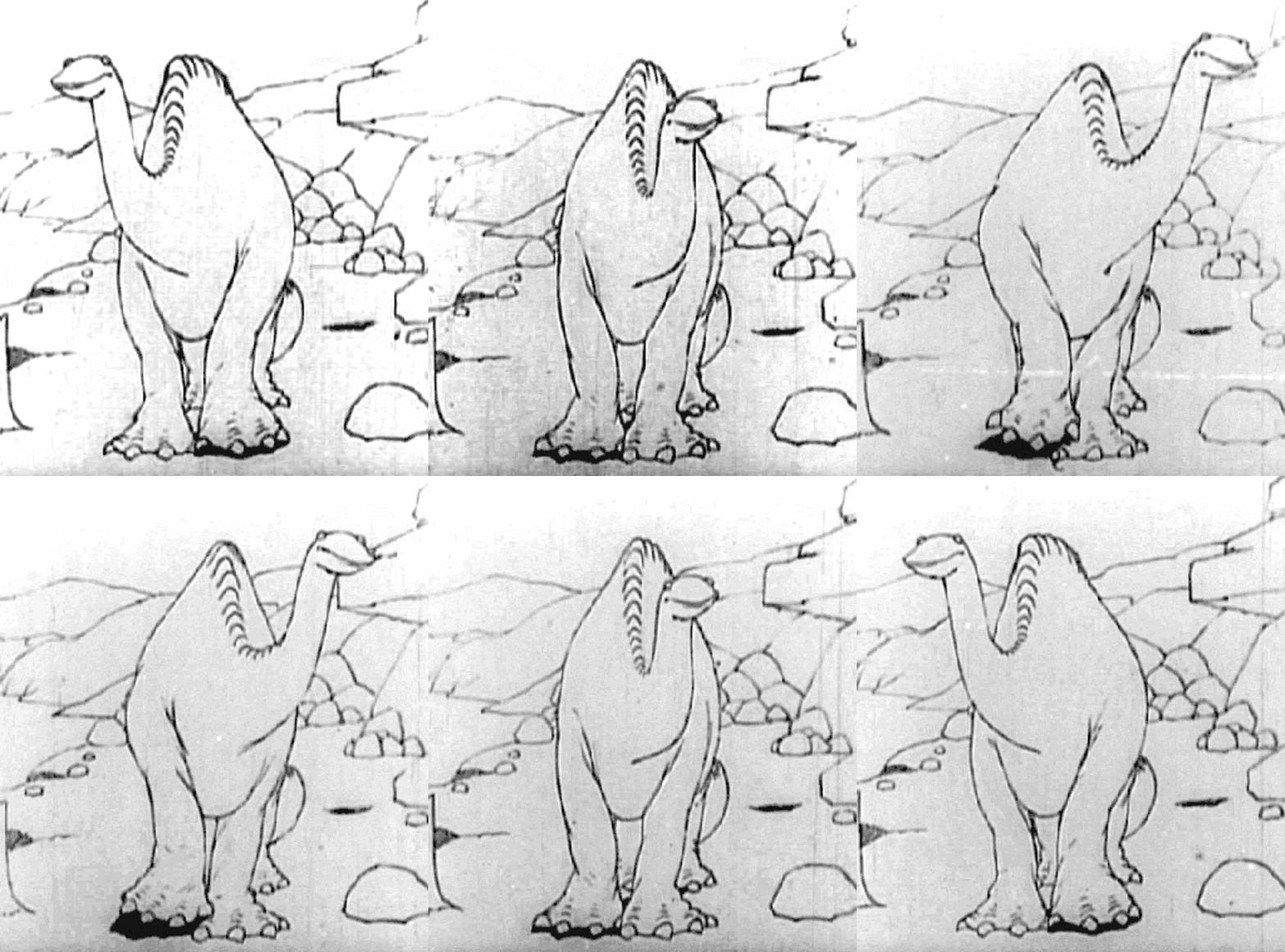
One of the early examples of this approach was Winsor McCay’s animation, «Gertie the Dinosaur» (1914). The main character is a drawn dinosaur that responds to the narrator’s words, follows commands, and displays a wide range of emotions. Gertie is not simply an animated animal; her behavior is based on human reactions and individual personality traits. Simultaneously, the character retains the recognizable anatomy of a dinosaur, while expressiveness is achieved through exaggerated plasticity and an emotional response to the unfolding events. This example demonstrates how animation allowed for the harmonious merging of the characteristics of an animal body with a human behavioral model.Winsor McCay. Still from the animation «Gertie the Dinosaur, ” 1914.
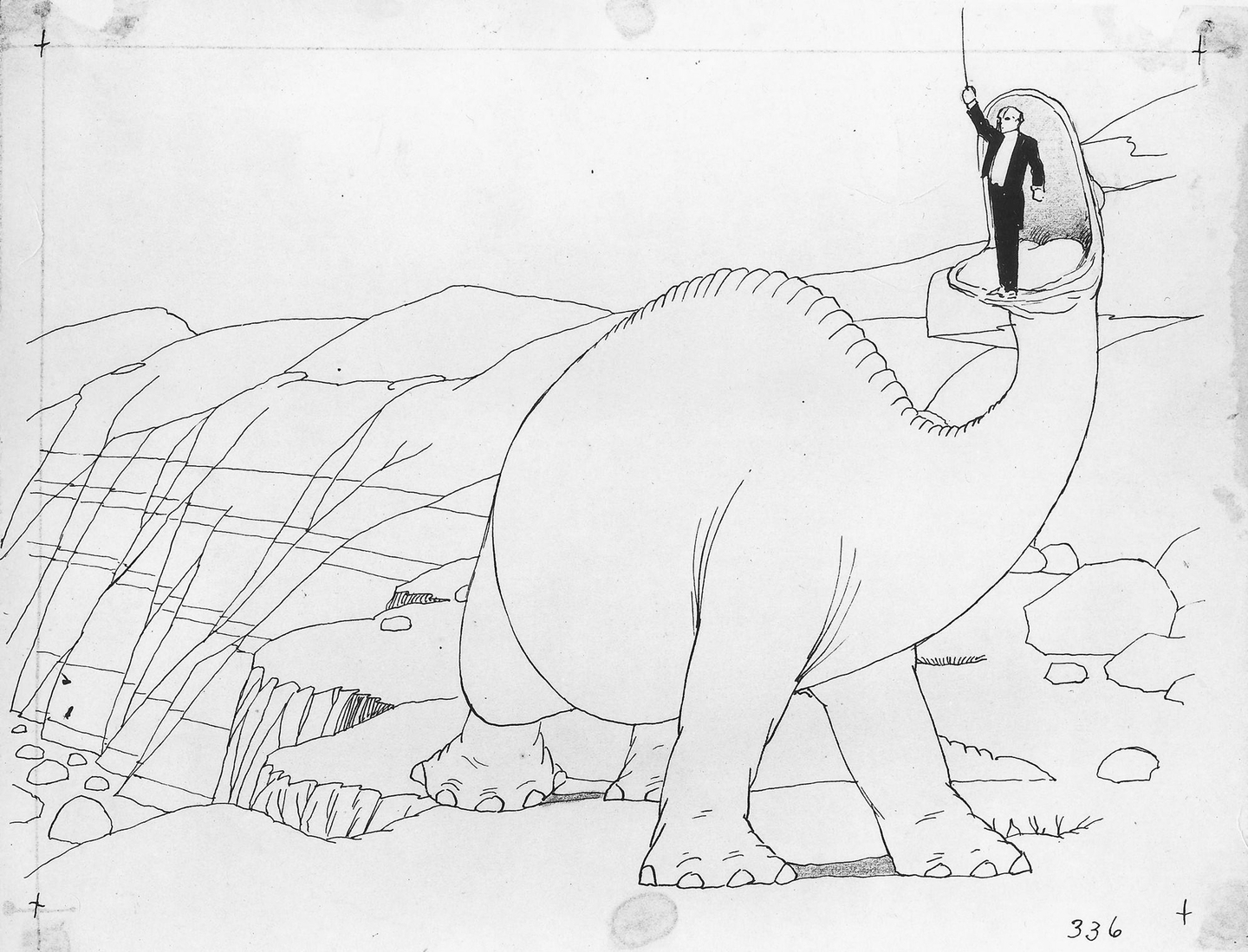
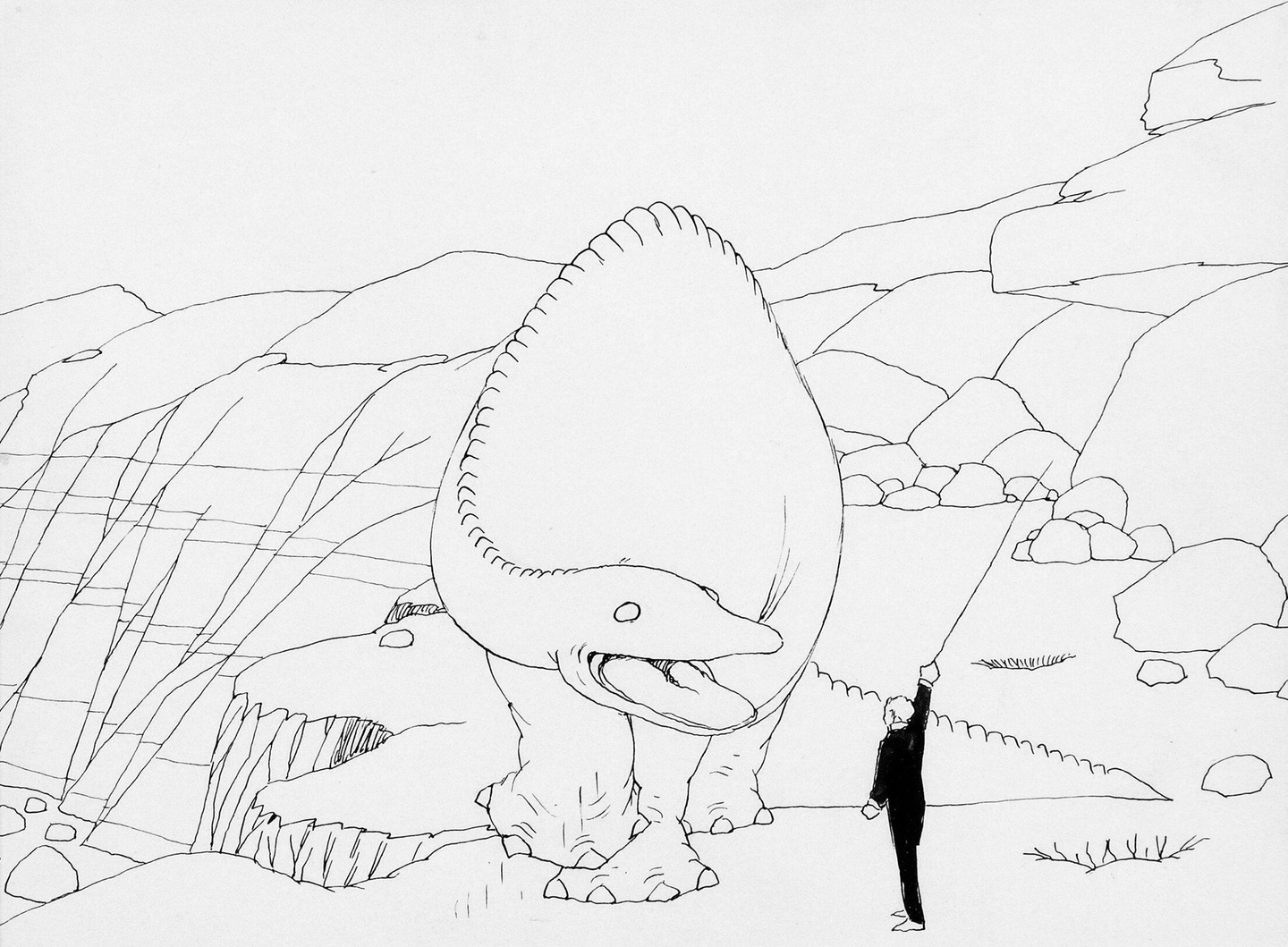
Winsor McCay. Stills from the cartoon «Gertie the Dinosaur, ” 1914
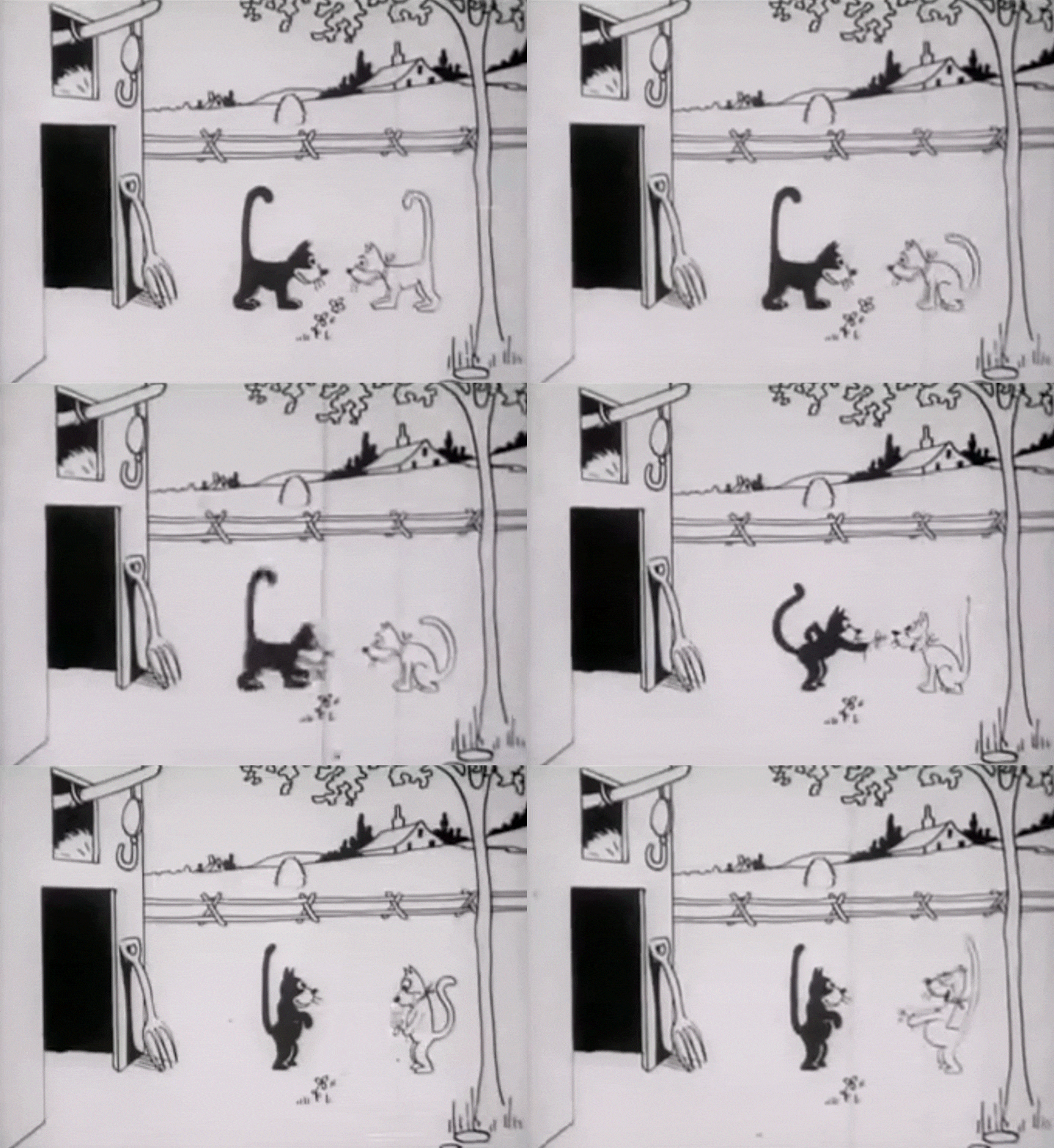
In subsequent years, anthropomorphic animals began to appear with increasing frequency in American animated series. A significant milestone was the introduction of the cat Master Tom in the cartoon «Feline Follies» (1919). The character, created at Pat Sullivan’s studio and closely associated with animator Otto Messmer’s work, developed a unique identity and became one of the most recognizable figures in early American animation. Master Tom (later Felix) retained feline characteristics, but his actions, emotional displays, and problem-solving methods were distinctly human. He could move independently, manipulate objects, and adapt his surroundings to his needs. Nevertheless, his body remained flexible and adhered to the conventional laws of the animated world.Sullivan, P. Master Tom and Miss Kitty White in the cartoon «Feline Follies, ” 1919.
By the 1920s, animal characters were flourishing, becoming central figures in independent narratives. These heroes acquired recognizable character traits and actively mastered human ways of interacting with the world. Gradually, the process of anthropomorphization moved beyond superficial details or humorous scenes, transforming into a comprehensive artistic method. This method integrated the character’s appearance, mannerisms, emotional expressions, and behavioral patterns.
Animal characters from American silent animation of the 1920s: Felix the Cat, Oswald the Rabbit, and early Mickey Mouse
The emergence of anthropomorphic animals in American silent animation was a logical culmination of evolving artistic traditions that had absorbed literary imagery, newspaper illustration, and the potential of moving images. Animation allowed the humanization of animals to reach a new level, where the creature was perceived as a self-sufficient personality, whose individuality was revealed through a harmonious combination of its inherent animal traits and human characteristics.
Character Animal Portrait
In American silent animation, animal characters possessed a wide spectrum of visual representations. Often, the choice of animal served as the basis for creating a character: its inherent traits defined its appearance, and artists utilized these to form a unique silhouette. Anatomical accuracy was not the priority. The main objective was to highlight the most recognizable characteristics of the animal, which remained distinct even with significant simplification. The silhouette played a crucial role in character design. The shape of the head, ears, torso, and tail helped distinguish characters without fine details. For instance, cats were characterized by their muzzle, ears, and tail; rabbits by their long ears; and mice by their round heads and large ears. These traits not only indicated the animal’s species but also shaped the individuality of each character.
Felix the Cat model sheet for Van Beuren Studios, 1936
Artists actively utilized proportional distortion to lend characters greater expressiveness. They might intentionally enlarge the head relative to the torso, elongate limbs, or conversely, diminish and exaggerate specific body parts. Such manipulations not only helped create diverse physical types but also influenced the overall perception of the character. A large head and small body could make a character comical, elongated forms could convey a sense of motion, and rounded lines could soften his image.
A telling example of proportional change was the evolution of Felix the Cat. In the article «Shaping Up: Felix the Cat, ” John Canemaker traces the transformation of his appearance. Initially, the character possessed a blocky structure: a pointed muzzle, geometric outlines for the limbs, and sharp silhouette lines. In 1924, artist Bill Nolan reworked his design, replacing the angular shapes with rounder ones. The new look was softer and more amiable while retaining the character’s essential features.
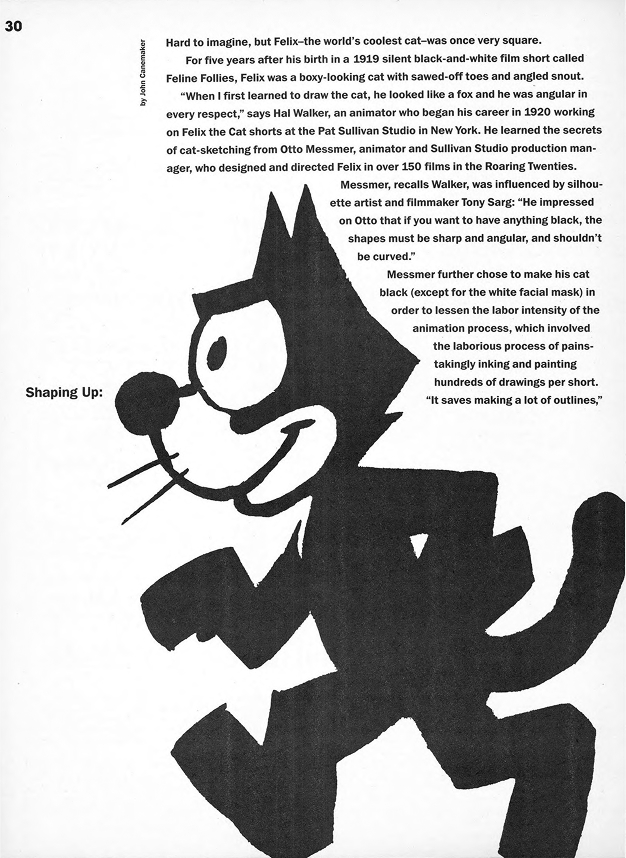
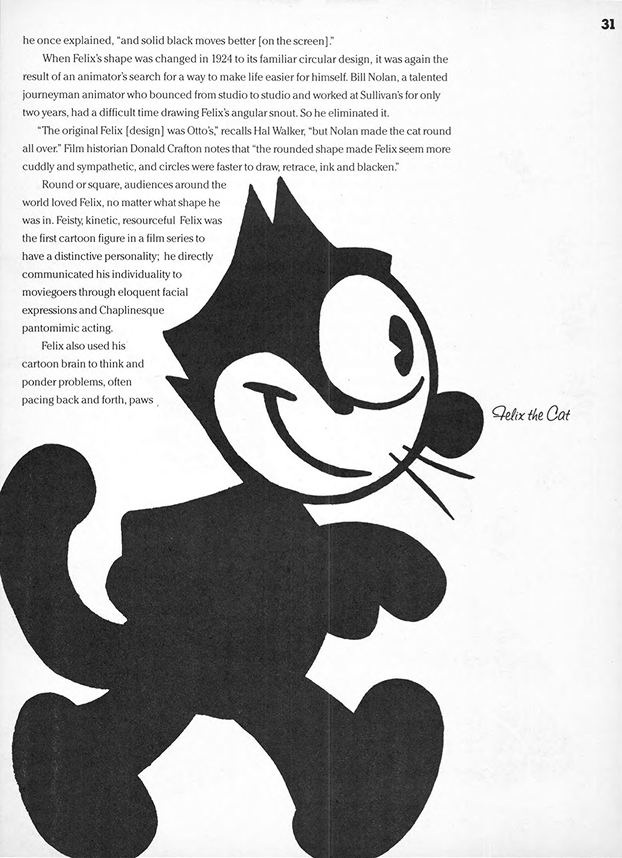
Felix Kot’s rounded design, developed in 1924. Illustration from an article by John Kanemeyer
Graphic simplicity played an equally important role in shaping the overall visual identity. Many animal characters were constructed using minimal detail, which allowed their appearance to be easily perceived and distinctly recognizable even in motion. Felix is one of the most striking examples of this approach: his recognizability stemmed from the contrasting combination of a solid black silhouette, light-colored eyes, and the facial area. The absence of intricate rendering and secondary details allowed the focus to remain squarely on the character’s defining features. Moreover, this visual economy did not restrict the character’s expressiveness; rather, it made his visual persona more cohesive.
A frame from the animated film Felix the Cat, 1923
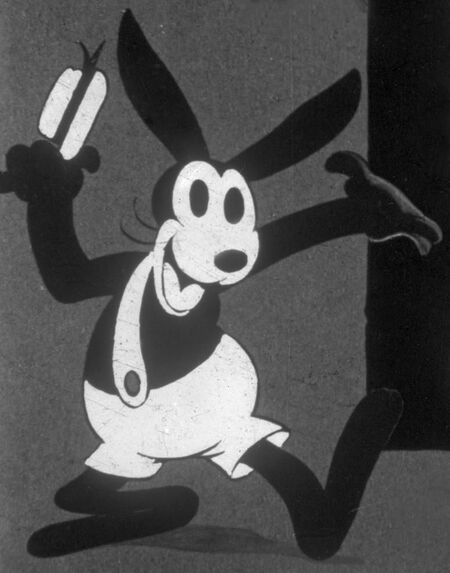
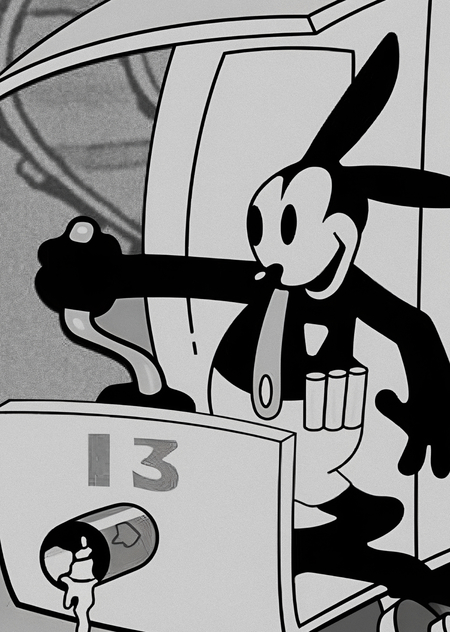
Unique external characteristics served as an important tool for lending individuality to characters. Clothing, headwear, accessories, and items associated with the hero acted as visual markers of their character and role in the plot. These details helped differentiate characters from one another, especially when they belonged to the same species and had a similar physical structure. Furthermore, the costume was not necessarily meant to fully «humanize» the animal; it could merely supplement its natural traits, creating a recognizable blend of animal and anthropomorphic features.A comparison of characters from different studios and artists clearly demonstrates the richness of visual solutions. Felix, Julius from «Alice Comedies, ” and the rabbit Oswald differ in their proportions, silhouettes, and degree of detail. Despite their general belonging to anthropomorphic animals, each possesses a unique graphic presence.Oswald the Lucky Rabbit. A frame from a Walt Disney Studios cartoon, 1927.
This indicates the absence of a single «correct» way to render an animal character: artists found different balances between the animal’s natural traits and the conventions of the animation style.
By the late 1920s, the figures of anthropomorphic animals in animation began to gain a more pronounced individuality. Early Mickey Mouse, who debuted in Walt Disney and Ub Iwerks' silent film Plane Crazy (1928), serves as a telling example. Unlike characters whose humor was built primarily on external human traits, Mickey was endowed with his own ambitions and an active life stance. In the cartoon, he is portrayed as an inventor and pilot, obsessed with the idea of flying with Minnie. His behavior mimics human models: an enthusiasm for technology, persistence in achieving goals, and a desire for approval. The animal ceases to be merely a source of comedic situations, transforming instead into an independent protagonist with unique interests and intentions. The image of Mickey Mouse illustrates the further evolution of anthropomorphism in American animation during the late 1920s.
Still from the cartoon «Plane Crazy, ” 1928