Visual Research Sections
1. Concept
2. Techniques
3. The Magic of Sven Nordquist’s Wimmelbuchs
4. Architecture as an Integral Part of History
5. The Child’s Perspective, Animating the Inanimate, and Authorial Techniques
6. Conclusion
Concept
Sven Nordqvist is a Swedish children’s author and illustrator who initially studied architecture at the Technical University after failing to pass the entrance exam for the Swedish Academy of Fine Arts. After earning his architecture degree, he began working as an illustrator, designing books, greeting cards, and posters. During this time, he experimented with various techniques—such as photography, screen printing, and comics—and occasionally painted with oils, but ultimately returned to illustration. His first major work and literary debut was the fairy tale «Agathon Emman and the Alphabet,» published in 1983. Nordqvist began writing at that moment because he had originally planned to illustrate someone else’s book for the «Opal» publisher’s children’s illustration competition in 1982, but since he couldn’t find a suitable project, he wrote his own. His authorial fame truly took off with a series of books starting with «The Birthday Cake,» released in 1984: it was there that his recognizable characters first appeared—characters who subsequently achieved incredible popularity first in Sweden, and then worldwide.
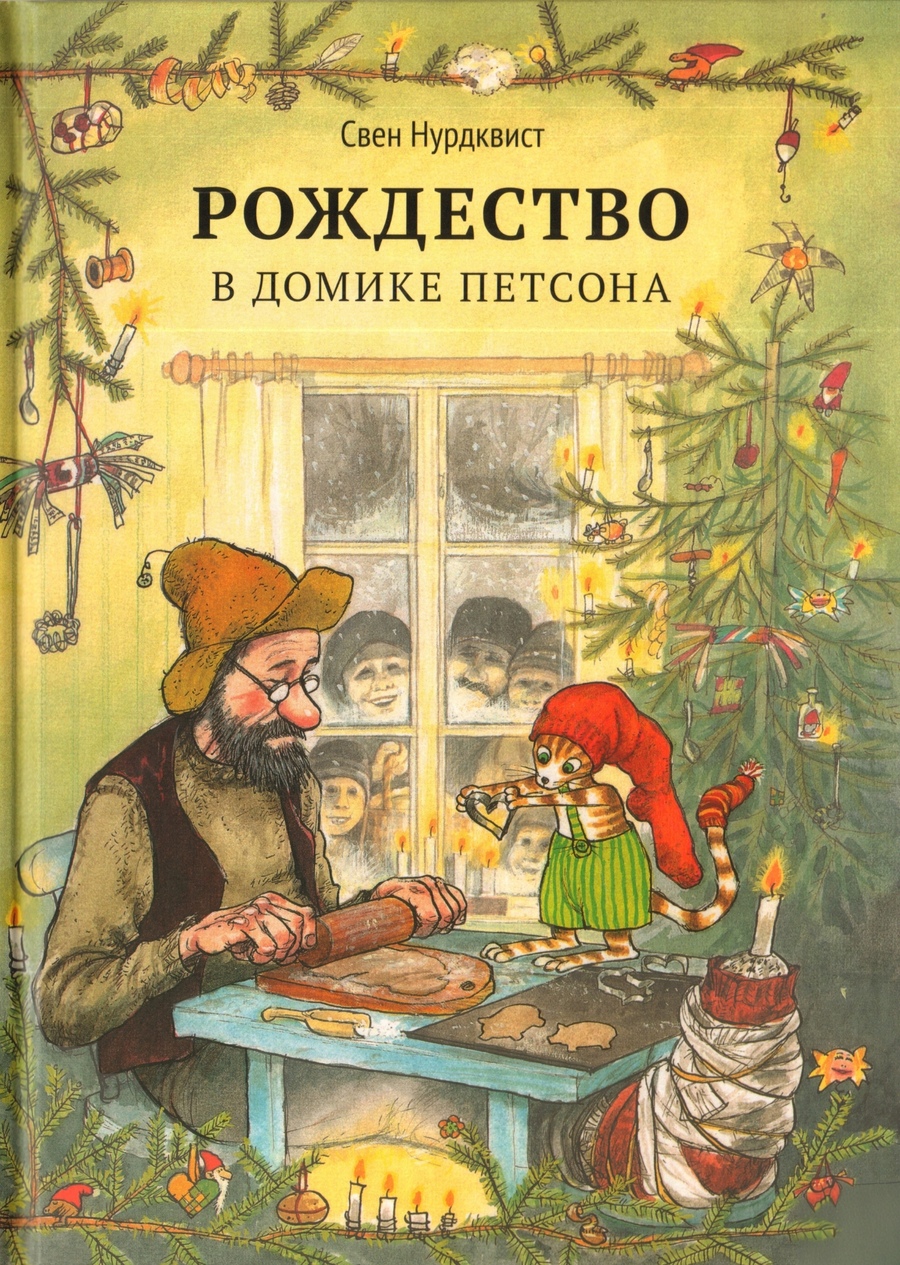
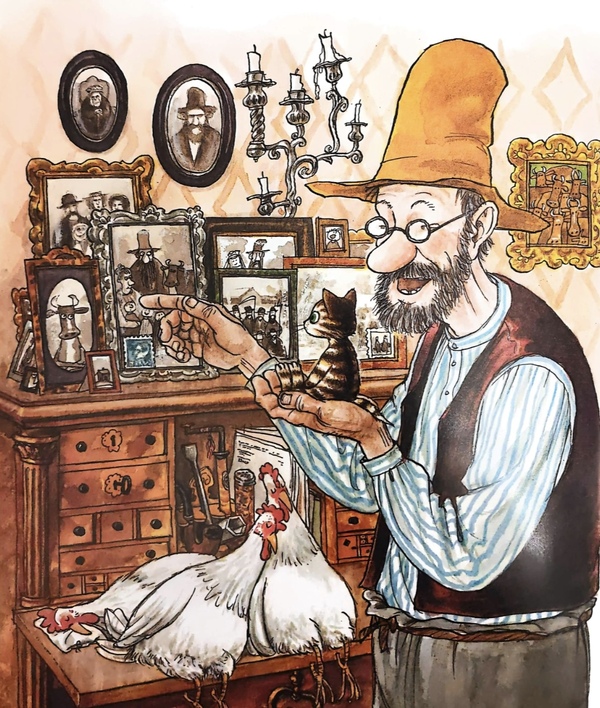
«Christmas in the Peterson House, ” Sven Nordqvist, 1988.
Nørdevik always emphasized that he aims to create books where the illustrations speak louder than words, as he considers illustration more significant than writing. (footnote here) For instance, in addition to the famous series about the cat Finpus and the old Pettson, the author released the book «Where Is My Sister?» in 2007—which contains almost no text—and in 2019, his book «A Walk» was published, which has no text at all. His illustrations are so vast, rich, and self-sufficient, yet simultaneously naive and childlike, that any verbal accompaniment to his work seems misplaced. For the visual context of this study, illustrations from the two aforementioned works, as well as illustrations from the Pettson and Finpus series, will be used.
Walk cover
Where is my sister on the cover?
This visual study will examine various aspects of Sven Nordqvist’s illustration practice as a creator for children, such as his picture books and the marvelous micro-narratives within them; the naive watercolor technique, which pairs with a distinctive perspective on the world and everything surrounding a person, whether animate or inanimate; the influence of an architectural «gaze» on the space within the illustrations and the creation of a specific atmosphere by treating the interior/exterior as an integral part and a means of storytelling; and caricature and the hyperbole of figures, which, combined with everything preceding it, serves as an additional method of conveying emotion and visual narrative.
Technique Features
«Commotion in the Vegetable Garden, ” Sven Nordquist, 1990
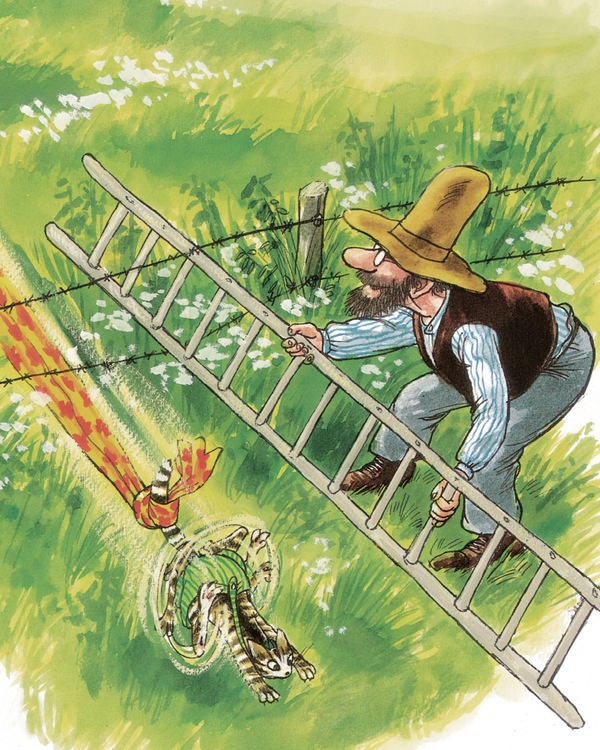
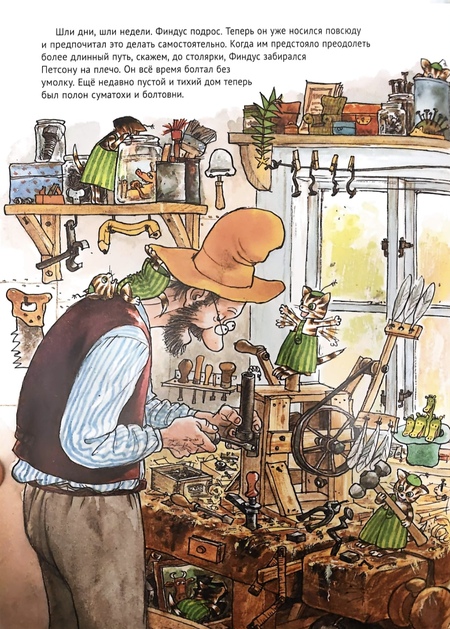
Nurekvist’s illustrations are founded on a combination of materials and visual techniques that allow him to achieve a sense of airiness, incredible detail, and dynamism in the subject matter. The primary material pairing that has run through much of the artist’s creative journey is ink and watercolor. It is thanks to these mediums that his illustrations are so vibrant and fairy-tale-like: watercolor creates soft, translucent washes and transitions, while the ink provides graphic definition and completeness. Nurekvist employs this approach to illustration for most of the books in the Peterson and Findus series.
«Garden Commotion,» Sven Nordqvist, 1990. An example of the dominance of form and graphic quality.
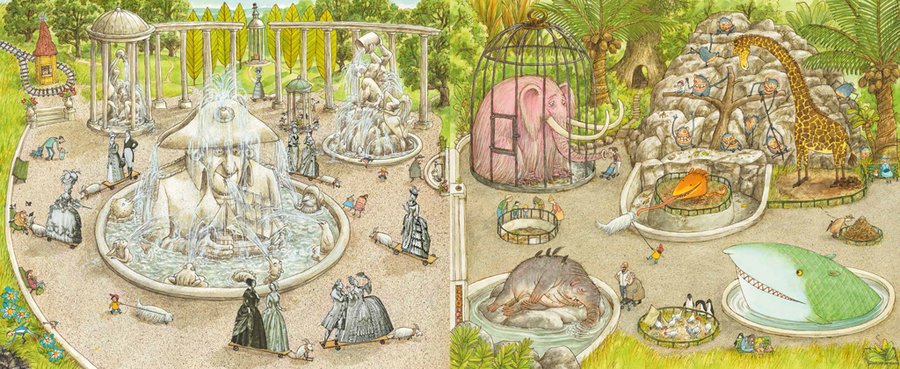
In fact, all of Nordqvist’s illustrations share a distinctive liveliness and fidelity—whether he is depicting nature, flora, fauna, an interior, or a workshop filled with tools—everything appears vibrant and convincing. Technically, this is achieved through the use of pen and colored ink, which the artist employs for meticulous detailing. This precision can also be seen in the illustrations for the book «Where Is My Sister?», which contain even finer details than those found in «Pelle and Fidu.»
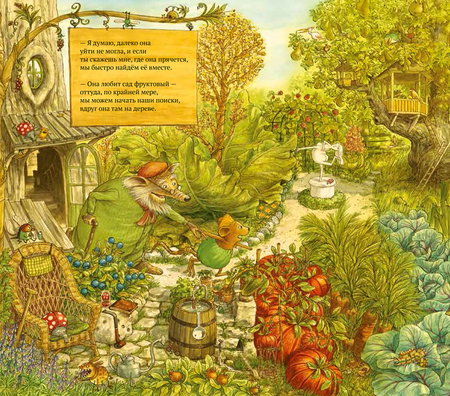
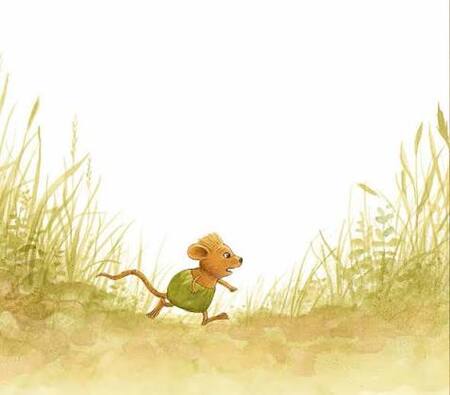
«Where is My Sister?» by Sven Nordqvist, 2007
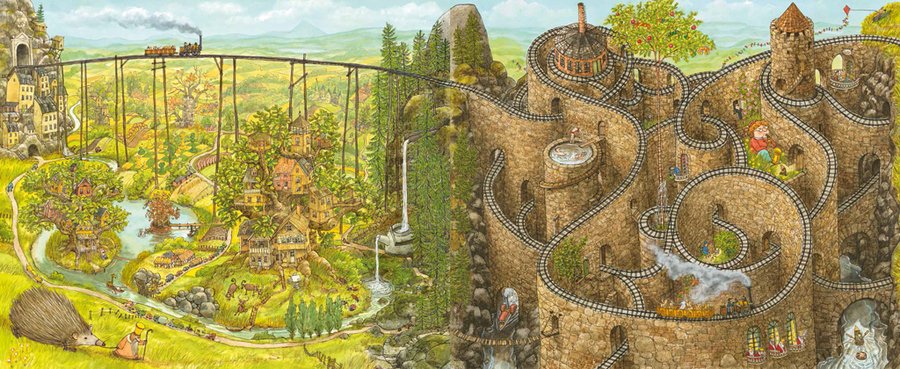
Speaking of the book «Where Is My Sister?», it is also worth noting that for denser illustrations, the artist used ink, which was mixed with oil and tempera, in addition to watercolor and pen (as you can see the difference in density and fullness between the two works from this book above). Thanks to these materials and the overall approach to illustrating the fairy tales, the works from this particular book resemble naive art or romantic landscape painting.
The Magic of Sven Nordqvist’s Wimmelbuchs
Architecture as an integral part of history
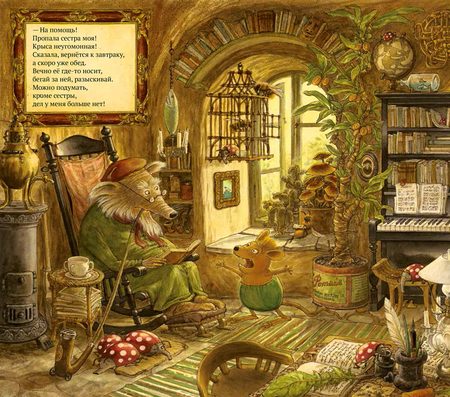
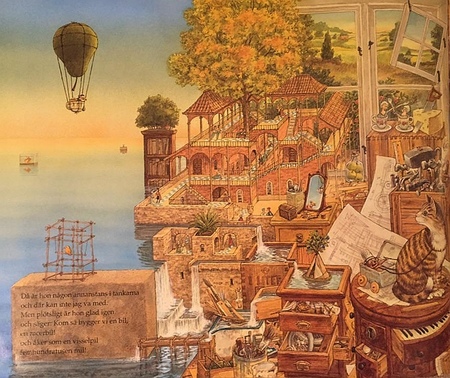
«Where is My Sister?» by Sven Nurdquist, 2007
Walk
A child’s perspective, the animation of the inanimate, and authorial techniques
Conclusion
yyyyy
oh oh
how is that