Evgeny Tikhonovich Mignunov is primarily a animator. «He transferred one of the main qualities of his drawings—dynamism—from animation to graphic design» [1].
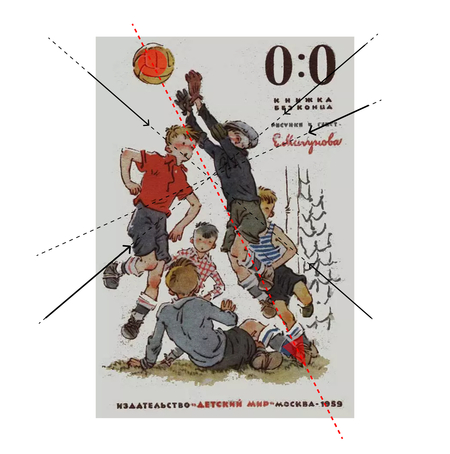
In general terms, a dynamic shot can be described as one that conveys movement, energy, and activity. It usually possesses the following characteristics:
Object Movement: People, vehicles, animals, or other elements are in motion. For instance, athletes during a competition.
Camera Angle: Utilizing unconventional camera angles (low, high, or tilted) can generate a sense of dynamism and tension.
Blur Elements: The effect of motion blur, which illustrates the movement of objects.
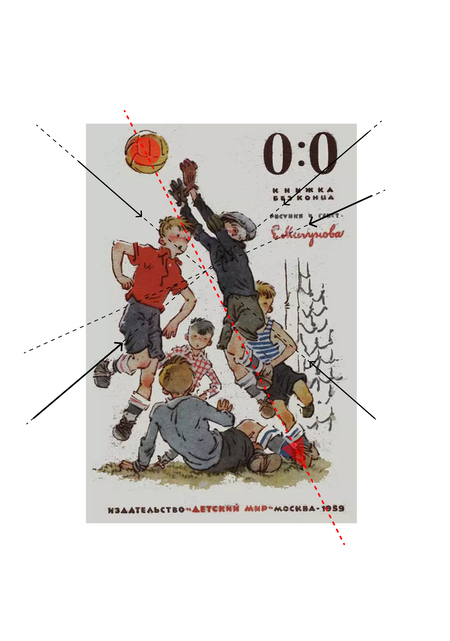
Composition: Arranging elements diagonally or using lines that suggest the direction of motion.
Framing: Objects are partially cropped, creating the feeling that the action continues beyond the frame.
Emotional Expression: The emotional reactions of the characters can convey dynamism through their expression.
In 1960, Migunov was dismissed from Soyuzmultfilm and subsequently did not work in animation.
The reason for his dismissal was stated as «due to lack of space» or «in connection with a partial reduction in the plan, ” but what actually occurred is linked to the storyboards for „Mayakovsky Among Bureaucrats, ” which is based on the poem „Prozasedvashiesya.“ He worked at Soyuzmultfilm from 1943 to 17 years.
During this time, Evgeny Tikhonovich was already an artist, illustrator, and caricaturist. However, the style of his work carries a deep imprint of the animator’s approach.
Attention will be paid to the unique perspective used by the author (the „shot“ angle), the method of conveying movement (analysis of compositional structure using rigging), as well as the „relationship with the crowd“ and movement itself.
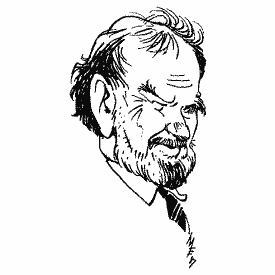
Yevgeny Tikhonovich was born on February 27, 1921, in Moscow. In 1938, he graduated from the Lepeshinsky Moscow Experimental and Demonstration School-Commune and subsequently spent a year at an art school. In 1939, he entered the newly opened Faculty of Fine Arts at VGIK, joining the animators' workshop under Ivan Ivanov-Vano[2]. He studied alongside Lev Milchin, Suzanna Byalkovskaya, and Anatoly Sazonov [3].
(Self-portrait by E. T. Migunov)
1. «SHOOTING» CORNER
For many of Migunov’s illustrations, the term «frame» is more appropriate.
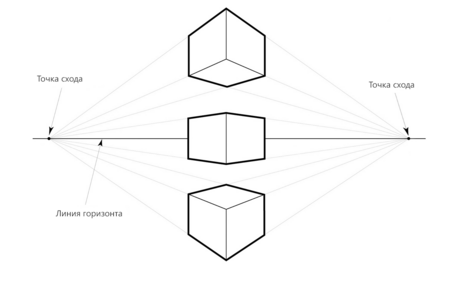
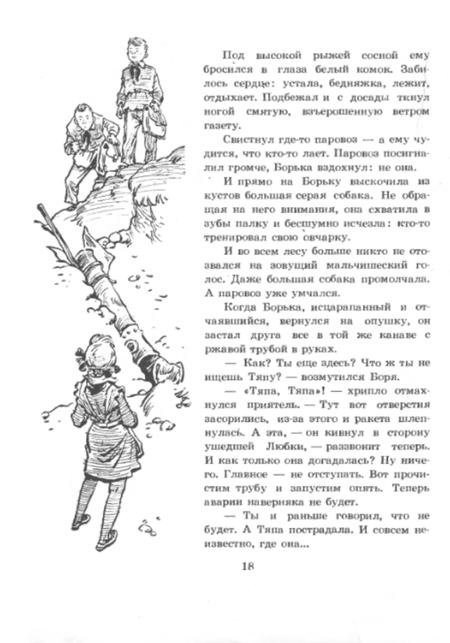
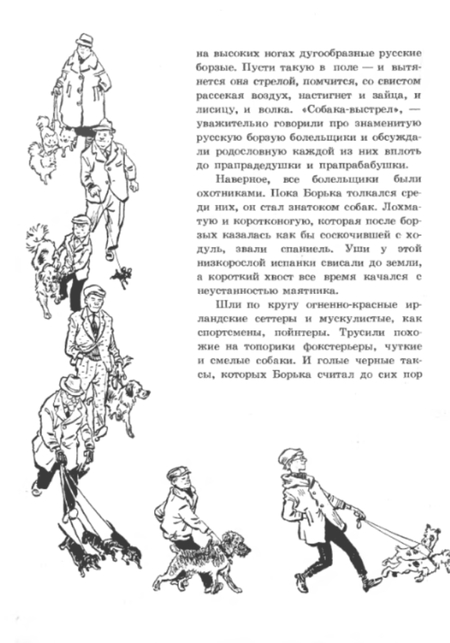
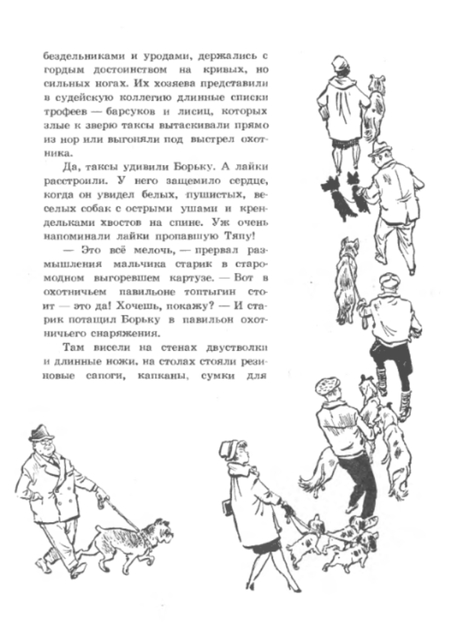
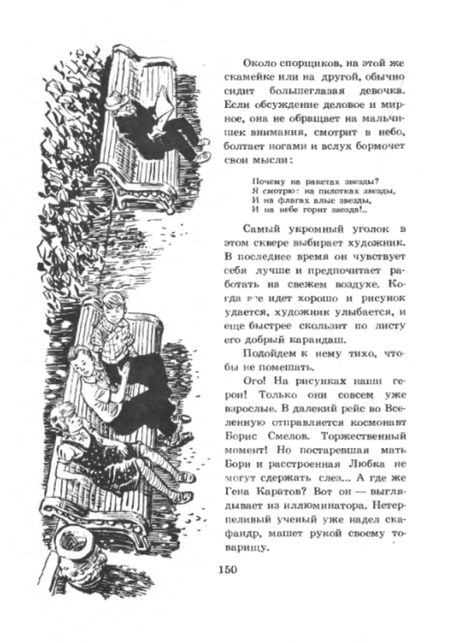
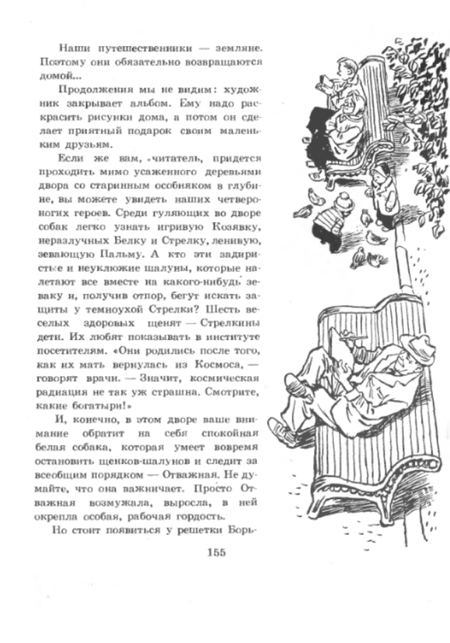
If Migunov is viewed as the creator of the images through his own illustrations, he is most often positioned ABOVE the subjects in the frame. Correspondingly, from this perspective, the horizon line resides in the upper portion of the «frame.» The author rarely «becomes» located anywhere else. This is how, for example, roofers shoot and are photographed, most frequently using a wide-angle lens.
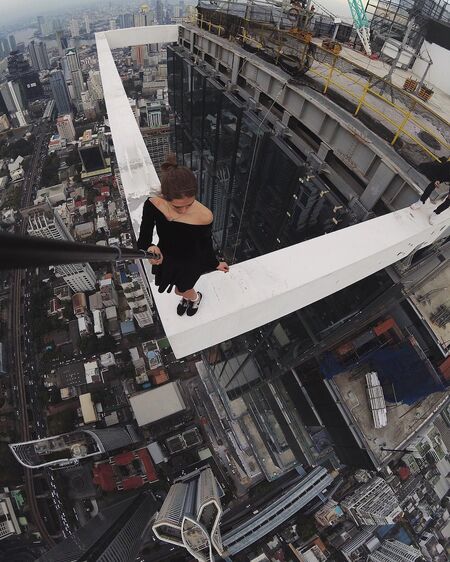
руферы
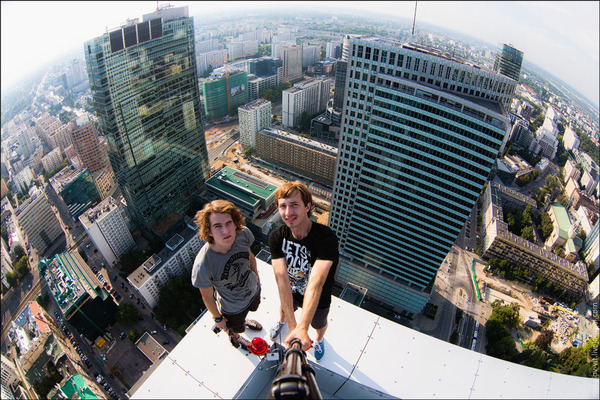
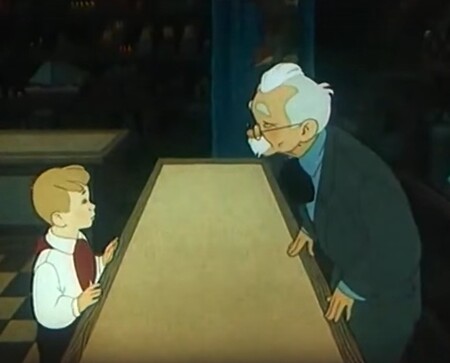
This perspective is most frequently observed in his animated works. A frame from the film «The Magic Store» (1953). Yevgeny Migunov served as the production designer in this scene. The camera operator is positioned ABOVE the action.
In 1961, Soyuzmultfilm released the animated film «Neznayka Learns,» but Migunov was no longer listed among the artists, despite the 1960 publication of the book «How Neznayka’s Friends Vintik and Shpuntik Invented a Vacuum Cleaner,» which featured illustrations by E. T. Migunov.
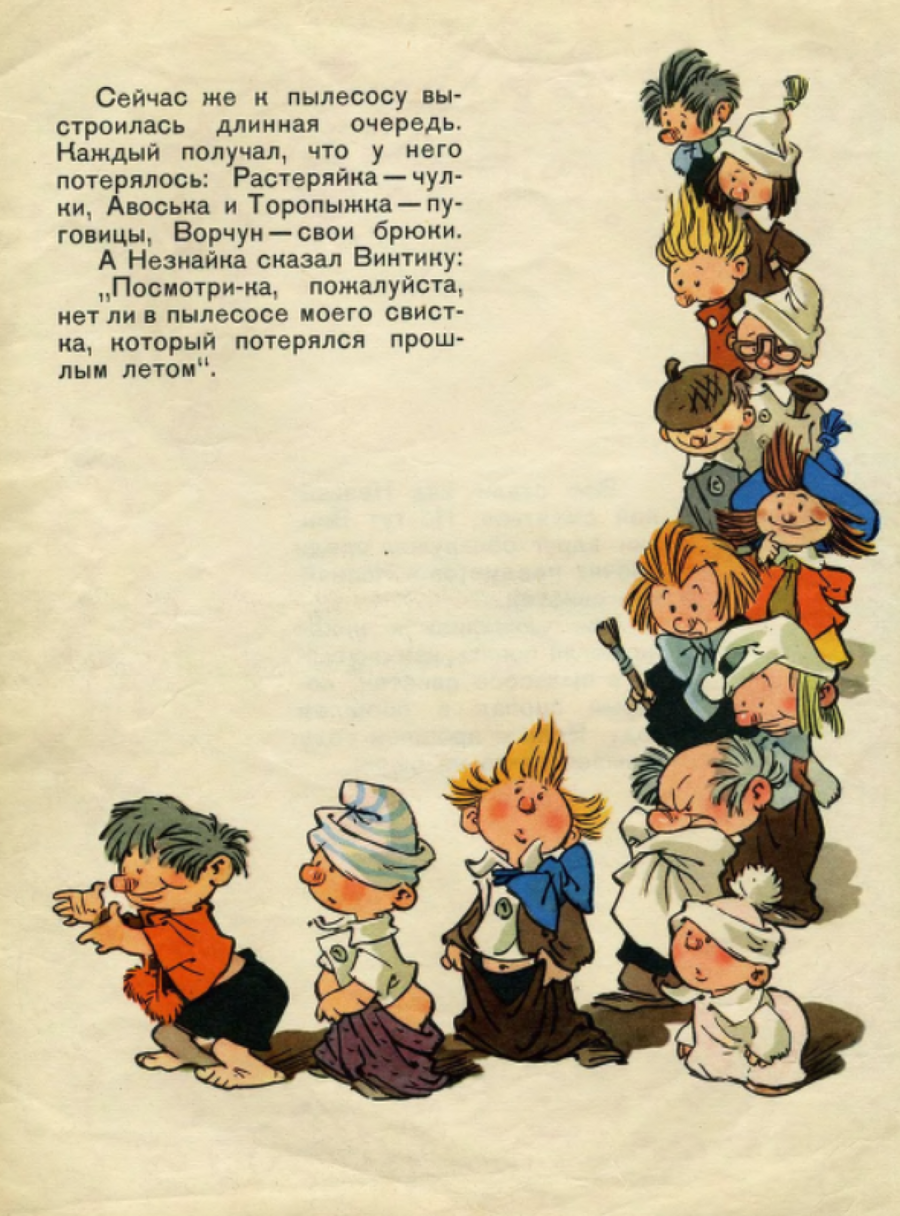

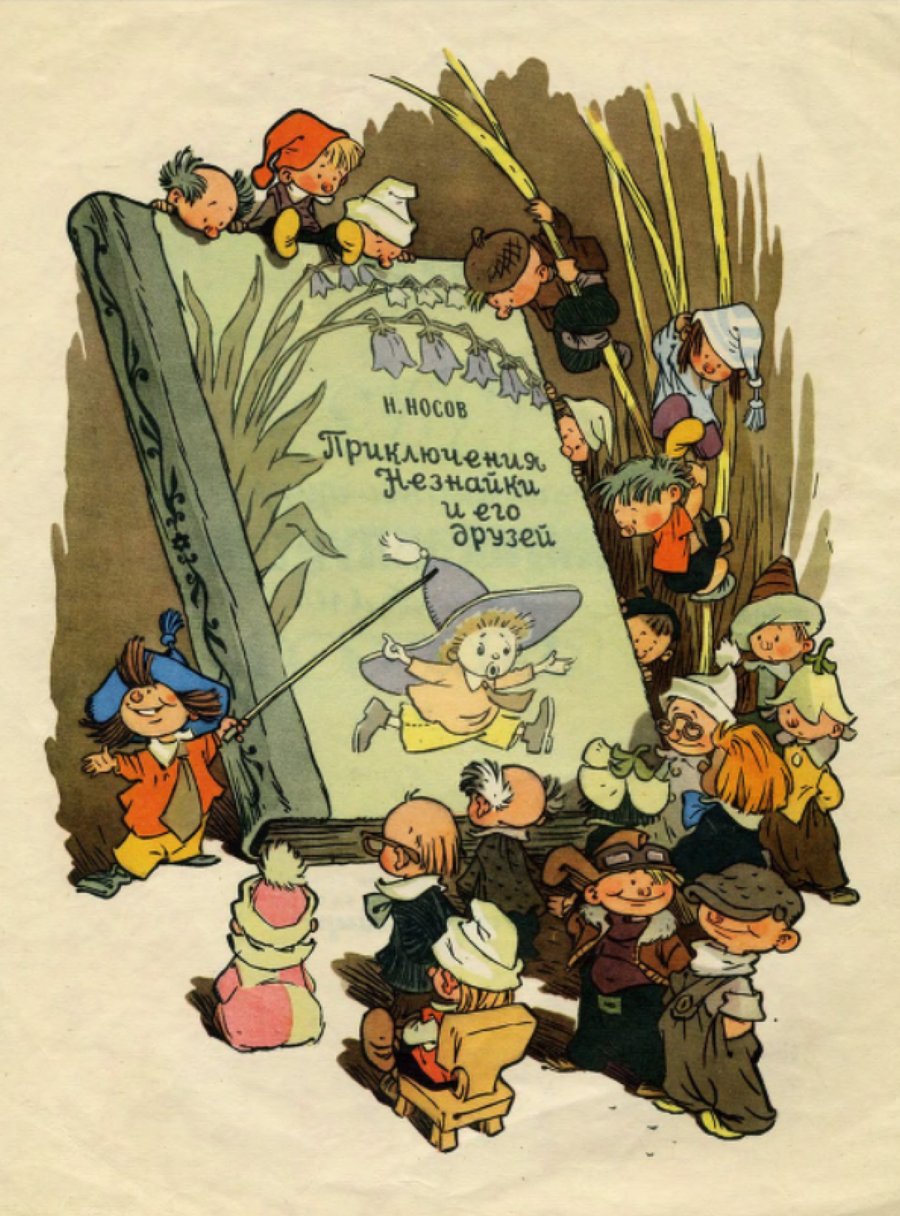
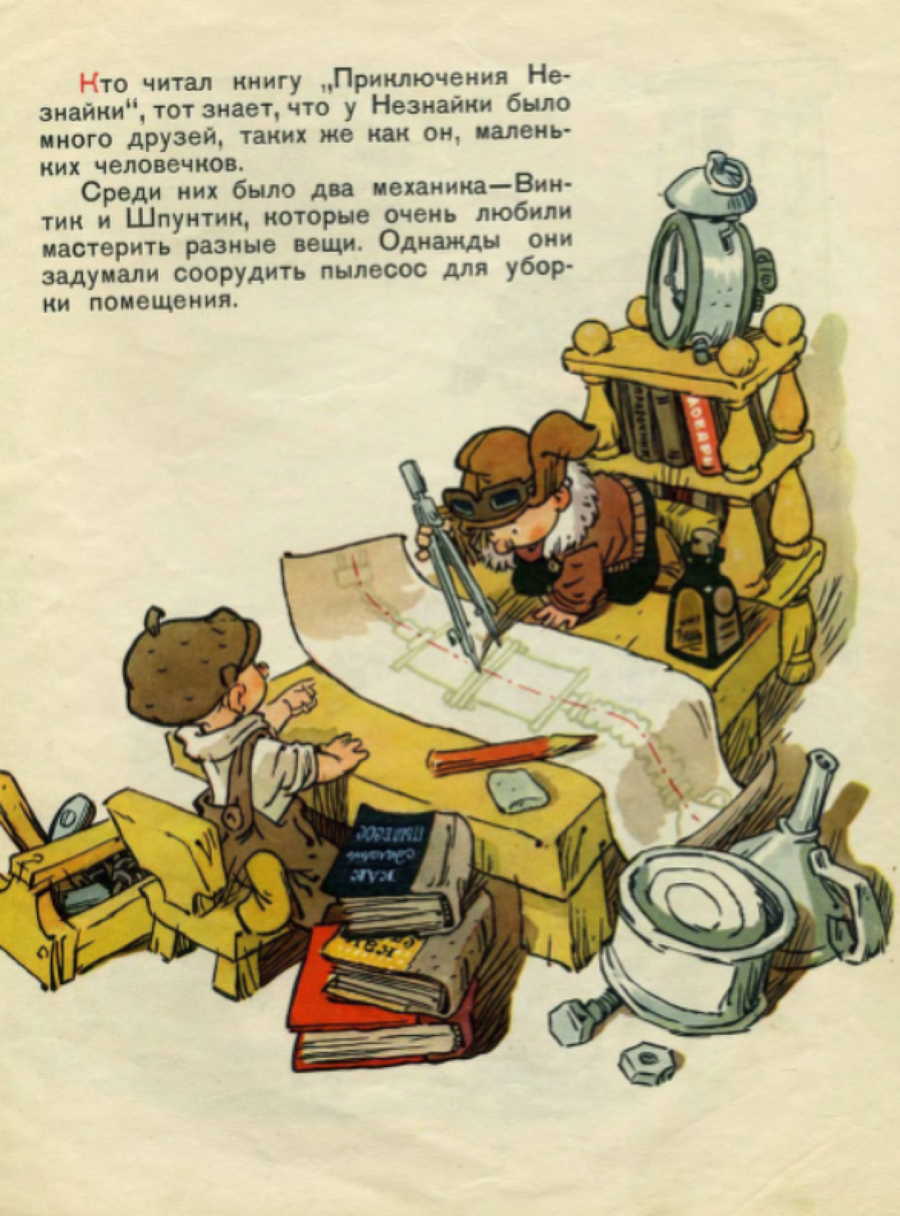
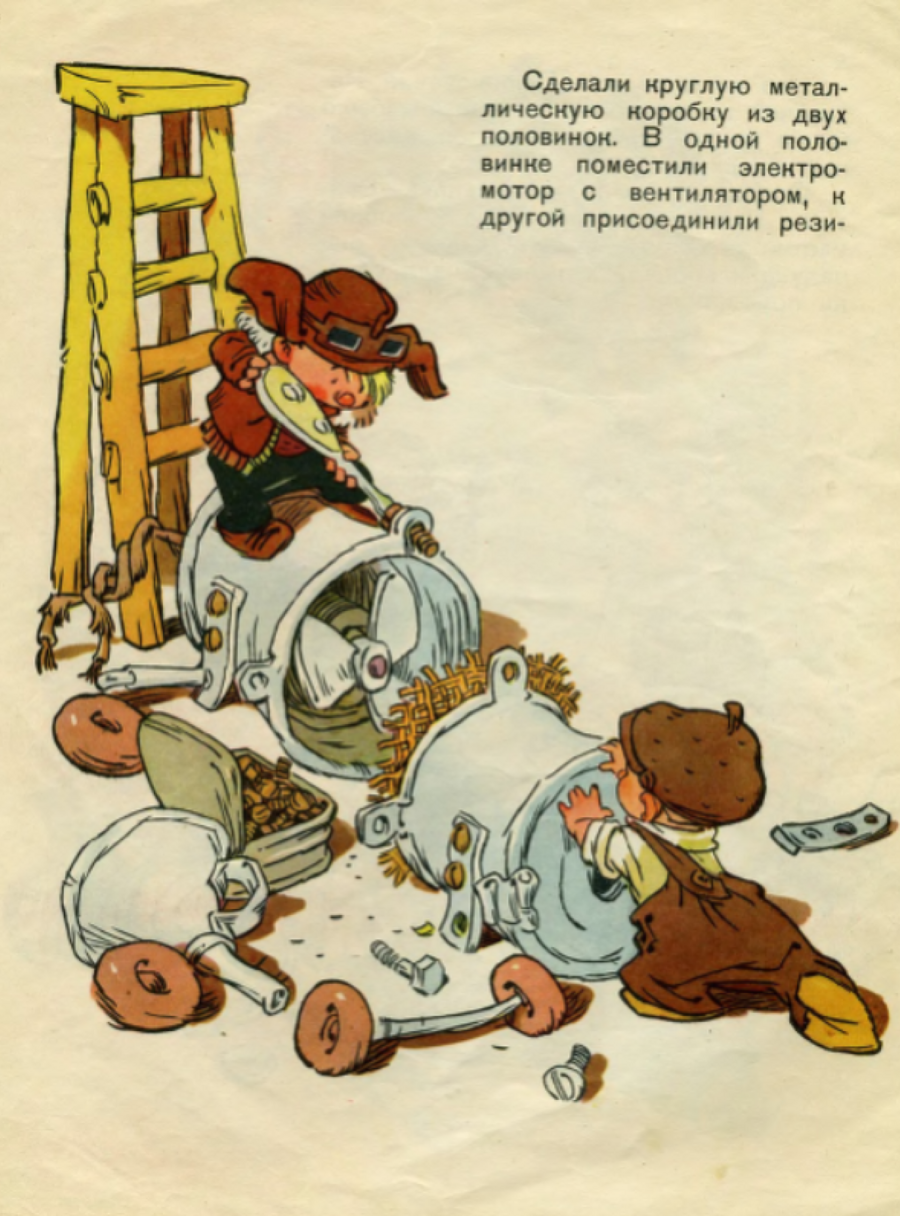
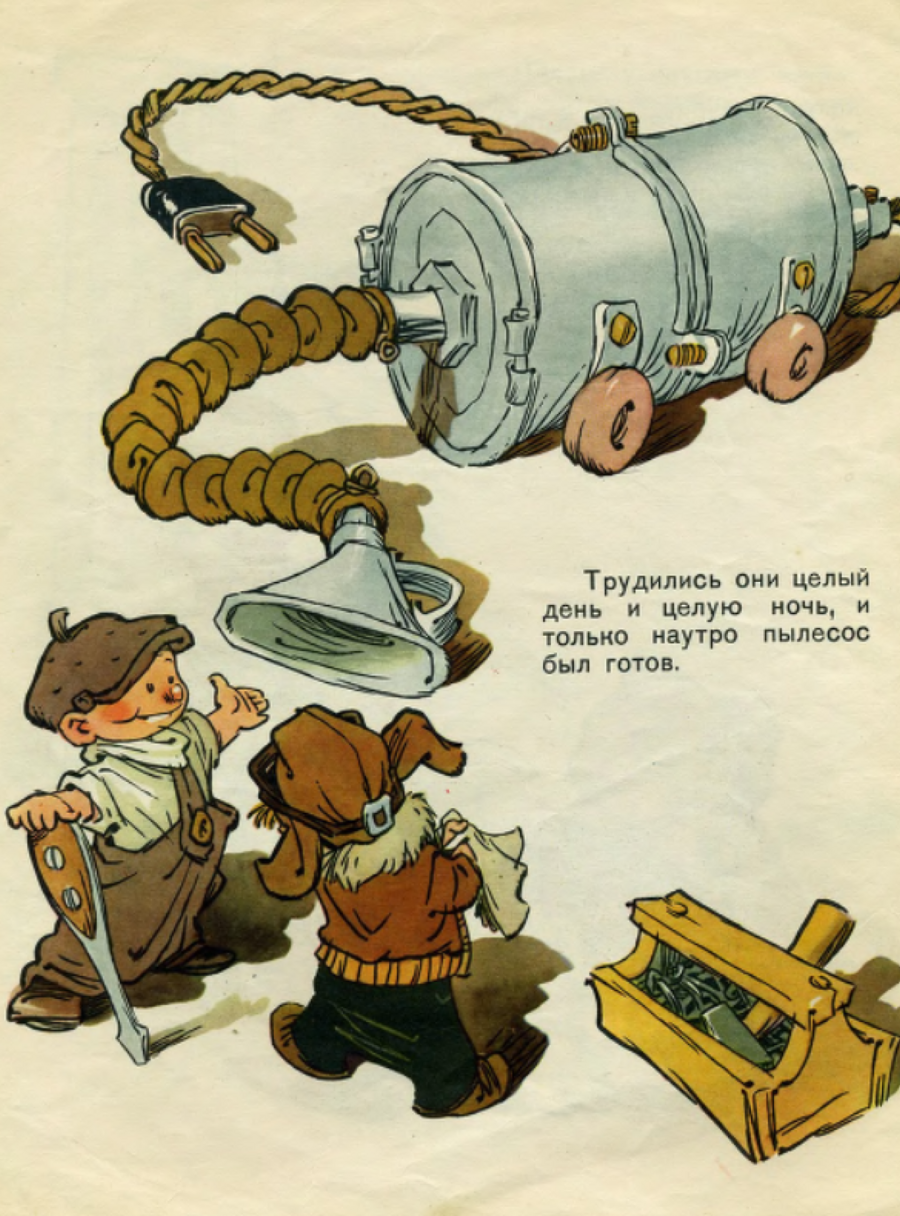
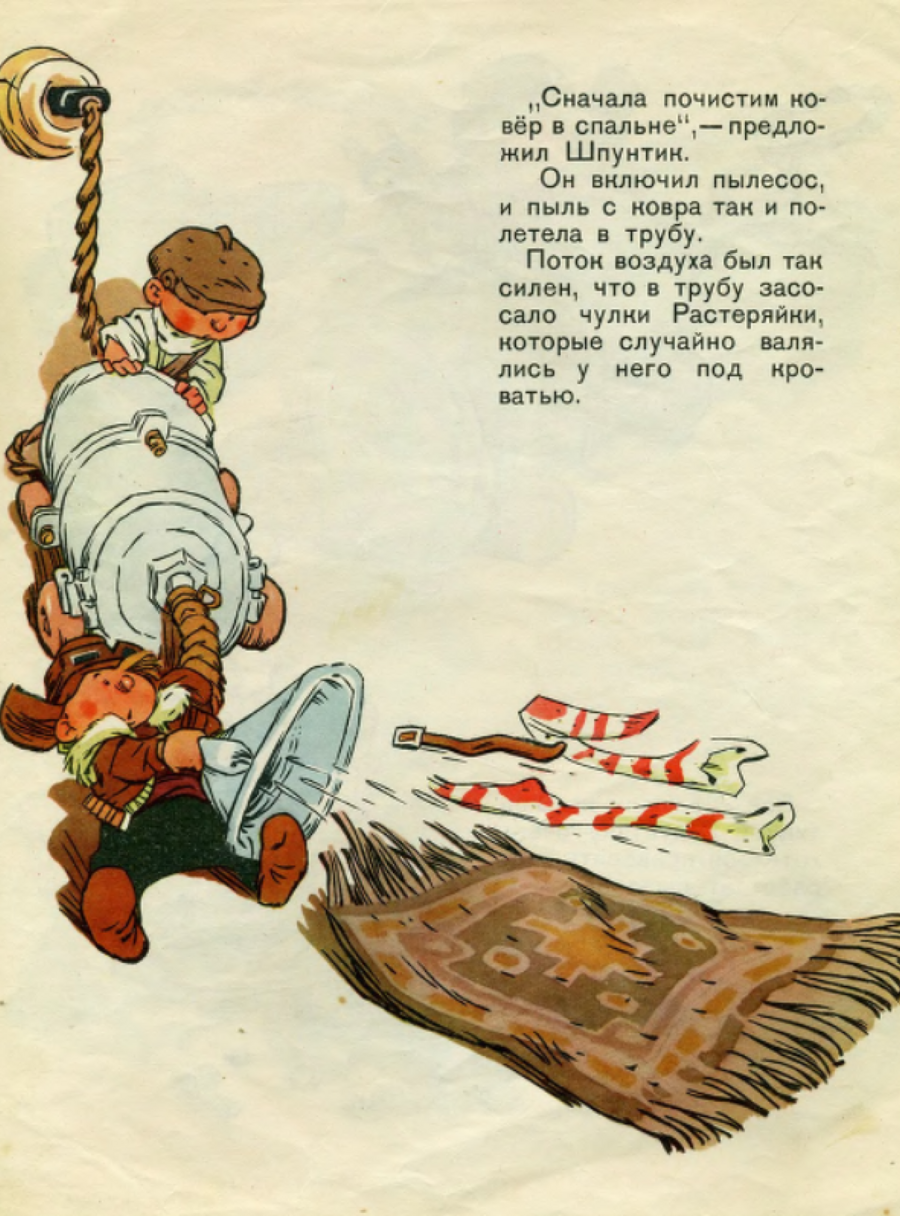
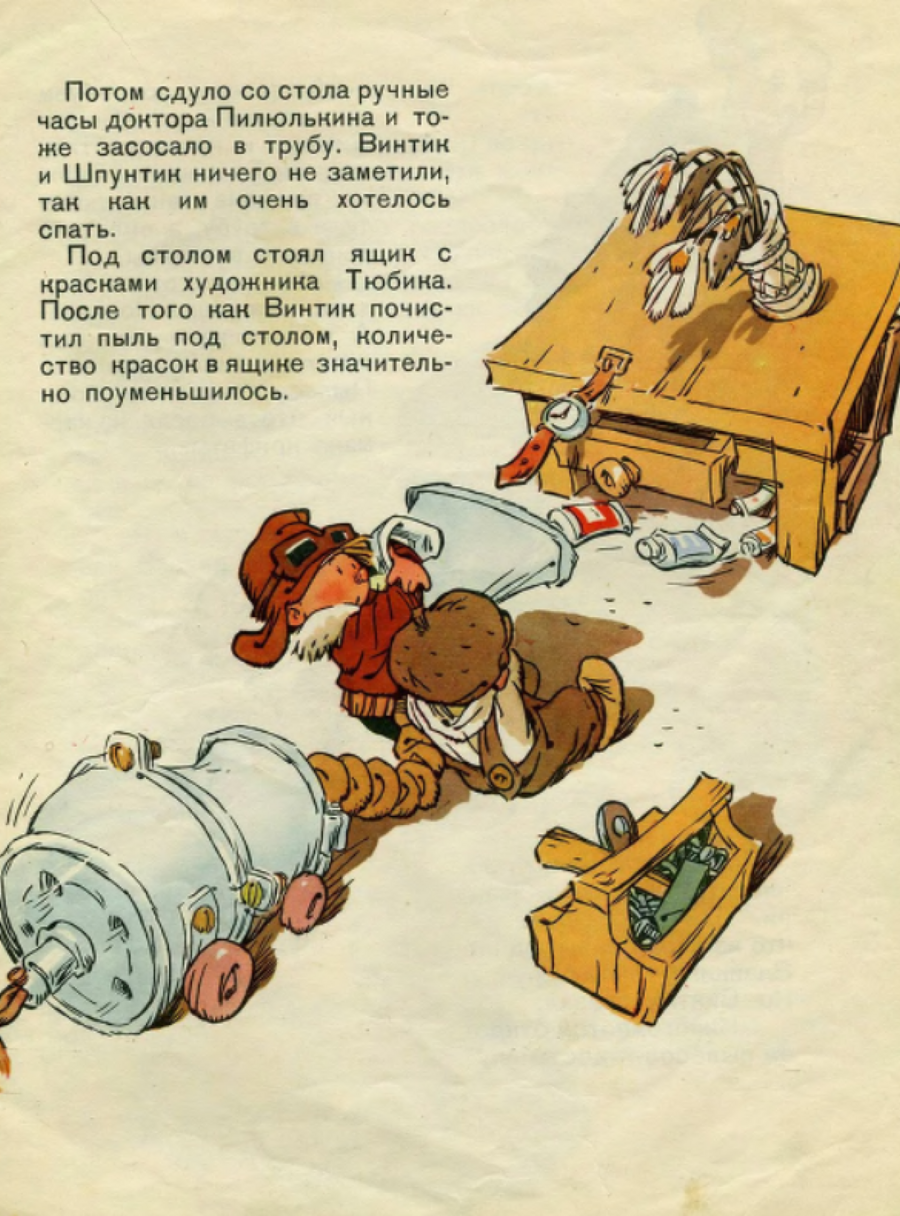
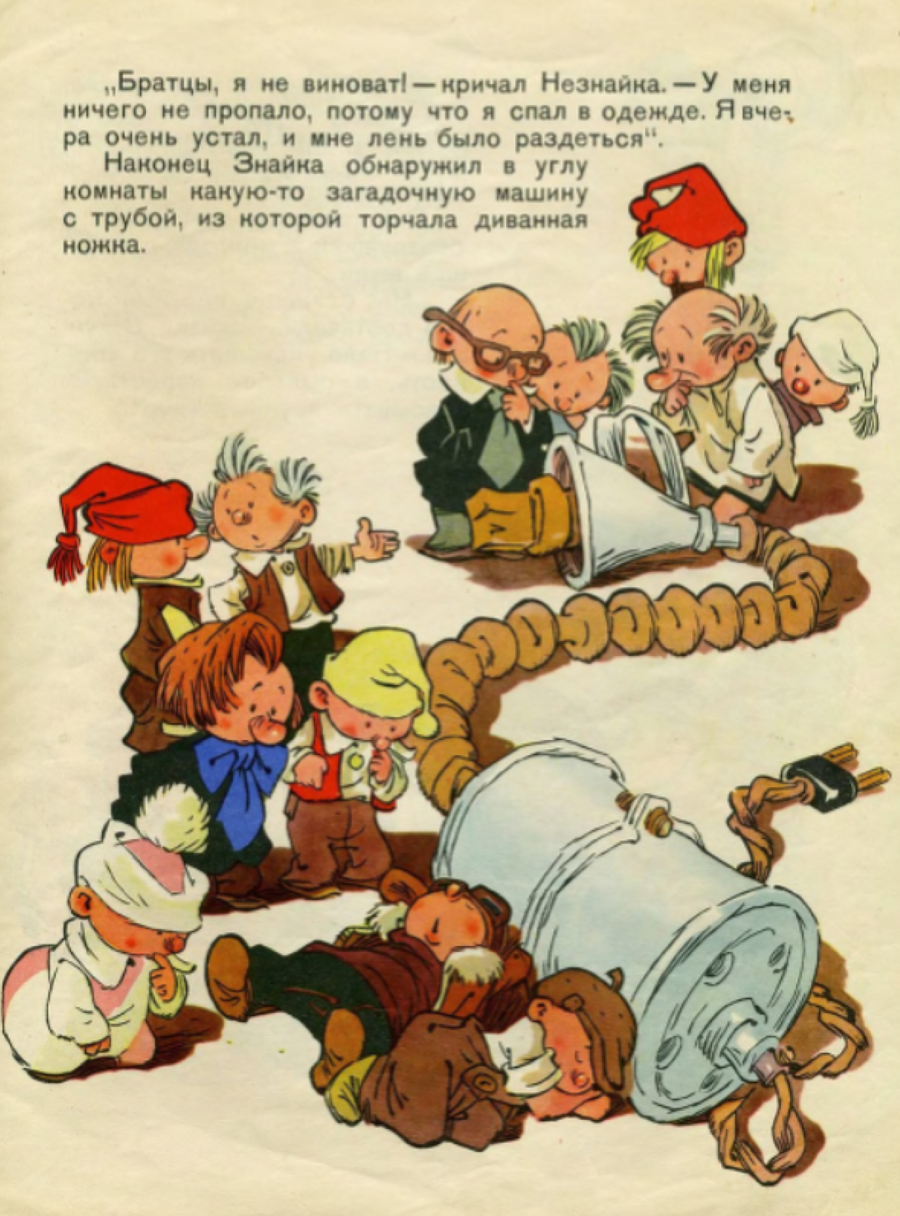
One of the first books illustrated by E. T. Migunov
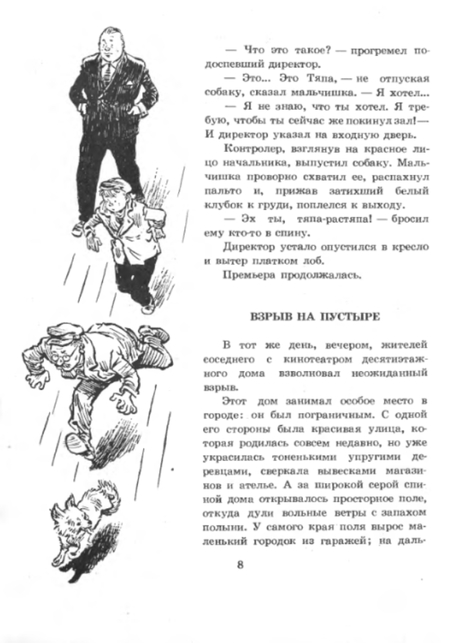
Migunov sees more in his «shot» than is typical. You can see both the crown and the heel of the hero:
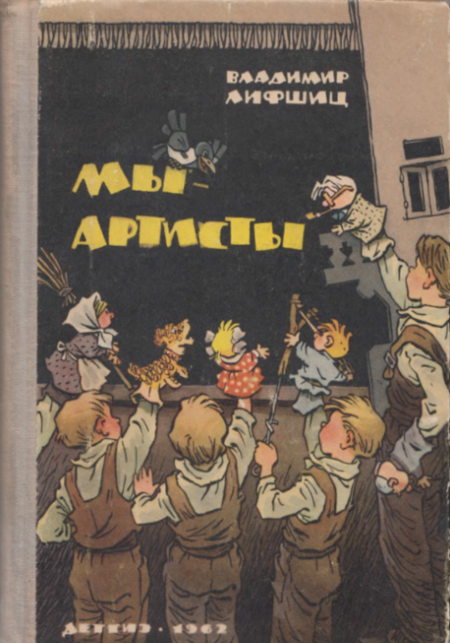
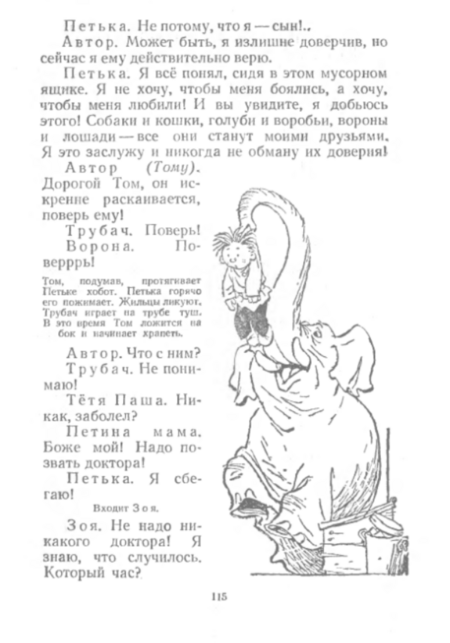
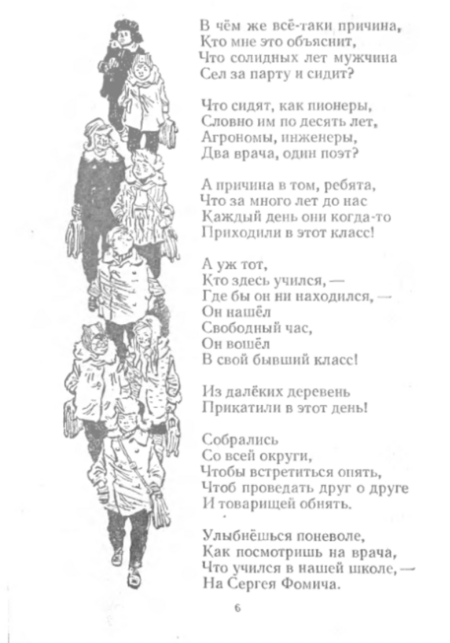
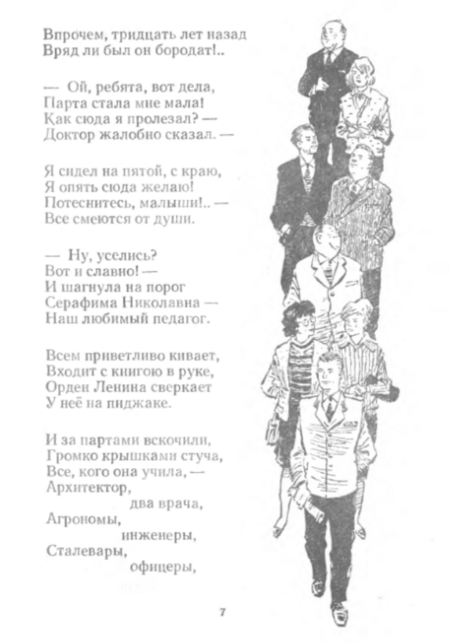
He does this by using a wide-angle composition, rendering the subjects and characters almost without distortion, as if in an orthogonal projection.
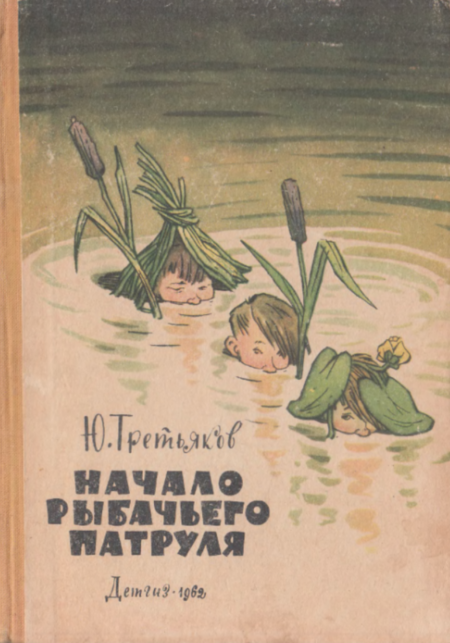
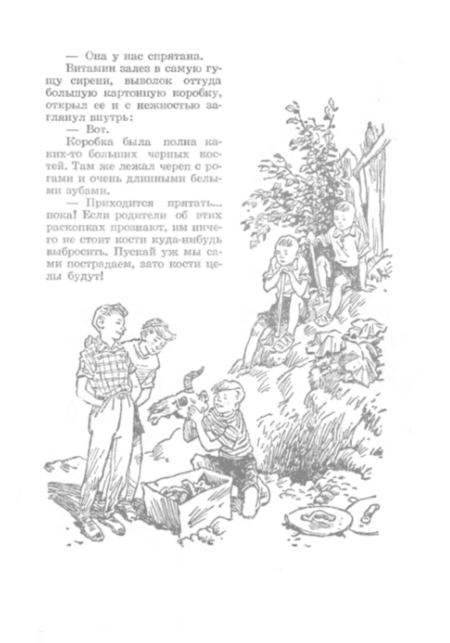
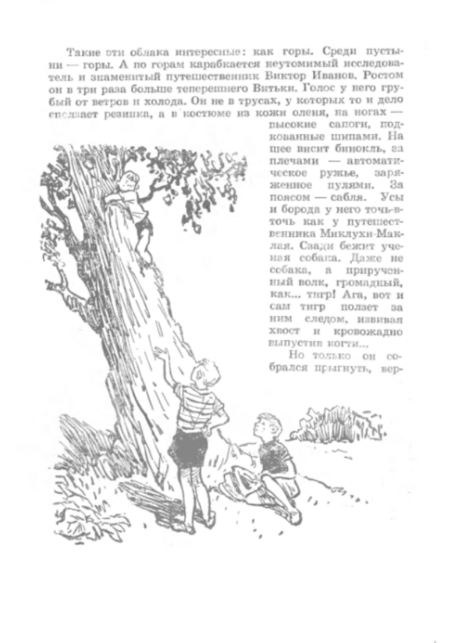
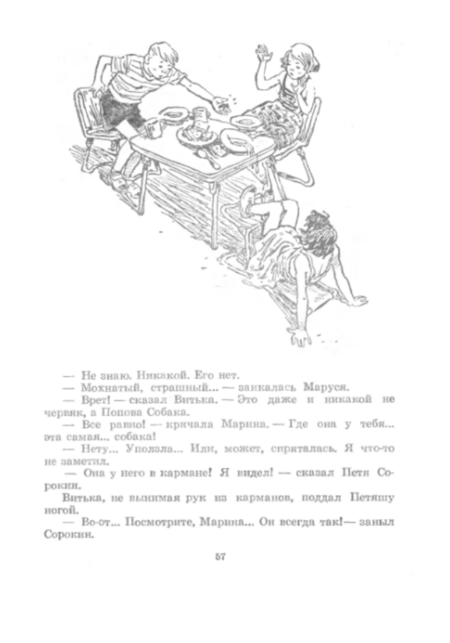
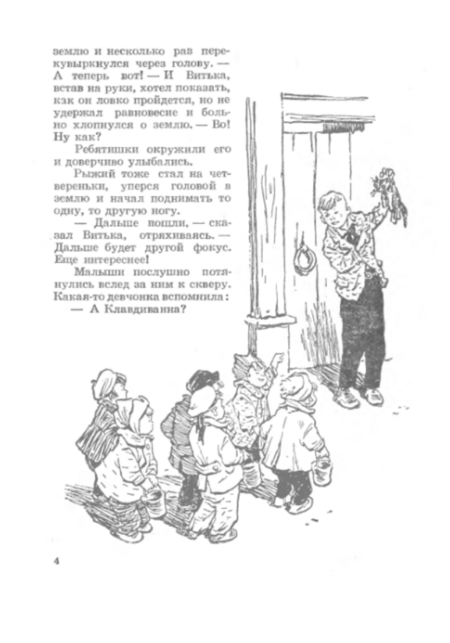
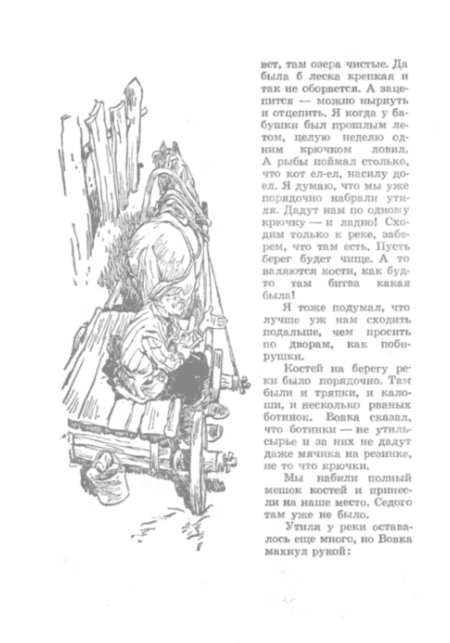
In addition to book illustration, Evgeny Tikhonovich collaborated with the magazines «Krokodil,» «Vesyolye Kartinki,» and the children’s publications «Murzilka» and «Pioner,» as well as the newspapers «Pravda,» «Literaturnaya Gazeta,» «Vechernyaya Moskva,» and «Sovetskaya Kultura.»
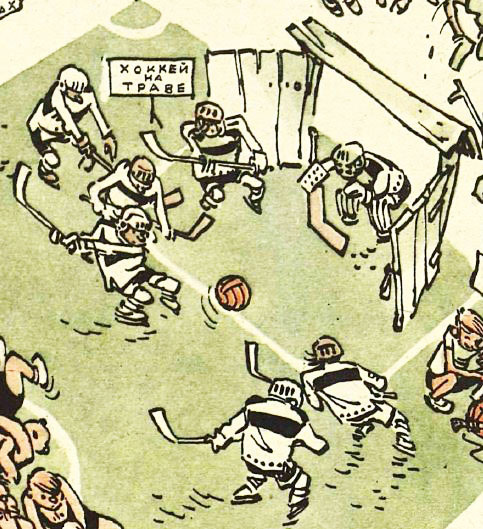
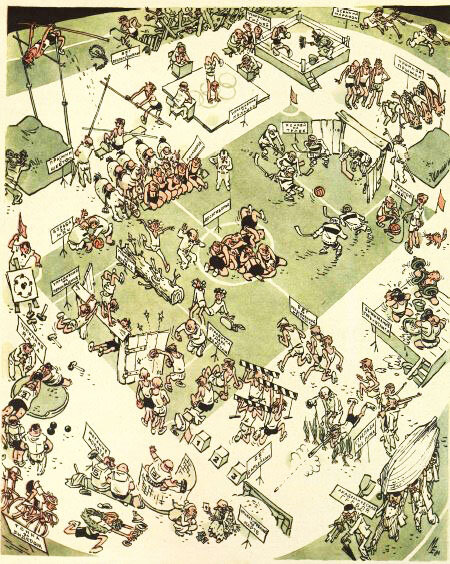
«Crocodile» No. 9, 1980
Crocodile No. 33, 1983
Illustrated books for several dozen writers and poets, including Nikolay Nosov, Vladimir Mayakovsky, Evgeny Permyak, and Yuri Tretyakov.
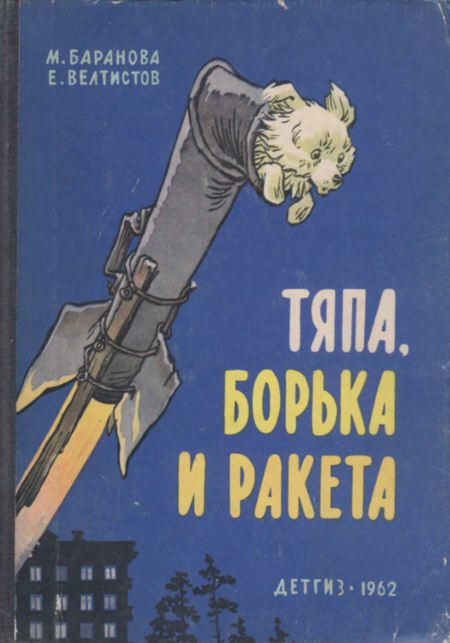
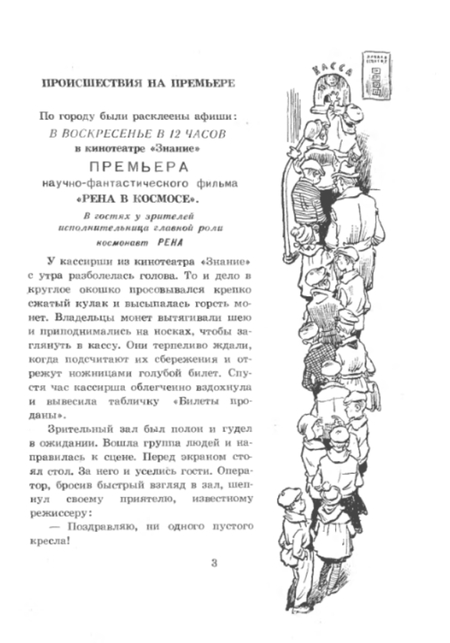
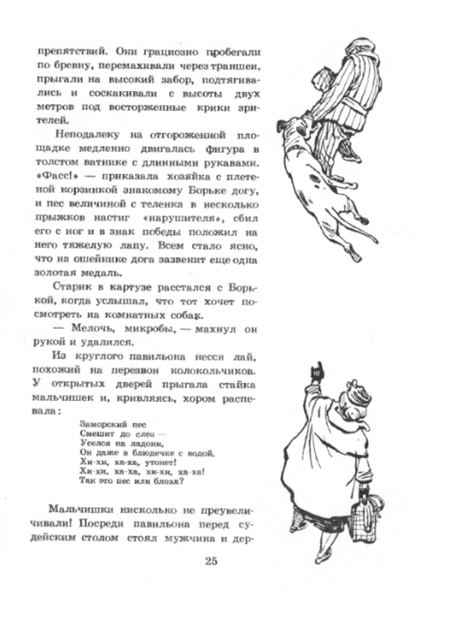
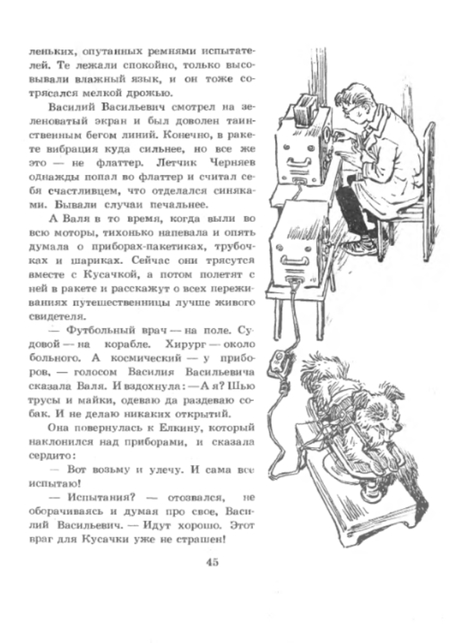
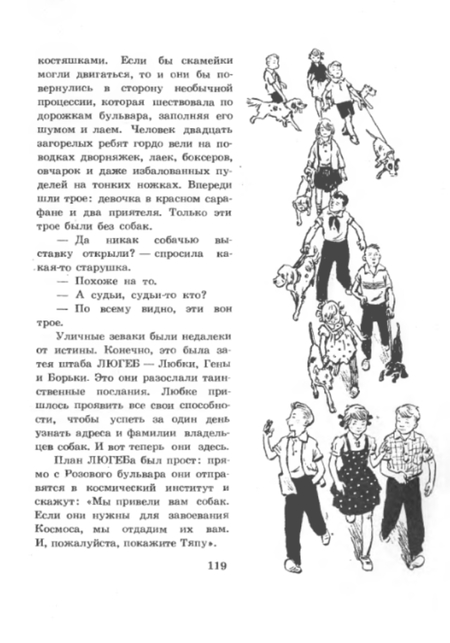
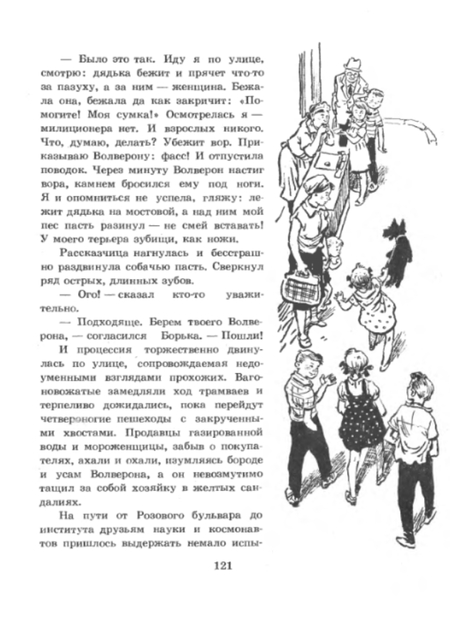
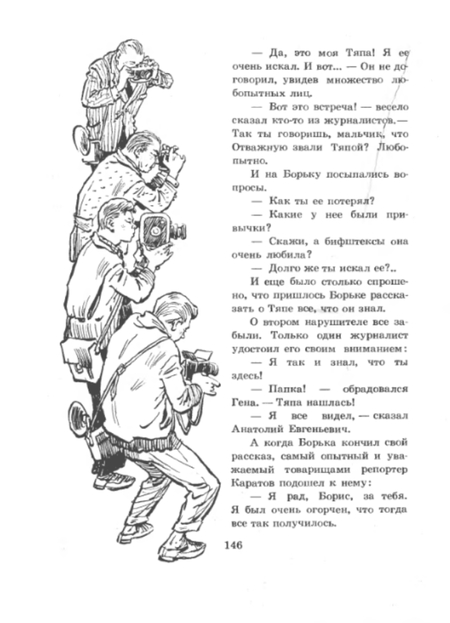
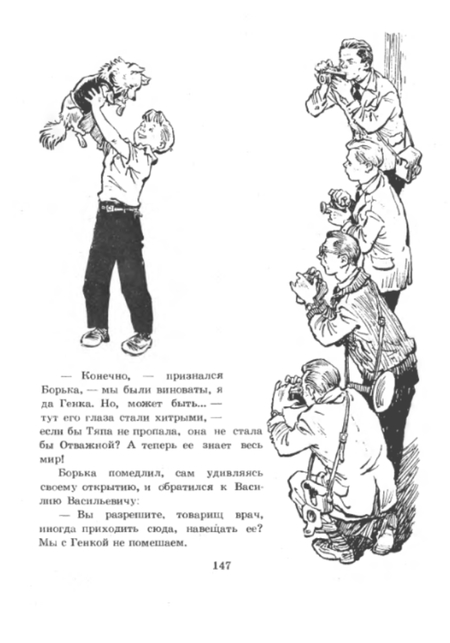
His work has been influenced by certain photographic and video trends.