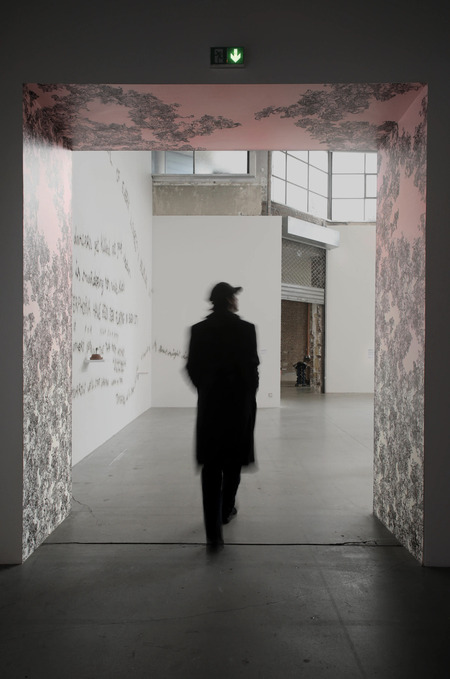
Palais de Tokyo positions itself as an «anti-museum”—a space open to experimentation and alternative forms of artistic experience. However, its architectural and cultural characteristics are gradually becoming recognizable hallmarks of institutional identity. This study aims to trace this transition and determine whether the concept of the anti-museum retains its critical potential after transforming into a sustainable institutional model.
Visual Research Plan
- Introduction.2. Chapter 1. What constitutes the concept of the anti-museum?3. Chapter 2. When does the anti-museum become a brand?4. Chapter 3. Does the anti-museum retain critical potential?5. Conclusion. Criticism as a style
Relevance
The relevance of this research stems from the need to examine the role of institutional critique in contemporary art. Using the Palais de Tokyo as an example, this study explores how the concept of the anti-museum is realized in the institution’s architecture, exhibition practices, and visual identity, as well as the opportunities and limitations that arise when establishing experimentation and alterity within a stable institutional image.
Concept
The Palais de Tokyo in Paris serves as an example of a contemporary art institution that builds its identity through the reimagining of the traditional museum model. Opened in 2002, the center positions itself as a space for experimentation—one open to new artistic practices and alternative forms of engaging with art. Its concept is evident both in the exhibition program and in the organization of the space: raw surfaces, open structures, flexible exhibition solutions, and an informal atmosphere shape the institution’s distinct image. The selection of the Palais de Tokyo for this study is motivated by the opportunity to trace how the anti-museum concept is realized in architecture and exhibition practice, and how it influences the formation of institutional identity.The research aims to analyze the tension between the anti-museum concept and the development of a sustainable institutional brand. The rejection of traditional museum aesthetics and familiar visitation scenarios initially functioned as a means of rethinking the museum’s functions. Over time, these characteristics became recognizable hallmarks of the Palais de Tokyo and the foundation of its positioning within the cultural sphere. This raises the question of whether this alternative nature transforms into an independent brand that solidifies a specific model of organizing the artistic experience.
The research aims to trace the historical evolution of Palais de Tokyo—from the building’s original purpose to its establishment as a contemporary art center in 2002. Special attention will be paid to the architectural concept of the renovation, the experimental principles of organizing the exhibition space, and the formation of an informal environment for visitors. This progression will allow for an examination of the prerequisites for the emergence of the anti-museum concept and determine how it is realized in the institution’s specific characteristics.Visual materials will be selected based on their significance to the analysis of Palais de Tokyo’s institutional identity. The study will include archival photographs of the building, images of interiors and exhibition spaces, documentation of individual exhibitions, and materials from the institution’s official self-presentation. Comparing materials from different periods will allow us to track which visual characteristics remain consistent, how their representation changes, and how the aesthetic of incompleteness and experimentation becomes part of the venue’s recognizable image.
The research database will comprise interviews with the creators of Palais de Tokyo, critical reviews of the center’s activities, and theoretical publications on institutional critique. Interviews with Nicolas Bourriaud will be used to analyze the initial principles and intentions of the founders, while the critical publications—specifically Jemima Montague’s review and Claire Bishop’s article—will be utilized to examine the institution from an external analytical perspective. Comparing Palais de Tokyo’s self-description with critical assessments will reveal divergences between its stated concept and its interpretations. The theoretical context for analyzing institutional critique will also draw upon Hans Haacke’s practices, which addressed the economic, political, and power mechanisms governing the functioning of art institutions.
The study’s structure will move from historical and conceptual analysis toward examining institutional identity and its critical potential. The first chapter will be devoted to the formation of the anti-museum concept, encompassing its architecture, exhibition practices, and spatial organization. The second chapter will explore the transformation of experimental aesthetics into a recognizable institutional image through the analysis of visual materials and Palais de Tokyo’s self-presentation methods. The third chapter will address the institution’s critical potential and analyze the contradictions between its proclaimed alternative and its operational mechanisms.
The research hypothesis is that the concept of the anti-museum at the Palais de Tokyo is becoming the foundation of a stable institutional identity. The aesthetics of incompleteness, experimentation, and informality retain their critical significance, yet they simultaneously function as recognizable hallmarks of the institution itself. Furthermore, embedding these principles into the institutional image does not necessarily imply a loss of critical potential, but rather raises questions about its boundaries and forms of realization.
The key research question is: can the Palais de Tokyo maintain its critical stance toward the museum system if its own alternative nature becomes a recognizable style and part of its institutional brand? What remains of criticism when it becomes a style, and what is its value—in the capacity to remain outside the institution, or in the possibility of transforming it from within?
Goal of the visual research
To identify the specific features of how the Palais de Tokyo’s institutional identity has formed and to determine how the transformation of the anti-museum concept into a recognizable institutional image affects its critical potential.
Visual Research Objectives
- Examine the history of Palais de Tokyo and the background leading to its establishment as a contemporary art center in 2002.2. Analyze the core principles of the anti-museum concept through the architecture of the building, the organization of exhibition space, and the exhibition program.3. Investigate the formation of Palais de Tokyo’s institutional identity based on an analysis of visual materials and self-presentation strategies.4. Trace how the aesthetics of incompleteness, experimentation, and informality become recognizable characteristics of the institution.5. Compare the initial concept of Palais de Tokyo with its subsequent visual representation and critical interpretations.6. Consider Palais de Tokyo’s critical potential within the context of institutional critique, referencing the practices of Hans Haacke.7. Identify the contradictions and limitations of the anti-museum concept amid the formation of a stable institutional identity.
Chapter 1. What constitutes the concept of the anti-museum?
1.1. The Architecture and Aesthetics of Incompletion
The concept of the «anti-museum» is historically defined in contrast to the «white cube.» Brian O’Doherty, in *Notes on the Gallery Space*, describes the ideal modernism gallery as a space built to laws no less strict than those governing a medieval church: the windows are sealed, the walls are white, the light comes from the ceiling, and the art exists in a peculiar state of «eternity of display» [6, p. 15]. For O’Doherty, the neutrality of the white wall is illusory because it expresses the values of a specific community [6, p. 79]. The Palais de Tokyo in 2002 was conceived precisely as a rejection of this model.Architects Anne Lacaton and Jean-Philippe Vassal removed partitions, left the marks of jackhammers on the walls and the contours of the stairwells, retained the concrete floors and exposed pipes, and allowed light in from above through a glass roof [4]. Bishop notes that a significant portion of the 4.75 million euro budget went toward structural reinforcement rather than renovation, and that the raw interior expressed the venue’s curatorial ethos [5]. The Sorbo article frames this as a contrast between the monumental facade and the roughness of the interior surfaces: the state of interior indeterminacy became the space’s identity, and the traces of time on the surfaces served as the basis for the aesthetic experience [2].
The inauguration of the Palais de Tokyo during the Universal Exhibition in Paris, France, on May 24, 1937.
1.2. An Alternative Model of Artistic Experience
Ideologically, the project was based on Nicolas Bourriaud’s «relational aesthetics.» For Bourriaud, art is a space of images, objects, and people, and the viewer is involved in the process of creating the work rather than standing before an object [7]. This led to the formula he presented before its opening: Palais de Tokyo should be something like an interdisciplinary art fair—"more of a laboratory than a museum» [7]. He noted that a museum should fundamentally not be limited to fine arts because contemporary art cannot be understood without music, literature, film, and fashion [7].In 2005, as his directorship neared its end, Bourriaud described the difference this way: the museum is order, while the center of art is chaos. The institution’s task is to «introduce lines of sight» into what seems like fog, and this chaos must be «creative» [8]. The program was based on this same idea: exhibitions without genre divisions, artists acting as co-organizers who invite other participants, such as Nono’s Club Arno Label-Roussel or the «Pavilion» of Anja Leccia for seven residents [3]. The 2002 vernissage brought together about thirty projects by young artists without a single unifying theme [4].Entrance hall of the Palais de Tokyo, 2002, Philippe Ruault
1.3. The Museum as a Social Environment
The third element of the concept is the relationship with the visitor. The institute operated from noon until midnight. Burrio explained this by saying that museums imitate bank hours, and the evening is the best time for this kind of project [7]. Inside, there were a restaurant, a bar, a bookstore, a shop, and a «stand» for free expression [3]. Vassal provides an architectural framework for this: he envisions a museum as a «promenade,» where there is no boundary between public and private space, and he referenced Jemaa el-Fna square as one of the project’s images [1]. He says he is irritated by museums where you have to buy a ticket and enter a specific room [1].This is once again the direct opposite of O’Doherty’s model, in which the viewer’s body is «excessive» and tolerable only as a bearer of the gaze [6, p. 15]. At Palais de Tokyo, the visitor can sit, eat, and converse. Steegmuller describes the mediation practice from 2012–2013: staff are available from noon to midnight, visitors are referred to as «actors of the unique experience,» and formats such as «Palaisrama» and «Bons baisers du Palais» (postcards between strangers) are intended to «unleash» attitudes toward art [9]. However, the same article shows a limitation. The Director of Public Programs, Tanguy Pelletier, admits that from the beginning, the center primarily attracted «youth under thirty, raised on art,» and that the public policy since 2012 has been trying to change this [9].The image of an open environment was also evident in its self-description: in 2005, Burrio called Palais de Tokyo a «social phenomenon» with over 800,000 visitors and an «alternative project for art institutions» [8].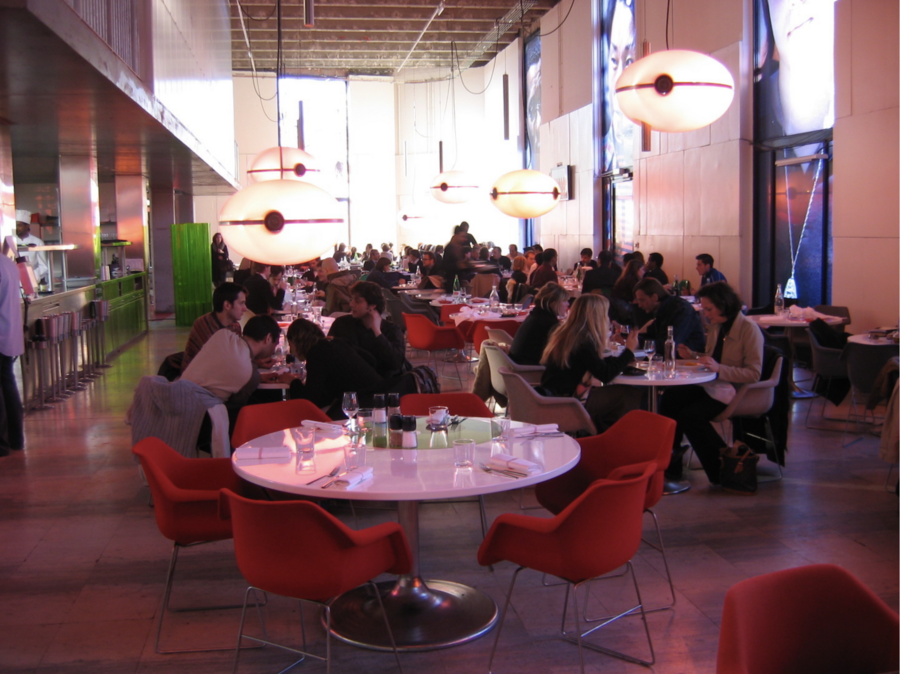
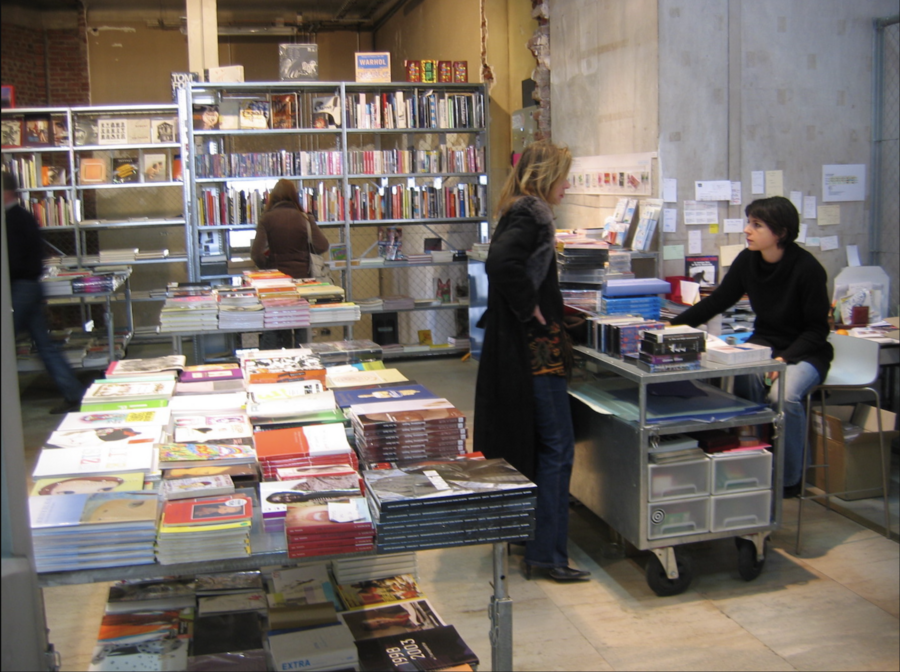
Librairie, Palais de Tokyo; Restaurant Tokyo Eat, Palais de Tokyo
Chapter 2.
When does the anti-museum become a brand?
2.1. Expansion of the Palais de Tokyo and the Strengthening of its Institutional Status
The Palais de Tokyo was initially conceived as a structure not intended to last long. It was established as an association under the 1901 law [2], with the directors' mandate limited to three years without renewal [1]. Nicolas Bourriaud noted in 2005 that the venue needed constant «reactivation, ” leading him and Jérôme Sans to feel it was right to leave rather than remain for twenty years [6]. However, as Chantal Stegmüller observes, the association, which was originally intended to be ephemeral, became an essential touchstone for contemporary art in France and internationally through the efforts of successive directors [3].The strengthening of its status proceeded along several fronts. In 2009, the center joined the „Colline des Musées“ network alongside the Cité de l’Architecture et du Patrimoine, the Musée d’Art Moderne de Paris, and the Musée Branly [3]. In 2011, Jean de Lozi became president, and the institution changed its legal form to a *société par actions simplifiée*. According to Stegmüller, this gave it greater autonomy and flexibility [3]. The second phase of renovation nearly tripled the space, expanding it from 8,000 to 22,000 m² [3]. Exhibition halls were augmented by cinema rooms, a concert hall, a terrace café, and a bookstore [4]. The opening in April 2012 featured 28 hours of continuous programming [5] and the „Intense Proximity“ Triennial, curated by Okwi Enwezor [4].2.2. Developing a Recognizable Architectural and Visual Identity
The second phase of the renovation deliberately echoed the principles of the first: preserving the bare concrete structure with minimal alterations [4]. Architects describe this as fidelity to the original decision, where «everything was left raw, ” and the traces of the penetration into the basement, uncovered during the expansion, were exposed rather than plastered over. The journalist from Wallpaper* noted that even after the expansion, the Palais de Tokyo appears „quite unfinished“ [5], while Time Out Paris described the updated building as a „very rough labyrinth“ [8].
Recognizability was also developed in the graphic communication. In 2012, the Helmo studio designed a poster principle for the Palais de Tokyo, variations of which were incorporated into applied arts examination materials in France [11]. This demonstrates that the institution’s image was professionally designed, much like any museum organization (Fig. 3).
Furthermore, in 2013, the official website defined the Palais de Tokyo as „a place born, inhabited, and grown from its contradictions, ” where „they don’t work on art, but they work with art, and it works on us“ [3]. Director Jean de Loazi is credited with this same formula [15].
2.3. Reconsidering Aesthetics and Aligning the Initial Concept with Its Contemporary Form
The aesthetics of incompleteness, experimentation, and informality have moved beyond the scope of the exhibition program. For example, the Gedeon agency designed the space at Palais de Tokyo for an event celebrating the 35th anniversary of the M6 television channel: a giant logo at the entrance, projections on the museum walls, and branded buffets [14]. The image of the venue functions here as scenery for corporate identity.Bourriault, in 2001, acknowledged the risk of relational practices becoming «merchandising of relationships» and questioned the purpose of contact if the political dimension were ignored [13]. Montague wrote as early as 2002 that informality and deconstruction, as forms of institutional critique, risk validating the institution’s authority [17]. Claire Bishop, in 2004, noted that a «laboratory» can easily transform into a leisure space [16]. Time Out Paris, in 2012, raised the question of whether expansion could restore trust in the institution after a decade of inconsistent programming [8].In 2005, Bourriault stated that the center and the periphery had long ceased to be opposites: «there are no longer boundaries between the margins and the center, ” and the term *récupération* (recupération) lost meaning because it was based on a confrontation between the avant-garde and power, which no longer existed [6]. This self-description simultaneously explains why the anti-museum became an institution without contradiction, and it calls into question the possibility of external critique itself.Thus, elements originally contrasted with the traditional model—such as raw concrete, hours of operation from noon to midnight, an informal atmosphere, and the rhetoric of the laboratory—are reproduced in the architecture of 2002 and 2012, in graphic and verbal self-presentation, and in collaborative projects. They become recognizable markers of the institution itself. Whether this critical potential remains will be examined in Chapter 3.Chapter 3. Does the anti-museum retain critical potential?







