Navigator
- Concept
- Conclusion
- Bibliography
- Image Sources
Concept
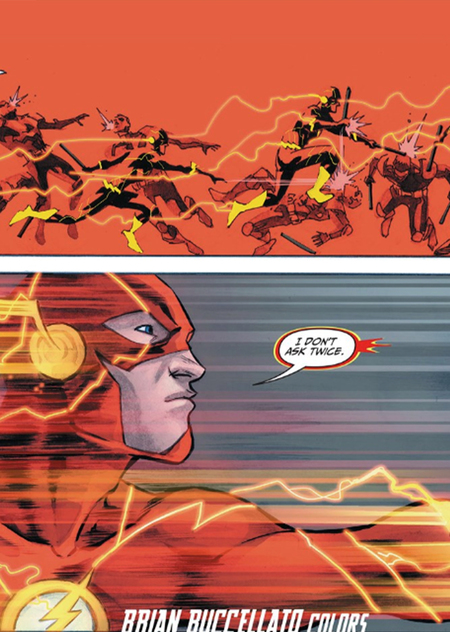
Comic storytelling differs from cinematic or literary narrative. At first glance, the panels of a comic might resemble film shots, as both employ a continuous narrative. However, unlike cinema, where the narrative is linear, the reader’s active participation, perception, and interpretation play a huge role in comics—not only what is visually presented but also what occurs in the space between the frames. In other words, the reader independently establishes the chrono-topos by relying on the sequence of images before them. Therefore, when creating a comic, it is crucial to consider factors like the reader’s imagination and their ability to visualize an action extended over time using just a few images. The reader decides at their own pace, but the artist utilizes techniques such as panel composition, shape, size, and quantity, rhythm, and perspective to maintain the reader’s attention or compel them to look at the next frame as quickly as possible. Meanwhile, space is inseparable from time.
«Comics characters fragment space and time, creating a jerky, staccato rhythm of disconnected moments. But the act of reconstruction allows us to connect them in our minds and construct a single, extended reality.» — Scott McCloud
This visual study aims to investigate how comic books achieve the sensation of a pause, a prolonged event, rapid action, or a transition between time periods through specific visual solutions, and how these concepts are rendered within the page space.
Time as Page Space: Layout Rhythm and Gutters
Visual Time Markers
Transcending the Panel as a Disruption of Chronotope Boundaries
The next concept I would like to explore is exiting the boundaries of the panel. We are accustomed to the idea that meaning resides within specific confines (inside the panel) and must adhere to the space and time inherent in it. However, when the author deliberately steps outside these boundaries, a new concept of chronotope is revealed to us: actions can occur simultaneously, flowing from one frame to another, or intruding upon it. Alternatively, these might be unrelated periods of time—past, present, and future.
Conclusion
.
.