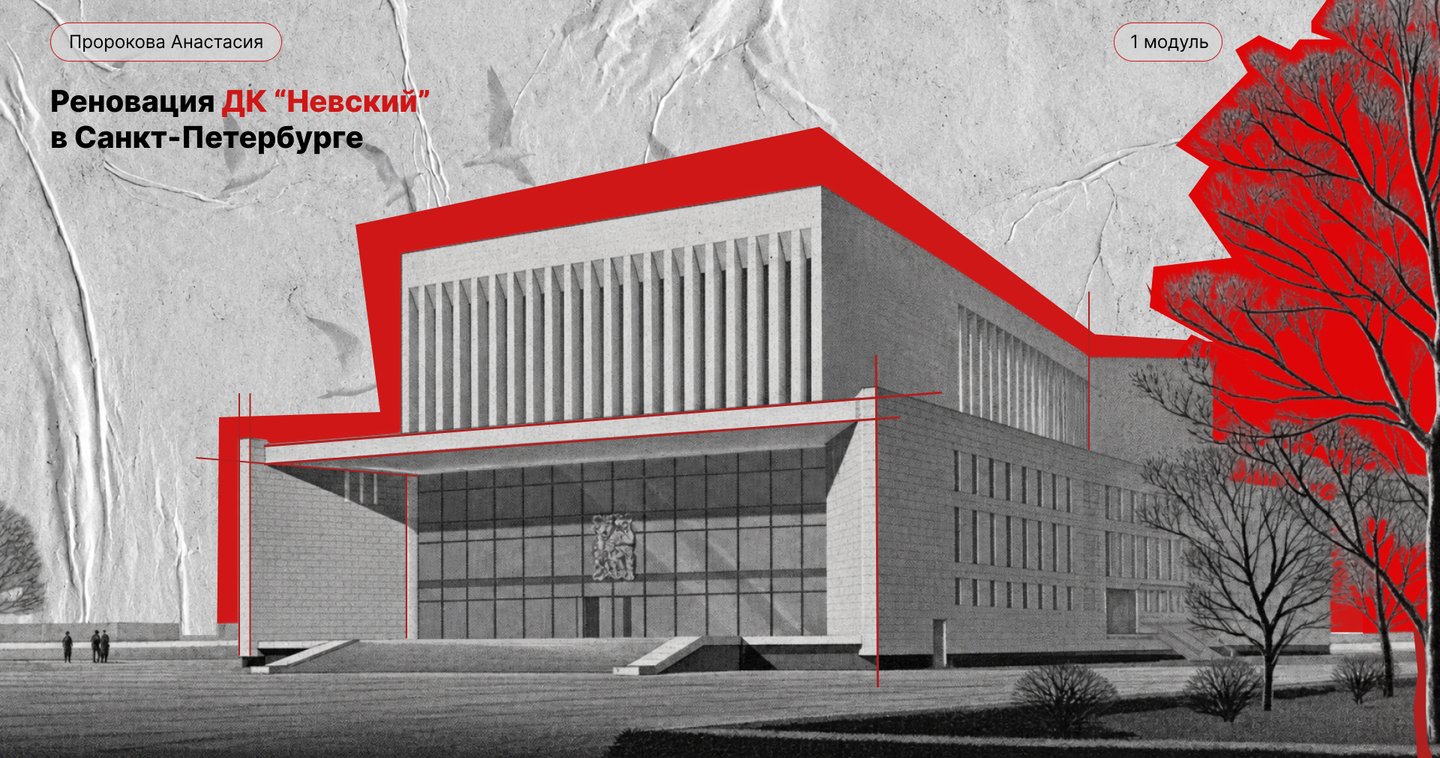
About the Project
[1] Thesis Topic
Renovation of the «Nevsky» Palace of Culture in Saint Petersburg to revive the cultural palace’s activities through a contemporary lens.
[2] Location
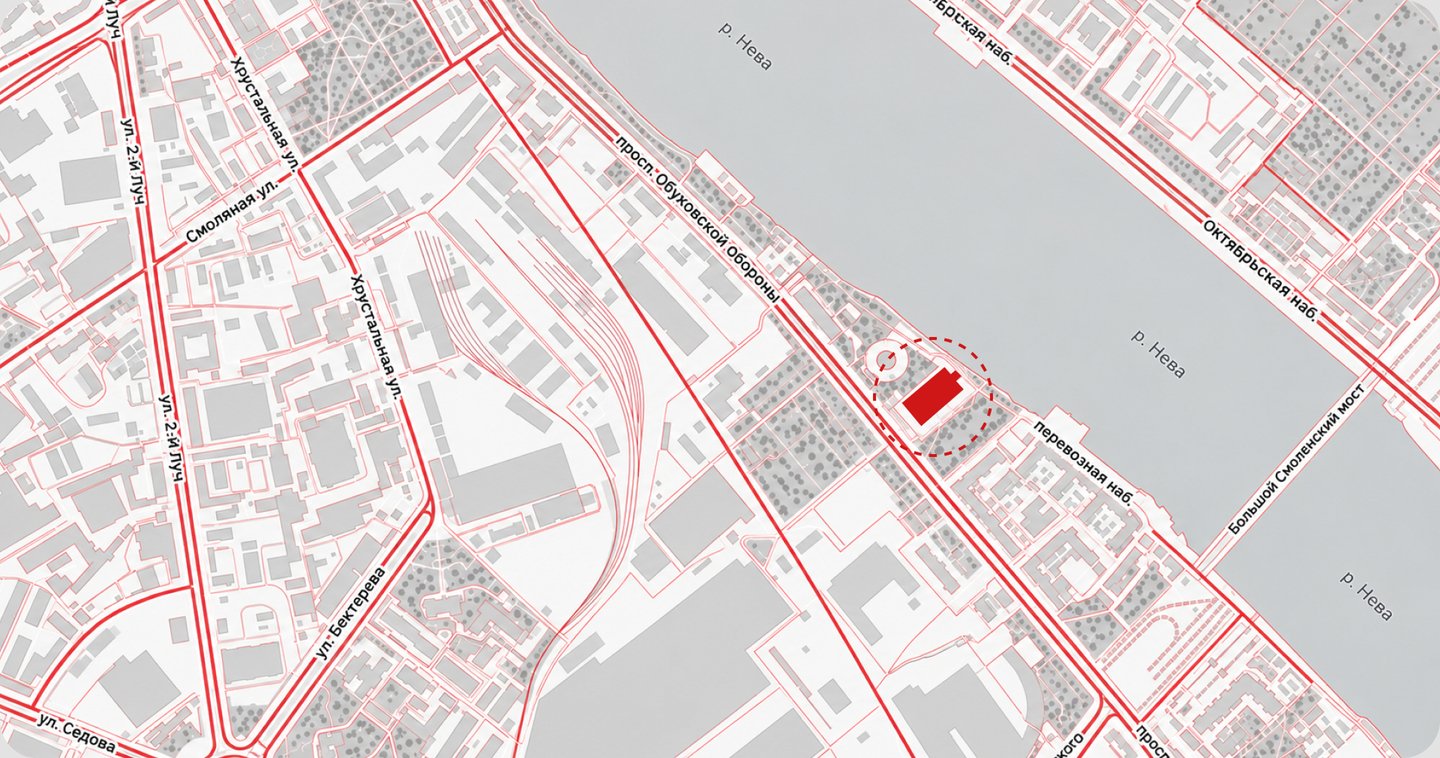
ADDRESSRussia, St. Petersburg, Obukhovskoy Oborony Avenue, 32
[3] [historical context]
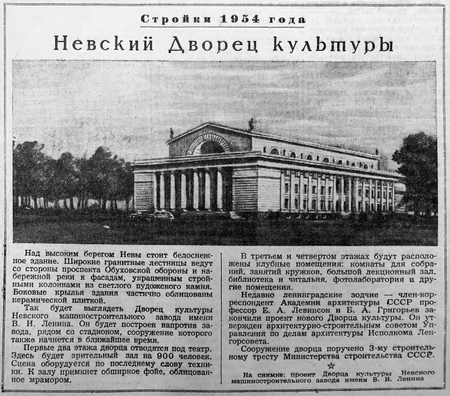
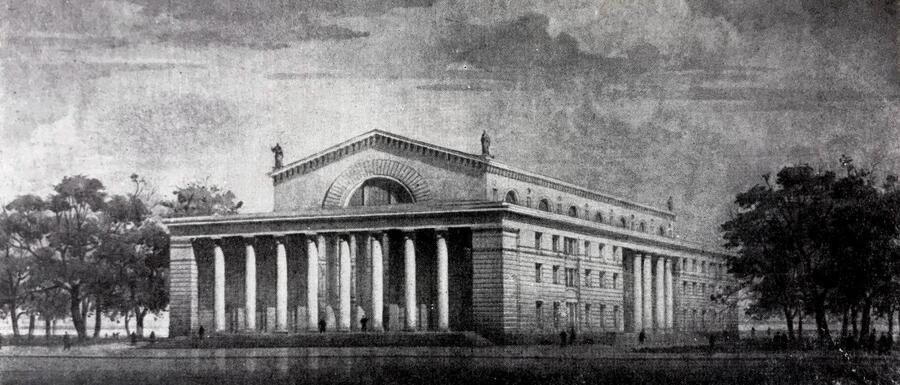
1953–1954 — original project in the Stalinist Empire style
The initial project for the Palace of Culture of the Nevsky Machine-Building Plant named after V. I. Lenin was developed under the guidance of architect Evgeniy Levinson. The building was designed in the Stalinist Empire style and resembled the Stock Exchange on Vasilyevsky Island: a monumental volume featuring a colonnade and a pitched roof. The design included an auditorium with a capacity of up to 900 people.
Following the 1955 decree on combating architectural excesses, the initial design was revised. Construction was halted, and later, a new version in the style of Soviet Modernism was developed, preserving the previously laid foundation.
From 1968 to 1972, the Neksky Palace of Culture was constructed based on a renovated design and remains standing today. Architects E. Levinson, B. Grigoryev, I. Railyan, Yu. Sitnikov, and Yu. Zemtsov worked on it. The complex brought together a main theater, a library, lecture halls, rehearsal spaces, and club facilities.In September 1974, a landmark exhibition of Leningrad nonconformist artists was held at the Palace of Culture. Later, the building became a venue for independent musical culture. Bands such as «Arsenal, ” „Kino, ” „Alisa, ” „Auktsyon, ” „Zoo Park, ” and others performed there. The Palace of Culture acquired the status of a key center for Leningrad’s unofficial art.
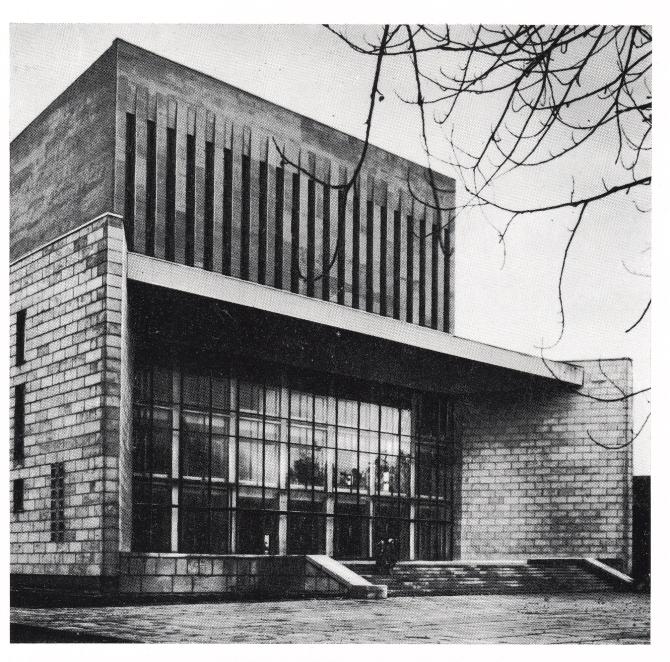
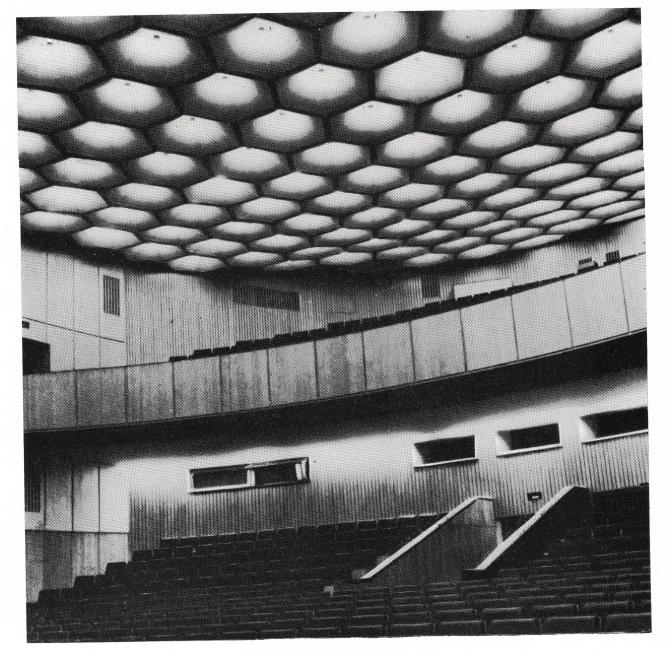
With the changing cultural landscape in the 1990s, the Palace of Culture gradually lost its former significance. In the 2000s, discos and certain events were still held there, but in 2015, the palace was permanently closed. Since then, the building has not been used for its original purpose and is slowly deteriorating.
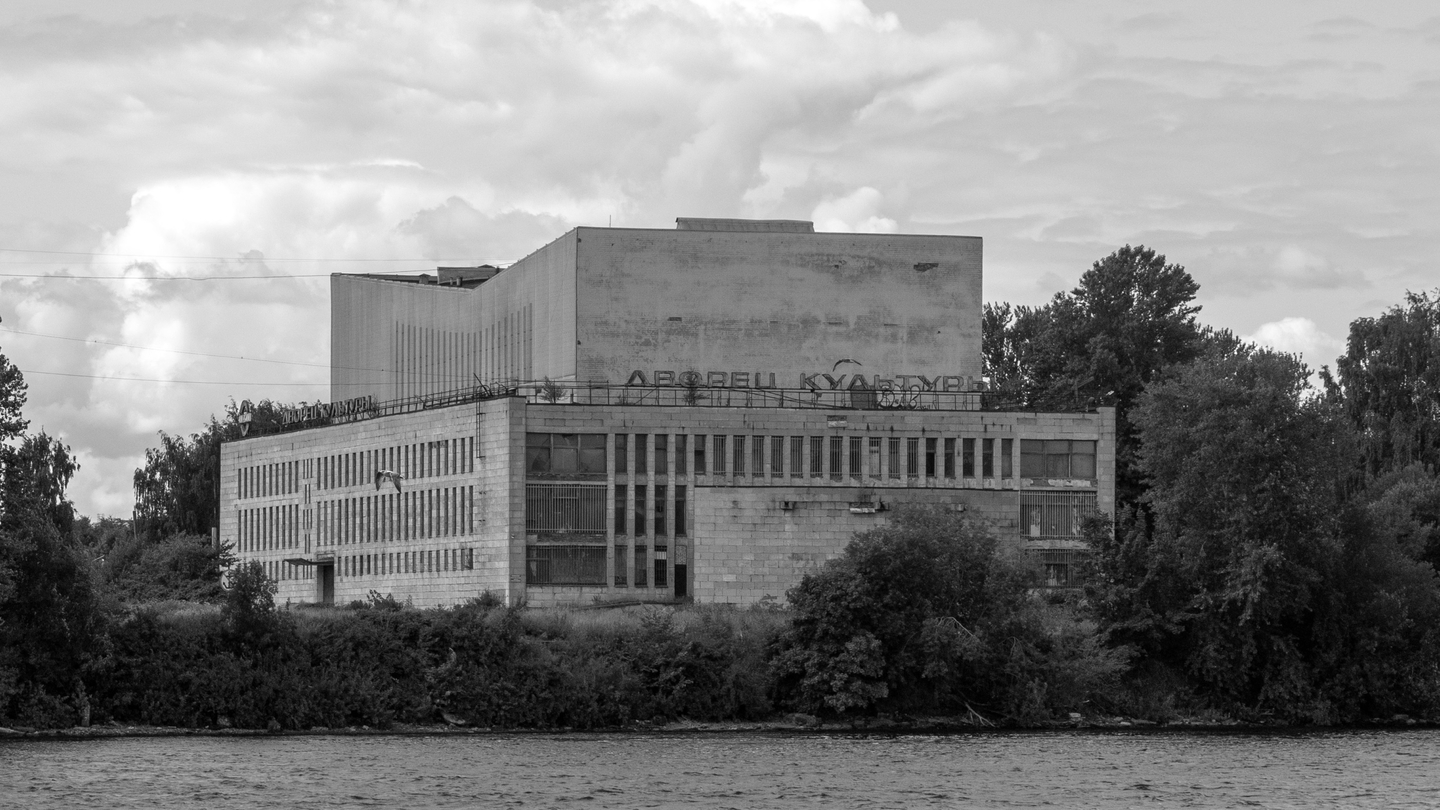
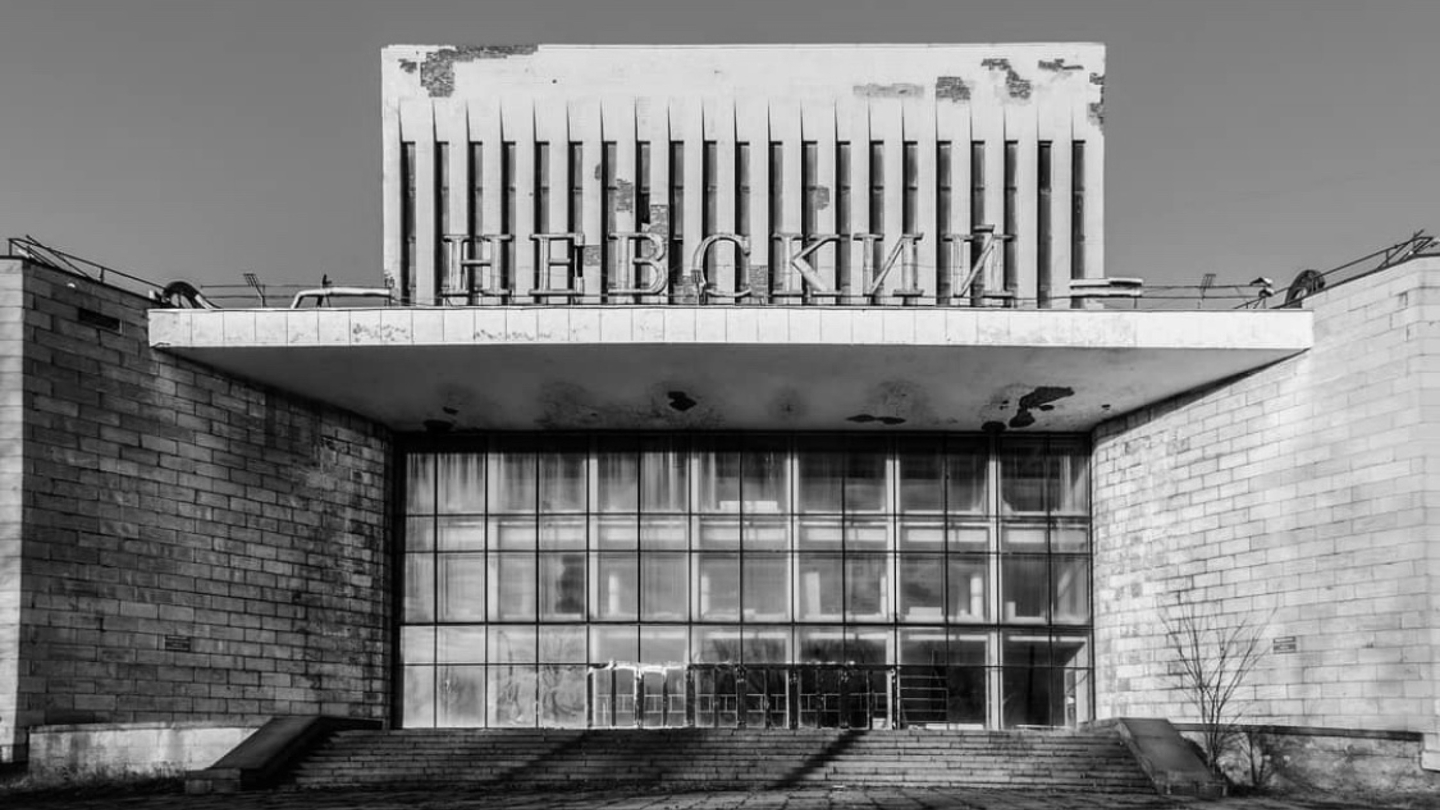
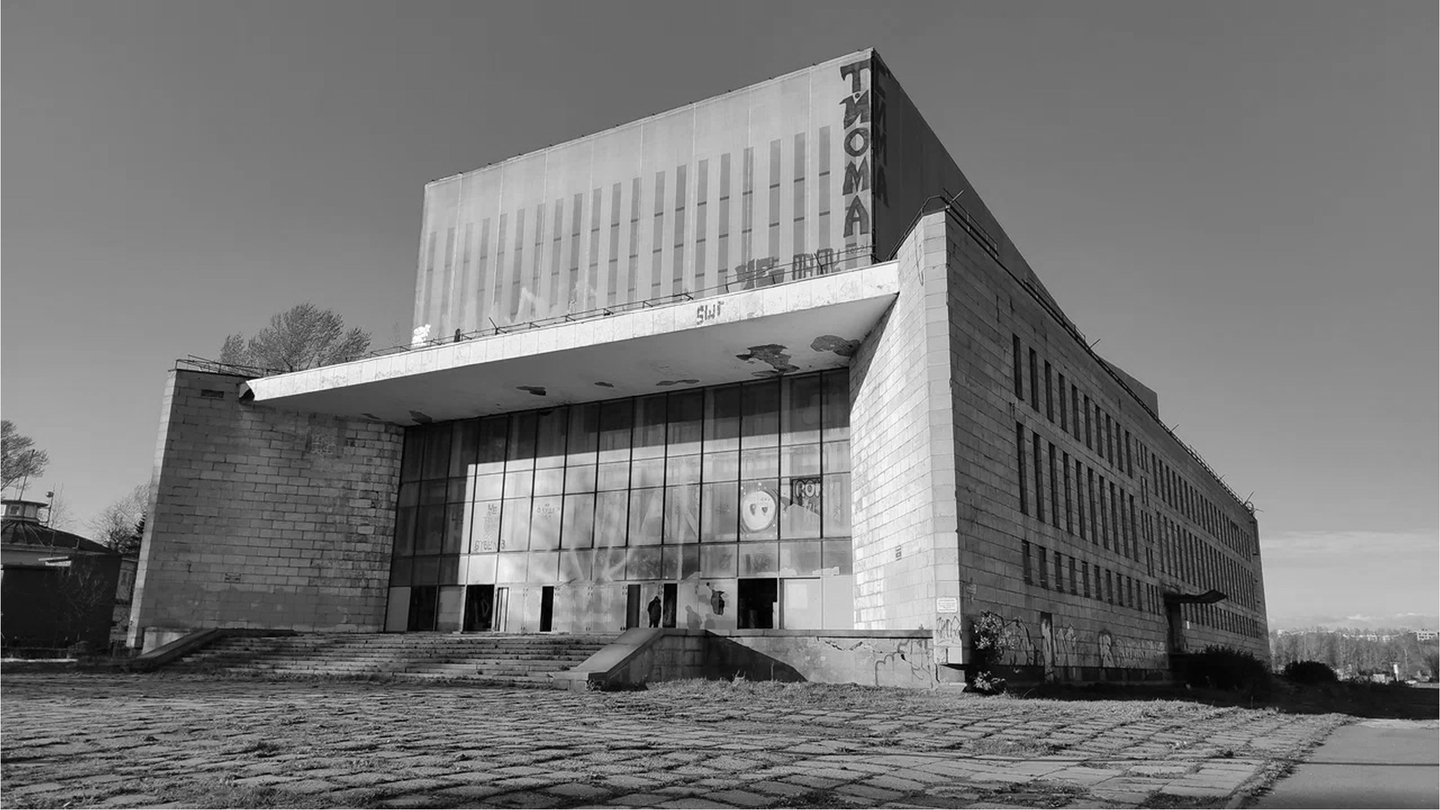
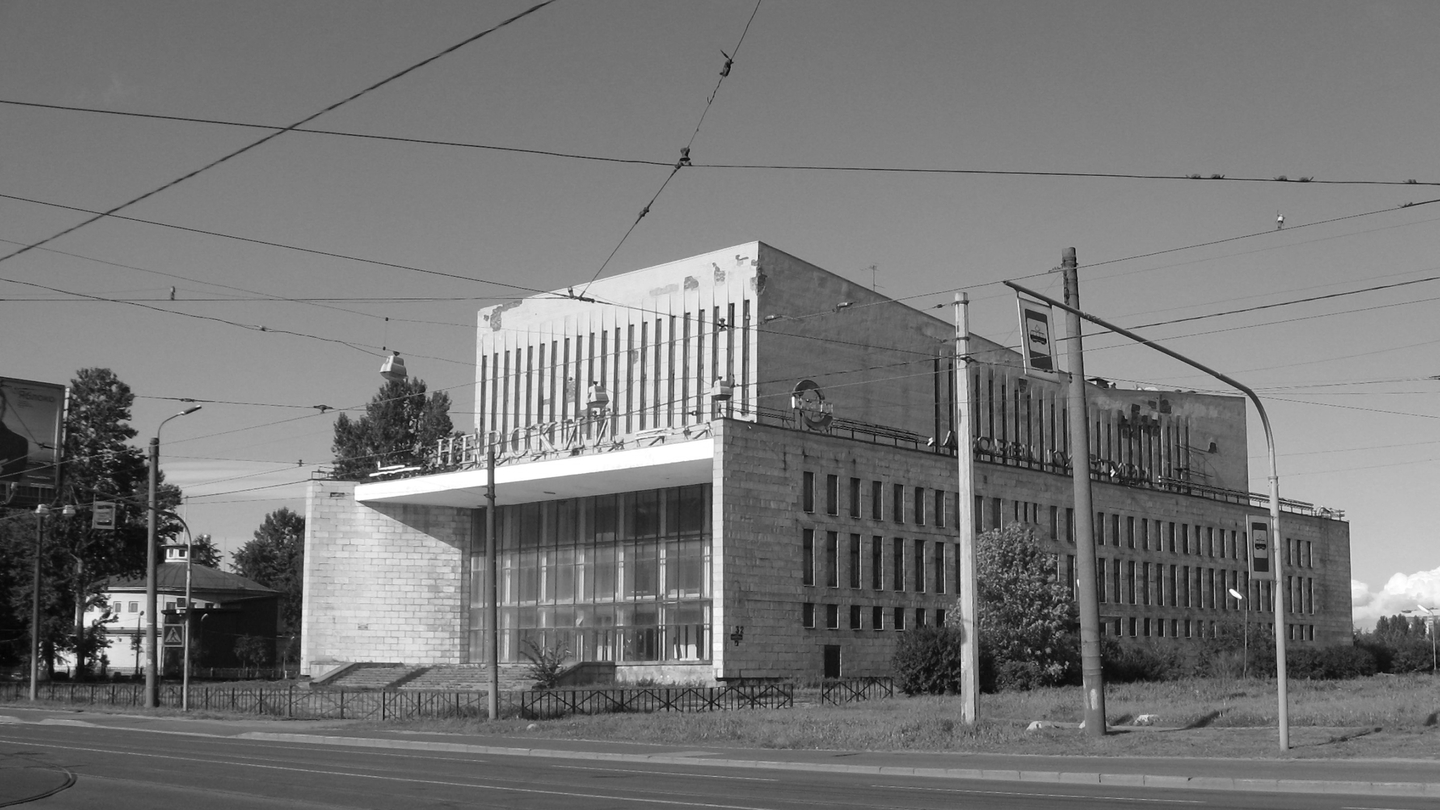
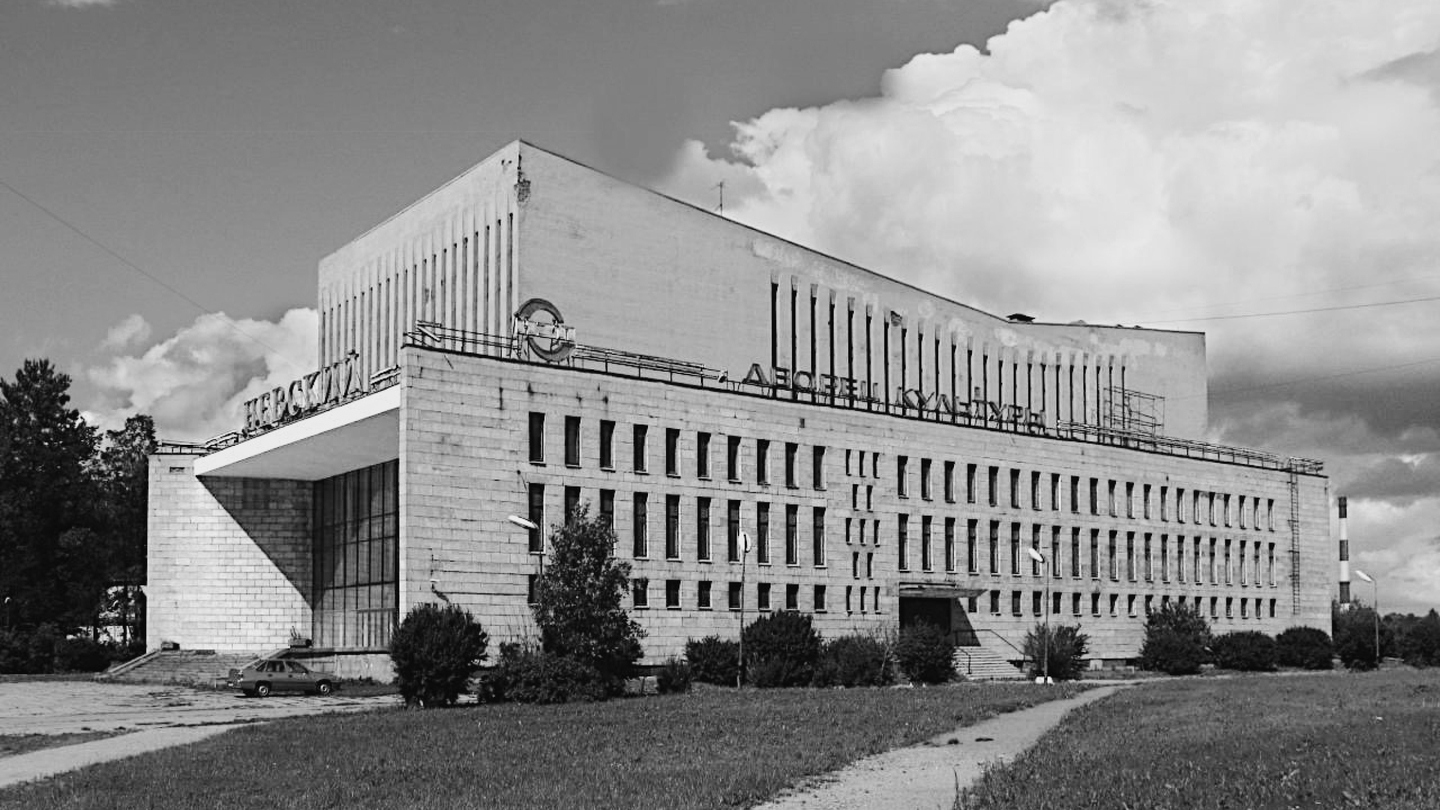
Current state of the building
[4] [Project Idea]
The Contemporary Art Center is a hub for creative individuals—a place where art is not just displayed, but created.
The project’s idea is to create a unified cultural space that brings together various artistic disciplines, their creators, and enthusiasts. This space would allow creative individuals to meet like-minded peers, exchange experiences, and interact with representatives from other fields. Furthermore, visitors would not only be able to view artworks but also engage directly with the artists, learn about the creative process, share impressions, and discuss art with one another.
Thus, the project proposes the creation of exhibition spaces for diverse forms of art and workshops for the creators to develop their work. This addresses the cultural agenda for visitors, as well as the need for additional exhibition spaces and workshops for the artists.
[5] [target audience]
This project is created for people interested in art—both for its appreciators and for the creators themselves. Primarily, it is aimed at an adult audience. However, the most important thing is bringing together creative people and like-minded individuals. And true art lovers know there is no age limit.
Artists and Creative Professionals:— Emerging Artists — Painters and representatives from various creative disciplines at the beginning of their professional journey. — Students and Young Professionals — Students and graduates of creative universities seeking space for practice, realization, and presentation of their projects. — Independent Creative Groups — Young theater and dance troupes, artistic associations, and experimental collectives. — Professional Art Practitioners — Established artists, designers, directors, and other creators interested in workshops, exhibition venues, and creative collaboration.Visitors and Audience Members:— Contemporary Art Enthusiasts — Individuals who regularly attend exhibitions, performances, film screenings, and cultural events. — Art Lovers — People interested in creative work, eager to meet artists, attend masterclasses, and discover new fields. — Public Space Visitors — Individuals who come to the center to socialize, work, relax, and spend leisure time.
[6] [Relevance of the Topic]
The relevance of creating a new contemporary art center is confirmed by the limited number of existing multifunctional spaces, the shortage of artist studios, and the growing interest in art and cultural activities.
Lack of multifunctional spaces for creating and exhibiting art
A significant portion of exhibition spaces in St. Petersburg is comprised of historical museums, traditional theaters, and tourist attractions. Undoubtedly, St. Petersburg already has a developed system of exhibition venues, galleries, and cultural centers. However, the number of spaces that combine equipped studios, exhibition halls, and venues for cultural events into a single creative environment is limited.
Lack of Accessible Creative Workshops
One of the current challenges remains finding suitable spaces for artistic practice. The relevance of this issue is evidenced by the growing demand for renting such facilities. The publication «Delovoy Peterburg» published a research piece on January 11, 2025, under the striking title: «Demand for creative workshop rentals has grown in St. Petersburg.» Interviews with practicing artists highlighted several key difficulties: securing studios through the Artists' Union, challenges in locating appropriate spaces, and restrictions on their use.
Interest in art and cultural activities is growing
Interest in cultural life remains high in Saint Petersburg. According to the Ministry of Culture, in 2025, attendance at Russian museums grew by 12%, reaching 197.8 million visits, which also led to increased revenue.