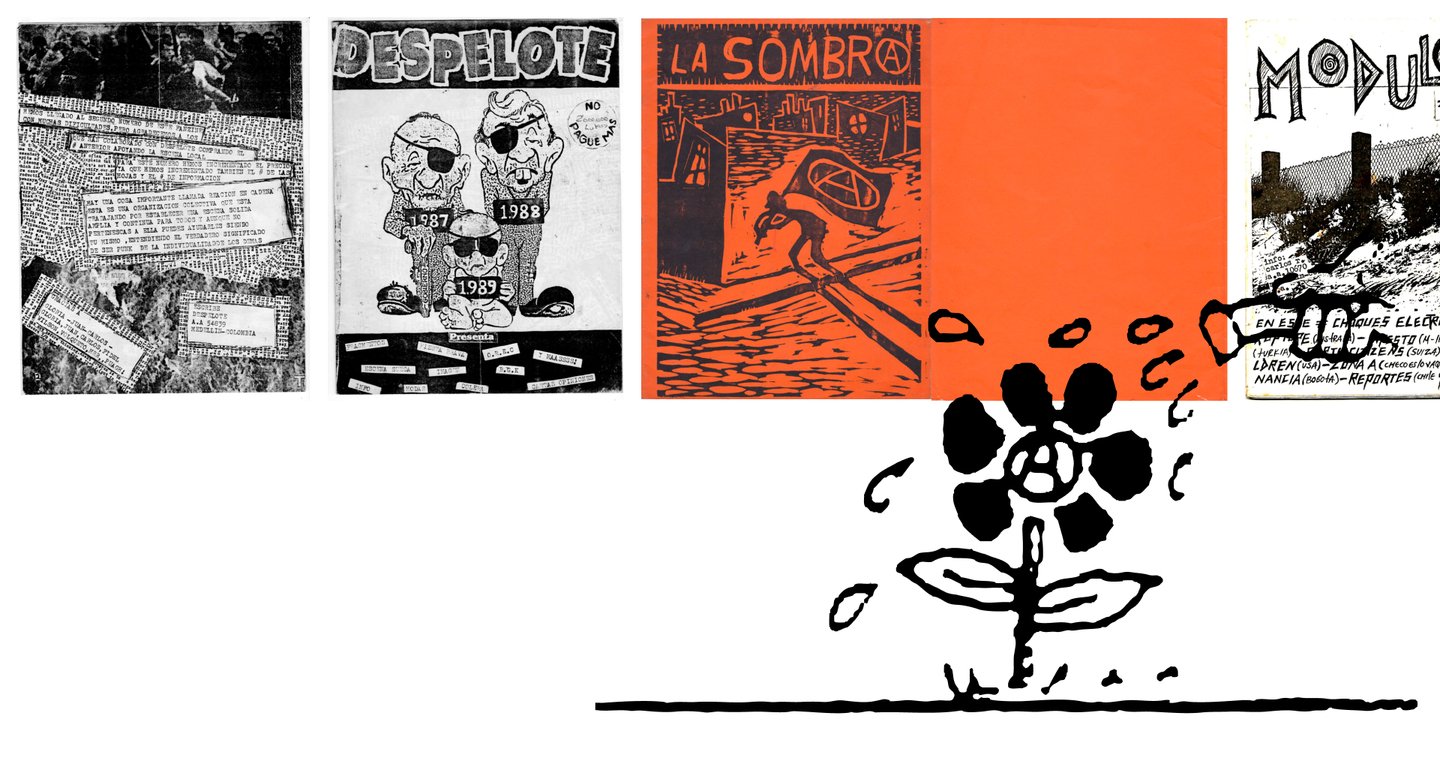
Thesis: Media of Counterculture in Spanish-Speaking Countries
The Problem Often, knowledge of Spanish-speaking peoples is limited to maracas, cartels, and guitar; people less frequently associate them with Gaudí or Picasso. Meanwhile, true culture gets overshadowed by stereotypes based on generalized images and remains unnoticed.
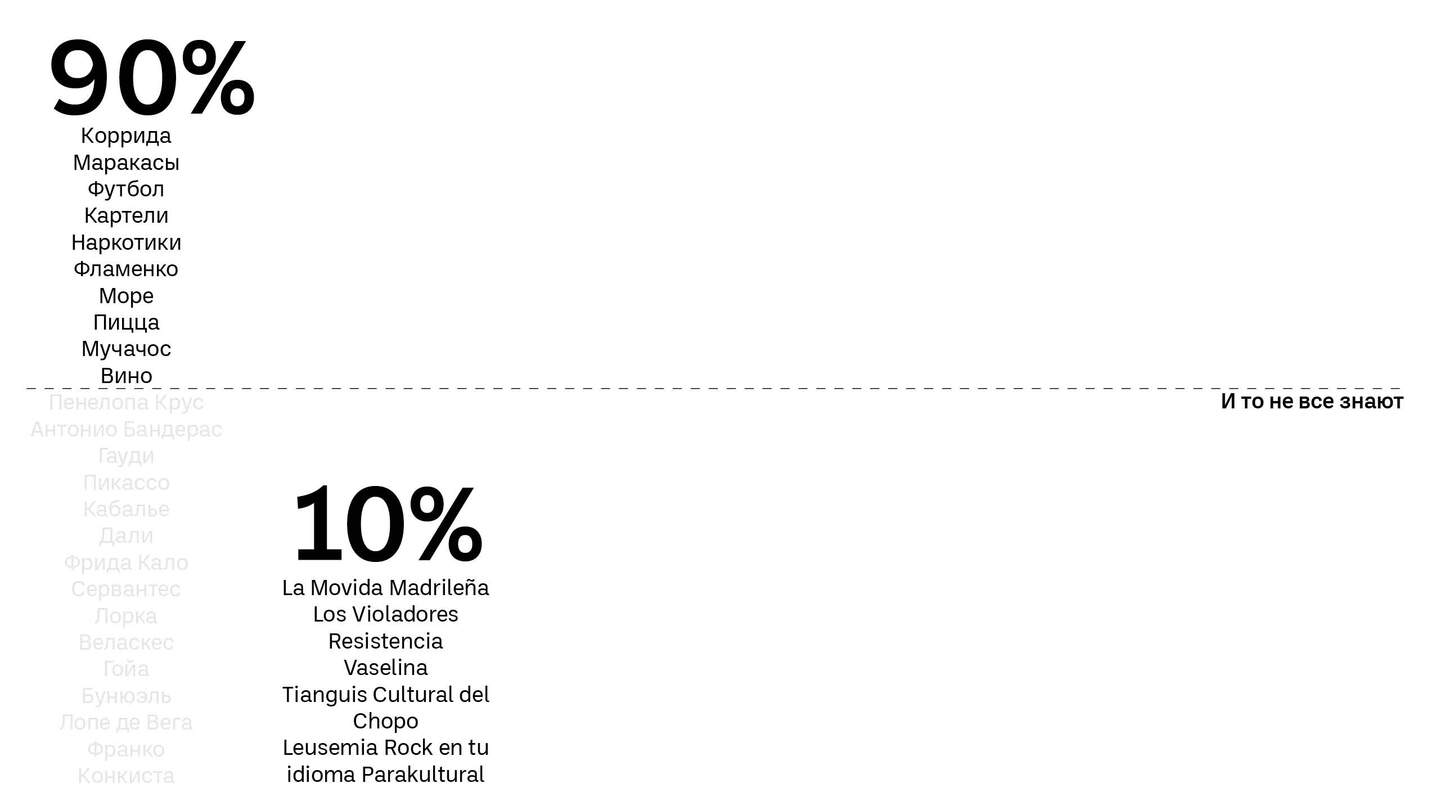
Solution Create an educational media platform about counterculture in Spanish-speaking countries to counter the maracas.
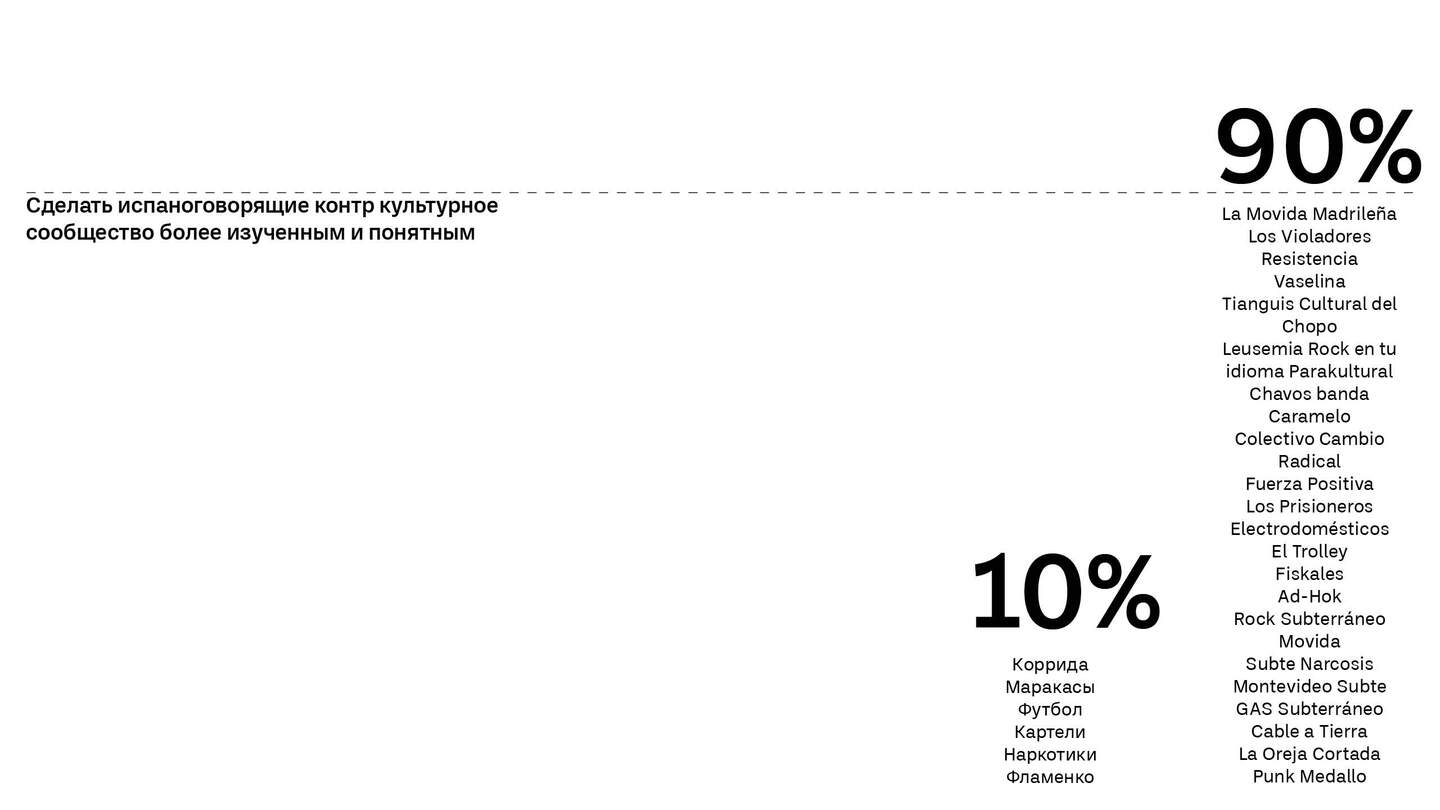
What is this? A wave of countercultural movements from the period of active liberalization in Spanish-speaking countries during the 1970s and 1980s. It is characterized by an abundance of underground social artifacts: music, social gatherings, artists, samizdat, fanzines, comics, writers, poets, photographers, magazines, and films.
music, parties, artists, self-publishing, fanzines, comics, writers, poets, photographers, magazines, films.
Posters, fanzines, satirical comics, self-published works
Relevance The underrepresentation of counterculture from Spanish-speaking countries in the generally known history of 20th-century movements leads to the systematic loss of a vital layer of a particularly vibrant local scene, which reflects the social and political processes of its time. Moreover, much of this material remains understudied or difficult to access.This media project aims to research and popularize this heritage, as well as to examine the mechanisms that determine which cultural phenomena are preserved in collective memory and which are forgotten.
Who is this for?
- Anyone interested in everything;
- Representatives of counter-cultural communities;
- People who love Spain and Latin American countries;
- For those planning to emigrate;
- For those who love getting absorbed in beautiful things.
Where is this already working? There are no people without interests, or a single person with a unique interest that is nowhere else replicated. The main thing is that the creator has this interest. For example, this is the case with Ivan Verlatogov, the author of the Telegram channel «Oriental Covers.» And this hyperfixation is now shared with over 8,000 subscribers.
Format Multimedia project engaging both online and offline audiences
The Link Between the Final Project and the Thesis
While working on my thesis, I forgot everything I knew, everything I loved, and everything that worried me. That’s when I realized the unreliability of my brain and the importance of documentation. I realized this a second time when I settled on my topic. All the alternative culture was saved on paper because the circle of knowledgeable people narrowed.
Short-term memory
Research Question What mechanisms determine what becomes part of cultural memory and what gets forgotten?
Club flyers, posters, album covers, movie posters
Topics What Remains After Culture? What is cultural memory and oblivion? Why do some artists, magazines, and movements become part of history while others vanish from view? 2. Created, But Not Preserved How do print runs, printing quality, distribution methods, and production conditions affect the fate of independent print culture? 3. The Politics of Forgetting How do political regimes, censorship, societal changes, and cultural restrictions impact the preservation of alternative visual practices? 4. Who Writes History? Who decides which works are preserved, reissued, exhibited, and included in the history of art and design? How does a lack of institutional attention affect an artist’s renown? 5. What Determines Place in History? A comparative study of the cases examined: what factors contributed to the preservation of some phenomena and the disappearance of others? Can common mechanisms of cultural memory be identified?
Work Plan for the Independent Project (IP) and Final Qualification Work (FW)