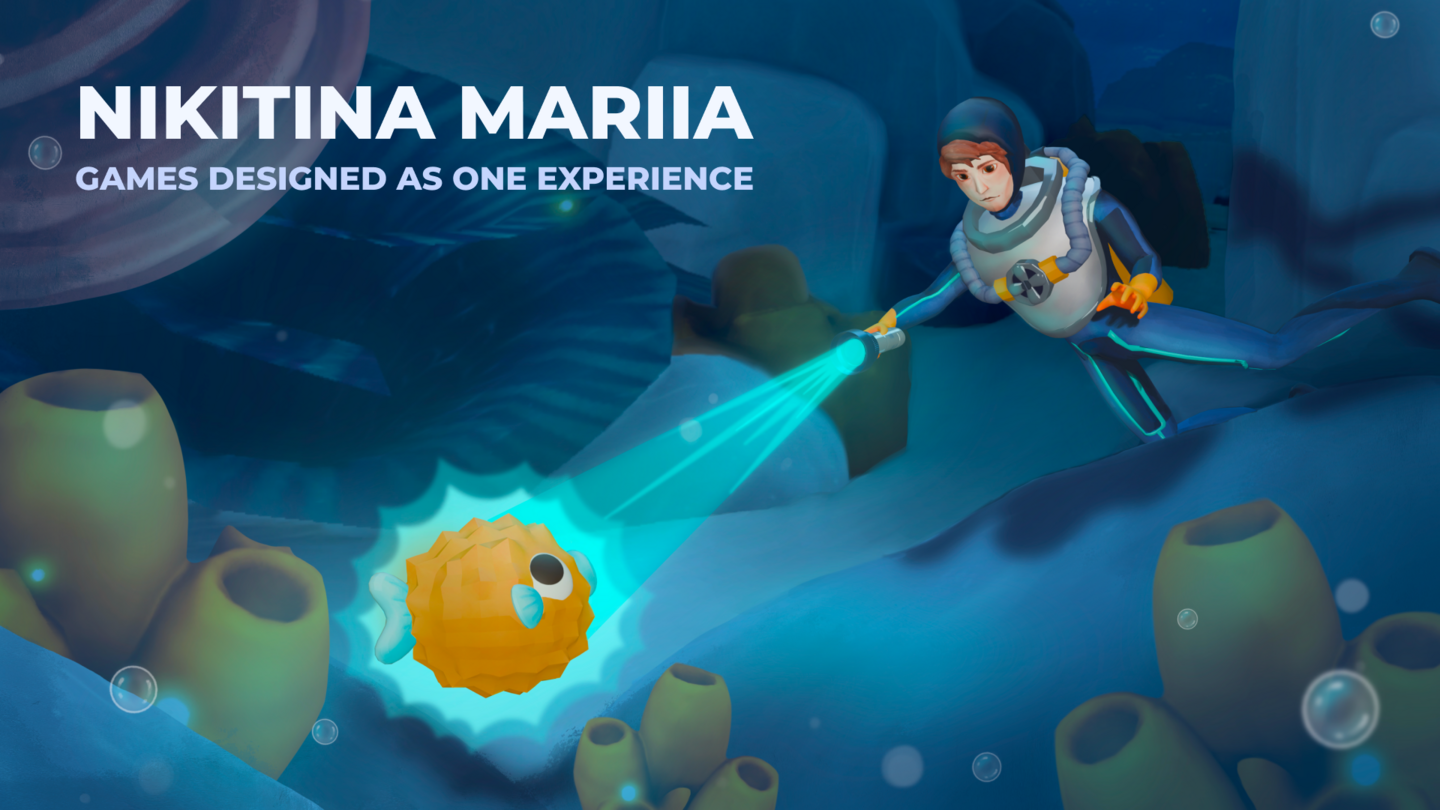
Hello, my name is Mariia!
Game Designer · Level Designer · Level ArtistI am a Game Design student at HSE University. For the past two years, I have been involved in student non-profit team projects—ranging from game design and level design to level art. I am deeply concerned with how a game is perceived: whether the player grasps the rules intuitively from the environment, whether the pacing is effective, and whether the mechanics and the level consistently tell the same narrative.Based in Moscow · Open to new projectsWhy do so many indie games feel broken—even when every part works?
The art is good. The mechanics are present. The levels are built. And still, players leave.The market is crowded: in 2025, nearly half of all Steam releases received fewer than 10 reviews, and only 2,99% of indie projects reached 1,000 reviews. The reason is rarely ambition. It’s disconnection: the level doesn’t teach the mechanic, the mechanic doesn’t serve the space, and the player leaves before the game has a chance.
I design games as a unified system—where every mechanic carries a spatial consequence and every space serves a mechanical purpose. Rules, pacing, and attention converge toward a singular experience.
My approach is simple: I design backward from the feeling.
Intent → Structure → Feel
It’s the same method for systems, levels, and level art—which is exactly why they end up working together.
What does it mean?
• Intent: what should the player feel or decide here? • Structure: which mechanic and which space make that happen—blockout, zoning, rules, pacing. • Feel: does it resonate with the player? Does it work as a whole?Want to see how it works? Here is what I’ve created!
THE ARCHITECTS
Year: 2025–2026 · Team: 6–9 people · Role: Game Designer, Level Designer
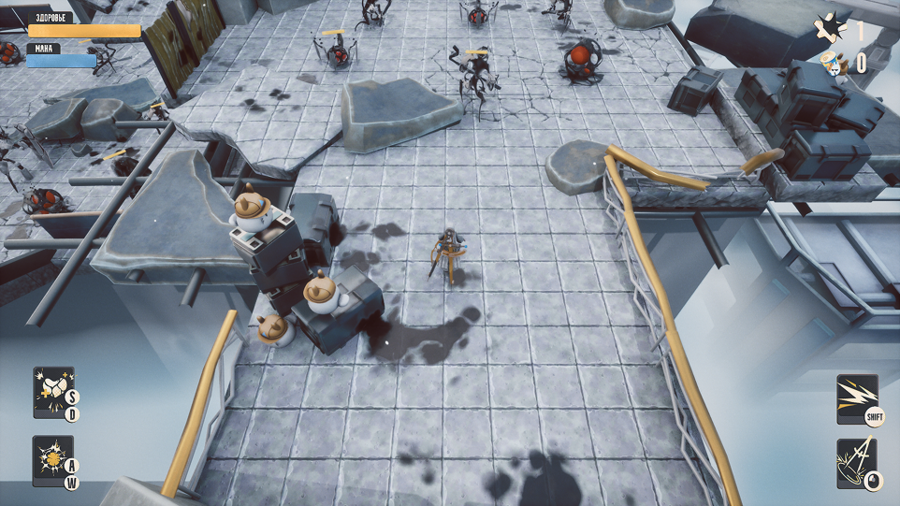
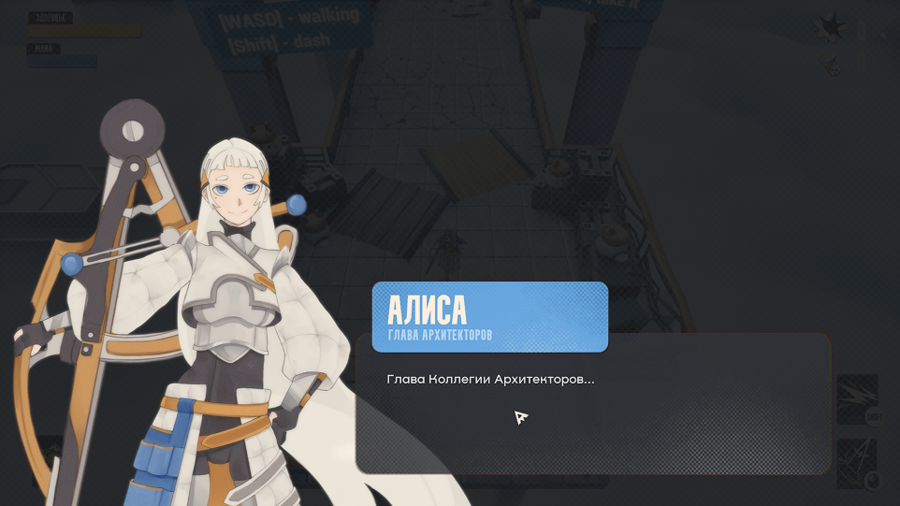
A 3D retro-futuristic action roguelike where combat runs and city restoration are two halves of a single loop. Players fight through districts, collect a single resource, and spend it to rebuild the city.
Design question: How do you make combat, resource economy, and city restoration feel like one cohesive loop instead of three separate activities?
Intent: The player should feel the tension between the risks of combat and the recovery of the hub world.
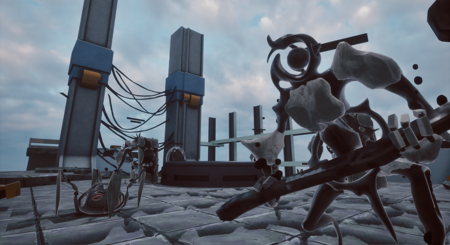
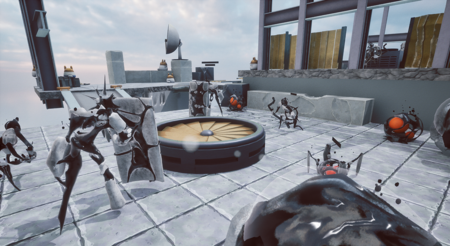
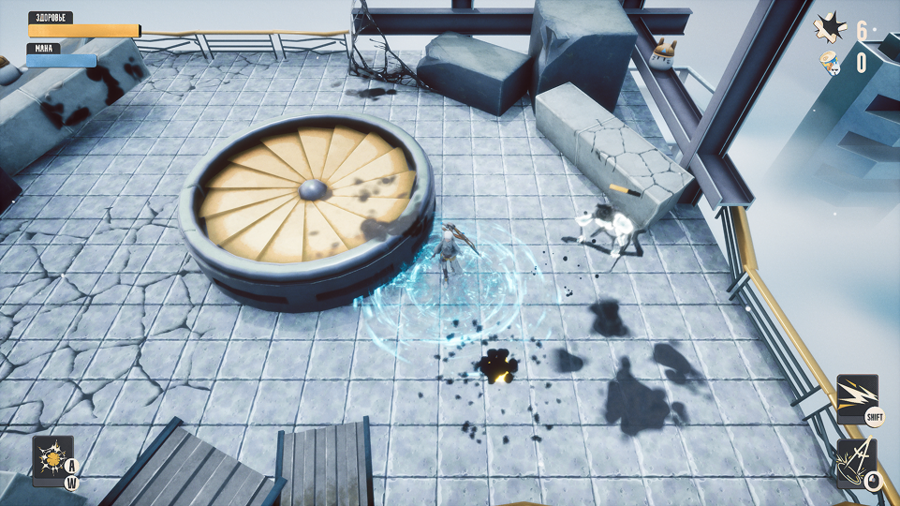
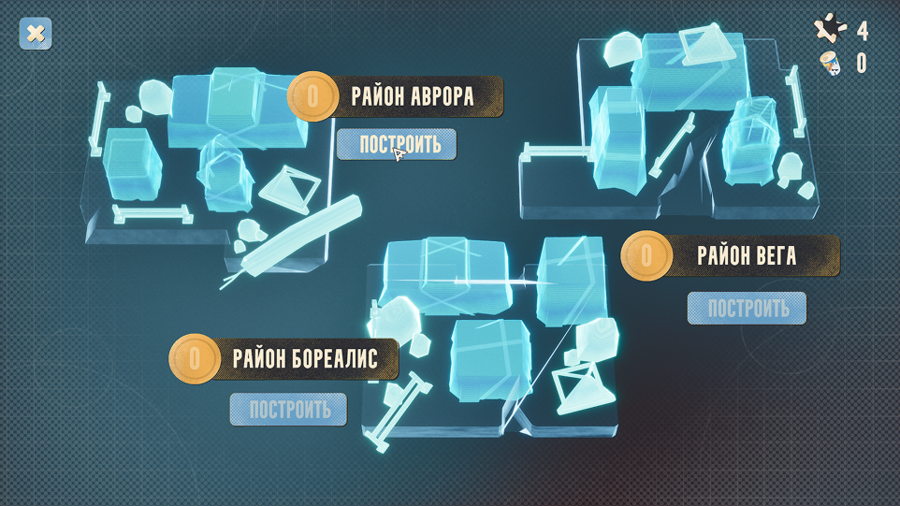
What I created: — Designed the two-phase loop: combat runs leading to hub restoration. — Designed the resource economy: one resource earned in combat and spent on city progression. — Built the modular arena system using reusable components—arenas, transitions, and obstacles. — Placed enemies and points of interest, and established difficulty progression from district to district.Experience & result: The environment successfully taught the economy, and district progression maintained the sense of goal orientation. Players felt the tension of risky expeditions and the relief of spending earned resources—the loop felt like a rhythm, not just a rule.
TURTLE TROUBLE
Year: 2024 · Team: 2 people · Role: Game Designer, Level Designer
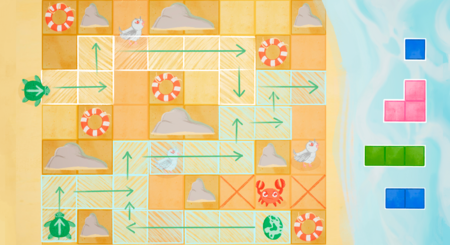
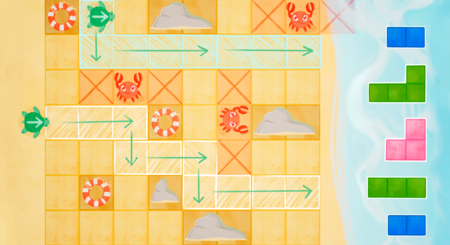
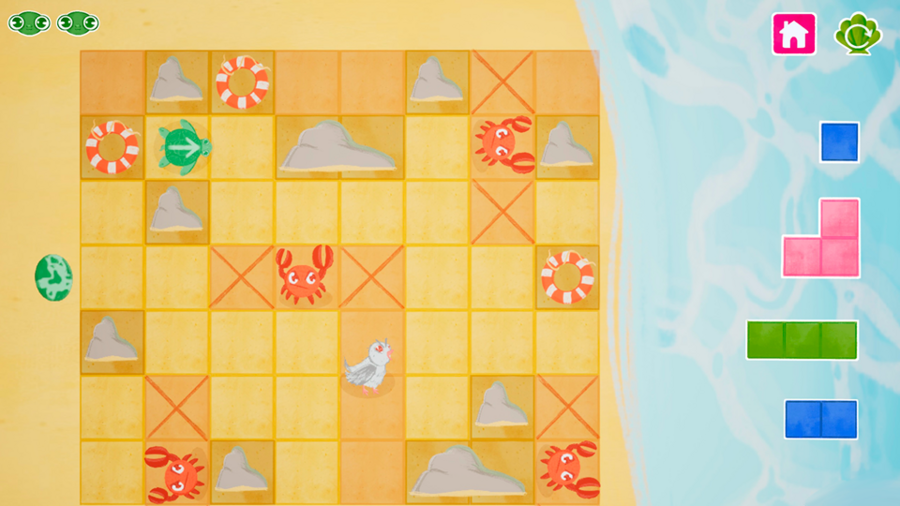
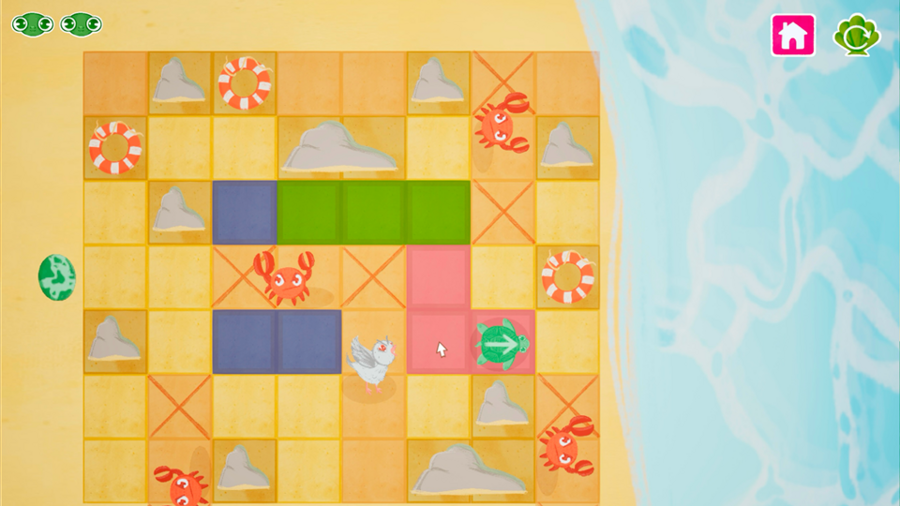
A top-down puzzle game where the player builds a safe path for newborn turtles from the nest to the sea.
Design Question: How do you make a simple path-building puzzle feel varied without adding new rules?
Intent: The player should feel the warmth of a small, gentle world—and the freedom to plan their own route, then re-plan when a threat forces adaptation.
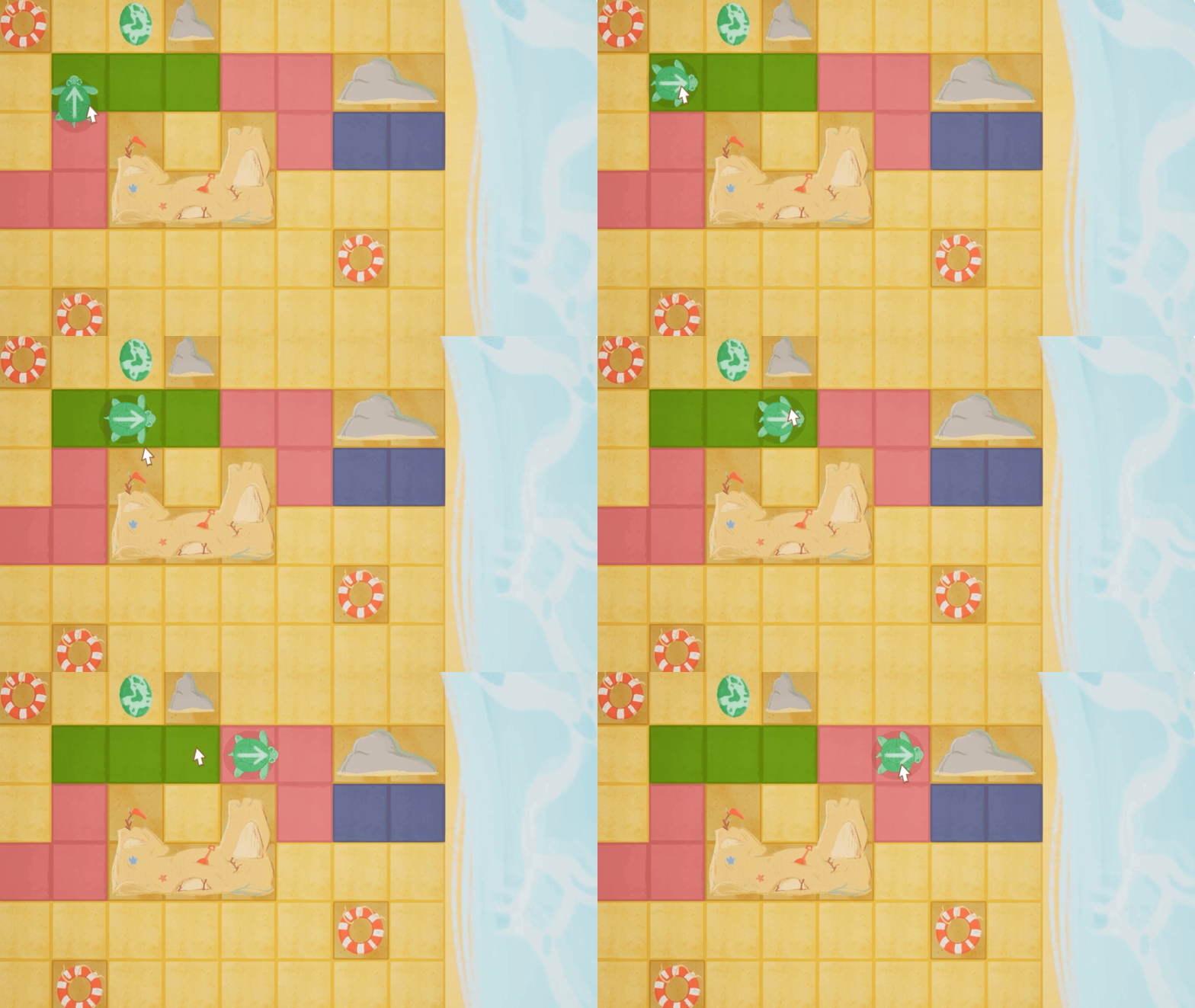
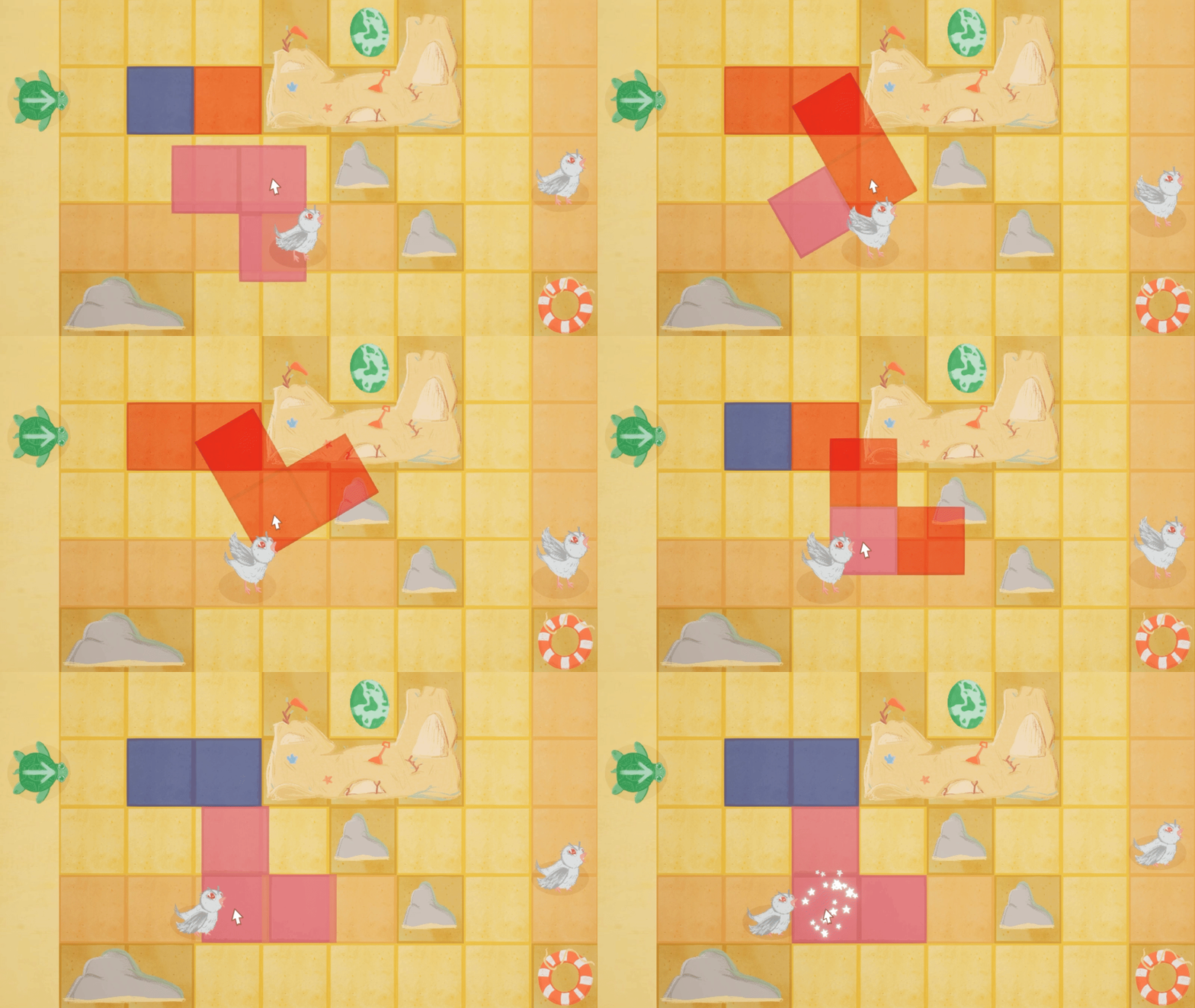
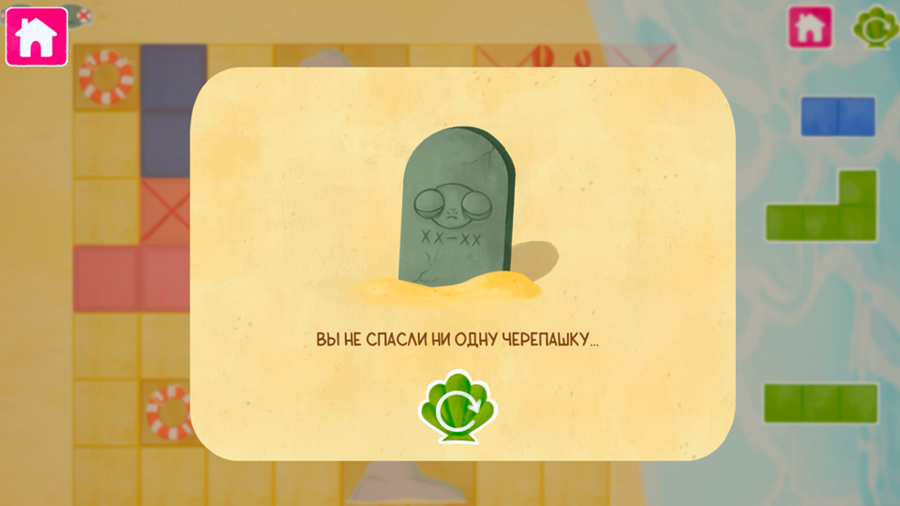
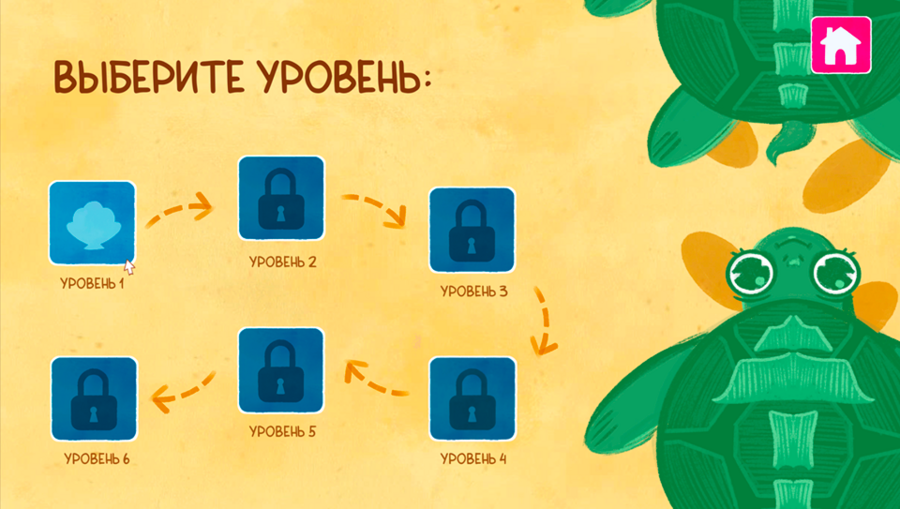
What I created: — Developed the core mechanic: a limited set of reusable blocks with varying shapes and lengths. — Implemented spatial mechanics: blocks can be picked up and repositioned until the turtles begin moving, causing the path to be dynamically rebuilt. — Designed patterned hazards: gulls following fixed routes and crabs attacking within localized areas. — Built all six levels and the difficulty curve, progressing from a single turtle on simple paths to multiple turtles navigating dense combinations of obstacles.User Experience & Outcome: Each level offers multiple solutions, and failure informs the player’s subsequent attempts. Players internalized the rules through geometric interaction rather than through textual instruction—the environment itself communicated what was safe, what presented risk, and what could be rearranged.
DEEPER & SALTIER
Year: 2025 · Team: 2 people · Role: Game Designer, Level Designer, Level Artist
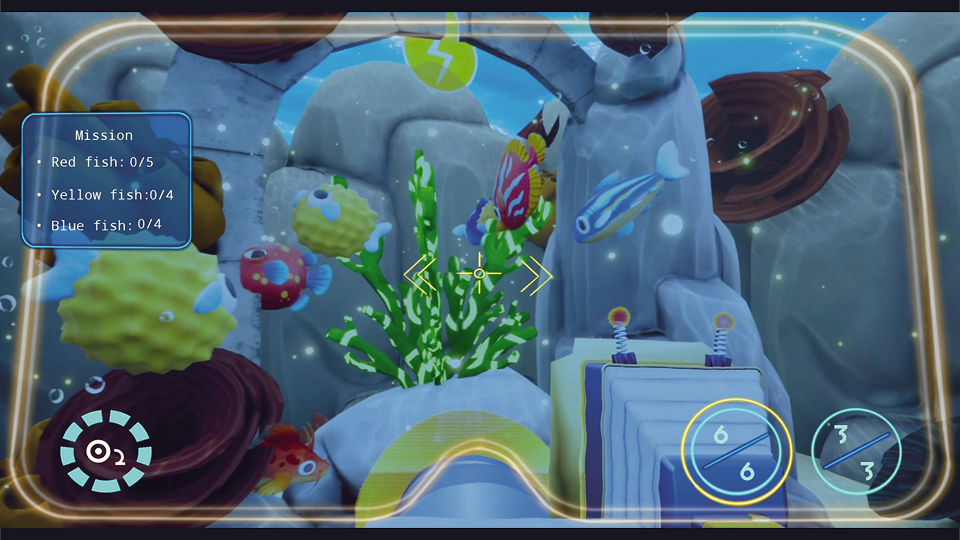
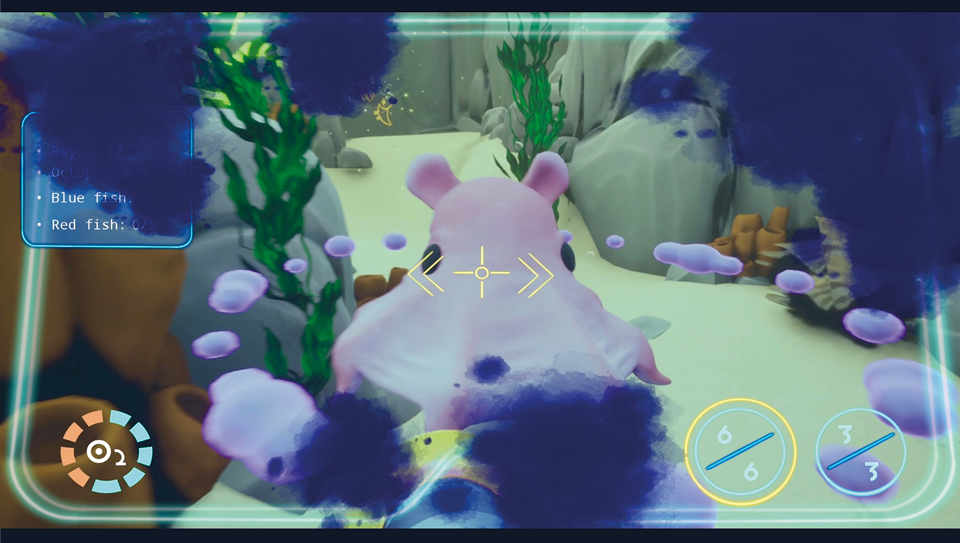
A first-person tactical shooter centered on underwater photography. A diver-photographer takes assignment shots of marine life—without startling the small fish or becoming prey.
Design challenge: How do you teach the toolkit step-by-step while ensuring every level feels like a distinct body of water?
Intent: Curiosity first, caution second. Each level introduces something new, yet remains calm enough to observe and strategize.
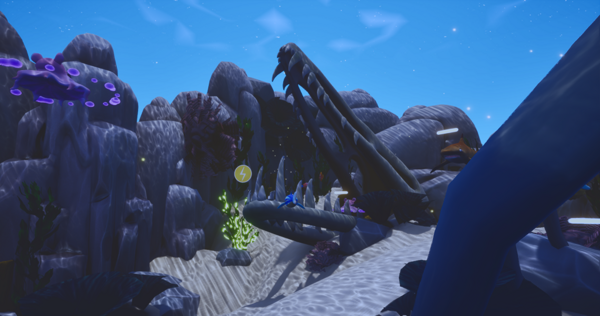
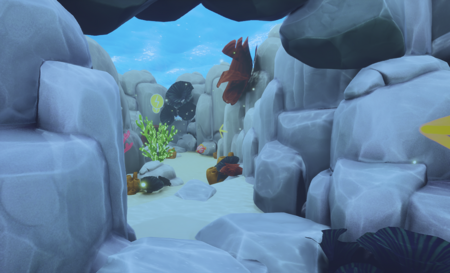
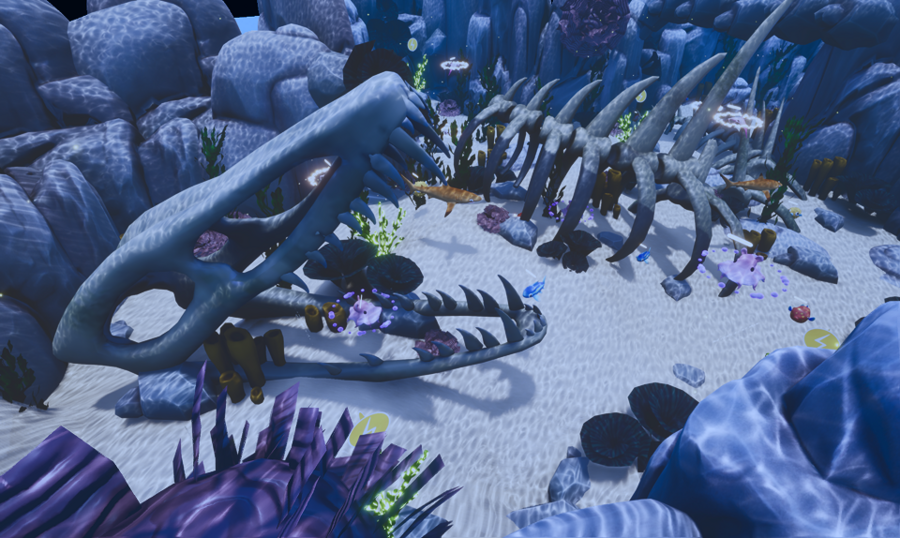
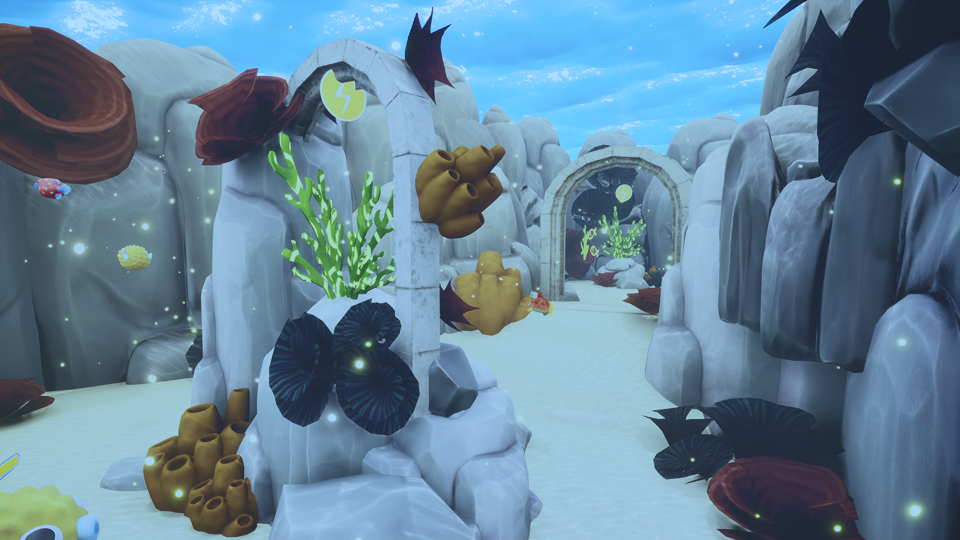
What I made: — Designed the teaching level structure: lenses and ammo → practice → coral behavior → free practice on safe targets. — Designed the enemy progression: small fish first, then rays and octopuses, then sharks. — Designed zones with different focuses: obstacle avoidance, luring fish to corals, free experimentation. — Built the level layouts and placed the creature zones and cover. — Worked on the lighting and atmosphere of the underwater spaces.Experience & result:Players learned by doing, not by reading—the level taught the entire toolkit before the first real threat. The zone logic kept attention shifting between caution and curiosity, so the space guided the player.
THE WAY HOME
Year: 2024 · Team: solo project · Role: Game Designer, Level Designer, Level Artist
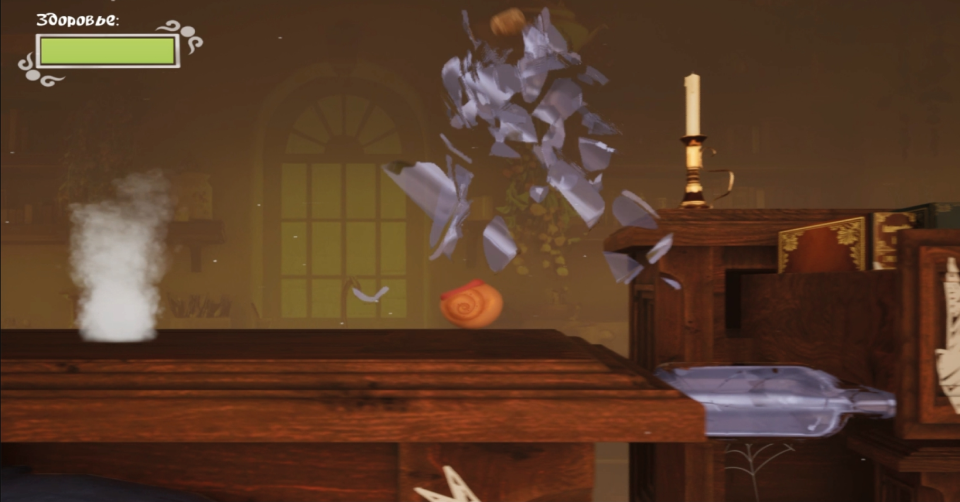
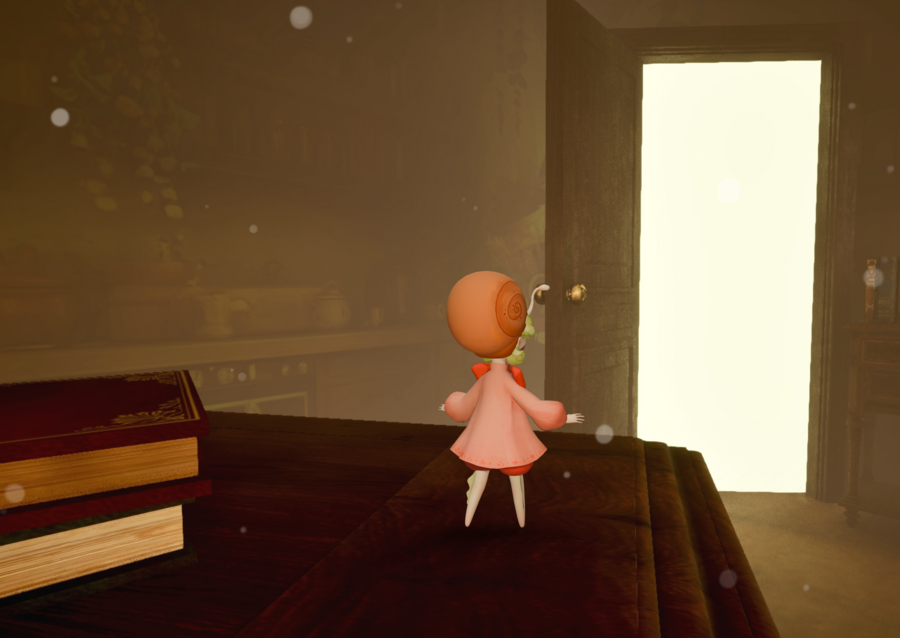
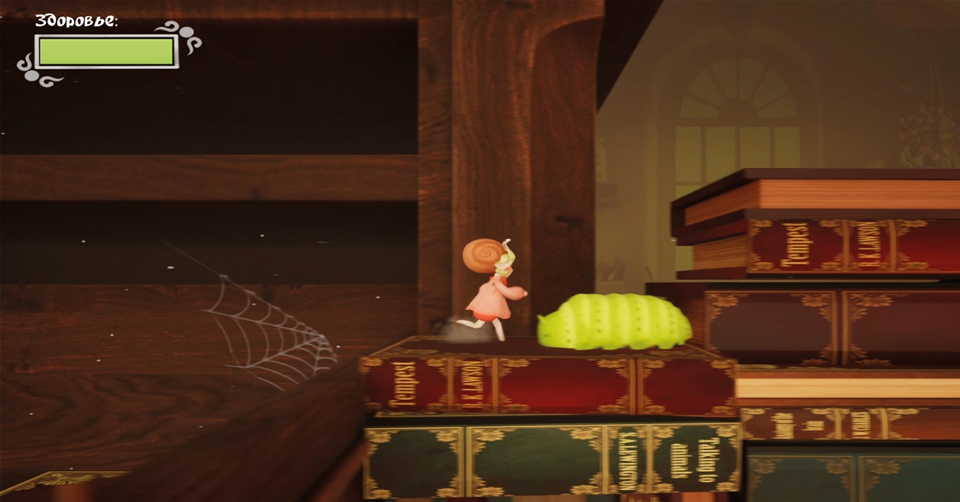
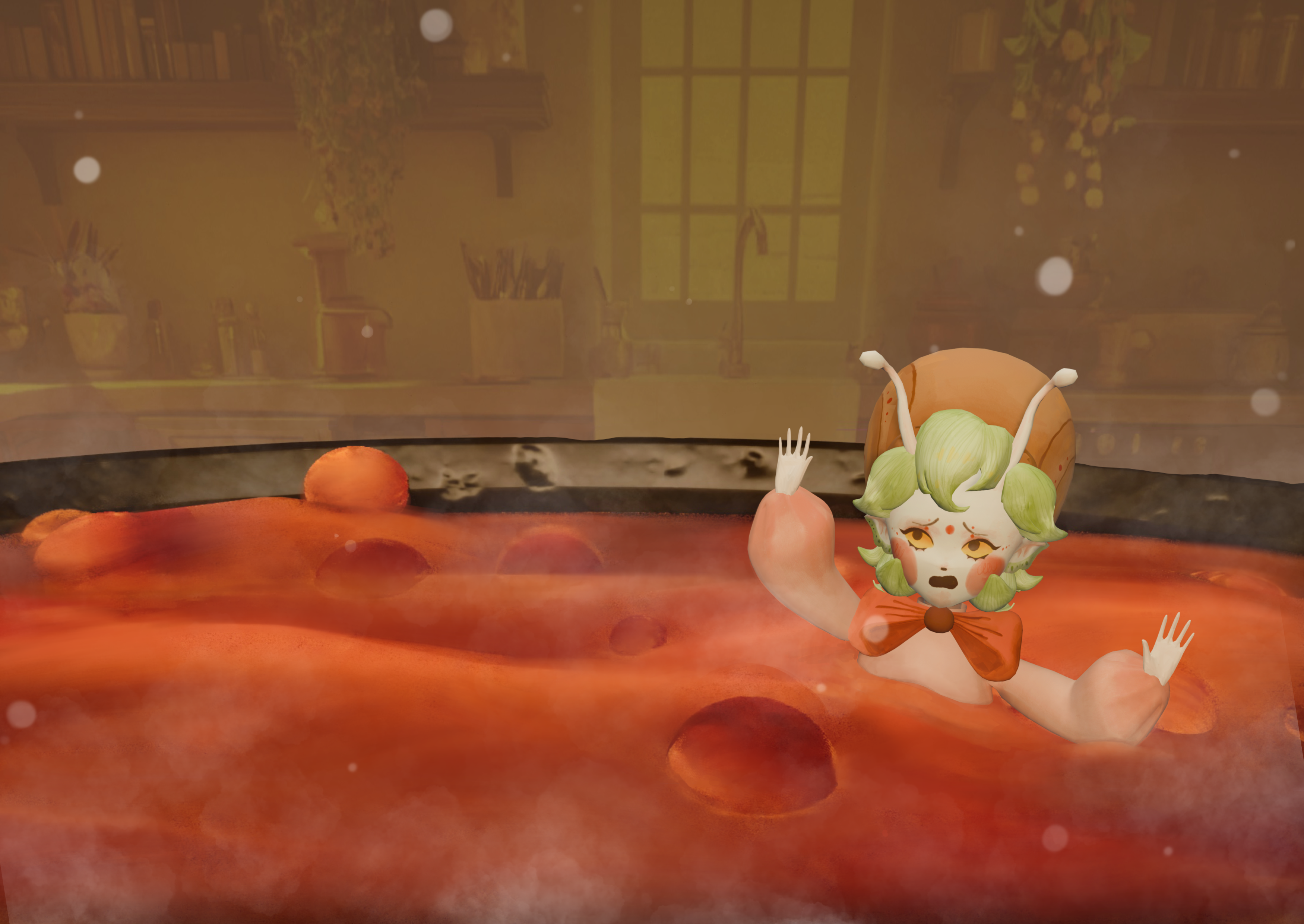
A 3D puzzle-platformer about a small snail that switches between two forms to bypass traps, platforms, and hot surfaces while escaping a witch’s house.
Design Question: How do you make one long level feel varied without introducing new mechanics? And how do you ensure both states are equally rewarding to choose?
Intent: The player must constantly switch between planning and reacting, while the level demands faster decisions and tighter timing—the challenge escalates without adding new rules.
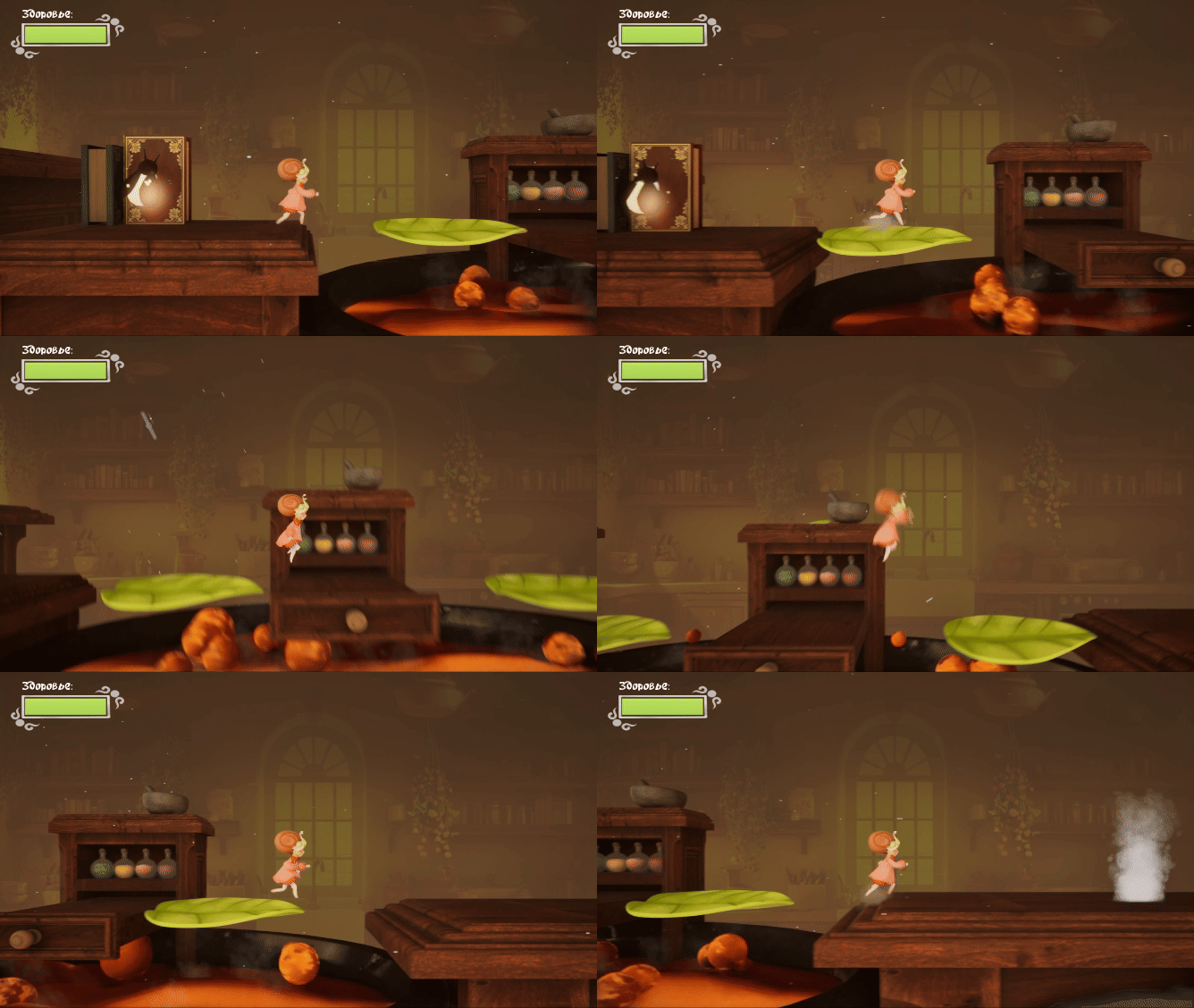
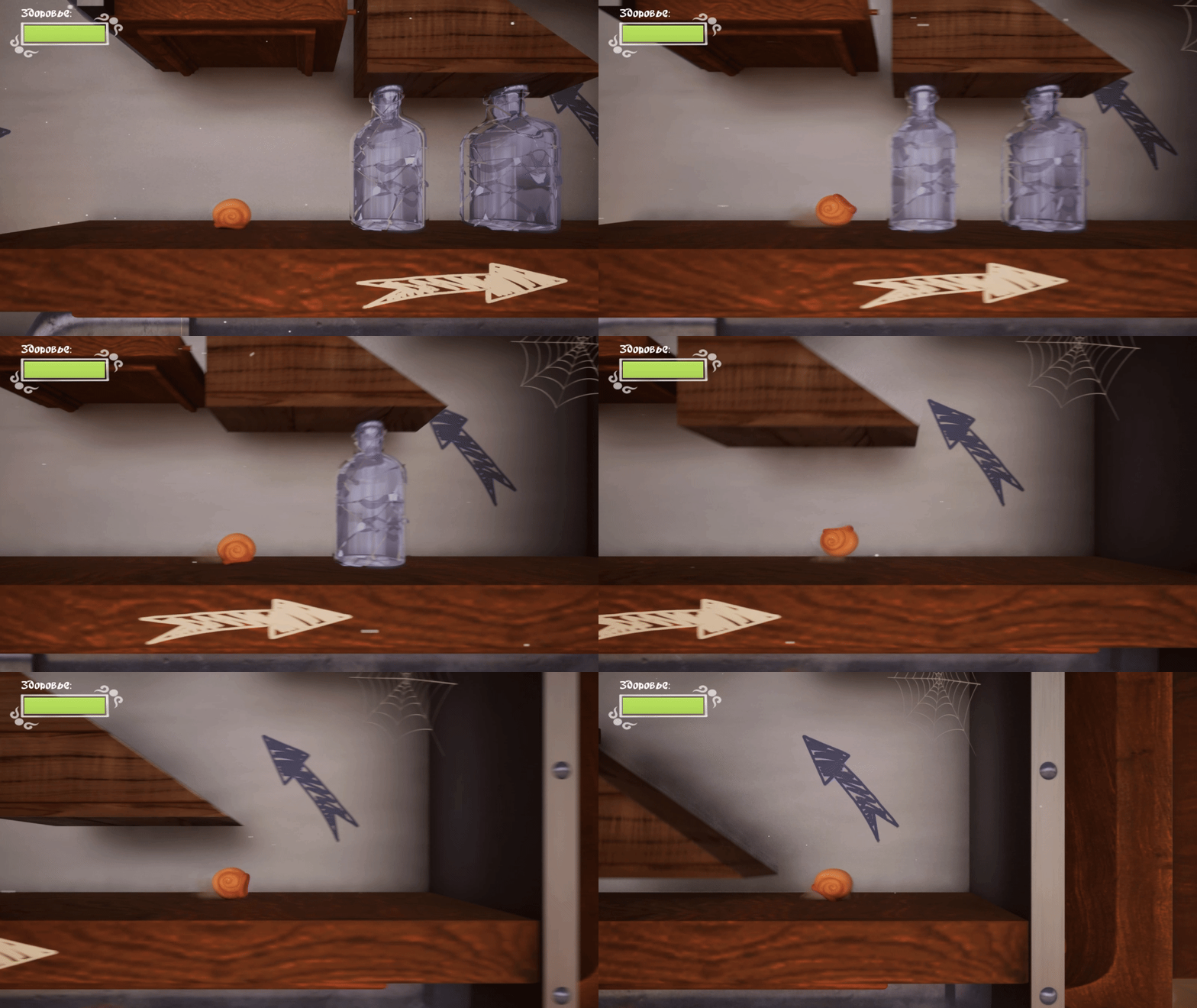
What I created: — Designed the dual-state system: a «shell» state (focused on speed, steam protection, and minimal jumping) and a «no shell» state (focused on jumping, climbing, and vulnerability). — Zoned the level based on focus: first, planning the sequence; second, reacting on the fly; and third, combining both approaches. — Built the platform and hazard logic to ensure every state change was contextually justified by the environment. — Established the pacing: tension building—followed by a safe pause—and then introducing a new challenge. — Refined the lighting, post-processing, and the overall visual atmosphere of the level.Experience & Result: Switching between states became the central skill, not just an auxiliary mechanic. The level’s zoning maintained player engagement throughout—the rhythm of planning versus reaction kept a solo-designed space from feeling repetitive.