Concept
Looking at a photograph featuring many similar objects, what draws your eye first? The individual items, each existing on its own, or the overall pattern formed by their repetition? Why might a row of identical windows on a building’s facade be perceived as a distinct graphic motif, while several similar objects on a table read as a unified composition?
Similar examples are found everywhere: in architecture, nature, daily life, and the material world. Sometimes, visual rhythm emerges completely naturally, thanks to the repetition of environmental elements. In other cases, the photographer intentionally draws attention to it by selecting a specific angle, scale, or object placement within the frame.
However, rhythm is not always built on complete similarity. It can appear through the alternation of different shapes, changes in size and proportion, the repetition of individual lines, or light and shadow patterns. Even a small deviation from the expected sequence can alter the perception of the entire composition—highlighting one object among others or, conversely, disrupting its visual balance.
Visual rhythm is interesting because it allows one to see a certain pattern in familiar objects and phenomena. A photographer can do more than simply capture multiple subjects; they can transform their arrangement, similarity, and differences into an independent compositional technique. In this way, repetition becomes not just a method of organizing the image, but also a tool for directing the viewer’s attention.
During this research, I will be most interested in how the repetition and alternation of elements are used to form visual rhythm in photography.
I want to explore the techniques that enable the creation of rhythmic structure, how it influences image perception, and the role it plays in compositional construction. The primary material will be original photobooks by various photographers, which allow for tracing different approaches to organizing visual space. I will refer to the works of Karl Blossfeldt, Albert Renger-Patzsch, and László Moholy-Nagy. Their photographs allow for examining rhythm from different perspectives: through the repetition of natural forms, the similarity between natural and artificial objects, geometric structures, and experimental methods of image construction. Furthermore, I believe it is important to pay attention to the photobook itself as a form of organizing photographic material. In some cases, rhythm arises not only within an individual shot but also between several adjacent images. Therefore, the study will also address the sequence of photographs on the pages and spreads.
Repetition is the foundation of visual rhythm
One of the most obvious ways to create visual rhythm is through repetition. This appears in various forms: from the arrangement of similar objects next to each other to the recurrence of individual details within a single object. The elements do not necessarily have to be identical. It is sufficient that they exhibit a certain degree of similarity, allowing the viewer’s eye to perceive them as a cohesive sequence.
This is especially evident in photographs of natural objects. Many plants already possess their own structure, built on repetition: leaves are arranged along the stem, petals form a circle around the flower’s center, and individual branches may echo the overall shape of one another. When photographing such objects, the artists pay attention to patterns that often go unnoticed during casual observation.
Karl Blossfeldt, «Art Archetypes, ” pp. 16–17, 24, 26
In the photographs of Karl Blossfeld in the photobook «Archetypes of Art, ” repetition often becomes part of the plant’s very structure.
In the first example, four sprigs are depicted in sequence: first a small one, followed by two larger ones, and then another small one. This arrangement creates a unique symmetry—the elements seem to balance each other in size. Furthermore, each sprig is topped with a similar bud. The repetition of these small forms creates an additional rhythm within the overall composition, and their placement suggests a smooth, undulating wave.
A similar principle can be observed on the following page, page 17. From one central stem, curved twigs branch off in both directions. They are positioned at approximately the same height and share a similar form, which creates a sense of symmetry relative to the center of the plant. However, the twigs do not perfectly replicate each other: their curves vary slightly. This illustrates that creating visual balance does not always require exact mirror symmetry—similarity in the form and placement of elements is often sufficient.
On page 24, repetition is established among individual objects. Three dry flowers, resembling cocoons, are placed next to each other. Their shape and overall curvature are similar, but the direction of the twist differs: the first element curves in one direction, while the other two curve in another. This slight variation in a simple repetition prevents the composition from being monotonous.
Page 26 also features three similar plants. The central one is slightly larger than the two on the ends, but all three share a similar shape and structure. This arrangement creates a sequence where the larger element is situated between the two smaller ones. The repetition continues within the plants themselves: their leaves are composed of small segments stacked above one another, forming a pyramid-like shape. Thus, the rhythm is discernible on two levels—among the individual plants and within each one.
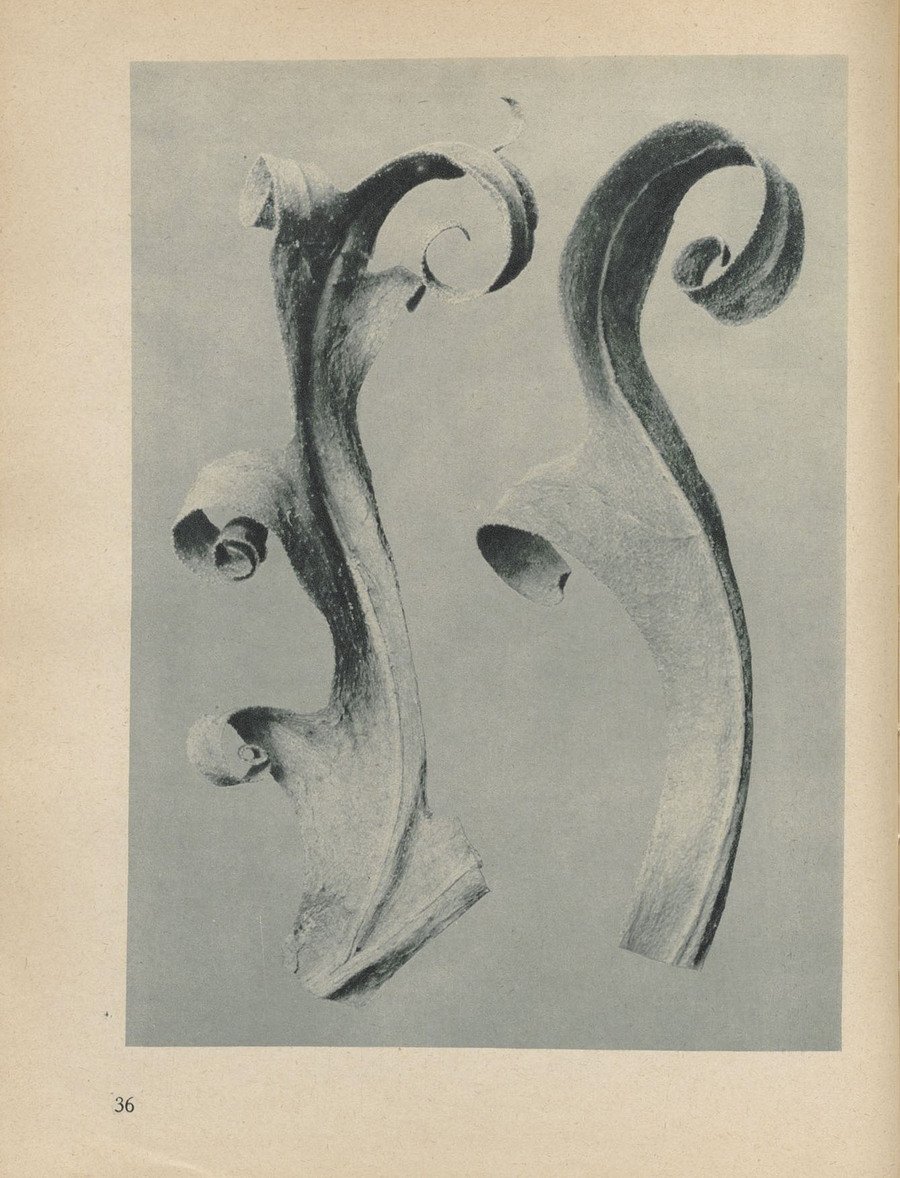
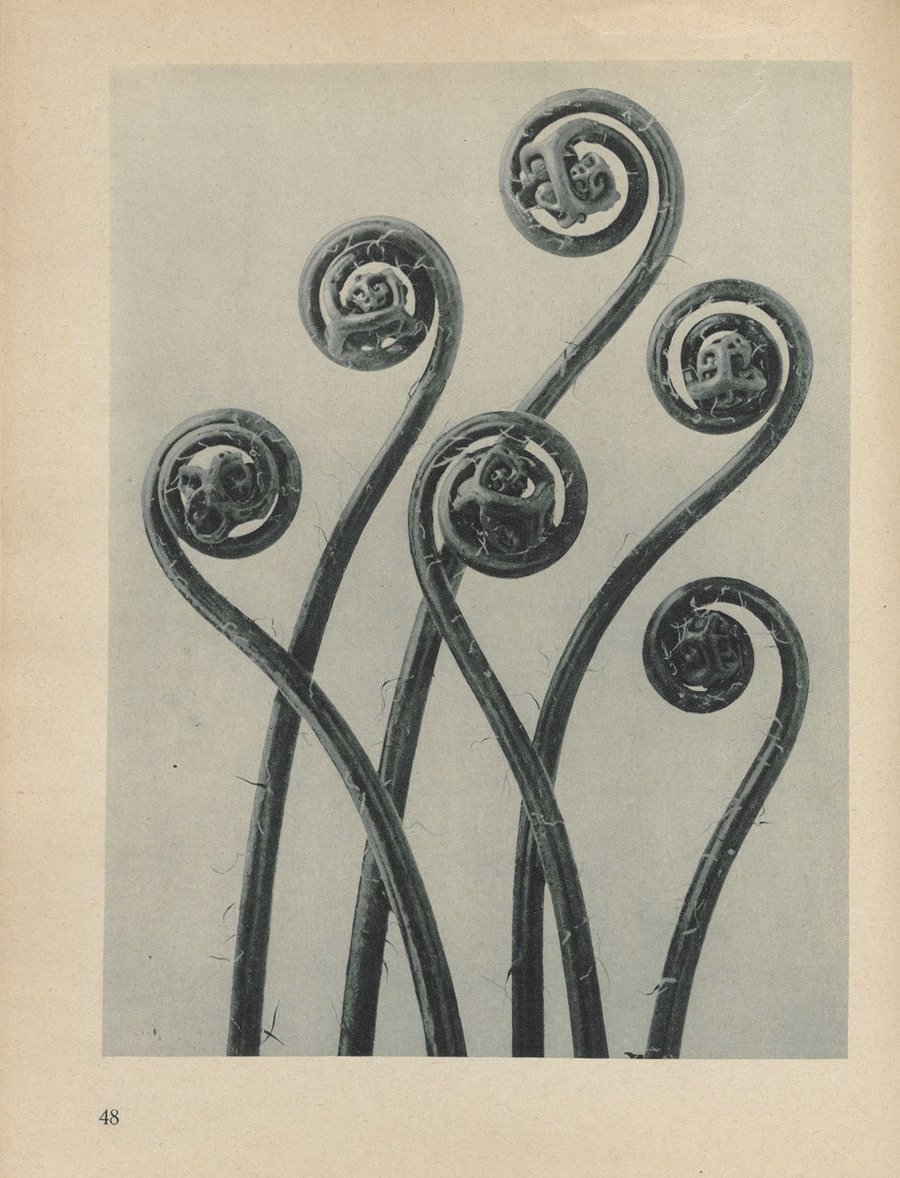
Carl Bloßfeldt, «Art Archetypes, ” pp. 36, 48
On page 36, two dried leaves are depicted, their form resembling a wave. Their outlines curve from bottom to top, and the ends spiral inward. The leaves are very similar in their curvature, allowing the viewer to easily compare them. Here, it is not so much a single detail that is repeated, but rather the overall line and the direction of the form’s movement.
A more complex combination of repetition and alternation can be seen on page 48. Deep within the composition are four spiral elements, twisted in one direction, and in the foreground are two more, oriented in the opposite direction. When viewing all elements together, an alternation of different twisting directions emerges. Moreover, the spirals are reminiscent of waves or recurring fence bends.
Carl Blossfeldt, «Archetypes of Art, ” p. 79; Albert Renger-Patzsch, „The World is Beautiful, ” pp. 6, 27
The next example of repetition is presented on page 79. The flower is composed of numerous small inflorescences arranged in a circle around a central point. This results in radial symmetry: individual elements repeat along the circumference, forming a unified circular structure. A similar principle can also be observed in Albert Renger-Patz’s book, Nature is Beautiful, on page 6. The photograph also depicts a natural object featuring small elements radiating from the center.
This example can also be correlated with the photograph of a snake. Here, the repeating element is not the plant’s form, but the scales on the body’s surface. They are placed very closely together, creating a continuous texture. Furthermore, the curve of the snake’s body suggests a feeling of coiled movement. Thus, repetition can manifest not only in the arrangement of individual objects but also in the surface details of a single object.
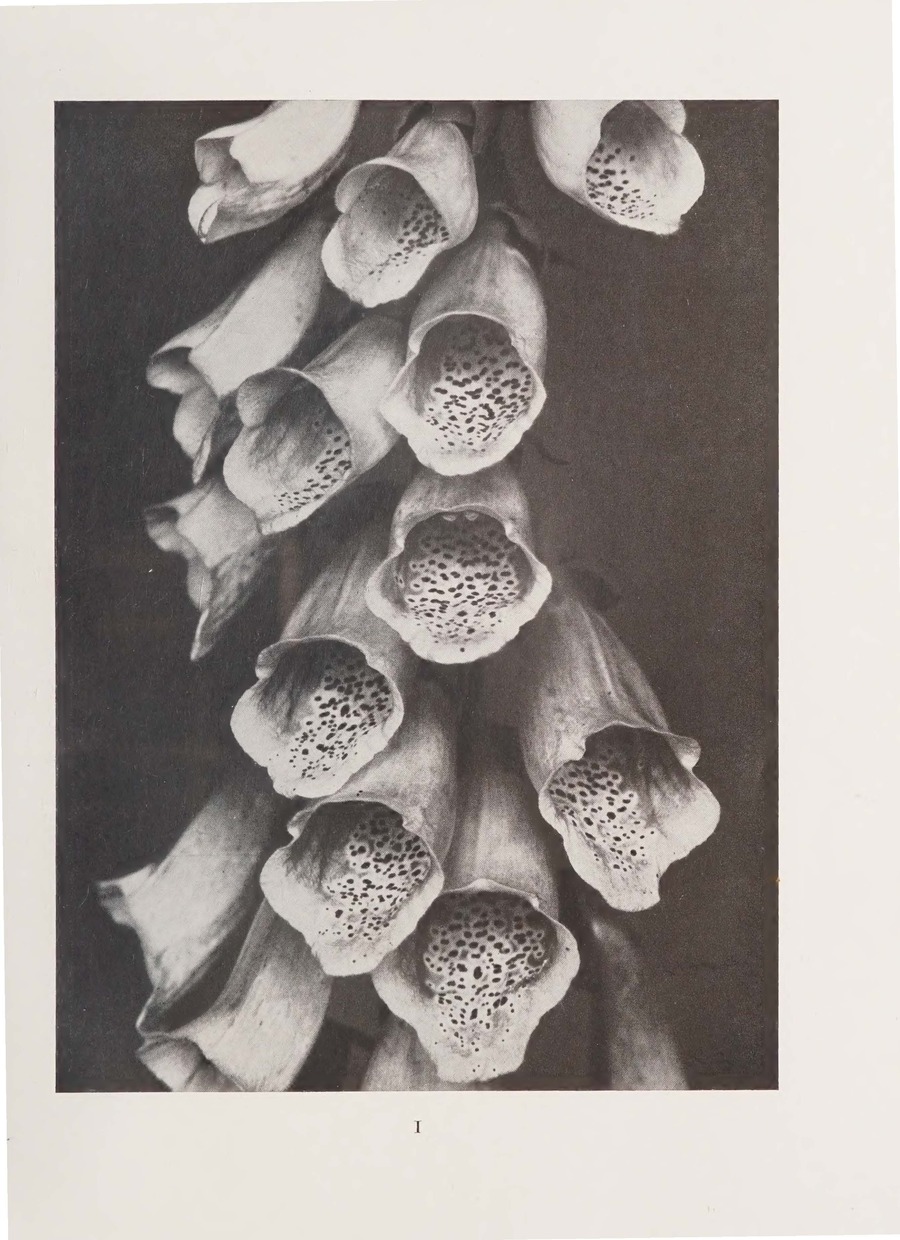
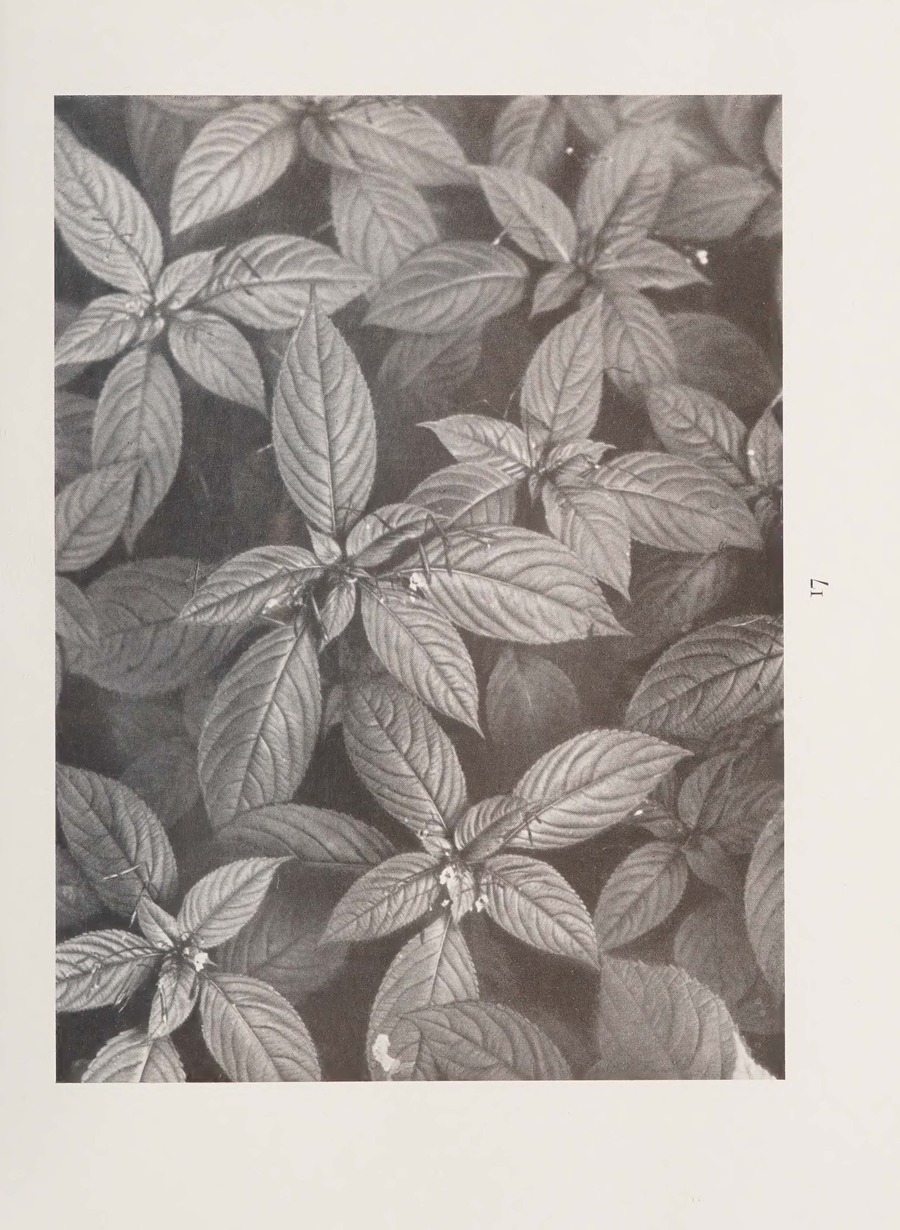
Albert Renger-Patz, «The World is Beautiful,» pp. 1, 17
In the book by Albert Renger-Patz, which was mentioned earlier, repetition is also found in photographs of natural objects, though it manifests slightly differently. For instance, page 1 depicts a cluster of small, tubular flowers gathered on a single stem. The repetition is noticeable not only in the shape of the flowers themselves but also in their internal structure: each flower shows numerous fine dots that create an additional rhythm.
Albert Renger-Patz, «The World is Beautiful, ” pp. 22, 30
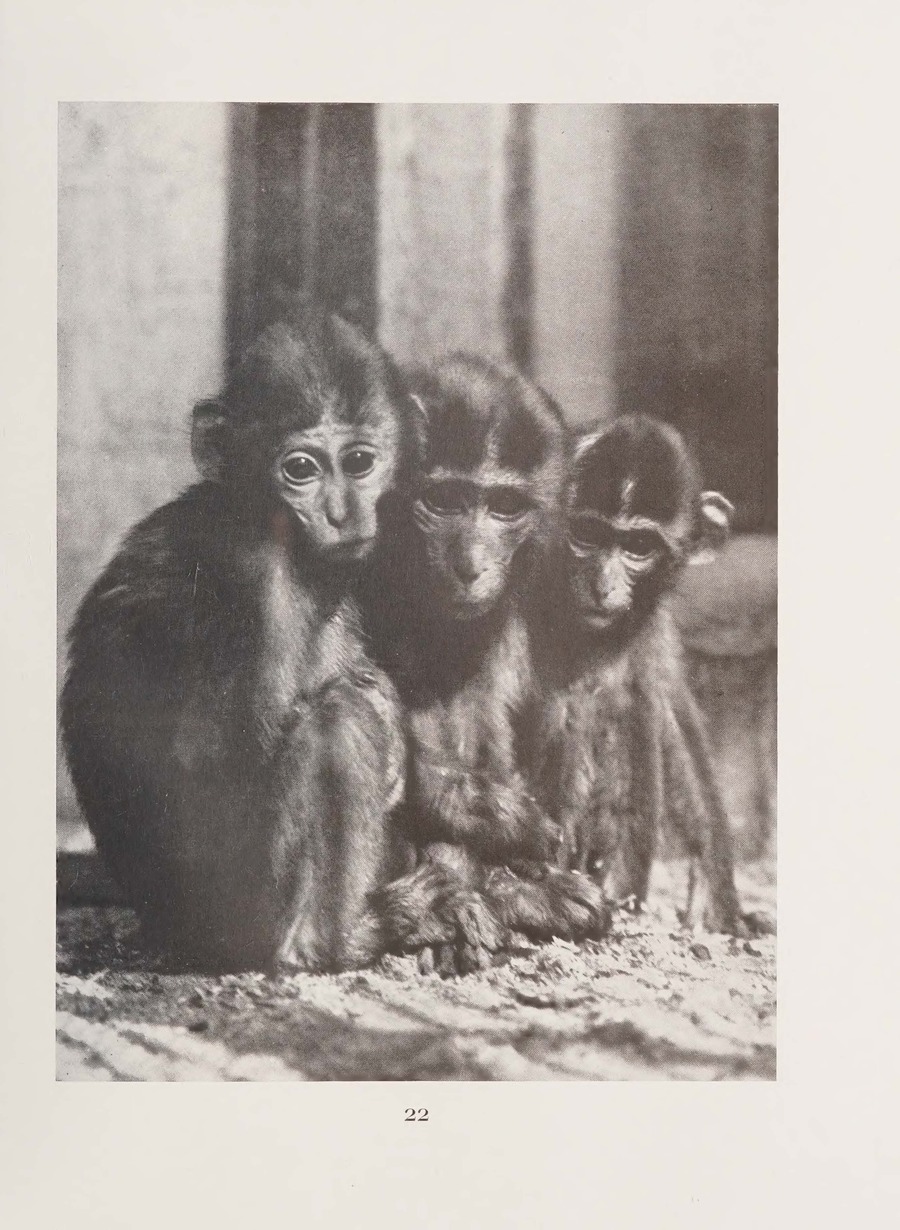
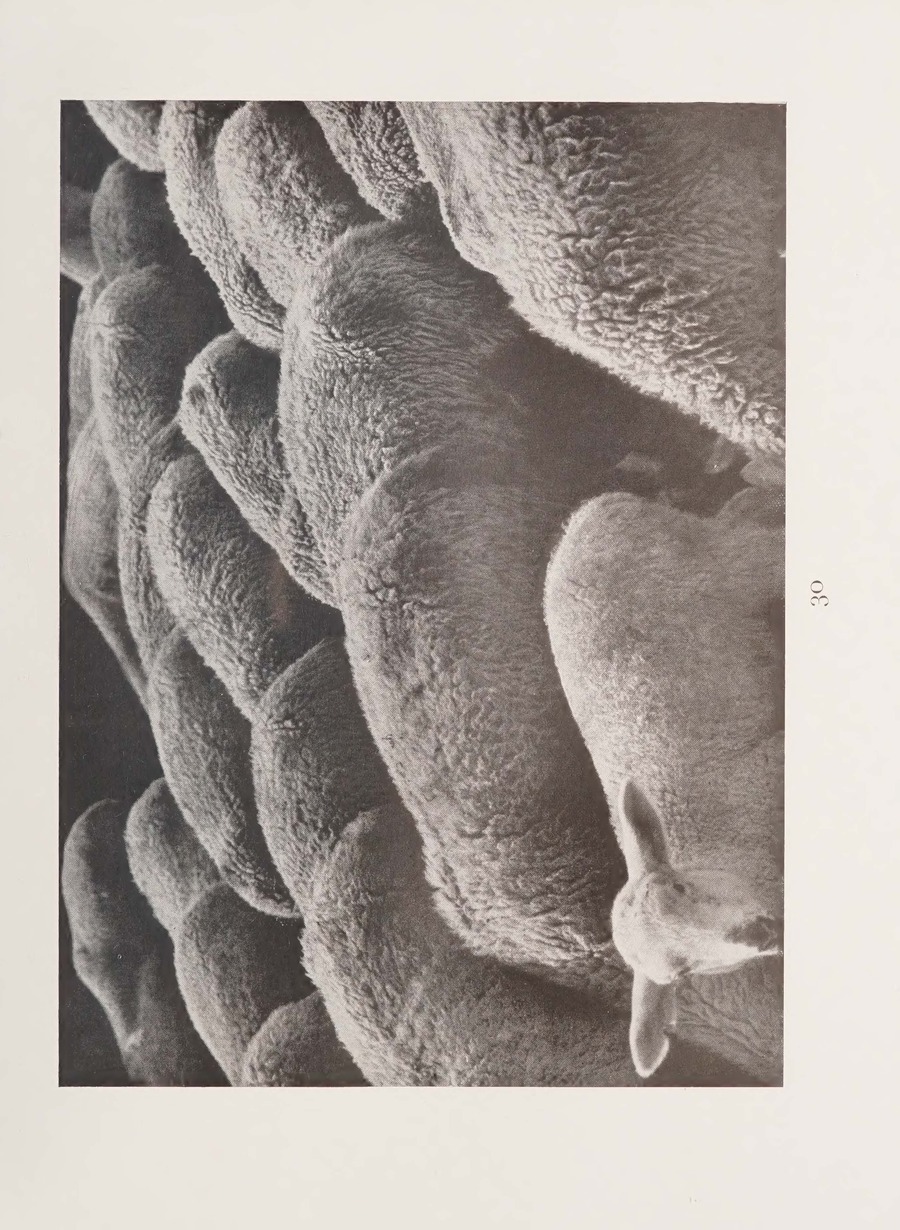
On page 22, three small monkeys are depicted sitting next to one another. They are not perfectly aligned—the figures shift slightly into the background, creating a subtle perspective. Because the animals are similar in size and positioning, the eye perceives them as a sequence of repeating forms.Repetition manifests quite differently on page 30, which features a flock of sheep. The animals are arranged so densely that they almost entirely fill the frame. On the foreground, one sheep has lifted its head, while the others are visible predominantly from above—the eye is immediately drawn to the multitude of similar rounded backs. If you disregard the animal with the raised head, the individual figures become less distinct and almost merge into a single surface. Here, repetition transforms into a distinct pattern, and the individual objects begin to be perceived as a unified whole.
In László Moholy-Nagy’s book, «Painting, Photography, Film, ” repetition is found not only in natural objects but also in architecture, objects, and experimental compositions.
Laszlo Moholy-Nagy, «Painting. Photography. Film, ” p. 48
On page 48, a flock of flying birds is depicted. Due to the strong contrast, individual silhouettes sometimes merge into one another: the birds are perceived more as dark contours than as distinct figures. However, their multitude creates a unified, directed motion.
Here, the repetition functions not so much because of the detailed similarity of each object, but due to the overall form and placement of the silhouettes.
László Moholy-Nagy, «Painting. Photography. Film, ” pp. 55, 66
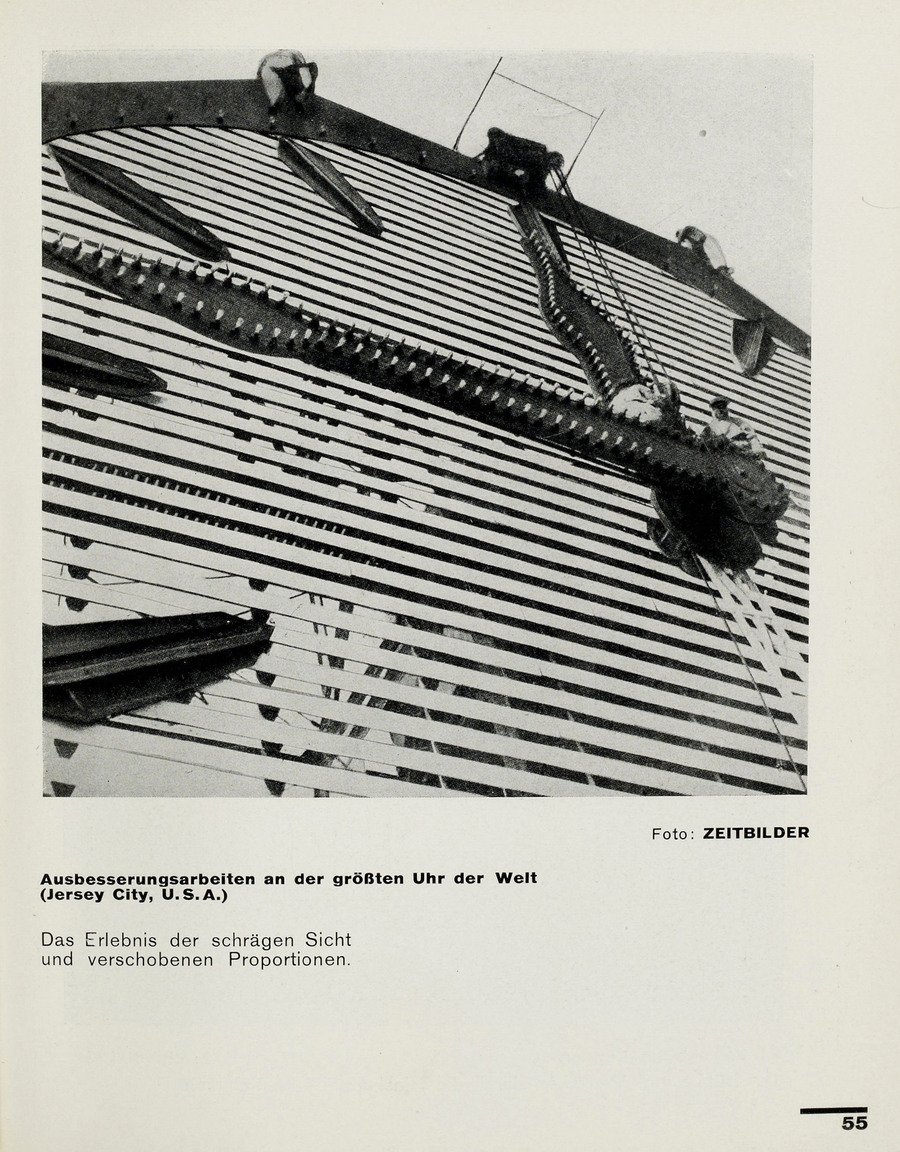
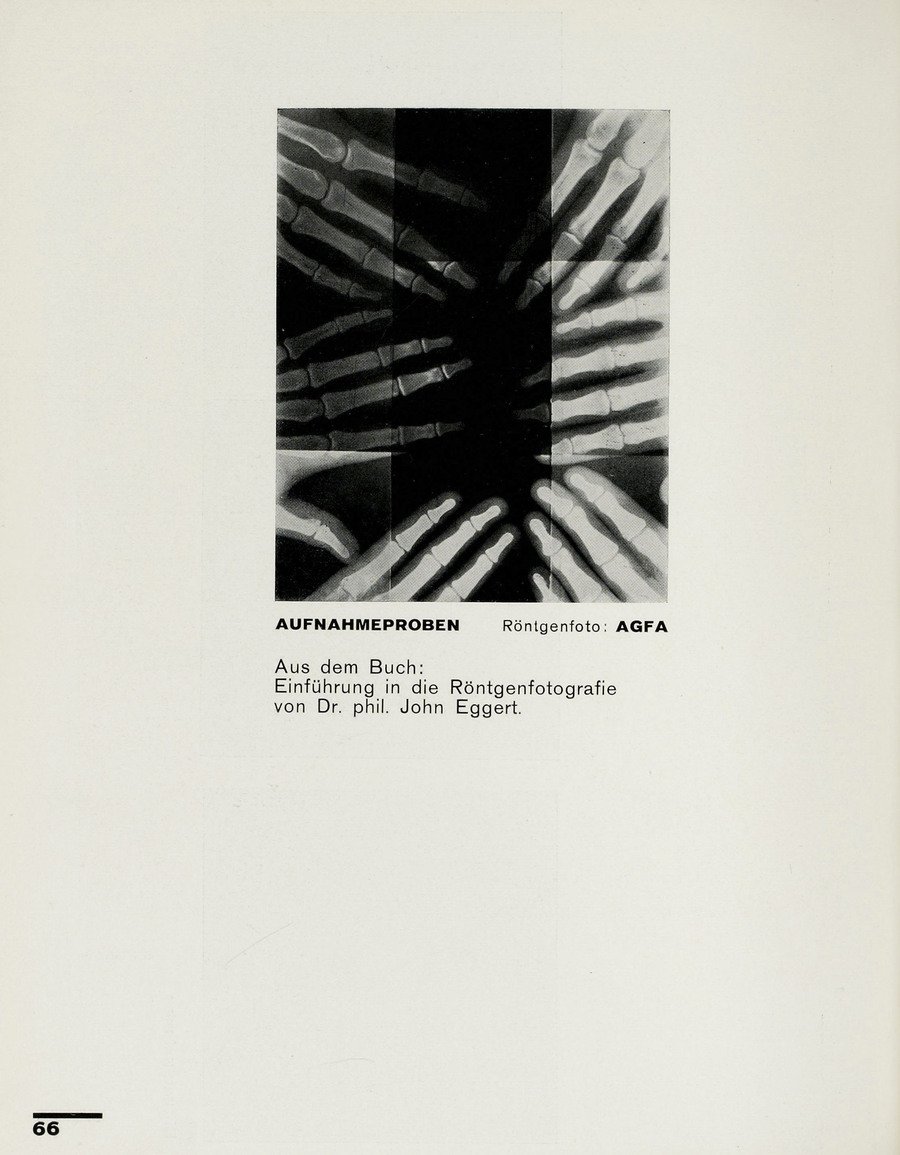
On page 55, a close-up of a clock is displayed. Its structure features repeating vertical elements resembling small slats or plates. These are stacked atop one another, drawing the eye upward and creating a pronounced directionality. This repetition is also present in the details of the hands: protruding elements line their edges, forming additional relief. Thus, even individual parts of the object can establish their own rhythm.Page 66 presents X-ray images of hand parts arranged in a circle. Within each image, the skeletal structures of the fingers are visible, composed of similar fragments.
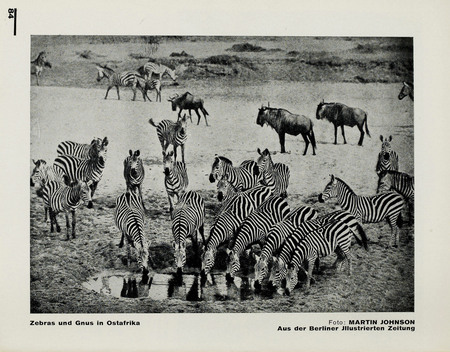
The image on the left depicts a herd of zebras by a water source. In the foreground, the animals are gathered quite densely, drinking water, while further back, they become fewer in number. Repetition is noticeable here on several levels: within each zebra, due to the characteristic striped pattern, and among the animals themselves because of their similar silhouettes. Concurrently, the density of the group gradually changes—the figures occupy most of the space in the foreground, while there is more open space between them in the background.← Laszlo Moholy-Nagy «Painting. Photography. Film» p. 84
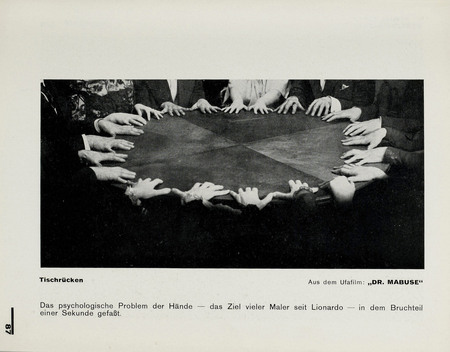
And the final example features a round table surrounded by people. Their clothing nearly blends with the dark background, so the viewer’s attention is immediately drawn to the light-colored hands placed around the edge of the table. They form a circular sequence and become the main recurring element of the composition. Although the hands belong to different individuals and vary slightly in position, their collective arrangement unifies the entire image.← Laszlo Moholy-Nagy, «Painting. Photography. Film, ” p. 87