Concept
Luxury is often associated with expensive materials, intricate ornamentation, and conspicuous displays of wealth. However, items of a completely different nature are found in affluent homes, designer interiors, and museum collections. A chair might resemble furniture from a rural home, a lamp might be an ordinary bottle, and a table might be a wooden crate. These objects appear simple, yet they can be highly valued.
Why do people who have access to expensive items choose forms associated with everyday life, physical labor, or material scarcity? What makes a simple object desirable in an environment where objects are expected to possess exceptional quality and expressiveness?
Исследовательский вопрос:
Why does the elite appropriate forms of life from which it strives to socially differentiate itself?
The elite encompasses various privileged groups: court aristocracy, wealthy patrons, collectors, and buyers of original design. Their tastes and capacities differ, meaning the reasons for seeking simplicity may also vary. For some, it offers a respite from formal settings; for others, it demonstrates an interest in craft, history, or unconventional design ideas.
Everyday objects cannot be lumped into a single category. A rustic chair, military furniture, and reused packaging emerged under different circumstances. Some items are linked to local tradition, others to production requirements, and a third to the desire to utilize what is already available. However, they share a common characteristic: initially, their value was largely determined by their utility.
When these objects transition into a different environment, their meaning changes. Their appearance, meanwhile, sometimes changes only slightly.
Гипотеза исследования:
The elite turns to everyday forms because they allow for a novel expression of taste and a particular sensibility toward objects. Prestige is built not only through luxurious appearance but also through authorship, manufacturing quality, the object’s history, and the setting in which it resides.
The history of this engagement with simplicity dates back to the 18th century. Marie Antoinette commissioned buildings resembling a rural village and porcelain tableware for dairy products. In the 19th century, artists and designers found value in folk furniture and manual craftsmanship. In the 20th century, industrial chairs, appliance parts, and salvaged materials entered home interiors. At the beginning of the 21st century, familiar, unassuming objects have become a distinct theme in авторского (author’s/designer’s) work.These examples show that simplicity can be the result of significant effort. Behind a chair’s delicate legs lies the precise work of artisans. Behind a deliberately rough surface lies thoughtful composition. Behind an object made from salvaged items lies an idea that changes one’s perception of a common material. Therefore, a modest appearance does not automatically mean low cost or ease of manufacture.However, it would be inaccurate to attribute every simple object to a desire to stand out. Designers might have sought to make furniture more accessible, to teach people how to assemble it themselves, or to reduce material consumption. Later, such projects might gain museum recognition and capture the interest of collectors. The initial purpose of an object and its subsequent destiny do not always align.This study is dedicated to this shift in meaning. At its core is the question of how an ordinary form becomes extraordinary and why familiar objects begin to be perceived differently. The prestige of simplicity arises where qualities previously unnoticed are discovered within a commonplace object.
Table of Contents
1. Rural Life as Privilege: Rococo Pastoralism of the 18th Century.
2. Authenticity over Grandeur: Folk Form and Authorship in Craft.
3. From Equipment to Classic: The Cultural Reappraisal of Utilitarian Furniture.
4. Simplicity Under the Guise of Authorship: Board, Box, and Self-Assembly.
5. From Field and Workshop to Living Room: The Finished Component as a Design Gesture.
6. Biography Over Novelty: Used Objects in Conceptual Design.
7. Necessity as Expressive Language: The Objects of the Campana Brothers.
8. The Right to the Mundane: Simplicity in 21st-Century Design.
9. Conclusion.
10. Bibliography and Textual Sources.
11. Image Sources.
1. Rural Life as Privilege: 18th-Century Courtly Pastoral
At the end of the 18th century, rural life began to attract the aristocracy. It was associated with nature, tranquility, and freedom from the strict rules of court life. However, the primary interest was drawn to its pleasant aspects: leisurely strolls, small homes, gardens, and fresh produce.
For Marie Antoinette, the Queen’s Village was constructed at Versailles. Its buildings resembled country houses, despite being located within the royal estate. It featured a genuine farmstead, though some structures were designed for relaxation and entertaining invited guests.
Richard Mick. Queen’s Village, Versailles. 1783–1786. Modern View.
Straw roofs, wooden fences, and buildings of various sizes create the impression of an ordinary village. But this setting was commissioned by the queen. The apparent spontaneity was meticulously planned in advance.
Richard Mick. Grand Dairy Room of the Queen’s Village, Versailles. Circa 1785. Interior before restoration. Photograph: Thomas Garnier / Château de Versailles
The dairy hall demonstrates how a rustic theme evolves within a courtly setting. The stone facade and meticulously arranged interior transform the encounter with dairy products into a distinguished experience. The utilitarian building acquires a formal, stately character.
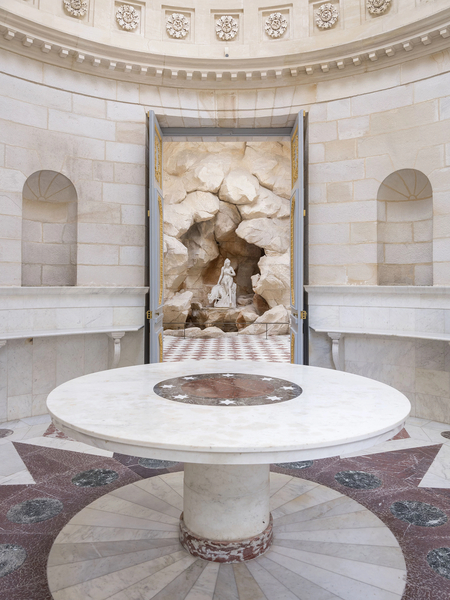
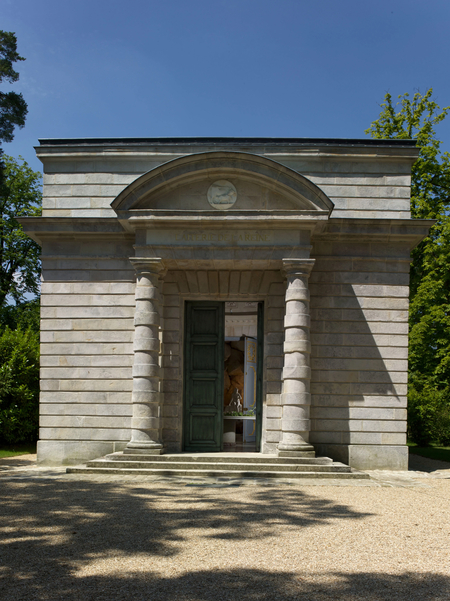
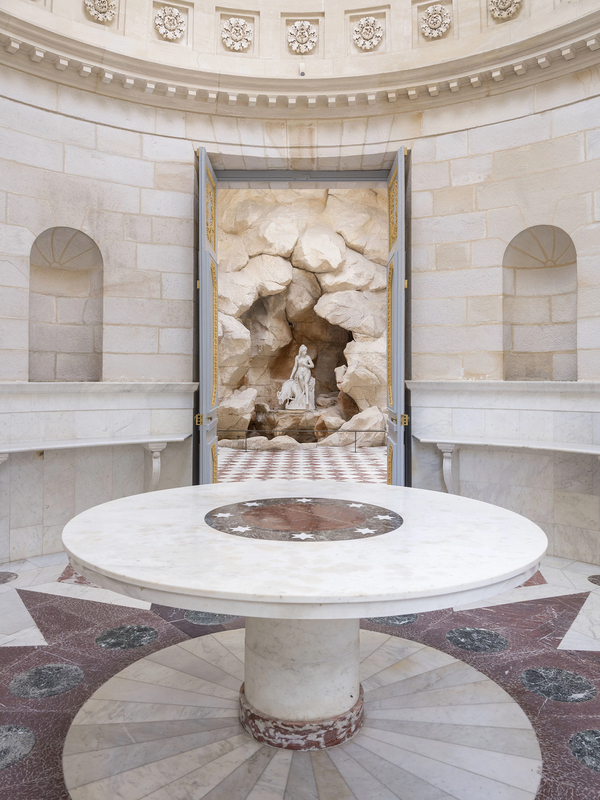
Hubert Robert, Jacques-Louis Thévenin; sculptural design by Pierre Julien. The Milk Queens, Rambouillet. 1785–1787. Contemporary view of the interior.
In the milky rambutan, this idea is expressed even more vividly. The space resembles an ancient temple: it features sculpture, stone detailing, and a rigorous composition of rooms. The milk here becomes part of the exquisite presentation. Its preparation and serving to guests take place in different areas.
Creamer and sugar bowl from the Lambaye milk set, Jatte écuelle. 1787. Porcelain. The Metropolitan Museum of Art, No. 1997.518. Creamer with raised handle and sugar bowl from the Lambaye milk set. 1786–1788. Porcelain. Musée national de céramique, Sèvres.
The tableware complements the overall concept. For a typical rural product, a specialized porcelain set is created. The image of a cow on a milk churn evokes the origin of the milk, while the delicate handle and decoration showcase the craftsmanship of the makers. Thus, the royal court engages with rural culture while maintaining a familiar standard of comfort and quality. The ability to temporarily connect with rural life becomes a privilege in itself—it can be chosen as recreation and abandoned at any moment.
2. Authenticity over Ostentation: Folk Form and Authorial Craftsmanship.
In the 19th century, the interest in simple objects received a different explanation. William Morris and his peers viewed traditional craft as an example of meticulous attention to labor and material. For them, the beauty of the domestic environment was tied to how things were made and how practical they were in daily life.
Philip Webb. Architectural design of Red House for William Morris. 1859. Victoria and Albert Museum, No. E.66–1916.
Philip Webb and the circle of William Morris. Red House, Bexleyheath. 1859–1860. Contemporary interior design. Photograph by Tony Hisgett, 2010.
Red House, designed by Philip Webb for Morris, exemplifies this approach. Brick, wood, built-in furnishings, and the work of the artists coalesce into a unified whole. The house references local building traditions yet remains a bespoke commission with meticulously considered detailing.
Here, the simplicity of individual solutions is paired with substantial labor. The modest aesthetic of the materials becomes a virtue that one must recognize.
Philip Webb / Morris & Co. Sussex Chair. Model—circa 1860s; presented example—circa 1890s. Wood, woven seat. William Morris Gallery, No. G71.
The Sussex chairs are based on a traditional local model. They feature a wooden frame, a simple backrest, and a woven seat. Morris & Co. preserves the recognizable design and releases it in various iterations.
This type of furniture is popular among educated consumers. The displayed pieces were used at Newnham College in Cambridge. However, Sussex chairs cannot be considered exclusively a luxury item; they were produced in large quantities. Their example primarily demonstrates the appreciation for the value of a common form.
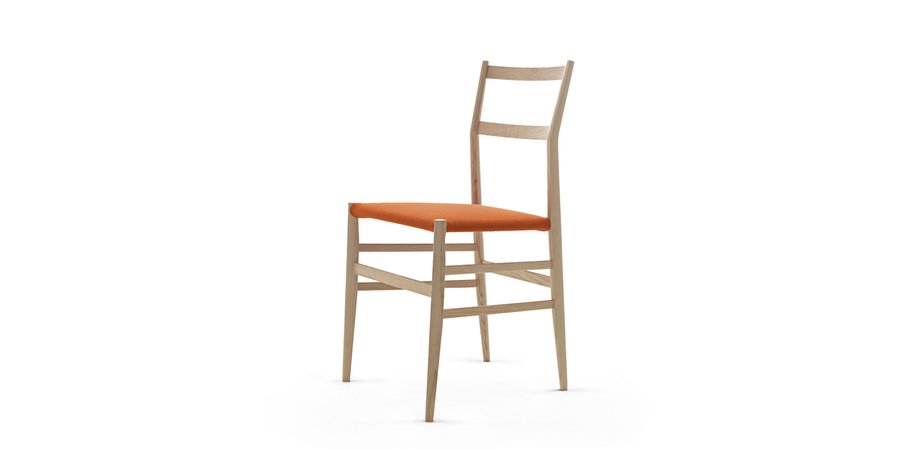
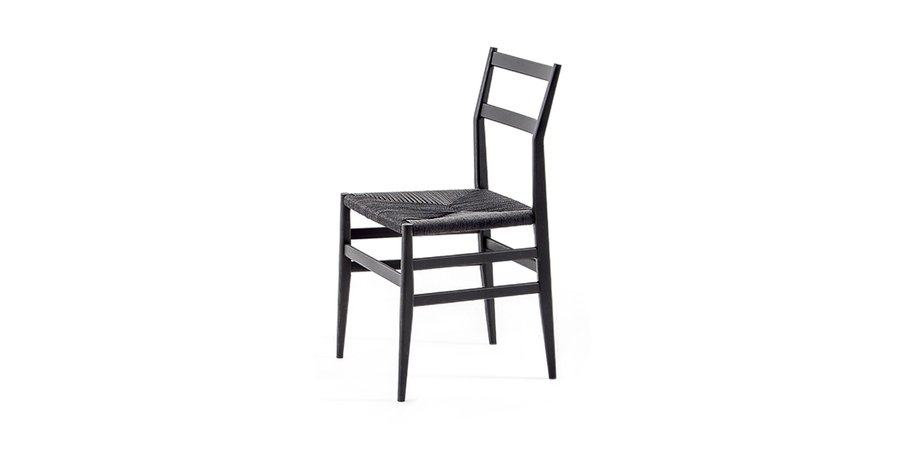
Joe Ponti. Leggera Chair, model 646. 1952. Contemporary Cassina edition, woven seat version. Joe Ponti. Superleggera Chair, model 699. 1957. Contemporary Cassina edition.
In the 20th century, Gio Ponti also referenced the tradition of the wooden chair. While working on the Leggera and Superleggera, he achieved ever-increasing lightness. The source for the Superleggera was furniture from the Italian city of Chiavari.
The external simplicity here depends on manufacturing precision. The delicate components must bear weight, and the joints must remain reliable. The familiar chair gains new value through meticulous work on its structure.
3. From Equipment to Classic: A Cultural Reappraisal of Utilitarian Furniture.
Industrial furniture is typically designed for a specific function. It must be durable, comfortable, and suited for frequent use. Its form is largely dependent on the material and manufacturing method. Over time, these qualities begin to be appreciated from an aesthetic perspective as well. What was once perceived as ordinary equipment evolves into a recognizable piece of design.
Xavier Poshard. Chair A. 1935; the model was improved by Jean Poshard in 1956. Modern production by Tolix.







