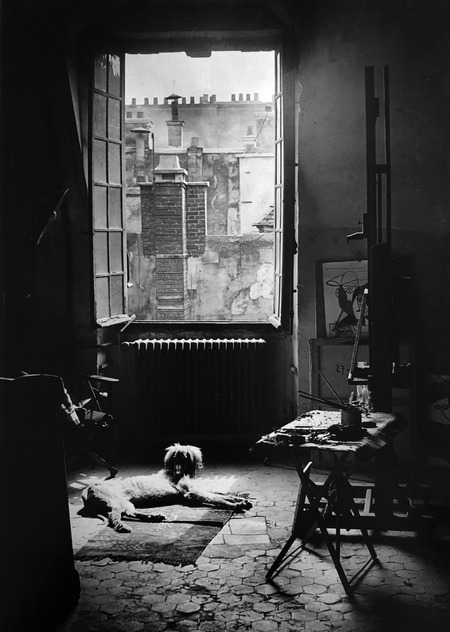
Concept
Photography captures a single viewpoint, yet the depicted space often feels like an extension of the viewer’s own space. A receding path, a slightly ajar door, or an object behind an obstacle allows the imagination to conceive of movement that is impossible to execute within the frame. I am interested in the means by which photography creates this anticipation and what happens when a similar invitation appears in a video game, where the observer gains the ability to approach an object, pass through an opening, or peek around a corner.
How do compositional and semantic relationships within a photograph create an invitation to mentally journey into depth, and how do similar relationships operate in the game spaces under investigation? My hypothesis is that this invitation arises from the interaction between a legible space, an accessible or implied goal, and informational incompleteness. Visible depth, by itself, does not yet imply a desire to move—the image must provide a basis for expecting that a change in position will allow one to see, discern, or understand something.
The research is structured around seven principles:
- depth direction,
- sequence of plans,
- threshold and interior framing,
- partial concealment,
- lighting and color accents,
- semantic attraction.
- moving subjectA single photograph can participate in multiple comparisons if, in each case, a distinct relationship between the observer, the space, and the object of interest is analyzed. Each comparison includes a description of visible features, a diagram of spatial relationships, and an interpretation of presumed movement. Photographs are compared with sequences of frames from typical gameplay: initial view, zoom, and reveal. This approach allows us to distinguish the similarity of individual compositions from the similarity of spatial experience. Special attention is paid to cases where a visible landmark is inaccessible, the depth remains a panorama, or the mystery does not promise resolution through movement.
From Direction to Spatial Depth
Guiding lines and projected path
Lines become an invitation to movement when they correspond to surfaces and pathways that can be conceived as accessible for motion.
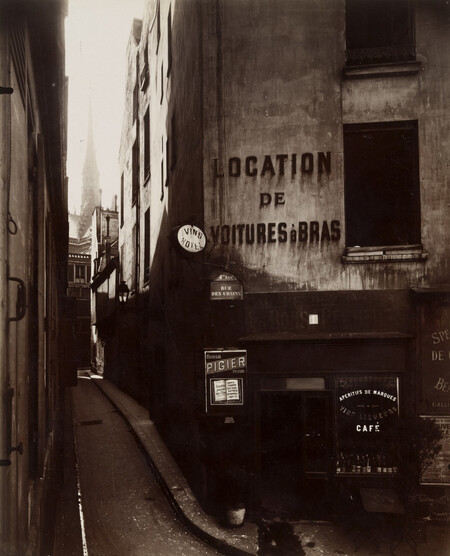
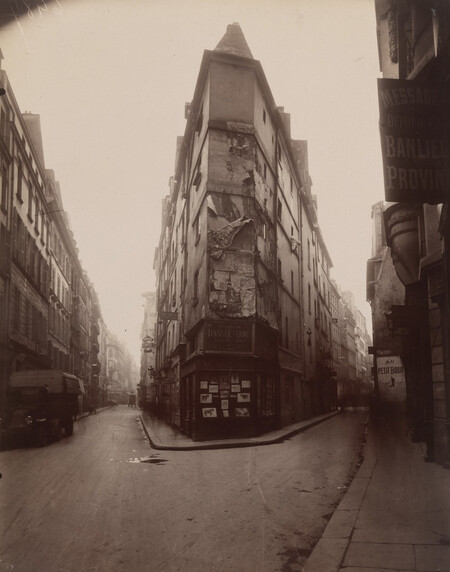
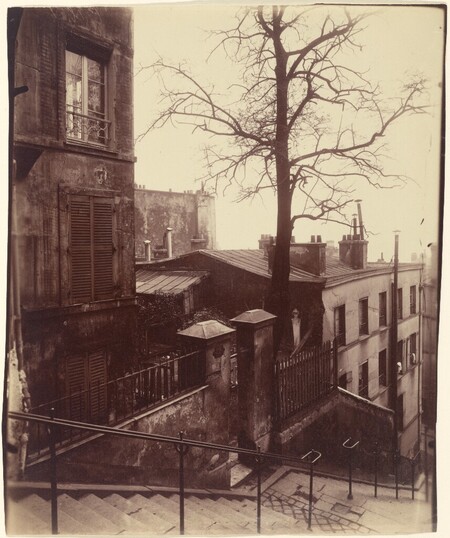
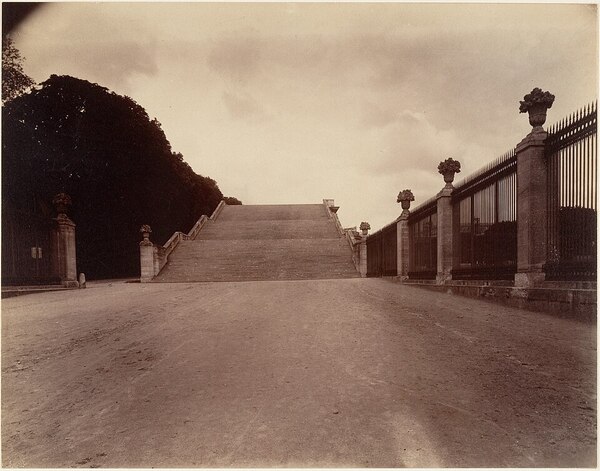
Staircase, Montmartre, 1921 Eugène Atget Versailles, The Orangerie Staircase, Eugène Atget
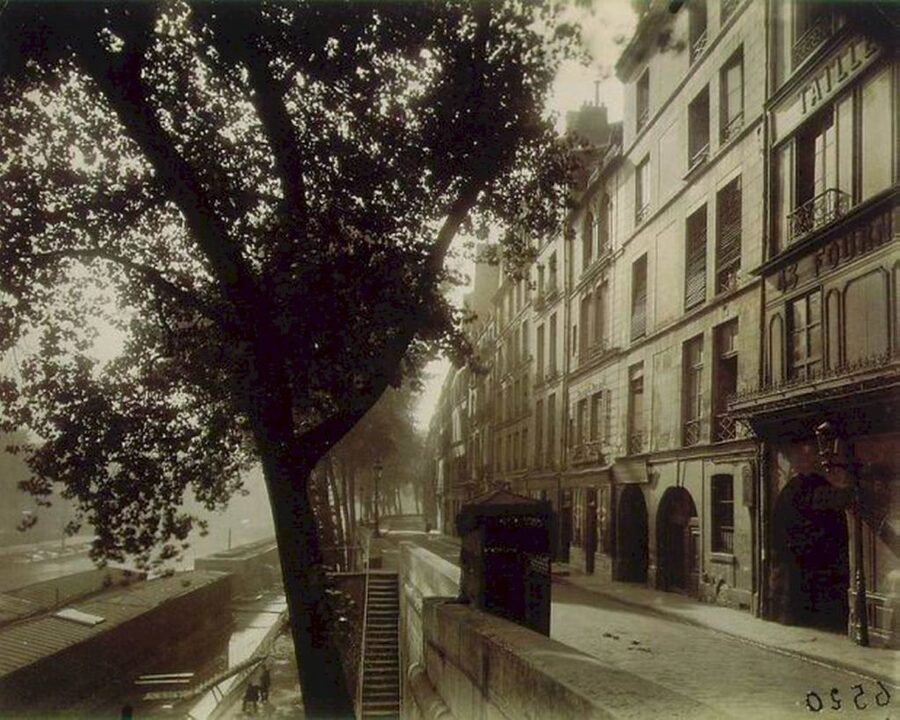
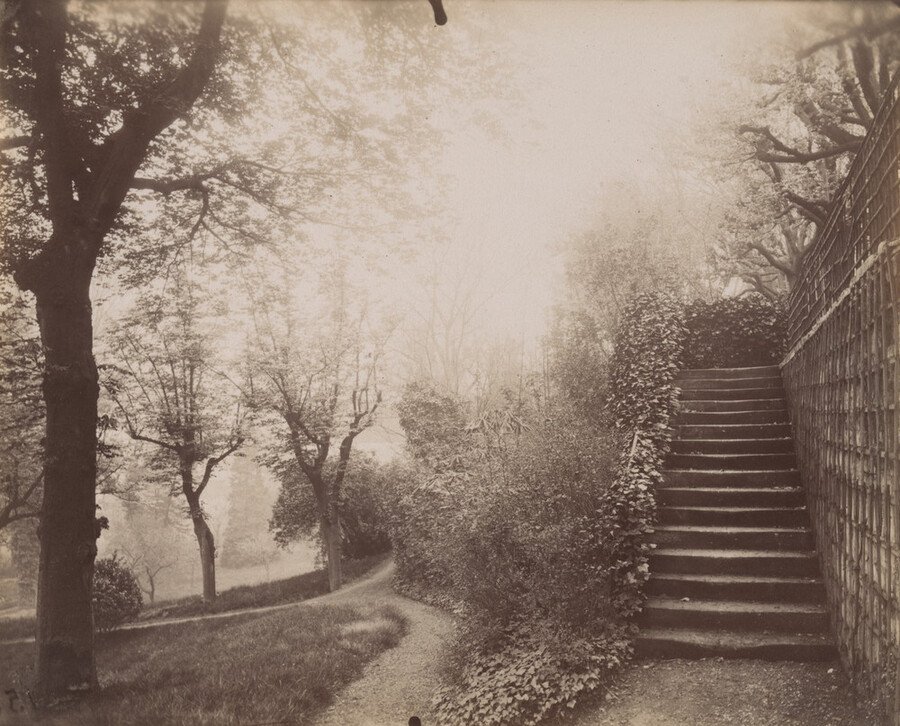
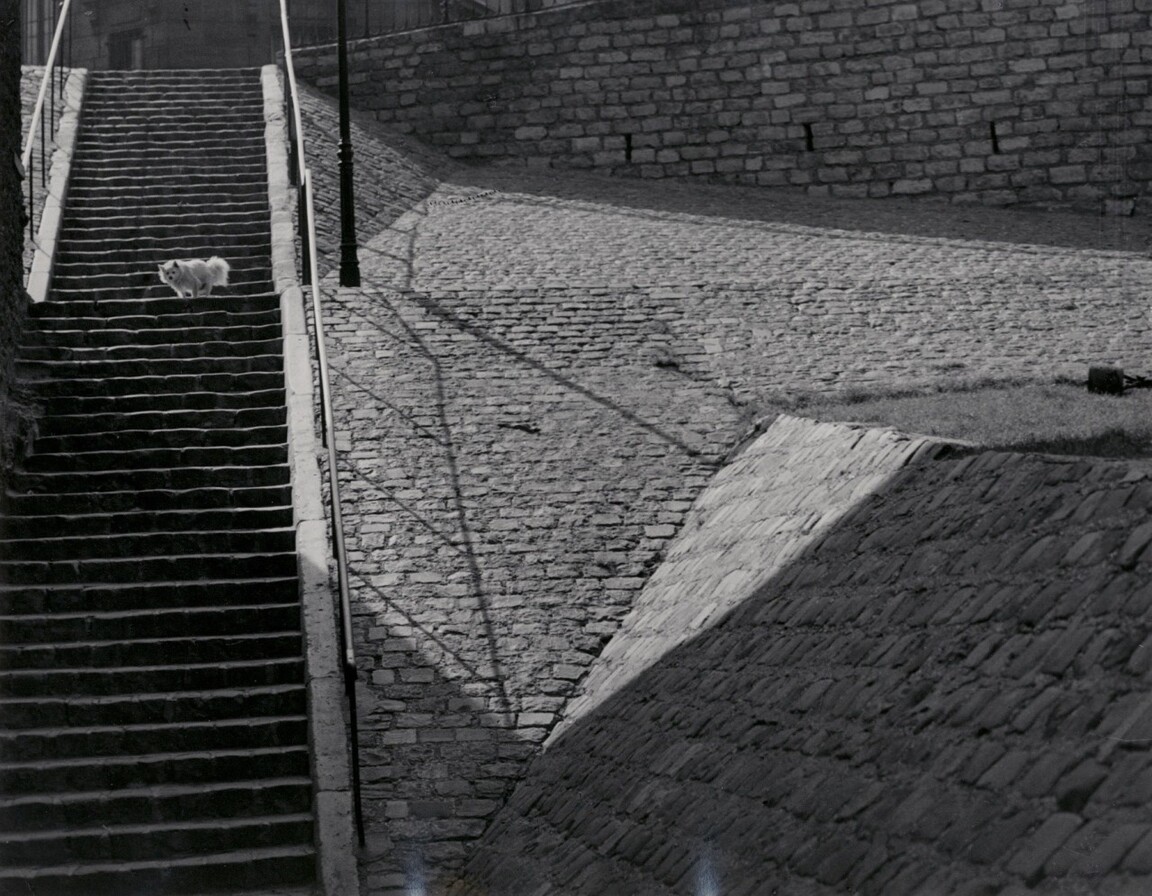
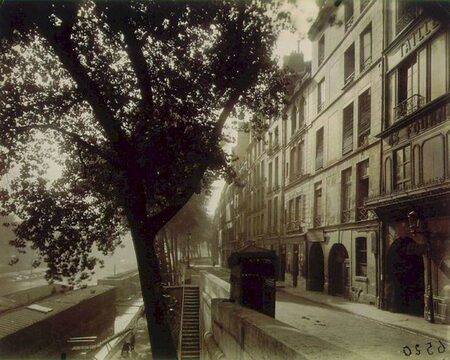
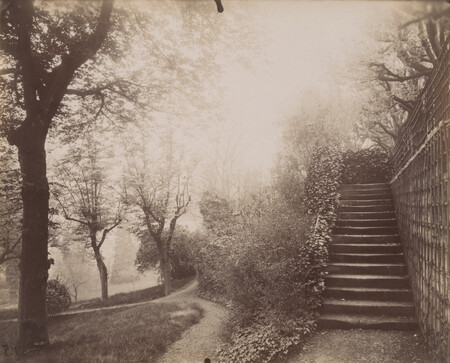
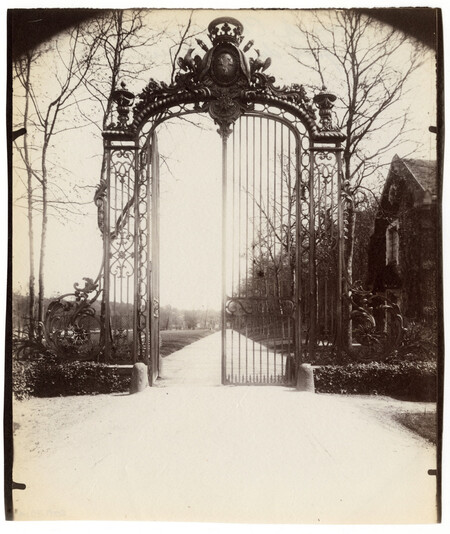
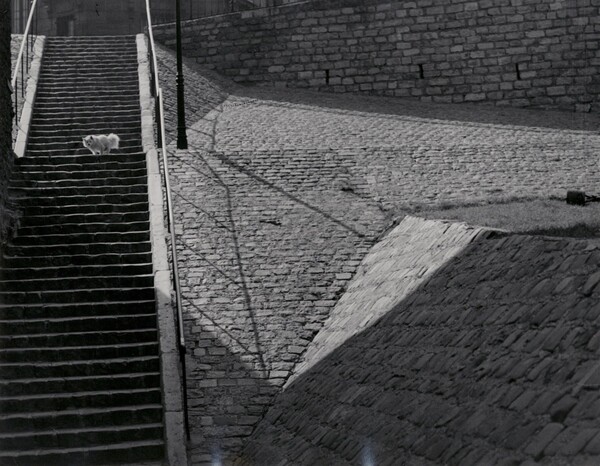
Atje and Brassaï
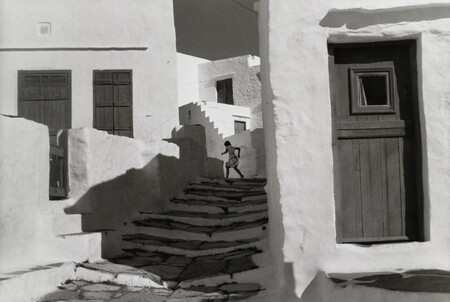
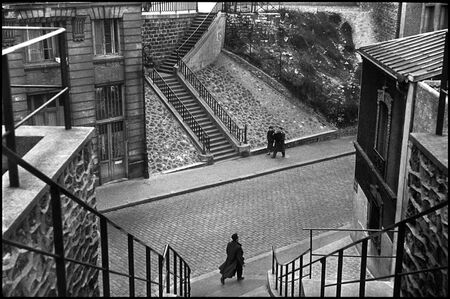
Cartier-Bresson
The road edges, railings, walls, and rows of trees connect the foreground to the background. During analysis, it is important to trace the beginning and end of the line, its relationship to the presumed viewer position, and the presence of obstacles. A diagonal shadow can guide the eye without suggesting a path; a staircase or pathway further denotes potential action.
2. Sequence of Plans and Interim Milestones
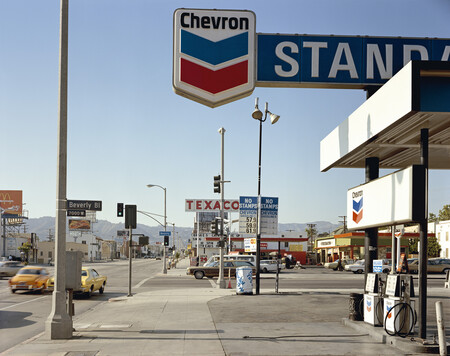
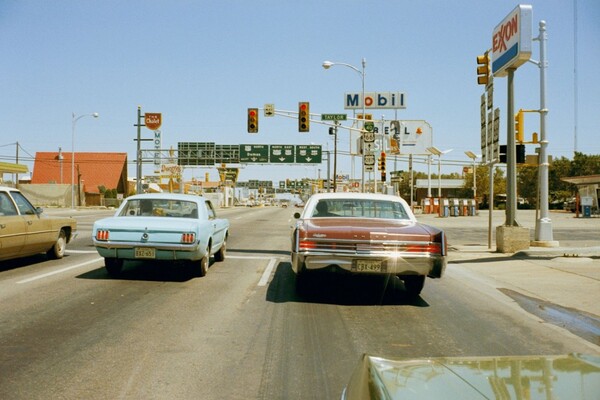
Depth becomes spatially legible through the relationships between planes: overlaps, the scale of repeating objects, and the discernible gaps between them.
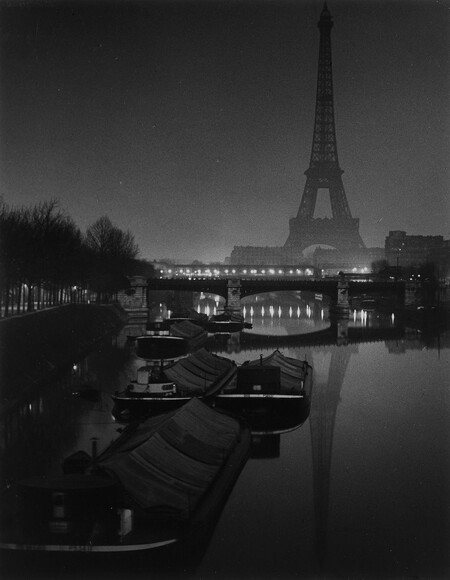
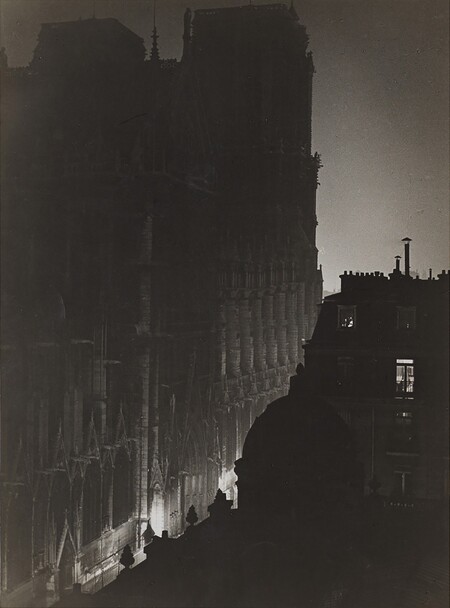
Short
Shaw, Uncommon Places: Beverly Boulevard and La Brea Avenue, Los Angeles, California, June 21, 1975; Trail’s End Restaurant, Kanab, Utah, August 10, 1973. Additional building—Atje Courtyards. Sources I5–I7 and I9.
At the center of the analysis is the potential to mentally reconstruct the transition from near to far. A near object can denote an initial position, the middle ground an intermediate segment, and the background a possible goal. These roles should not be considered mandatory—the composition may intentionally confuse distances or break the spatial coherence.
From the entrance to the hidden continuation
3. Threshold and Internal Framing
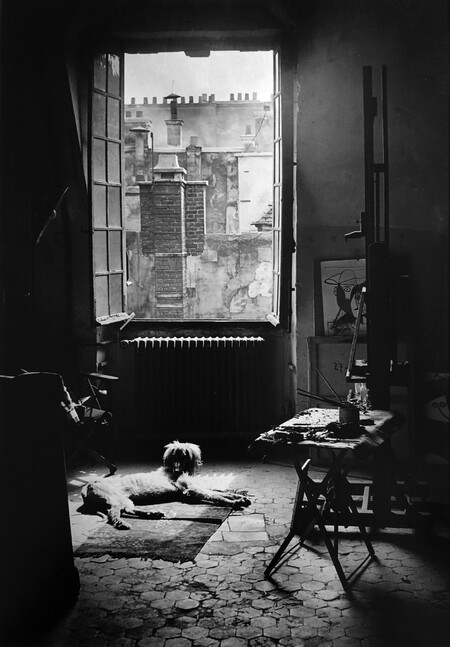
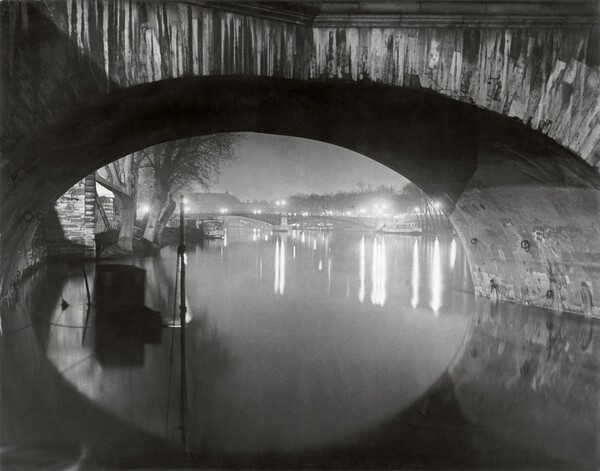
A door, arch, or window delineates space beyond the boundary of the nearest plane; the nature of the opening determines whether only a view is suggested or also an imagined passage.
Brussai
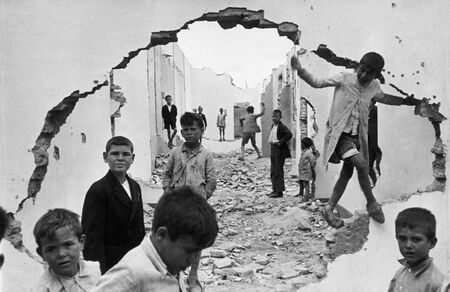
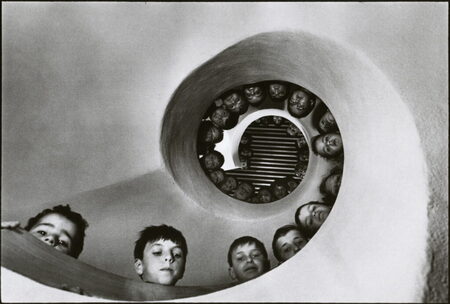
Cartier-Bresson
Photographic material. Talbot, The Open Door, before May 1844; Atje, Cour, 7 rue de Valence, Cour, 14 rue Saint-Médard and Cour, 53 rue St. André-des-Arts. These are separate shots of the doors and the associated city buildings, not a single, cohesive authorial series. Sources I8–I11.
It is important to distinguish a frame as a method for highlighting an image segment and a threshold as the presumed boundary of action. The analysis includes the camera’s position relative to the entrance, the visibility of the space behind it, the human scale of the doorway, and obstacles. A window can visually reveal the interior while maintaining physical inaccessibility.
4. Partial Obfuscation and Promise of Disclosure
Spatial curiosity can arise from the combination of sufficient indications of continuity and the inability to see it all at once.
Marville, in the Old Paris architectural style of the 1860s; starting point—Rue de la Bûcherie, cul-de-sac Saint-Ambroise. Supplementary material—covers from Leichter’s early color photography, particularly Through Boards, 1957. Sources I12–I14.







