AI-Assisted Redesign Challenge
The challenge is to rethink the WANDER brand identity and develop a cohesive concept for a small startup based on it. It is necessary to maintain a connection to the original identity while creating a new visual language suitable for product design, advertising, merchandise, and physical space.
Source Project Materials
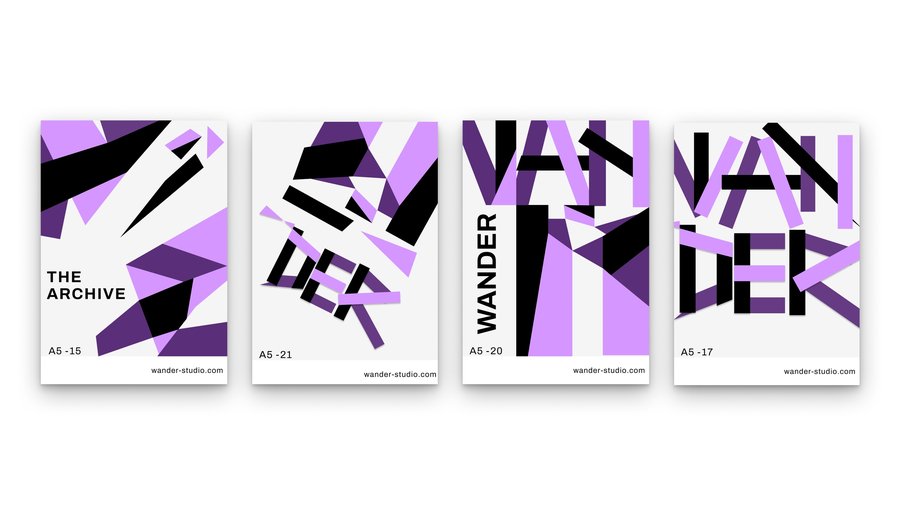
Initial Project Posters
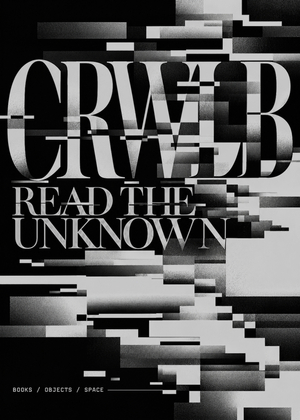
The original academic project WANDER presents a visual system built on a combination of typography and modular graphics. The letters of the title are formed from bands that shift position, intersect, and combine into dynamic compositions. Black, purple, and lilac colors unite the system’s elements.
The brand identity is revealed through a series of four posters, six flags featuring the title’s letters, and mockups of various carriers. The different formats demonstrated how a single graphic principle could function across print, merchandise, and the urban environment.
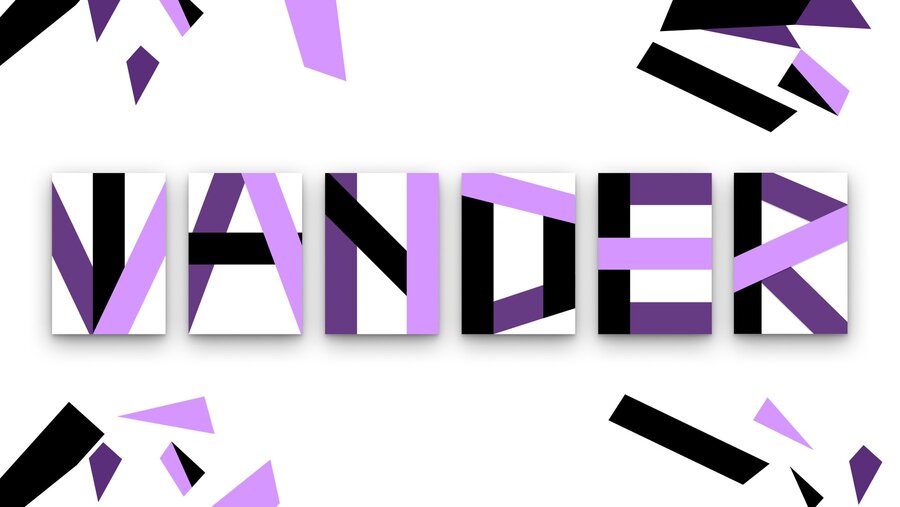
Source Project Flags
The project focused on establishing a visual style for a concept that envisions a space housing an archive of unreleased, rare, or forgotten music. Those interested in studying this archive will be able to discover niche genres and new emotional experiences.
New AI-Powered Design
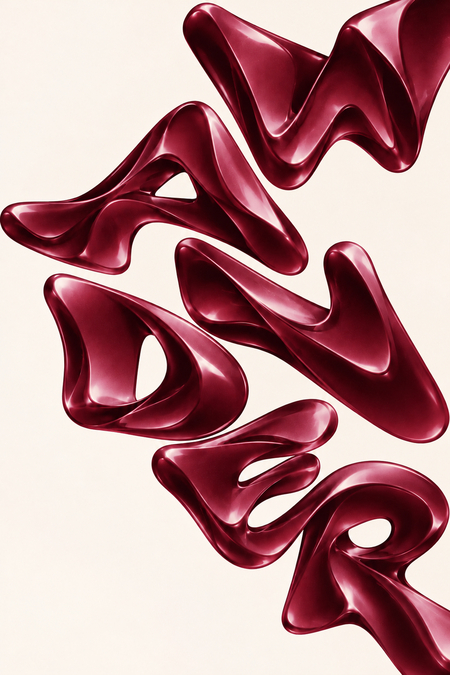
The visual direction involves a shift from a violet palette to burgundy and its shades. Straight lines should gain fluid plasticity, soft deformations, and a glossy surface that unites the expressiveness of graffiti with the feeling of viscous gel.
Logo
Color and Typography
Burgundy becomes the primary color. The palette is built from an almost black wine tone to a dusty-pink highlight. The light, warm background aids readability of the form; the dark tone emphasizes reflections and depth. The white highlight is part of the image’s lighting, not a separate corporate color.
The functional typography is Liberation Sans Regular and Bold. Headings are set in a large size, while captions are compact with increased tracking. The WANDER plastic lettering is used as imagery—it is a set of proprietary graphic forms, not a finished typeface.
■ Wine black #16080D ■ Burgundy #4A1027 ■ Cherry #851C3F ■ Dusty pink #D79AAA ■ Ivory #F5F0EA
New Posters
New flags
The Image Creation Process
Tools and Models Used
— ChatGPT and Codex, based on GPT-6 — concept development, text preparation, prompt formulation, and code writing for assembling materials. GPT-6 official documentation.
— OpenAI ImageGen integrated image generator — creation of posters, flags, product key visuals, merch mockups, business materials, and space visualization; subsequent modification of individual images. The precise identifier and version of the model were not disclosed in the tool’s output. OpenAI image generation official documentation.
— Python and the Pillow library — image size verification, creation of checklists, and final merging of original posters and flags into horizontal compositions while preserving the dimensions of each file.
— The python-docx library — assembling an editable document containing images, text, and a process description.
— LibreOffice and a document rendering tool — obtaining the PDF and visual page verification.
— SVG — creating a simplified flat version of the emblem for small-scale applications.
T-shirt
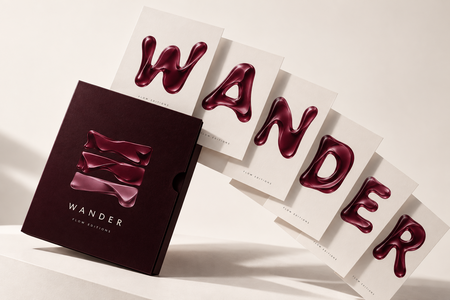
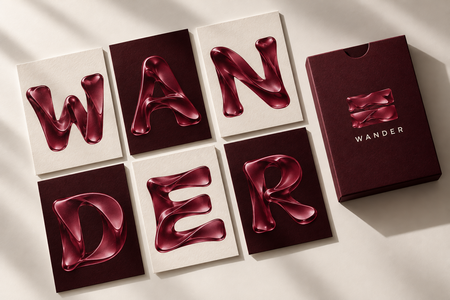
KeyVisual 1 and 2
Cap
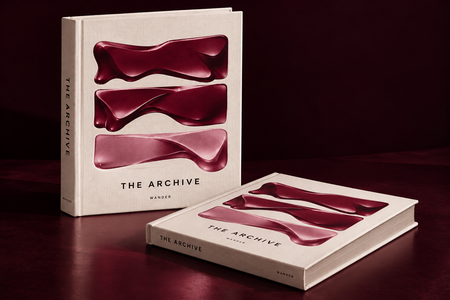
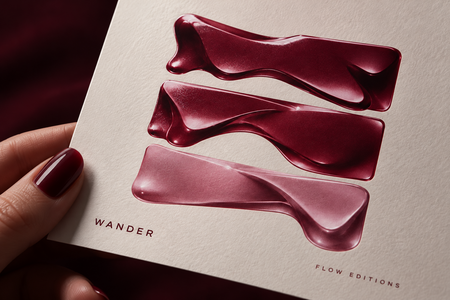
Keyvisual 3 and 4
The Image Creation Process
The WANDER redesign was executed using generative artificial intelligence. The foundation was established using source brand assets—posters, flags, and branding materials—along with references to new volumetric graphics. Initially, ChatGPT / Codex was used to formulate the core concept, visual constraints, and prompts. Subsequently, OpenAI’s integrated image generator produced the posters, flags, product key visuals, packaging, merchandise, and spatial visualizations. The prompts specified a burgundy color palette, fluid forms, a glossy surface, and a connection to the original striped graphic identity. Following generation, the composition, readability, and series coherence were reviewed; individual images were refined through additional prompts.
Tote Bag
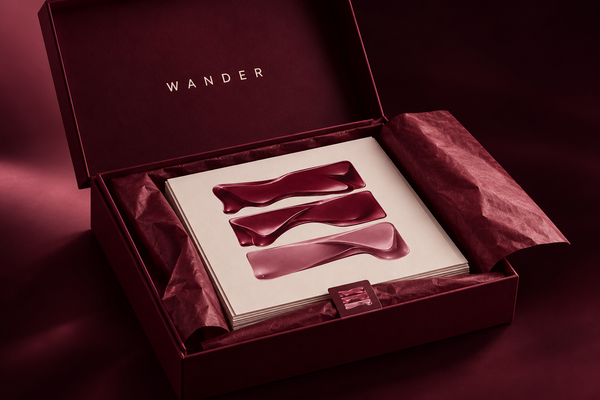
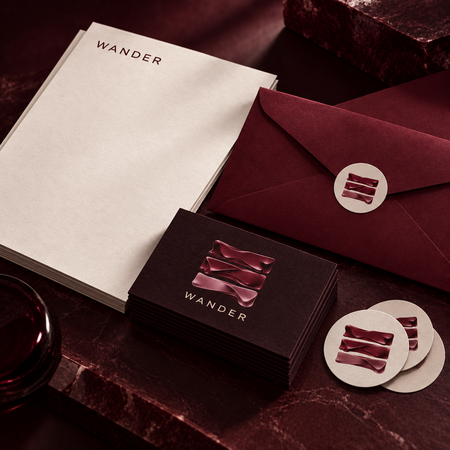
Key Visual 5 and Identity Carriers
The core principle of prompts
«Reimagine the WANDER brand identity while retaining the striped structure. Replace the purple palette with burgundy and cherry hues. Create volumetric, fluid forms that combine the expressiveness of graffiti with the plasticity of jelly. Incorporate soft folds, glossy reflections, and light pink highlights. Maintain the recognizability of the lettering and a unified graphic character across different media.»This phrasing generalizes the specific requests: for each image, additional specifications were provided regarding format, composition, subject matter, and necessary text elements.
WANDER Space — studio and small shop