In recent years, I have been spending a lot of time with Soviet literature—literature that is both known and not so known. The short stories I read often resonate with specific Soviet films, though there is usually no direct connection between them; rather, there is a free exchange of motifs, a resonance of certain themes, techniques, and characters. Once I amassed enough of these pairings, I decided that I could turn these comparisons into a series of materials where Sorokin meets Muratov, Chukovskaya meets Panfilov, and I. Grekova meets Larisa Sheptyk.
The first article in the series was published on the journal «Session» website in November 2026. Its featured elements were Mikhail Romm’s film Nine Days of a Year (1962) and Natalia Baranskaya’s short story A Week Like Any Other (1969). Their recurring motifs include the futility of morning breakfasts prepared by the main characters, Lelya and Olya, and the shift in the work atmosphere of Soviet research institutes during the 1960s.
The project presents excerpts from the article.
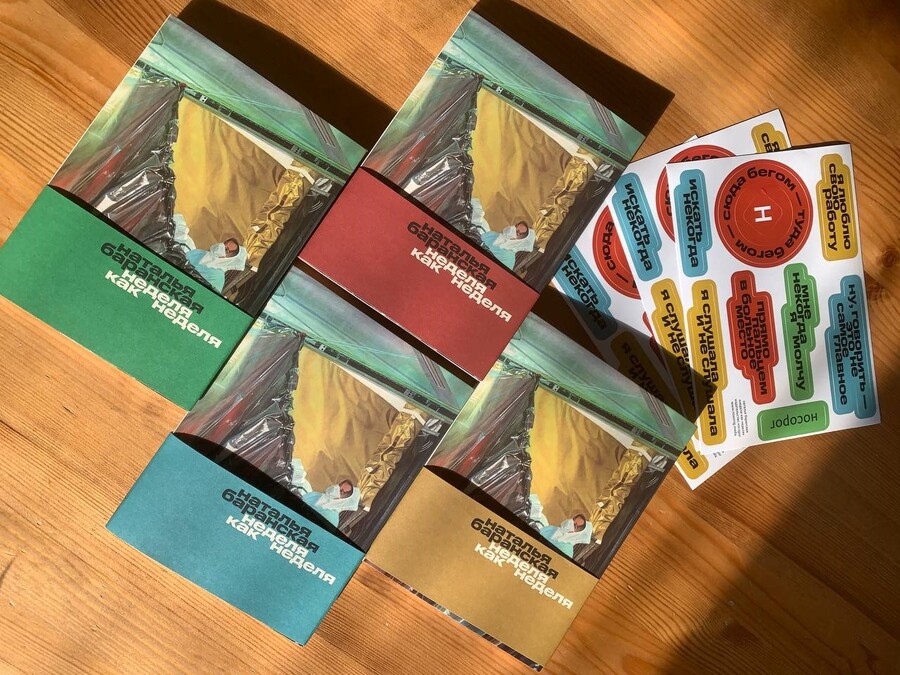
Book covers by Natalia Baranskaya, reissued by Nosorog Publishing House. Photo from the publisher’s social media.
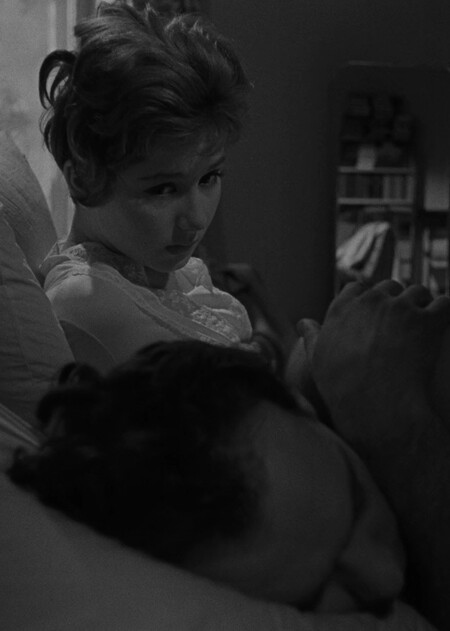
«I have to get up and make him breakfast. Breakfast every day, breakfast every day. Oh, I just want to sleep. Why do people even eat? No, I’m just a bad wife… He’s sleeping. I get up. What should I make him? He hates scrambled eggs, and I forgot to buy sausages. I’m a bad wife. I get up. Why is everything so good when people simply love each other? Where does it all go when they become husband and wife? How tiresome these pi-mesons are. Perhaps I’m a bad physicist. A bad physicist and a bad wife» («Nine Days of One Year»)
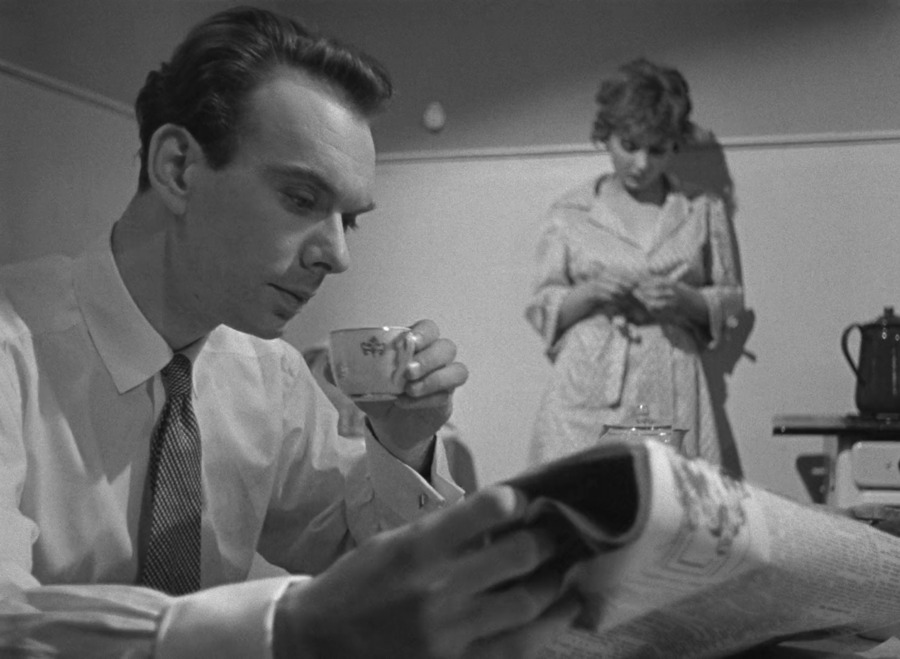
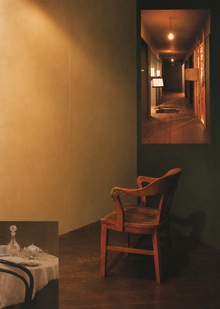
[2] Stills from the film «Nights of a Year» (1962, directed by Mikhail Romm)
Lelya is melancholic: beside her husband, who lives in grand days, it seems that ordinary days are reserved only for her. But after seven years—as the 1960s draw to a close—the rhythm of her daily routine, where dissatisfaction with married life intertwines with a suffocating lack of professional enthusiasm, suddenly appears in the pages of the journal «Novy Mir.» Her inspiration is drawn from the heroine of Natalya Baranskaya’s novella published in 1969: for her, days like those in «Nine Days of a Year» form a «Week after Week.» Olya (almost Lelya) also works at the Research Institute and wakes up next to her husband Dima (almost Mitya) every day. The vanity of the morning breakfasts is compounded by other routine processes, ceaselessly detailed in the text written from the perspective of a person with perpetually labored breathing:
«Today I wake up normally—by 7:10 AM, I’m ready, just not styled. I peel potatoes—prep for dinner—stir porridge, brew coffee, heat milk, wake up Dima, and go to get the kids… I run, the grocery bags swing and hit my knees. I’m on the bus, and it’s already seven on my watch… I run along paths, cross vacant lots, climb the stairs… I turn on all the burners: put on the potatoes, the kettle, the milk, and drop the cutlets onto the skillet.» («Week After Week»)
[3] A still from the film «Nine Days of One Year» (1962, dir. Mikhail Romm)
When looking at other Soviet films, you might wonder: is a restless life in any era exclusively the domain of working women? They are always running somewhere. «I run, I run…» is how Baranskaya’s novella begins, and running is indeed its leitmotif. Lena from «July Rain» might repeat, «I run, I run…» on her way to work, dodging the pursuing camera. Maria in «The Mirror» might whisper, «I run, I run…» as she desperately pushes through the downpour to the printing house. Galina might gasp out, «I run, I run…» upon bursting into a work meeting in the very first episode of Mikhail Bogin’s «On Love.»Even in general, the outwardly calm, perhaps bored Lyalya is once caught by the camera rushing through the institute corridors. But the literary Olya is not much like her screen sisters—those who maintain grace and coquettishness with the tapping of their heels. The rhythm of her movements is reminiscent not of theirs, but rather of Buzikin, the relentlessly consistent marathon runner, whom Alexander Volodin and Georgy Danelya conceived during the stagnant era. In short, no matter how Lyalya from 1962 exchanges glances with Olya from 1969, one must consider not only the constancy of the female «I run, ” but also the manner of that running—a manner dictated to the characters by the uneven decade. If you lay the edges of the sixties side by side, their contours will not align.
[4] Still from the film «July Rain» (1966, dir. Maren Khutiev)
Still from the film «Nine Days of a Year» (1962, dir. Mikhail Romm)
Still from the film «Nine Days of a Year» (1962, dir. Mikhail Romm)
Still from the film «July Rain» (1966, dir. Maren Khutziev)