Navigation
1. The Staircase: A verticality of danger.
2. The Window as the boundary between the observer and the observed.
3. The Hallway and the enclosed space.
4. The Maze-City.
Concept
In Alfred Hitchcock’s cinema, architecture is never a neutral backdrop upon which events unfold. Ordinary spaces—residential buildings, stairwells, hallways, windows, trains, and city streets—become vital elements of the dramaturgy, capable of generating a sense of tension and psychological vulnerability.This characteristic is particularly evident in the director’s early British period, spanning the late 1920s through the 1930s. In films such as The Lodger (1927), 39 Steps (1935), and The Lady Vanishes (1938), space assumes an autonomous significance. It dictates the movement of the characters, restricts visibility, conceals sources of danger, and creates scenarios for observing the protagonist.
Architectural structures become unique intermediaries between the human and their surrounding diegetic world. A staircase allows one to observe what is happening from different levels; a window divides space into the visible and the concealed; a corridor directs movement and limits the possibility of retreat. A train encloses its passengers within its space. Even the familiar urban landscape transforms into a labyrinth where a person can become lost or become the object of pursuit.
The interaction between the camera and the architecture plays a vital role. Hitchcock utilizes unconventional angles, perspective distortion, shooting through doorways and other structures, as well as the restriction of the viewer’s field of vision. The camera does not show the space entirely, leaving a potential source of threat outside the frame. The viewer finds themselves in the character’s position—seeing only part of what is happening and being forced to guess what is hidden behind the door or on the floor above. Thus, anxiety arises from the very organization of space.
Research Question: How can the architecture and organization of space become a tool for generating anxiety, the sensation of danger, and the feeling of inescapability?
Stairs: The Vertical of Danger
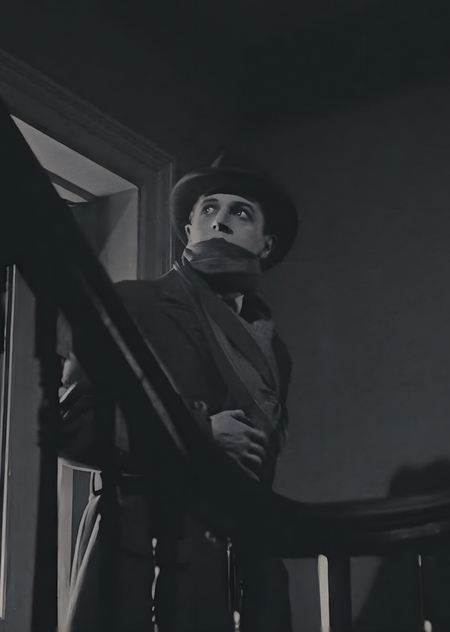
The visual expressiveness of the staircase in early Hitchcock films is primarily linked to its vertical organization. It connects different levels of the building while simultaneously creating possibilities for observation from both above and below. A character on the stairs finds themselves in a liminal position: they have not yet reached their goal, but they have already left the relatively safe space of the room. Their movement becomes open to outside scrutiny, and the staircase structure itself transforms into a site of potential confrontation with the unknown.
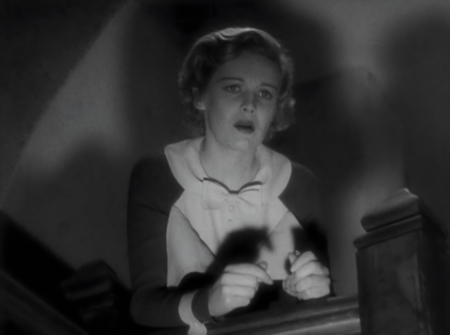
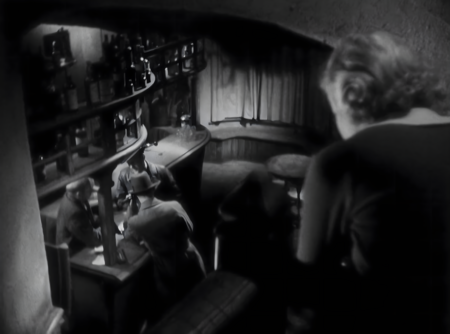
Stills from the film «The 39 Steps» (directed by Alfred Hitchcock, 1935).
This is particularly evident in the film «The Tenant.» In one scene, the residents of the building hear the footsteps of a mysterious lodger on the floor above. The lodger’s movement causes the chandelier in the room below to sway. The architectural ceiling, which usually separates the rooms, ceases to function as a barrier and transforms into a conditionally transparent surface.
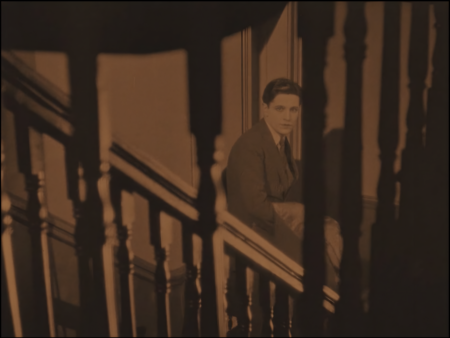
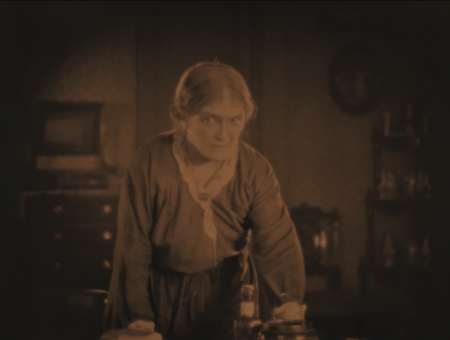
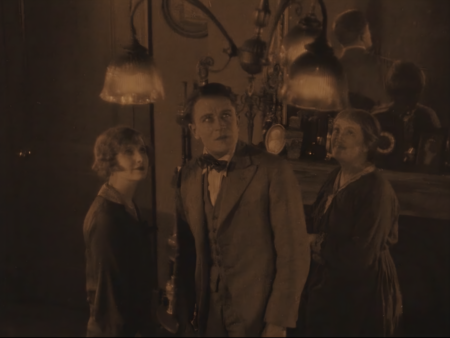
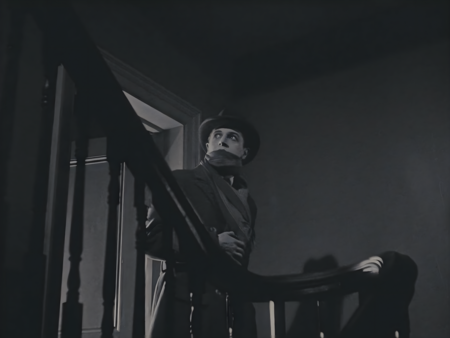
Stills from the film «The Lodger» (directed by Alfred Hitchcock, 1927).
In another episode, the director shows the hand of the guest sliding along the staircase railings. The human figure is not shown in its entirety—its presence is conveyed through a specific body detail and movement. This fragmentary method of depiction intensifies the feeling of ambiguity—the viewer perceives the protagonist more as an enigmatic presence in the space than as a concrete individual.
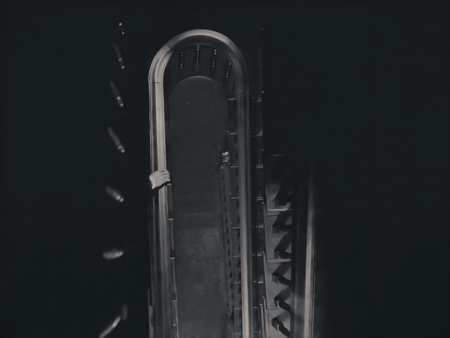
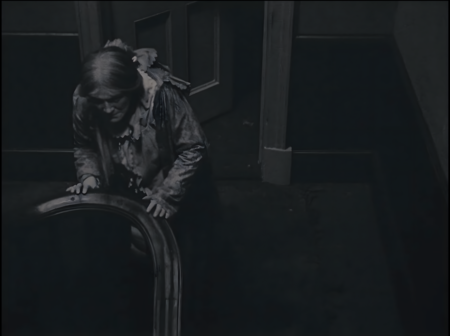
Stills from the film «The Lodger» (directed by Alfred Hitchcock, 1927).
In this context, the staircase serves several functions simultaneously. It allows the transmission of information about a character who cannot be seen entirely, creates a vertical connection between spaces, and establishes a feeling of constant presence from somewhere beyond view.
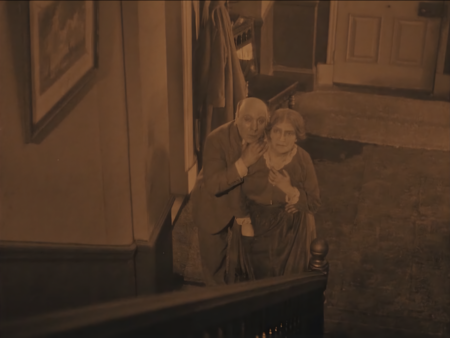
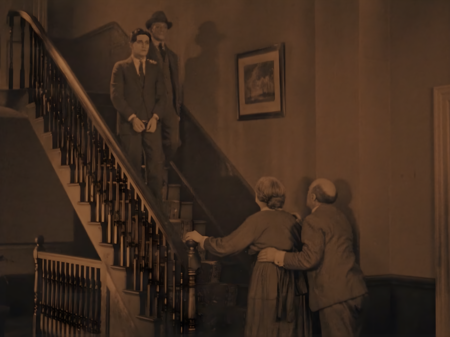
Stills from the film «The Lodger» (directed by Alfred Hitchcock, 1927).
Window and Doorway: The Boundary Between Visible and Hidden
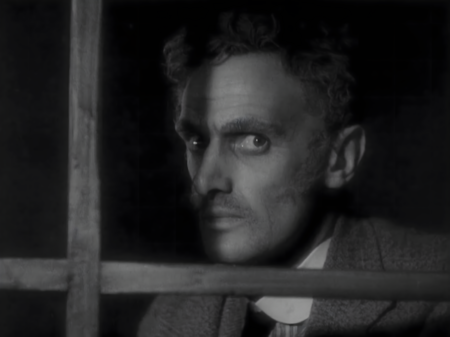
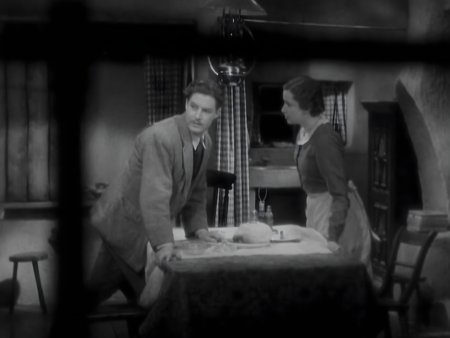
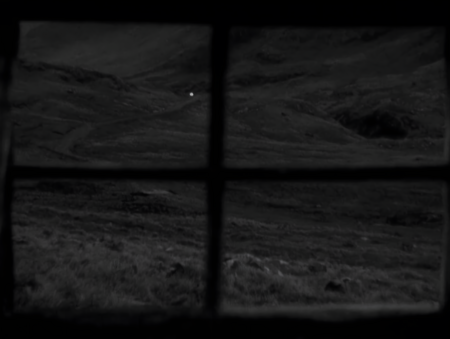
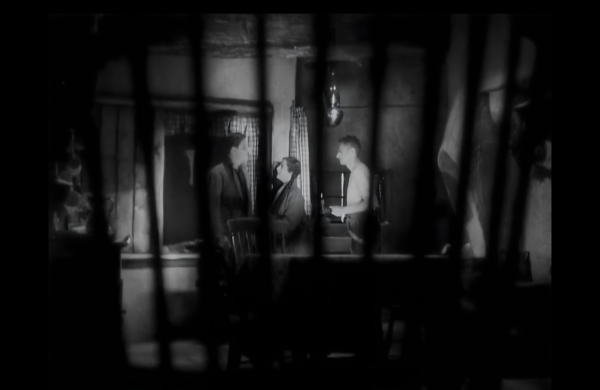
Stills from the film «39 Steps» (directed by Alfred Hitchcock, 1935).
Windows and doorways in Hitchcock’s films become unique frames within the shot. They divide the space into several visual zones, allowing the narrative to simultaneously reveal and conceal events. A character can observe the outside world while remaining inside the room, or they themselves can become the object of someone else’s gaze.The window presents a particularly striking architectural boundary. It establishes a visual connection between the interior and exterior space, yet physically separates the two. The transparency of the glass creates an illusion of access to the surrounding world, while the window’s structure itself maintains a distance between the observer and the observed.
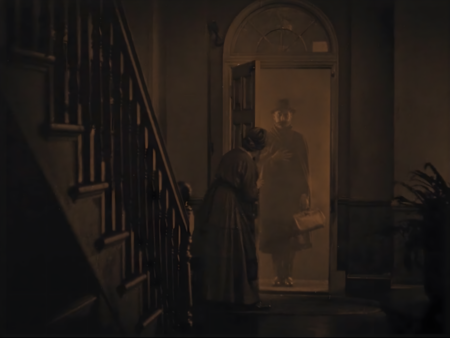
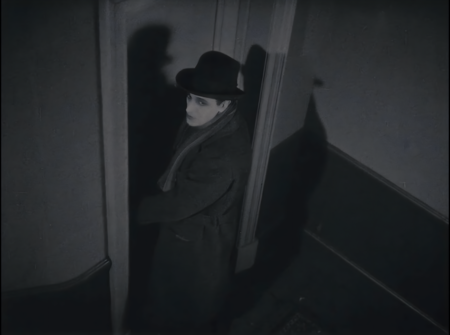
Stills from the film «The Lodger» (Dir. Alfred Hitchcock, 1927).
In «The Tenant, ” the doorways help to establish the image of a mysterious guest. His appearance within the confines of a limited architectural space emphasizes the character’s foreignness relative to the domestic setting. The dark figure within the doorway becomes an independent visual motif, suggesting a threat before any action even takes place.
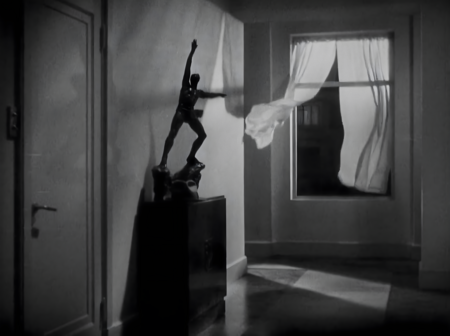
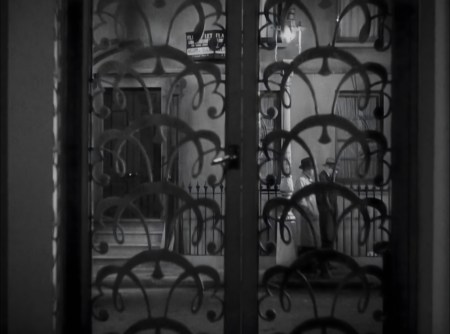
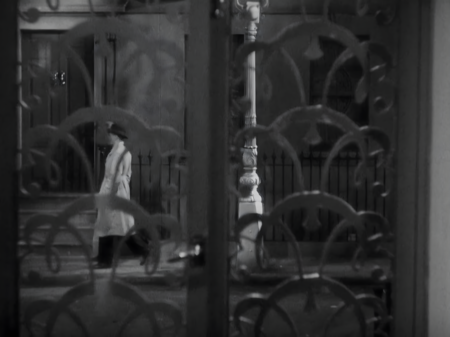
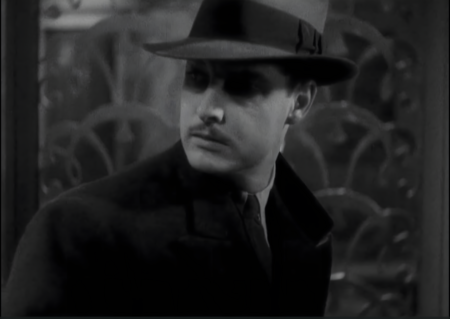
Stills from the film «The 39 Steps» (directed by Alfred Hitchcock, 1935).
In «39 Steps,» the window assumes an opposing function. While escaping the police station, the protagonist smashes the window and finds himself outside, among the parade participants. If a window structure usually separates interior and exterior spaces, here it becomes an obstacle that must be overcome. The character breaks the architectural boundary to continue moving and evade pursuit.
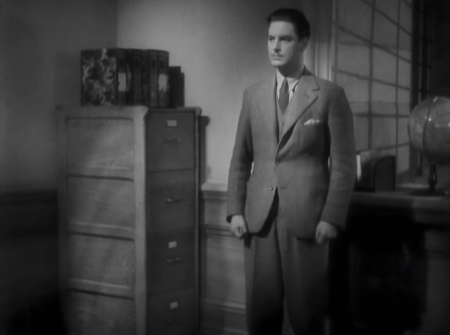
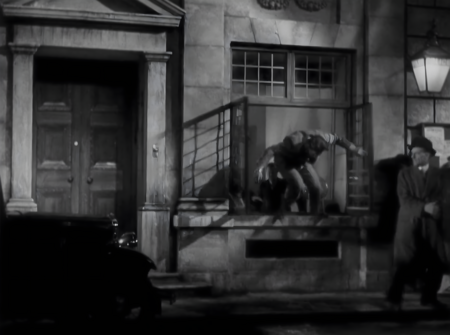
Stills from the film «The 39 Steps» (directed by Alfred Hitchcock, 1935).
The glass surface plays a particularly significant role in «Lady Vanishes.» On the train window, the name of the missing passenger—Miss Frey—is written with a finger. The glass transforms into a surface for conveying a message, and this familiar architectural element becomes a kind of screen within the film. It simultaneously separates the characters from their environment while allowing information about the unfolding events to be preserved.
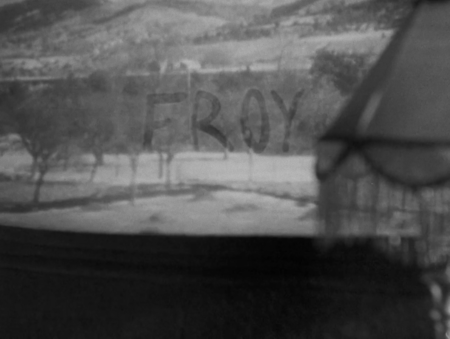
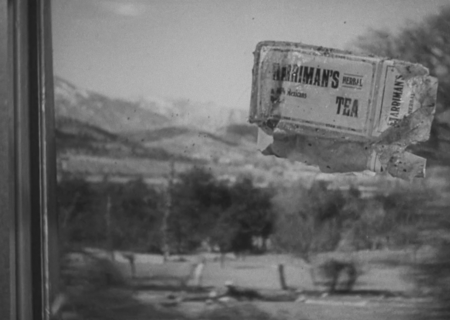
Stills from the film «The Lady Vanishes» (directed by Alfred Hitchcock, 1938).
A window or door allows for the delineation of a specific space, obscuring the rest while leaving the possibility for the unexpected appearance of a character or object.