Concept
The starting point for this project is 20th-century Japanese illustration and one of its key figures, Akira Uno (宇野亞喜良, born 1934). His work clearly shows where Japanese tradition intersected with European modernism: the fine, flowing line, the melancholic women with elongated proportions, and the theatrical posters for the Shuji Terayama troupe. The goal was to create a neural network that could convey this essence of Japanese culture. However, training a model on Uno’s work is not feasible because it is copyrighted, and using it for a dataset without the author’s consent would be a violation. Therefore, the project took a different route: training the model not on Uno himself, but on artists whose styles influenced his own and whose works are already in the public domain.
Takahisa Yumedji (1884–1934) is a Japanese artist from the Taisho period, known for his characteristic depiction of delicate, melancholic beauties. He himself confirms his connection to Uno; in an interview, he recalled how, as a child, he did not want to return a borrowed book of Yumedji’s prints and copied women in kimonos from it. Aubrey Beardsley (1872–1898) was a British graphic artist of the Art Nouveau period who drew heavily from Japanese prints—flat black washes, ornamentation, and flexible line. The Comics Journal critic has noted echoes of Beardsley in Uno’s early work.
This results in a mutual influence: European modernism emerging from Japanese prints, and Japanese illustration that absorbed European modernism.
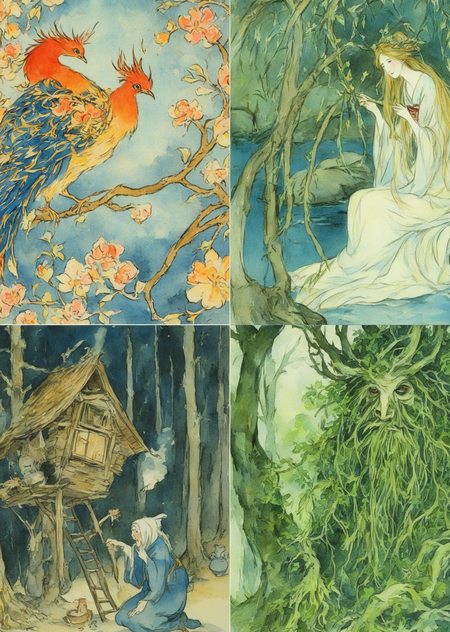
The series plot features characters from Russian mythology: Koschei, Vasilisa, Rusalka, the Firebird, the birds-maidens Sirin, Alkonost, and Gamayun, Kikimora, Vodyanoy, Domovoy, Marena, and Baba Yaga. Familiar figures presented in an unconventional style.
Dataset
Dataset Examples
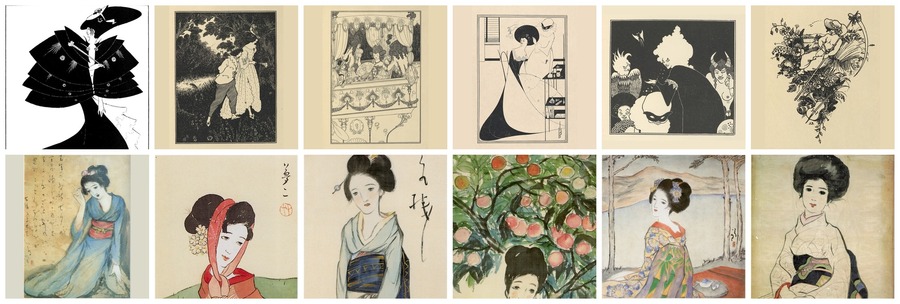
200 images: 100 works by Bordsley («Salome, ” The Yellow Book, The Savoy, „The Tress Snatcher, ” „Death of Arthur“) and 100 works by Yumedi (Bijingas, engravings, magazine covers). All are from Wikimedia Commons, public domain, or CC0.
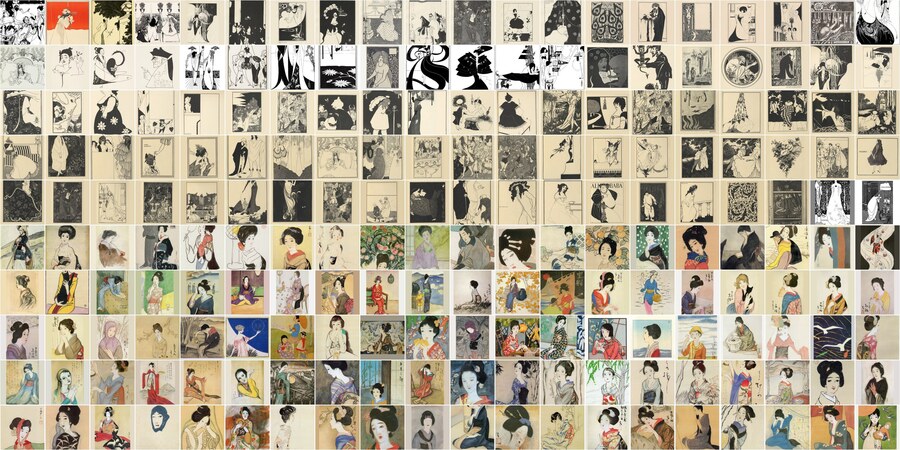
Image Dataset
How the sample was compiled: Out of approximately 900 candidates, works representative of the style were selected; covers with text, blank frames, early sketches, works with explicit nudity, and repetitions of the same work from different editions were excluded; Birdsley’s drawings were cut out from scans of book pages (margins and captions were automatically cropped); all images were resized to a 512×512 square—the format on which the model is trained.
Learning
Model: Stable Diffusion XL 1.0, using the DreamBooth + LoRA method (a small «adapter» is trained on top of the base model). The teacher’s laptop was used as the foundation.Captions: The BLIP neural network automatically described the content of each image. To the description, the style token akrstl and the specific technique were added: black and white ink illustration for Birdsley and japanese watercolor illustration for Yumedi. This allows users to select which stylistic «branch» to use during generation, or to blend them.The token akrstl is a meaningless word that the model had never encountered before. The word «Akira» would not have worked; the model would associate it with the 1988 anime «Akira.»Parameters: Resolution 512, 600 steps, rank 16, learning rate 1e-4, 8-bit optimizer, and mixed precision to fit within the free T4 GPU on Google Colab.
Book of Myths — Graphics
Overview
The most cohesive part of the project. For this section, the generation prompt was refined to: «full-body figure, Art Nouveau botanical frame, book page.» Four variations were generated for each character, and one was selected for each—the one that best sustained the overall rhythm of the series. This resulted in a unified bestiary: identical paper, frames, and a rhythm of black and white, reminiscent of pages from an early 20th-century book.The model took inspiration from Boardley’s black silhouettes of Koschei and Marena, the long, flowing hair of the Rusalka, and the ornamentation. However, it features significantly more hatching and decorative frames than Boardley’s work—the result leans closer to the general book engravings of the turn of the century than to his concise graphic style.
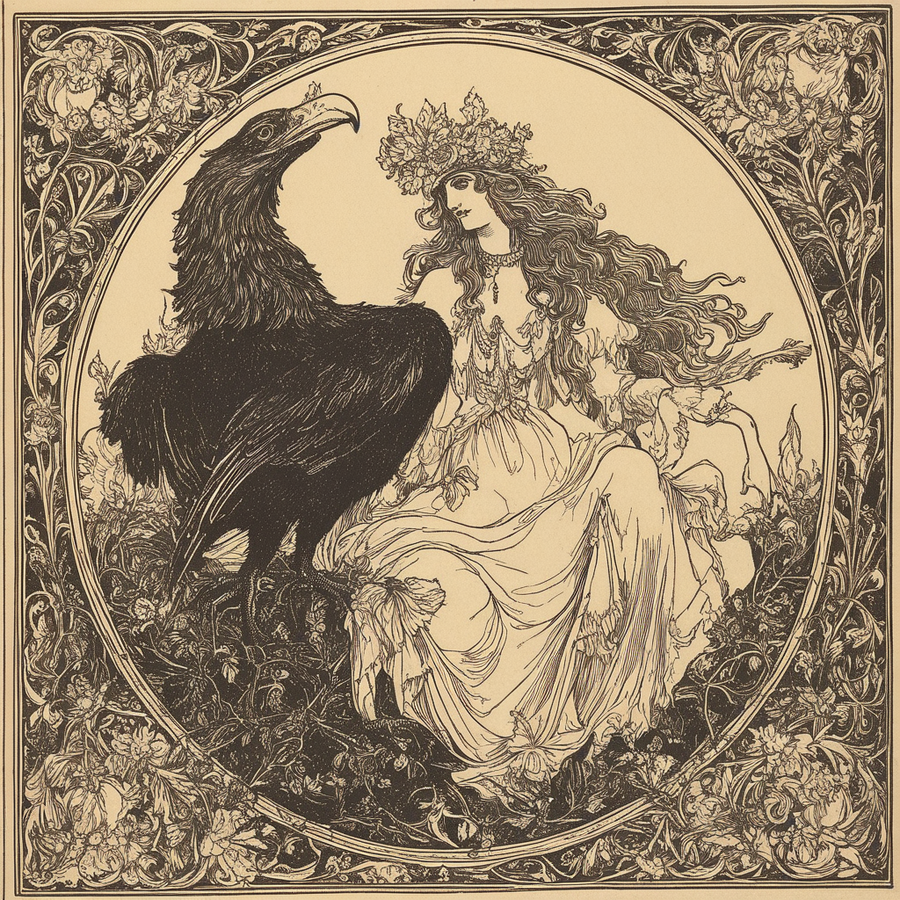
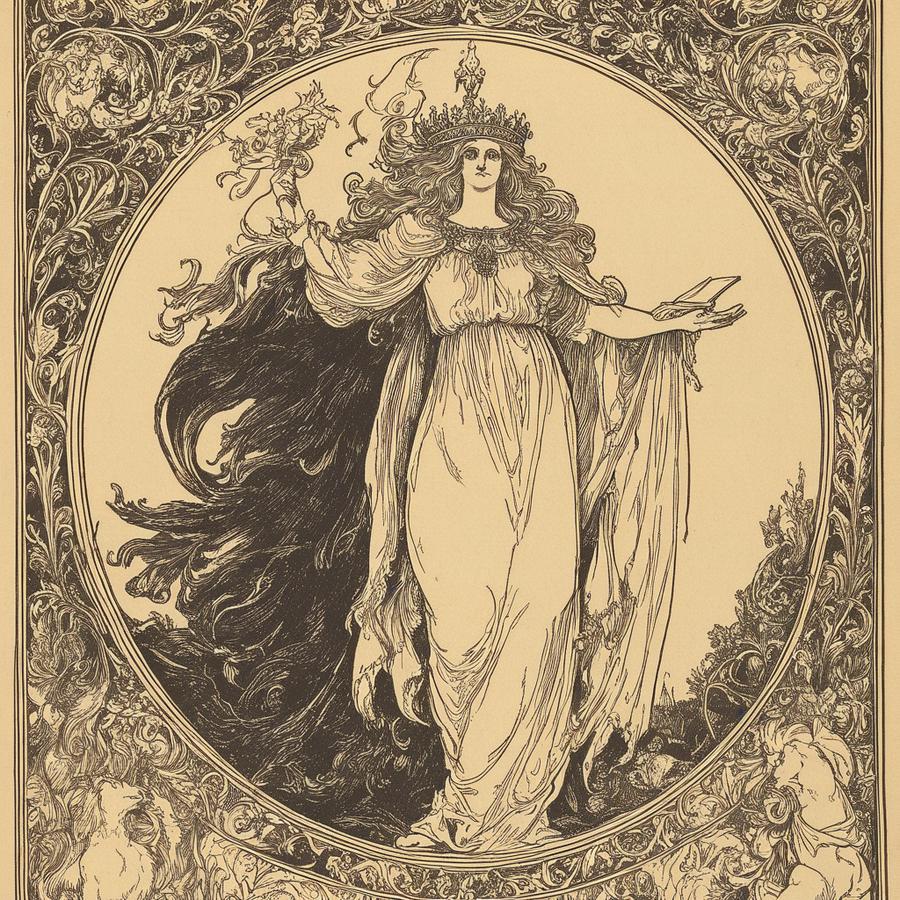
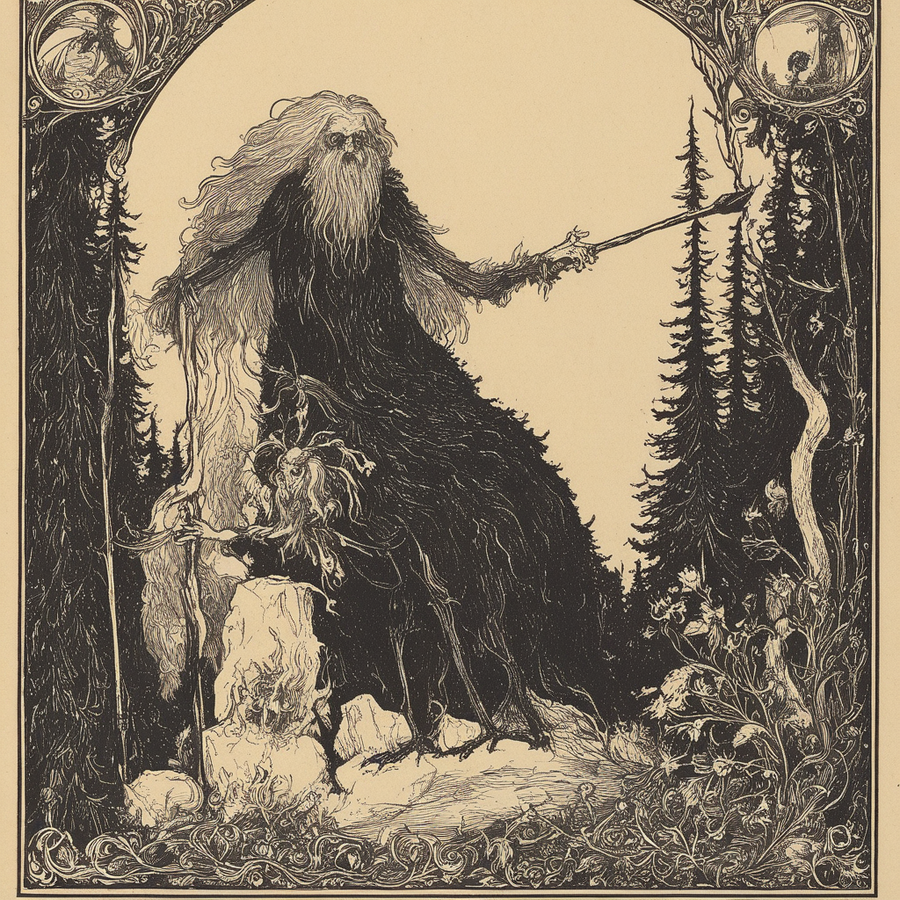
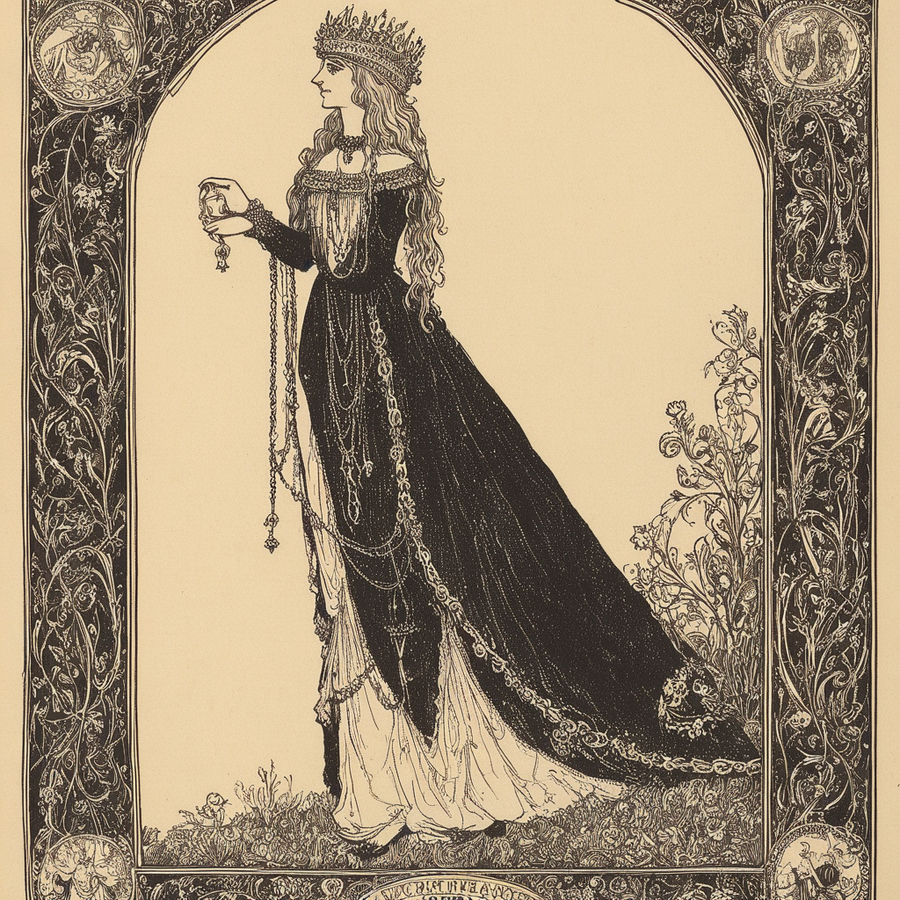
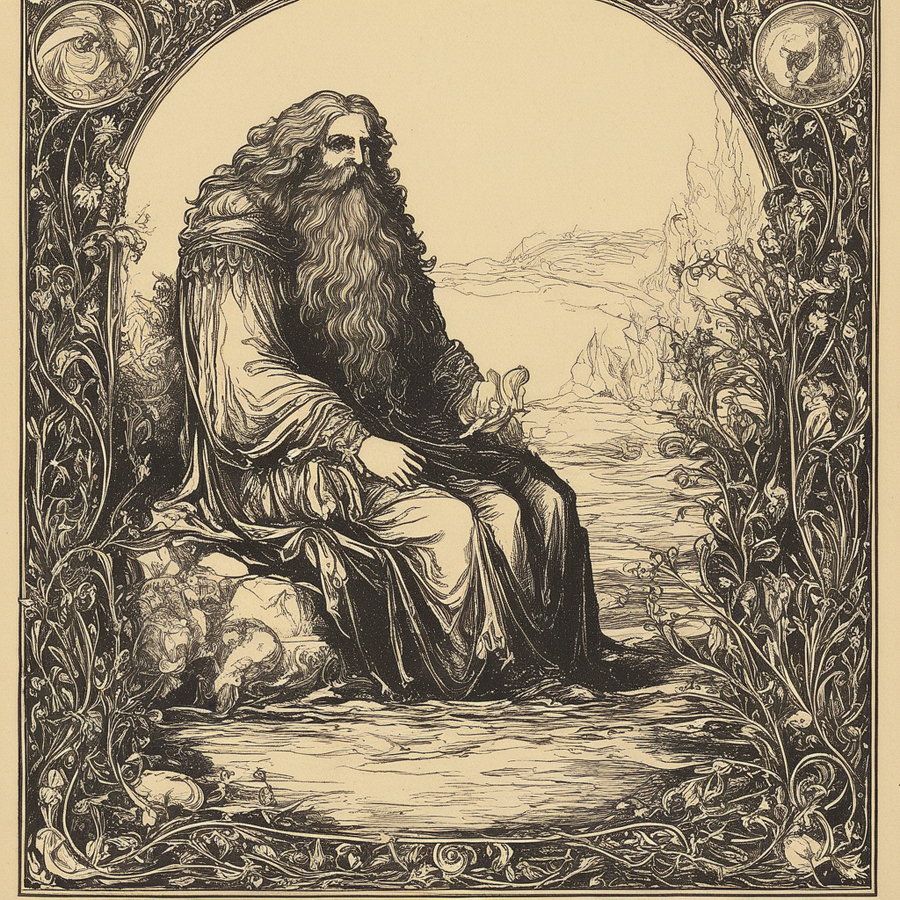
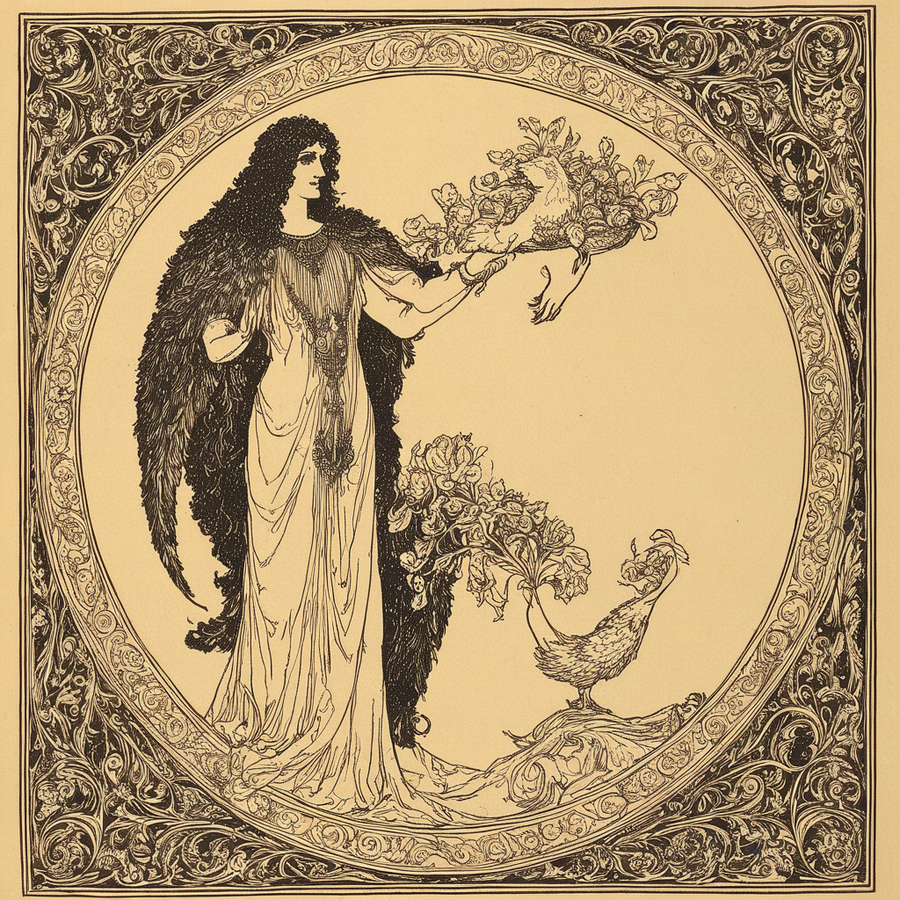
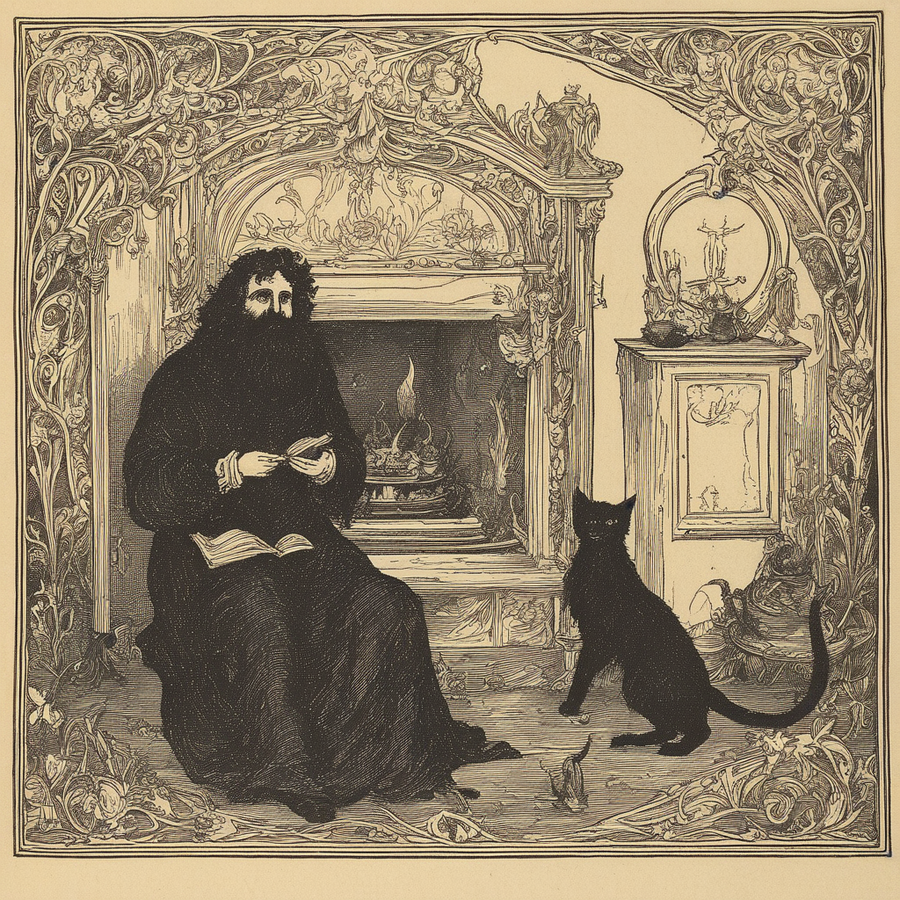
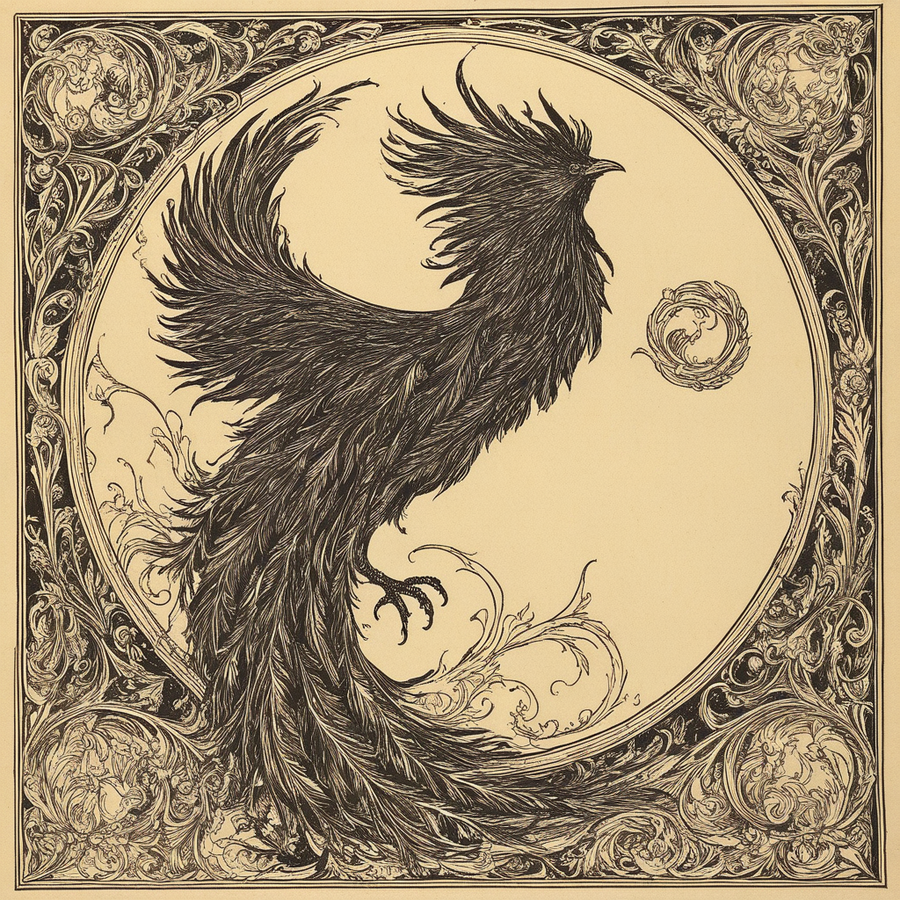
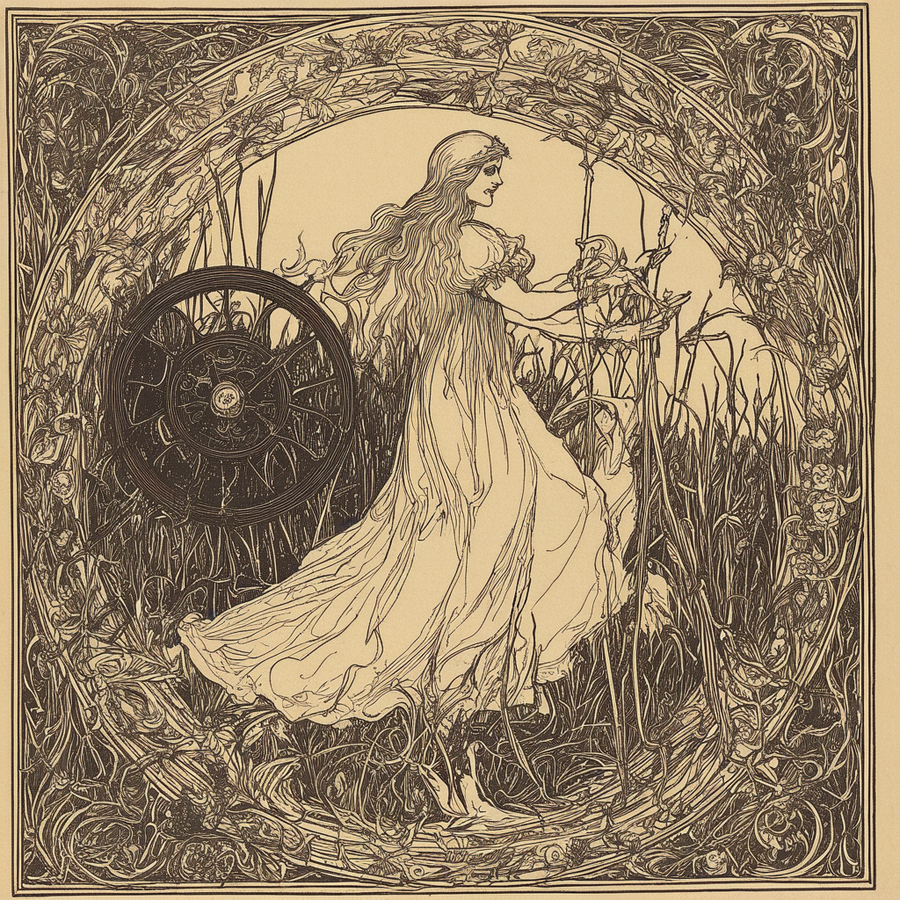
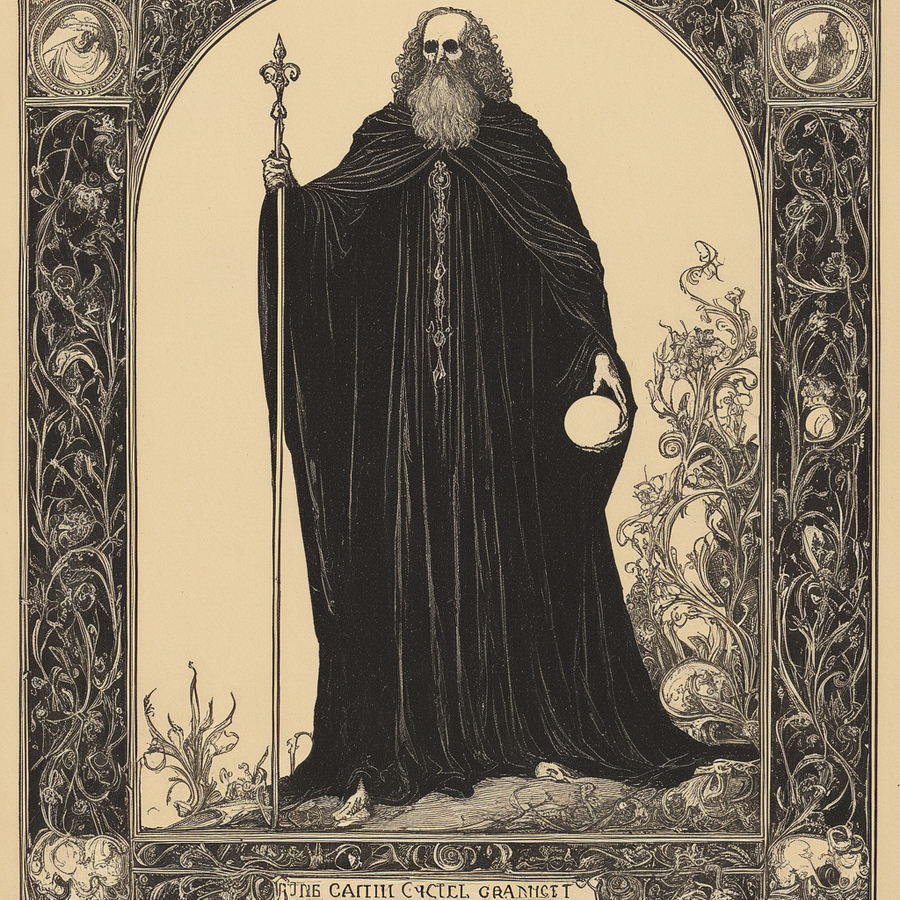
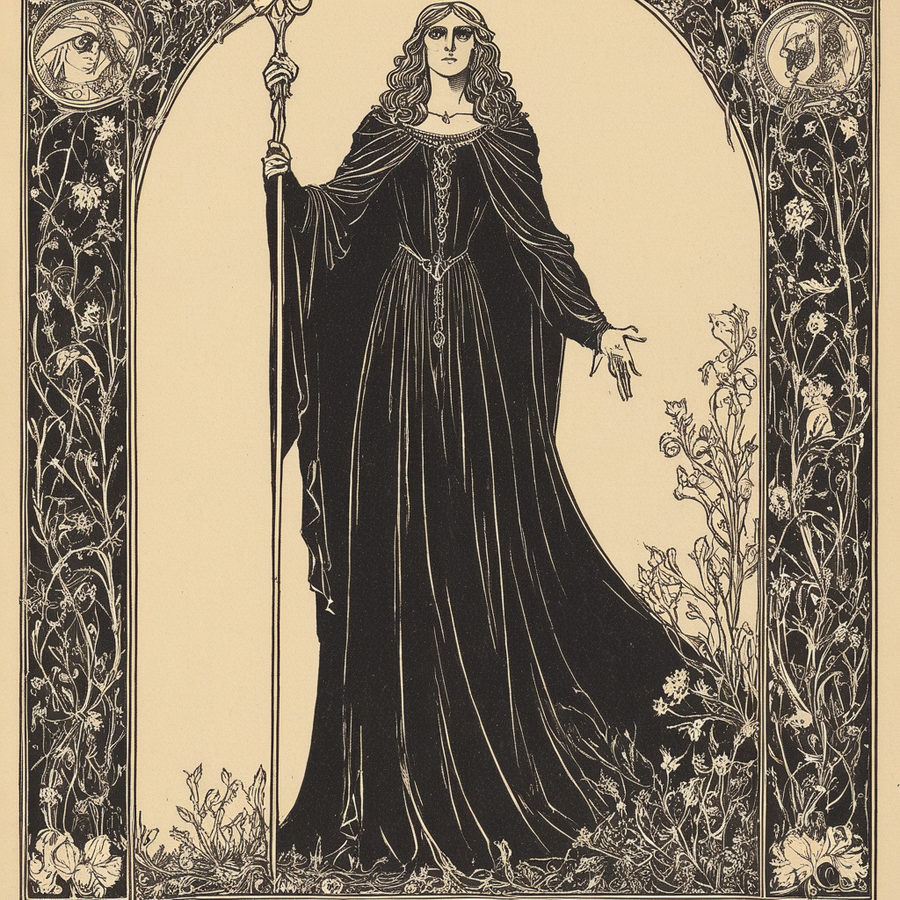
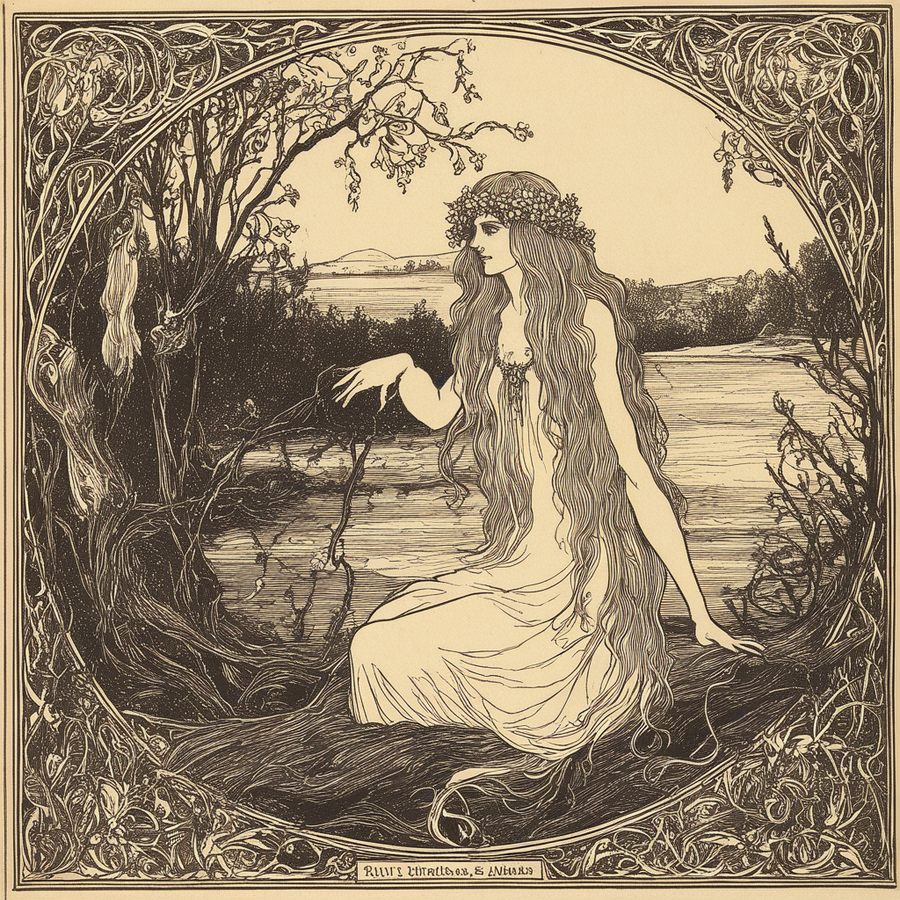
Alkonost, Baba Yaga, Vasilisa the Wise, Vodyanoy, Gamayun, Domovoy, Zhar-Ptitsa, Kikimora, Koschei the Immortal, Marena, mermaid, Sirena