Navigator
Concept Chapter 1. Theoretical Foundations Chapter 2. The Fold as Marvel: The Late Renaissance (1490–1520) Chapter 3. The Bridge: The Fold Becomes Expression (1520–1650) Chapter 4. The Fold as Problem: Early Computer Graphics (1995–2005) Chapter 5. The Fold as Medium: Contemporary Video Games (2015–2023) Chapter 6. Comparative Analysis Conclusion Bibliography
Concept
The drape fold was chosen because it retains recognizability across 500 years—from Leonardo to video games—while radically changing its function. In Renaissance painting, the fold functioned as a hint toward an unseen, sacred body. In contemporary video games, the fold functions as an indicator of the virtual environment’s physics and as an algorithmic parameter. The topic is narrow enough for deep analysis (a single visual element) and broad enough to illustrate the shift from the handcrafted to the computed, from contemplation to scanning. Twenty-two works are presented according to three criteria.
The first criterion is chronological boundaries (1490–2023). Within this span, four periods are highlighted: the Late Renaissance (1490–1520), a brief bridge across Mannerism and Baroque, early computer graphics (1995–2005), and contemporary video games (2015–2023).
The second criterion is representativeness. Canonical and technologically significant works are displayed: Leonardo, Dürer, and Raphael for painting; Pixar and Half-Life 2 for the early digital era; and The Witcher 3 and Elden Ring for modern times.
The third criterion is the presence of formally comparable elements. Each work from the Renaissance section can be compared to a work from the contemporary section based on at least one feature (a vertical fold, a fold on a knee, drapery as a boundary). The research is structured around a chronological-problematic principle. The main axis is time, but the transition between sections is determined by a shift in visual problem.
The first section (Renaissance) addresses the question: how does the fold create meaning through the artist’s hand? The second section (the bridge across the Baroque) shows the moment the fold breaks away from materiality. The third section (early digital) addresses the question: what happens to the fold when a human no longer draws it? The fourth section (contemporary games) answers the question: what happens when the technical problem is solved, but visual expressiveness vanishes?
The logic of transition moves from the artist’s complete control over every fold (Leonardo) to dictating parameters to an algorithm (Half-Life 2), and finally to a situation where there are too many folds and they are too fast for individual inspection (contemporary games).
The sources are divided into three categories: classical art history, media theory, and fold theory, and technical literature on fabric simulation.
Chapter 1. Theoretical Foundations: What is a Fold and Why Is It an Interface
1.1. The Typology of Fold in Drawing History
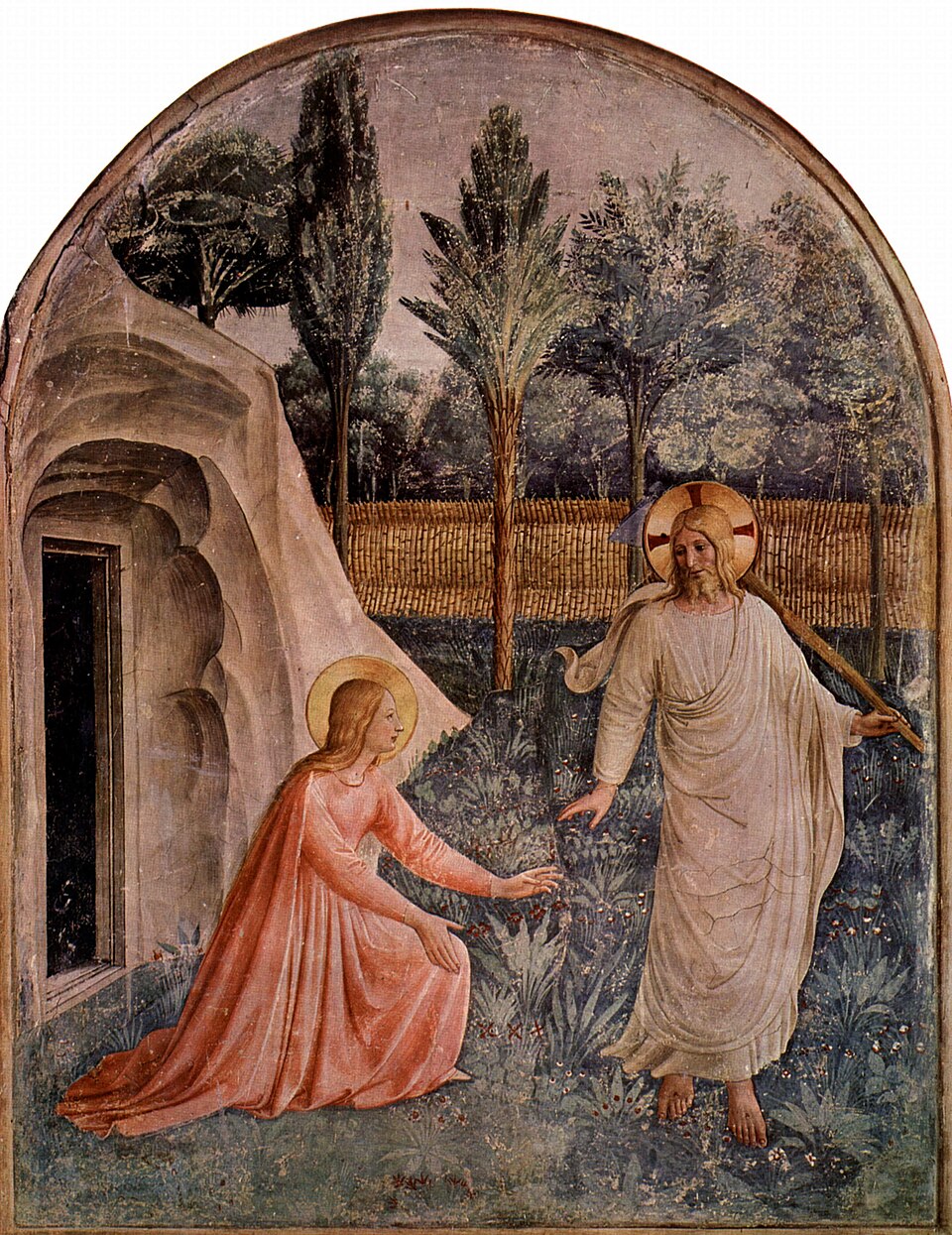

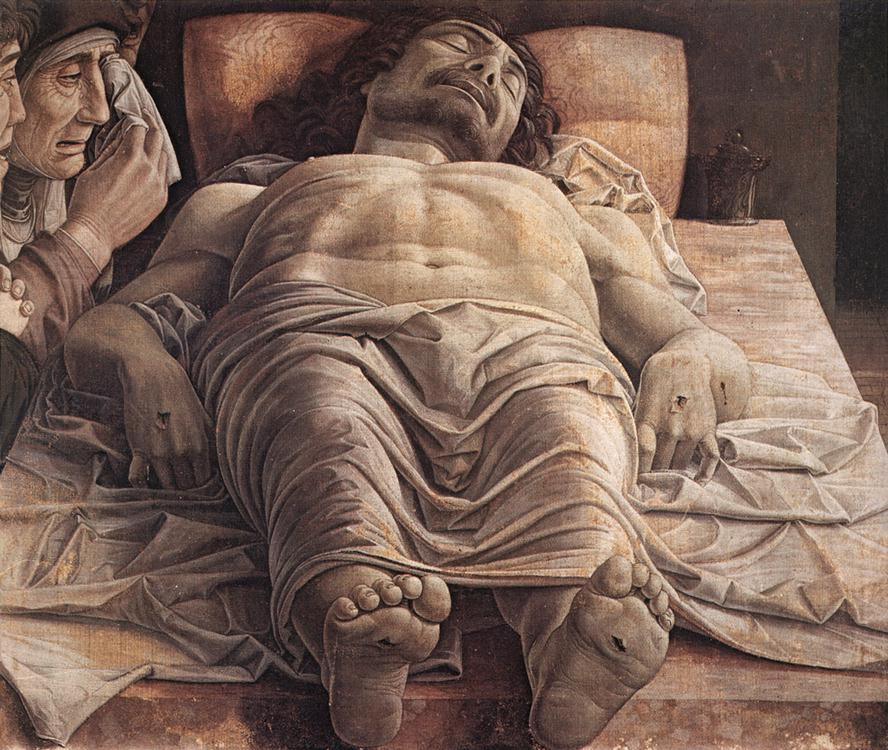
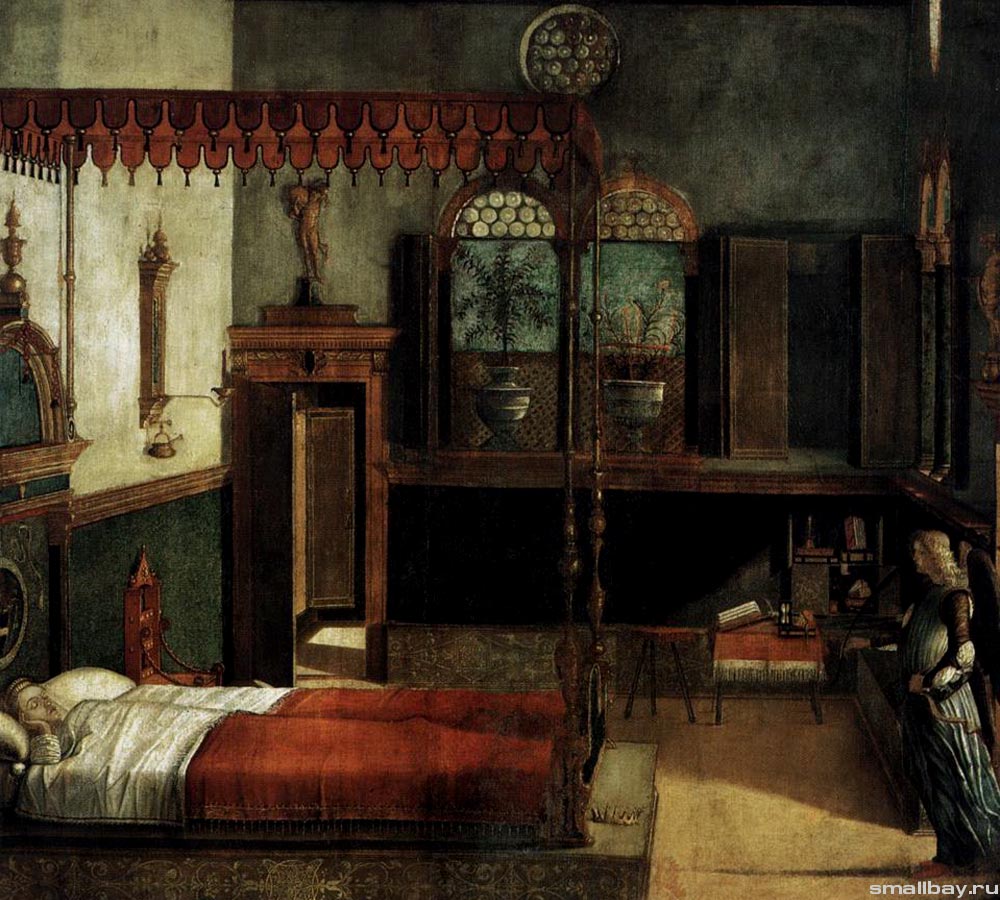
Hans Memling’s «Madonna and Child, ” Andrea Mantegna’s „Dead Christ, ” Vittore Carpaccio’s „The Dream of St. Ursula, ” and Fra Beato Angelico’s „Do Not Touch Me.“
In classical academic drawing, four main types of folds are distinguished depending on how the fabric is fastened and how it falls.
Tubular folds occur when the fabric hangs freely and vertically. They resemble pipes or columns—hence the name. This type of fold is present on long dresses worn by standing figures.
Broken folds appear when the fabric is draped over an edge—over the knee of a seated figure, over the edge of a table, or over a shoulder. A sharp angle is formed at the point of bending.
Hanging folds are secured at two points from above and sag under their own weight. A typical example is a curtain or a canopy.
Fan folds radiate from a single point where the fabric is held by a hand, a belt, or a brooch.
These types will be used in Chapter 2 as a tool for formal analysis.
1.2. The Fold as Interface: Working Definition
In this study, the concept of «interface» is employed not in a technical sense (screen, button, menu), but in an anthropological one. The interface is understood as the point of intersection between two realities.
In Renaissance painting, a fold becomes the interface between the viewer and the invisible sacred body. The viewer does not see the body directly—they see how the fabric drapes over it and elaborate on the rest. The fold simultaneously conceals and reveals.
In digital environments (video games, CGI), the fold becomes the interface between the player and virtual physics. The player does not touch the fabric, but they see how it reacts to wind, water, and movement. Through the behavior of the fold, the player «feels» the virtual world.
The core hypothesis of this research is that over 500 years, the fold has transitioned from serving as a suggestion to functioning as an algorithmic parameter.
1.3. Analysis Methodology
The study employs a combination of three methods.
Formal analysis is applied to Renaissance artworks. It allows for the identification of the type of each fold, its direction of movement, and the character of the light-shadow boundary.
Medial analysis is used when transitioning to digital imagery. It documents the difference between a handmade fold (a drawing with a silver stylus) and an algorithmic fold (fabric simulation within a game engine).
Comparative analysis operates across all levels. Works from different eras are juxtaposed in pairs based on formal characteristics (for example, a vertical fold in Leonardo versus a vertical fold in Elden Ring).
Chapter 2. The Fold as Wonder: The Late Renaissance (1490–1520)
2.1. Leonardo da Vinci: Analytical Fold
The first piece in the block is Leonardo’s drawing, «Study of Drapery for a Seated Figure» (1475–1480). Technique: silverpoint on toned paper with chalk.
The image displays a fragment of drapery falling from a knee to the floor. The left side of the drawing is filled with dark, tightly compressed folds. The right side features nearly white highlights on the projecting parts of the fabric.
Formal analysis reveals that Leonardo is not merely copying the fabric; he is constructing its logic. Each fold possesses a beginning (the point of tension), a direction (the vector of gravity), and an end (the free fall). The fold types are mixed: angular folds at the knee, and tubular folds along the calf.
Leonardo’s transition between light and shadow is always soft—blended with the finger. This is the famous Leonardesque sfumato. It creates the sensation that the fabric is breathing, pulsating, alive. The body beneath the fabric is not shown, but it is legible in every crease.
2.2. Leonardo da Vinci: Hieratic Fold
The second piece is «Madonna in the Grotto» (1483–1486). The fragment of the Madonna’s right knee is examined.
Here, the fold functions differently than in the drawing. It lacks a sharp contour. The fabric is modeled solely through color—dark blue shadows transition into bright blue highlights. This is not an analytical fold (like in the drawing), but a synthetic one. It adheres to the overall composition rather than the task of realistically rendering the texture of the fabric.
The Madonna’s knee is the focal point. The folds converge toward it like a center point and radiate downward. From a theological perspective, the knee is the meeting point of the divine (the Madonna holds Christ) and the human (she is seated like an ordinary woman). The fold marks this point. It doesn’t just depict the fabric; it participates in the painting’s theological program.
2.3. Giovanni Bellini: Material Folds
A fragment from the painting «Madonna and Child» (1480–1490) offers a third interpretation of the Renaissance drapery fold.
Bellini’s fabric is more substantial than Leonardo’s. Individual threads and the silk sheen are discernible. The folds spread like a fan from the left shoulder—a fan type.
However, Bellini’s folds are less analytical. They don’t so much sketch the body beneath the cloth as they create a decorative rhythm. The body becomes blurred. With Leonardo, the viewer could reconstruct the shape of the leg from the folds. With Bellini, this is more difficult. The materiality of the fabric begins to dominate the body it covers.
2.4. Vittore Carpaccio: Architectural Fold
«Ursula’s Dream» (1495, Accademia Gallery, Venice) exemplifies draped folds. The green canopy is gathered at the top, falling in broad waves, and terminates in a brushstroke.
The veil functions as a secondary character. It separates the sacred from the external world. The heavy, almost symmetrical folds create the sensation of a cocoon. Carpaccio is not drawing fabric; it is drawing the space that fabric creates.
The fold type is pure hanging. They are fixed at two points at the top and sag under their own weight. This is the most architectural type: the fold creates an aperture, a boundary, a limit.
2.5. Albrecht Dürer: Graphic Folds
Albrecht Dürer — Drapery with Folds.
Northern Renaissance provides a stark contrast. Drawing with brush and ink on colored paper.
For the Italians, fabric was soft and flowing. For Dürer, it is graphic, almost like a technical drawing. Every fold is defined by a clear contour line. Shadows are rendered through parallel hatching. The type is purely tubular.
The comparison with Leonardo is fundamental. With Leonardo, the fold melts away (sfumato). With Dürer, the fold is defined (line). The first approach immerses the viewer in the material. The second explains the logic of the fabric. Both function as interfaces, but they are different: the Leonardesque invites; the Dürerian instructs.
2.6. Raphael: neutral fold
«Madonna in Green» (1506) concludes the block. The Madonna’s yellow gown.







