Navigation
- Concept
- Scale and Field 2.1 Immersion 2.2 Detachment
- Dialogue and Interaction 3.1 Continuation 3.2 Visual Intersect 3.3 Juxtaposition 3.4 Montage
- Format
- Structure
- Conclusion
- Bibliography
Concept
A photograph possesses its own composition, system of images, and meanings, which are shaped by the artistic techniques employed by the author. To express their ideas, photographers utilize the expressive tools inherent to this medium: composition, angle, light, color, depth of field, and others. Therefore, when analyzing a shot, attention is usually paid to how the frame is structured, how the author highlights the main elements, and what visual impact is achieved. However, when a photograph appears on a book page, it becomes part of another composition, which can alter its perception.
The photobook is one of the most important ways to engage with photographic works, to preserve them, and to collect them. Unlike a single image, it allows the photographic series to be viewed as a unified work—allowing the viewer to gradually explore the frames and trace the connections between them. Photographs are rarely placed on pages randomly. When assembling a photobook, one must decide which images will be included in the publication, in what sequence they will be arranged, which works will be placed next to each other, and how they will interact across a spread.
Creating and laying out a photobook is similar to curating an exhibition.
The curator determines the placement of each photograph, its size, the surrounding artworks, and how the viewer will navigate between them. A book designer tackles similar challenges, but instead of an exhibition space, they work with pages, spreads, and the very structure of the publication. However, the viewing conditions for a photograph in an exhibition versus a book are substantially different. At an exhibition, a viewer can see multiple works simultaneously, step back, and independently choose their route. In a photobook, the viewing space is limited to a spread, and subsequent images are hidden until the page is turned.
A distinct feature of the photobook is that each book is a self-contained physical object. Its format, thickness, and construction influence the viewer’s interaction with the photographic works. For instance, a small edition encourages close, almost intimate viewing, while a large format allows for the detailed rendering of the shots and creates a different sense of scale. The book’s construction dictates how the reader will turn pages and engage with the spreads. Therefore, the design of the photobook must be intrinsically linked to the photographic project’s content and the impression the author intends to leave with the viewer. In creating the final look, the photographer, designer, editor, and publisher may collaborate on the publication.
When a photograph is translated onto paper, another level of composition emerges: the photograph becomes part of the page. The same frame can be printed edge-to-edge, leaving no margins, or positioned as a small rectangle within empty space. In the first case, the work fills the page, whereas in the second, the margins establish a distance between the viewer and the image. Even the placement of the image relative to the page edge alters the viewer’s gaze and draws attention to specific details. This effect is even more pronounced when two or more photographs appear on a spread. The images can be unified through shared forms, gestures, or color. Sometimes, their proximity generates new connotations that were absent in each frame individually.
The placement of photographs on the strip and spread, their scale, margins, proximity of images, and the book’s structure influence the perception of the photographs. These elements can amplify the author’s intent and forge new relationships between the images. A single technique can yield a different effect, depending on the content of the photographs and the publication’s design.
The objective of this study is to identify the expressive devices in book design and their impact on the viewer. The methods will involve selecting, sorting, and conducting a comparative visual analysis of publications created in the second half of the 20th century. The selection will include books with accessible spreads sourced from museum archives, libraries, and the catalogs of photographers and publishers.
The research is divided into four sections that illustrate the main and most frequently used expressive devices in the layout of photographic books. The first two—“Scale and Margins» and «Interaction”—focus on analyzing the internal structure of the book, specifically how photographs are positioned on the spread. The remaining sections—“Format» and «Construction”—address external factors that also influence perception.
Scale and Fields
ImmersionPlacing photographic works across the entire panel creates a sense of immersion and presence. It fosters a deceptive feeling that the viewer becomes a direct participant in the events, seeing what is happening with their own eyes.
Hoda Afshar, «Speaking to the Wind,» 2021, MACK Press
It is interesting to examine how the technique works in Richard Billingham’s photobook, «Ray Isn’t Nostalgic.» Here, stretching the photograph across the entire spread creates a division due to the appearance of the spine line. As a result, the narrative becomes «sharper, ” often juxtaposing two characters or parts of the photograph.
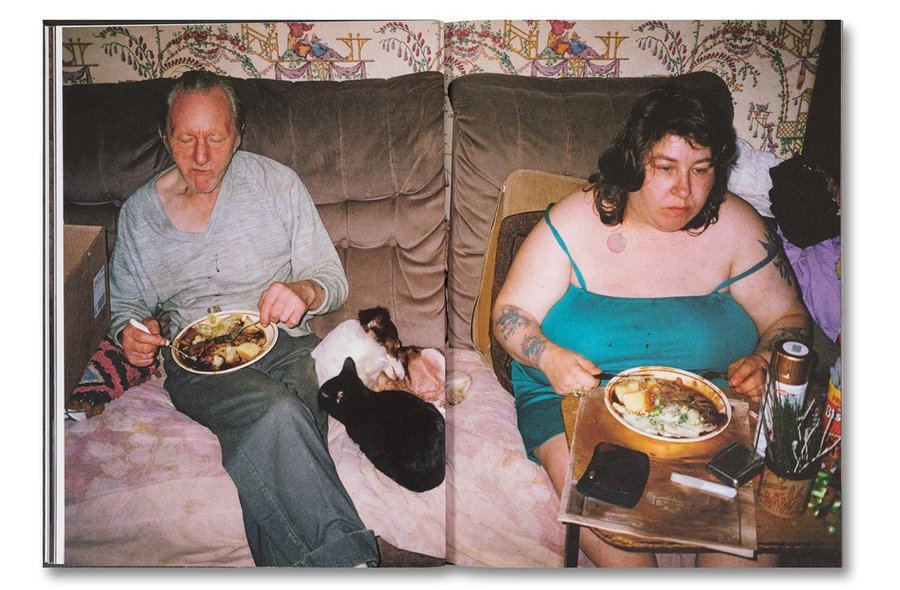
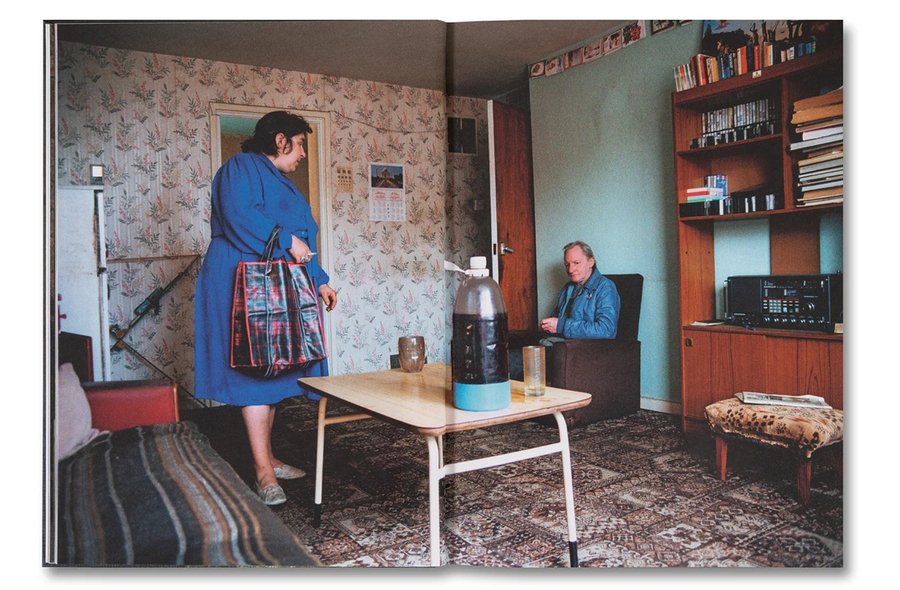
[1-2] Richard Billingham, «Ray, You Won’t Get Bored, ” 2024, MACK Press
Richard Billingham, «Ray, You Won’t Get Bored, ” 2024, MACK Publishing
This technique is also often used to frame photographs that contain textures or natural motifs.
[1–2] Kikuji Kawada, «Map (Mock-up Edition), ” 2021, MACK Publications (MACK)
Kikuji Kawada, «Map (mockup edition), ” 2021, published by MACK.
IsolationTo facilitate a more «detached» perception of the photograph, white borders are used, creating a passe-partout effect.
Diana Arbuz, «Diana Arbuz: Aperture Monograph,» 1972
[1-2] Lars Thunbjörk, «Office / Office in Los Angeles, ” 2024, Loose Joints
Gary Johansson, «Spanish Summer, ” 2022, published by MACK
Also interesting is how the postcard reception begins to work when the fields around the photograph are unevenly distributed. For example, in Paul Collier Shor’s «Book of Plaques,» this approach plays with the unconventional twist within the photograph itself, adding an extra layer of «strangeness.»
Coler Shor, Book of Pol, 2019, published by MACK
Dialogue and Interaction
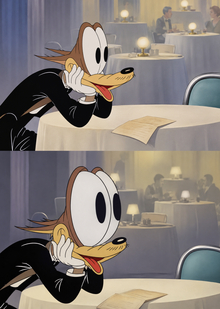
ContinuationBy featuring two shots taken in the same location, you create a sense of «before and after, ” introducing narrative dynamism and action.
Mads Holm, HRTLND («Heartland»), 2025, published by Disko Bay
[1-2] Guido Ghividi, «Over Time, 1956–2024, ” 2025, MACK Press
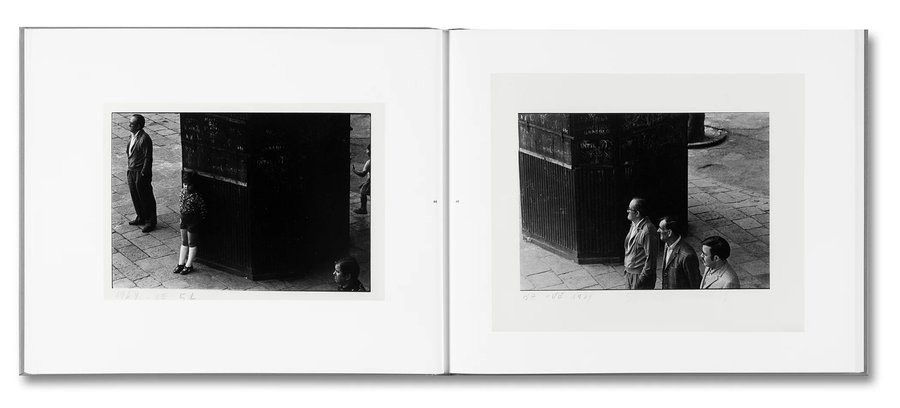
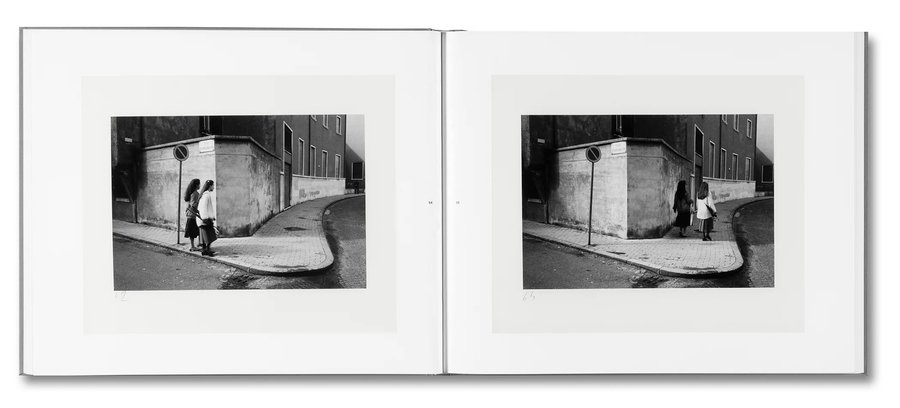
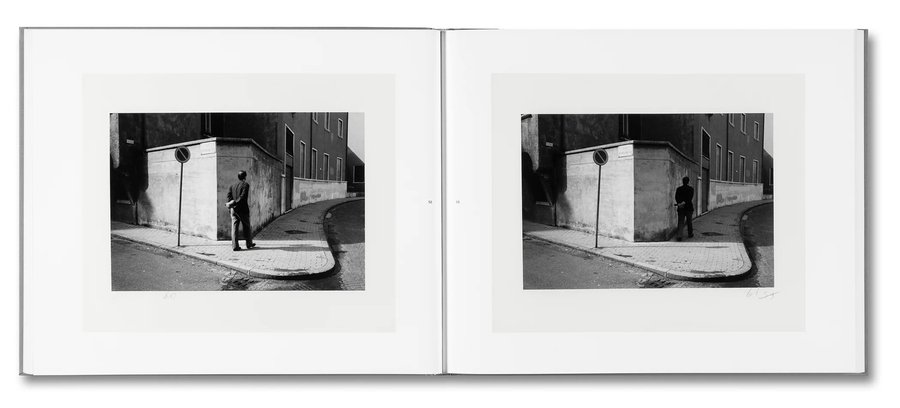
[1-3] Guido Ghividi, «Album, 1969–1982, ” 2026, published by MACK
Trine Søndergaard, «203 Works, ” 2020, Gothenburg Museum of Art / Fabrikbooks Publishing