Navigation
- Concept2. The Dancing Person Becomes a Dancing Character3. Dancing Statics4. Personal Dance Movement5. Character Interaction in Dance6. Conclusion7. Bibliography8. Image Sources
Concept
The 1930s in the United States saw dance become deeply embedded in the lives of ordinary people. Dance of that era was largely connected to jazz and Latin American traditions.
For example, popular swing lacked strict rules; it was built on the improvisation of the dancer, energy, collaborative movement, and the simple enjoyment of the moment. All of this led the dance to become a refuge from the Great Depression and the looming Nazi threat for every American, serving as a symbol of unity across different races.
The Fleischer Studio’s evolution coincided perfectly with the American dance era and the integration of music and animation. Along with music, dance also entered the world of animation.
Many projects and studios failed to cope with the onslaught of sound and lost their fame, but the Fleischer brothers were ahead of the curve. As early as 1915, Max Fleischer invented the rotoscoping technique, which allowed the movement of a real person to be transferred into an animated film. This heavily determined the dance-like nature of the studio’s films, as rotoscoping lent the characters' movements a special fluidity and vitality, much like a choreographed dance number—which was very popular at the time.
However, a distinct feature of dance, especially in animation, is the possibility of weaving it into the characters' everyday lives, dialogues, and actions. In real life, the phenomenon of dance is rare—not as a staged or premeditated performance, or at least not occurring in the appropriate atmosphere of a disco or dance hall—but animation’s conditional metaphorical language opens up new possibilities for this.
Nothing can impede a fictional character: they can express their dramatic narrative in a song, accompanying it with fluid or sharp gestures of sorrow, transform a walk into a dance routine, engage in an entire dialogue with another character through dance, or even manage all of this simultaneously! The audience will believe it because such animated narratives create a wonderful and captivating new world while simultaneously reflecting the character’s nature and persona within that world.
It was precisely the aesthetically more complex and deliberate character animation within a dance perspective that led me to this topic. I propose that dance allows for a deeper exploration of a character’s behavioral traits, enabling a more engaging depiction of their emotions and the relationships between different characters through more intricate and compelling choreographic movement.
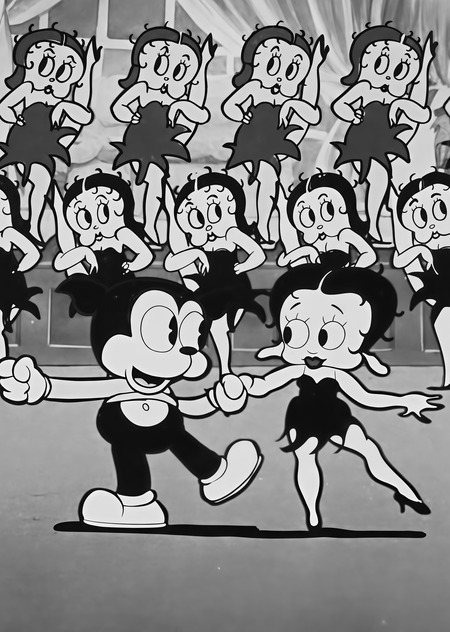
For my research materials, I will use the works created by the Fleischer Studio during its independent existence, from 1929–1942, primarily centered around the universe of the studio’s most famous characters: Koko the Clown, Bimbo, Betty Boop, and Popeye the Sailor.







