Concept
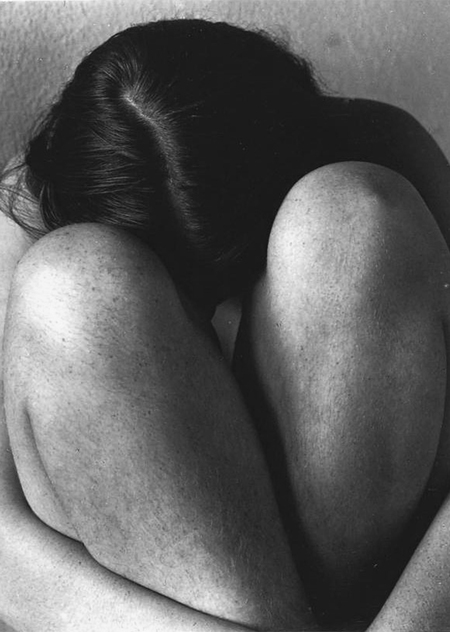
Photography is traditionally perceived as a means to capture a person’s likeness and preserve their recognizable image. However, photographers frequently depart from the conventional portrait. This visual study focuses on a process through which photography gradually ceases to view the human body solely as a human image, beginning instead to treat it as a form, an object, or material for experimentation. This is not about isolated, quirky shots, but rather about a systematic shift in perspective: the body sheds the status of a recognizable face and acquires the qualities of an object, a surface, a sculpture, or an optical effect. Works by Edward Weston, Bill Brandt, Andre Kertész, Man Ray, Hans Bellmer, Shirin Neshat, and other artists allow us to trace the evolution of this approach, from modernist experiments in the 20th century to contemporary practices. Comparing these photographs reveals how similar effects are achieved through different means: the resemblance of the body to an object is created through composition and light, while alterations to anatomy are achieved through optical distortion or photomontage.
The foundation of the research is the classification of body transformation methods: fragmentation; object resemblance and mimicry; fetishization; optical distortion; turning the body into a surface for depiction; and doubling and double exposure. Each category is explored through an analysis of the photographs—their framing, angle, proportions, light, and texture. Thus, the research becomes an analysis of visual techniques, rather than a collection of unusual images.
The relevance of this topic stems from the fact that the turn toward the body is one of the central themes of visual research. Beginning with the work of Roland Barthes and John Berger, photography is viewed not as a transparent window into reality, but as a practice that produces meaning itself [4]. The represented body proves to be a particularly convenient subject for such analysis, as it simultaneously references a living person while transforming them into an image. Investigating how the body becomes a «foreign object» allows us to refine how photography constructs the boundary between human and thing.
What means allows photography to transform the recognizable human body into an independent form, object, or material for artistic experimentation?
It is suggested that the further an image deviates from conventional anatomical representation, the more the viewer notices the body’s plasticity, texture, and composition rather than the model’s individual identity. Furthermore, a loss of recognizability does not necessarily equate to a loss of meaning; the body can retain social, cultural, or symbolic value.
The goal of this research is to trace the methods of photographic transformation of the body and demonstrate how the boundaries between person, object, and image shift.
The Body Beyond Conventional Perception
In traditional portrait photography, the human body primarily serves as a means of presenting an individual. The face, the expression in the eyes, the posture, and the clothing help the viewer discern a person’s character, social standing, and emotional state. However, with the evolution of artistic photography, the perception of the human body is gradually changing. It ceases to be solely the subject of a portrait and transforms into an autonomous visual form that can be studied, transformed, and juxtaposed with the surrounding world.
This is particularly evident in 20th-century photography, where artists began to move away from realistic depictions of reality. They became interested not so much in the person’s appearance as in the capabilities of the photographic medium itself: how the lens alters proportions, how light shapes volume, and how framing shifts the perception of anatomy. Consequently, the body gradually detaches from its original function—representing a specific individual—and turns into a material for artistic experimentation.
R. Brechner, drawing upon the work of R. Barthes, J. Berger, and G. Böhme, identifies several types of the image’s relationship to reality: the image as a copy, as a sign, as an image in itself, as a means of communication, and as a hyperreality. Each of these types establishes its own manner of bodily presence in the photograph and its own criteria for what can be seen at all.
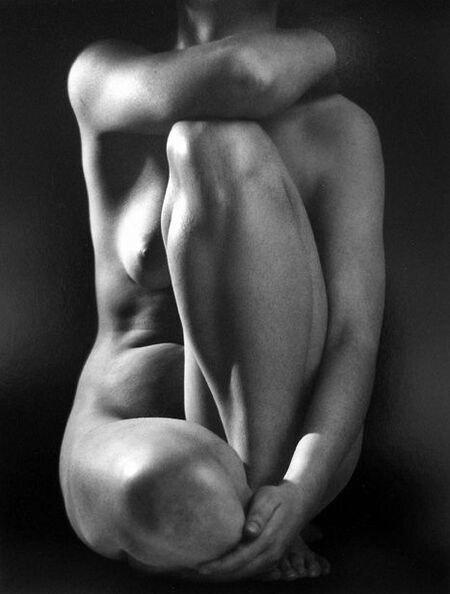
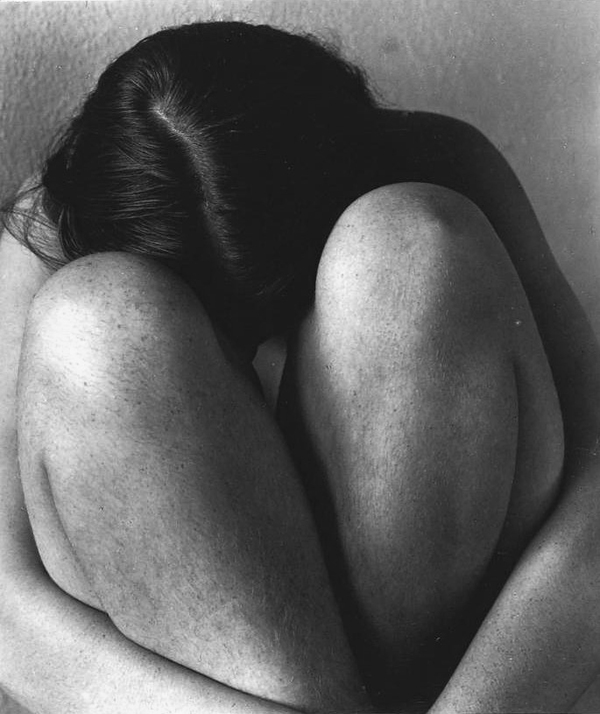
Ruth Bernhard — «Classic Torso, ” 1952 Edward Weston — „Nude, ” 1936
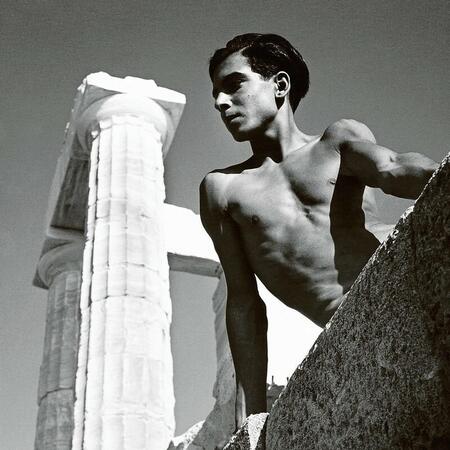
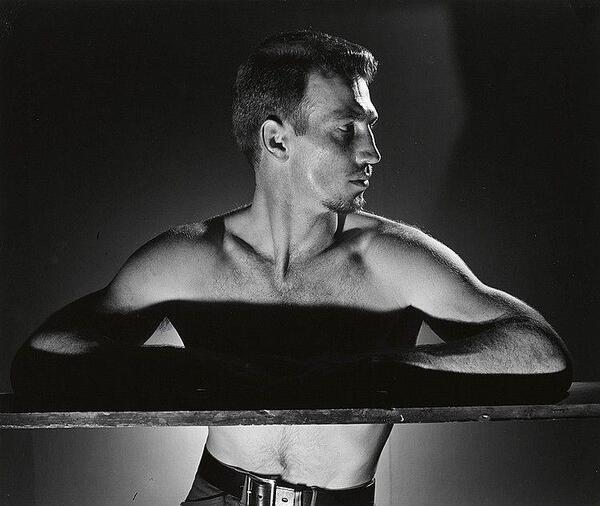
Herbert List — «Below the Temple of Poseidon, Sounion, ” 1936–1937 George Platt Lynes — „Man leaning on plank, ” 1907–1955
The photographs share a common approach: the photographers move away from depicting the person as an individual and instead focus on the plasticity of the body—its lines, curves, volume, proportions, and the interaction of light and shadow.
One of the first areas in which the body begins to be perceived as an independent plastic form is modernist photography. Photographers turn to close-ups, unconventional angles, and high-contrast lighting. They abandon the need to show the entire person and begin to isolate individual parts of their anatomy. Hands, back, shoulders, and curves become independent compositional elements. This approach changes the viewer’s accustomed perspective: instead of a recognizable portrait, they are presented with an image that can be perceived as an abstract composition.
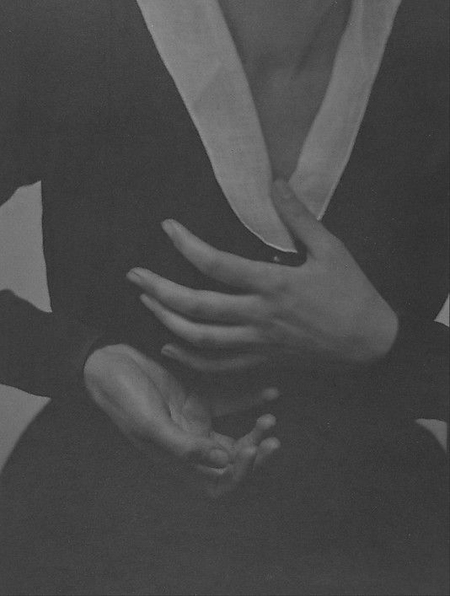
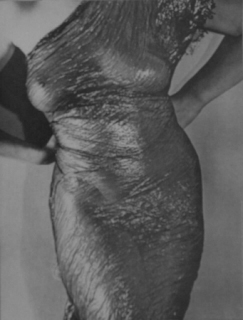
Alfred Stieglitz — «Georgia O’Keeffe—Hands, ” 1917 Man Ray — „Anatomies, ” 1930
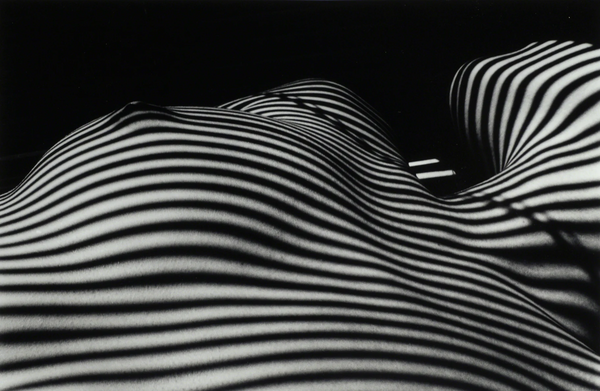
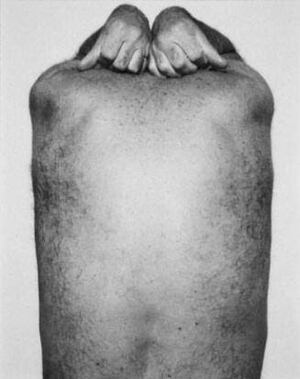
Lucien Clergue — «Nu Zebre, ” 2013 John Coplans — „Self-Portrait, ” 1984
A pivotal role in this process was the shift from representing the human as an individual to investigating their physical presence. Photography begins to work not only with appearance but also with the sensations evoked by the body: tension, weight, vulnerability, fragility, and stillness. This is especially evident in works where the human figure interacts with architecture or surrounding objects.
American photographer Francesca Woodman, for example, used her own body as the primary material for her work. She placed herself in abandoned interiors, hid behind wallpaper, doors, and pieces of furniture, and used long exposures to blur the outline of her figure. The person in her photographs isn’t just in a space—they gradually merge with it, losing their conventional boundaries.
The National Galleries of Scotland notes that Woodman connected photography with performance, exploring the hidden aspects of the self and how we perceive our own bodies.
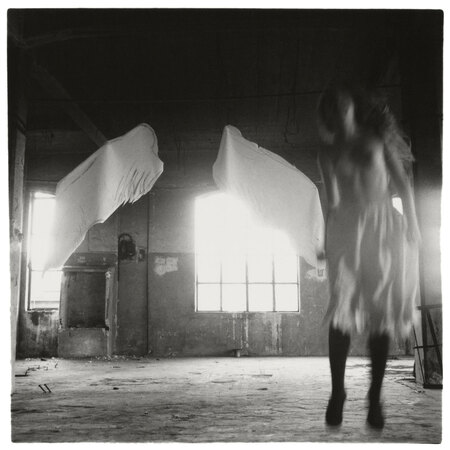
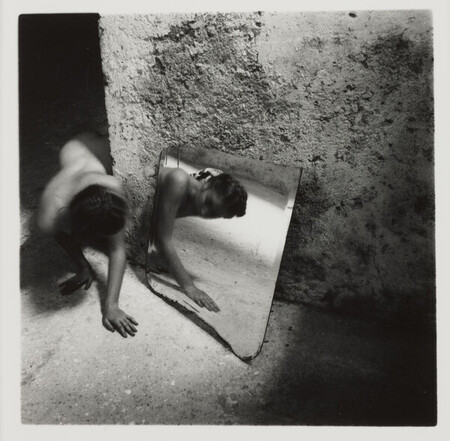
Francesca Woodman — «Angel,» 1977 Francesca Woodman — «Self-Deceit #1,» 1977–1978
Francesca Woodman — «Eel,» 1978 Francesca Woodman — «From Space²,» Providence, Rhode Island, 1976
Thus, the body in photography gradually ceases to be merely an object of observation. It becomes a tool through which the artist explores the relationship between the person, space, objects, and their own reflection. This is what allows the transition to the next stage—transforming the body into an external, autonomous object.
Fragmentation
One of the most common ways to alter the perception of the human body is through fragmentation. This technique involves intentionally foregoing a complete depiction of the figure. The photographer selects individual parts of the anatomy, employs close-ups, crops the figure to the frame’s boundaries, or positions the camera at an unusual angle.
As a result, the viewer loses the ability to immediately determine the person’s position in space. Individual body parts begin to be perceived as autonomous objects, and familiar proportions are disrupted. What is usually perceived as a unified whole transforms into an aggregate of lines, volumes, and surfaces.
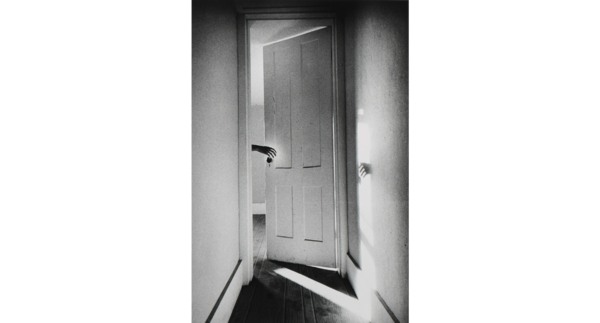
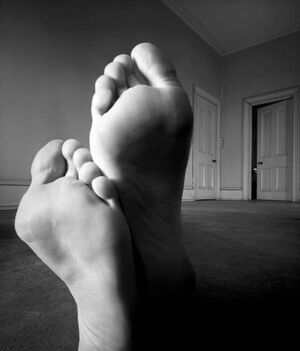
Ralph Gibson — «Hand through Door, from The Somnambulist, ” 1969 Bill Brandt — „Nude, Hampstead, ” 1952
The parallelism between bodily and object form is one of the through-lines of photographic history: Edward Weston’s still life with vegetables and his nude studies are structured by the same plastic logic, where volume, chiaroscuro, and texture are significant, rather than the model’s psychology. The body, placed within such a system of coordinates, begins to be measured by form and surface, not by facial recognition. This transition prepares for all subsequent approaches to treating the body as material.
Fundamentally, fragmentation is not about depicting the nude body: the technique that supports it is the close-up shot, which ultimately becomes macro photography, allowing a fragment of minimal scale to function as an independent object. E. Weston builds both still lifes and nudes at an extreme level of proximity: vegetables, shells, and body parts are photographed so that they read as generalized volumes rather than recognizable objects [5].
Edward Weston — «Cabbage Leaf, ” 1931

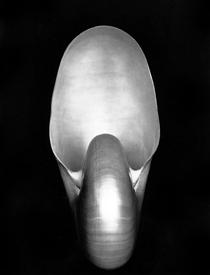
Edward Weston — «Nautilus Shell, ” 1927 Edward Weston — „Nautilus, ” 1927
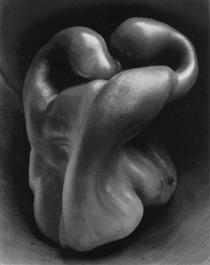
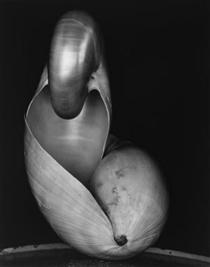
Edward Weston — «Pepper No. 30,» 1930 Edward Weston — «Shell,» 1927
If fragmentation depicts the body in pieces, the next step is to place the human form alongside forms of non-living nature and reveal their resemblance. This technique relies on the plastic kinship between humans and objects—a kinship that photography is capable of emphasizing, or even creating.