Rubrics
0^ Research Cover
1^ History of Creation
2^ Original Source
3^ Visual Universe
4^ The Grand Market
5^ Diversity of Alien Dawns
6. The Civilization of Mules
7. The Planet’s Tragedy
8. Postcolonial Trauma
9. Memory and Recovery
10. Conclusion
Research Cover
This work is dedicated to the visual quotidian life of alien civilizations, the diversity of life forms, and the «Grand Market”—a nexus where disparate cultures intersect. Central focus, however, is placed on the Mool people—the inhabitants of the Mool planet, which was destroyed as a result of military intervention by human civilization.
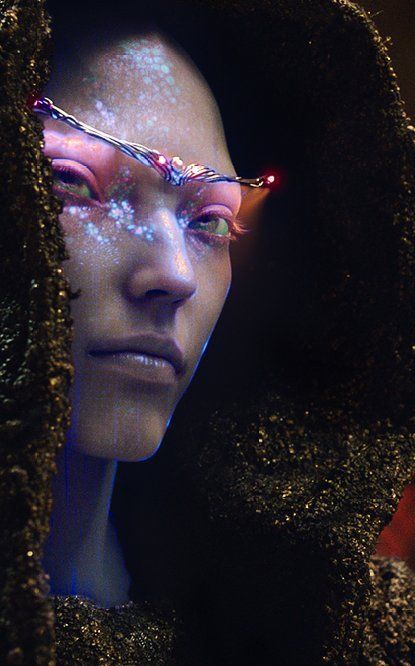
Through an analysis of the film’s architecture, imagery, natural environment, and major events, the themes of the destruction of cultural identity, forced displacement, loss of homeland, and concealment of historical truth are explored. The tragedy of the people of the planet Muel is examined as a history of inequality and violence, as well as the responsibility of a more powerful civilization toward the destroyed people.
01 History of the School’s Founding
The film’s story began long before its creation. Its origins trace back to the 20th century. Artist Jean-Claude Mezher and screenwriter Pierre Christen created a series of science fiction comics, the first of which was published in the magazine Pilote in 1967. The initial issue was titled «Les Mauvais Rêves» (Bad Dreams). It narrated the unexpected meeting of two future agents. Initially, until 2007, the comic was called «Valérian, agent spatio-temporel» (Valerian: Spatio-temporal Agent). In 2007, coinciding with the comic’s 40th anniversary and the release of the animated series, the publisher Dargaud officially changed the name of the entire franchise to «Valérian et Laureline» (Valerian and Laureline). Later, the original issues were also reissued and renamed with the current title.
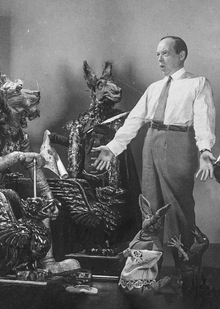
Pierre Christian and Jean-Claude Mezier Photo taken on June 12, 2017, in Paris, during a photoshoot for the AFP agency. Photo credit: Joel Saget
In subsequent works, the authors created worlds rich with diverse political systems, life forms, technologies, and cultural frameworks. Furthermore, these worlds were not merely disposable backdrops—the structure of the worlds became integral to the plot and conflict.
If we talk about the film director, Luc Besson, he was a huge fan of the comic by Pierre and Jean-Claude. Luc started reading «Valerian» at age 10 and immediately fell in love with Valerian’s adventuring companion: Laureline. At such a young age, he dreamed of adapting the comic into a film. In the 1990s, Besson began shooting his biggest hit, The Fifth Element (1997), and invited the comic artist Jean-Claude Mezher to work on the film’s design. That is when the conversation took place—Mezher asked him why he was making this film instead of «Valerian.» The director replied that the filming technology was not yet ready for that film.
However, the major turning point occurred with the release of Avatar (2009–2012). Luke wrote the first draft of the screenplay in 2009, and shortly thereafter, James Cameron’s Avatar premiered. The level of computer graphics that Besson witnessed made it clear to him that technology was finally giving the «green light» to film the project, but his own screenplay now felt too weak in comparison to Avatar. At that point, Luke decided to rewrite the script, making it more contemporary and grand in scope.
To bring «Valerian» to life, Luc Besson assembled an unprecedented budget for European cinema: $180–210 million. To recoup these costs, he sold distribution rights worldwide even before the film’s release. The work then began. Artists from all continents and countries collaborated to design the hundreds of alien creatures and spaces for the «Alpha» space station. Simultaneously, casting was underway, with Dane DeHaan selected for Valerian and model Cara Delevingne cast as Laureline. Official filming started in January 2016 in France, surrounded by green screens.
02 Primary Source
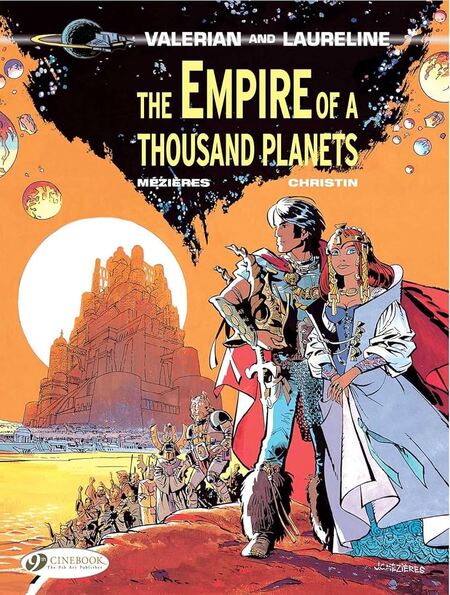
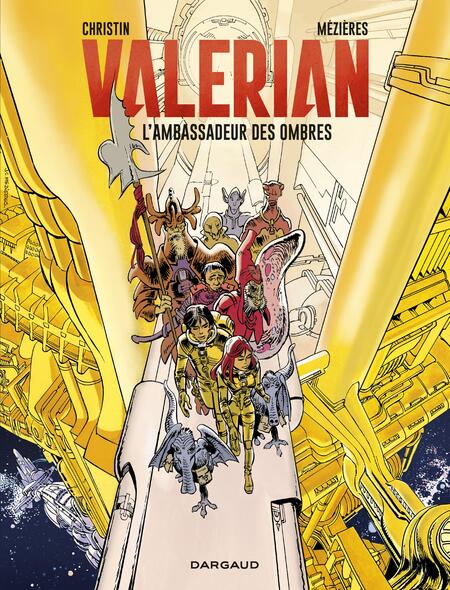
1. Album edition «L’Empire des mille planètes, ” Pierre Christen and Jean-Claude Mezher, 1971 2. First Dargaud album edition, „L’Ambassadeur des ombres, ” Pierre Christen and Jean-Claude Mezher, October 1975
«The Empire of a Thousand Planets» (French original; translated into Russian as «The Empire of a Thousand Planets») is one of the early albums in the series, published in 1971. The title of the story is crucial to the context of the film adaptation—the concept of countless planets and civilizations existed in the comic long before the screen version. This album should be considered one segment of the source material.
Another standout work is the 1975 album, «L’Ambassadeur des ombres» («The Ambassador of Shadows»), published in four issues of Pilote Mensuel No. 14–17. It extensively depicts multi-civilizational spaces where representatives from diverse worlds interact. It can be compared to the «Alpha» space station in a film, as both spaces convey the concept of a place that unites cultural and species diversity.
Since Mezger was a comic artist, the role of world-builder naturally fell to him; he approached this with exceptional attention to detail. Jean-Claude built his fantastic world through meticulous environment design—transportation, architecture, clothing, and even the bodies of the aliens. He understood that what mattered was not just the design, but also the character’s relationship with the space. Therefore, the detailed development of the environment illustrates the structure of society and its technology. All of this helped to create the sense of self-contained civilizations.
When creating the film, Luc Besson did not shy away from the meticulous detailing and other visual characteristics of the comic, translating them into the movie through a vast array of civilizations and exotic creatures, unusual architecture and fantastic transportation, as well as grand, sweeping spaces.
However, some things have changed. For instance, the planet Myl disappeared, and the tragedy of the grain people, which inhabited the planet, was entirely invented by Besson from scratch. In addition, the main characters' personalities have undergone changes.
The comic began in 1967 and concluded in 2010, following this chronology:
- Formation (1967–1971)—the comic flourished before our eyes. Initially, Valerian was conceived as the sole protagonist, and Loreleen as a character for a single issue, but it turned out that Loreleen would later overshadow Valerian.
- Development and Connection to Reality (1972–1985)—the comic’s artwork becomes more realistic, the plots gain seriousness, and themes such as racism, ecology, and bureaucracy begin to be addressed. Key masterpieces of the series appear—for instance, «Ambassador of Shadows.»
- Disappearance of Earth and Wandering (1986–2001)—due to a temporal paradox involving Galaxity, the home planet, as interpreted in the future, ceases to exist. The special agents lose their status and become mercenaries in an effort to reclaim their sanctuary.
- Finale (2004–2010)—the mystery of Earth’s disappearance is revealed by the main characters, and in volume 21 («L’OuvreTemps, ” or „The Time Opener“ in Russian), the series logically concludes and is renamed „Loreleen.“
03 Visual Development
«Valerian and the City of a Thousand Planets» is a French science fiction film released in 2017. It was directed by Luc Besson, based on the comic book series «Valerian and Laureline» by Pierre Christin (July 27, 1938 — October 3, 2024) and Jean-Claude Mézières (September 23, 1938 — January 23, 2022).
The film’s action unfolds in the 28th century. The main protagonists—space agents Valerian and Laureline—are given a mission at the space station «Alpha, ” which unites numerous alien civilizations. Their investigation leads them to discover a threat connected to the disappearance of the planet Muel and its inhabitants.
«The Great Market»
One of the most complex challenges in creating the film was developing the visual world. It required a huge number of locations, each with meticulously developed architecture and environment, as well as civilizations, each possessing its own distinct visual character.
All of this needed to be presented in the «Grand Bazaar”—a place where two environments connect according to excellent spatial principles:
~ The Dusty Arena—the physical location where visitors are present.
~ The „Grand Bazaar”—a massive trading city accessible only through specialized equipment.
The „Grand Bazaar“ models the future of commerce: here, the concepts of geographical distance and immediate physical presence dissolve.
What unifies these spaces is virtual technology, through which purchased goods materialize. With this, the „Grand Bazaar“ illustrates not only the diversity of alien races but also how technology itself changes the perception of physical space.
Concept Art: «Great Bazaar, ” Ben Mauro, 2017
At the «Great Market,» the merchant is inseparable from their own visual identity. Their movements, face, body, and even clothing are integral to the perception of the trading post. Unlike a human market, the differences here are not limited to clothing, language, or social status; they also extend to biology. The appearance of each being varies drastically—from humanoid body structures to anatomies entirely unlike human ones. The look of every creature directly influences how they will interact with objects and visitors.
The market itself allows one to observe the individuality of the sellers while unifying disparate forms of life and culture. Thus, through the merchants in this market, the extraterrestrial civilization transforms from abstract concept into a tangible reality.